Cleobis and Biton

Polymides of Argos, a Greek sculptor of the Archaic Period (6th century BC)
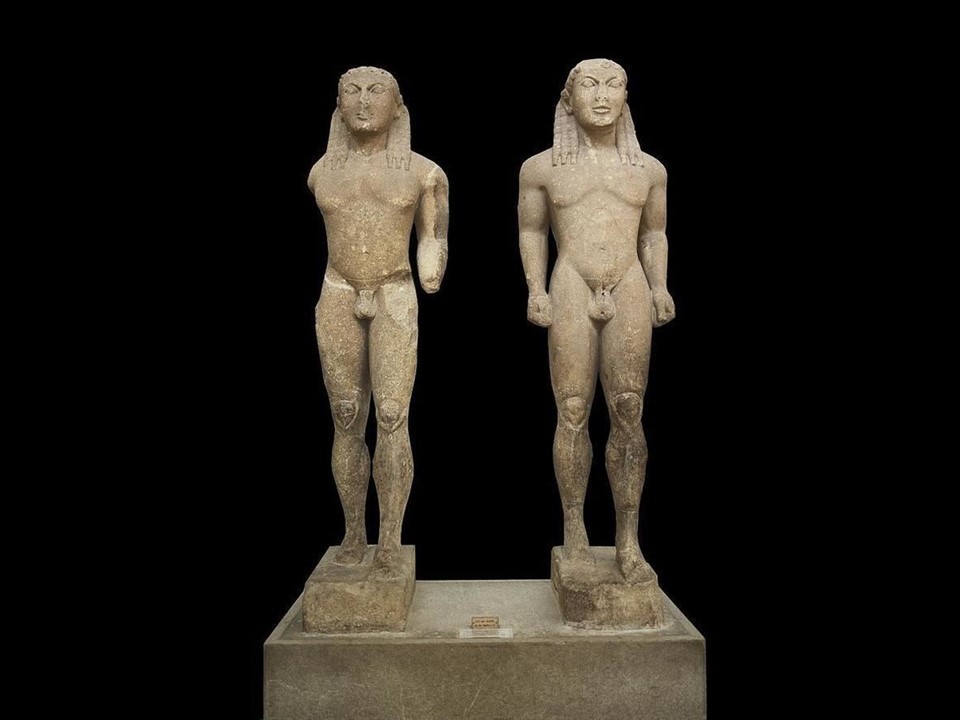
The two Kouroi of Argos, known as Cleobis and Biton, dedicated to Delphi by the city of Argos, 580 BC, marble, H. 1.97 m, Archaeological Museum of Delphi
https://alchetron.com/Kleobis-and-Biton

Cleobis and Biton,” according to Herodotus “were of Argive stock, had enough to live on, and on top of this had great bodily strength. Both had won prizes in the athletic contests, and this story is told about them: there was a festival of Hera in Argos, and their mother absolutely had to be conveyed to the temple by a team of oxen. But their oxen had not come back from the fields in time, so the youths took the yoke upon their own shoulders under constraint of time. They drew the wagon, with their mother riding atop it, traveling five miles until they arrived at the temple.  When they had done this and had been seen by the entire gathering, their lives came to an excellent end, and in their case the god made clear that for human beings it is a better thing to die than to live. The Argive men stood around the youths and congratulated them on their strength; the Argive women congratulated their mother for having borne such children.  She was overjoyed at the feat and at the praise, so she stood before the image and prayed that the goddess might grant the best thing for man to her children Cleobis and Biton, who had given great honor to the goddess. After this prayer they sacrificed and feasted. The youths then lay down in the temple and went to sleep and never rose again; death held them there. The Argives made and dedicated at Delphi statues of them as being the best of men.” What a story…     http://www.perseus.tufts.edu/hopper/text?doc=Perseus%3Atext%3A1999.01.0126%3Abook%3D1%3Achapter%3D31    and     https://www.jstor.org/stable/4476541?read-now=1&refreqid=excelsior%3A696d910b4f58214d895c34828b1f43ce&seq=3#page_scan_tab_contents

The two statues affectionately called The Twins of Argos hold me in fascination! They were sent to Delphi by the Argives back in the early 6th century BC… the first monumental commemorative monument to grace Apollo’s sanctuary. Many, resplended monuments followed… but the Kouroi of Cleobis and Biton forever bedazzle us with their monumentality and grace.
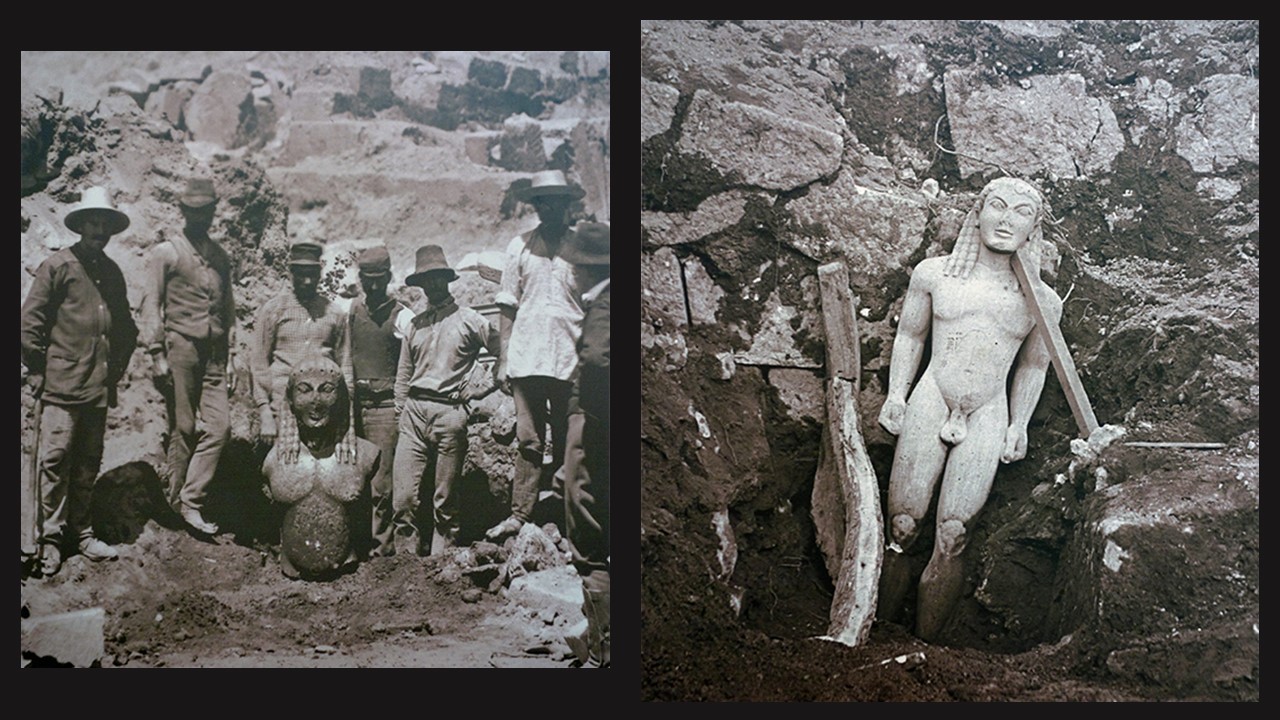
Unearthing Biton, 1894, the sanctuary of Apollo, Delphi, Greece
Archaeologists excavating Cleobis, 1894
https://www.khanacademy.org/humanities/ancient-art-civilizations/greek-art/daedalic-archaic/a/the-kouroi-of-kleobis-and-biton

The Twins of Argos were excavated in Delphi by French archaeologists in 1893 and 1894. The discovery of two extremely similar statues of idealized nude male youths is a rare find of the kouros type. Like other kouroi, they are “naked except for boots, which distinguish them from images of Apollo and may mark them as travellers. They are stockily built, short though over-life-size, with broad shoulders and broad faces… The round eyes are set within curving upper and lower lids, the entire eye unit cut deeply into the head beneath heavy brows. The mouth is full. The large ears are set far back at the side of the head; the lobe is a flat disk. The transition between the front and sides of the head is very abrupt. A single row of large disk-like curls line the forehead. The rest of the hair, emphasizing the flat top of the head, is combed and then subdivided into large bead-like elements. In back the hair springs out from beneath the double cord which holds it in place, at the top of the ears and, again, at the base of the neck. Each of the tendrils, front and back, is neatly finished with a tie… The abdomen is defined linearly… The round knees are set off by incision as well as by modeling. The arms are held close to the body, the clenched hands securely attached to the thighs, the thumbs facing outward…”     http://www.perseus.tufts.edu/hopper/artifact?name=Delphi%2C+Kleobis+and+Biton&object=Sculpture
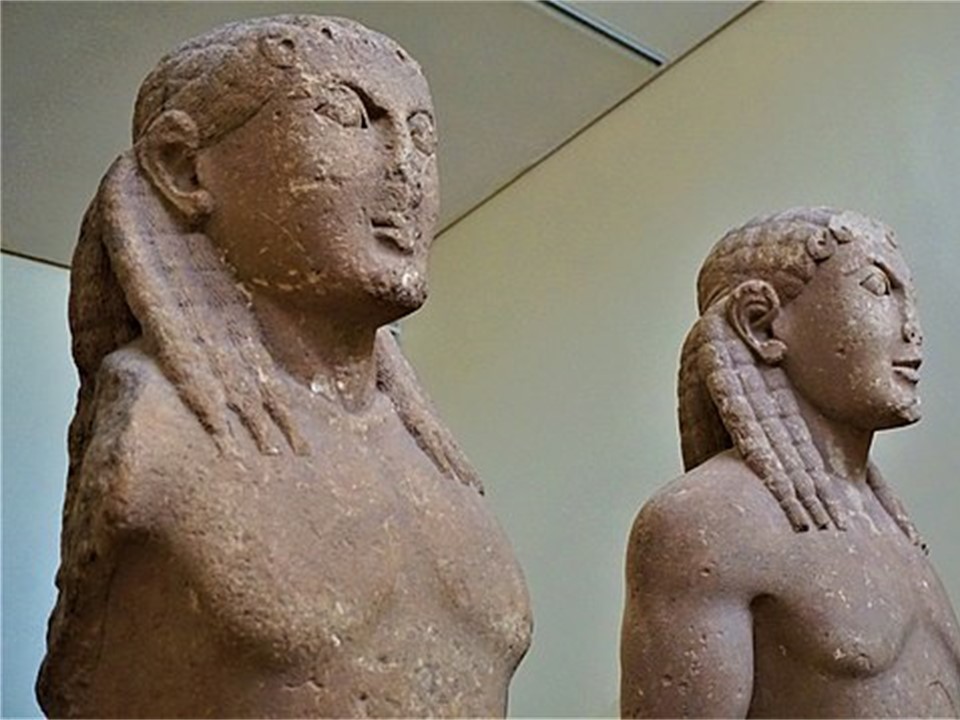
Polymides of Argos, a Greek sculptor of the Archaic Period (6th century BC)
The two Kouroi of Argos, known as Cleobis and Biton (detail), dedicated to Delphi by the city of Argos, 580 BC, marble, H. 1.97 m, Archaeological Museum of Delphi
https://www.khanacademy.org/humanities/ancient-art-civilizations/greek-art/daedalic-archaic/a/the-kouroi-of-kleobis-and-biton

To introduce my students to ancient Greek Archaic Art and the Kouros Brothers from Argos, Cleobis and Biton, I use the Inquiry-based teaching method known as Visual Thinking Strategy introduced by Abigail Housen and Philip Yenawine which “uses art to teach visual literacy, thinking, and communication skills—listening and expressing oneself. Growth is stimulated by looking at artworks of increasing complexity, answering developmentally based questions, and participating in peer-group discussions carefully facilitated by teachers.” Philip Yenawine, Visual Thinking Strategies: Using Art to Deepen Learning Across School Disciplines, 2013  https://www.amazon.com/Visual-Thinking-Strategies-Learning-Disciplines-ebook/dp/B00XO20380
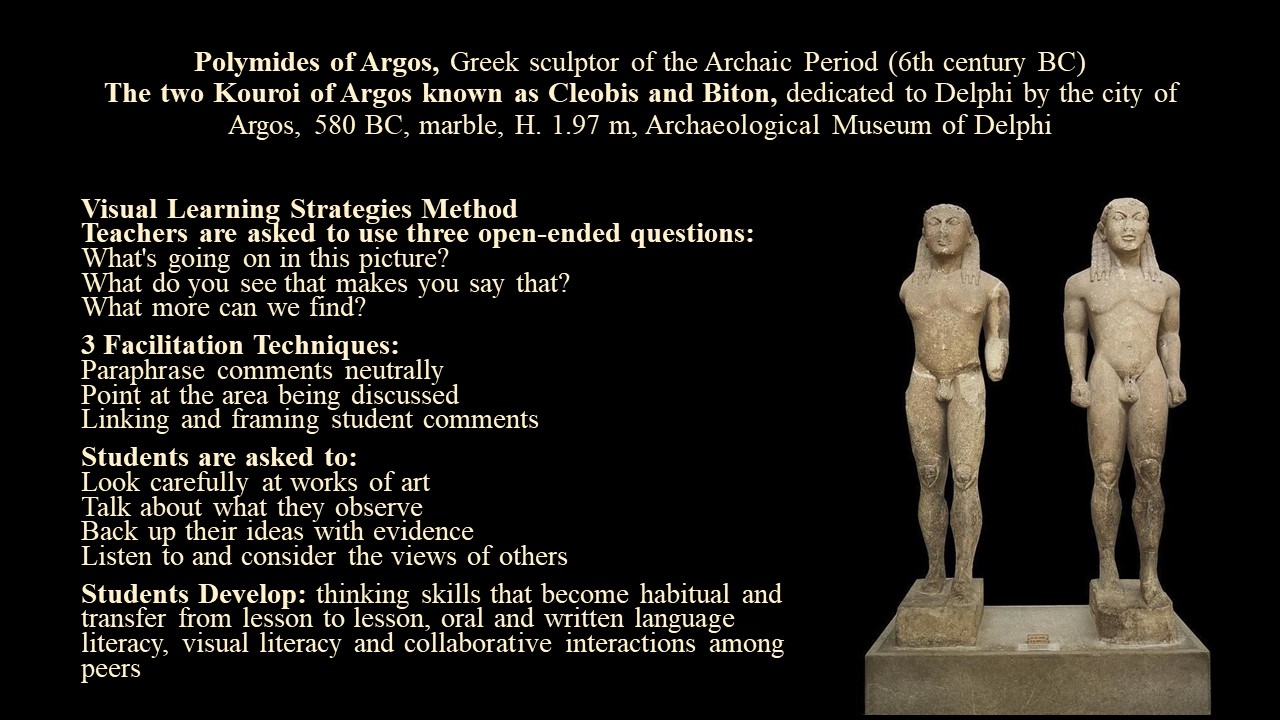
For a student “RWAP”, (RWAP stands for Research – Writing – Art – Project), please… Check HERE!
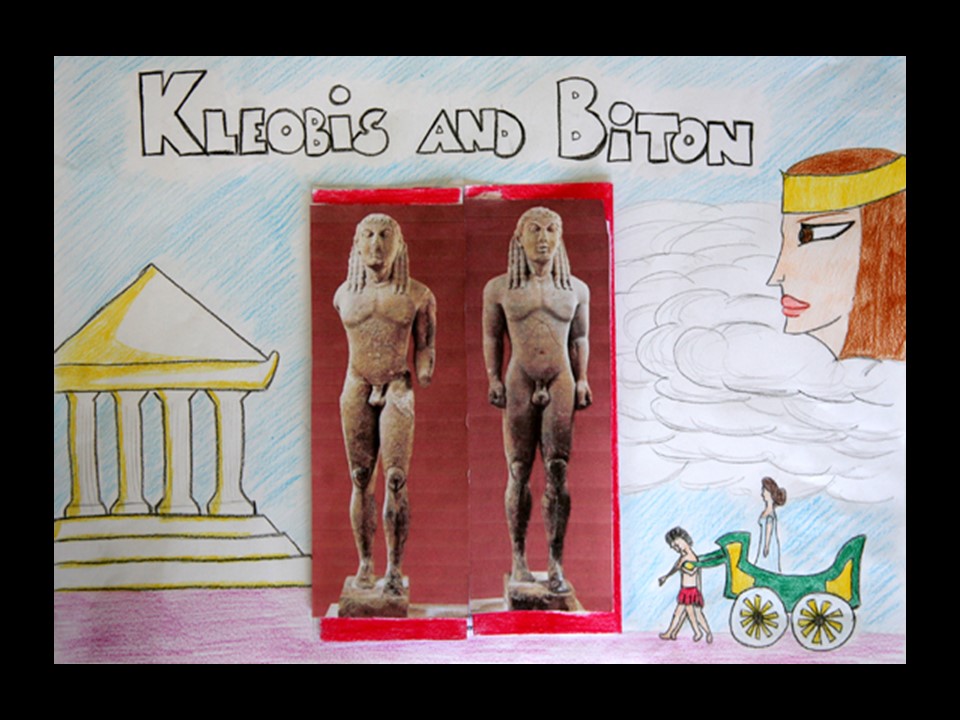
In 2016, after visiting the Archaeological Museum of Delphi… one of my Grade 7 students, inspired by Cleobis and Biton, presented me with the above poster!

Areskon is my Name and I am an Actor

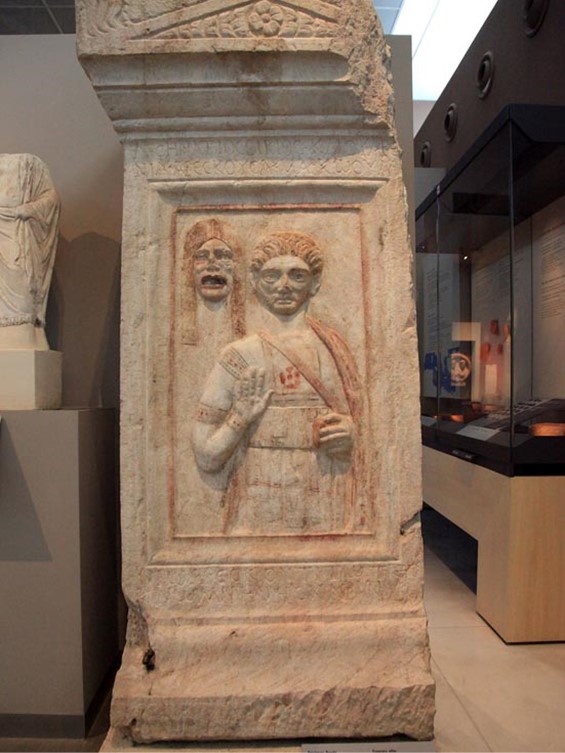
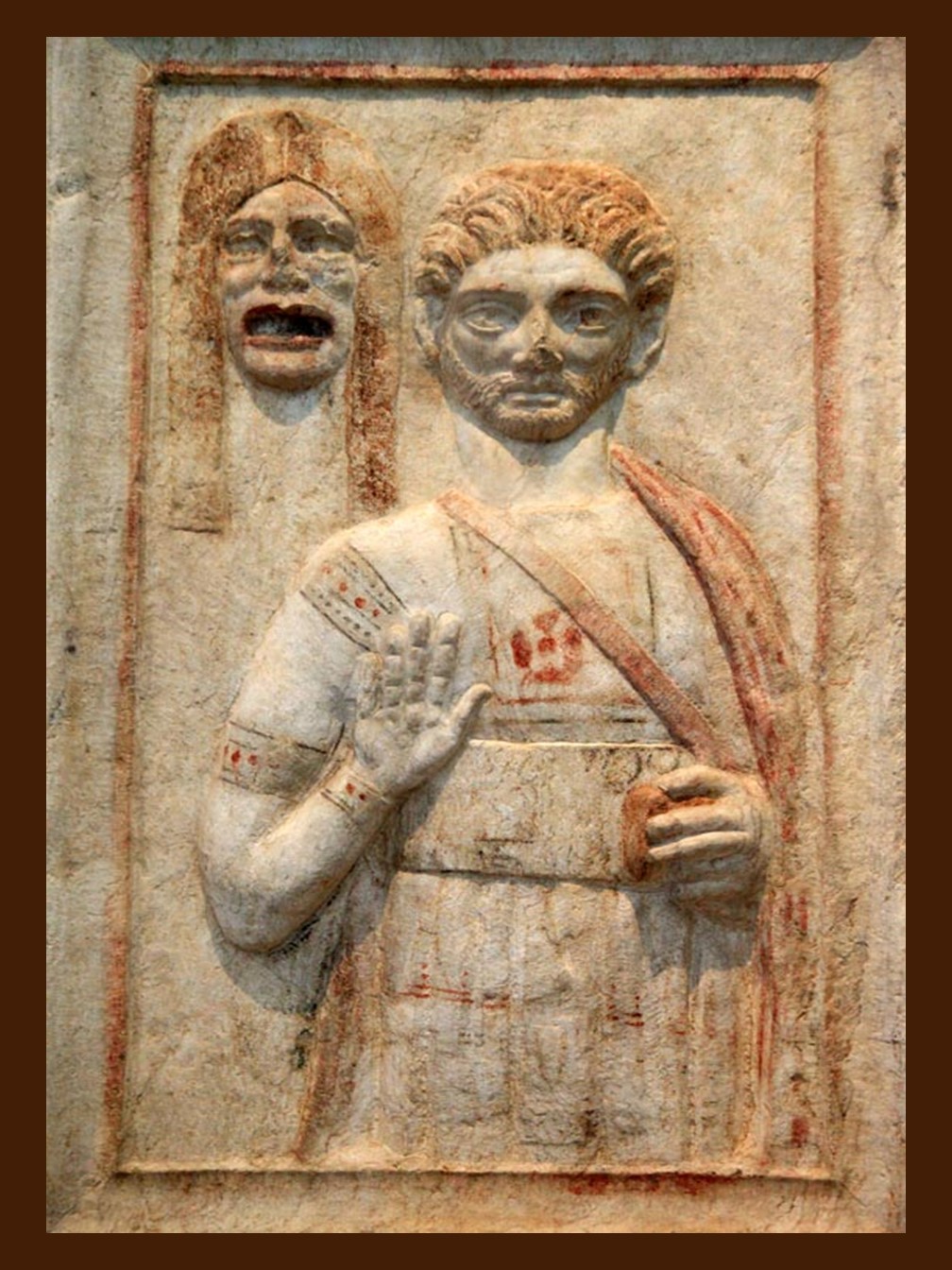
Funerary Altar-Shaped Stele of Actor Marcus Varinius Areskon, 170-200 AD, Marble with traces of the original paint, 1670×70-72×52-66 cm, Archaeological Museum of Thessaloniki
Photo Credit: Kostas Papantoniou https://www.amth.gr/en/exhibitions/highlights

O man, with your wonderful dower, / O woman, with genius and grace, / You can teach the whole world with your power, / If you are but worthy the place. / The stage is a force and a factor / In moulding the thought of the day, / If only the heart of the actor / Is high as the theme of the play.     …     No matter what role you are giving, / No matter what skill you betray, / The everyday life you are living, / Is certain to colour the play./ The thoughts we call secret and hidden / Are creatures of malice, in fact;/ They steal forth unseen and unbidden, / And permeate motive and act. Ella Wheeler Wilcox (1850-1919) was an American author and poet who wrote THE ACTOR…an appropriate, in my humble opinion, introduction to our new POST… Areskon is my Name and I am an Actor.  http://www.ellawheelerwilcox.org/poems/pactor.htm     https://en.wikipedia.org/wiki/Ella_Wheeler_Wilcox

Funerary Altar-Shaped Stele of Actor Marcus Varinius Areskon, 170-200 AD, Marble with traces of the original paint, 1670×70-72×52-66 cm, Archaeological Museum of Thessaloniki Photo Credit: Kostas Papantoniou https://www.amth.gr/en/exhibitions/highlights

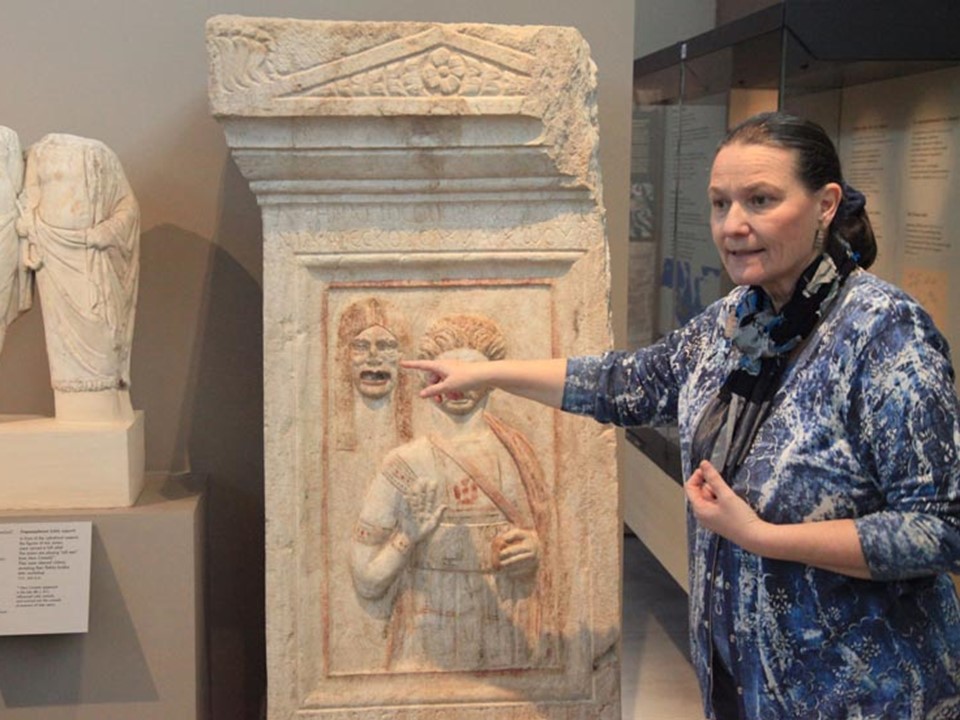
Marcus Varinius Areskon… I seek him out every time I visit the Archaeological Museum of Thessaloniki. I introduce him to my students every time I guide them around this wonderful “shrine” of the Muses… and yet I know so little about him. An inscription introduces himself.  Carved above his portrait and under it, the epitaph inscription reads… Λ(ούκιος) Σηνάτιος Οἴκιος καὶ Οὐαρε | νία Ἀρέσκουσα Μάρκῳ Οὐαρ[ε] | νίῳ Ἀρέσκοντι τῷ τέ | κνῳ μνήμης χάριν Lucius Senatius (probably an unknown member of the family) and Var(e)inia Areskousa to her son Marcus Var(e)inius Areskon in memory… I am intrigued… can the portrait of a young man and an inscription help us unravel the knot?     https://www.amth.gr/en/exhibitions/highlights

Areskon was the son of Var(e)inia Areskousa, he was related? to Lucius Senatius, he was Roman, he lived in Thessaloniki, and he died painfully young. This beautiful funerary memorial, in marble and vividly painted, the colours remain remarkably well-preserved, testifying to the economic ability of the family to honour their young demised member with a worthy memorial.     https://m.flickr.com/photos/69716881@N02/50914350016/in/faves-36551225@N05/

Areskousa and Areskon, mother and son, members of a popular family of actors, were probably entertainment “stars” of the time. This is what their names connotate (Areskon/Areskousa= one who pleases, who is popular). The mother was probably an actress of the popular mime theatre, while the son managed to elevate himself and become a young, versatile tragic actor of fame and fortune. His funerary monument is a proper testament to his popularity and wealth.

The portrait on his rectangular funerary altar shows him en face, upright, attired in military gear. His right hand is raised in salutation, the left seems to hold a sword?  In the upper left corner of the composition, still beautifully coloured, a mask, worn by male actors for a female theatrical role, identifies the male portrait as an actor of versatile abilities.

1917, Trip to the Archaeological Museum of Thessaloniki… my respects to Areskon… Photo Credit: Kostas Papantoniou

The Portrait of Areskon is shown in the middle of a simple yet elegantly proportioned structure described by the Museum archaeologists as a funerary altar. It is simply framed, sits on a pedestal and is crowned by an inscribed pediment with a central rosette, leaves and stylized acroteria. It was discovered near the eastern fortification walls of Thessaloniki, almost embedded in an apartment building of modern times. Today, exhibited in the Archaeological Museum of Thessaloniki, it is considered one of the Museum’s highlights!

For a PowerPoint presenting a School Trip to the Archaeological Museum of Thessaloniki and the Funerary Altar of Areskon, please… Check HERE!

For a StudentActivity, please… Check HERE!

2017, Grade 4 STARS in front of the Archaeological Museum of Thessaloniki! Photo Credit: Kostas Papantoniou

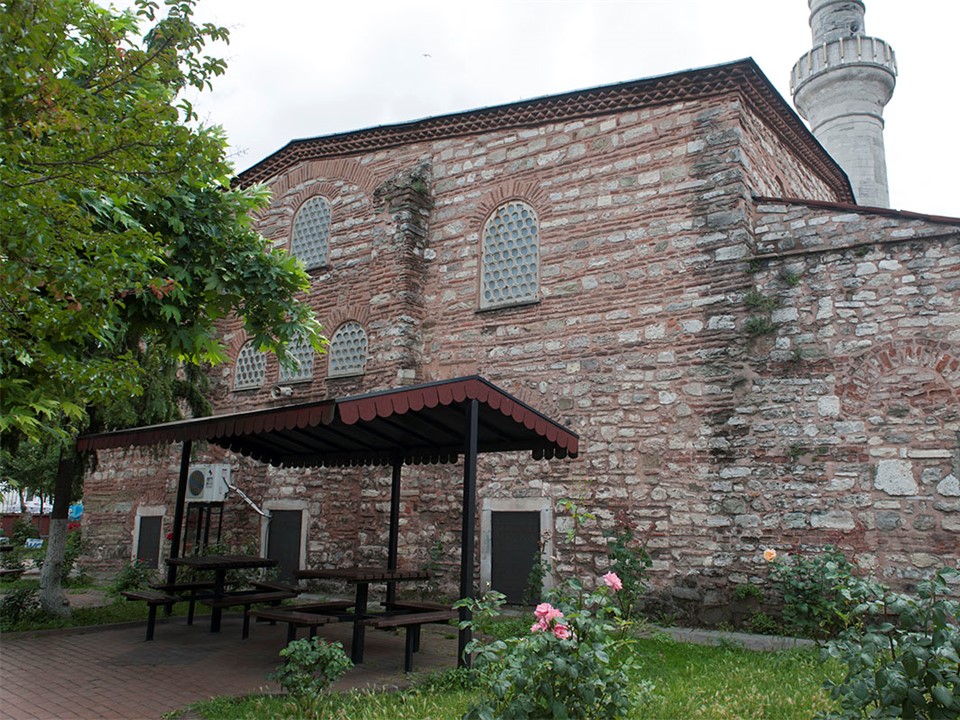
Unidentified Byzantine Church in Constantinople known today as Atik Mustafa Paşa Camii

Unidentified Byzantine Church in Constantinople known today as Atik Mustafa Paşa Camii, original Byzantine construction date: 842-867
Photograph by Dick Osseman, East Façade, https://pbase.com/dosseman/atikmustafa
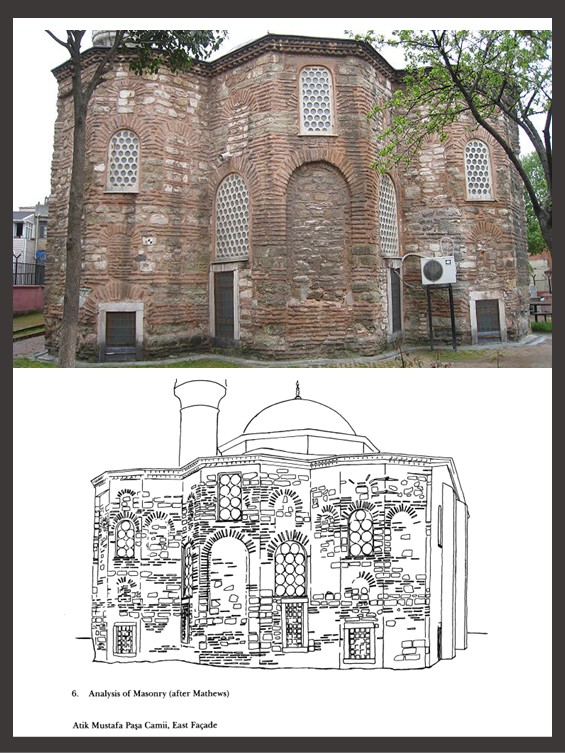
East Façade, Analysis of Masonry (after Mathews) https://www.jstor.org/stable/1291520?seq=8#metadata_info_tab_contents

It’s bitter cold, a snowy Sunday in the συμβασιλεύουσα του Βυζαντίου and I enjoy reading “Notes on the Atik Mustafa Paşa Camii in Istanbul and its frescoes” by Thomas F. Mathews and Ernest J. W. Hawkins in Dumbarton Oaks Papers, Vol. 39 (1985), pp. 125-134. My goal is to prepare for a new POST, titled… Unidentified Byzantine Church in Constantinople known today as Atik Mustafa Paşa Camii.     https://www.jstor.org/stable/1291520?seq=1#metadata_info_tab_contents

Unidentified Byzantine Church in Constantinople known today as Atik Mustafa Paşa Camii, original Byzantine construction date: 842-867
Photograph by Dick Osseman https://pbase.com/dosseman/atikmustafa

Atik Mustafa Paşa Camii is a historic Byzantine church in Constantinople, an Ottoman Mosque of great importance for the Muslims, and an intriguing building for the expert Art Historians in the academic world. I have to confess I never visited the building and that makes it difficult to talk about it… I rely, however, on Mathews and Hawkins Dumbarton Oaks Paper, the Encyclopedia of the Hellenic World presentation, the Byzantine Legacy report, and the precious photographs taken by Dick Ossemann. This may not be “all-inclusive,” it is the groundwork for my next trip… στην Πόλη!    https://www.jstor.org/stable/1291520?seq=1#metadata_info_tab_contents,    http://constantinople.ehw.gr/forms/fLemmaBodyExtended.aspx?lemmaID=11785,     https://www.thebyzantinelegacy.com/atik     and     https://pbase.com/dosseman/atikmustafa

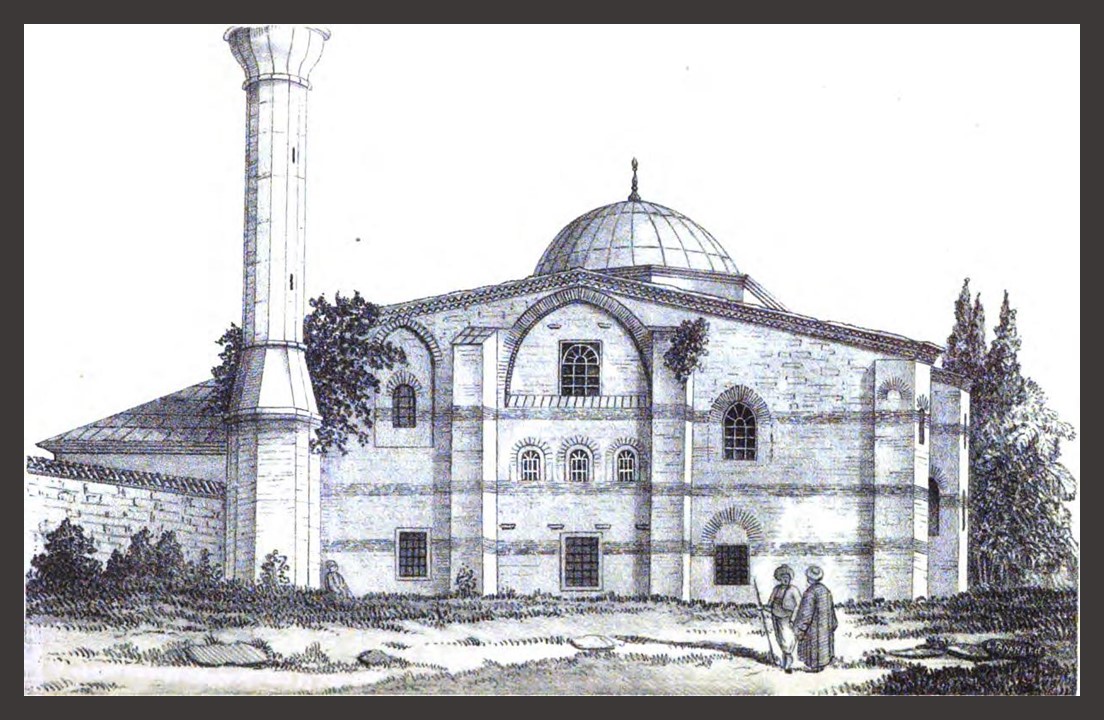
Unidentified Byzantine Church in Constantinople known today as Atik Mustafa Paşa Camii, original Byzantine construction date: 842-867, drawing of 1877, from A.G. Paspates’ Byzantine Topographical Studies

References to early 20th-century bibliography and logical deductions lead Mathews and Hawkins to a first acceptance that the Atik Mustafa Paşa Camii is “the earliest Constantinopolitan example of a cross-domed church (and indeed the first Constantinopolitan church after Iconoclasm).” The authors further studied the articulation of the East End of the building, the design of the Apses (p. 127), the windows in the apses, drew comparisons to many Constantinopolitan churches for plausible similarities and drew the conclusion that the Atik share the most similarities with “the Theotokos of Lips (church) of 907 and the Myrelaion 920-22. With these churches the Atik shares the basic plan of three triple-faceted apses in which surfaces begin to be broken up by windows and niches set at varying levels.” Further comparisons (pp.127-128) on where apse windows were placed and the lack of horizontal cornices enhanced the belief that Atik Mustafa Paşa Camii “while closely related to the Lips and the Myrelaion, seems to represent an earlier stage in the evolution of apse design. Very likely it belongs to the second half of  the ninth century in the new surge of church building known from literary sources to have followed the defeat of Iconoclasm in 842 and the accession of Basil I in 867.”     https://www.jstor.org/stable/1291520?seq=4#metadata_info_tab_contents

The Dumbarton Oaks Paper by Mathews and Hawkins is an inexhaustible source of information I enjoyed reading. Groundwork accomplished, I feel ready for a future trip… στην Πόλη

For a Student Activity, please… Check HERE!

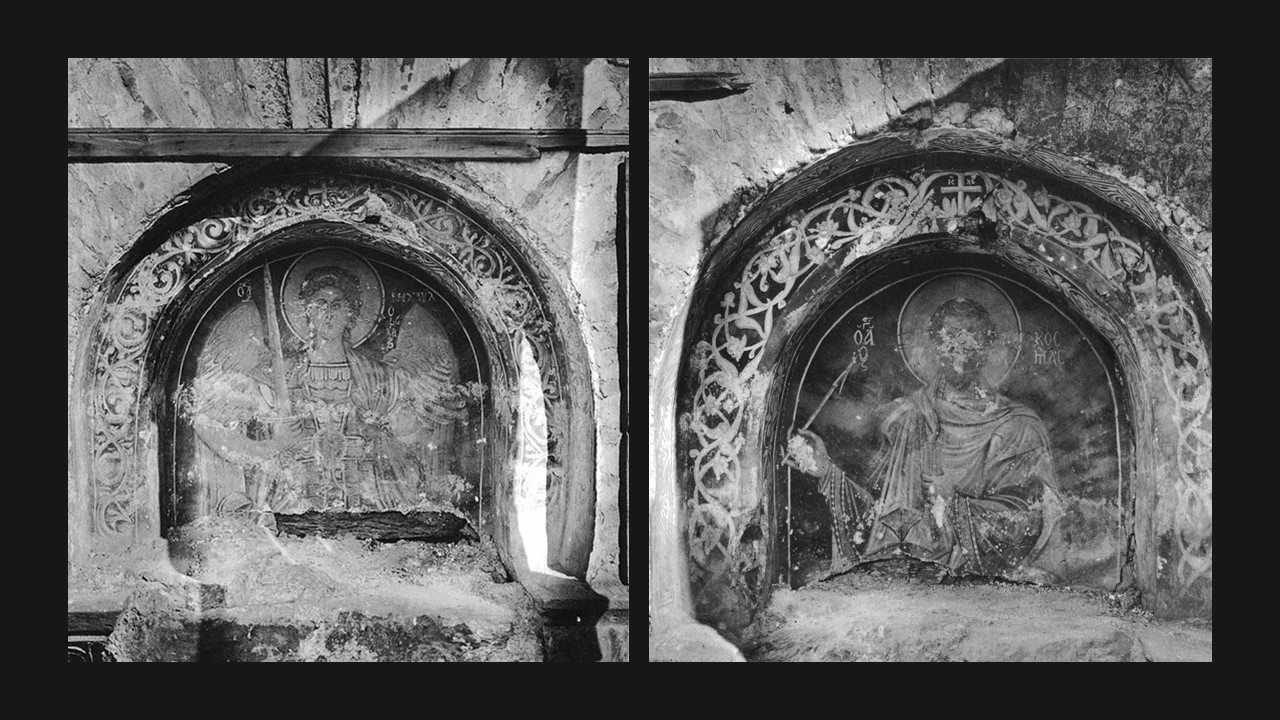
Unidentified Byzantine Church in Constantinople known today as Atik Mustafa Paşa Camii, original Byzantine construction date: 842-867
South Wall Frescoes, https://www.jstor.org/stable/1291520?seq=8#metadata_info_tab_contents

Teaching with Jan van Eyck

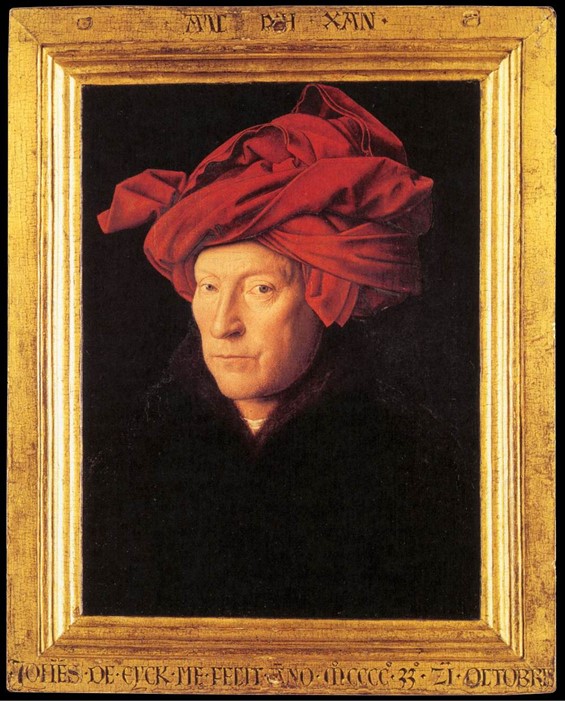
Jan van Eyck, before 1395-1441
Portrait of a Man (Self Portrait?),
1433, oil on wood, 25,5 x 19 cm, National Gallery, London
https://www.wga.hu/frames-e.html?/html/e/eyck_van/jan/01page/13turban.html

When the time comes for me to introduce my students to Jan van Eyck’s oeuvre I start with his remarkable motto, Als Ich Can – As well as I can, inscribed in large Greek letters on the upper part of the frame of his Self-Portrait? at the National Gallery in London. Humble words… but appreciate how subtly they draw attention to his extraordinary skills as a painter. Where can you go wrong Teaching with Jan van Eyck?     https://www.nationalgallery.org.uk/paintings/jan-van-eyck-portrait-of-a-man-self-portrait

“Jan van Eyck is credited with originating a style of painting characterised by minutely realistic depictions of surface effects and natural light. This was made possible by using an oil medium, which allowed the building up of paint in translucent layers, or glazes.” These three lines by the National Gallery in London embody the essence of van Eyck’s painting style and technique. I like to read it to my students emphasizing his contribution to Western European Art. Information about his training and his life is scarce, we do know, however, that he was a member of the gentry class and that by 1425 he lived in Bruges and Lille as court painter to Philip the Good, Duke of Burgundy. We also know that in 1428 he travelled to Portugal to paint Philip the Good’s future wife, Isabella of Portugal.     https://www.nationalgallery.org.uk/artists/jan-van-eyck

“Hubrecht van Eyck, the most famous painter ever known, started this work of art; his brother Jan, who was second in the art, finished the task at the request of Joos Vijd. With this verse the donor consigns the work to your charge on May 6th 1432. Admire what they have done for you”. The famous inscription on the frame of the Ghent Altarpiece sets off my Jan van Eyck PowerPoint Presentation and lets my students admire what they (Hubrecht and Jan) have done for us.

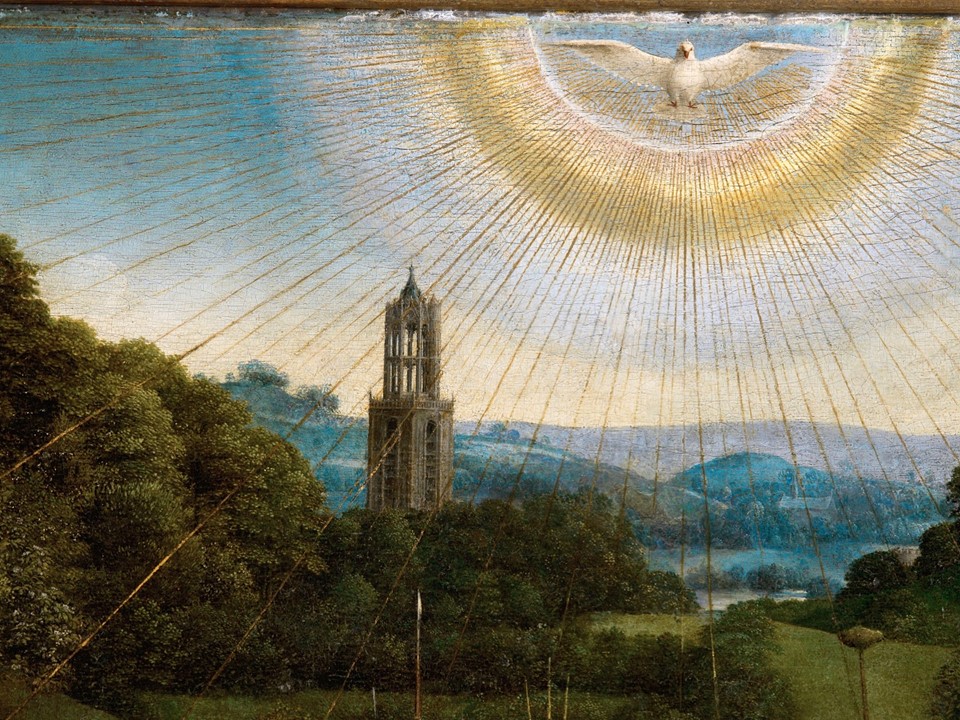
The Adoration of the Mystic Lamb in the Ghent Altarpiece (detail) by Jan van Eyck, 1432, St. Bavo’s Cathedral, Ghent, Belgium
https://artsandculture.google.com/asset/the-ghent-altarpiece-adoration-of-the-mystic-lamb-detail-of-the-holy-spirit-in-the-guise-of-a-dove-hubert-and-jan-van-eyck/MwEFlDeCLbw9RQ

Introducing a former BLOG POST at the 2020 Ghent Museum of Fine Arts Exhibition, titled Van Eyck – An Optical Revolution, I further discuss with my students his painting characteristics: 1. How he perfected the Oil Technique by adding siccatives. With oil paints, he created rich, deep, lustrous colours, flawless golden tones, and amazing life-like textures. 2. How Observation of reality is key to Jan’s Art. For example, his portraits are lifelike to the minutest detail, his depiction of nature and natural phenomena are credible and authentic, his art seems like it’s competing with reality itself! 3. How Observation of Reality is key to Jan’s Art. For example, his portraits are lifelike to the minutest detail, his depiction of nature and natural phenomena are credible and authentic, his art seems like it’s competing with reality itself! 3. How Observing and Painting Optical Light Phenomena shows an artist deeply interested “in the painting of light, so crucial to his optical revolution.” Scholars believe that Jan van Eyck “not only gathers practical but also theoretical knowledge in order to reproduce the effects of light.”     https://vaneyck2020.be/en/the-optical-revolution/     and     https://www.teachercurator.com/art/van-eyck-an-optical-revolution/

Teaching with Jan van Eyck… Online References PowerPoints and Activities…

For the List of ONLINE References on Jan van Eyck’s oeuvre, TeacherCurator put together, please… Click HERE!

For my PowerPoint on the Ghent Altarpiece, please… Click HERE! https://www.teachercurator.com/wp-content/uploads/2021/02/Twith-JvanE-Ghent2-PP.pptx. List of Slides and Photo Credits for the Ghent Altarpiece PowerPoint, please… Click HERE!

For my PowerPoint on Jan van Eyck’s Oeuvre, please… Click HERE! List of Slides and Photo Credits for Jan van Eyck’s Oeuvre PowerPoint, please… Click HERE!

I always feel confident discussing an artist with my students when I prepare my Steps to Success Lesson Plan Outline

For High School level Student Activity, please… Click HERE!

For a RWAP (Research-Writing-Art-Project), please… Click HERE!

I hope that teaching with Jan van Eyck will prove easy and helpful. Do you think it justifies my BLOG name TeacherCurator?

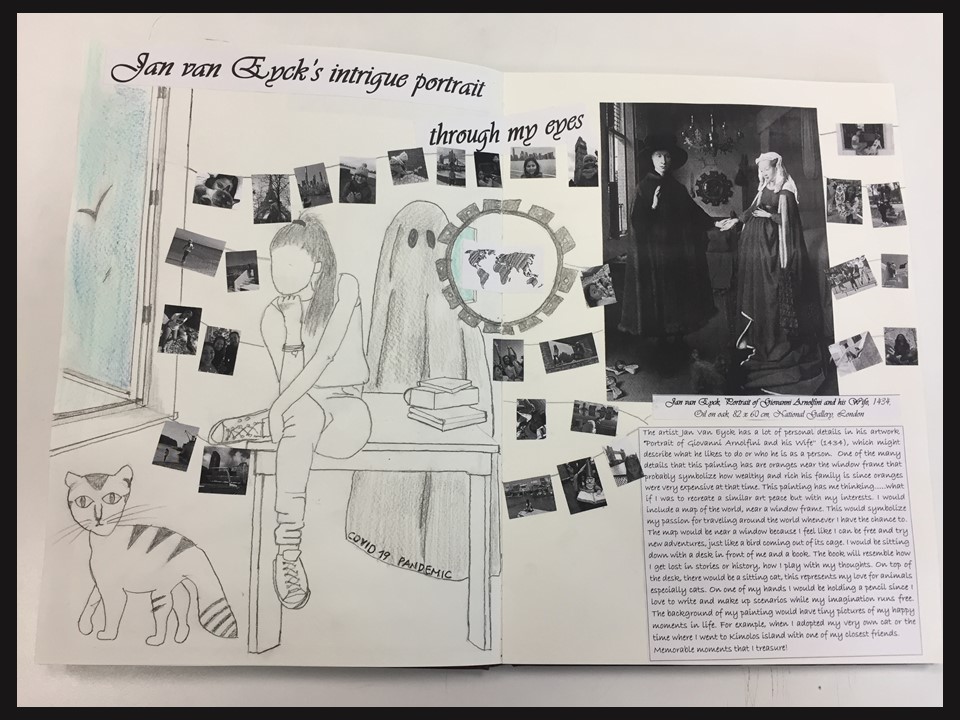
Alexandra D. and her Arnolfini Wedding RWAP Sketchbook Pages
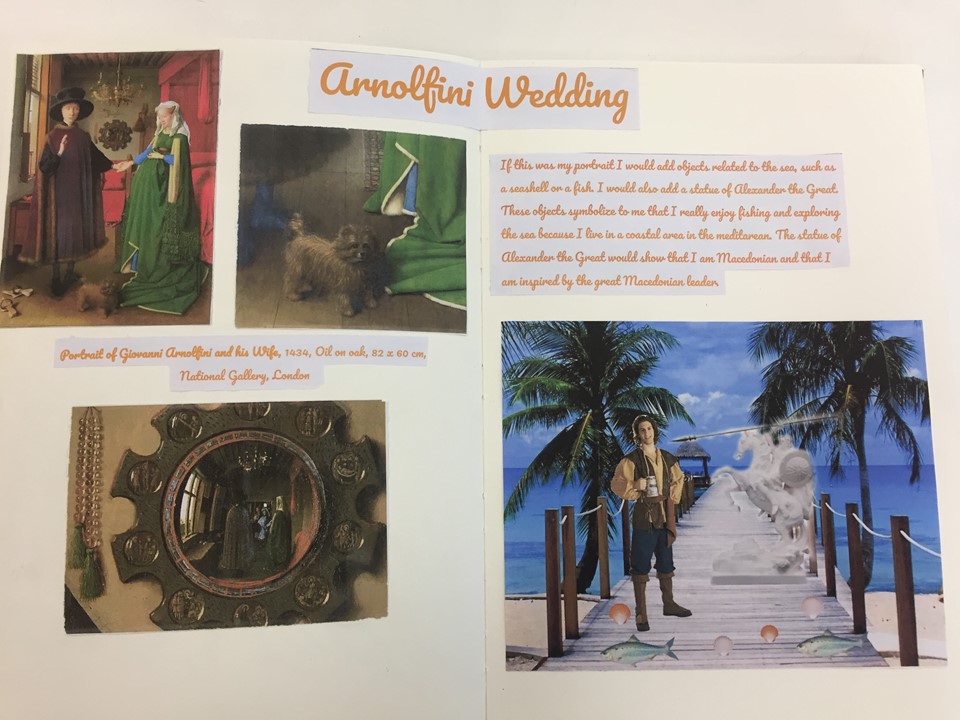
Marios M. and his Arnolfini Wedding RWAP Sketchbook Pages

Teaching with Domenico Ghirlandaio

Domenico Ghirlandaio, 1449-1494
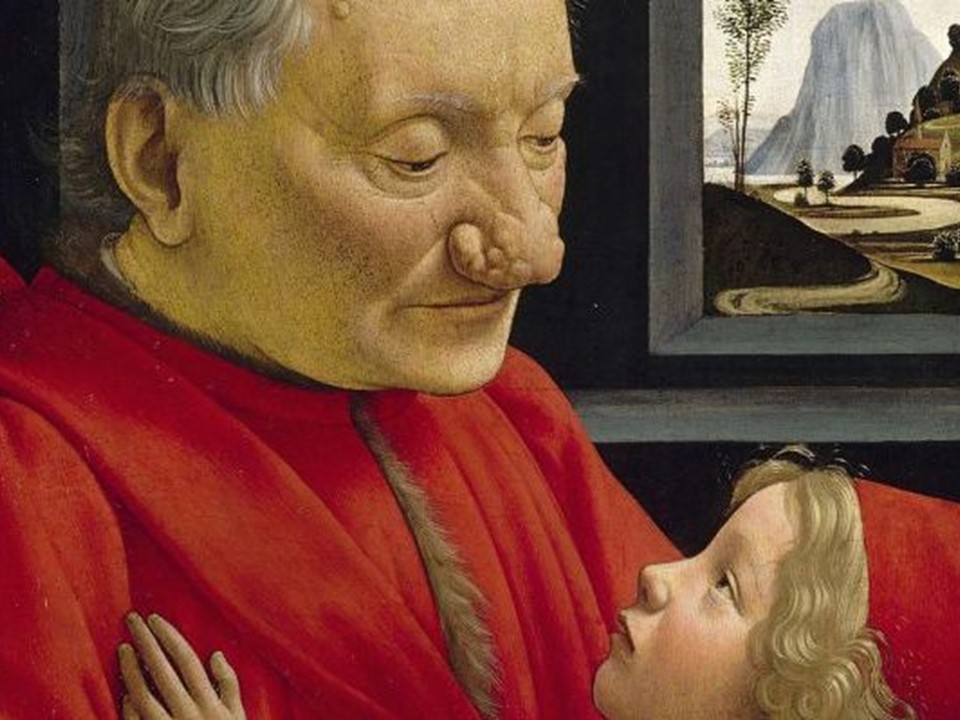
An Old Man and his Grandson (detail), c. 1490, Tempera on wood, 62 x 46  cm, Musée du Louvre, Paris https://paintersonpaintings.com/clarity-haynes-on-domenico-ghirlandaio/

Domenico di Tommaso del Ghirlandajo, who, from his talent and from the greatness and the vast number of his works, may be called one of the most important and most excellent masters of his age, was made by nature to be a painter; and for this reason, in spite of the opposition of those who had charge of him (which often nips the finest fruits of our intellects in the bud by occupying them with work for which they are not suited, and by diverting them from that to which nature inclines them), he followed his natural instinct, secured very great honour for himself and profit for his art and for his kindred, and became the great delight of his age… This is how Giorgio Vasari describes Domenico Gh irlandaio, the artist who was …endowed by nature with a perfect spirit and with an admirable and judicious taste in painting! Teaching with Domenico Ghirlandaio is a set of student activities and worksheets inspired by the great Italian artist I admire. Domenico’ Portrait of An Old Man and his Grandson in the Louvre is one of my all-time favourite Renaissance paintings. It touches me in a very personal way. It reminds me of my father’s love and unconditional devotion to my son, his Grandson… Του παιδιού μου το παιδί, δυο φορές παιδί (My child’s child, is twice my child), he used to say and looked at him with unbelievable tenderness…     http://www.travelingintuscany.com/art/giorgiovasari/lives/domenicoghirlandaio.htm

Domenico Ghirlandaio, 1449-1494
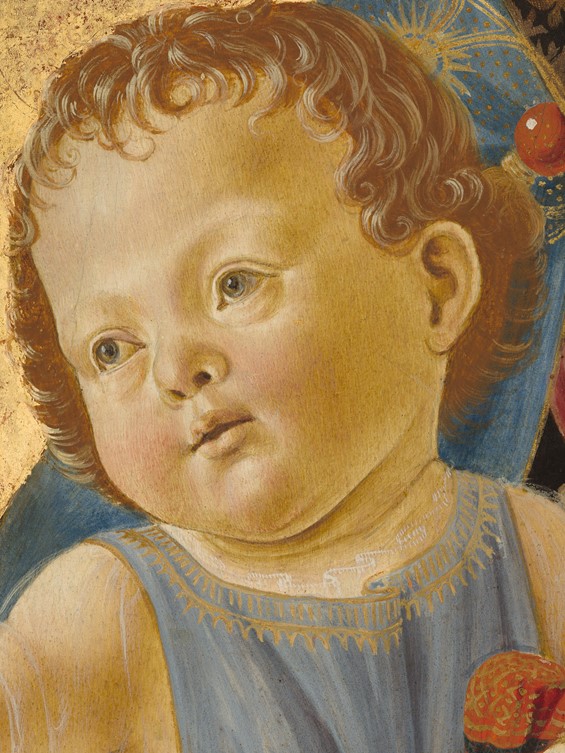
Madonna and Child (detail), 1470-75, Tempera on panel, 71 x 49 cm, National Gallery of Art, Washington, DC https://www.nga.gov/features/exhibitions/verrocchio-discoveries.html

When the time comes for me to introduce my students to Domenico’s oeuvre I start with Giorgio Vasari description of how …He is said to have been so accurate in draughtsmanship, that, when making drawings of the antiquities of Rome, such as arches, baths, columns, colossea, obelisks, amphitheatres, and aqueducts, he would work with the eye alone, without rule, compasses, or measurements; and after he had made them, on being measured, they were found absolutely correct, as if he had used measurements. He drew the Colosseum by the eye, placing at the foot of it a figure standing upright, from the proportions of which the whole edifice could be measured; this was tried by some masters after his death, and found quite correct. I usually finish my presentation of Ghirlandaio with Vasari’s final sentence… Wherefore he has deserved to be held in honour and esteem for such rich and undying benefits to art, and to be celebrated with extraordinary praises after his death.     http://www.travelingintuscany.com/art/giorgiovasari/lives/domenicoghirlandaio.htm

Domenico Ghirlandaio, 1449-1494
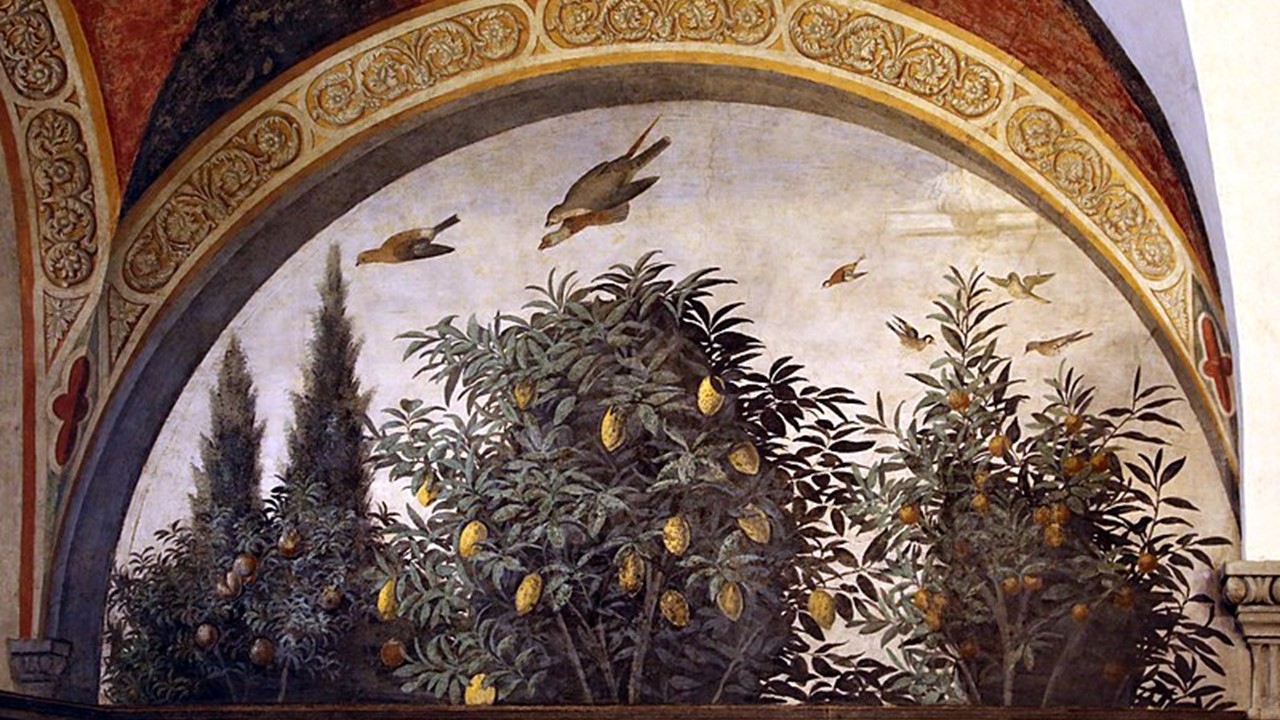
Last Supper (detail), 1480, Fresco, 400 x 880 cm, Ognissanti, Florence https://commons.wikimedia.org/wiki/File:Domenico_ghirlandaio,_cenacolo_di_ognissanti,_1480,_03_giardino_con_uccelli.jpg

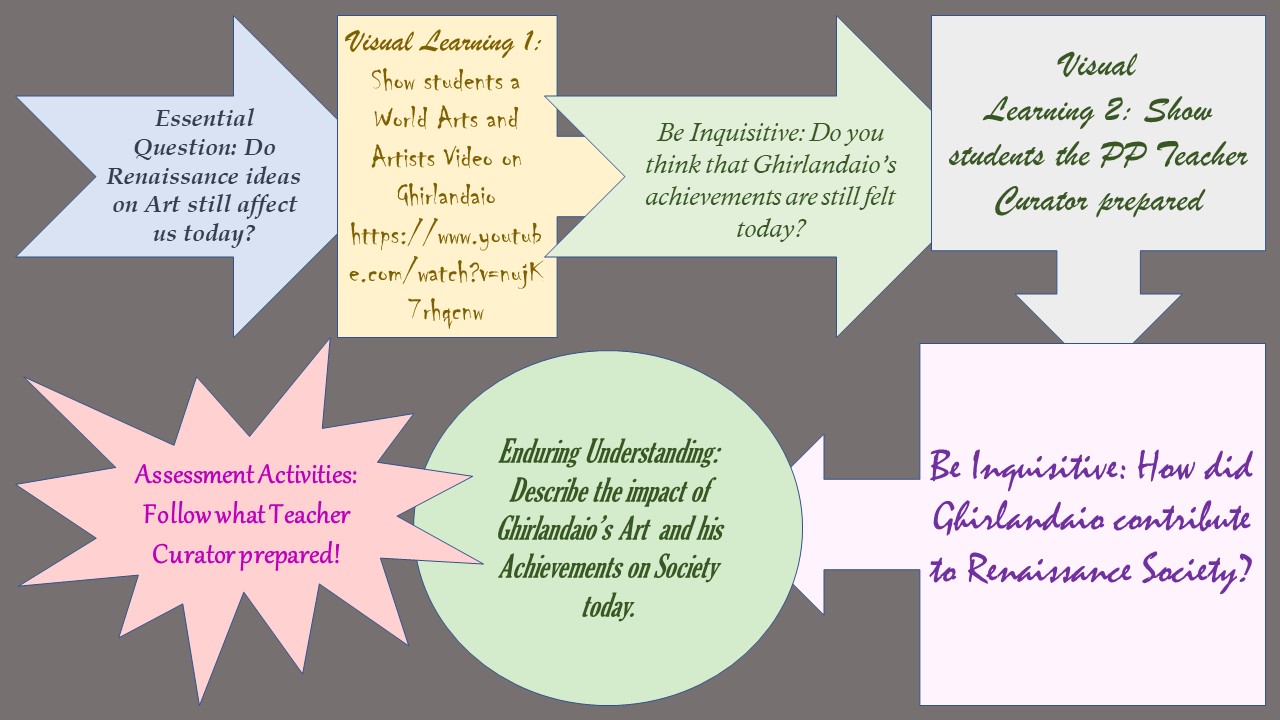
Teaching with Domenico Ghirlandaio Lesson Plan, PowerPoint and Activities…

For a List of ONLINE References on Domenico Ghirlandaio TeacherCurator put together, please… Click HERE!

For my PowerPoint on Domenico Ghirlandaio, please… Click HERE!

I always feel confident discussing an artist with my students when I prepare my Steps to Success Lesson Plan Outline

7 Steps to Success Lesson Plan

For Student Activities (four Activities), please… Click HERE!

I hope that Teaching with Domenico Ghirlandaio will prove easy and helpful. Do you think it justifies my BLOG name Teacher Curator?

Domenico Ghirlandaio, 1449-1494
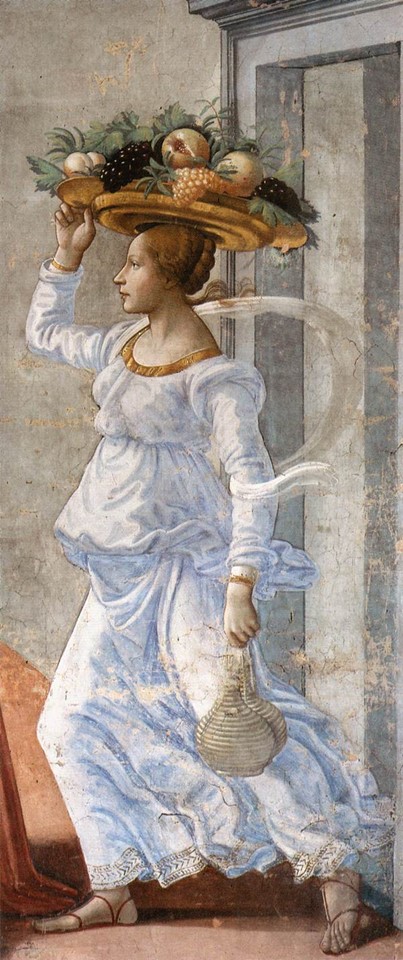
Birth of St John the Baptist (detail), 1486-90, Frescoes on the right wall: Stories of St John the Baptist, W. 450 cm, Cappella Tornabuoni, Santa Maria Novella, Florence https://www.wga.hu/support/viewer_m/z.html

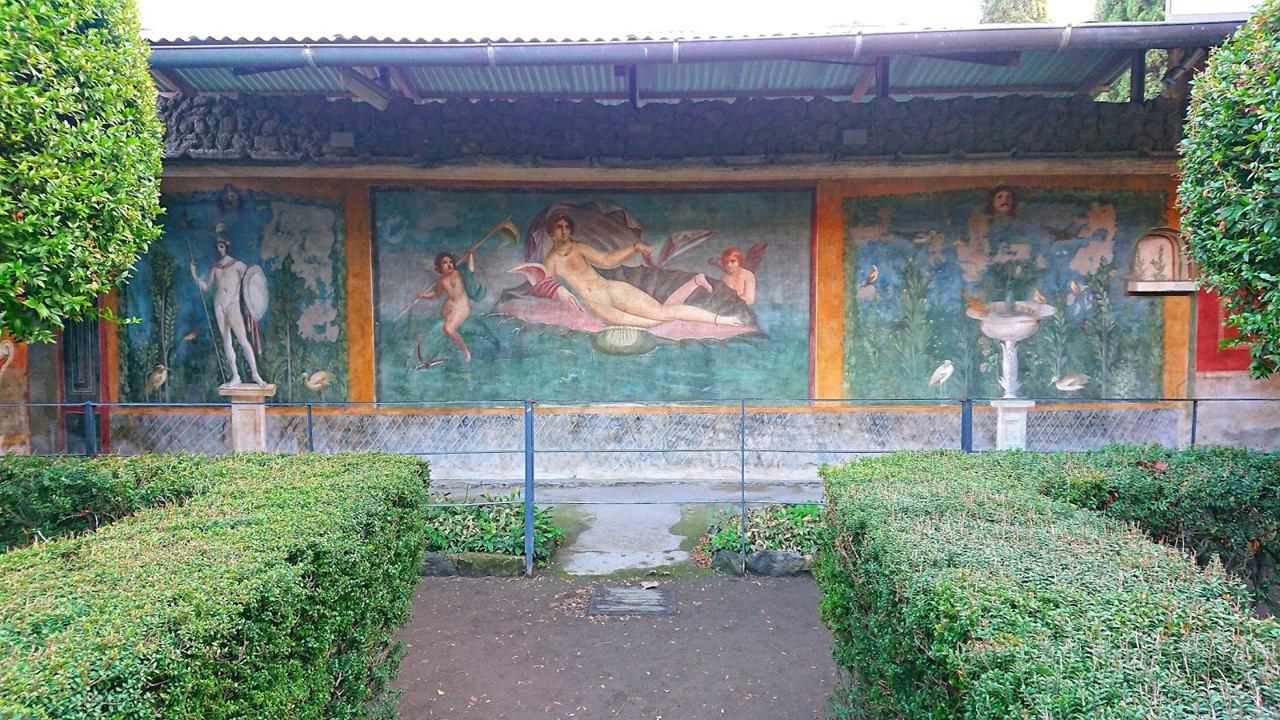
House of Venus in the Shell

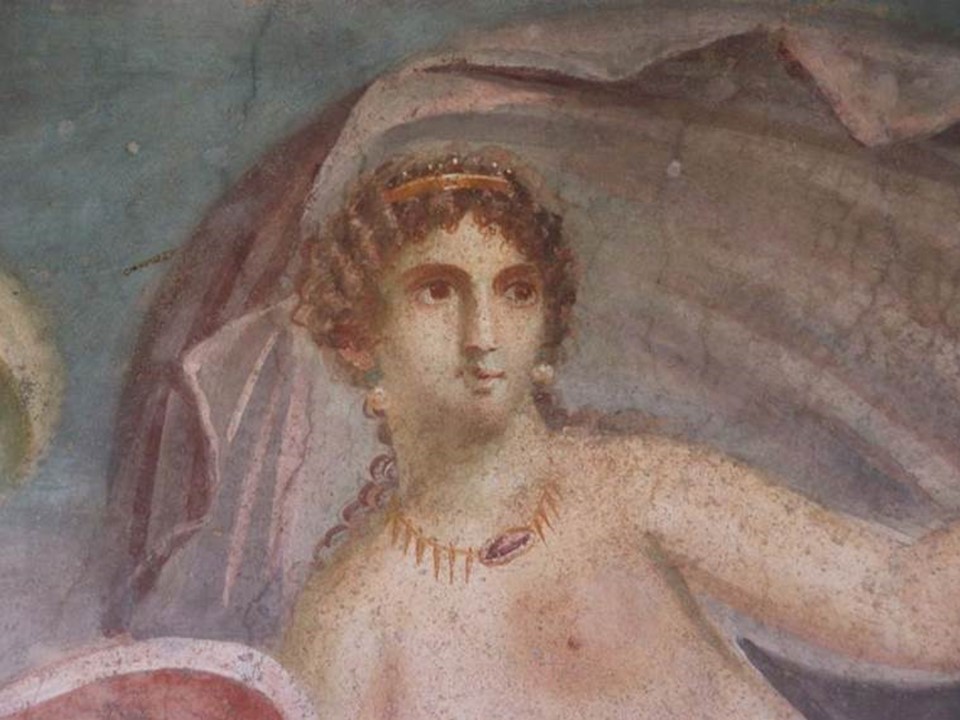
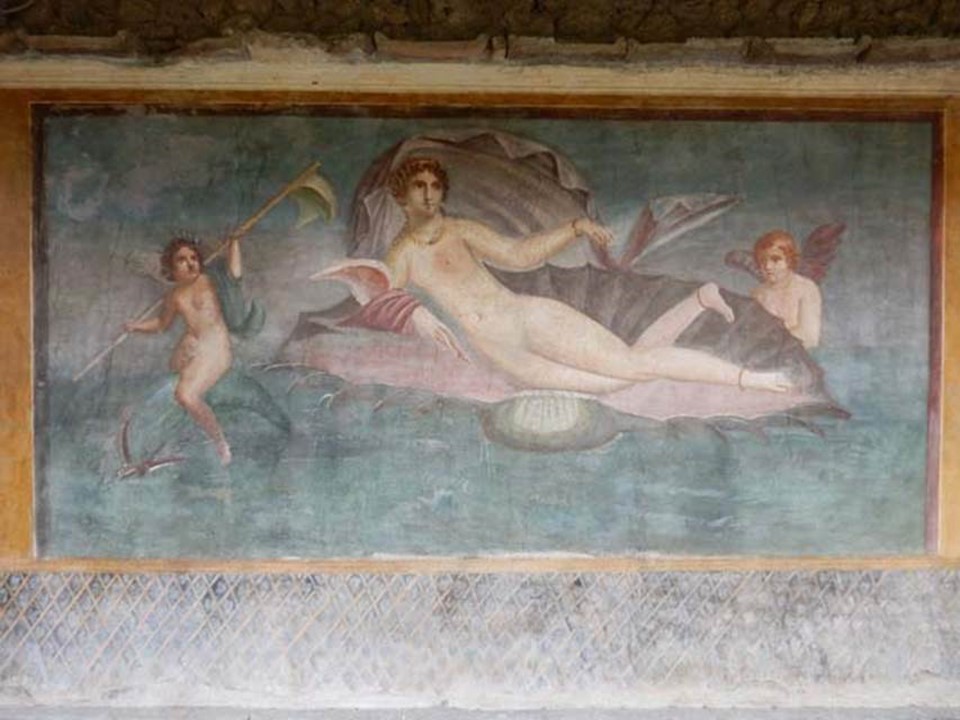
Venus in the Shell (detail), 1st century AD, fresco, House of Venus in the Shell, Pompeii Archaeological Site, Pompeii, Italy, 2017 Photo courtesy of Klaus Heese http://pompeiiinpictures.com/pompeiiinpictures/R2/2%2003%2003%20part%2011.htm

…Ah, goddess, when the spring  /  Makes clear its daytime, and a warmer wind  /  Stirs from the west, a procreative air,  /  High in the sky the happy-hearted birds,  /  Responsive to your coming, call and cry,  /  The cattle, tame no longer, swim across  /  The rush of river-torrents, or skip and bound  /  In joyous meadows; where your brightness leads,  /  They follow, gladly taken in the drive,  /   The urge, of love to come. So, on you move /  Over the seas and mountains, over streams  /  Whose ways are fierce, over the greening leas,  /  Over the leafy tenements of birds,  /  So moving that in all the ardor burns  /  For generation and their kind’s increase… The amazing fresco of Venus in the House of Venus in the Shell inspired me to search for Roman Poems dedicated to the Goddess of beauty… and I “stumbled” upon Lucretius’s Hymn to Venus, the goddess of pleasure.     https://newepicurean.com/lucretius-hymn-to-venus-and-the-defense-of-pleasure/     and     https://www.youtube.com/watch?v=xuqPhR8QTZQ

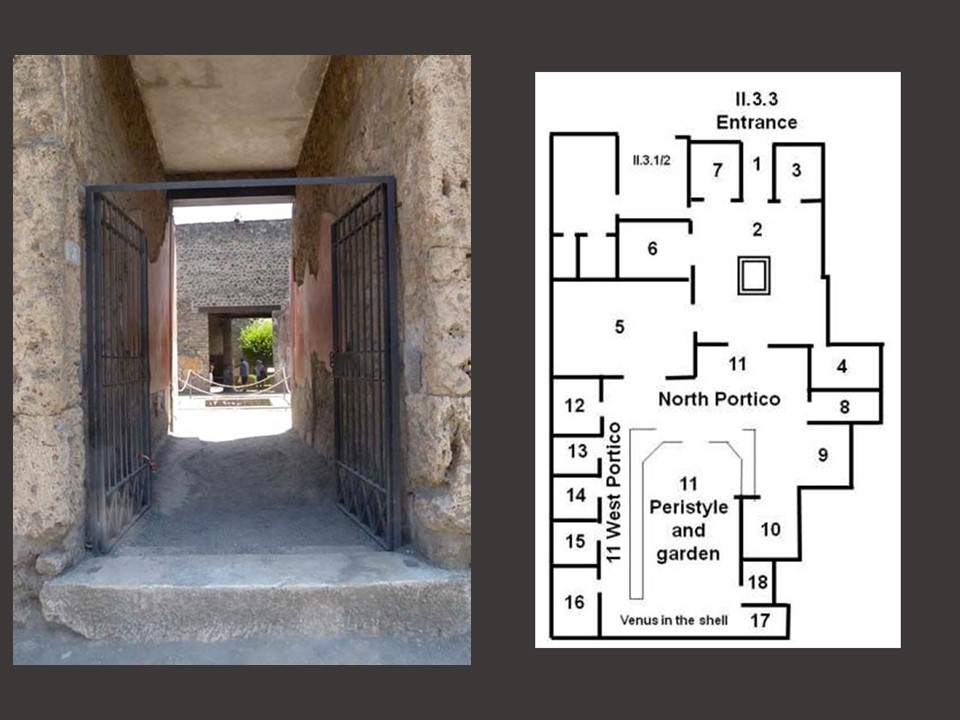
Entrance doorway, looking south, House of Venus in the Shell or House of the Marine Venus or House of D. Lucretii Satrii Valentes, Pompeii, 2012 Photo, courtesy of Michael Binns http://pompeiiinpictures.com/pompeiiinpictures/R2/2%2003%2003%20part%201.htm
Ground Plan of the House of Venus in the Shell or House of the Marine Venus or House of D. Lucretii Satrii Valentes, Pompeii http://pompeiiinpictures.com/pompeiiinpictures/R2/2%2003%2003%20plan.htm

The Via dell’Abbondanza, one of Pompeii’s two Decumani Maximus, formed the main east-west axis which traversed the entire urban area of the city. Facing Via dell’Abbondanza, in Regio II of the city, near the Porta Sarno, the Amphitheatre and the Large Palaestra, lies a private property of particular interest, the House of Venus in the Shell (Insula 3), also known as House of the Marine Venus or House of D. Lucretii Satrii Valentes.  Excavated between 1933-35, it was damaged by bombings during World War II in 1943, but was re-excavated and restored in 1952.     https://sites.google.com/site/ad79eruption/pompeii/regio-ii/reg-ii-ins-3/house-of-venus-in-the-shell

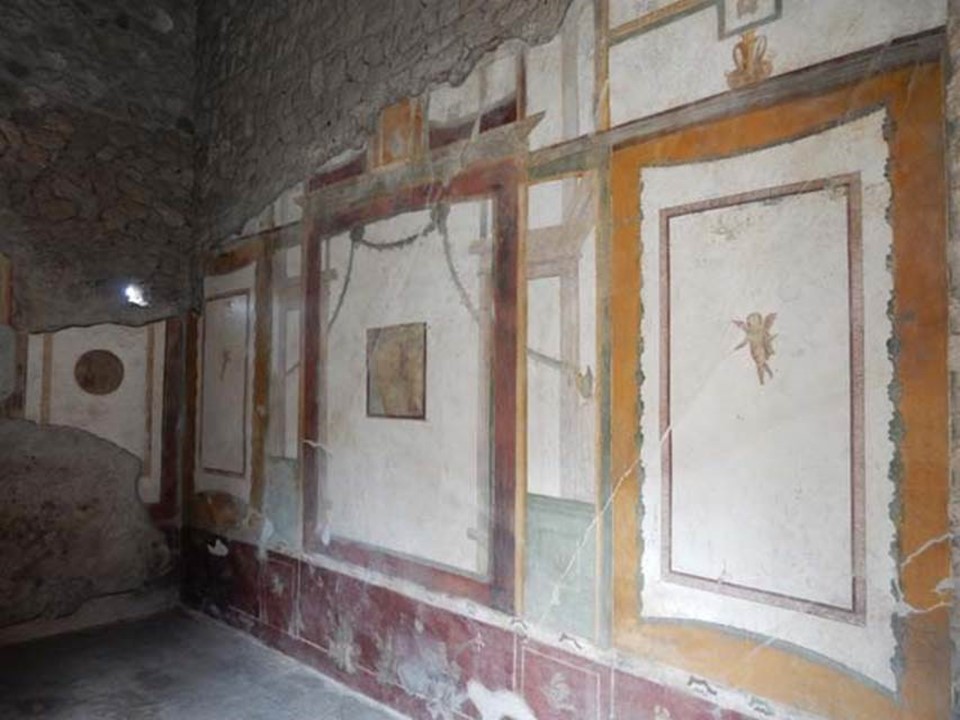
House of Venus in the Shell, Frescoes in Room 4, 1st century AD, fresco, looking towards south-east corner and south wall, Pompeii Archaeological Site, Pompeii, Italy,  Photo courtesy of Buzz Ferebee. https://pompeiiinpictures.com/pompeiiinpictures/R2/2%2003%2003%20part%202.htm

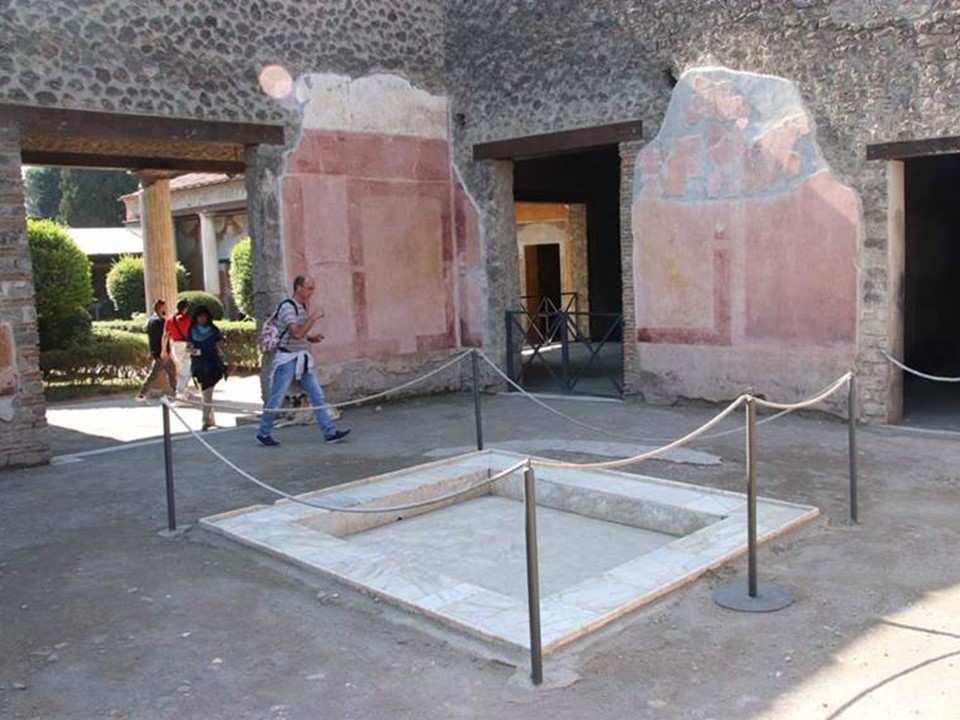
The House of Venus in the Shell has all the characteristics of a typical Pompeiian House. A narrow corridor (1) (fauces) beautifully decorated in the 3rd Pompeiian Style opens directly onto a square atrium (2) with a central impluvium. Both areas were intricately decorated with red or yellow painted panels with small medallions in the center to enhance the visual effect. Three cubicula face the atrium, the one in the south east corner (4) is decorated in the 3rd Pompeiian Style “with framed white panels separated by fantastic architectural views above a lower dark red frieze. The central panel of the south wall contains a badly faded mythological scene of Hermes and Dionysus. The side panels on the north wall contain floating figures while on the east are two portrait medallions.” https://sites.google.com/site/ad79eruption/pompeii/regio-ii/reg-ii-ins-3/house-of-venus-in-the-shell

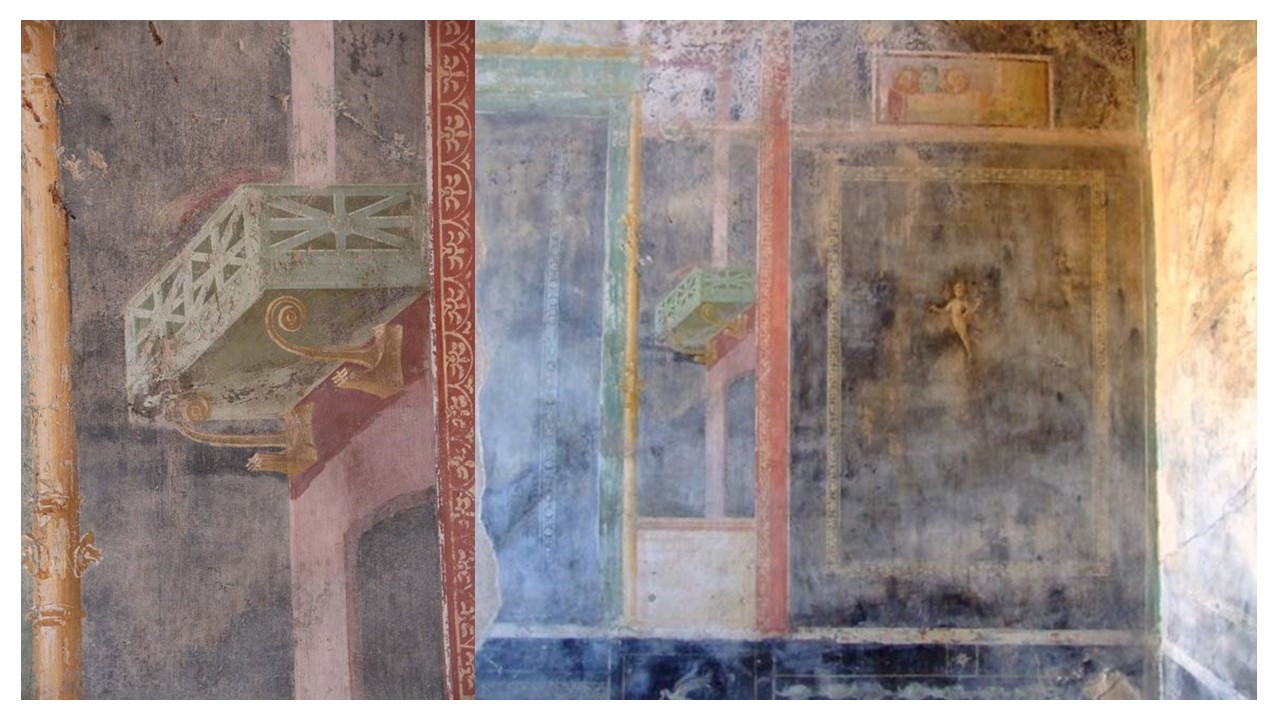
House of Venus in the Shell, Frescoes in Room 6, 1st century AD, fresco, south wall of Triclinium, Pompeii Archaeological Site, Pompeii, Italy, https://pompeiiinpictures.com/pompeiiinpictures/R2/2%2003%2003%20part%203.htm   

Two more interesting rooms open to the Atrium (2), a Triclinium (6) and a large Tablinium  (5). The Triclinium (6) has vaulted ceilings and walls, painted in the 3rd Pompeian Style, with architectural themes framing floating figures within black panels, and on the uppermost part of the room’s decoration, small scenes and still lives. The Tablinum (5), “has lost most of its decoration but still impresses with its size. The tablinum has a second doorway on its south wall which opens onto the north side of the peristyle.”     https://sites.google.com/site/ad79eruption/pompeii/regio-ii/reg-ii-ins-3/house-of-venus-in-the-shell

House of Venus in the Shell, 1st century AD, looking towards the south-west corner of the Atrium, with doorway into room 11, on the left, and rooms 5 and 6, on the right, Pompeii Archaeological Site, 2017 Photo courtesy of Klaus Heese
House of Venus in the Shell, 1st century AD, fresco in the Peristyle area, Pompeii Archaeological Site, Pompeii, Italy     http://janzen3journeys.blogspot.com/2017/12/the-ruins-of-pompeii.html    

The nicest part of the House, the Peristyle area, develops around a lovely garden with 9 fluted columns of stuccoed brickwork (11). Rooms and Porticos, sumptuously decorated, once more, with frescoes in the 3rd Pompeiian Style, display interesting scenes that reveal almost impressionistic qualities. “On the rear wall (17) of the peristyle are three large framed frescoes each set on a blue background. The lefthand painting, is of the god Mars shown standing naked on a plinth while holding a lance and a shield. Around him the foliaged garden is teaming with birdlife. The central painting on the rear wall is of Venus lying in a conch shell with a cherub either side of her. The nymph on the left side of the painting is shown riding a dolphin while the one on the right supports the conch shell. The righthand painting is of flowers and birds drinking at a fountain. The fresco incorporates a niche painted with plants.”     https://sites.google.com/site/ad79eruption/pompeii/regio-ii/reg-ii-ins-3/house-of-venus-in-the-shell

Venus in the Shell, 1st century AD, fresco in the central panel of the Peristyle area South Wall, House of Venus in the Shell, Pompeii Archaeological Site, Pompeii, Italy, 2016 Photo courtesy of Buzz Ferebee https://pompeiiinpictures.com/pompeiiinpictures/R2/2%2003%2003%20part%2011.htm
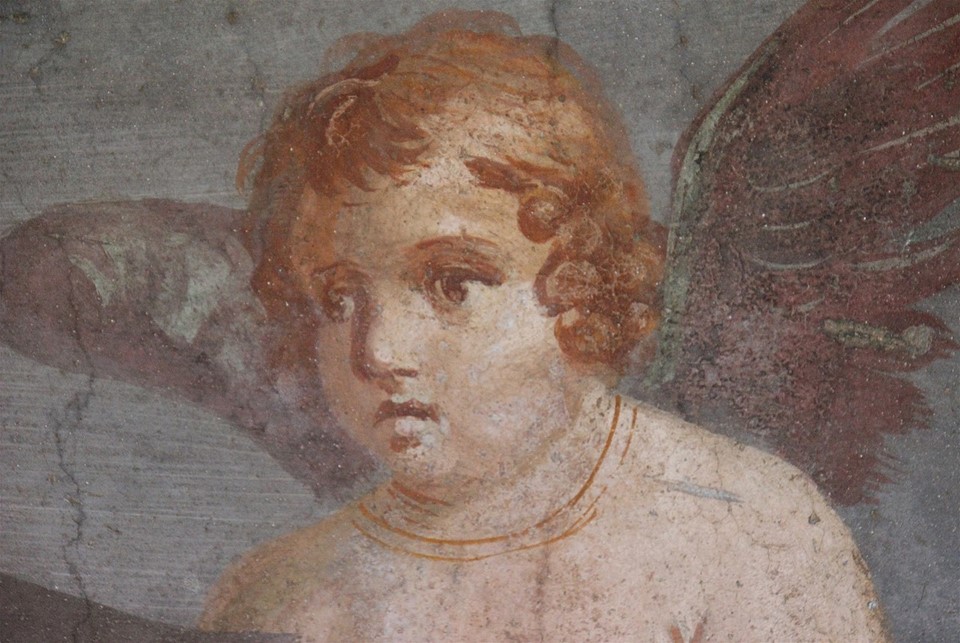
Venus in the Shell (detail depicting one of the Cherubs), 1st century AD, Fresco, House of Venus in the Shell, Pompeii Archaeological Site, Pompeii, Italy https://commons.wikimedia.org/wiki/Category:Venus_Anadyomenes_in_the_House_of_Venus_(Pompeii)#/media/File:Casa_de_Venus_Pompeya_07.jpg

The star fresco in the House, after which the house, let’s not forget, was named, depicts Venus in the Shell. It portrays a large and striking depiction of the goddess Venus, naked but relaxed “giving no signs of modesty, yet no signs of overt sexuality,” reclining in a shell, swelling “sails” behind her, accompanied by a cortege of two Cherubs. This fresco may not be one of the finest discovered in Pompeii, but it is definitely eye-catching. Venus’s  head of curly hair and pale skinned body, resplendent with gold jewels, “looking off into the distance seemingly without a worry in the world” create a stunning vision. The Cherubs’ look of curiosity and astonishment is a strike of ingenuity. The combination of aquamarine blue and plum-hued violet, cool and refreshing, is precious! Simply put… I love it!!!     https://womeninantiquity.wordpress.com/2018/11/27/the-portrayal-of-venus-in-pompeian-frescoes/

For a student RWAP (Research-Writing-Art-Project), please… Check HERE!
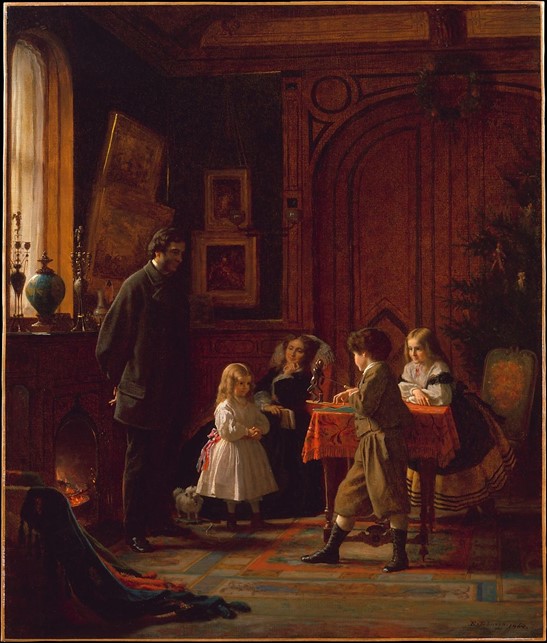
Christmas-Time

Eastman Johnson, 1824–1906
Christmas-Time, The Blodgett Family, 1864, oil on canvas, 76.2 x 63.5cm, the MET, NY
https://www.metmuseum.org/art/collection/search/11258

I heard the bells on Christmas Day  /  Their old, familiar carols play,  /  And wild and sweet  /  The words repeat  /  Of peace on earth, good-will to men!…  Christmas Bells by Henry Wadsworth Longfellow (1807-1882)… a wonderful way to introduce Christmas-Time by Eastman Johnson and Wish you all Merry Christmas!!! https://www.nga.gov/collection/artist-info.1423.html and https://poets.org/poem/christmas-bells

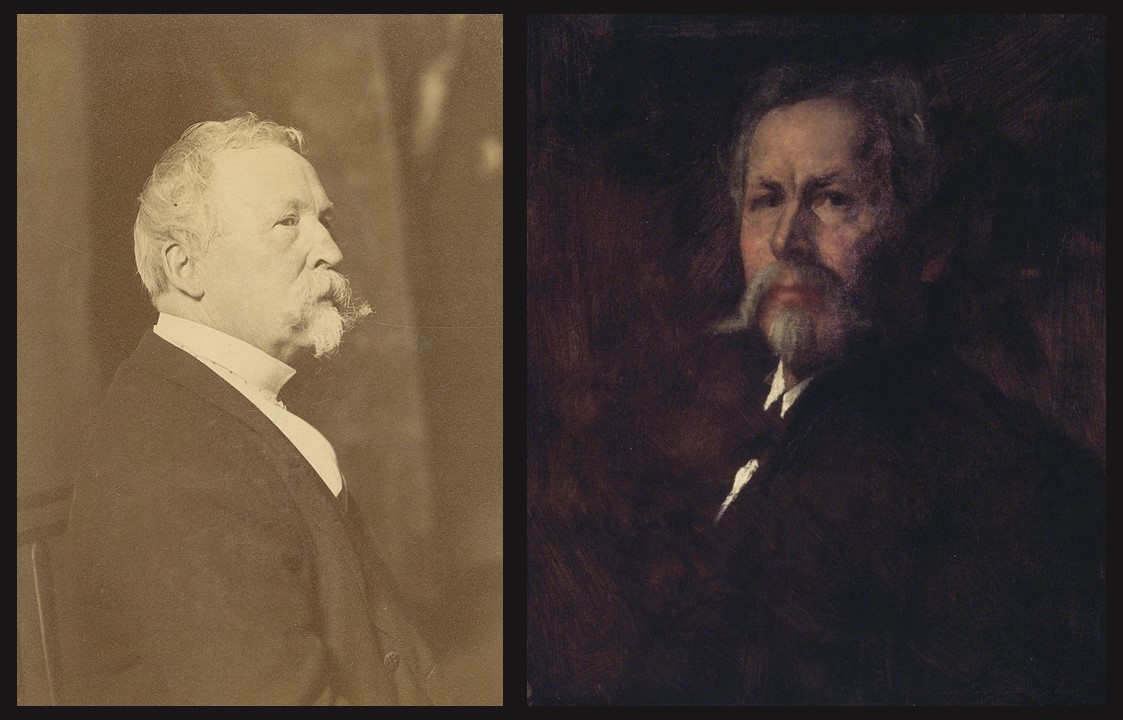
Eastman Johnson, 1824–1906
Eastman Johnson, 1890s, albumen print (cabinet card) by Edwin S. Bennett (detail), National Gallery of Art, Washington, DC, Department of Image Collections
Self-portrait of Eastman Johnson, circa 890, oil on canvas, 60.9 x 50.7 cm, Brooklyn Museum
https://en.wikipedia.org/wiki/Eastman_Johnson

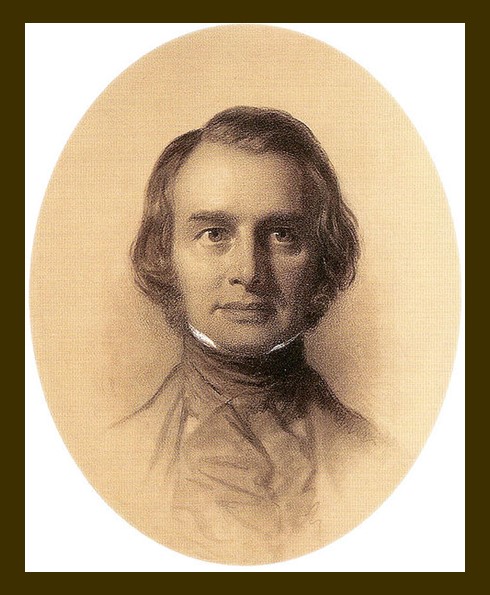
In 1846 Eastman Johnson was in Boston, where he was commissioned to create portraits of several of Henry Wadsworth Longfellow’s friends and family members. At the time, Eastman Johnson was a young man of twenty-two, but his draftsmanship was accomplished and thus he drew the attention of the established poet and Harvard professor Henry Wadsworth Longfellow. All of these portraits hang today in the Vassall/Craigie/Longfellow House in Cambridge, Massachusetts, a site that offers unique opportunities to explore 19th-century literature and arts. https://www.mainememory.net/artifact/15896     and     https://www.nps.gov/long/index.htm

Eastman Johnson, 1824–1906
Portraits of Henry Wadsworth Longfellow, 1846, Crayon and Chalk on Paper, 21 x 19 in. Oval, Vassall-Craigie-Longfellow House
Scanned from Eastman Johnson: Painting America     https://commons.wikimedia.org/wiki/File:Eastman_Johnson_portrait_of_Longfellow.jpg

Young Eastman Johnson was pleased to place himself under Henry Wadsworth Longfellow patronage, but like his patron, his dream was to travel and study in Europe… and this is exactly what he did in 1849, “when he travelled to Düsseldorf, Germany, and received rigorous training in drawing at that city’s academy. More congenial, however, was the time he spent in the studio of Emanuel Leutze,” the German/American artist who painted in 1851 Washington Crossing the Delaware “where he concentrated on painting. In 1851 he went to London to see the Universal Exposition and then relocated to The Hague, remaining for over three years. His lengthy stay at The Hague was somewhat unusual for an American artist, but he apparently found much inspiration in the Dutch Old Masters as well as ready patronage through August Belmont, the wealthy American ambassador. His European education ended with several months spent in the Parisian studio of Thomas Couture before the death of his mother brought him home in 1855.”     https://www.nga.gov/collection/artist-info.1423.html

Eastman Johnson, 1824–1906
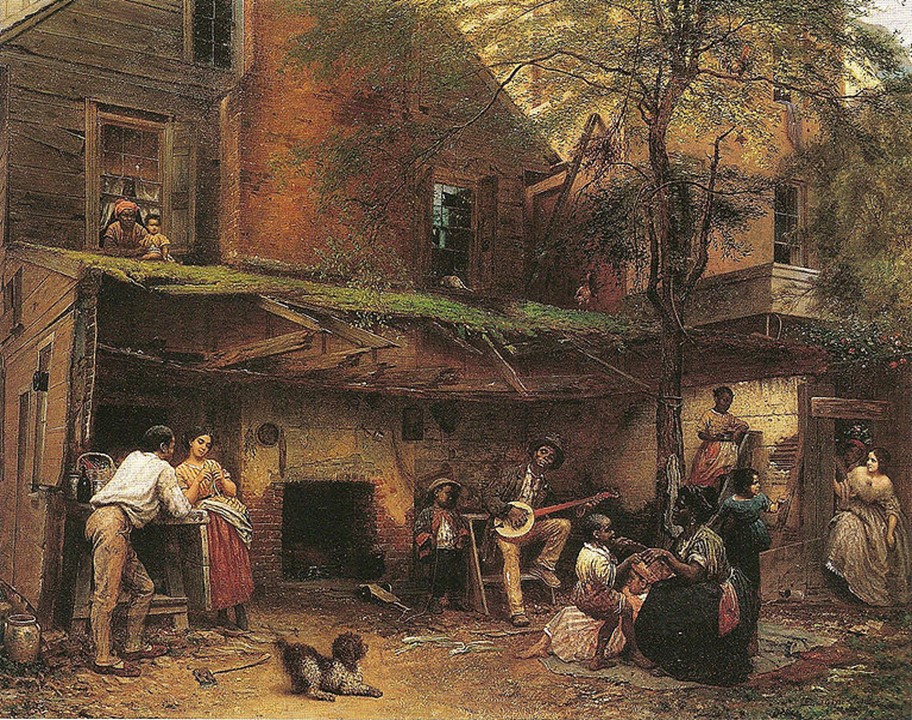
Negro Life at the South, 1859, oil on canvas, 129.5×154.9 cm, The New-York Historical Society, The Robert L. Stuart Collection

Back in the United States, Eastman Johnson spent his time painting in his rented studio in New York City or travelling extensively, visiting members of his family in Washington, D.C., or Lake Superior, where he sketched members of the Chippewa Tribe.  His reputation was established in 1859 when, at a time when slavery was heatedly debated,  he presented in a New York exhibition a painting of the backyard of his father’s house in Washington, D.C. titled Negro Life in the South. https://www.nyhistory.org/exhibit/negro-life-south-0

Eastman Johnson, 1824–1906
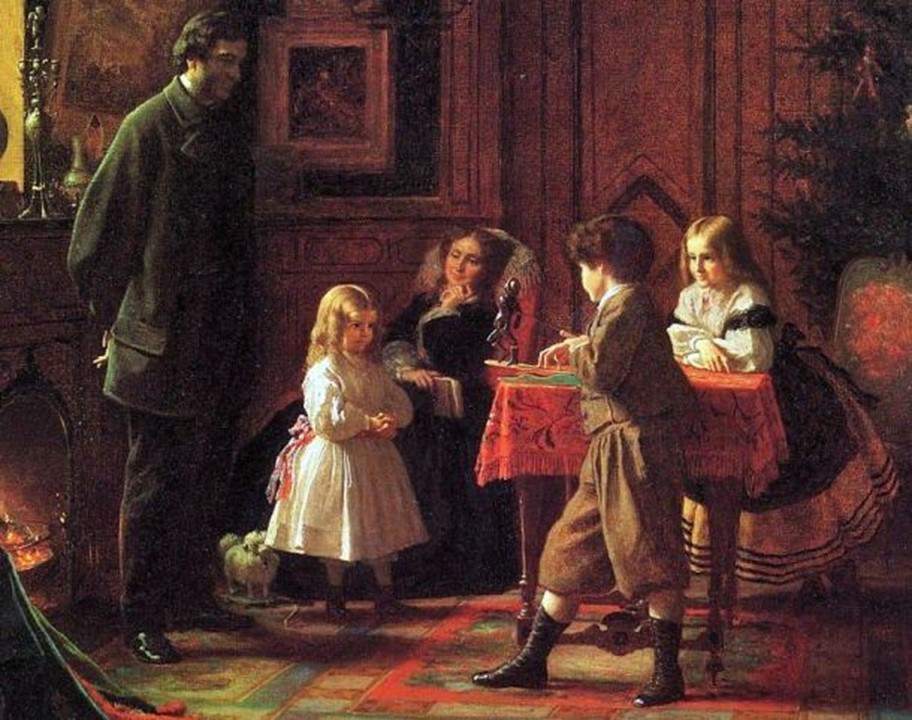
Christmas-Time, The Blodgett Family (detail), 1864, oil on canvas, 76.2 x 63.5cm, the MET, NY https://www.metmuseum.org/art/collection/search/11258

In 1864, he was commissioned to paint Christmas-Time, The Blodgett Family, a group portrait with interesting narrative elements. “It shows William Tilden Blodgett (1823–1875), a supporter of the Union cause and a founding trustee of the Metropolitan Museum, with his family in the Renaissance Revival parlour of their house at 27 West 25th Street. Depicted during the Civil War, at a time of urban upheaval, the serene interior decorated for Christmas embodies the best sentiment of home, as a critic observed in 1865.”  https://www.metmuseum.org/art/collection/search/11258

Eastman Johnson, 1824-1906
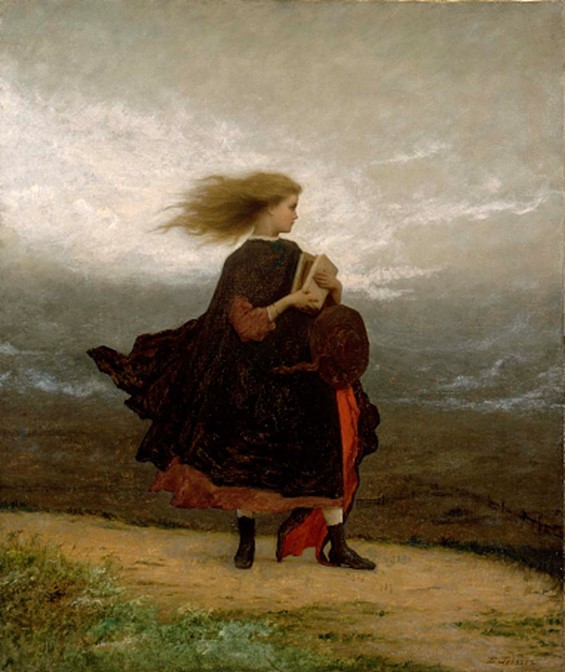
The Girl I Left Behind Me, 1872, oil on canvas, 106.7 x 88.7 cm, Smithsonian American Art Museum, Washington, DC

One of the foremost painters of American life, Eastman Johnson’s reputation grew further with paintings like the A Ride for Liberty—The Fugitive Slaves, of 1862 or The Wounded Drummer Boy, of 1864-1870 or The Girl I Left Behind Me, of 1872. He was financially comfortable and professionally successful. He lived in a large house in Manhattan and vacationed on the island of Nantucket, the scene of many of his paintings. He was an active member of the National Academy, the Century and Union League Clubs, the Metropolitan Museum, and even the Society of American Artists. He is remembered for his humour and kindness in helping other artists, as a good story-teller, a short, rotund kind of a man. https://www.brooklynmuseum.org/opencollection/exhibitions/1664

For a Student Activity on It’s Christmas with Eastman Johnson, please… Check HERE!
Teaching with Domenico Veneziano

Domenico Veneziano,  c. 1410-1461
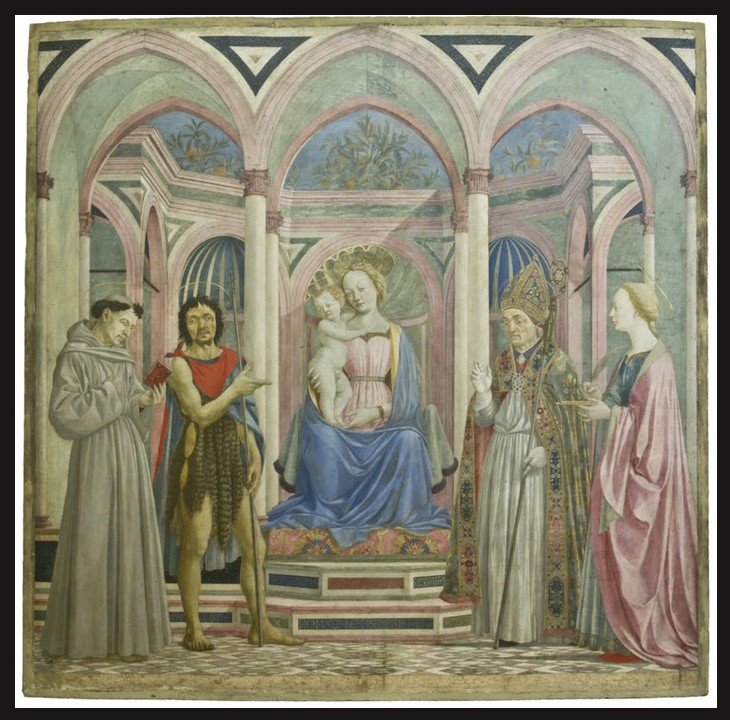
 Madonna and Child enthroned with St. Francis, John the Baptist, St. Zenobius and St. Lucy,
c. 1445, tempera on panel, 209 x 216 cm, Galleria degli Uffizi, Florence

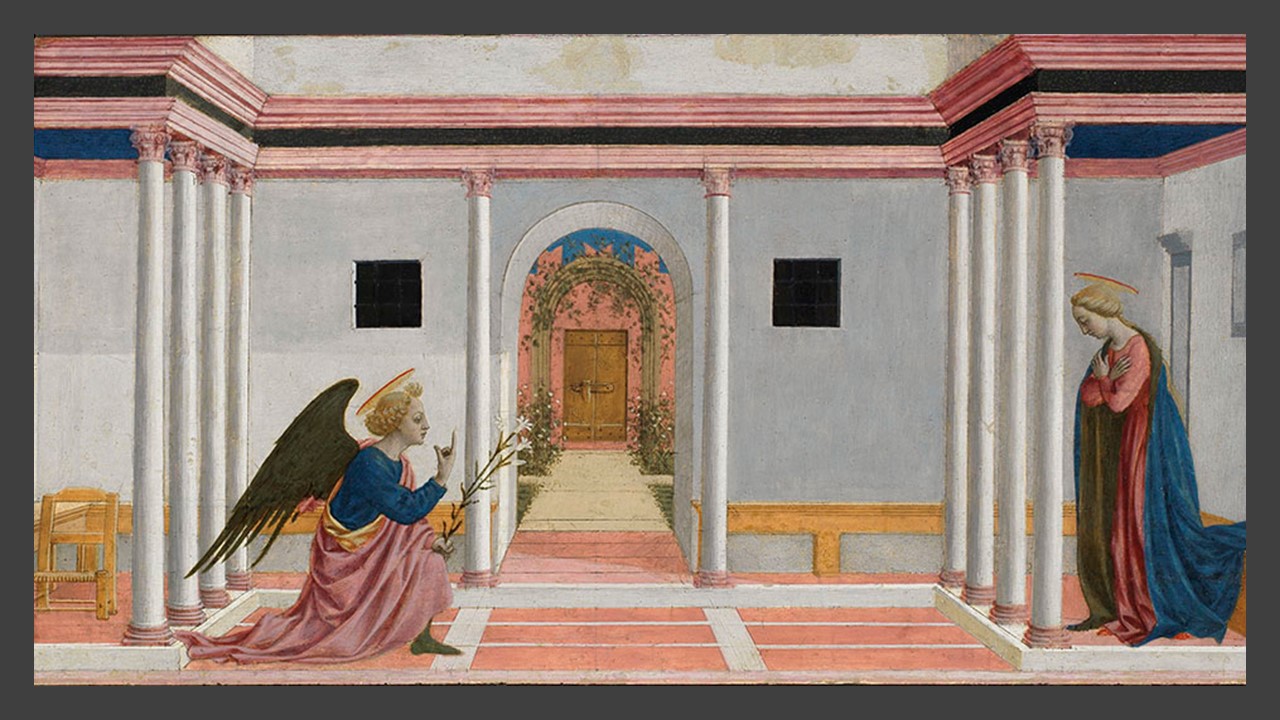
 (Domenico was) …a good and affectionate fellow, fond of singing and devoted to playing on the lute,  he would come together (with his friend Andrea del Castagno) every night to make merry and to serenade their mistresses” This is how Giorgio Vasari describes Domenico Veneziano, the artist from Venice who took Florence by storm! Teaching with Domenico Veneziano is a set of student activities and worksheets inspired by the great Italian artist I much admire. Domenico’  Madonna and Child enthroned with St. Francis, John the Baptist, St. Zenobius and St. Lucy Altarpiece in the Gallerie degli Uffizi is one of my favourite paintings in Florence. I am intrigued by its ethereal beauty, the balance of composition and harmony of pictorial planes. I can’t wait to be back to Florence… stand in front of it and have, once more, an aesthetically rewarding experience.     http://www.travelingintuscany.com/art/giorgiovasari/lives/andreadelcastagno.htm

When the time comes for me to introduce my students to Domenico’s oeuvre I start with Giorgio Vasari and his fictional story of how Domenico Veneziano was murdered by his friend Andrea del Castagno… a story masterfully said but totally untrue.

I start with Vasari’s condemnation of envy, wicket artistic rivalry and betrayal resulting from envy… “How reprehensible is the vice of envy, which should never exist in anyone, when found in a man of excellence, and how wicked and horrible a thing it is to seek under the guise of a feigned friendship to extinguish not only the fame and glory of another but his very life, I truly believe it to be impossible to express with words, …that in such men there dwells a spirit not merely inhuman and savage but wholly cruel and devilish, and so far removed from any sort of virtue that they are no longer men or even animals, and do not deserve to live.…” and explain the difference between a healthy competition among artists, which according to Vasari is “ …worthy to be praised and to be held in esteem as necessary and useful to the world” and pure, malicious envy capable in the case of Andrea del Castagno to “ …conceal and obscure the splendour of his talents.” http://www.travelingintuscany.com/art/giorgiovasari/lives/andreadelcastagno.htm

I finish my introductory presentation discussing Domenico’s famous anecdotal story of his assassination by Andrea del Castagno, absolutely fictitious as modern scholarship proved. “ …Andrea, …being blinded by envy of the praises that he heard given to the talent of Domenico, determined to remove him from his path; and after having thought of many expedients, he put one of them into execution in the following manner. One summer evening, according to his custom, Domenico took his lute and went forth from S. Maria Nuova, leaving Andrea in his room drawing, for he had refused to accept the invitation to take his recreation with Domenico, under the pretext of having to do certain drawings of importance. Domenico, therefore, went to take his pleasure by himself, and Andrea set himself to wait for him in hiding behind a street corner; and when Domenico, on his way home, came up to him, he crushed his lute and his stomach at one and the same time with certain pieces of lead, and then, thinking that he had not yet finished him off, beat him grievously on the head with the same weapons; and finally, leaving him on the ground, he returned to his room in S. Maria Nuova, where he put the door ajar and sat down to his drawing in the manner that he had been left by Domenico. Meanwhile, an uproar had arisen, and the servants, hearing of the matter, ran to call Andrea and to give the bad news to the murderer and traitor himself, who, running to where the others were standing around Domenico, was not to be consoled, and kept crying out: “Alas, my brother! Alas, my brother!” Finally, Domenico expired in his arms; nor could it be discovered, for all the diligence that was used, who had murdered him; and if Andrea had not revealed the truth in confession on his death-bed, it would not be known now.”     http://www.travelingintuscany.com/art/giorgiovasari/lives/andreadelcastagno.htm

Domenico Veneziano,  c. 1410-1461
The Adoration of the Magi, 1435, tempera on panel, 90 cm diameter, Gemäldegalerie, Berlin

Teaching with Domenico Veneziano Activities…

For the List of ONLINE References on Domenico Veneziano TeacherCurator put together, please… Click HERE!

For my PowerPoint on Domenico Veneziano, please… Click HERE!

I always feel confident discussing an artist with my students when I prepare my Steps to Success Lesson Plan Outline

7 Steps to Success…

For Student Activities (four Activities), please… Click HERE!

I hope that Teaching with Domenico Veneziano, will prove easy and helpful. Do you think it justifies my BLOG name TeacherCurator?

Domenico Veneziano,  c. 1410-1461
The Annunciation, c. 1445/1448, tempera on panel, 27.3 x 54 cm, The Fitzwilliam Museum, Cambridge

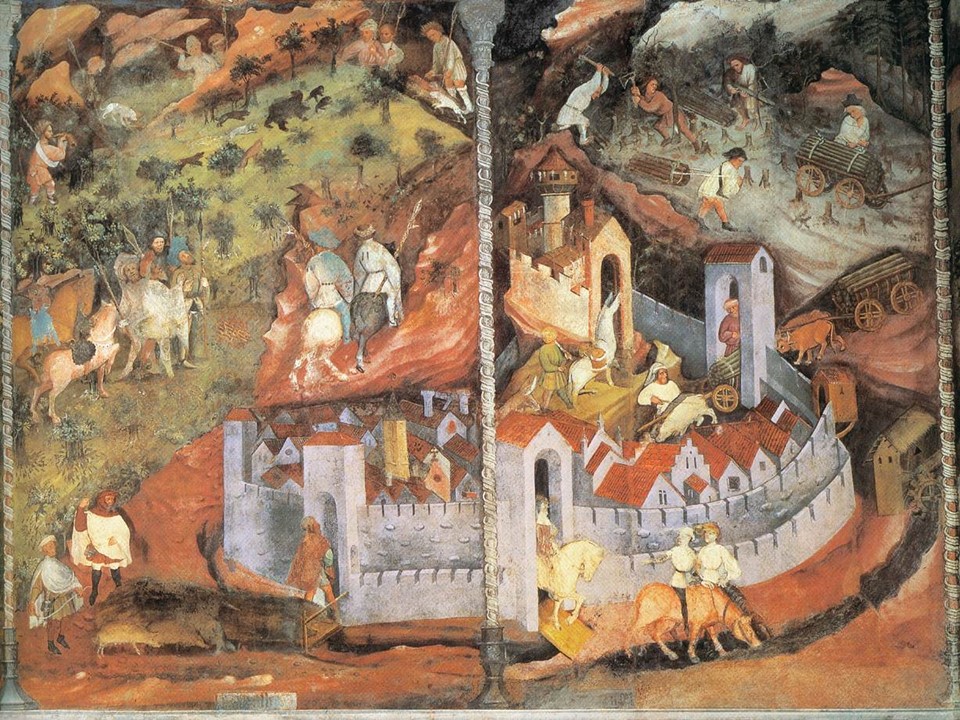
The Month of December

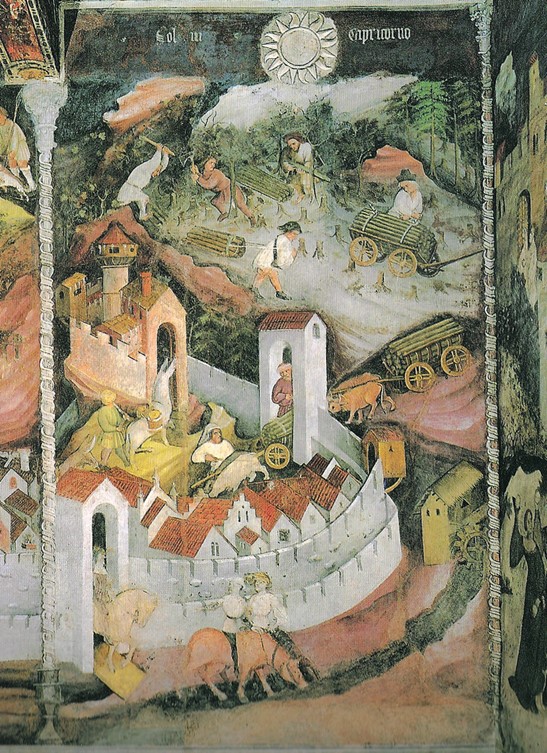
The Month of December, latest 1407, possibly by Maestro Venceslao, Fresco, Torre Aquila, Castello del Buonconsiglio in Trento, Italy

Last, for December, houses on the plain,  /  Ground-floors to live in, logs heaped mountain-high,  /  And carpets stretched, and newest games to try,  /  And torches lit, and gifts from man to man  /  (Your host, a drunkard and a Catalan);  /  And whole dead pigs, and cunning cooks to ply  /  Each throat with tit-bits that shall satisfy;  /  And wine-butts of Saint Galganus’ brave span.  /  And be your coats well-lined and tightly bound,  /  And wrap yourselves in cloaks of strength and weight,  /  With gallant hoods to put your faces through.  /  And make your game of abject vagabond  /  Abandoned miserable reprobate  /  Misers; don’t let them have a chance with you. My new BLOG POST: The Month of December starts with a sonnet by Folgore Da San Geminiano (c. 1250-1317), translated by Dante Gabriel Rossetti in his book “Dante and His Circle,” (Roberts Brothers, Boston, 1893).     http://www.sonnets.org/folgore.htm

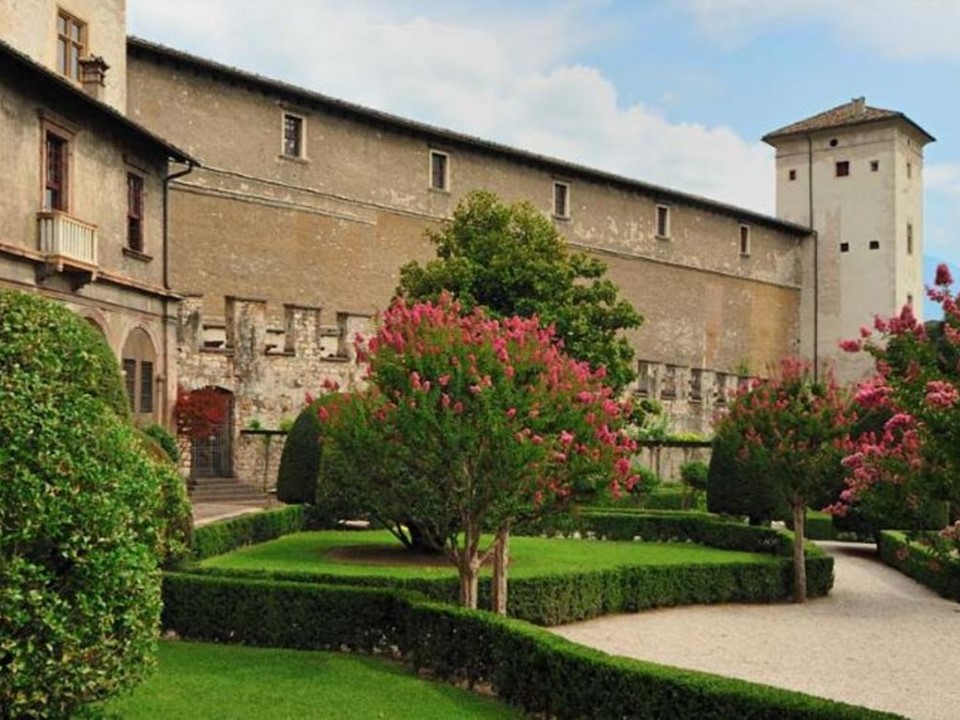
Torre Aquila and Garden in Castello del Buonconsiglio, in Trento, Italy

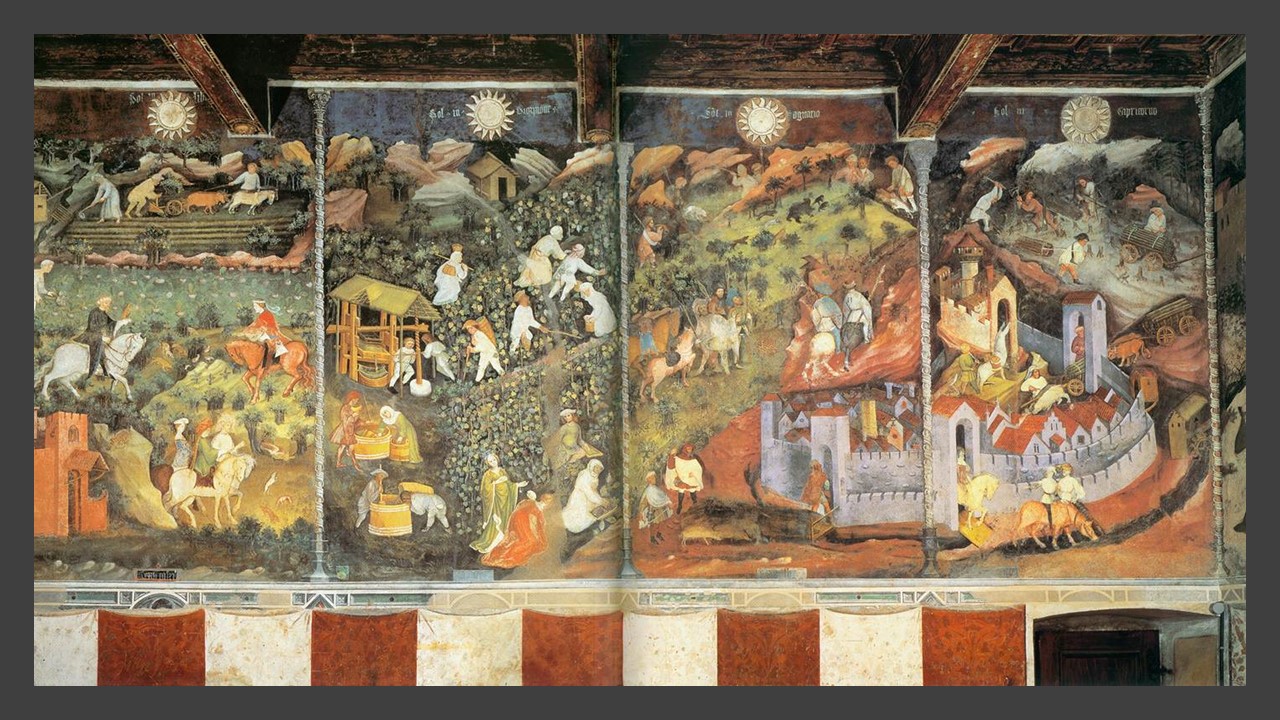
The Month of December is a fresco, and it comes from the Torre Aquila in the Castello del Buonconsiglio, in Trento, Italy. It is part of an amazing fresco Cycle of the Twelve Months painted on the walls of the tower’s 2nd-floor main room. Today, only eleven of the original 12 panels survive as a 16th-century wooden spiral staircase, connecting the tower floors, destroyed the painted panel of March. The famous painted Cycle of the Months is divided into twelve panels, one for each month. Each one of the twelve panels is separated by a slender column, distinctive yet subtle, so as not to disturb the natural continuity between months and the seasons.

Months of September, October, November and December – Torre Aquila North Wall

This exceptional room, 6 x 5,8 x 3 m in size, was commissioned by Prince-Bishop George of Liechtenstein, as a quiet, atmospheric retreat, away from the rest of the Castello’s busy and noisy state quarters. It has been suggested and widely accepted that the painter of this extraordinary fresco Cycle of the Months was Maestro Venceslao, a Czech painter, popular in the Tyrol area of the time.     https://www.cultura.trentino.it/eng/Cultural-venues/All-cultural-venues/Documentation-centres2/Torre-Aquila-Eagle-Tower  

Fresco panels in Torre Aquila are rare and special. They document life in the Trentino area, with references to the aristocratic pastimes throughout the year, or the peasant activities and duties to their masters. They also depict a vivid landscape, romanticized…bare and covered with snow for the January panel, rich and fertile, autumnal, covered with fallen leaves, harsh and inhospitable for the scene depicting December.  

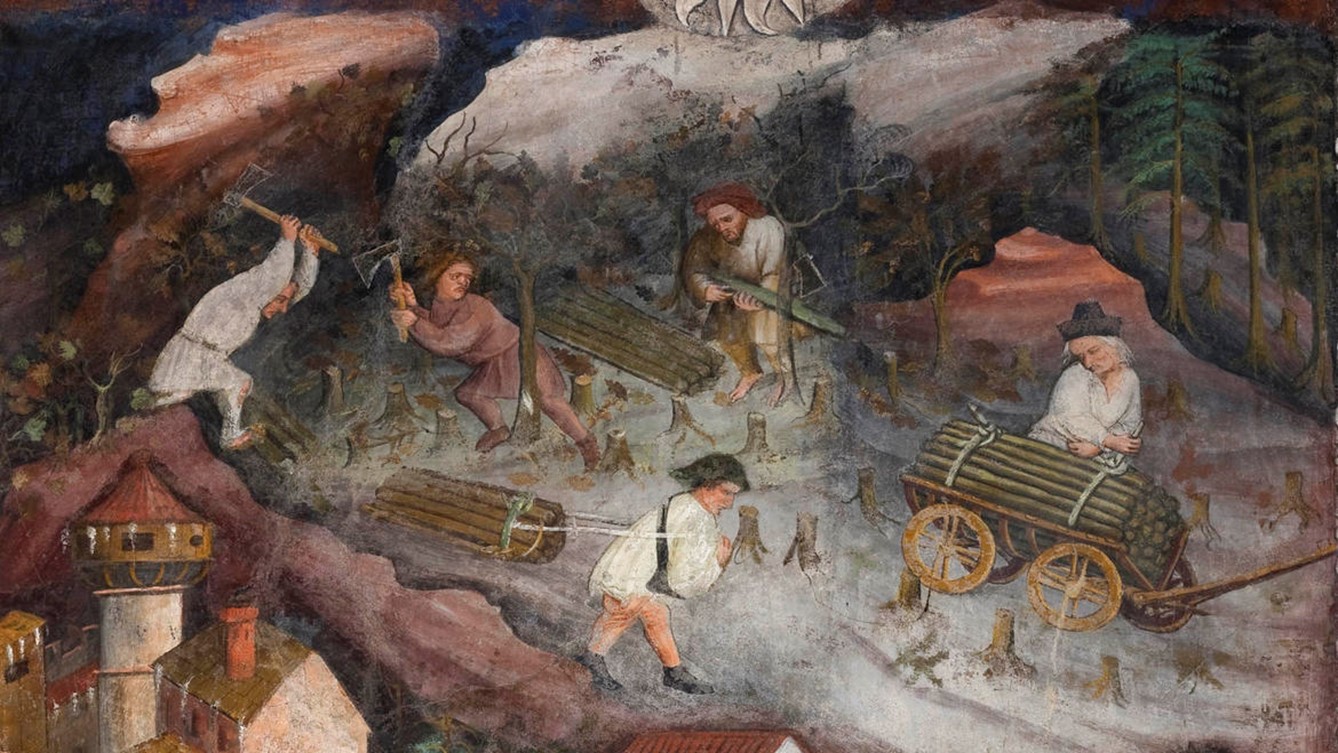
My attention turns to the upper right corner where on the frozen ground of a forest, the Trentino peasants are busy once more. Numb by the cold, wearing short white tunicles, one of them even bear-footed, with axes and hatchets in their hands, they are depicted wood harvesting. They chop forest trees down, pile wood logs up, carry heavy loads to the wagons, stack wagons up with neatly cut logs and finally carry precious firewood to the city, to heat the houses during the long winter days. What an accomplishment in such uninviting circumstances…

Trentino Torre Aquila frescoes love presenting anecdotal details. The depicted city, cold and bleak, is setting the tone … Icicles hang from the attics, neatly built in stone and wood, of the Buonconsiglio Castle and the top of its circular tower. The city boasts double defensive walls and plenty of gabled houses with red roof tiles that deftly form a neat residential area, with a decorated church on its left side. It is a stark and unembellished scene, yet… a caravan of mules, loaded with goods, heads towards the castle at the top of the city, while, on the lower part of the composition, two knights on horseback, escort a riding noble lady for a winter outing. Harry up… they seem to tell her, and water your horse before setting off! Let’s follow the stream and visit the Water Mill for an al fresco lunch. What a sight…

Maestro Venceslao painted a dream world for Prince-Bishop George of Liechtenstein… a world that collapsed in 1407 with a successful rebellion. The Prince was not particularly liked by the locals. He was a conservative, authoritative and harsh leader of anachronistic demands. The painted room of Torre Aquila was sealed up, almost forgotten… Walking back in time in a world of endlessly working peasants and privileged aristocrats was no more…          https://www.buonconsiglio.it/index.php/en/Buonconsiglio-Castle/collections/Introduction     and     https://books.google.gr/books?id=L3e0BgAAQBAJ&pg=PA11&lpg=PA11&dq=cycle+of+the+months+paintings&source=bl&ots=PDmmhZPn37&sig=ACfU3U0ZvpPwd-ZSa8dnhL4AUn2uBLt26g&hl=el&sa=X&ved=2ahUKEwjVxcGIzNzmAhWRGewKHQiuD5g4ChDoATAGegQIBxAB#v=onepage&q=cycle%20of%20the%20months%20paintings&f=false

For a student Activity, please … Check HERE!
Watercolours by Howard Carter

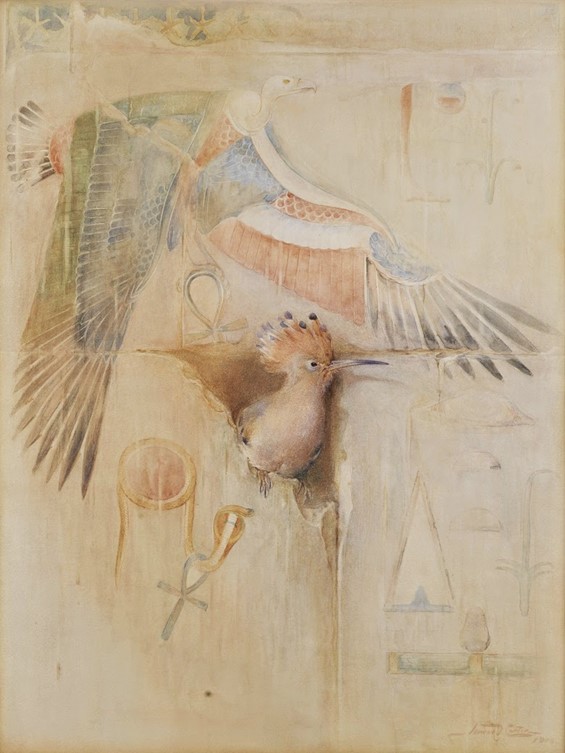
Under the protection of the gods, marked and dated “Howard Carter 1908 “, watercolour on paper, 62 x 46 cm, private collection
https://egyptophile.blogspot.com/2014/12/a-la-decouverte-des-tresors-de-carter.html
 “…Carter painted Under the Protection of the Gods (1908), a composite fantasy that depicts a vulture — representing the goddess Nekhebet, protector of Upper Egypt — above a solar disc wrapped in a cobra — representing the goddess Wadjet, protector of Lower Egypt. It’s likely that the iconography of the watercolour was inspired by some of Carter’s finds in Thebes, including the 18th Dynasty Tomb of Tetaki and a 15th Dynasty tomb with nine coffins.”     http://www.thehistoryblog.com/archives/date/2014/11/page/3

“…as my eyes grew accustomed to the light, details of the room within emerged slowly from the mist, strange animals, statues, and gold – everywhere the glint of gold. For the moment – an eternity it must have seemed to the others standing by – I was struck dumb with amazement, and when Lord Carnarvon, unable to stand the suspense any longer, inquired anxiously, ‘Can you see anything?’ it was all I could do to get out the words, ‘Yes, wonderful things.” This is how Howard Carter, the famous archaeologist, describes his discovery in 1922 of the Tomb of Tutankhamen. In my new BLOG POST, I want to introduce Watercolours by Howard Carter… his first steps on Egyptian Archaeology.

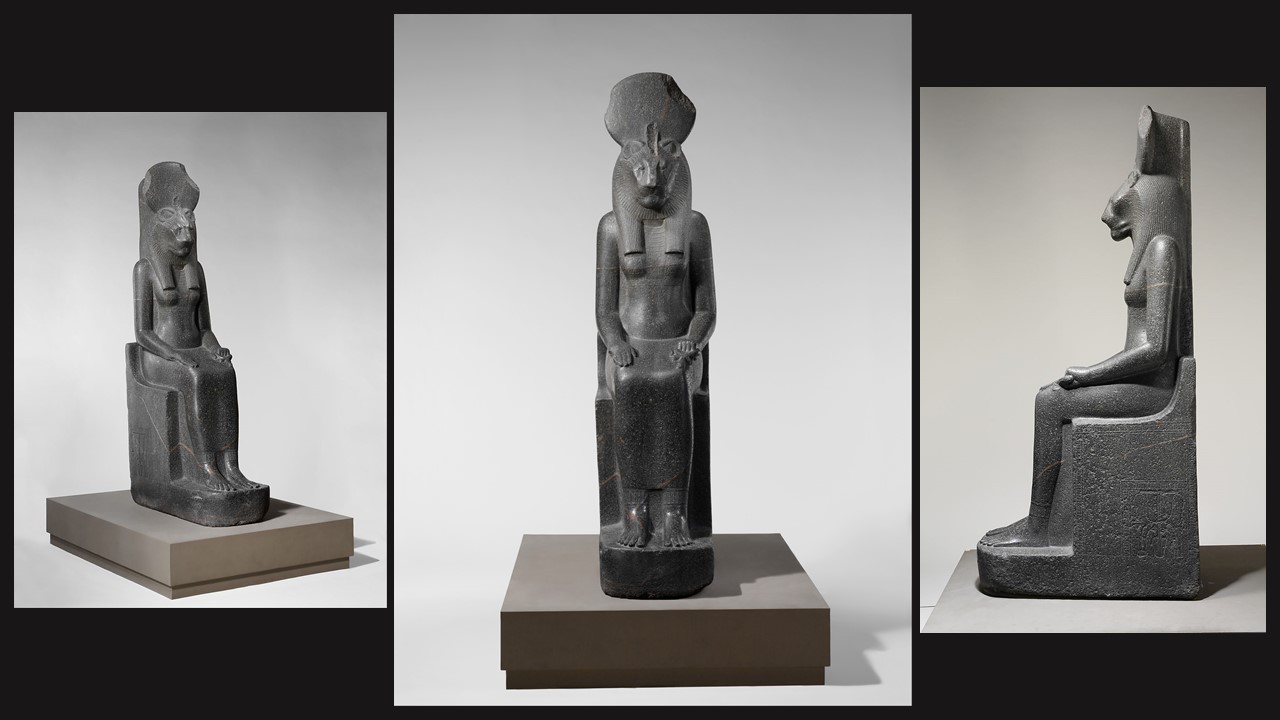
Statue of the Goddess Sakhmet, ca. 1390–1352 BC, New Kingdom – 18th Dynasty – reign of Amenhotep III, Granodiorite, 210 x 47.5 x 95.5 cm, the MET, NY

Could the Statue of the Goddess Sakhmet at the MET in New York be responsible for Howard Carter’s love for Egyptology? Well… According to THE HISTORY BLOG, young Carter was a frequent visitor to Didlington Hall, the estate William Amhurst Daniel-Tyssen, a patron of the accomplished artist and illustrator Samuel John Carter, Howard’s artist father, visited on several occasions on painting commissions. Didlington Hall is where the young Carter, home-schooled and trained in the arts by his father, first became exposed to Egyptology.

“Amherst was an avid collector of Egyptian antiquities. He, his wife Margaret Mitford (whose father had a passion for all things Egyptian as well) and their seven daughters traveled frequently to Egypt, constantly acquiring new artefacts. A whole wing of Didlington Hall was dedicated to housing his vast collection. Seven statues of the lion-headed warrior goddess Sekhmet guarded the door of the museum, one for each of the Amherst daughters. …The Amherst family didn’t just give Howard Carter the chance to explore Egyptian art through their extensive collection. It was their recommendations and contacts that secured him his first job in Egypt. He was just 17 years old when he was hired as a tracer — someone who copies inscriptions and artwork found in excavations onto paper for later study — for the Egyptian Exploration Fund (EEF) in 1891. This was an essential job in the age before colour photography. Watercolours were the only accurate recreations of tomb decorations available.”     http://www.thehistoryblog.com/archives/33258

Howard Carter, 1874-1939
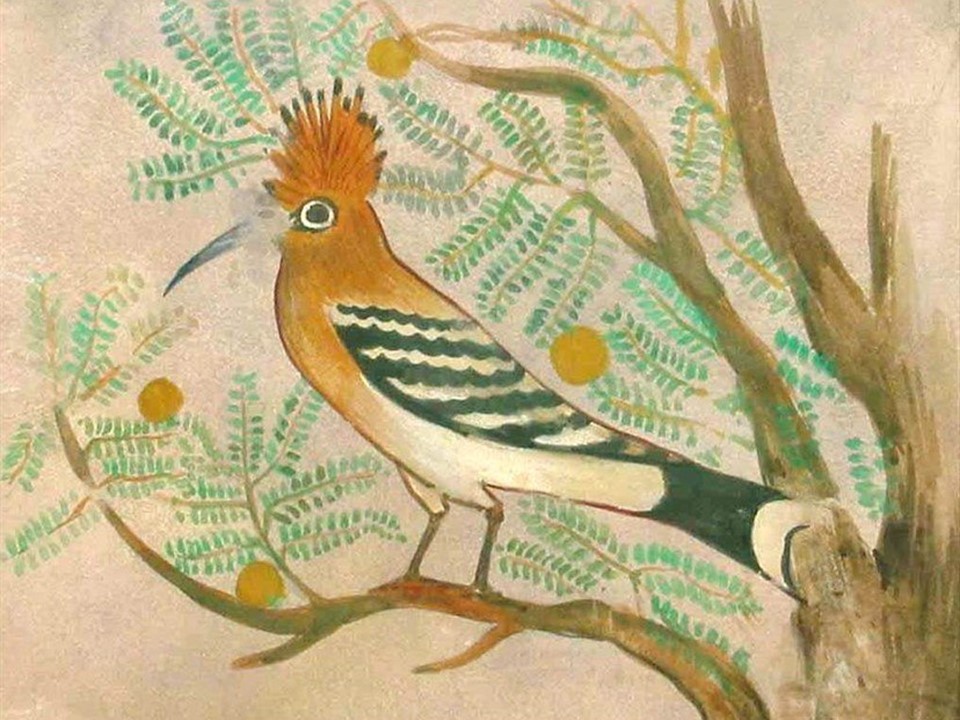
Hoopoe Bird, 1891, from the tomb of Khnumhotep II at Beni Hasan, watercolour on paper, EES Lucy Gura Archive. https://www.ees.ac.uk/reuniting-the-carter-watercolours
“Carter was most interested in making carefully coloured drawings of the more
interesting and important details among these mural decorations”     https://www.academia.edu/8582513/The_Archaeological_Survey

Young Carter distinguished himself as a tracer for his artistic abilities, dedication and diligence. In 1891, hired by the Egypt Exploration Fund (EEF), Carter assisted an Amherst family friend, Percy Newberry, in the excavation and recording of Middle Kingdom tombs at Beni Hasan. His Watercolours are accurate, innovative and charming.

Howard Carter, 1874-1939
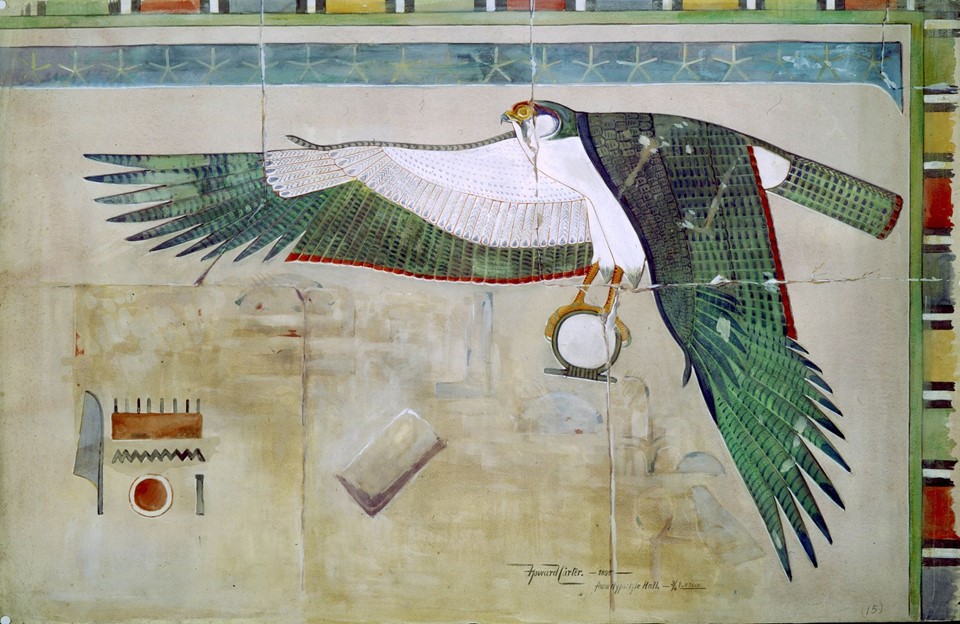
Horus, 1895, Watercolour copy of a painted scene showing the Horus falcon from the mortuary temple of Queen Hatshepsut at Deir el-Bahri, Griffith Institute, University of Oxford
https://www.bbc.co.uk/programmes/p023dbvk/p023d3x7

Carter’ first steps to field “archaeology were taken on his next assignment at El-Amarna under pioneering Egyptologist Flinders Petrie in 1892. He was still an artist, recording artefacts as they were discovered, but Petrie allowed him to dig too, and Carter made some significant finds.” From 1894 to 1899, he worked with Édouard Naville at Deir el-Bahari, where he recorded the wall reliefs in the temple of Hatshepsut, joined in the excavation process of the temple and learned restoration techniques as well. Watercolours by Howard Carter of the Deir el-Bahari period are among his finest, as he frequently stated that “When reproducing an ancient art, let us, by all means, be accurate, and employ every kind of mechanical aid to obtain that objective; but let that mechanical aid be our assistant, not our master.”

Howard Carter, 1874-1939
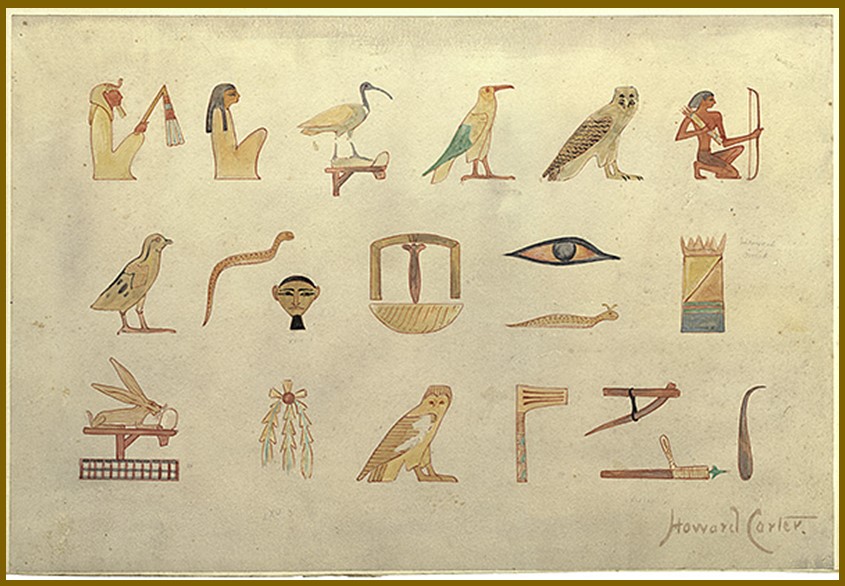
Hieroglyphs, 1891, Deir el-Bersha, Tomb of Djehutihotep II – Temples of Sesostris II and Sesostris III, watercolour on paper, 42.3 x 28.7 cm, Griffith Institute, University of Oxford
http://www.griffith.ox.ac.uk/gri/4GI_wd_072.html

In 1899, Carter was “appointed Inspector of Monuments for Upper Egypt in the Egyptian Antiquities Service (EAS), and …supervised the systematic exploration of the valley of the Kings by the American archaeologist Theodore Davis.” His successful career, however, came to a halt because of a violent confrontation between Egyptian site guards, under Carter’s permission, and a group of aggressive French tourists. Carter resigned his position and for the next years “had something of a hard scrabble existence. He sold his watercolours or guided tours to make a living.” In 1907 “he hit the jackpot. French Egyptologist Gaston Maspero, Director of the Egyptian Antiquities Service who had given Carter the Chief Inspector General job, introduced him to George Herbert, 5th Earl of Carnarvon. Carnarvon had deep pockets and was keen to fund archaeological excavations. He got the necessary licenses and made Carter the Supervisor of Excavations in Thebes.”  The rest is history…     http://www.thehistoryblog.com/archives/33258     and     https://en.wikipedia.org/wiki/Howard_Carter

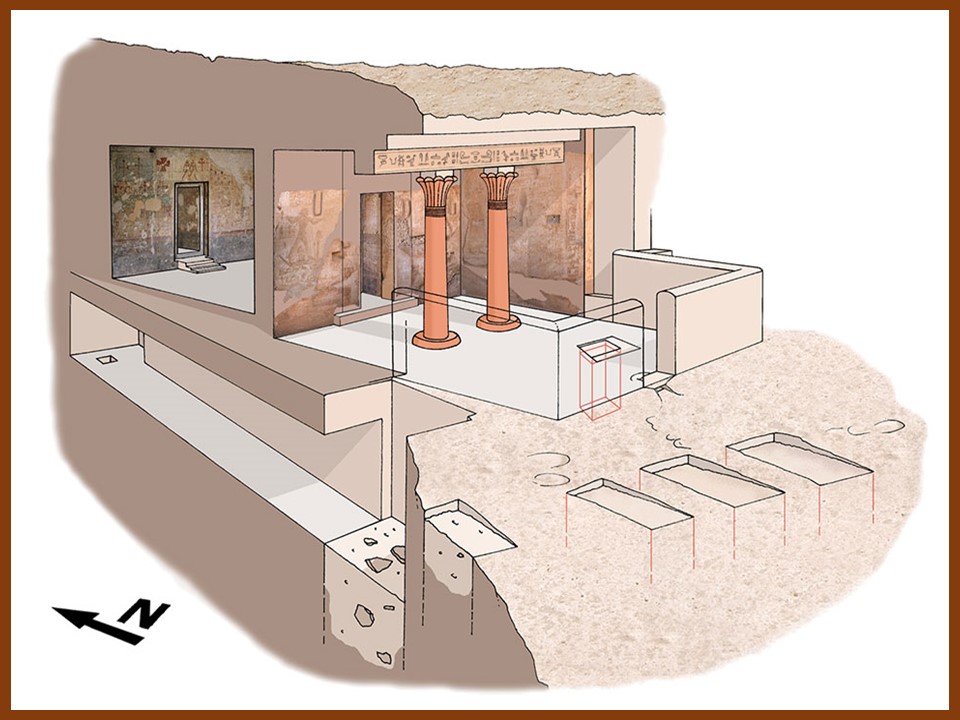
The student Activity on Watercolours by Howard Carter is inspired by the work on The Middle Kingdom Tombs at Deir el-Bersha, the Reconstruction of tomb wall-scenes using watercolours from the Griffith Institute Archive and the Tomb of Djehutihotep in particular, please… Click HERE!
Reconstruction drawing of the tomb of Djehutihotep (Drawing M. Hense)
“When reproducing an ancient art, let us, by all means, be accurate, and employ every kind of mechanical aid to obtain that objective; but let that mechanical aid be our assistant, not our master.” Howard Carter
https://www.digital-epigraphy.com/projects/recording-djehutihotep-digital-epigraphy-in-a-middle-kingdom-governors-tomb-at-dayr-al-barsha-part-1