Funerary Stele of Alexibola

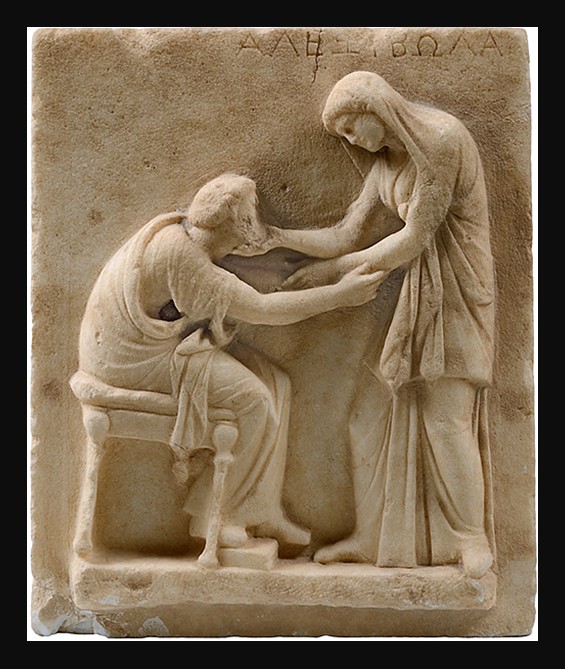
Alexibola: Funerary Stele with Scene of Greeting, early 3rd century BC, Marble, Archaeological Museum of Thera, Greece
https://www.ias.edu/ideas/2017/chaniotis-world-of-emotions

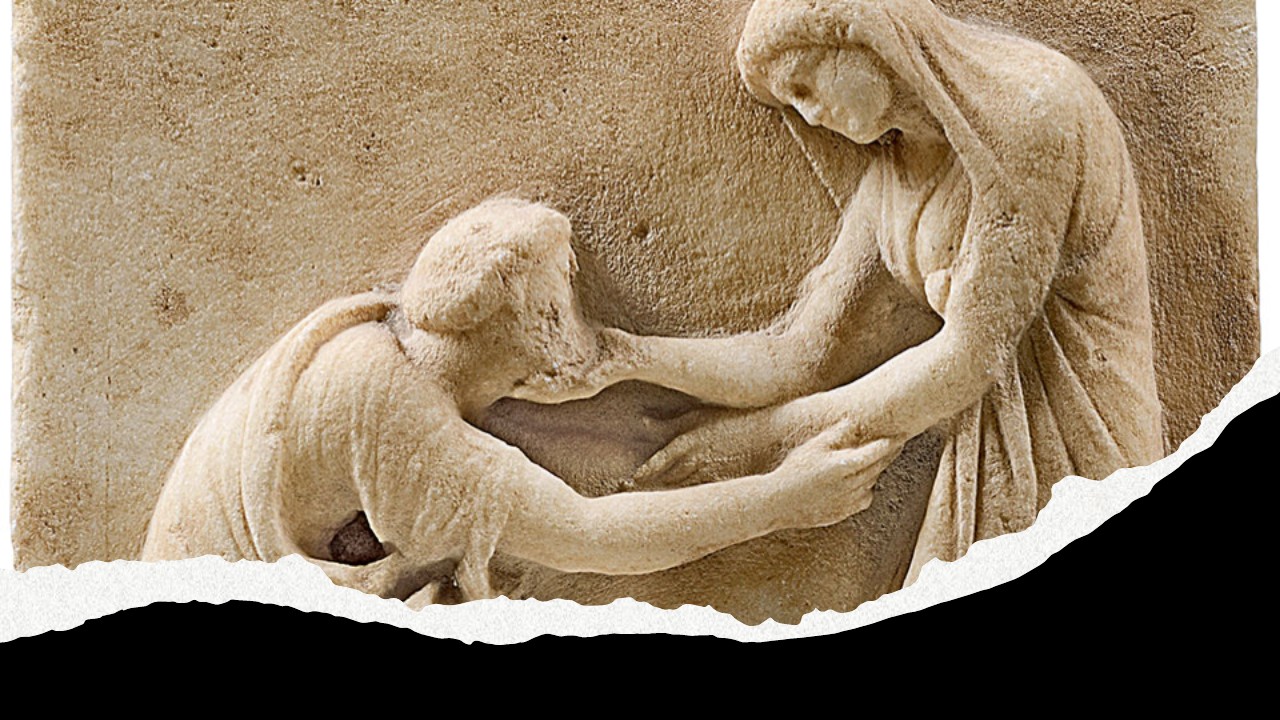
Among the treasures of the Archaeological Museum of Thera, the Funerary Stele of Alexibola stands out as a moving testament to the emotional depth of Classical Greek art. Carved in marble in the early 3rd century BC, the relief depicts Alexibola, the deceased, standing before a seated older man, probably her father, as they exchange a final, tender farewell. The woman’s gesture, gently touching the man’s beard, is met by his reciprocal touch on her arm, creating a moment of quiet intimacy and profound affection. Their calm expressions and composed postures convey sorrow and love without excess, embodying the Greek ideal of dignity even in grief.

Displayed in the acclaimed 2017 exhibition “A World of Emotions: Greece, 700 BC–AD 200” (Onassis Cultural Center, New York; Acropolis Museum, Athens), this stele beautifully illustrates how emotion was central to Greek experience. As curator Angelos Chaniotis observed, emotions shaped Greek culture no less than reason. The stele of Alexibola reveals how artists of the Classical world captured not only the likeness of individuals but also the enduring human capacity for feeling, transforming private loss into timeless art.

Funerary stelae held a vital place in ancient Greek art, serving as both commemorations of the dead and reflections of deeply personal emotion within a public setting. These marble reliefs, often depicting the deceased in moments of quiet interaction with loved ones, reveal how the Greeks balanced restraint and feeling, translating private grief into graceful, idealized form. Rather than dramatic displays of sorrow, they communicate emotion through subtle gestures: a clasped hand, a downward gaze, or a tender touch. The Stele of Alexibola exemplifies this tradition perfectly, its depiction of a final farewell between a daughter and her father transforms the pain of parting into a timeless image of love, respect, and composure. Through such works, Greek artists gave emotional depth to stone, reminding viewers that even in death, the bonds of human affection endure.

The Funerary Stele of Alexibola was discovered on the Cycladic island of Thera, modern Santorini, an island that has long held a significant place in the history of Greek art and culture. Thera was a thriving center of Aegean civilization, strategically located between Crete and mainland Greece, and its artistic legacy reflects this blend of influences. From the vivid frescoes of the prehistoric settlement at Akrotiri, which reveal a sophisticated visual culture rivaling that of Minoan Crete, to later Classical and Hellenistic sculptures such as the stele of Alexibola, Thera demonstrates the island’s continuous engagement with the broader artistic currents of the Greek world. The stele itself embodies the island’s role as both participant in and preserver of Greek aesthetic value, melding technical mastery with emotional subtlety, and reminding us that even on this volcanic outpost, art served as a bridge between personal memory and collective tradition.

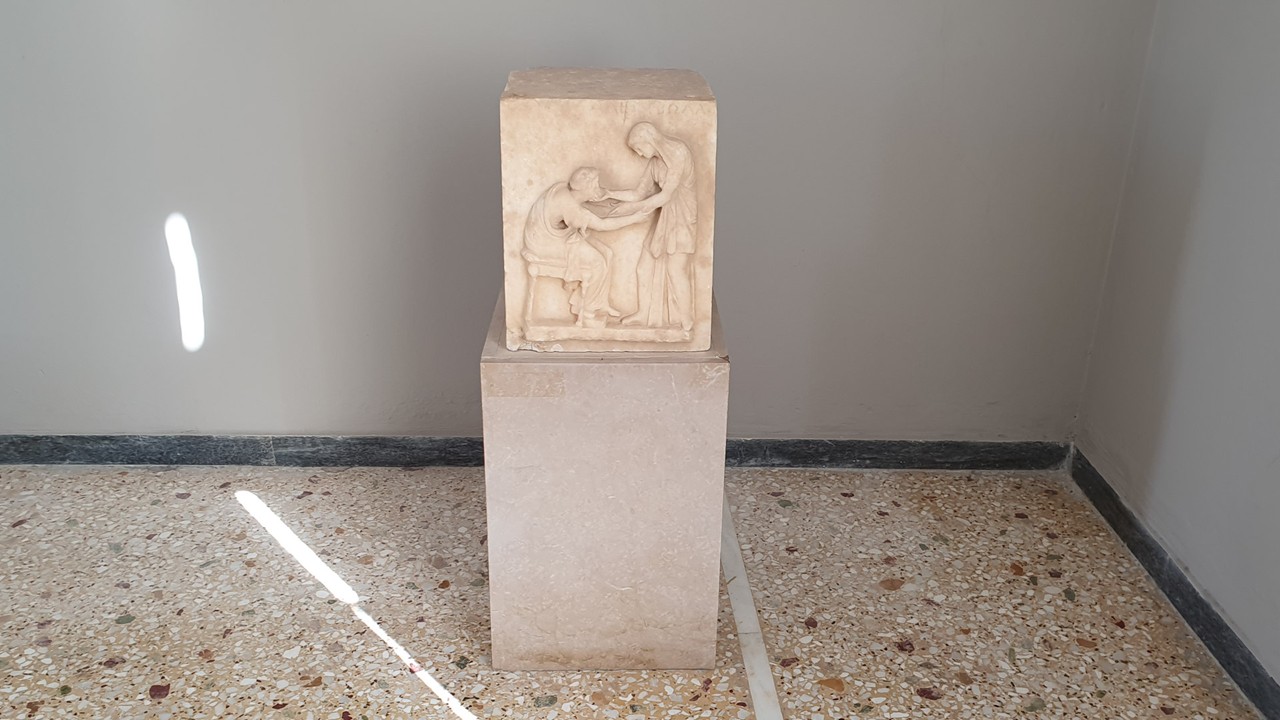
Alexibola: Funerary Stele with Scene of Greeting, early 3rd century BC, Marble, Archaeological Museum of Thera, Greece
https://www.greece-is.com/millennia-tour-santorini-ages/

Today, the Funerary Stele of Alexibola continues to speak across millennia, its message as clear and touching as when it was first carved. In its quiet grace, we recognize the timeless human emotions of love, loss, and remembrance, feelings that unite us with those who lived and grieved long ago. The simplicity of the figures, their tender gestures, and the dignified calm of their farewell remind us that art can express what words often cannot. Through Alexibola’s parting moment with her father, we are invited into an intimate world where ancient stone becomes a vessel for enduring emotion, proving that even in silence, the human heart has always sought connection, beauty, and meaning.

For a PowerPoint Presentation of important ancient Greek Funerary Stele, please… Check HERE!

Bibliography: https://www.ias.edu/ideas/2017/chaniotis-world-of-emotions

More Posts on ancient Greek Funerary Stele by Teacher Curator… https://www.teachercurator.com/art/hegeso-daughter-of-proxenos/ and https://www.teachercurator.com/ancient-greek-art/telling-us-goodbye/ and https://www.teachercurator.com/ancient-greek-art/grave-stele-of-a-youth-and-a-little-girl/

The Consular Diptych of Anicius Faustus Albinus Basilius

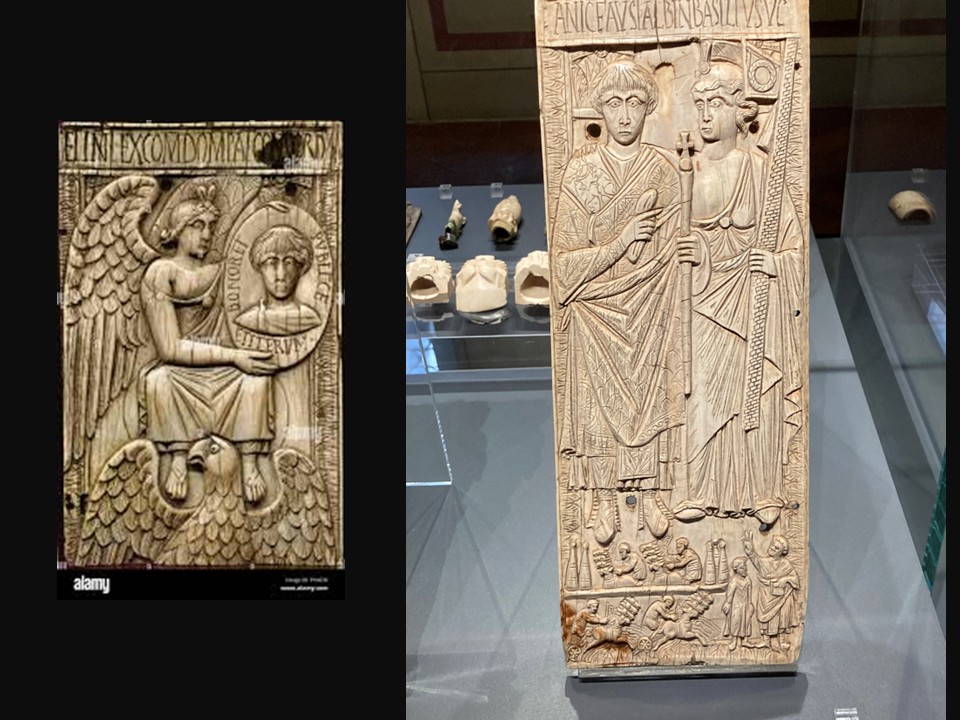
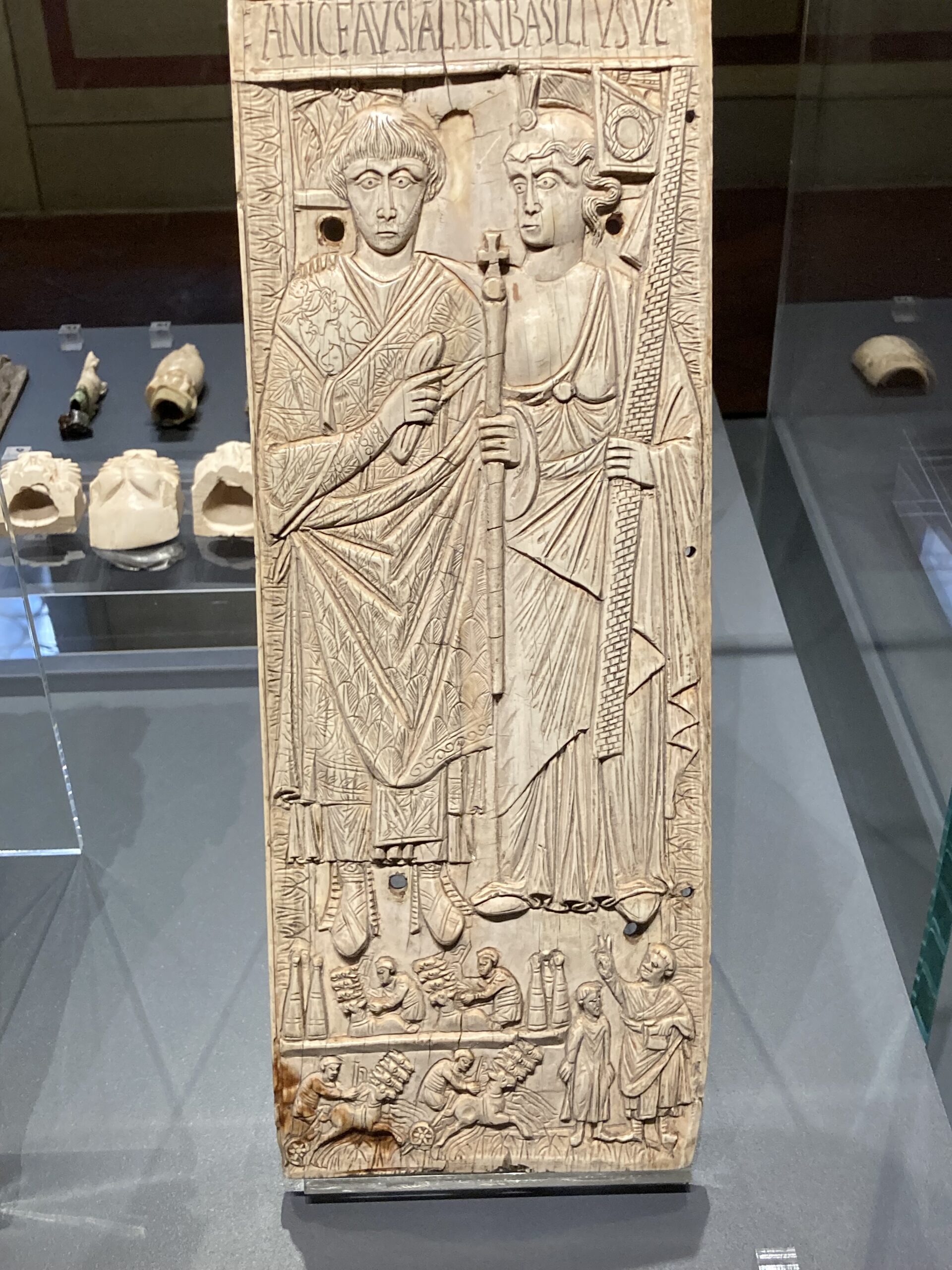
Consul Basilio with personification of Rome and chariot race, 541 – 541, Plaque of an Ivory Consular Diptych, 34.5×12.9 cm, National Museum of Bargello, Florence, Italy – Photo Credit: Amalia Spiliakou, April 2025
Ivory Angel fragment of a diptych valve, 6th Century, Ivory, Museum of Ancient Art in the Castello Sforzesco, Milan, Italy
https://www.alamy.com/ivory-angel-from-bottega-romana-fragment-of-a-diptych-valve-6th-century-museum-of-ancient-art-in-the-castello-sforzesco-sforza-castle-in-milan-italy-image223703517.html

The Bargello panel of The Consular Diptych of Anicius Faustus Albinus Basilius (consul in 541 AD) offers a vivid glimpse into the ceremonial splendor and political symbolism of late antiquity. Carved in fine ivory, the plaque depicts the Consul Basilio standing frontally beside the personification of Rome, who crowns him with a laurel wreath, a timeless emblem of civic and military virtue. Below unfolds a chariot race, a rare and dynamic motif symbolizing the public games that marked the consul’s inauguration. The consul holds both the scipio topped with a cross and the mappa circensis, the cloth used to signal the start of the races, fusing Christian and traditional Roman imagery in a moment of political theater.

Once hinged to a now-separated companion leaf, the Milan panel (Avori 10, Castello Sforzesco), the Bargello relief would have formed one side of a luxurious diptych presented to commemorate Basilius’s consulship. The Milan fragment, showing Victory presenting the consul’s portrait within a clipeus, completes the scene’s message of divine favor and public virtue. Together, these ivories capture the final flowering of the consular tradition, bridging Roman civic ideals and Byzantine court aesthetics, and reflecting a world where art served both as devotion and as declaration of power.

Consular diptychs were luxurious paired ivory panels created in the late Roman and early Byzantine periods to commemorate the inauguration of a consul, one of the highest offices in the empire. Traditionally carved on the inside to hold wax for writing, these diptychs evolved by the 4th and 5th centuries into richly decorated ceremonial gifts rather than practical objects. Newly appointed consuls commissioned them to celebrate their accession and distributed them to friends, allies, and dignitaries as tokens of prestige and gratitude. The front surfaces were elaborately carved with scenes of the consul’s investiture, imperial imagery, or allegorical figures such as Victory or Rome, while inscriptions proclaimed the consul’s name and titles. Their iconography—often showing the consul presiding over games, dispensing largesse, or associated with divine favor—served to reaffirm the continuity of Roman civic traditions even as imperial power shifted eastward to Constantinople.

Anicius Faustus Albinus Basilius, consul in 541 CE, was a distinguished member of the ancient and influential Anicii family, one of the last great senatorial lineages of Rome. His career unfolded during a turbulent period in the Gothic War and the final years of the Western Roman aristocracy. Before attaining the consulship, Basilius held prominent administrative posts, including comes domesticorum (commander of the imperial household guard) and patricius, titles that reflected both his rank and his proximity to the imperial court. Appointed consul by Emperor Justinian I, he was the last man to hold the title in the Western tradition. After his term, the consulship ceased to exist as an independent civic office and became an imperial prerogative. His consular games, commemorated by the magnificent ivory diptych now divided between Florence and Milan, symbolized both the enduring prestige of Rome’s senatorial elite and the transformation of Roman political culture under Byzantine rule. Basilius’s life thus marks a poignant historical threshold: he stood at the end of Rome’s ancient civic offices and the dawn of a new, imperial order dominated by Constantinople.

The Consular Diptych of Anicius Faustus Albinus Basilius, divided today between the Bargello Museum in Florence and the Museo delle Arti Decorative in Milan, stands as one of the most compelling survivals of sixth-century ivory art. Created in 541 CE to commemorate Basilius’s consulship—the last in the Western Roman tradition—the two panels once formed a hinged pair, uniting political ceremony, imperial iconography, and refined craftsmanship. The Bargello panel represents the consul’s public and civic identity, while the Milan plaque embodies the divine and honorific aspects of his role, creating a complete visual narrative of authority and virtue.

Consul Basilio with personification of Rome and chariot race, 541 – 541, Plaque of an Ivory Consular Diptych, 34.5×12.9 cm, National Museum of Bargello, Florence, Italy – Photo Credit: Amalia Spiliakou, April 2025

The Bargello panel presents Basilius standing frontally in full consular regalia beside the personification of Rome, who crowns him with a laurel wreath, a symbol of victory and civic honor. In his hands, the consul holds the scipio topped with a cross and the mappa circensis, signaling the opening of the chariot races carved below in vivid relief, where teams of four-horse chariots turn around the spina of the circus. This combination of Christian and traditional Roman imagery reflects the fusion of old civic ritual with new imperial faith. The Milan plaque, by contrast, depicts a winged Victory seated on a globe, her feet resting on an eagle’s outstretched wings as she presents a clipeus containing Basilius’s portrait. Around it runs the inscription BONO REI PVBLICAE ET ITERVM (For the good of the Republic, and again), proclaiming the consul’s service to the state. Together, these compositions balance earthly power and celestial sanction, merging public ceremony with divine endorsement.

Aesthetically, the two panels reveal both unity and distinction. The Bargello panel is dense and narrative, crowded with human figures and architectural motifs that emphasize movement and civic spectacle. The Milan panel, in contrast, is more restrained and idealized, its composition centered, symmetrical, and imbued with spiritual calm. The Milanese Victory, delicately modeled and classically poised, recalls earlier Roman traditions of divine personification, while the Bargello figures are more rigid, their proportions elongated, their gestures formalized in the emerging Byzantine style. The difference in tone, public versus celestial, active versus contemplative, suggests that the two leaves were designed as complementary expressions of the same ideology: the earthly authority of the consul validated by divine and imperial favor.

Viewed together, the two ivories encapsulate the final synthesis of Roman civic art and Byzantine symbolism. They celebrate the consulship not merely as an office but as a sacred performance of continuity between past and present, Rome and Constantinople, man and empire. Their divided survival, one in Florence, one in Milan, mirrors the historical fragmentation of the world that produced them, yet their shared message endures: that power, piety, and artistic excellence could still converge in the twilight of antiquity. As such, the diptych of Basilius stands not only as a testament to individual glory but as a poignant farewell to the visual language of Roman public life.

For a Student Activity, please… Check HERE!

Bibliography: Representing consulship: on the conception and meanings of the consular diptychs, by Cecilia Olovsdotter, OpAthRom 4, 2011, 99-124 https://www.academia.edu/11849854/Representing_consulship_on_the_conception_and_meanings_of_the_consular_diptychs_OpAthRom_4_2011_99_124?utm_source=chatgpt.com and https://catalogo.beniculturali.it/detail/HistoricOrArtisticProperty/0900645430

Tomb of Hunting and Fishing

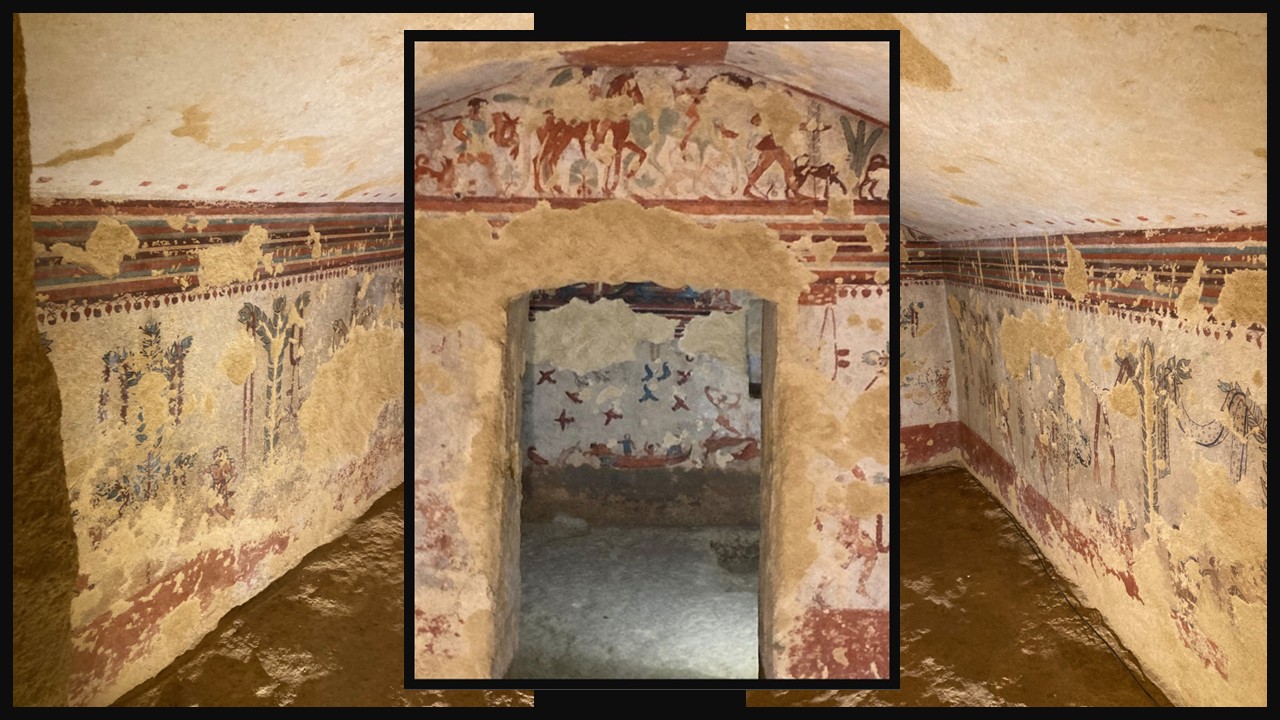
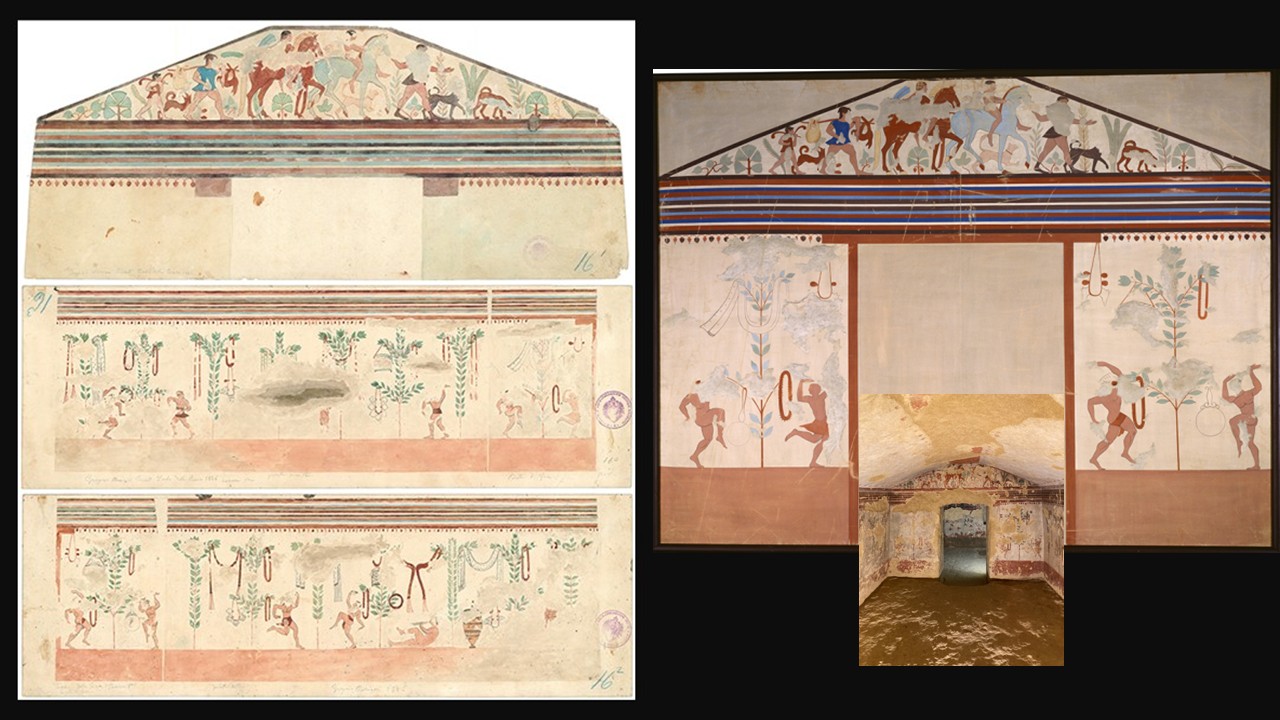
Etruscan Tomb of Hunting and Fishing, 520-510 BC,Necropoli dei Monterozzi, near Tarquinia, Lazio, Italy Photo Credit: Amalia Spiliakou, April 2025

The Etruscans, a powerful and enigmatic civilization of central Italy, played a vital role in shaping the cultural foundations later adopted by the Romans. Renowned for their elaborate funerary customs, they believed in providing for the dead in ways that reflected both status and the joys of earthly life, leading to the creation of richly decorated tombs that serve as lasting testaments to their artistry and worldview. The Necropoli dei Monterozzi near Tarquinia exemplifies this tradition, as one of the most important burial grounds of the ancient Mediterranean, where hundreds of painted chambers offer a vivid glimpse into Etruscan society. Among these, the Tomb of Hunting and Fishing, dating to around 520–510 BC, stands out for its lively frescoes that celebrate nature, leisure, and the afterlife, making it a masterpiece of Etruscan funerary art.

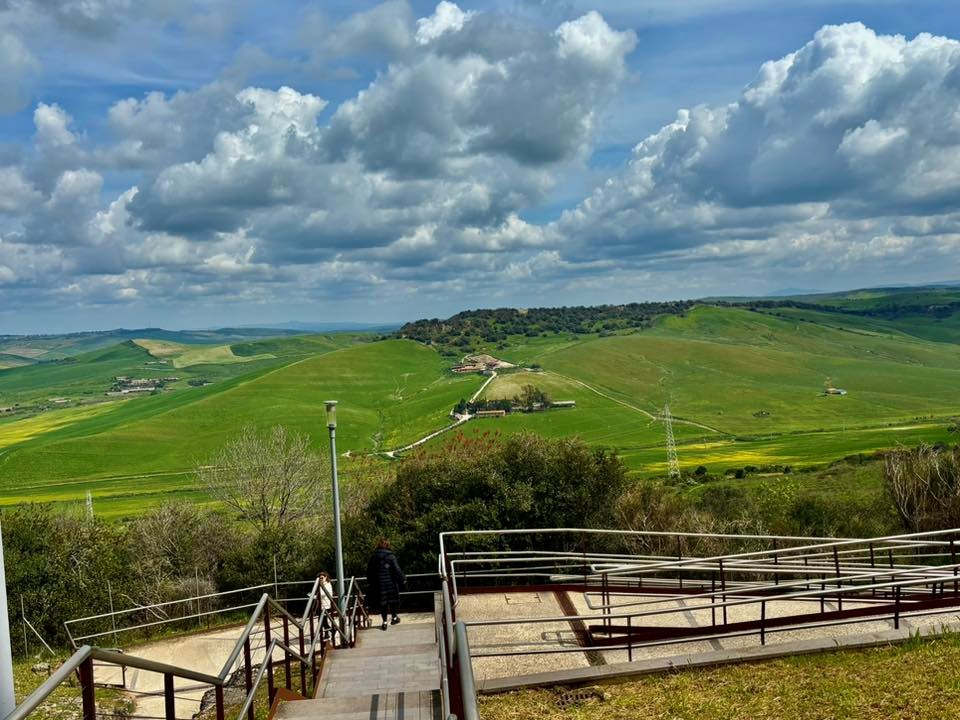
The Necropoli of Monterozzi – Photo Credit: Xanthippi Glavopoulou

The Necropoli of Monterozzi holds immense archaeological significance as it preserves the largest collection of painted Etruscan tombs, offering unparalleled insight into the beliefs, daily life, and artistic achievements of this ancient culture. Discovered in the early nineteenth century, the site quickly became a focal point for antiquarian interest, with early excavations often driven more by the desire to uncover treasures than by scientific methods. Over time, however, more systematic archaeological approaches have revealed the necropolis’ historical depth, documenting over 6,000 tombs ranging from simple chamber burials to elaborately decorated family vaults. The frescoes, in particular, have transformed scholarly understanding of Etruscan society, as they preserve vibrant scenes of banquets, rituals, and natural landscapes that rarely survive in other contexts, making Monterozzi a cornerstone in the study of pre-Roman Italy.

Etruscan Tomb of Hunting and Fishing, 520-510 BC,Necropoli dei Monterozzi, near Tarquinia, Lazio, Italy – Photo Credit: Amalia Spiliakou, April 2025

The Tomb of Hunting and Fishing, discovered in 1873 during a period of intensive investigation at the Necropoli of Monterozzi, represents one of the most significant finds of late nineteenth-century Etruscan archaeology. Documentation from the time, however, provides only fragmentary information regarding the circumstances of its excavation, the personnel involved, and the precise condition of the monument upon opening. Despite these gaps, contemporary commentators consistently remarked upon the striking preservation of the painted decoration, noting with particular interest the unprecedented imagery of fishermen, hunters, and divers that expanded the known repertoire of Etruscan funerary art. Although anecdotal testimony concerning local responses or early interventions is scarce, the tomb rapidly entered scholarly discourse and has since been recognized as an essential source for understanding the interplay of ritual, daily life, and conceptions of the afterlife in Etruscan culture.

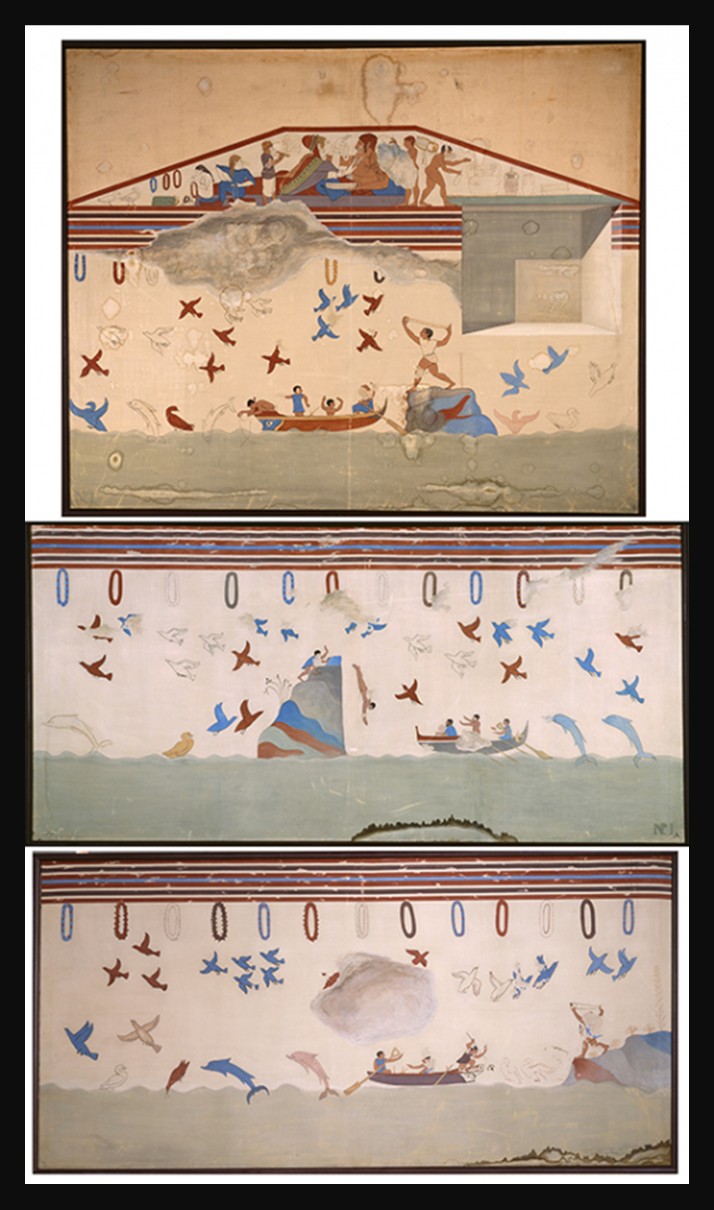
Crucial to the legacy of the Tomb of Hunting and Fishing are the watercolours produced by the artist Gregorio Mariani soon after its discovery. His meticulous reproductions, later published in chromolithograph form, captured the vibrant hues and delicate details of the frescoes at a moment when they were far fresher than today. These images not only provided scholars with reliable records of motifs that have since deteriorated, but also played a vital role in popularizing the tomb’s significance within the wider field of Etruscan studies. Original Mariani watercolours are preserved in the archives of the German Archaeological Institute in Rome, while facsimile reproductions can be found in the Ny Carlsberg Glyptotek in Copenhagen. In this way, Mariani’s work serves as both an artistic achievement and a scientific tool, bridging the gap between nineteenth-century discovery and modern scholarship.

The Tomb of Hunting and Fishing is a two-chambered burial space whose walls are adorned with some of the most dynamic and evocative frescoes in Etruscan art. The imagery vividly depicts scenes of everyday leisure and subsistence: Dionysian figures dancing in a sacred grove, hunters chasing game, fishermen casting nets, youths diving into clear waters, and birds in flight above lush landscapes.

Gregorio Mariani, Tomba della Caccia e Pesca, Facsimile olio su tela, Ny Carlsberg Glyptotek HIN 0091-3 -© Ny Carlsberg Glyptotek, Copenaghen; foto Ole Haupt https://journals.openedition.org/mefra/8455
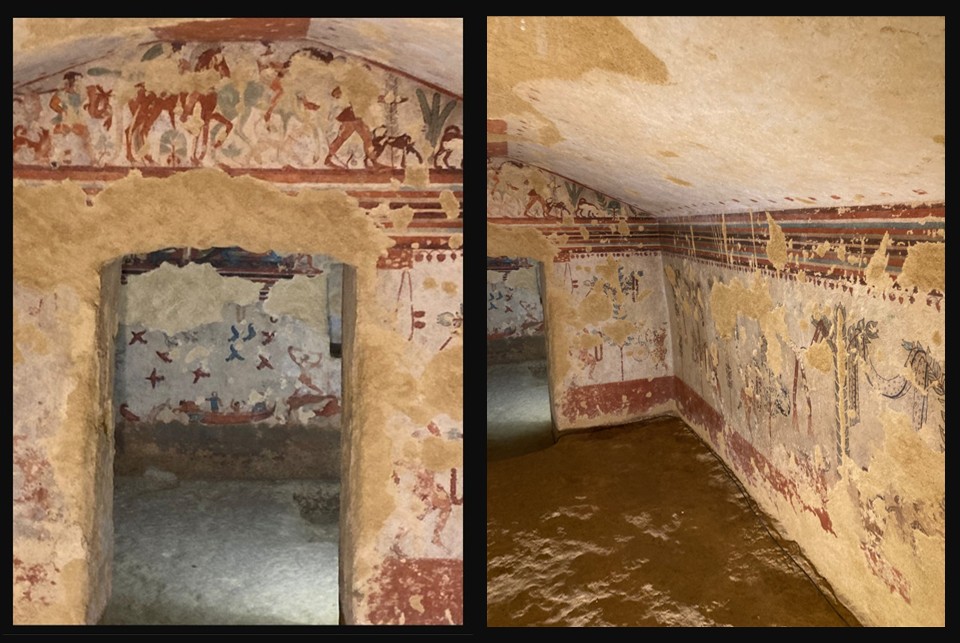
Etruscan Tomb of Hunting and Fishing, 520-510 BC,Necropoli dei Monterozzi, near Tarquinia, Lazio, Italy – Photo Credit: Amalia Spiliakou, April 2025

In the antechamber, the frescoes depict nearly naked figures engaged in what appears to be a Dionysian ritual dance, set within a grove adorned with ribbons, wreaths, mirrors, and cistae. Reclining satyrs holding rhytoi occupy the gable of the entry wall, underscoring the influence of the cult of Dionysus on Etruscan religion and funerary practices. On the back wall, a hunting scene unfolds, with hunters and dogs returning with their quarry through a lush, almost tropical landscape filled with vibrant vegetation. This juxtaposition of ritual and daily activity illustrates both spiritual and worldly dimensions, highlighting the Etruscans’ belief in the continuation of life’s pleasures beyond death.

Gregorio Mariani, Tomba della Caccia e Pesca, Facsimile olio su tela, Ny Carlsberg Glyptotek HIN 0091-3 -© Ny Carlsberg Glyptotek, Copenaghen; foto Ole Haupt https://journals.openedition.org/mefra/8455

In the main burial chamber, the frescoes shift focus from activity to celebration, illustrating scenes that suggest both ritual and leisure. Youths are depicted diving and swimming in carefully delineated waters, while birds and aquatic creatures populate the surrounding environment, emphasizing a harmonious interaction between humans and nature. The figures are arranged in continuous sequences that convey narrative flow, as if time itself is unfolding across the walls. Here, the painter employs brighter pigments and more elaborate detailing, particularly in the depiction of musculature, drapery, and facial expressions, giving the scenes a remarkable sense of immediacy and life. Together, the two chambers combine to create a vision of an idealized Etruscan existence, where work, sport, and the pleasures of the natural world coexist with an underlying sense of spiritual continuity.

The composition is notable for its sense of movement and rhythm, as figures and animals are arranged in continuous, flowing sequences that suggest both narrative and ritual significance. Bright ochres, reds, and blues bring the scenes to life, while careful attention to proportion and perspective conveys depth and realism unusual for the period. Beyond their aesthetic appeal, the frescoes offer a profound insight into Etruscan conceptions of the afterlife, suggesting a vision in which the pleasures and activities of earthly existence continue beyond death, making the tomb not only a funerary monument but also a celebration of life itself.

For a Student Activity inspired by the frescoes in the Antechamber of the Tomb of Hunting and Fishing, please… Check HERE!

Bibliography: Abundance of Life: Etruscan Wall Painting, by Stephan Steingräber https://books.google.gr/books?id=K25ydBTGhbkC&pg=PA95&redir_esc=y#v=onepage&q&f=false and Anni 1880: Tomba della Caccia e Pesca e Tomba degli Auguri https://journals.openedition.org/mefra/8455

Poliochne on Lemnos

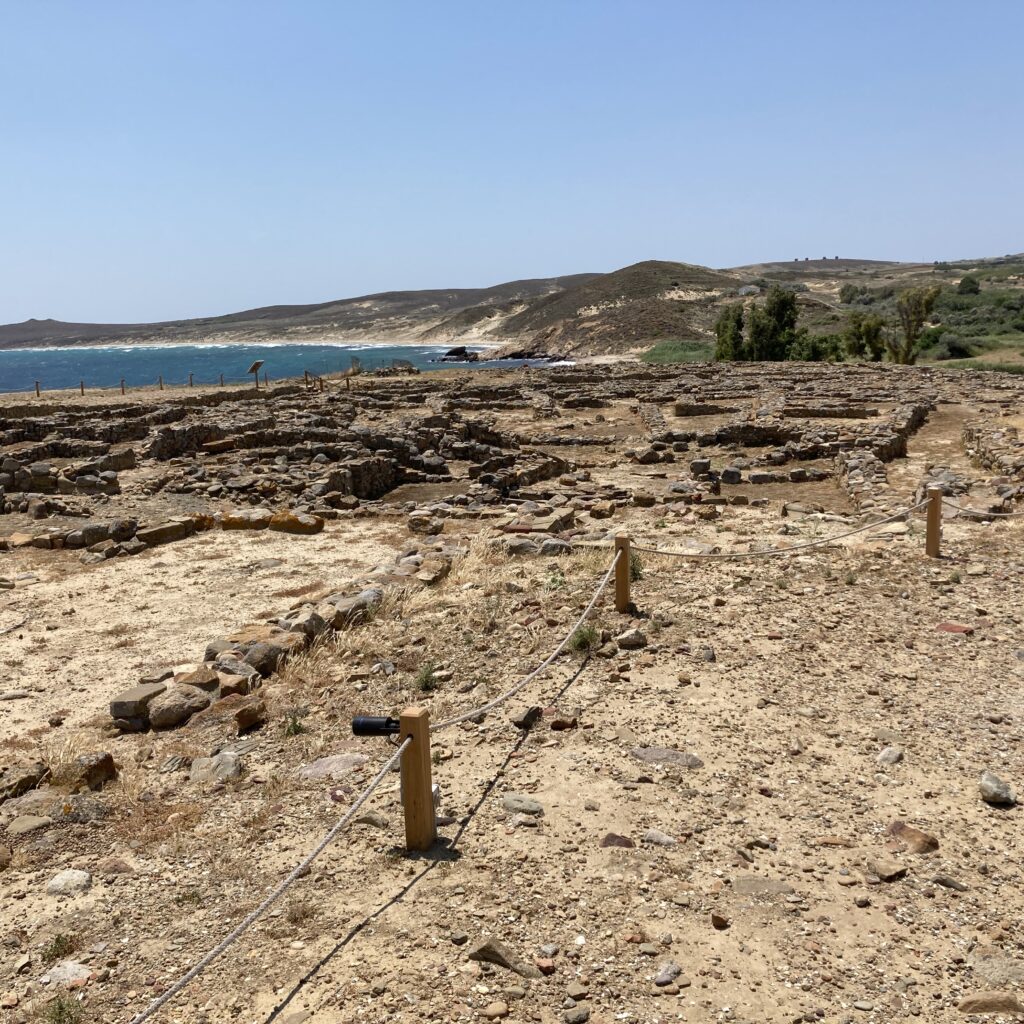
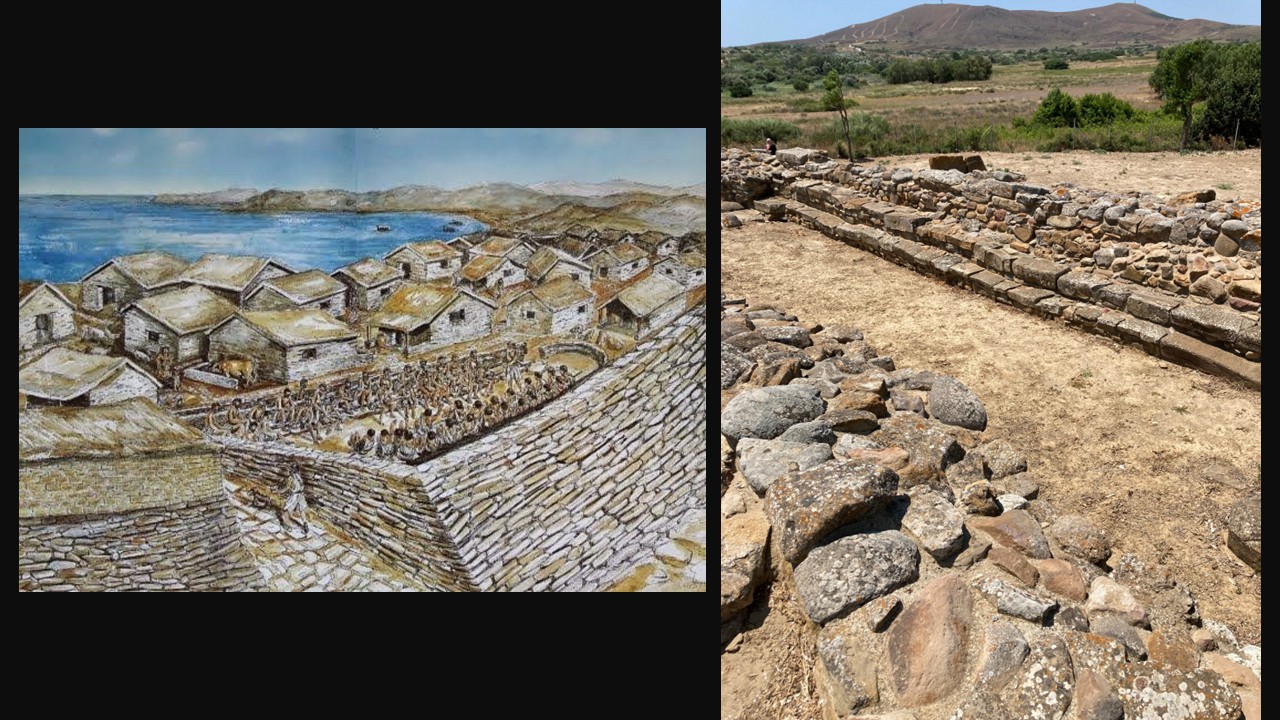
Poliochne on Lemnos, one of the earliest European settlements (Early Bronze Age, c. 3200–2100 BCE), with its maze-like houses and public squares revealing the social organization and daily life of its inhabitants. – Photo Credit: Amalia Spiliakou, July 2025

Visiting the ancient settlement of Poliochne on Lemnos offered a rare opportunity to step directly into the early stages of European urban history. Walking among the remains of its carefully planned streets and multi-roomed houses, I was struck by how vividly the site conveys the ingenuity and social organization of its Bronze Age inhabitants. Poliochne, often regarded as one of Europe’s earliest towns, reveals a level of architectural and cultural sophistication that challenges modern assumptions about prehistoric life. Through the photographs I captured on-site, I hope to share both the tangible traces of this remarkable settlement and the sense of awe that comes from encountering a place where history feels immediately present.

Poliochne, on the eastern coast of Lemnos, flourished as a major urban center of the Early Bronze Age. Established around the mid-fifth millennium BC and occupied until the end of the second millennium BC, it prospered thanks to its strategic location between Asia Minor and the Aegean, with safe anchorage, fertile land, and abundant freshwater. Archaeological evidence reveals a sophisticated settlement with strong fortifications, public squares, paved streets with drains, wells, and both modest houses and large mansions, reflecting a complex social and civic structure. Its development unfolded through successive cultural phases, marked by advances in architecture, pottery, metallurgy, and trade, while its decline in the late third millennium was likely triggered by a devastating earthquake. Closely connected to Troy, Thermi on Lesbos, and other centers of the Northeast Aegean, Poliochne was a hub of commerce and innovation, leaving a lasting imprint on early urban life in the wider region.

Opened in the west side of the settlement at Poliochne is the main gate, terminus also of the central thoroughfare 102. Both the street and the gateway appear to have been part of the first urban plan of the settlement, which is dated to the Blue period, and were kept unchanged throughout almost its entire existence, with some additions and local interventions. 
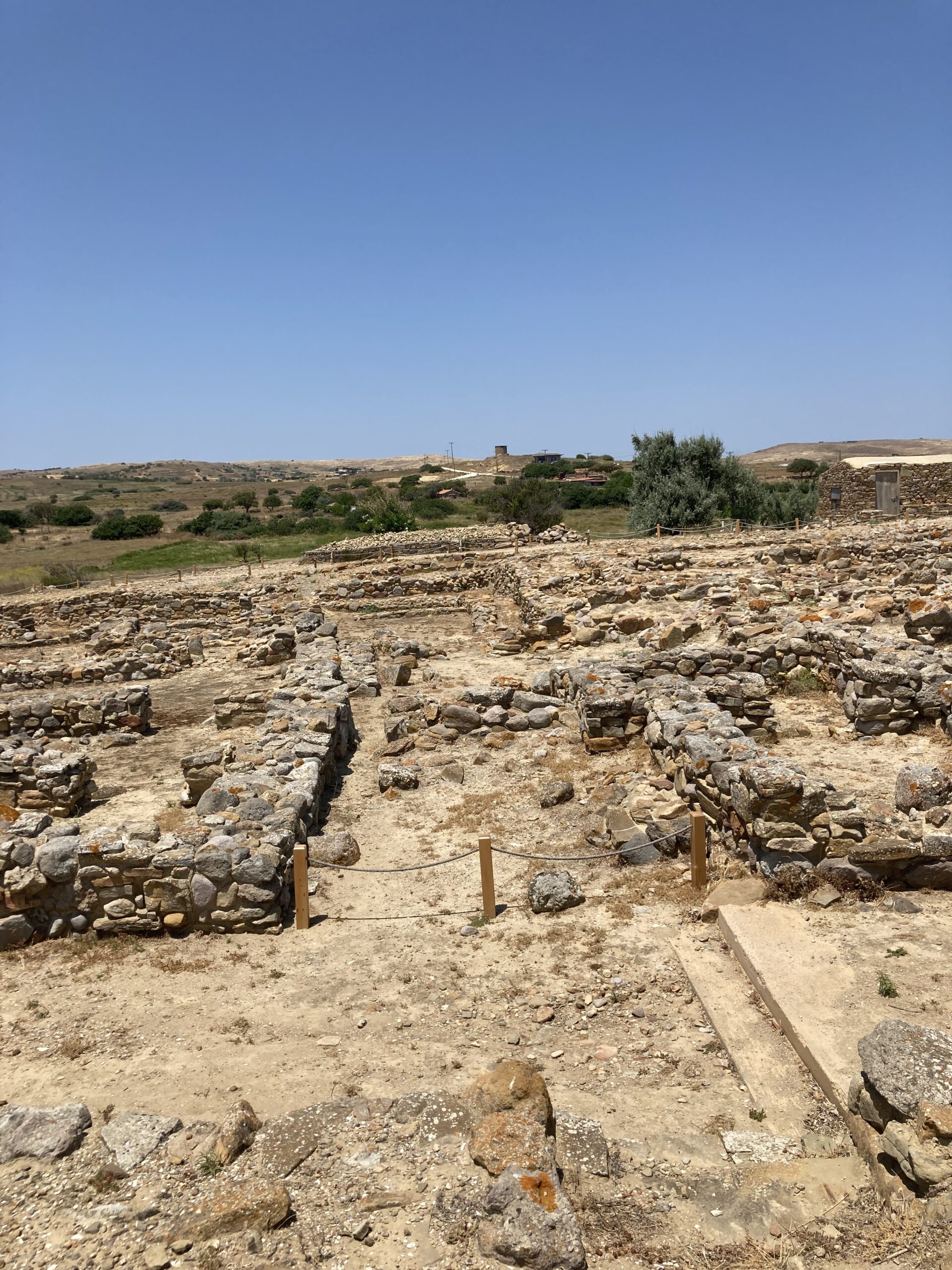
Photo Credit: Amalia Spiliakou, July 2025

Poliochne, first established during the Final Neolithic period, developed through successive architectural phases that archaeologists have identified by color. In the earliest Black Period (3700–3200 BC), a modest cluster of oval huts built of wood and straw stood at the hill’s center. The following Blue Period (3200–2700 BC) saw dramatic growth: the settlement expanded, a fortification wall was erected on the mainland side, and the urban plan became more organized. Oval huts gave way to apsidal and oblong houses, and public buildings began to appear, including the so-called Bouleuterion, likely a meeting hall for civic leaders, and a large communal granary capable of storing vast quantities of food. By the Green Period (2700–2400 BC), the city expanded further northward with new retaining walls, extended defenses, redesigned gates, and a carefully laid-out road system with squares and wells, reflecting a thriving and increasingly complex urban society.

One of the most intriguing aspects of Poliochni is the evidence of democratic structures within its society. Central to this is the “Bouleuterion,” a communal meeting space that points to the practice of collective decision-making, It served as a gathering place for the city’s inhabitants to discuss and decide on matters of common interest, reflecting an early form of democratic governance.
https://www.thearchaeologist.org/blog/poliochni-of-lemnos-the-oldest-city-in-europe-and-a-cradle-of-democracy and Photo Credit: Amalia Spiliakou, July 2025

In the Red and Yellow Periods (2400–2100 BC), Poliochne contracted in size but reached a peak in monumental architecture. This was the era of the first megarons, rectangular halls that may have served as proto-palatial residences or civic buildings, such as Megaron 832 and Megaron 317. The city’s centerpiece in the Yellow Period was Megaron 605, a grand structure with storerooms situated on a central square, thought to have been the seat of a ruler or elite household. The discovery nearby of a golden hoard, comparable to treasures unearthed at Troy, underscores Poliochne’s wealth and regional importance. A well-preserved network of streets, including a main north–south thoroughfare, demonstrates advanced urban planning. Yet, around 2100 BC, a devastating earthquake destroyed much of the settlement, leading to its gradual decline. Later phases, the Brown and Purple Periods (2100–1200 BC), saw only sparse occupation without the monumental scale of earlier centuries, marking the fading of one of Europe’s earliest urban centers.

Archaeological excavations at Poliochne began in the 1930s under the direction of the Italian School of Archaeology at Athens, led by Alessandro Della Seta, who uncovered nearly two-thirds of the site between 1931 and 1936. These pioneering investigations revealed the multi-phased settlement and established Poliochne as one of the earliest urban centers in Europe. Further campaigns were carried out between 1951 and 1956 by Luigi Bernabò Brea, whose detailed publications systematized the site’s stratigraphy and architectural sequence. Renewed work in the late 20th century, under Sandro Tiné, combined excavation with architectural restoration and conservation, re-examining earlier findings with modern methods. Today, the site remains an exemplary case of early Aegean archaeology, where stratigraphic precision and long-term international collaboration have illuminated the development of urban life in the prehistoric Aegean.

For a PowerPoint Presentation of the Bronze Age Seplement of Poliochne, please… Check HERE!

Bibliography: http://odysseus.culture.gr/h/3/eh351.jsp?obj_id=2534 and https://www.greeknewsagenda.gr/poliochne-on-the-island-of-lemnos-the-earliest-evidence-of-social-and-civic-structure-in-europe/ and https://sites.dartmouth.edu/aegean-prehistory/lessons/lesson-7-narrative/

Head of Aphrodite of the Aspremont-Lynden/Arles type 

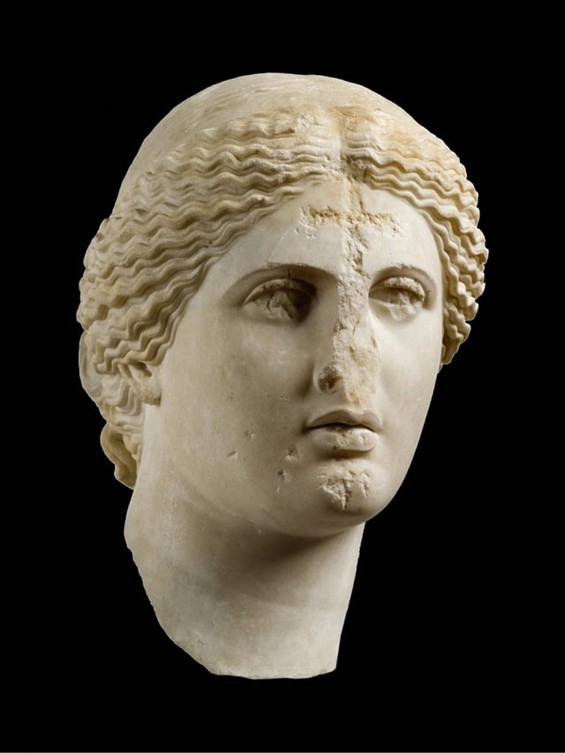
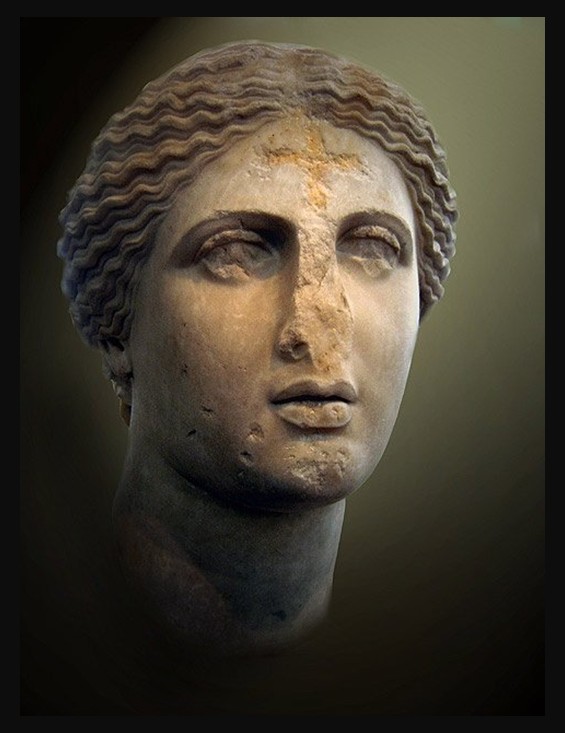
Head of Aphrodite of the Aspremont-Lynden/Arles type, 1st c. AD copy of an original 4th century BC work by Praxiteles, Marble, possibly Parian (Marathi), Height: 32 cm, National Archaeological Museum, Athens, Greece
https://blogs.getty.edu/iris/the-christian-empire-that-grew-from-classical-roots/

The Head of Aphrodite of the Aspremont-Lynden/Arles type, housed in the National Archaeological Museum in Athens, offers a compelling glimpse into the classical ideals of beauty and divinity shaped by the legacy of Praxiteles. As a copy of a lost 4th-century BC original, possibly the first known depiction of Aphrodite with a nude upper body, this sculptural type reflects the evolving representation of the goddess, bridging the serene sensuality of the Aphrodite of Knidos with the more voluptuous forms of later works like the Aphrodite of Melos. The surviving head, now divorced from its torso, carries echoes of a refined, yet idealized femininity that would influence Roman and Renaissance aesthetics alike. Its later restoration by François Girardon, under the patronage of Louis XIV, introduced symbolic elements like the mirror and apple, both deeply charged with mythological meaning, underscoring not just Aphrodite’s divine allure, but also the enduring power of classical art to adapt to new cultural narratives. An incised cross on her forehead, likely added in the early Christian era, marks a moment when pagan imagery was recontextualized within a new religious worldview.

Carved from Parian marble, the Head of Aphrodite once belonged to an over-life-size statue of a clothed Aphrodite, though some scholars have suggested it may instead portray the famed courtesan Phryne due to its individualized features. The face, turned slightly to the right, is serene and harmonious, with soft, fleshy contours and delicately incised features: a smooth triangular forehead framed by parted curls, a broad nose (now broken), full lips, and a rounded chin. A thick bun gathers the hair at the nape, secured by a wide band. The eyes, beneath gently curved brows, show signs of deliberate Christian-era defacement, likely part of an effort to “close” the eyes and “silence” the mouth. A small, incised cross on the forehead reinforces this reinterpretation of pagan art within a Christian context, suggesting the statue may have been reused as a sacred image. Despite the damage, most notably to the nose and facial extremities, the head remains in relatively good condition and serves as a compelling testament to both the endurance of classical ideals and their transformation in later religious and cultural landscapes.

Head of Aphrodite of the Aspremont-Lynden/Arles type, 1st c. AD copy of an original 4th century BC work by Praxiteles, Marble, possibly Parian (Marathi), Height: 32 cm, National Archaeological Museum, Athens, Greece
https://x.com/ArysPan/status/1513155769000247301/photo/1

The statue’s discovery near the Clock of Andronikos Kyrrhestes in the Roman Agora of Athens further grounds it in the layered urban fabric of ancient Athens, where temples, markets, and later churches coexisted and often repurposed one another’s remains. This setting, close to the sanctuary of Aphrodite and Eros on the north slope of the Acropolis, reinforces the likelihood that the statue originally served a votive or cultic function. The artistic style—marked by its naturalistic modeling, graceful asymmetry, and subtle anatomical details like the “Venus rings” on the neck—embodies the Praxitelian ideal of ethereal beauty softened by human warmth. In this way, the head is not only a remnant of a once-complete devotional image but also a rare survivor of artistic transitions: from Classical to Hellenistic, pagan to Christian, and ultimately, from sacred object to museum artifact.

For a Student Activity, please… Check HERE

Bibliography: https://blogs.getty.edu/iris/the-christian-empire-that-grew-from-classical-roots/ and https://collections.louvre.fr/en/ark:/53355/cl010277986

Hephaistia on the island of Lemnos

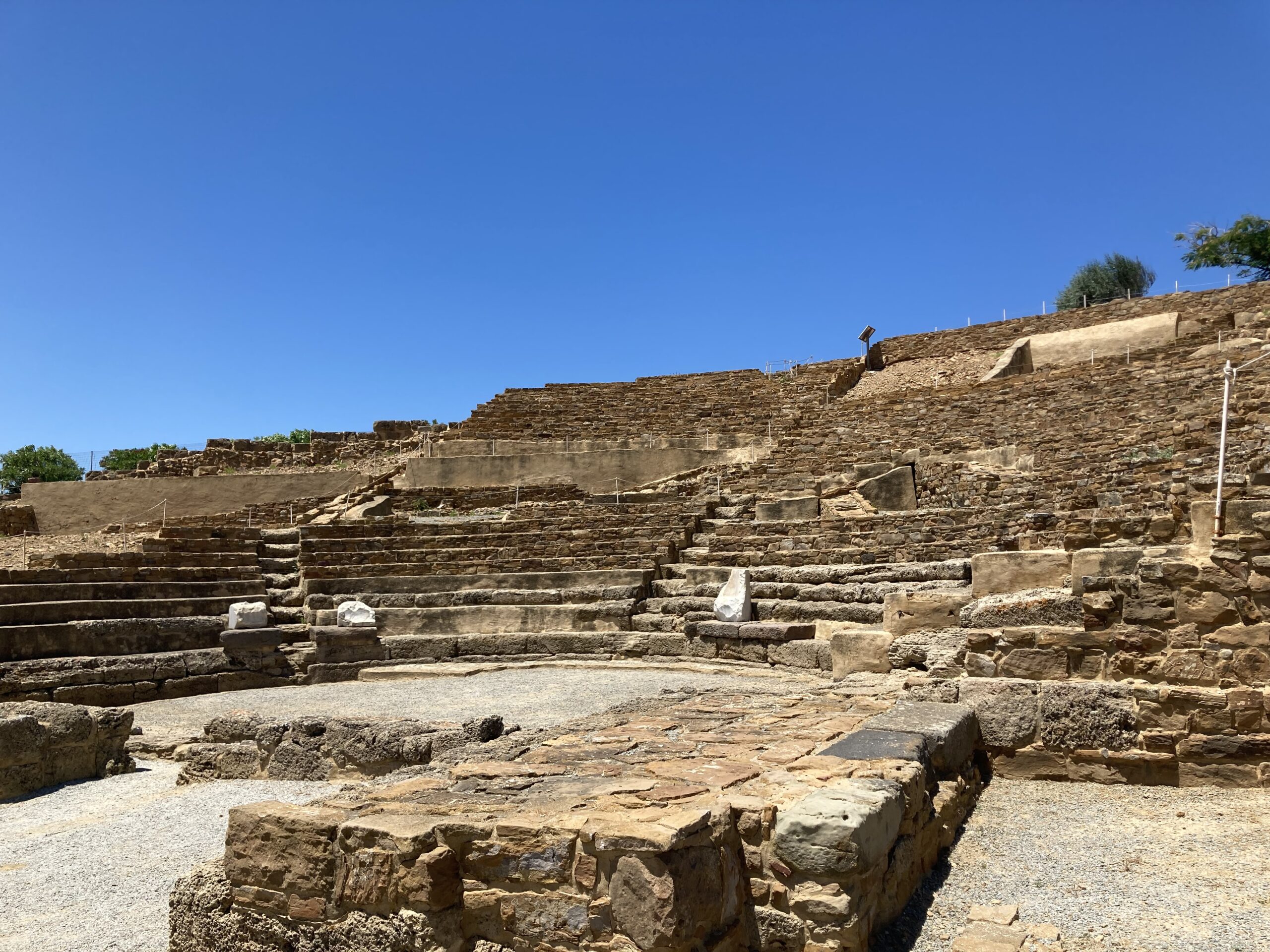
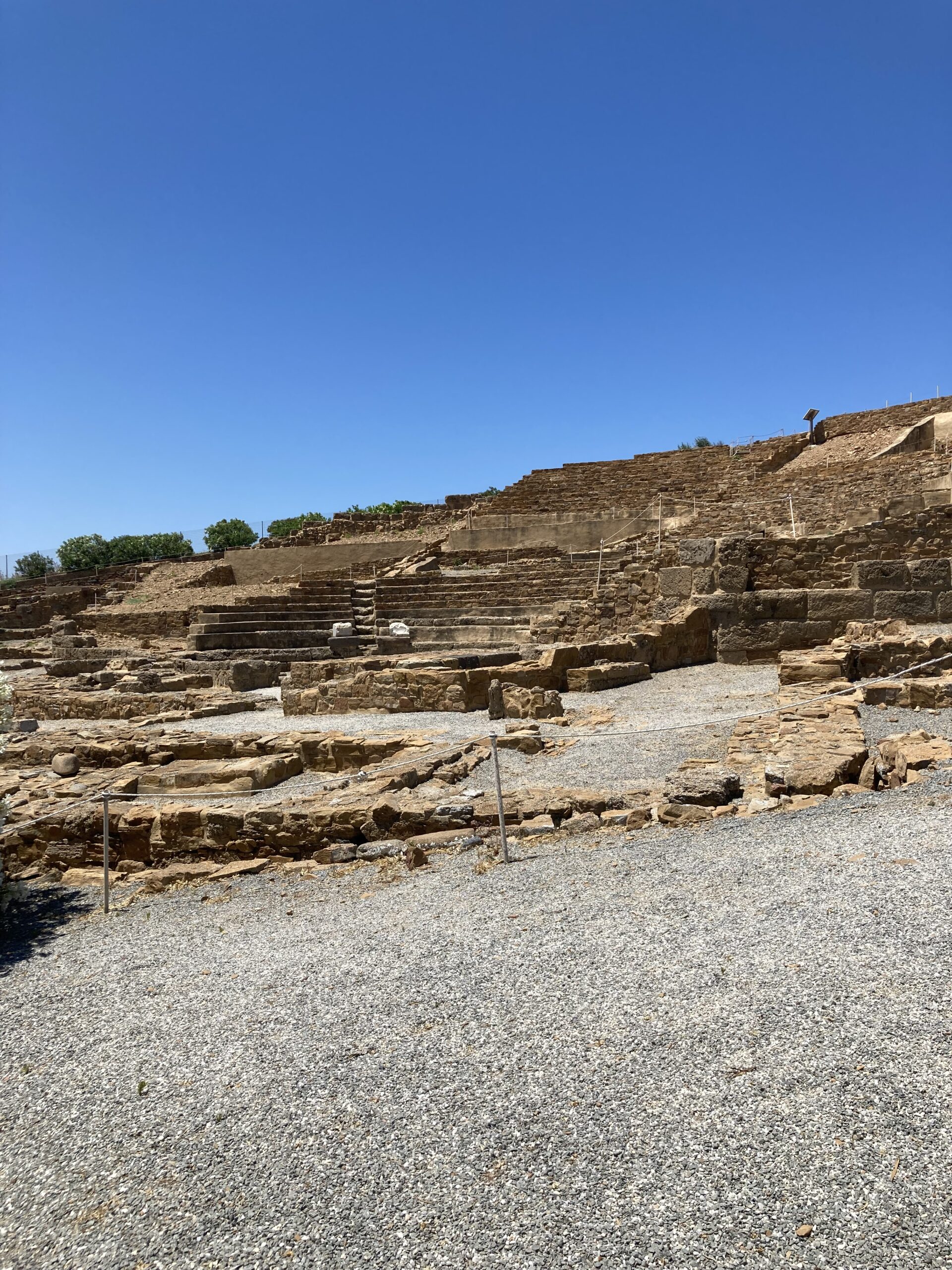
Ancient Theater of Hephaistia, late 5th to early 4th century BC, Lemnos Island, Greece
One of the most important monuments of Lemnos, this theater reflects the transition from the Classical to the Hellenistic world, later remodeled during the Roman period.
Photo Credit: Amalia Spiliakou, July 2025

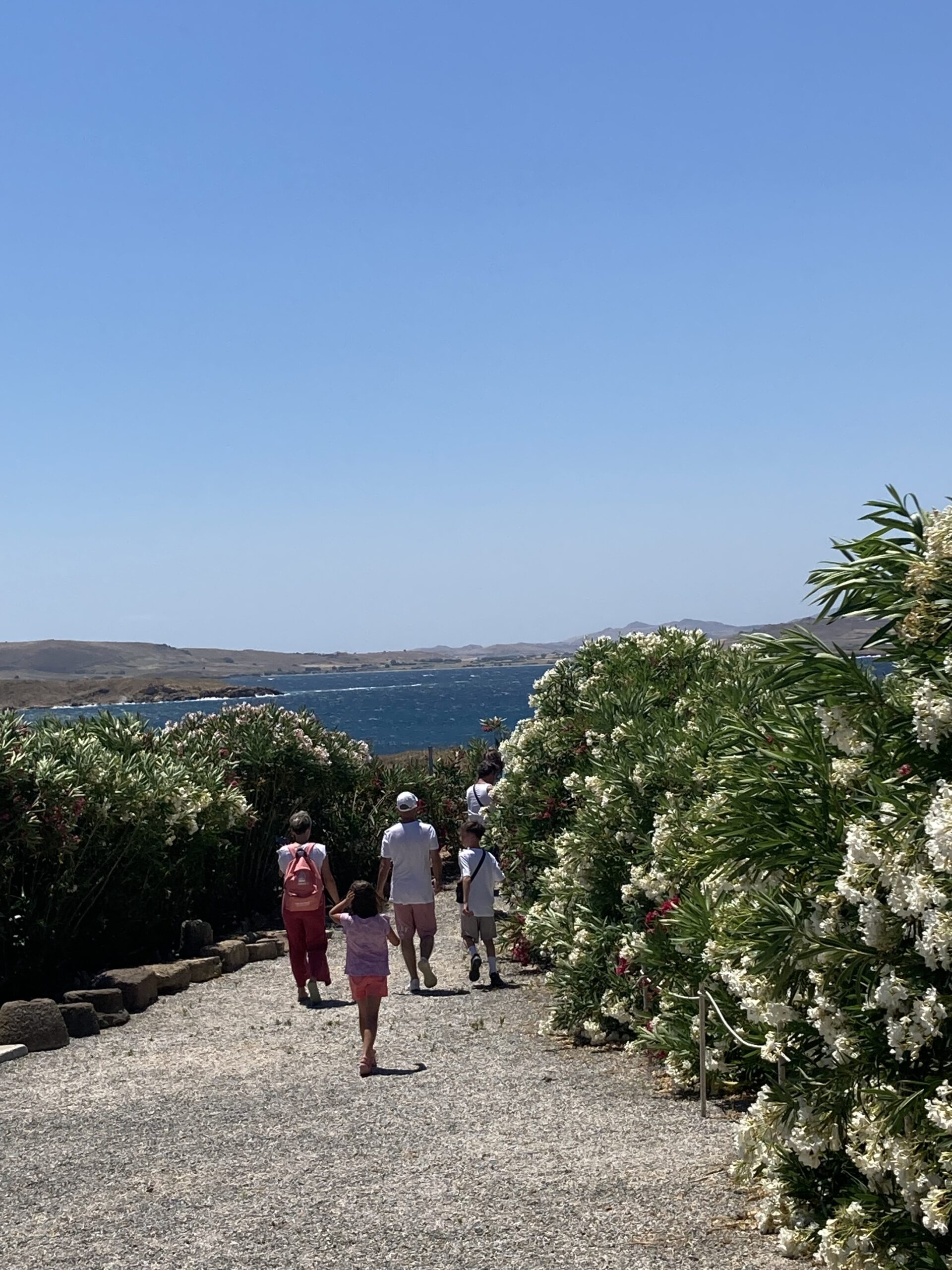
When I visited the ancient city of Hephaistia on the island of Lemnos in July 2025, the quiet hills and open sea breeze made it easy to imagine how myth and daily life once blended here. Named after Hephaestus, the god of fire and metallurgy who, according to legend, fell to Lemnos after being cast from Olympus, the city was the island’s principal center of power and worship. Today its ruins still speak volumes: the stone outlines of sanctuaries and houses, the tombs that reveal centuries of life, and the well-preserved theater that once echoed with civic gatherings and performances. To walk through Hephaistia is not only to step into a serene landscape but also to encounter a city that thrived from the Late Bronze Age through the Byzantine era, balancing myth, religion, and community in a way that remains profoundly compelling.

Hephaistia was once the most important city of Lemnos, rivaling the nearby settlement of Myrina. Its strategic position overlooking the northern Aegean not only provided natural protection but also allowed it to thrive as a gateway for trade, culture, and religious influence. It became both a political hub, where decisions shaping the island were made, and a sacred site intimately tied to the cult of Hephaestus, whose fiery craft was thought to resonate with the island’s volcanic landscape. Archaeological discoveries confirm continuous habitation for centuries, revealing a layered history of prosperity and resilience. The diversity of remains — from private homes and storerooms to public baths, temples, and meeting spaces — paints a picture of a bustling, interconnected community. Hephaistia was not merely a seat of power but also a place where religious rituals, artistic performances, and everyday exchanges intertwined, embodying the rhythms of civic life in antiquity.

The site’s most striking feature is its ancient theater, an elegant structure carefully restored and still able to convey the sense of grandeur it must have radiated in antiquity. Standing there today, it is easy to imagine the rows filled with citizens gathering for performances, debates, and rituals that reinforced the city’s identity. The theater’s semicircular form, perfectly attuned to the surrounding landscape, frames a view toward the sea, giving performances a backdrop as dramatic as the plays themselves. From its stone tiers, one can almost hear the echoes of voices that once rose into the open air, carrying words of tragedy, comedy, and civic discourse. Around this centerpiece lie the ruins of temples, altars, and burial sites, which together provide a vivid window into the spiritual and social fabric of the city. Excavations have also uncovered ceramics, inscriptions, and structural remains, each artifact adding detail to Hephaistia’s long history, from its Bronze Age foundations to its significance under Roman rule. For today’s visitors, these ruins are more than silent stones; they are a tangible bridge between myth and history, where ancient legend is grounded in the enduring presence of place.

What impressed me most was the atmosphere of the place: quiet, open, and touched by the Aegean winds. Unlike busier archaeological sites in Greece, Hephaistia retains a sense of tranquility that invites reflection. Standing in the theater, looking out toward the sea, I felt connected not just to the myths of Hephaestus but also to the generations of people who once called this city home. It is a site that combines scholarly richness with an emotional pull, offering both education and inspiration to those who walk its paths.

The ancient city of Hephaistia is more than a collection of ruins, it is a living reminder of how mythology, community, and history intertwine. For travelers interested in both the educational depth of archaeology and the personal resonance of travel, the city offers a unique and rewarding experience. My walk among its stones left me with a profound sense of connection, to myth, to history, and to the enduring spirit of Lemnos.

For a PowerPoint Presentation, please… Check HERE!

Bibliography: https://greekreporter.com/2025/08/01/hephaistia-ancient-greek-city-limnos/ and https://en.wikipedia.org/wiki/Hephaestia and https://efales-lem.gr/en/ancient_site/%CE%B7%CF%86%CE%B1%CE%B9%CF%83%CF%84%CE%AF%CE%B1/

The Figure of Eight Shield

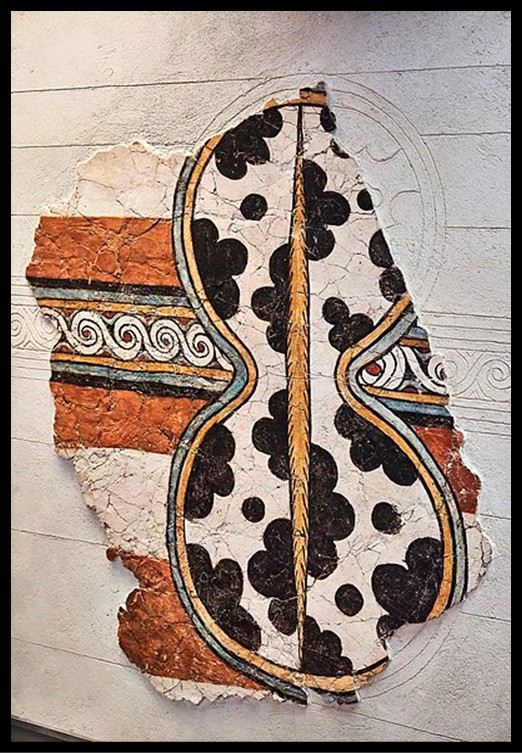
Wall painting depicting the Figure of Eight Shield,
Fresco from the Cult Center of the Acropolis
of Mycenae, 1250-1180 BC, National Archaeological Museum
of Athens, Greece https://commons.wikimedia.org/wiki/File:Mycenaean_mural_
depicting_a_shield_at_the_National_Archaeological_Museum_of_Athens_on_October_26,_2021.jpg

The Figure of Eight Shield is a distinctive type of shield originating in the Aegean region, particularly prominent during the Late Bronze Age. Its unique design, resembling the number ‘8’, featured a curving outline that provided comprehensive protection while allowing for ease of movement. Typically constructed from a wooden frame, it was reinforced with layers of leather or metal to enhance durability and resistance in combat. This shield is closely associated with the warrior culture of Mycenaean Greece and is frequently depicted in frescoes and artifacts from that period, symbolizing both practicality and status in the martial practices of the time.

Let me present you with ’10 Facts’ about the amazing Figure of Eight Mycenaean Shields!

Unique Shape: The ‘Figure of Eight’ shield was shaped like two large, connected ovals, creating a narrow waist-like middle. This design not only made it visually distinctive but also allowed for a balance between size and ease of handling.

Large Size: These shields were massive, often covering a soldier from head to toe, providing extensive body protection. Their size was advantageous in phalanx formations or defensive stances but made them cumbersome in fast, mobile combat.

Construction Materials: The construction of the ‘Figure of Eight’ shields reflects the technological ingenuity of the Mycenaeans. The core of the shield was typically a wooden frame, chosen for its balance of strength and lightness, allowing the shield to remain functional despite its large size. The wooden frame was then covered with multiple layers of tightly stretched cowhide, often up to several layers thick, which added durability and the ability to absorb impact from weapons like spears and arrows. To further enhance their strength, some shields were reinforced with bronze fittings or edging. These metal elements made the shields more resistant to slashing or piercing blows, ensuring they could withstand the demands of battle. Additionally, the cowhide was sometimes treated with oils or other substances to make it more durable and less susceptible to wear from environmental factors like moisture. These materials worked in harmony to produce a shield that was both protective and flexible, suited for the needs of Mycenaean warriors in close combat or defensive formations.

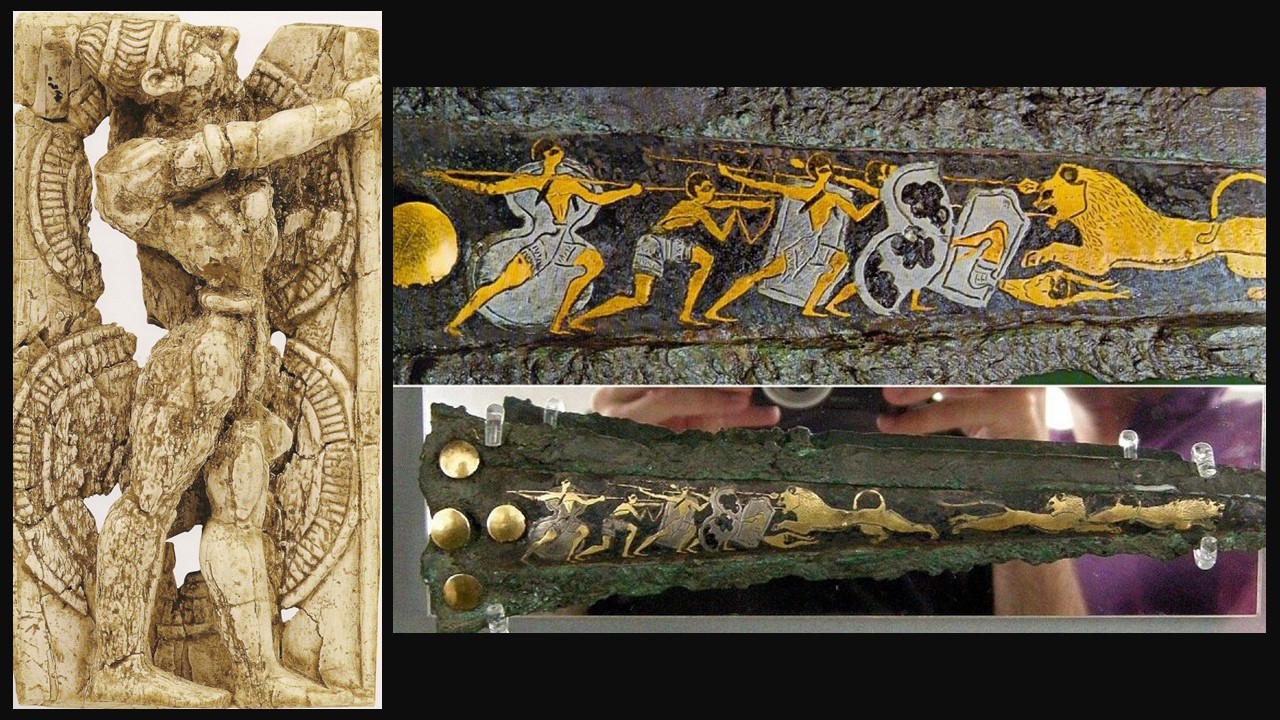
Mycenaean warrior, complete with Boar’s Tusk Helmet and the Figure of Eight Shield, ca. 13th Century BC, Ivory, Archaeological Museum, Delos, Greece https://twitter.com/DocCrom/status/1264518112386396160
Mycenaean Dagger Blade with Hunters attacking Lions, c. 1,600-1,500 BC, inlaid in gold, silver and niello, National Archaeological Museum of Athens, Greece https://archeology.dalatcamping.net/the-bronze-legacy-unveiling-the-artistry-of-mycenaean-daggers/

Artistic Depictions: Artistic depictions of the ‘Figure of Eight’ shields are found in various media, including frescoes, pottery, and engraved seals, offering valuable insights into their role in Mycenaean and Minoan societies. Frescoes from palatial sites like Knossos and Tiryns often show warriors wielding these shields, emphasizing their importance in both warfare and ceremonial contexts. Seal engravings, frequently detailed and symbolic, also depict the shields, suggesting their association with elite status or divine protection. Such representations indicate that the shields were not just practical tools for defense but also symbols of power, prestige, and cultural identity in the Late Bronze Age.

Use in Warfare: The shield was designed for full-body protection, particularly in close combat or during sieges. Its large size made it especially effective against projectile weapons, though it required significant strength to wield.

Ceremonial and Symbolic Roles: These shields were likely used in rituals or as symbols of power, as seen in artistic representations. Their association with elite warriors or deities underscores their importance beyond mere battlefield use.

Origins and Chronology: The ‘Figure of Eight’ shield originated in the Late Bronze Age, around 1600 BCE, and was likely influenced by earlier Minoan designs. It fell out of use by the end of the Bronze Age as combat tactics evolved.

Flexibility and Mobility: The narrow middle of the shield allowed soldiers to maneuver it more easily despite its large size. This feature improved mobility in combat, making it versatile for both offense and defense.

Decline in Use: By the 12th century BCE, the ‘Figure of Eight’ shield was replaced by smaller, lighter designs like circular or tower shields. This change reflected the increasing importance of agility and individual mobility in warfare.

Connection to Homeric Epics: Homer’s descriptions of large shields, though generally round, may have been inspired by earlier designs like the ‘Figure of Eight.’ These shields serve as a link between Mycenaean warfare and later Greek military traditions.

For a PowerPoint on Student Activities inspired by the Mycenaean Shields, please… Check HERE!

St John the Baptist and Four Saints

St John the Baptist and Four Saints, c. 1000 AD, Elephant ivory with traces of gilding, 23.2×13.3cm, Victoria and Albert Museum, London, UK https://commons.wikimedia.org/wiki/File:St._John_
the_Baptist_and_saints,_c._1000_CE._
Ivory_with_traces_of_gilding._From_Constantinople,_Byzantine_
Empire_%28Istanbul,_Turkey%29._Victoria_and_Albert_Museum.jpg

On the 7th of January, the Feast Day of Saint John the Baptist, the Greek Orthodox Church celebrates a significant figure in Christian tradition. His Apolytikio is a testimony to his elevated status… ‘The memory of the just is celebrated with hymns of praise, but the Lord’s testimony is sufficient for thee, O Forerunner; for thou hast proved to be truly even more venerable than the Prophets, since thou was granted to baptize in the running waters Him Whom they proclaimed.’ The Ivory Plaque of St John the Baptist and Four Saints in the Victoria and Albert Museum in London is evidence of his importance in the arts.

This Byzantine ivory plaque, housed in the Victoria and Albert Museum, presents a commanding depiction of Saint John the Baptist surrounded by four saints in a beautifully carved composition. St. John, central to the piece, gazes solemnly outward, his right hand raised in a gesture of blessing reminiscent of the iconic Christ Pantocrator. He holds a scroll, in his left hand, a symbol of prophetic wisdom. Encircling him in a design formed by an elegant tubular vine are busts of Saints Philip and Stephen above and Saints Andrew and Thomas below, creating a balanced visual symmetry.

The surface between these circular frames is filled with intricate, pierced foliage, a testament to the Byzantine craftsman’s skill. Traces of gilding and remnants of red-tinted inscriptions hint at the plaque’s former vibrancy, once illuminated with a regal gold shine and rich colours highlighting each saint’s name. The eyes of the figures, enhanced with glass paste beads, lend a lifelike intensity, particularly in St. Philip, where the beading remains fully intact.

Despite a long crack running vertically on the left side and the loss of two leaves from the foliage, the plaque preserves its structural beauty. The back side reveals the ivory’s natural texture, with gentle wavy lines and the subtle trace of a nerve canal, adding to the piece’s authenticity and tactile connection to its organic origins. These characteristics all contribute to the plaque’s historical value, serving as a physical testament to devotion and masterful artistry from the Byzantine era.

The V&A’s ivory plaque of Saint John the Baptist, dating to around 1000 AD, emerges from a period in Byzantine history when art flourished under the Macedonian Dynasty. This era was marked by a “renaissance” of classical themes, blending ancient Greco-Roman styles with Christian iconography and meticulous, refined craftsmanship. The plaque exemplifies this revival through its carefully carved figures and balanced composition, presenting Saint John with an aura of reverence as a ‘bridge’ between the Old and New Testaments. Positioned in the center with a raised hand in benediction, Saint John echoes the imagery of Christ Pantocrator, highlighting his esteemed role as the Forerunner who baptizes Christ. His scroll symbolizes prophetic wisdom, while the saints around him—Philip, Stephen, Andrew, and Thomas—reflect the universal call to discipleship, with inscriptions and red accents further enhancing their significance. https://collections.vam.ac.uk/item/O92548/st-john-the-baptist-and-plaque-unknown/

The original purpose of the plaque remains somewhat uncertain, though the prominence afforded to Saint John the Baptist suggests a possible connection to a religious foundation dedicated to him, such as the renowned Studios Monastery and Basilica in Constantinople. This celebrated institution, a major center of Byzantine monastic life, may have housed objects of similar significance. Following the Crusaders’ sacking of Constantinople in 1204, treasured items from such sites often made their way westward, making it plausible that this plaque was preserved as a valued relic in Europe. Through its symbolism and fine craftsmanship, the plaque reflects both personal devotion and the era’s dedication to spiritual legacy in Byzantine Art.

According to experts at the Victoria and Albert Museum, the Byzantine plaque has been stylistically linked to ivory panels on a casket now housed in the Bargello Museum in Florence, which also features half-length depictions of Saints John the Baptist, Philip, Andrew, and Thomas. This connection suggests a shared artistic tradition, reflecting how Byzantine craftsmen used similar motifs and compositions to emphasize the saints’ roles. While my search for a photo and further information on the Bargello casket has been challenging, I hope to view this piece in person during my upcoming visit to the Bargello in the spring! Seeing it firsthand will be invaluable for understanding its stylistic parallels with the V&A plaque. https://www.theflorentine.net/2021/05/04/bargello-museum-reopens-with-refurbished-sala-degli-avori/

For a Student Activity, please… Check HERE!

Education in Byzantium

Teaching scene with teachers and students during the reign of the scholarly Emperor Constantine VII Porphyrogennetos (944-959) by a Sicilian Illuminator identified as B1, 12th century, Illuminated Manuscript version of the Synopsis of Histories, or Σύνοψις Ἱστοριῶν (in Greek) by John Skylitzes, which covers the reigns of the Byzantine emperors from the death of Nicephorus I in 811 to the deposition of Michael VI in 1057, Biblioteca Nacional de España, Madrid, Spain https://www.loc.gov/resource/gdcwdl.wdl_10625/?sp=277

Education in Byzantium was a complex system deeply rooted in the traditions of the Greco-Roman world and the Christian Church, evolving over the centuries to reflect the socio-political and religious changes within the empire. This system spanned from the establishment of Constantinople in 330 AD to the fall of the Byzantine Empire in 1453 AD. It was significantly influenced by classical Greek education, Roman administrative needs, and Christian teachings, creating a unique blend of classical and ecclesiastical learning.

Miniature 134r in the illuminated manuscript Madrid Skylitzes presents a Byzantine classroom. Using the illumination as an example, let’s explore… school reality 1.000 years ago!  

The Madrid Skylitzes is a richly illustrated manuscript, the only known illuminated manuscript of a Byzantine Greek Chronicle, that serves as a vital historical record of the Byzantine Empire from the reign of Emperor Nikephoros I in 811 AD to the death of Emperor Michael IV in 1057 AD. Named after the Spanish city where it is currently housed, the manuscript is based on the work of John Skylitzes, a late 11th century historian. The Madrid Skylitzes is notable for its detailed and vivid miniatures, 575 of which combine Byzantine, Western and Islamic elements of unparalleled significance for art historians. These miniatures depict the period’s significant events, battles, and personalities, providing a unique visual accompaniment to the textual narrative. This manuscript is one of the few surviving examples of Byzantine historical illustration and is invaluable for its insights into Byzantine art, culture, and historical scholarship.

Teaching scene with teachers and students during the reign of the scholarly Emperor Constantine VII Porphyrogennetos (944-959) by a Sicilian Illuminator identified as B1, 12th century, Illuminated Manuscript version of the Synopsis of Histories, or Σύνοψις Ἱστοριῶν(in Greek) by John Skylitzes, which covers the reigns of the Byzantine emperors from the death of Nicephorus I in 811 to the deposition of Michael VI in 1057, Biblioteca Nacional de España, Madrid, Spain https://www.loc.gov/resource/gdcwdl.wdl_10625/?sp=277

Miniature 134r of the Madrid Skylitzes manuscript vividly illustrates the essence of education during the Byzantine era, particularly the progress of letters during the reign of Constantine Porphyrogenitus (913-959). On the left side of the miniature, a group of eight male students is shown seated at a desk with open notebooks, highlighting their active participation in learning, presided over by their teacher, who expounds and explains with an upraised hand. Further to the right, four (possibly six) more students with notebooks in hand are depicted standing before two professors of philosophy. The scene takes place in a well-constructed, rectangular building that is collonaded, spacious, and well-furnished. The students appear young and attentively engaged. Their expressions, postures, and gestures suggest concentration and eagerness to absorb the teachings. The three teachers, two of whom are bearded, are shown with upraised pointer fingers, clearly in the process of delivering a lesson. Overall, the scene conveys a sense of disciplined yet dynamic learning, reflecting the structured and vibrant nature of Byzantine scholarly life. The attention to detail in the students’ attentive postures and the teachers’ engaged gestures underscores the era’s commitment to education and intellectual growth. https://www.academia.edu/31545633

John Skylitzes, emphasizing Emperor Constantine’s praiseworthy and wondrous qualities, highlights his interest in education and explains that …On his own initiative, the Emperor brought about a restoration of the sciences of arithmetic, music, astronomy, geometry in two and three dimensions and, superior to them all, philosophy, all sciences which had for a long time been neglected on account of a lack of care and learning in those [238] who held the reins of government. He sought out the most excellent and proven scholars in each discipline and, when he found them, appointed them teachers, approving of and applauding those who studied diligently. Hence he put ignorance and vulgarity to flight in short order and aligned the state on a more intellectual course.

Education in the Byzantine Empire was generally accessible to the upper and middle classes, while the lower classes had limited access due to economic constraints. The system was predominantly male-oriented, but there are records of women receiving education, particularly within monastic settings or among wealthy families. Notable figures in Byzantine education included Photius, a leading intellectual and Patriarch of Constantinople in the 9th century, and Michael Psellos, an 11th-century scholar who contributed significantly to philosophy, history, and rhetoric.

The legacy of Byzantine education is significant, particularly in its role in preserving and transmitting classical Greek and Roman knowledge to the Islamic world and later to Western Europe during the Renaissance. This educational system influenced Islamic education during the Abbasid Caliphate and contributed to the revival of learning in Western Europe. Through its sophisticated blend of classical and Christian teachings, Byzantine education formed a crucial bridge between the ancient world and medieval Europe, shaping intellectual traditions in both the Eastern and Western worlds.

For a Student Activity, please… Check HERE!

Bibliography: https://www.academia.edu/31545633 and https://www.persee.fr/doc/scrip_0036-9772_2007_num_61_2_4229 and https://www.bne.es/sites/default/files/redBNE/Actividades/Exposiciones/2024/skylitzes-matritensis-bne-en.pdf

Apulian Pottery Style

An Apulian Red-Figured Knob-Handled Patera in the manner of the Lycurgus Painter, circa 2nd half of the 4th century BC, Diameter: 43.2 cm, Private Collection https://www.christies.com/lot/lot-6436519?ldp_breadcrumb=back&intObjectID=6436519&from=salessummary&lid=1

The ancient Apulian Pottery Style, originating in southeastern Italy during the 4th to 3rd centuries BCE, is renowned for its distinctive and ornate red-figure technique. Characterized by elaborate scenes and mythological narratives, Apulian pottery often featured detailed depictions of figures in dynamic poses, showcasing a high level of artistic skill and storytelling. The vessels, ranging from amphorae to kraters to paterae, served both functional and decorative purposes, with intricate designs adorning their surfaces. Artists employed a rich colour palette, including red, white, and yellow, creating a visually striking contrast. The subjects depicted in Apulian pottery varied widely, encompassing mythology, daily life, and religious themes. This unique pottery style not only reflects the artistic achievements of ancient Apulia but also provides valuable insights into the cultural and social context of the time.

In July 2023, at Christie’s, an Apulian Red-Figured Knob-Handled Patera, dating back to the second half of the 4th century BC and executed in the style of the Lycurgus Painter, was auctioned with exceptional results. The patera’s interior features an Amazon on horseback, adorned in an intricate costume and panther skin, wielding a long spear while attacking a panther amidst a complex freeform foliate setting. Conversely, the exterior is decorated with a central figure of winged Eros, flanked by draped females on one side, and a centrally seated draped female, accompanied by winged Eros and another draped female, on the opposite side. This exquisite piece of pottery provides us with the opportunity to raise questions about Apulian Pottery and its significance… https://www.christies.com/lot/lot-6436519?ldp_breadcrumb=back&intObjectID=6436519&from=salessummary&lid=1

What was the cultural and historical context of ancient Apulia during the production of the so-called, Apulian Pottery? Apulia, a region in Southern Italy colonized by the Greeks, played a significant role in the production of pottery during the 4th century BC. Over half of the recovered pottery vases from Southern Italy, particularly in modern Puglia, were crafted in Tarentum, a major Greek polis in the area. This flourishing pottery production was part of the broader phenomenon of Greek colonization in the western Mediterranean, occurring from the 8th to the 5th century BC, leading to the establishment of colonies in Southern Italy and Sicily, collectively known as Magna Graecia or ‘Great Greece.’ The influx of Greek artisans and pottery makers to these colonies facilitated the development of a unique artistic style that blended local Italic traditions with Attic aesthetics.

What is an ‘Apulian Patera’… The term ‘Apulian Patera’ typically refers to a specific shape of ancient Apulian pottery rather than a separate style. A patera is a shallow, often bowl-like vessel with a flat, wide rim. In the context of Apulian pottery, the Apulian Patera shape is commonly associated with the red-figure pottery produced in Apulia during the 4th to 3rd centuries BC. These vessels were characterized by their distinctive form, featuring a broad, flat rim with a slightly concave interior. The exterior of the bowl often displayed intricate red-figure decorations, showcasing scenes from mythology, daily life, or religious motifs. The Apulian Patera shape was popular for various functions, including serving food and libations during rituals or symposia. The artistic embellishments on these vessels, coupled with their functional design, make Apulian Patera potter an intriguing aspect of ancient Apulian artistic and cultural heritage.

How would Apulian Pottery aesthetics be described… Apulian pottery vessels exhibit distinctive aesthetic characteristics that contribute to their enduring appeal. Renowned for their red-figure technique, these vessels typically feature a lustrous black background adorned with intricate, finely drawn details in red, white, and occasionally yellow pigments. The scenes depicted on Apulian pottery often showcase a remarkable level of artistry, with figures engaged in dynamic poses and elaborate narratives drawn from mythology, daily life, or religious themes. The artists displayed keen attention to anatomical accuracy and fine details, emphasizing the expressive facial features and fluid movement of the depicted figures. The wide range of vessel shapes, including kraters, amphorae, and the characteristic Apulian Patera, further highlight the versatility of this pottery tradition. The overall effect is one of visual richness and storytelling, where each vessel becomes a canvas for the skilled artisans to convey both aesthetic beauty and cultural narratives from ancient Apulia.

For a PowerPoint of 10 Masterpieces of Apulian Pottery, please… Check HERE!