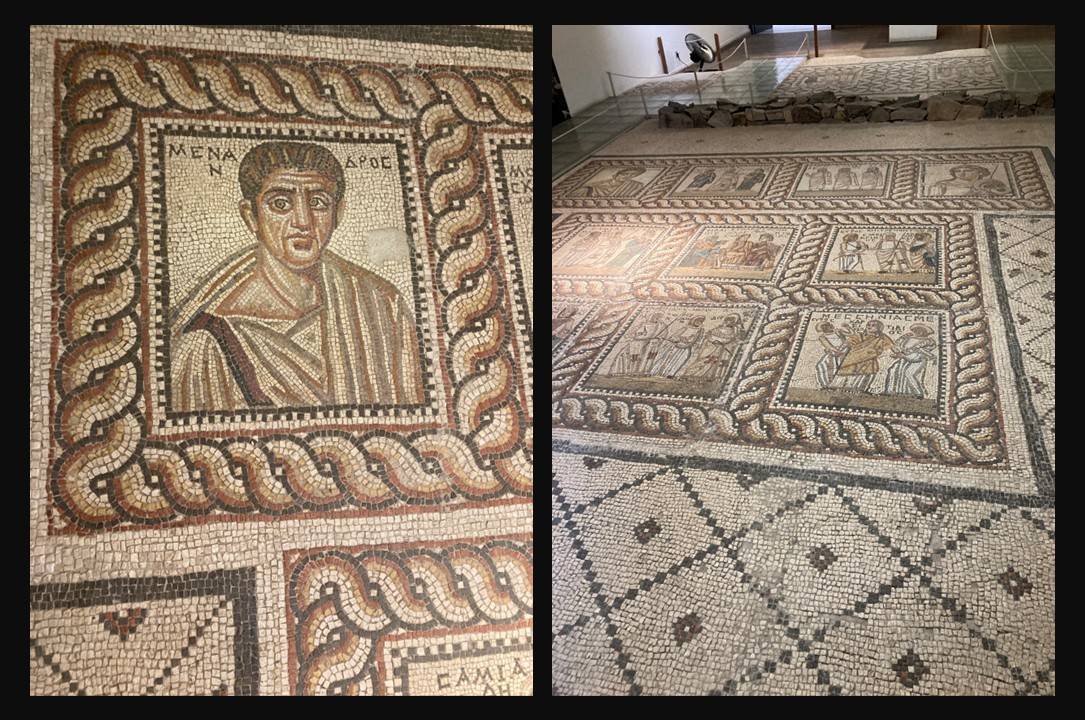
Floor mosaics in the House of Menander in Mytilene, featuring the Portrait of Menander and figural scenes from his Comedies, preserved within the remains of a Roman-period domestic interior.

The House of Menander

Floor mosaics in the House of Menander in Mytilene, featuring the Portrait of Menander and figural scenes from his Comedies, preserved within the remains of a Roman-period domestic interior.
The House of Menander, built after the 2nd century AD, on earlier remains of the Hellenistic period, Mytilene, Greece – Photo Credit for the mosaic of Menander: Amalia Spiliakou, Summer 2025

In ancient times, the landscape west of the Euripos river, opposite the island-city of Mytilene, underwent a remarkable transformation. What began in the Archaic period as an extensive cemetery gradually evolved into a thriving residential district as the city expanded beyond its original fortified island in the early Hellenistic era. By the Roman period, this southeastern area near the hill of Agia Kyriaki had become a prestigious neighbourhood, home to affluent residents whose villas reflected the economic prosperity and cultural vitality of the island of Lesvos. Among these residences, the so-called House of Menander stands out as one of the most impressive discoveries.

Although parts of its mosaic floors had surfaced as early as 1930, the House of Menander was properly excavated in stages between 1961–63, 1973–75, and again between 2010–15 through the ‘Unification of the Archaeological Sites of Mytilene’ project. The excavations revealed continuous use of the site from the Late Classical/Hellenistic period into the Early Byzantine era, including a long-lived east–west road equipped with a stone culvert, clay pipes, and later a monumental colonnade. The villa itself, built after the 2nd century AD atop earlier Hellenistic remains, went through at least two major building phases before it was ultimately destroyed by fire in the late 3rd century.

Architecturally, the House of Menander represents the late Roman peristyle house at its finest. At its center lay a marble-paved courtyard framed by three columns on each side and surrounded by covered stoae that led to the wings of the house. Much of the north and west wings survive today, including representative rooms used for meetings, dining, and entertainment, while other parts were lost to later Early Byzantine construction and the 20th-century refugee housing built after the Asia Minor Catastrophe. Even in its fragmentary state, the villa conveys a sense of refinement, wealth, and a strong commitment to artistic expression.
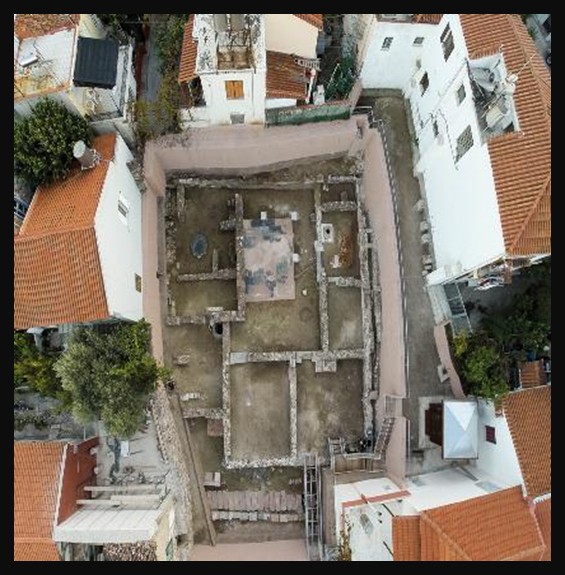
Aerial view of the House of Menander archaeological site in Mytilene, Lesbos, showing the rectangular remains of a late Roman-period peristyle house with visible outlines of walls and courtyard foundations set into the urban fabric.
The House of Menander, Areal View of the archaeological site, built after the 2nd century AD, on earlier remains of the Hellenistic period, Mytilene, Greecehttp://odysseus.culture.gr/h/2/gh2560.jsp?obj_id=19976

The Mosaics in the House of Menander

This artistic identity is best revealed in the villa’s extraordinary mosaics. The northern stoa features intersecting geometric patterns framing metopes inspired by the comedies of Menander, the great Athenian playwright of the New Comedy, whose name has been symbolically attached to the house. The western stoa continues the theme with more geometric motifs, theatrical masks, and a charming fishing scene. Inside the north wing, the hall (oecus) contains a magnificent Orpheus mosaic: the legendary poet-musician sits playing his lyre, enchanting animals and even the nearby tree whose branches bend towards him. The neighbouring triclinium presents an even richer narrative tapestry, with ten mosaic panels depicting Menander’s portraits, scenes from his comedies, Socrates with his disciples, and the muse Thalia. Inscriptions identify the plays, scenes, and actors, underscoring the cultural literacy and theatrical tastes of the villa’s occupants.
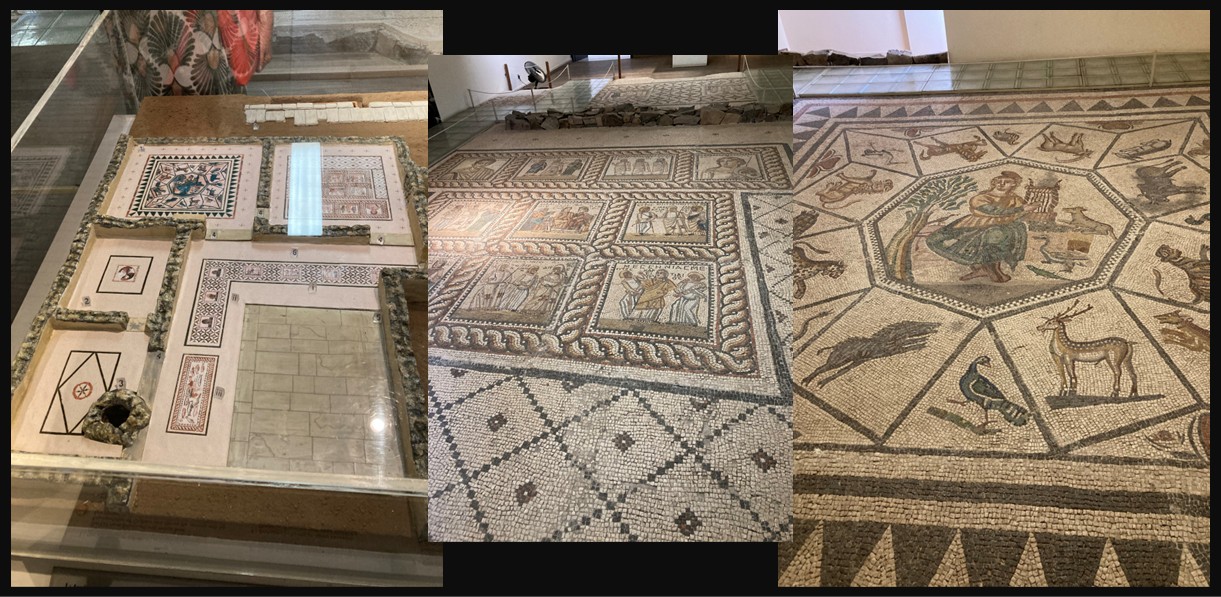
Roman floor mosaics from the House of Menander in Mytilene, composed of multicolored tesserae.
Mosaics from the House of Menander in the Archaeological Museum of Mytilene, after the 2nd century AD, Mytilene, Greece – Photo Credit: Amalia Spiliakou, Summer 2025

Beyond their beauty, these mosaics offer compelling insights into the household’s identity. The built altar and marble-lined offering table in the hall, as well as the burnt cesspit near the triclinium, point to domestic ritual practices. Combined with the overwhelming theatrical and philosophical themes of the mosaics, they suggest two possibilities: either the villa belonged to a wealthy citizen deeply engaged with drama, music, and intellectual life, or it served as the seat of a Dionysiac actors’ association, a guild dedicated to the god of theatre. In either case, the House of Menander stands as a celebration of performance, artistry, and cultural memory within a domestic setting.

After the villa’s discovery, its mosaics were painstakingly detached, conserved, and restored throughout the mid-20th century. Since 1998, they have been the star attraction of the New Archaeological Museum of Mytilene, where visitors can admire their detail up close. Meanwhile, the remains of the house itself, still embedded in the quiet neighborhood of Krinagoras Street, are accessible to the public, offering a rare opportunity to walk through a Roman residence where poetry, philosophy, and theatre once animated the floors beneath its inhabitants’ feet.

For a downloadable PowerPoint Presentation on the House of Menander and its mosaics, please… Click HERE!

Bibliography: from the Archaeological Routes of Lesvos https://www.efales-ar.gr/en/ancient_site/the-house-of-menander-in-mytilene/ and the Greek Ministry of Culture http://odysseus.culture.gr/h/2/eh2560.jsp?obj_id=19976
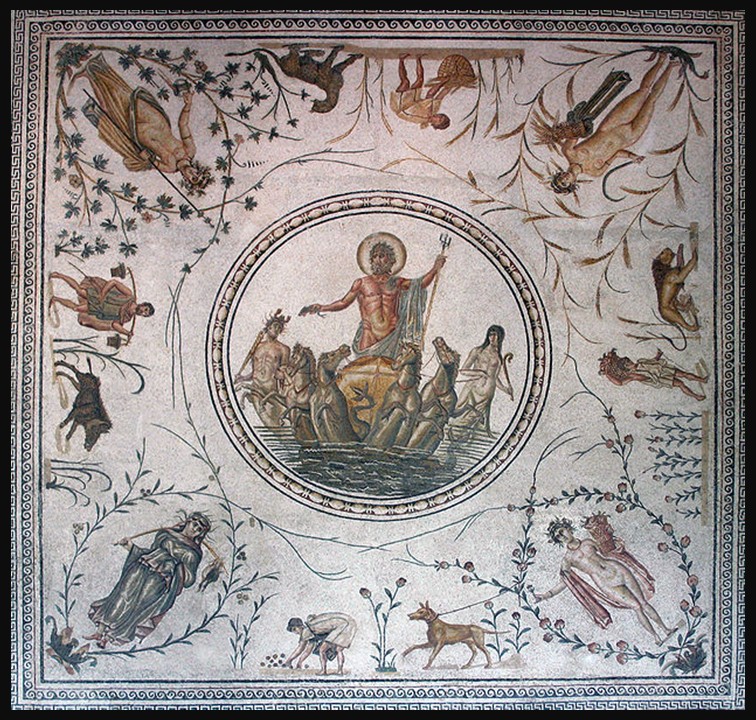
Triumph of Neptune and the Four Seasons

Triumph of Neptune and the Four Seasons, from La Chebba, Tunisia, late 2nd century AD,  Mosaic, Bardo National Museum, Tunis, Tunisia https://en.m.wikipedia.org/wiki/File:Neptune_Roman_mosaic_Bardo_Museum_Tunis.jpg

I remember standing before the Triumph of Neptune and the Four Seasons mosaic at the Bardo Museum, in Tunisia, sunlight filtering through the high windows as if to echo the brilliance of the scene before me. Neptune, regal and commanding, surged forward in his chariot drawn by sea creatures, while the Four Seasons circled him in a dance of eternal return, each one marked by fruits, flowers, or flowing cloaks. It was as if time itself had been trapped in tesserae, inviting me to reflect on nature’s rhythms and the grandeur of ancient imagination. Today, on the first day of Summer 2025, I’m drawn back to that moment, a reminder that every season begins with awe and the quiet power of renewal.

The Triumph of Neptune and the Four Seasons mosaic was unearthed in 1902 during archaeological excavations at a Roman seaside villa in La Chebba, a coastal town in northeastern Tunisia. The excavation, carried out by archaeologists D. Novak and A. Epinat, revealed a Roman villa comprising twelve rooms, most of which were paved with mosaics of notably good style. The principal room featured a grand composition: at the center, Neptune rides over the waves, attended by two companions, while the four corners are occupied by elegant personifications of the Four Seasons. Likely serving as an atrium or formal reception space, this square, columned room showcased the opulence and artistic refinement of Roman domestic life. Dating from the mid-2nd century AD, during the reign of Antoninus Pius, the mosaic reflects the cultural and aesthetic heights achieved in Roman Africa. After its discovery, it was transferred to the Bardo National Museum in Tunis, where it remains one of the most admired treasures of the collection.

The central medallion of the mosaic from La Chebba presents a commanding depiction of Neptune, the Roman god of the sea. He stands prominently in a quadriga—a four-horse chariot—drawn by hippocamps, mythical sea creatures that are part horse and part fish. Neptune is portrayed nearly nude, showcasing a muscular physique, and is adorned with a nimbus, symbolizing his divinity. In his hands, he holds a trident and a dolphin, traditional attributes associated with his dominion over the sea. The chariot is guided by a Triton and a Nereid, both depicted partially submerged, emphasizing the marine setting of the scene. This composition, as analyzed by Gifty Ako-Adounvo in her 1991 thesis, is unique in Roman mosaic art for combining Neptune with the Four Seasons, reflecting a sophisticated iconography that intertwines themes of nature’s cycles and divine authority.

In the Tunisian mosaic, the Four Seasons are strategically placed at the four corners of the square composition, creating a visual framework around the central circular medallion that features Neptune in his marine chariot. This architectural arrangement draws the viewer’s eye inward while symbolically enclosing Neptune’s dominion within the eternal cycle of time.

In the Triumph of Neptune and the Four Seasons mosaic from La Chebba, each Season is personified as a female figure and placed in one of the four corners of the square composition, surrounding the central medallion of Neptune. These figures are accompanied by specific animals that enrich the symbolic and seasonal imagery. Spring, adorned with floral motifs, wears a floral crown, evoking rebirth and the blossoming of nature. She is paired with a dog, possibly a greyhound, evoking themes of pastoral vitality and energy. Summer, holding sheaves of wheat, is flanked by a lion, representing the strength and intensity of the sun at its peak. Autumn, bearing grapes or a cornucopia, appears with a leopard, reinforcing the season’s association with Dionysian festivity and harvest. Winter, heavily cloaked and bearing pinecones or bare branches, is accompanied by a boar, an animal linked to the hunt and the harshness of the cold months.

Together, the figures of the Four Seasons not only anchor the composition visually but also embody a deeper message of natural rhythm and divine governance. Their accompanying animals, drawn from both myth and the natural world, intensify the seasonal symbolism while reflecting the broader North African mosaic tradition, which skillfully weaves cosmic order with scenes of rural life and agricultural labor.

For Student Activities inspired by the La Chebba mosaic, please… Check HERE!

Bibliography: American Journal of Archaeology, Jul. – Sep., 1903, Vol. 7, No. 3 (Jul. – Sep., 1903), pp. 357-404 Published by: Archaeological Institute of America, and https://honorthegodsblog.wordpress.com/2015/02/25/triumph-of-neptune-and-the-four-seasons-from-la/, and https://www.romeartlover.it/Bardo.html

House of the Ancient Hunt

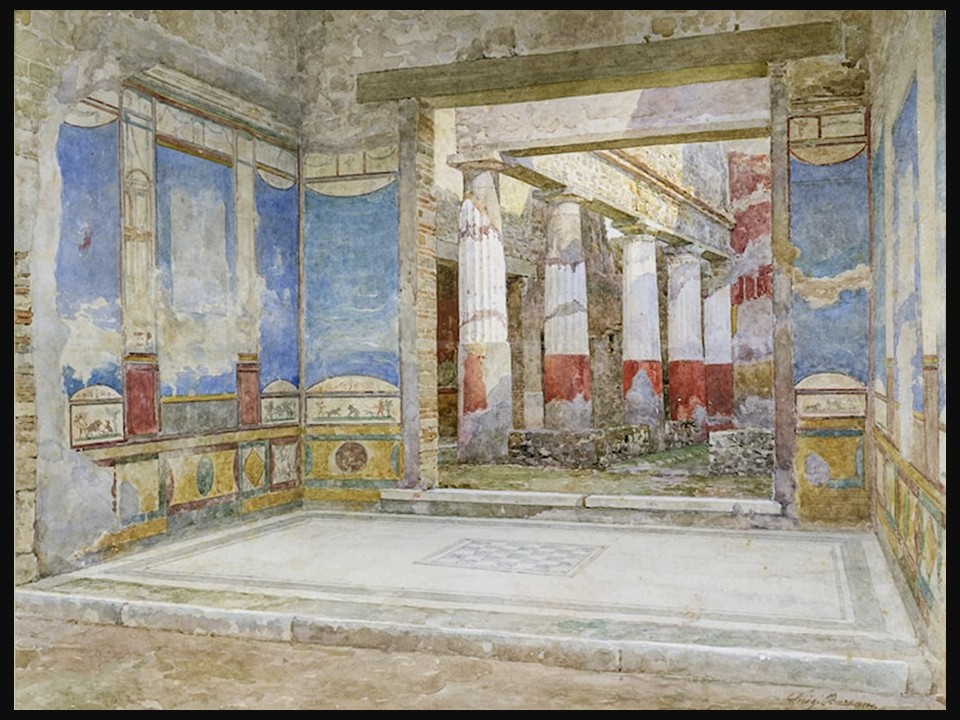
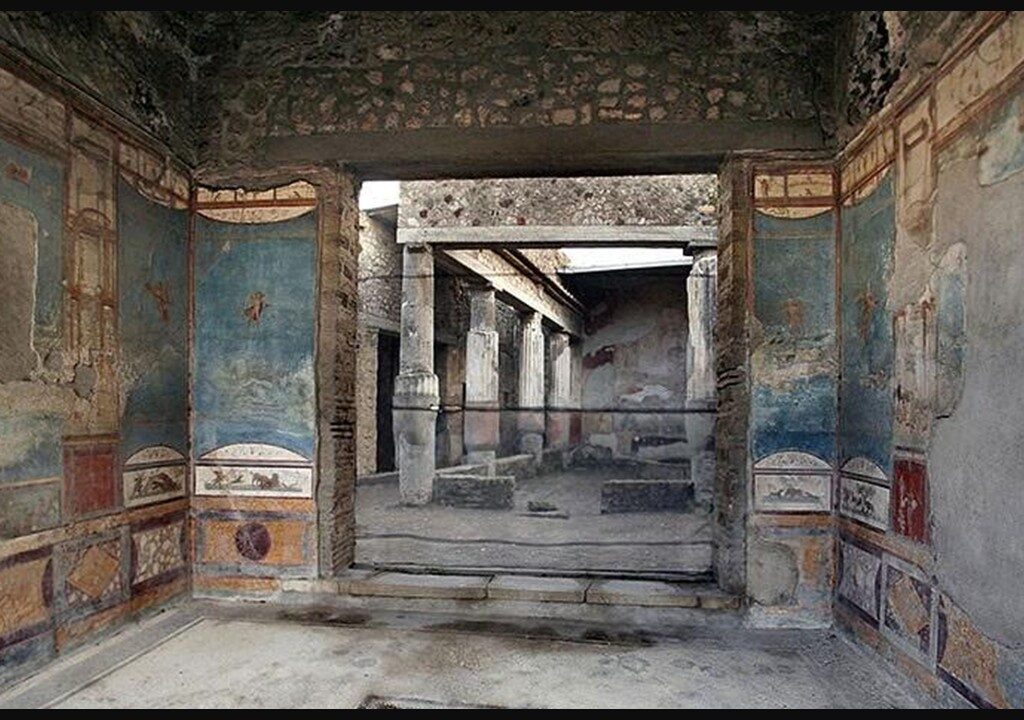
Tablinum in the House of the Ancient Hunt in Pompeii, Regio VII   Insula 4.48, Pompeii, Italy
https://www.planetpompeii.com/it/map/casa-della-caccia-antica.html

Nestled in the heart of Pompeii, the House of the Ancient Hunt (Casa della Caccia Antica) is a captivating glimpse into the artistry and domestic life of the ancient Roman elite. Named for its striking frescoes depicting dynamic hunting scenes, this modest yet elegant domus offers insight into the aesthetic tastes and daily routines of its former inhabitants. Unlike the grand villas of Pompeii’s wealthiest citizens, the House of the Ancient Hunt showcases a more intimate and functional design, yet it remains rich in decoration, reflecting the cultural fascination with nature and sport. As we step through its timeworn corridors, we uncover not just a beautifully preserved home, but a testament to the artistic mastery and lived experiences of a civilization frozen in time.

The House of the Ancient Hunt (Casa della Caccia Antica) is located on Via della Fortuna, in Regio VII, Insula 4, No. 48 within the city of Pompeii, near the Via degli Augustali, a central street that connected key areas of the city. Dating to the 2nd century BC, the house exemplifies a traditional Italic domus with a relatively compact yet elegant architectural plan. Upon entering, visitors pass through a narrow fauces (entrance corridor) that leads into a central atrium, which once featured an impluvium (a rainwater collection basin). Surrounding the atrium are several cubicula (bedrooms) and a tablinum (reception area), which opens into a charming peristyle garden adorned with frescoes. The house is best known for its vivid hunting-themed wall paintings, particularly in the peristyle, depicting dynamic scenes of hunters pursuing wild animals—a reflection of Roman aristocratic leisure and cultural ideals. Despite its relatively modest size compared to Pompeii’s grander residences, the House of the Ancient Hunt remains a fine example of domestic architecture, blending functionality with artistic refinement.

The tablinum of the House of the Ancient Hunt (Casa della Caccia Antica) served as the central reception area, positioned between the atrium and the peristyle, allowing for a seamless transition between the more public and private spaces of the house. This room, a hallmark of traditional Roman domus architecture, was likely used by the owner for conducting business, receiving guests, and displaying status through artistic decoration. In this case, the tablinum not only functioned as an administrative space but also as a visual gateway to the house’s most striking artistic feature – the vibrant frescoes that adorned the walls of this amazing house.

Luigi Bazzani, Italian Artist,1836-1927
Tablinum in the House of the Ancient Hunt in Pompeii, 1886, Watercolour on Paper, 34.92x 47.94, Victoria and Albert Museum, London UK https://www.artrenewal.org/artworks/atrium-a-pompei-nella-domus-della-caccia-antica/luigi-bazzani/92235  

The room’s wall decoration follows the Fourth Pompeian Style (c. 60–79 AD), a highly theatrical and elaborate aesthetic that integrates architectural illusionism, intricate ornamentation, and mythological narratives. The lower portion of the walls features an imitation of polychrome marble cladding, reflecting a taste for luxury by simulating the expensive materials used in elite Roman homes. The central register is striking, set against a turquoise blue background, divided into panels adorned with winged figures, architectural views on a white background, and predellas depicting cupids engaged in hunting, reinforcing the house’s thematic connection to the chase. Two prominent mythological scenes stand out: Theseus and Ariadne outside the labyrinth, symbolizing triumph and abandonment, and Daedalus presenting Pasiphae with the wooden bull, an episode tied to deception and desire in the myth of the Minotaur’s conception.

Aesthetically, the decoration of the Tablinum exemplifies the Fourth Style’s emphasis on illusionistic depth, vibrant color contrasts, and dynamic compositions. The turquoise blue central background, a rare and striking choice, enhances the ethereal quality of the winged figures while simultaneously creating a vivid contrast with the architectural elements. The mythological vignettes, rendered in delicate, miniature-like detail, evoke a refined taste for storytelling, drawing the viewer into dramatic moments from Greek mythology. The cupids hunting in the predellas serve as a playful yet symbolic nod to the themes of pursuit and conquest, which resonate both in the act of hunting and in the mythological narratives depicted above. The upper zone, with its white background and fantastical architectural motifs, further extends the illusionistic space, creating a sense of openness and grandeur. This interplay of myth, ornamentation, and spatial illusion not only enhances the aesthetic richness of the room but also reflects the intellectual and artistic ambitions of its owner, transforming the Tablinum into a theatrical stage of myth, power, and beauty.

For a PowerPoint Presentation of the House of the Ancient Hunt in Pompeii, please check HERE!

Bibliography: https://www.planetpompeii.com/it/map/casa-della-caccia-antica.html and https://pompeiiinpictures.com/pompeiiinpictures/R7/7%2004%2048%20p1.htm

House of the Large Fountain

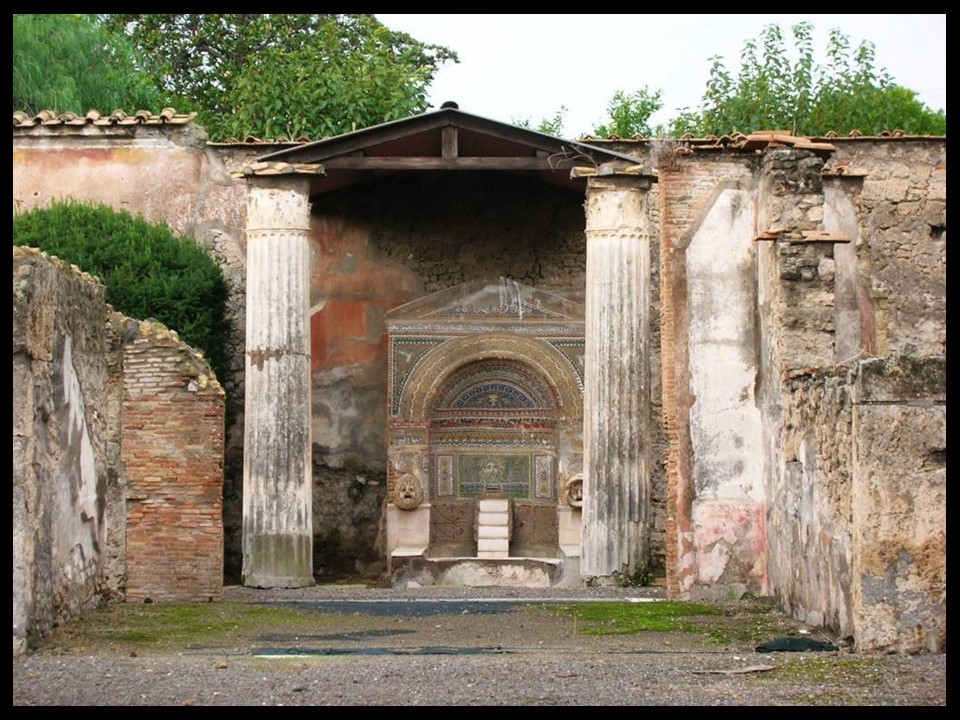
House of the Large Fountain, 2nd century BC to 1st century AD, Pompeii (Regio VI   Insula 8.22), Italy
https://pompeiisites.org/en/comunicati/the-house-of-the-large-fountain-the-house-of-the-anchor-and-the-temple-of-isis-all-reopen-to-the-public/#&gid=1&pid=8

Pompeii is an ancient Roman city located near modern-day Naples, Italy, that was buried under volcanic ash and pumice after the eruption of Mount Vesuvius in AD 79. The eruption preserved much of the city in remarkable detail, offering a unique glimpse into Roman life. Excavations have revealed homes, streets, public baths, markets, and temples, as well as vibrant frescoes and mosaics. One of the notable residences is the House of the Large Fountain, famous for its elaborate garden fountain adorned with mosaics, showcasing the wealth and artistic tastes of its owners. Pompeii is renowned for its archaeological significance, as the site provides valuable insight into the daily routines, social structures, and art of Roman civilization over 2,000 years ago.

The House of the Large Fountain is one of Pompeii’s most distinctive and luxurious residences, celebrated for its remarkable garden and ornamental water features. Located on Via di Mercurio, the house’s layout dates back to the early 2nd century BC, though it underwent various modifications over time. Originally, the two atria were connected, but later alterations separated them, with the smaller atrium marked by six Doric columns. A portico supported by brick columns was added behind the tablinum, enhancing the house’s architectural complexity. In the final years before Pompeii’s destruction, the large fountain that gives the house its name was erected against the back wall of the small garden, set against a backdrop of vibrant mosaics and decorative stucco that showcases a sense of elegance and refinement.  https://pompeiisites.org/en/archaeological-site/house-of-the-large-fountain/

House of the Large Fountain, 2nd century BC to 1st century AD, Pompeii (Regio VI   Insula 8.22), Italy
https://www.planetpompeii.com/en/map/the-house-of-large-fountain/524-the-house-of-large-fountain.html

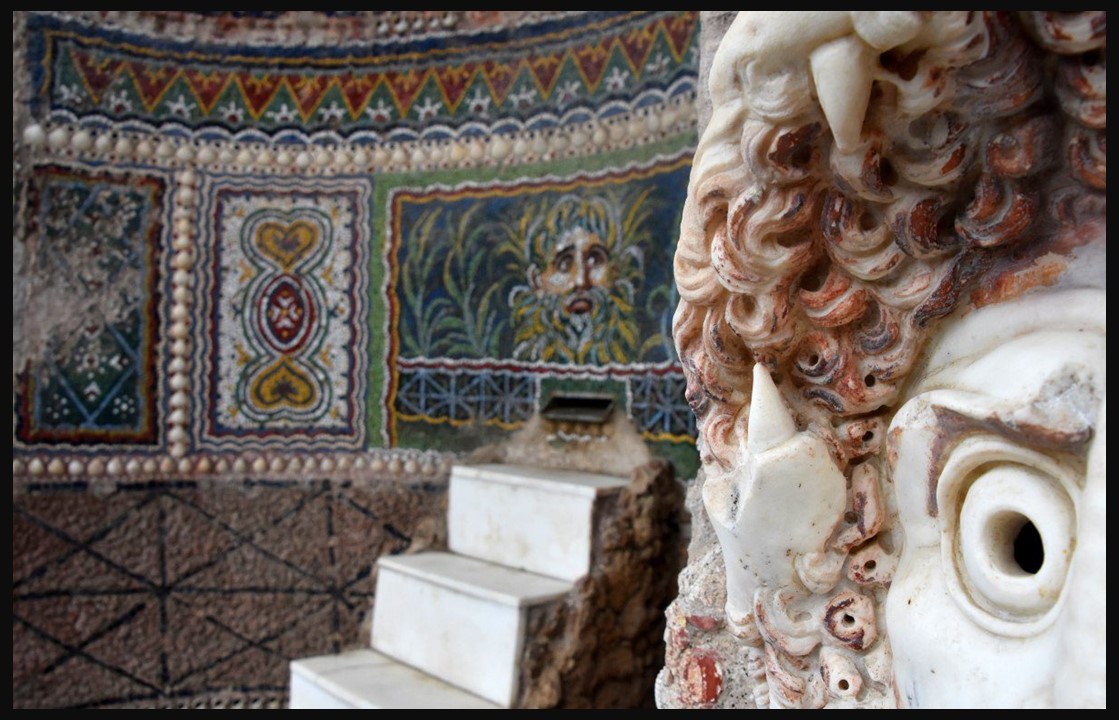
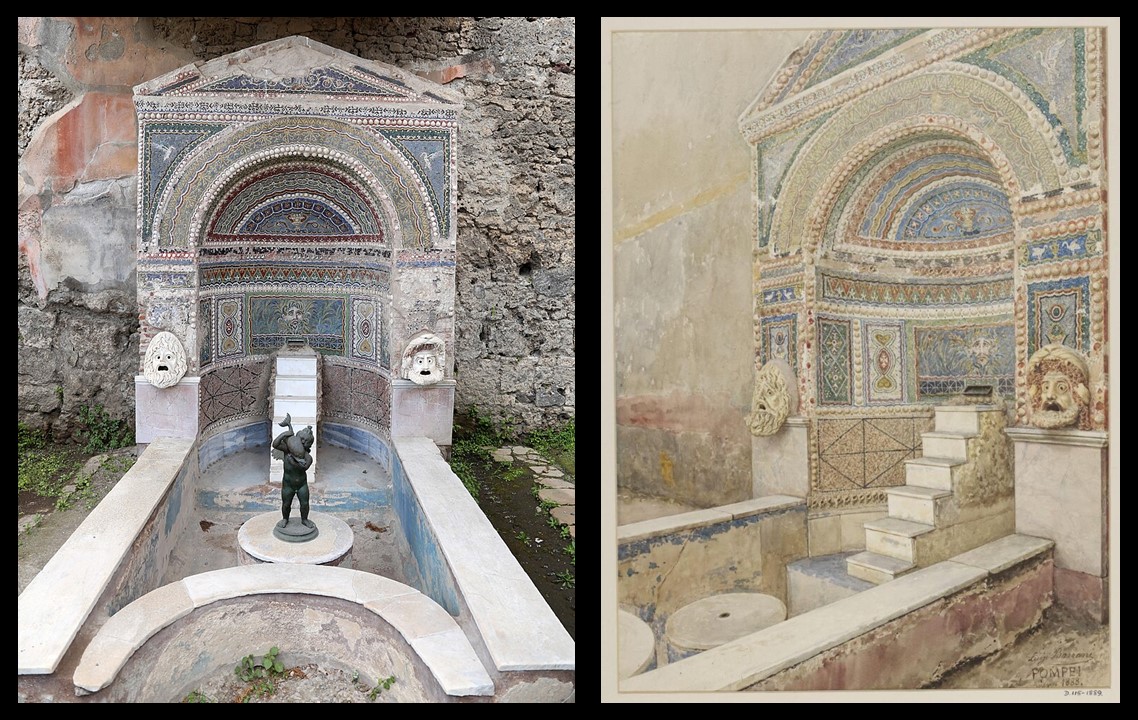
This Pompeiian example of domestic architecture is a stunning blend of artistry and antiquity, rooted in the elegance of the 2nd century BC. The fountain, the house’s most striking feature, dominates the garden space with its intricate design of wall mosaic and sculpture. In front of a colonnaded façade, the fountain consists of a niche which is completely covered with polychrome tesserae and embellished with two marble sculpture theatrical masks, a rare example of non-floor mosaic nympheum made of glass paste and stone. The mosaics, adorned with delicate seashells, and two marble theater masks, reflect the artistic tastes of the Roman aristocracy, offering a glimpse into the luxury and aesthetic values of the time. This lavish display of art and water highlights the owners’ wealth and status in Pompeian society.

The fountain’s centerpiece, a cylindrical base with a central hole, stood bare when first uncovered in the early 19th century. It wasn’t until the late 19th century that a bronze copy of a cherub riding a dolphin, originally discovered in the nearby House of the Arches, was placed at the fountain’s heart. This artistic choice mirrored the style of the House of the Small Fountain, where a similar cherubic figure with a goose serves as the focal point. The display we see today faithfully recreates this historical arrangement, echoing the fountain’s transformation and its lasting legacy over the centuries.

The fountain, positioned at the end of the garden, would have provided a soothing ambiance with its flowing water, contributing to the overall tranquility of the space, offering valuable insight into how water, art, and nature were integrated into daily life. This feature, combined with the house’s other luxuries, points to the social status of its owners, who likely used the space for both private leisure and hosting social gatherings.

House of the Large Fountain, 2nd century BC to 1st century AD, Pompeii (Regio VI   Insula 8.22), Italy
https://www.planetpompeii.com/en/map/the-house-of-large-fountain/524-the-house-of-large-fountain.html and Luigi Bazzani, Italian Artist, 1836–1927
A fountain in Pompeii (House of the Large Fountain, Pompeii), 1888, Watercolour on Paper, 46.35x 35.56 cm, Victoria and Albert Museum, London, UK https://collections.vam.ac.uk/item/O406355/painting-of-pompeii-drawing-luigi-bazzani/#object-details

Today, the house is a key example of Roman domestic art and garden design, offering valuable insight into how water, art, and nature were integrated into daily life. The lavish decorations and grand layout reflect the wealth and aspirations of the Pompeian elite, while the preservation of the site allows modern visitors to step into a world of ancient luxury. The House of the Large Fountain continues to fascinate both archaeologists and visitors for its artistic and architectural significance.

For a PowerPoint Presentation of the House of the Large Fountain in Pompeii, please… Click HERE!

Bibliography: https://collections.vam.ac.uk/search/?page=1&page_size=15&q=Luigi+Bazzani

Eros Punished

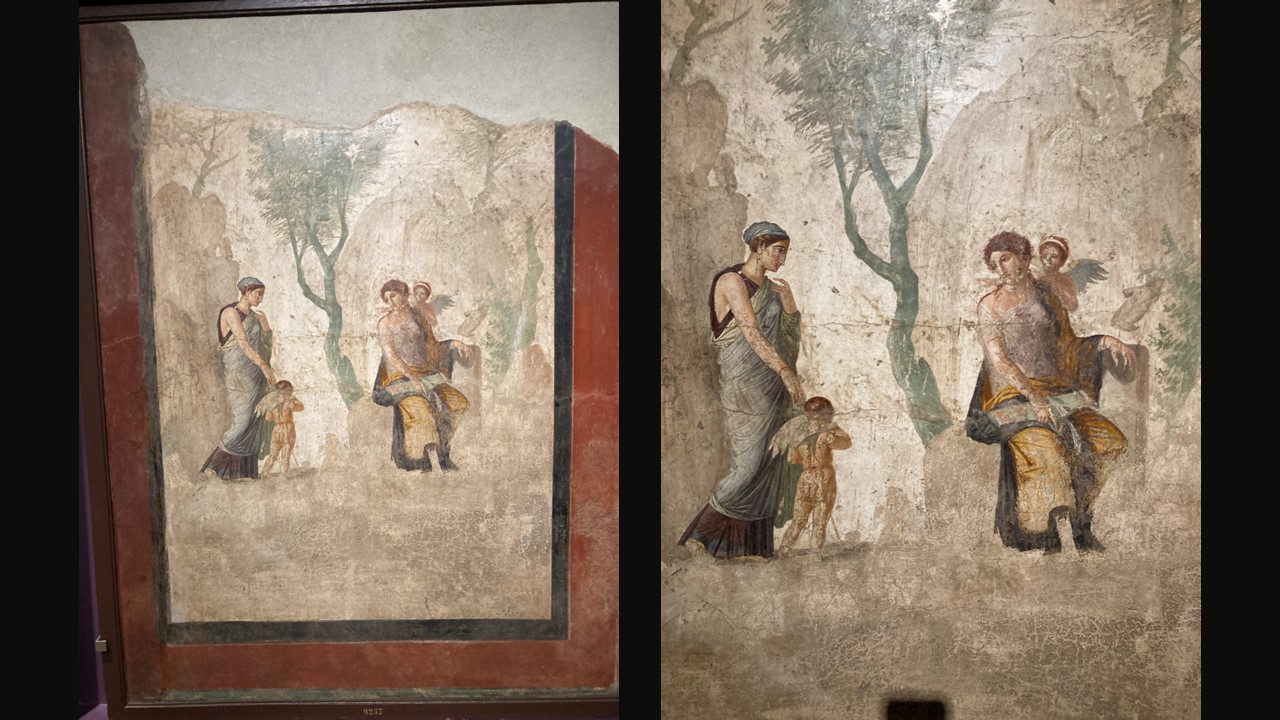
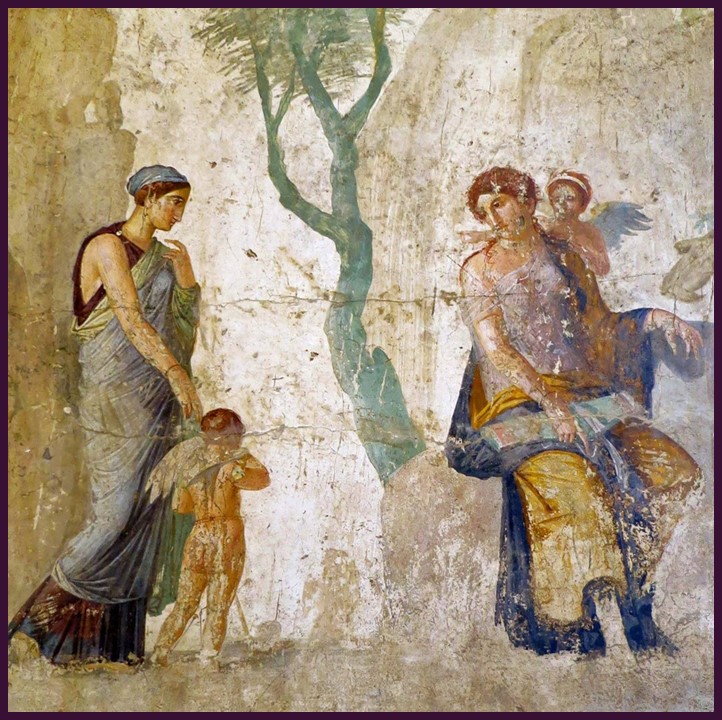
Eros Punished, 1st century AD, Fresco, 126×162.3 cm, from the House of Punished Eros in Pompeii, National Archaeological Museum of Naples, Italy – Photo Credit: Amalia Spiliakou, February 18, 2024, ‘Meanings’. Personifications and Allegories from Antiquity to Today Exhibition, Acropolis Museum, Athens, Greece

On February 17, 2024, in Athens, attending an exceptional exhibition, titled ‘NοΗΜΑΤΑ’: Personifications and Allegories from Antiquity to Today, held at the Acropolis Museum, I came face to face with an adorable Pompeiian fresco titled Eros Punished. It is now part of the Museo Archaeologico Nazionale di Napoli, but back in the 1st century AD, adorned the wall of a triclinium in the House of Love Punished in Pompeii.

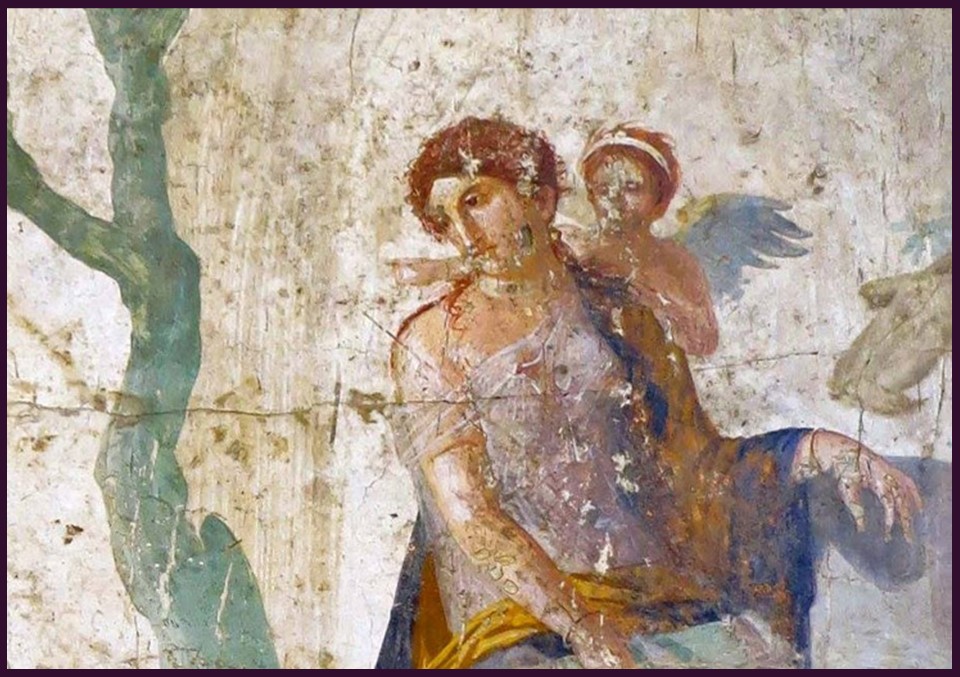
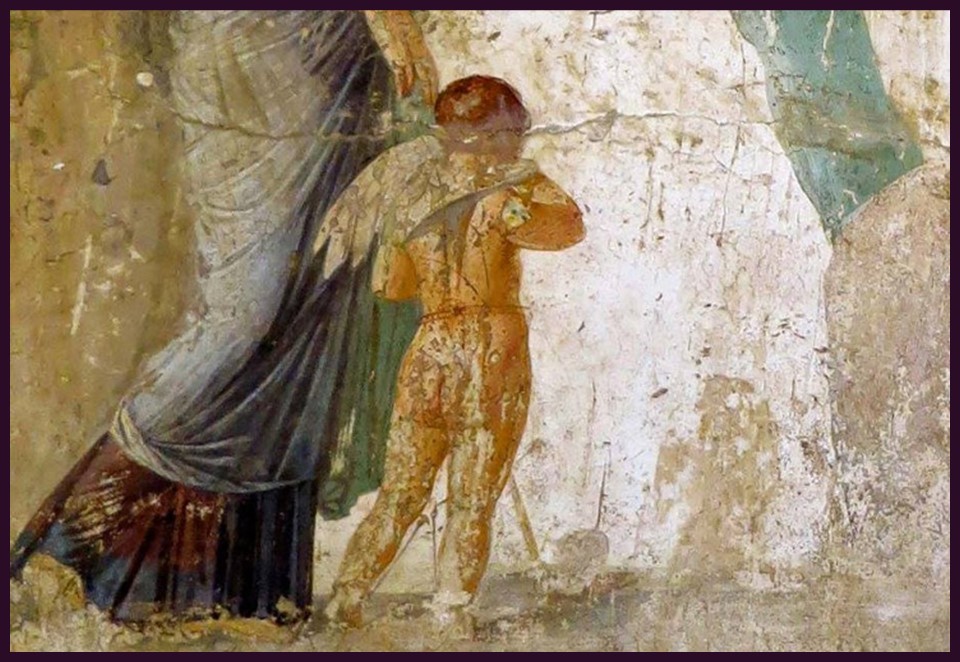
The fresco’s narrative unfolds amidst the timeless strokes of fine ancient artistry. Peithò, (Persuasion Personified), leads Eros to his mother Aphrodite, terribly crossed with him, for an impending punishment. Eros used his arrows to kindle Ares’s passion for another woman, and Aphrodite is unwilling to forgive such mischief. Peithò, Persuasion personified, affectionately holds Eros’s hand, who bearing the weight of his misdeed, seems like crying, hesitant to proceed. Aphrodite, seated regally upon a rugged perch, emanates an aura of solemnity. She holds Eros’s bow and cuirass and looks at him sadly, but firmly. Anteros, the younger sibling of Eros, lurks behind her, poised to witness the unfolding consequence with a mixture of anticipation and childish delight. This tableau, frozen in time, capturing the intricate interplay of familial bonds, divine intervention, and the immutable consequences of love’s transgressions, delights me!

Eros Punished (detail), 1st century AD, Fresco, 126×162.3 cm, from the House of Punished Eros in Pompeii, National Archaeological Museum of Naples, Italy
https://www.planetpompeii.com/en/blog/eros-and-anteros-the-love-needs-to-be-reciprocated-to-grow.html
Eros Punished (detail), 1st century AD, Fresco, 126×162.3 cm, from the House of Punished Eros in Pompeii, National Archaeological Museum of Naples, Italy
https://www.planetpompeii.com/en/blog/eros-and-anteros-the-love-needs-to-be-reciprocated-to-grow.html

In exploring this scene, I cannot overlook the intriguing presence of God Eros and his younger brother Anteros within the same composition. The relationship between Eros and Anteros, symbolizing the two counterparts of reciprocal love, finds its vivid portrayal in a fanciful myth recounted by the fourth-century rhetorician Themistius. Through Themistius’s narrative, we glimpse into the depths of brotherly affection and the profound consequences it entails…

When Aphrodite gave birth to Eros, the child was beautiful and befitted his mother in any respect but one: he did not grow to a size appropriate to his beauty… The baby’s mother and the Graces, his nurses, did not know what to do when confronted with this situation. They went to Themis… and asked her to find some means by which they might be delivered from their strange and astonishing misfortune. Themis said: “I shall put an end to your predicament. The problem is that you do not yet know the true nature of the baby. Eros, your genuine offspring, may perhaps have been born alone but he cannot grow up in any part of the body: you need Anteros if you want Eros to grow. These brothers will have the same nature; each will be responsible for the other’s growth. For when they see each other, they will both shoot up equally; but if one of them is deprived of the other, they will both shrink in size.” And so Aphrodite conceived Anteros, and Eros immediately had a spurt of growth and sprouted wings and was tall. Since this is Eros’s fortune, he often endures strange transformations, now sprouting up, now shrinking, then growing again. He always needs his brother’s presence. If he sees that his brother is of sizable stature, he is eager to appear bigger himself; but he often shrinks in size, against his own will, once he has discovered that his brother is shrunken and small.

Eros Punished (detail), 1st century AD, Fresco, 126×162.3 cm, from the House of Punished Eros in Pompeii, National Archaeological Museum of Naples, Italy
https://www.planetpompeii.com/en/blog/eros-and-anteros-the-love-needs-to-be-reciprocated-to-grow.html

For a PowerPoint on Eros and Anteros in Art, please… Check HERE!

Bibliography on Eros and Anteros: Eros and Anteros or Reciprocal Love in Ancient and Renaissance Art by Guy de Tervarent, Journal of the Warburg and Courtauld Institutes, Vol. 28 (1965), pp. 205-208 p.272 https://www.jstor.org/stable/2853330?read-now=1&seq=8#page_scan_tab_contents  and Grecian and Roman mythology by Dwight, M. A. (Mary Ann), 1806-1858, p. 266 https://archive.org/details/cu31924029135651/page/n269/mode/1up and Anteros: On Friendship Between Rivals and Rivalry Between Friends p. 9 file:///C:/Users/aspil/Downloads/Post_columbia_0054D_11776.pdf

The House of the Bicentenary in Herculaneum

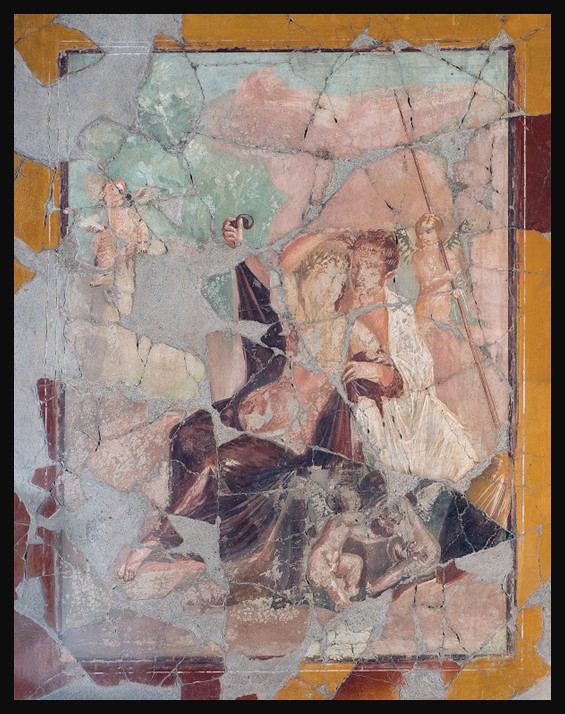
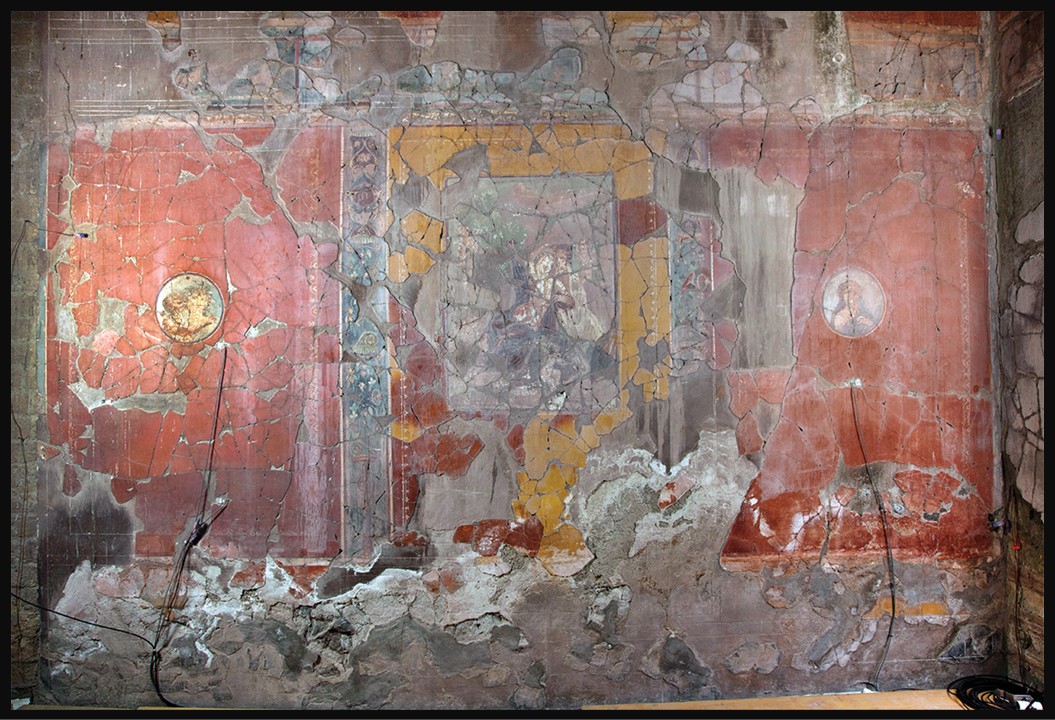
The Bicentenary House, the fresco of Aphrodite and Aris, 1st century AD, Tablinum, Herculaneum, Italy https://minervamagazine.com/grand-designs-at-herculaneum.html

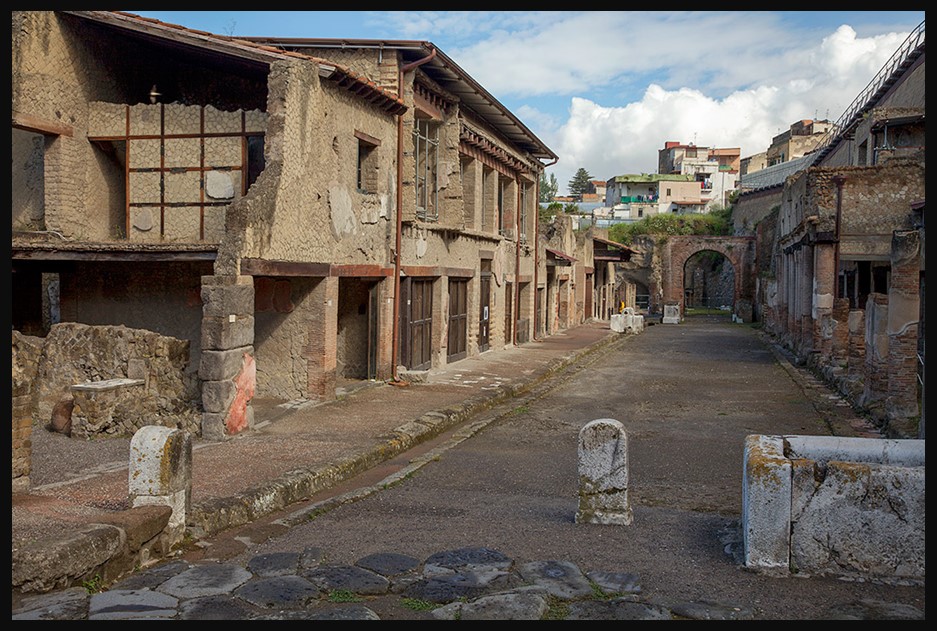
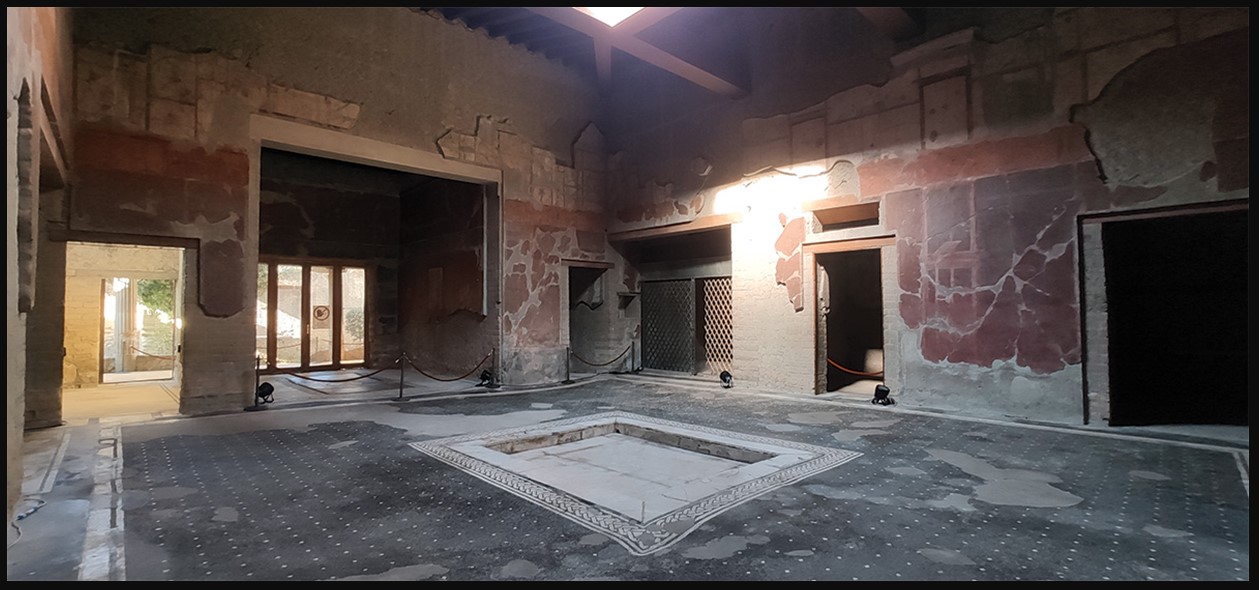
The House of the Bicentenary in Herculaneum is one of the site’s jewels. Back in the 1930s, archaeologist Amedeo Maiuri described it as a sumptuous noble house of elegant proportions. It is one of Herculaneum’s largest townhouses, as would be expected for a property with such a prominent location on the main street of the town, close to the theatre, the law courts, and the forum. The stately 1st-century BC house was built on two storeys and its façade was decorated with a brightly coloured green-and-red chequerboard pattern, with a balcony looking over the street. Inside, a large atrium with a central marble pool led to an elegant room for receiving guests. Both were covered with lavish mosaic pavements and wall paintings, all indicating that this was a noble house that belonged at some point to prosperous owners… https://minervamagazine.com/grand-designs-at-herculaneum.html

The House of the Bicentenary is one of the best preserved noble houses at Herculaneum, with highly refined wall paintings and mosaic pavements, 1st century AD, Herculaneum, Italy https://www.getty.edu/conservation/our_projects/field_projects/herculaneum/overview.html

History of the Archaeological Site

The House of the Bicentenary was unearthed under the direction of archaeologist Amedeo Maiuri, in 1938, amidst the bicentennial celebrations of the excavations at Herculaneum. Concurrently, efforts were made to stabilize, restore, and exhibit the site, with artefacts showcased in the atrium’s left hall and a preserved wood screen displayed in the right hall. By 1983, however, the house faced severe deterioration, worsened by exposure to the elements and heavy tourist traffic. Structural instability, deteriorating wall paintings, crumbling tuffa walls, flaking paint layers, and lifting mosaics plagued the once-grand villa, necessitating urgent restoration efforts.

In a decisive move, the House underwent closure to visitors, heralding a transformative period in 2011. A collaborative effort ensued, with the participation of the Getty Conservation Institute (GCI), the Archaeological Park of Herculaneum, and the Herculaneum Conservation Project, united in a mission to comprehensively research, analyze, document, and stabilize the edifice’s architectural framework, wall surfaces, frescoes, and mosaic pavements. Particular focus was directed towards the restoration of the remarkable Tablinum area. The outcome of this concerted effort has been nothing short of remarkable. Such was the extent of the achievement that Domenico Camardo, the chief archaeologist at the Herculaneum Conservation Project, expressed the endeavour as not only a pivotal moment in the house’s preservation but also an opportunity for pioneering advancements in conservation methodologies and materials, with implications reaching far beyond the site itself. https://www.thehistoryblog.com/archives/56824

An Overview of the House of the Bicentenary…

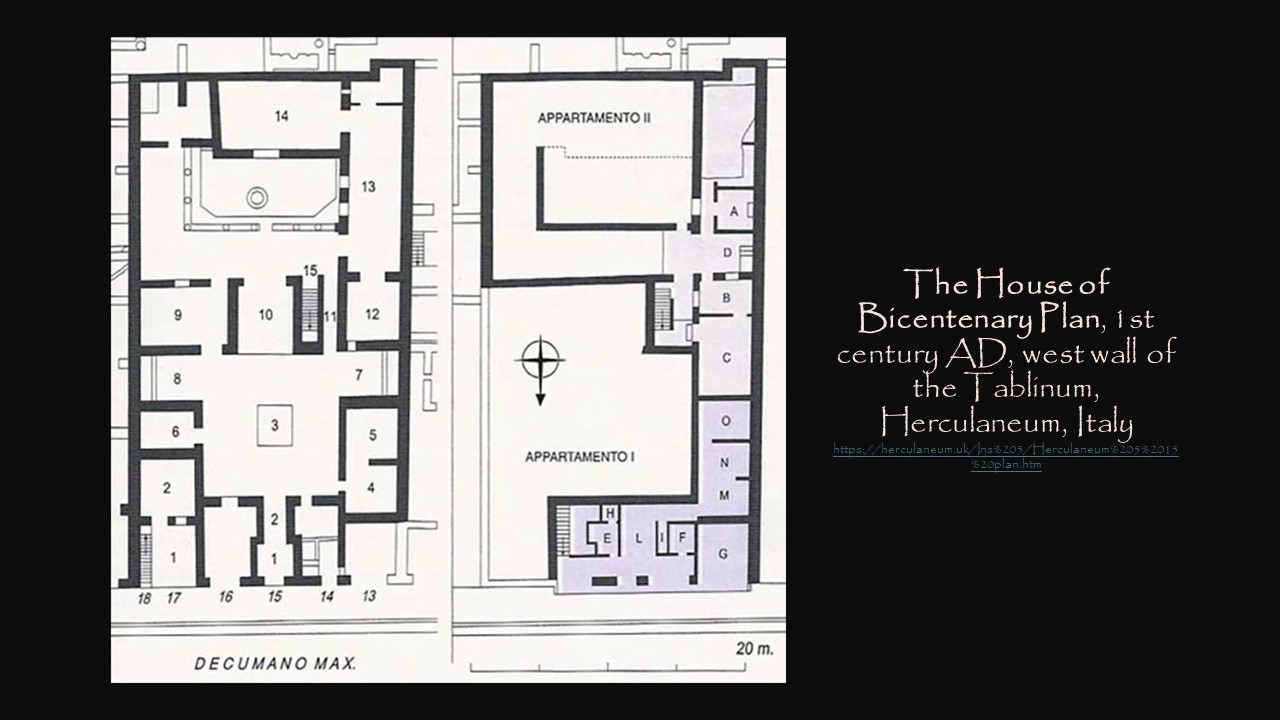
Nestled along Herculaneum’s bustling main thoroughfare, the city’s Decumanus Maximus, the Bicentenary House once hosted Gaius Petronius Stephanus and his wife Calantonia Themis within its exquisite confines. Renowned as one of the city’s most opulent residences, sprawling across over 600 square meters and boasting an upper floor, its halls were adorned with meticulously preserved mosaic floors and frescoes breathing life into mythological narratives and intricate architectural and animal motifs. Particularly noteworthy is the Tablinum (Room 10 on the Plan), adorned with a collection of 4th Pompeian Style paintings renowned for their beauty and craftsmanship, offering visitors a glimpse into the peak of artistic expression within the site.

The Bicentenary House, 1st century AD, Tablinum, Herculaneum, Italy https://minervamagazine.com/grand-designs-at-herculaneum.html

On the Tablinum Frescoes…

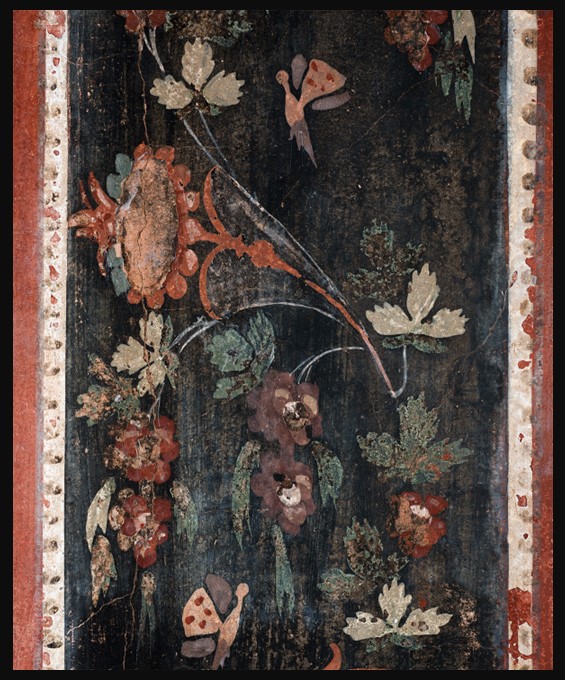
The decoration of the Tablinum is superb. The room’s ensemble of wall paintings exhibits artistic and archaeological importance portraying mythological scenes, cupids in a variety of activities, and portraits of Dionysiac figures of the utmost elegance and sophistication. Finally, the unique mosaic pavement in opus sectile and opus tessellatum, creates a unique mosaic floor, blending opulent reds, yellows, and blacks in a sophisticated scheme.

The Bicentenary House, the fresco of Aphrodite and Aris with medallions of Dionysiac portraits, 1st century AD, Tablinum, fresco, Herculaneum, Italy https://minervamagazine.com/grand-designs-at-herculaneum.html

According to Amedeo Maiuri… The tablinum preserves a rich, sparkling marble pavement, like a polychrome carpet, and on the walls, paintings, medallions, and a frieze; in the panels are represented the myths of Daedalus and Pasiphae and of Venus and Mars; in the medallions are busts of Satyrs, Sileni and Maenads. On the upper part of the walls runs a frieze with cupids. From the tablinum, we reach the little portico with the garden and the rustic rooms on the ground floor. https://herculaneum.uk/Ins%205/Herculaneum%205%2015%20p3.htm

For a PowerPoint on the House of the Bicentenary, please… Check HERE!

The Bicentenary House, the fresco of Aphrodite and Aris with medallions of Dionysiac portraits, 1st century AD, Tablinum, fresco, Herculaneum, Italy https://minervamagazine.com/grand-designs-at-herculaneum.html

Europa on the Bull in the House of Jason in Pompeii

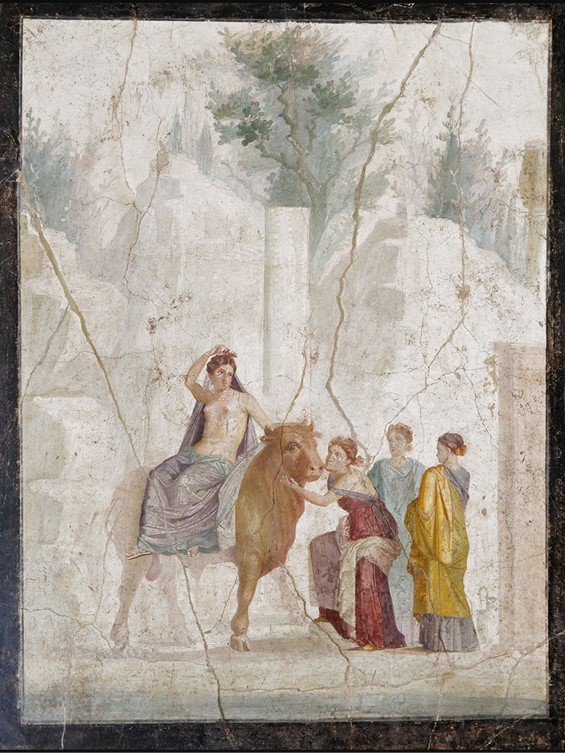
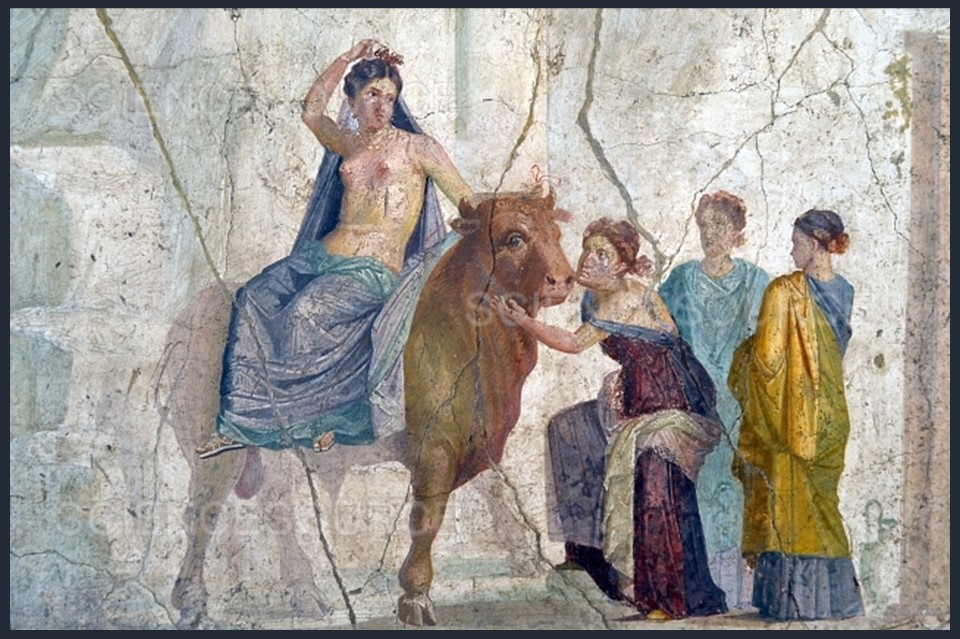
Europe on the Bull, 20-25 AD, Fresco Painting,125×95 cm, from Pompeii, Room ‘f’ in the House of Jason, today, in the National Archaeological Museum, Naples, Italy https://ancientrome.ru/art/artworken/img.htm?id=2092

In 1878 archaeologists discovered a most wonderful fresco of the Myth of Europa on the Bull in the House of Jason in Pompeii! Let’s explore the ‘where’, ‘which’, ‘how’, and ‘what’ of this amazing fresco by posing some questions!

What is the Myth of Europa and Zeus? In the myth of the Abduction of Europa, Zeus, the king of the gods, is captivated by the beauty of Europa, a Phoenician princess and daughter of King Agenor. Seized by desire, Zeus transforms into a magnificent bull and approaches Europa with an air of gentleness. Europa, charmed by the bull’s allure, climbs onto its back, only for Zeus to swiftly take off, and carry her across the sea to the island of Crete. Upon reaching Crete, Zeus discloses his identity, and Europa becomes his queen. This myth of love and adventure, steeped in symbolism and divine intrigue, has left a lasting legacy, not only in the naming of the continent of Europe but also in its enduring influence on art, literature, and the understanding of ancient cultural values.

How does Ovis describe the Myth of the Abduction described in his Metamorphoses? So the father and ruler of the gods, who is armed with the three-forked lightning in his right hand, whose nod shakes the world, setting aside his royal sceptre, took on the shape of a bull, lowed among the other cattle, and, beautiful to look at, wandered in the tender grass.  /   In colour he was white as the snow that rough feet have not trampled, and the rain-filled south wind has not melted. The muscles rounded out his neck, the dewlaps hung down in front, the horns were twisted, but one might argue they were made by hand, purer and brighter than pearl. His forehead was not fearful, his eyes were not formidable, and his expression was peaceful. Agenor’s daughter marvelled at how beautiful he was and how unthreatening. But though he seemed so gentle she was afraid at first to touch him. Soon she drew close and held flowers out to his glistening mouth. The lover was joyful and while he waited for his hoped-for pleasure he kissed her hands. He could scarcely separate then from now. At one moment he frolics and runs riot in the grass, at another he lies down, white as snow on the yellow sands. When her fear has gradually lessened he offers his chest now for virgin hands to pat and now his horns to twine with fresh wreaths of flowers. The royal virgin even dares to sit on the bull’s back, not realising whom she presses on, while the god, first from dry land and then from the shoreline, gradually slips his deceitful hooves into the waves. Then he goes further out and carries his prize over the mid-surface of the sea. She is terrified and looks back at the abandoned shore she has been stolen from and her right hand grips a horn, the other his back, her clothes fluttering, winding, behind her in the breeze. This is how Ovid describes in Bk II:833-875 Zeus’s abduction of Europa. https://ovid.lib.virginia.edu/trans/Metamorph2.htm#476707521

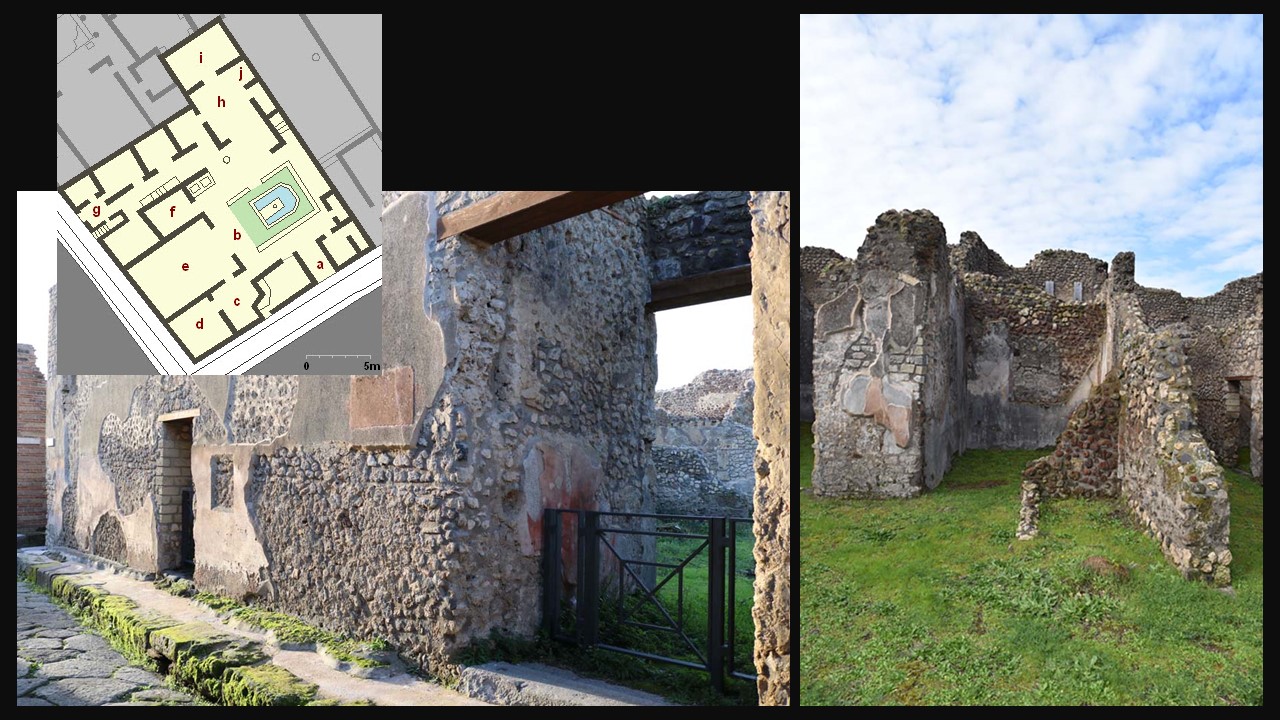
House of Jason in Pompeii, Ground Plan, Photo of the entrance hall ‘a’ of Jason’s House looking towards the Atrium ‘b’, central living room and Photo of the internal garden/Atrium ‘b’, looking west towards room ‘f’, where three amazing fresco panels, including the Abduction of Europa, were discovered https://ermakvagus.com/Europe/Italy/Pompeii/jason.html and https://www.pompeiiinpictures.com/pompeiiinpictures/R9/9%2005%2018%20p1.htm    and https://www.pompeiiinpictures.com/pompeiiinpictures/R9/9%2005%2018%20p9.htm

Where did archaeologists discover the Roman fresco of Europa’s Abduction? The fresco was discovered in the House of Jason, in 1878, in Pompeii, in Region IX, Insula 5, Entrance 18. Today, the building is in a fairly sad dilapidated condition due to weather erosion. It is a relatively small residence compared to other Pompeiian Houses, but rich in exceptional frescoes which, taken to the National Archaeological Museum in Naples, are currently exhibited.

Which famous fresco panels, exhibited in the National Archaeological Museum in Naples, were discovered in the House of Jason? In Room ‘d’, one of the House’s cubicula (bedrooms), archaeologists discovered three large mythological scenes (they have long been removed to the National Museum in Naples) depicting Paris waiting for Aphrodite, Medea, and Phaedra. Two more frescoes, Phoenix and Polyxena, and Jason and Pelias were discovered in the triclinium marked as ‘e’. Finally, Room ‘f’ provides us with three more fresco panels presenting the Abduction of Europa, Pan and the Nymphs, and Hercules, Deianira, and Nessus. https://ermakvagus.com/Europe/Italy/Pompeii/jason.html

What do we know about the discovery of the Pompeiian fresco of the Abduction of Europa? The House of Jason was originally discovered in 1878 in Pompeii, Italy. On the western side of the House, in a small Room, marked ‘f’ in the Plan, archaeologists discovered three frescoes, exhibited today in the National Archaeological Museum in Naples, the Abduction of Europa being one of them.

Europe on the Bull (detail), 20-25 AD, Fresco Painting,125×95 cm, from Pompeii, Room ‘f’ in the House of Jason, today, in the National Archaeological Museum, Naples, Italy https://www.sciencesource.com/1719661-europa-fresco-pompeii.html

How can the Abduction fresco be described? The Abduction fresco captures the poignant opening of the famous Myth of Europa, where the Phoenician king Agenor’s young daughter finds herself captivated by the bull’s gentle demeanor and striking beauty. Overwhelmed by the creature’s tranquil presence, her initial fear gradually dissipates, encouraging her to daringly mount its back. Positioned on the right side of the fresco are three of Europa’s companions, with one leaning forward to tenderly caress the bull’s face. The entire composition unfolds against a backdrop of breathtaking ‘Hellenistic’ scenery, characterized by intricate rock formations, architectural motifs such as the central column, and lush greenery.

For a PowerPoint of all frescoes discovered in the House of Jason and exhibited in the National Archaeological Museum in Naples, please… Check HERE!

House of the Doves in Pompeii

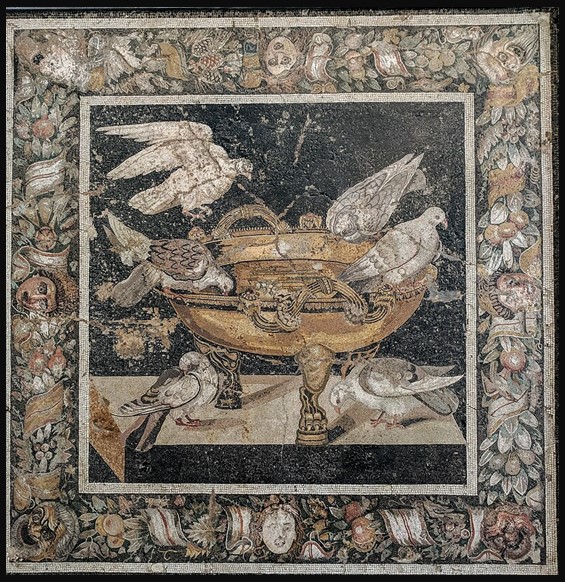
Mosaic Emblema with Doves on a Water Basin, 1st century BC, Room ‘n’ House of Doves in Pompeii (Region VIII, 2-34), now in Naples Archaeological Museum, Italy https://commons.wikimedia.org/wiki/Category:Doves_drinking_at_a_golden_basin,_mosaic_(from_Pompeii)#/media/File:Doves_at_a_Basin,_Mosaic.jpg

The dove, revered across cultures and religions, stands as a powerful symbol of Peace, Purity, and Hope. With its gentle demeanor and graceful flight, the dove has been a timeless emblem of tranquility and reconciliation. In various ancient mythologies, the dove has been linked to goddesses of love and fertility, like Inanna/Ishtar in Mesopotamia, or Aphrodite in Greece, adding a dimension of divine love to its symbolism. The dove’s appearance in the biblical story of Noah’s Ark further solidified its association with peace and new beginnings, as it returned to Noah carrying an olive branch, signaling the end of the flood. In Christianity, it gained prominence as a symbol of the Holy Spirit, often depicted during significant moments like the baptism of Jesus. Beyond religious contexts, the dove has become a universal icon for peace movements and humanitarian causes, transcending borders and languages to convey a shared aspiration for harmony in the world. As we usher in the New Year, let the beautiful mosaic of Doves in the House of the Doves in Pompeii serve as a heartfelt message for peace and prosperity in the coming year! May the spirit of these doves inspire moments of serenity and abundance in your life as we embark on this fresh journey together.

The House of the Doves (Casa delle Colombe or Casa di V. Popidius) is a captivating ancient Roman residence located in the archaeological site of Pompeii. Situated in the southwestern part of the city (Regio VIII, 2-34), this well-preserved house offers a glimpse into the lifestyle of the Pompeian elite during the first century AD. The house derives its name from a stunning mosaic that adorns one of its rooms (Room ‘n’ in Plan), featuring six Doves in various poses, around a water basin. Its layout is typical of Roman homes, with a central atrium surrounded by rooms adorned with frescoes, mosaics, and other ornate decorations. The architectural and artistic elements found within the house provide valuable insights into the aesthetics and daily life of Pompeii’s ancient inhabitants, making it a fascinating destination for archaeologists, historians, and visitors alike.

The intricate Mosaic Emblema featuring three doves perched on the rim of a golden water basin supported by lion’s feet, with a fourth dove gracefully descending and two more resting on the shelf below, is just one among the numerous exquisite details that distinguish this particular residence. Unearthed during the March 1885 excavation season in Room ‘n,’ an oecus or triclinium located in the southeast corner of the house’s atrium, the impressive mosaic is currently on display at the Naples Archaeological Museum. https://mann-napoli.it/en/mosaici-2/

The room’s floor, hardly preserved today, was made of a white mosaic with small tesserae without any border. In the center, the Emblema with the Doves is believed to derive from a model by the famed mosaicist Sosus of Pergamon (εκ Περγάμου ψηφιδογράφος Σώσος), an artist discussed and much admired by Pliny the Elder.

Sosus of Pergamon, a renowned Hellenistic mosaicist, left an indelible mark on the ancient world with his extraordinary mosaic artworks. Pliny describes Hellenistic mosaic making and Sosus’s accomplishments as …Paved floors originated among the Greeks and were skilfully embellished with a kind of paintwork until this was superseded by mosaics. In this latter field the most famous exponent was Sosus, who at Pergamum created a greatly admired mosaic of a Dove… in the act of drinking, and throwing the shadow of its head upon the water; while other birds are to be seen sunning and pluming themselves, on the margin of a drinking-bowl. https://www.perseus.tufts.edu/hopper/text?doc=Perseus%3Atext%3A1999.02.0137%3Abook%3D36%3Achapter%3D60

While none of Sosus’s original works have withstood the test of time, his renown persists through the admiration of later artists and historians. His impact on the art of mosaic has created a lasting legacy, inspiring subsequent generations and enriching the intricate tapestry of Hellenistic artistic achievement. The question arises: is the Pompeiian Mosaic of Doves a reproduction of Sosus’s renowned Hellenistic mosaic? An affirmative response is quite likely.

Wishing you a joyous and fulfilling New Year filled with Harmony and Happiness!

Behold, I send you forth as sheep in the midst of wolves: be ye therefore wise as serpents, and harmless as doves (Matthew 10:16)… https://www.biblegateway.com/passage/?search=Matthew%2010%3A16&version=NIV

For a Student Activity, inspired by the beautiful mosaic of Doves in the House of the Doves in Pompeii, please… Check HERE!

A reference to the legendary Hellenistic Mosaicist Sosus (εκ Περγάμου ψηφιδογράφος Σώσος), can be accessed in a former Teacher Curator BLOG POST titled Heraklitos and the Asarotos Oikos Mosaic… https://www.teachercurator.com/art/heraklitos-and-the-asarotos-oikos-mosaic/

House of the Faun

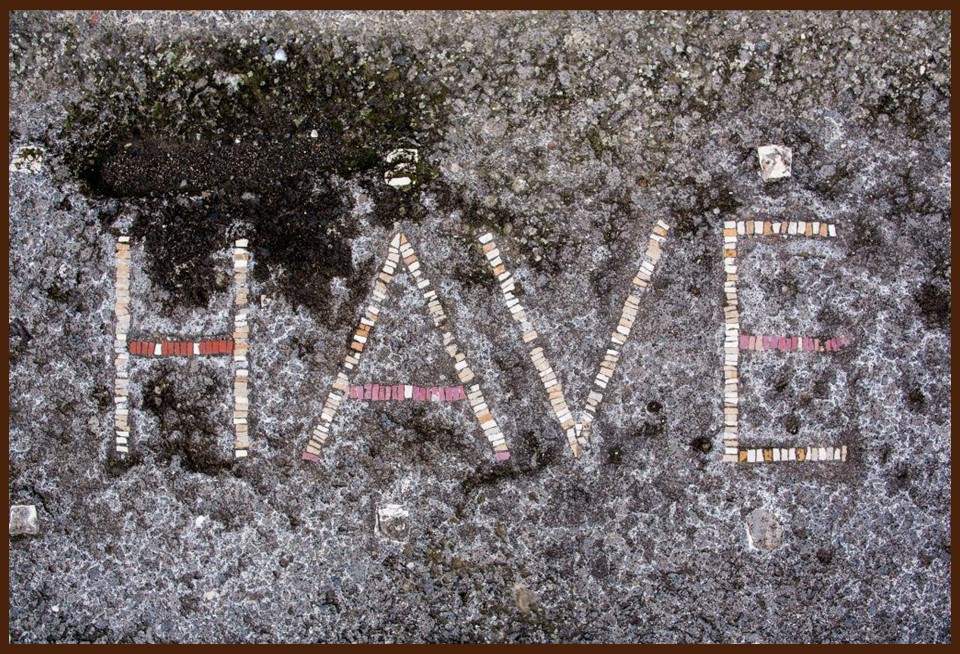
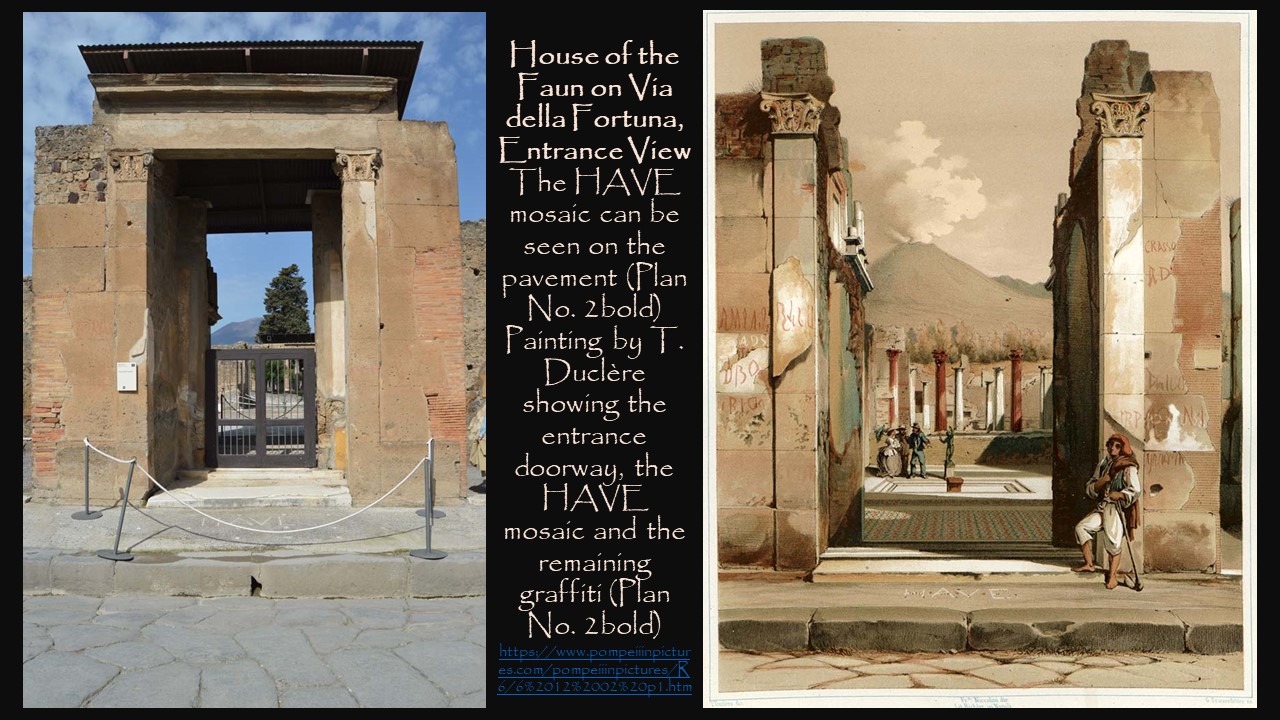
The Latin inscription HAVE, translated as Welcome in English, salutes visitors to the largest and most luxurious residence in Pompeii, The House of the Faun, 2nd century BC to 79 AD, Pompeii, Italy
http://pompeiisites.org/en/archaeological-site/house-of-the-faun /

The House of the Faun is the grandest and most lavishly decorated private residence in ancient Pompeii. Originally serving as the home of a privileged family, this remarkable house, constructed in the latter part of the second century BC, circa 180 BC to be specific, occupied an entire city block and boasted an expansive interior spanning approximately 3,000 square meters. Home to many spectacular pieces of art, the House of the Faun stands out for its opulent floor mosaics, some of which remain in their original positions, while others are exhibited at the National Museum of Naples.

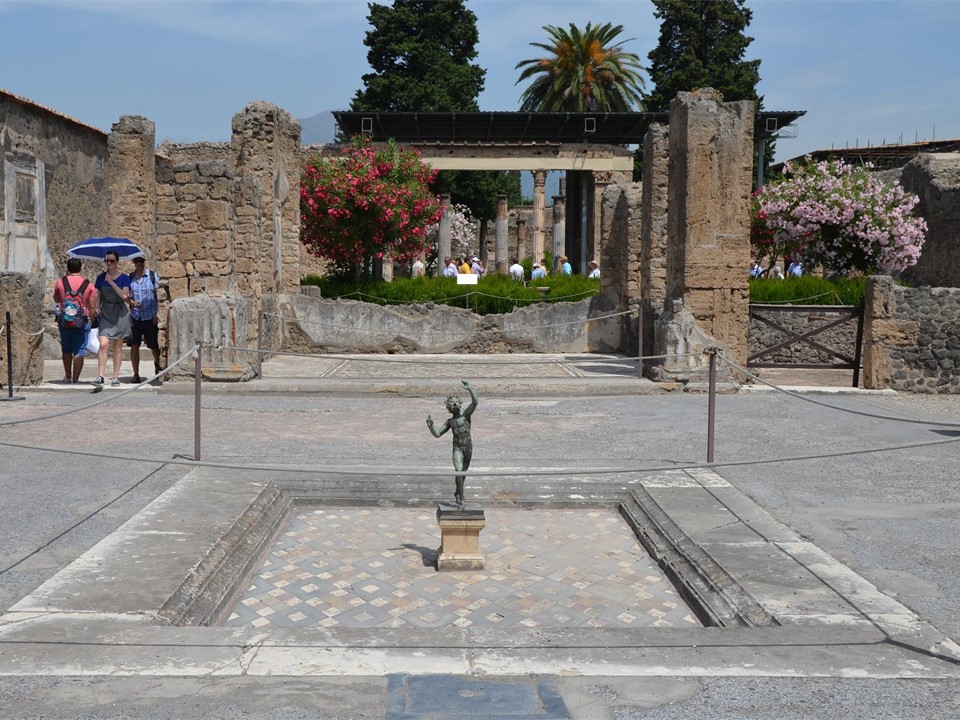
House of the Faun, the large Tuscan Atrium of the House of the Faun in Pompeii with a central impluvium (rainwater basin) and the bronze statue of the Dancing Faun, a Roman copy of a Hellenistic original bronze statue, 0.64 cm, National Museum of Naples, Italy https://www.worldhistory.org/image/11263/the-atrium-of-the-house-of-the-faun-in-pompeii/

The title, House of the Faun, derived from an original bronze figurine portraying a dancing Faun situated at the heart of a white limestone Impluvium (Plan No. 27), a basin for collecting water. Fauns, ethereal beings associated with untamed forests, were frequently linked by Romans to Pan and Greek satyrs, who were followers of Dionysus, the Greek deity associated with wine and agriculture. The original bronze statuette of the Dancing Faun is in the National Museum of Naples, thus the statue seen in the house’s ruins today is a copy.

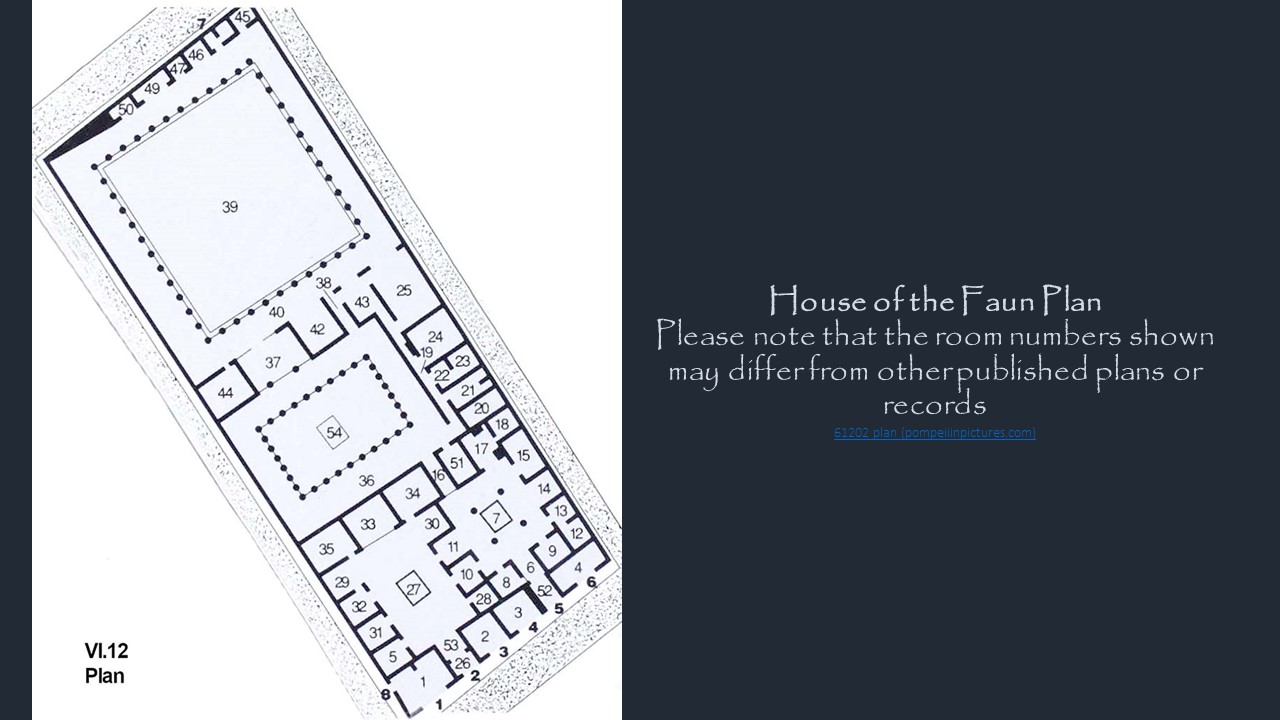
The elaborate and sophisticated architectural plan of the House of the Faun reflects the wealth and social status of its occupants and follows the standard Roman architectural style of a Domus (private family house) but on an exceptionally grand scale. The House had, for example, two main Entrances, (Plan No 2bold and No 5bold). The principal Entrance (Plan No. 2bold) led to the Tuscan Atrium (Plan No. 27), while a secondary Entrance (Plan No. 5bold) led directly to the Tetrastyle Atrium (Plan No. 7)  and the service areas. The Tuscan Atrium, with a large open hall, the heart of the house, had the impluvium in the center, a basin that collected rainwater, with a small bronze statue of a Dancing Faun, giving the house its name.

Around the Tuscan Atrium were various rooms including cubicula (bedrooms), a tablinum (office or study), and triclinia (dining rooms). A special room, the Exedra (Plan No. 37), was off the smaller Peristyle (Plan No. 36) and contained the famous Alexander Mosaic.

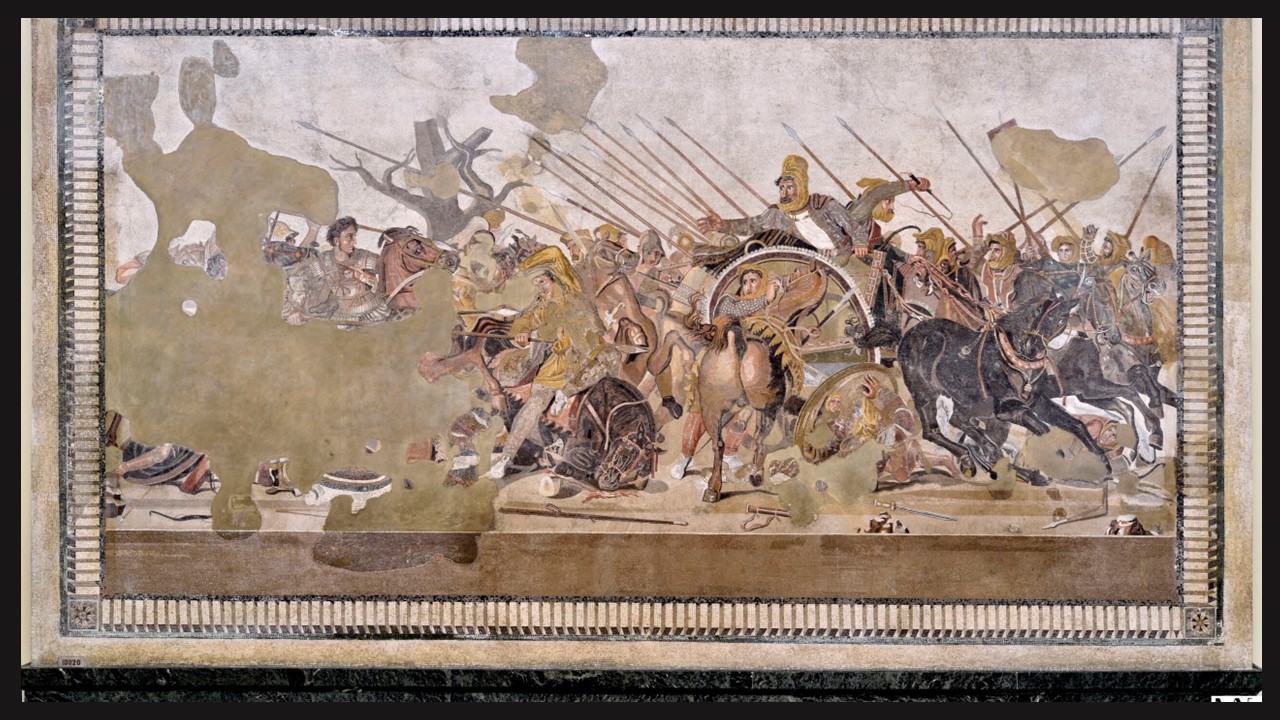
Mosaic of Alexander and Darius, 2nd century BC, Naples Archaeological Museum, Italy https://mann-napoli.it/en/mosaici-2/#gallery-4

The house had two Peristyles (Plan No. 36 and No. 39) or colonnaded courtyards. The larger one (Plan No. 39), was essentially a garden surrounded by a colonnade. The second smaller Peristyle (Plan No. 36) was more private and was linked to the private living areas. Separate service quarters were attached to the secondary entrance and the Tetrastyle Atrium (Plan No. 5bold and No. 7). These included the kitchen, a small bathing complex, slave quarters, and storerooms. On the exterior, the house had tabernae or shops (Plan No. 1, No 2, No 3, and No 4). These were leased out to generate additional income.

The House of the Faun represents a clear example of how the Romans valued both private and social aspects of life, and how they incorporated this into their architecture.

This residence is most famous for its intricate and beautifully preserved mosaics, which not only demonstrate the wealth and status of its inhabitants but also provide an insight into the aesthetic tastes of the Roman elite during this period. The mosaics serve as invaluable examples of the ancient Roman mosaic tradition, each one unique in design and execution.

The most famous mosaic found in the House of the Faun is the Alexander Mosaic, which covered the floor of the Exedra (Plan No. 37). The mosaic, dated during the 2nd century BC, is believed to depict the Battle of Issus (333 BC) between Alexander the Great and Darius III of Persia. The mosaic is lauded for its attention to detail, dramatic energy, and sophisticated use of perspective, showcasing a high degree of artistic skill.

The mosaic I find particularly touching presents one word only. It was placed in front of the main entrance to the House (Plan No. 2bold), reading HAVE, a Latin word meaning ‘Greetings’ or ‘Welcome’. Isn’t it a particularly welcoming touch to the grandeur of this spectacular Pompeiian house?

The PowerPoint I prepared for my new BLOG POST the House of the Faun has two Parts. The first consists of photos of the House itself. The second part of the PowerPoint presents photos of its famous Mosaics. For the PowerPoint, please… Check HERE!

This Video dedicated to the House of Faun is worth seeing… https://www.youtube.com/watch?v=-X4i0psJ2p0

Astragaloi Players

Alexander of Athens, 1st cent BC-1st cent AD
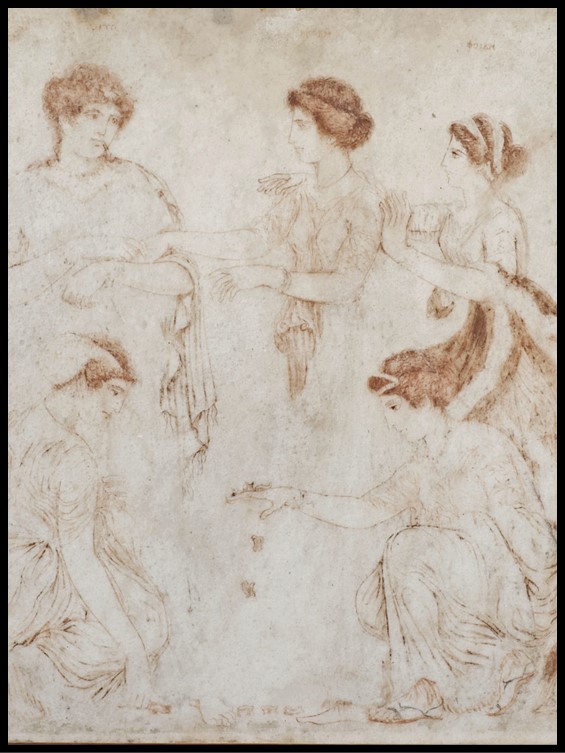
Astragaloi players from Herculaneum, 1st cent BC-1st cent AD, Marble and Pigment, 47.6×50.5 cm, National Archaeological Museum of Naples, Italy https://mann-napoli.it/affreschi/#gallery-8

Niobe ((P. Ovidius Naso, Metamorphoses)… So many things / increased her pride: She loved to boast / her husband’s skill, their noble family, / the rising grandeur of their kingdom. Such / felicities were great delights to her; / but nothing could exceed the haughty way / she boasted of her children: and, in truth, / Niobe might have been adjudged on earth, / the happiest mother of mankind, if pride / had not destroyed her wit… and Leto’s anger fell hard on her… Childless— she crouched beside her slaughtered sons, / her lifeless daughters, and her husband’s corpse. / The breeze not even moved her fallen hair, / a chill of marble spread upon her flesh, / beneath her pale, set brows, her eyes moved not, / her bitter tongue turned stiff in her hard jaws, / her lovely veins congealed, and her stiff neck / and rigid hands could neither bend nor move.— / her limbs and body, all were changed to stone… The Astragaloi Players, the painted marble Pinax from Herculaneum, takes the viewer to moments of contentment when Leto and Niobe certainly they loved each other like true friend (Sappho Fragment 142)… before Niobe’s Ύβρις (transgression against a god) and Leto’s painful Wrath!  https://www.perseus.tufts.edu/hopper/text?doc=Perseus%3Atext%3A1999.02.0028%3Abook%3D6 and https://digitalsappho.org/fragments/fr118-168/

The famous painting of the Astragaloi Players was discovered in the House of Neptune and Amphitrite, in Herculaneum, on Cardo IV, in May 1746. Not one of the largest houses in ancient Herculaneum, yet one of the most famous, and visited, as it boasts three masterpieces.

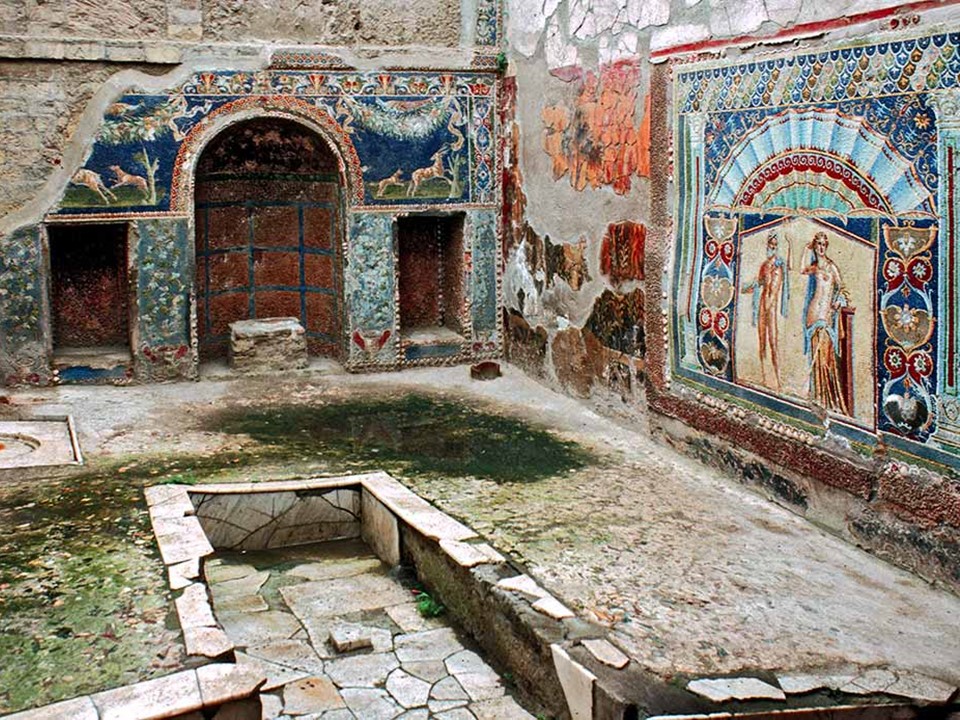
The Villa’s Garden Court, with a summer triclinium, veneered with marble, on the far end wall, the Nymphaeum, and the famous Neptune and Amphitrite mosaic.

First, the mosaic decorating the Nymphaeum, located in the Inner Garden Court of the house. Adorned with geometric and floral motifs and hunting scenes with dogs and deer composed of glass paste tesserae, shells, and designs of mother of pearl, the Nymphaeum mosaic is brightly colorful and elegant. Second, in the center of the east wall, the mosaic after which the house is named shows Neptune and Amphitrite surrounded by an exquisite frame of decorative motifs. Third, the Marble Pinax of the Astragaloi Players is detached and exhibited today in Naples Archaeological Museum.

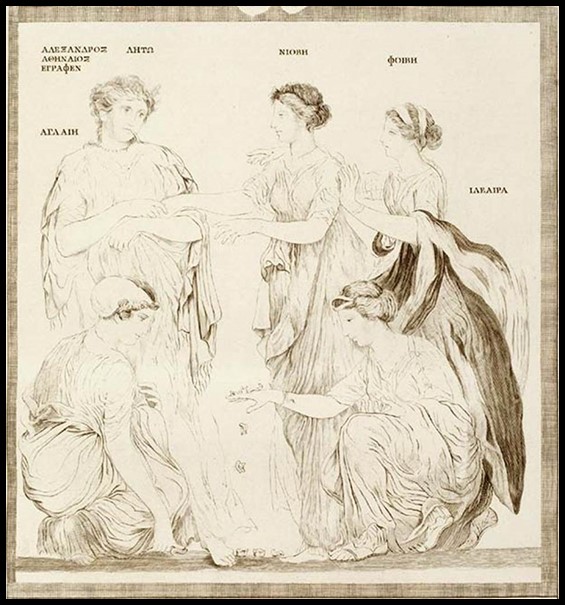
The depicted scene in the marble Pinax, titled Astragaloi Players, presents the act immediately preceding the massacre of the Niobids. The myth, also told by Ovid (Metamorphoses, VI), narrates that Niobe, wife of Amphion, king of Thebes, and mother of many children, dared to declare herself even superior to the goddess Leto, mother of only two children, Apollo, and Artemis. Leto, angered by Niobe and her outrageous presumption, ordered the killing of the queen’s seven sons by Apollo and the killing of her seven daughters with arrows shot by Artemis. https://mann-napoli.it/wp-content/uploads/2022/05/10.-Giocatrici-di-astragali.pdf

Astragaloi players from Herculaneum, Drawing of the painting on marble, in Antichità di Ercolano: Tomo Primo: Le Pitture 1, 1757, 1,5
https://herculaneum.uk/Ins%205/Herculaneum%205%2007.htm

The inscriptions in capital Greek characters, placed next to each figure depicted in the Pinax, identify the members of the story by name. In the background, three women are identified as Leto (left), Niobe (middle), and Phoebe (right). In the foreground, kneeling and involved in a game of Astragaloi, the artist of the composition placed two of Niobe’s daughters, Aglaia (left) and Ilaria (right). Another inscription, placed in the upper left corner, introduces us to the artist, a man called Alexander from Athens (ΑΛΕΞΑΝΔΡΟΣ ΑθΗΝΑΙΟΣ ΕΓΡΑΦΕΝ).  

Antonio Coppa of the Naples Archaeological Museum believes that this marble painting is most likely a Neo-Attic remake of an original painting of the late 5th century BC, attributable to the famous Zeuxis. The archaeologist also believes that the presence of names identifying each figure depicted in the composition fits into the archaizing fashion of the Augustan age, allowing to date the work between the end of the 1st century BC and the beginning of the 1st century AD. https://mann-napoli.it/wp-content/uploads/2022/05/10.-Giocatrici-di-astragali.pdf

The painting of the Astragaloi Players was immediately defined as “monochrome”, believing it to be an example of those paintings in which the only color for their realization was the cinnabar. However, recent investigations into the picture pigment have highlighted the use of multiple colors: pink and yellow for the clothes, red for the sandals, and black for the hair; moreover, the different gradations of color gave volume to the figures, therefore the current monochrome is only the result of the action of time. https://mann-napoli.it/wp-content/uploads/2022/05/10.-Giocatrici-di-astragali.pdf

What a magnificent discovery!

For a Student Activity, please… Check HERE!