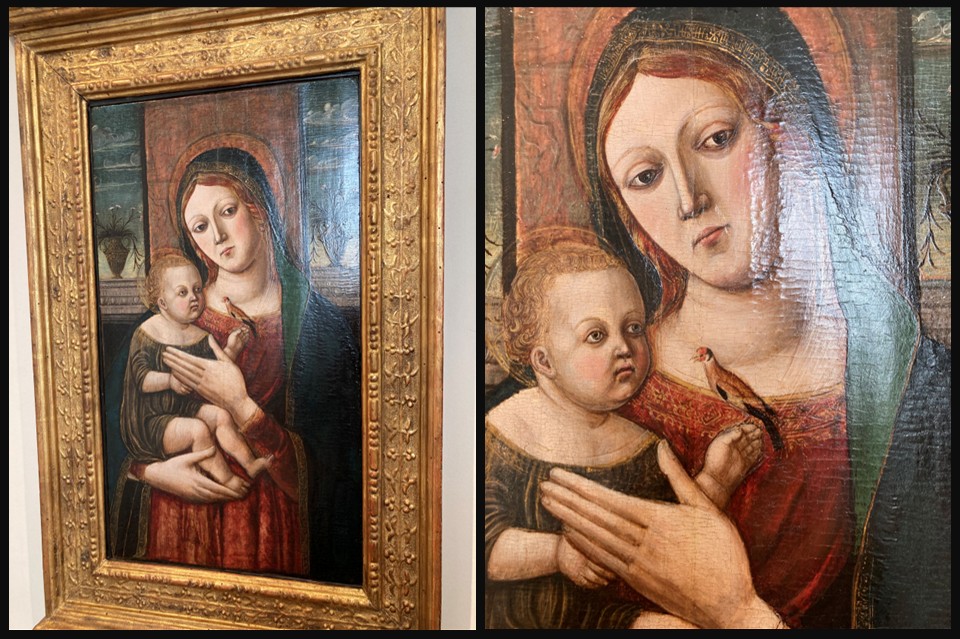
Madonna and Child, end of 15th century, Tempera on panel, Palazzo Maffei, Verona, Italy – Photo Credit: Amalia Spiliakou, September 2025
Visitors to the Palazzo Maffei in Verona often move from room to room delighted by the museum’s eclectic and carefully curated blend of antiquities, Renaissance works, and modern masterpieces. Yet among these diverse collections, Antonio Badile’s Madonna and Child stands out as a quiet but remarkable example of devotional painting from the Veronese Quattrocento. Modest in scale yet rich in emotional nuance, the work offers a revealing glimpse into the spiritual culture, artistic language, and domestic rituals of its time.
Antonio Badile belonged to a family of painters active in Verona across several generations, and he was an important precursor to the great Venetian-Veronese master Paolo Veronese, of whom he was a teacher. Although his influence is often overshadowed by his more famous pupil, Badile himself played a key role in shaping the visual identity of late-medieval and early-Renaissance Verona. His style is rooted in tradition, but it also reflects the broader artistic shifts of the period, shifts toward naturalism, warm human presence, and gentler emotional expression. The Madonna and Child displayed in Palazzo Maffei encapsulates this moment of transition.
Unlike grand altarpieces intended for churches, this panel was likely made for private domestic devotion. Wealthy Veronese households frequently commissioned such images for personal prayer, meditation, or family rituals. The intimate scale, detailed framing, and serene emotional tone all point toward its original setting: a bedroom, a small private chapel, or an intimate corner of a noble home.
Seen in this light, the painting’s emotional closeness becomes even more significant. The Virgin holds the Christ Child not in formal majesty but in natural tenderness. Their hands touch, their bodies lean toward one another, and their expressions radiate calm contemplation. This humanizing portrayal helped viewers deepen their personal connection to sacred subjects, an essential aspect of late-medieval and Renaissance devotional practice.
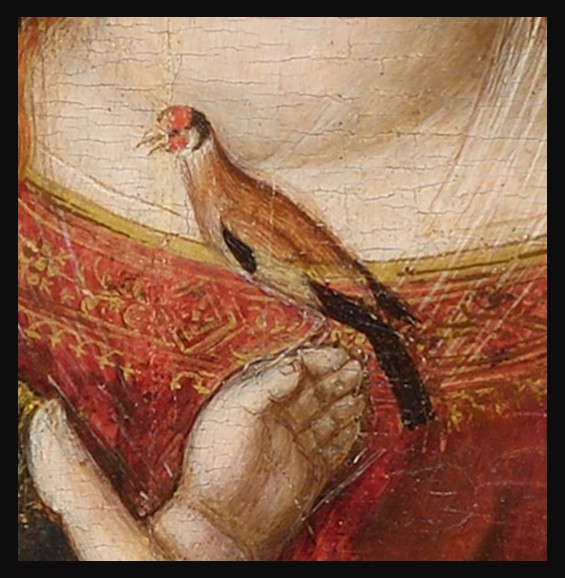
Madonna and Child (detail), end of 15th century, Tempera on panel, Palazzo Maffei, Verona, Italy
https://www.facebook.com/photo/?fbid=426163726177565&set=a.156455469815060&locale=fy_NL
A further, subtle layer of meaning emerges in the small bird the Christ Child holds in his left hand. With its distinctive red marking around the head, the bird is identifiable as a European goldfinch, a creature frequently included in Renaissance depictions of the Madonna and Child. Far from a simple naturalistic touch, the goldfinch was widely understood to symbolize the Passion of Christ, its red face linked to the Crown of Thorns and the suffering that awaited him. Its presence introduces a quiet tension into the scene: even within this tender maternal moment, the narrative of redemption is already foreshadowed. For contemporary viewers, the Child’s gentle interaction with the goldfinch would have encouraged prayerful reflection on joy, sacrifice, and the unfolding arc of the Christian story.
Behind the central figures, Badile constructs a believable interior framed by glimpses of a landscape. Two vases sit symmetrically on a ledge, each holding lilies, enduring symbols of Mary’s purity and her role in the Incarnation. Painted with meticulous care, these floral details bridge the spiritual and the domestic, suggesting that the divine can blossom quietly within everyday surroundings.
Badile’s carefully chosen palette reinforces this idea. Deep greens, warm reds, and soft golds create a contemplative atmosphere without overwhelming the viewer. These tones, characteristic of Veronese painting of the period, offer a sense of stability and serenity. They allow the emotional and symbolic resonance of the scene to unfold naturally, without theatricality.
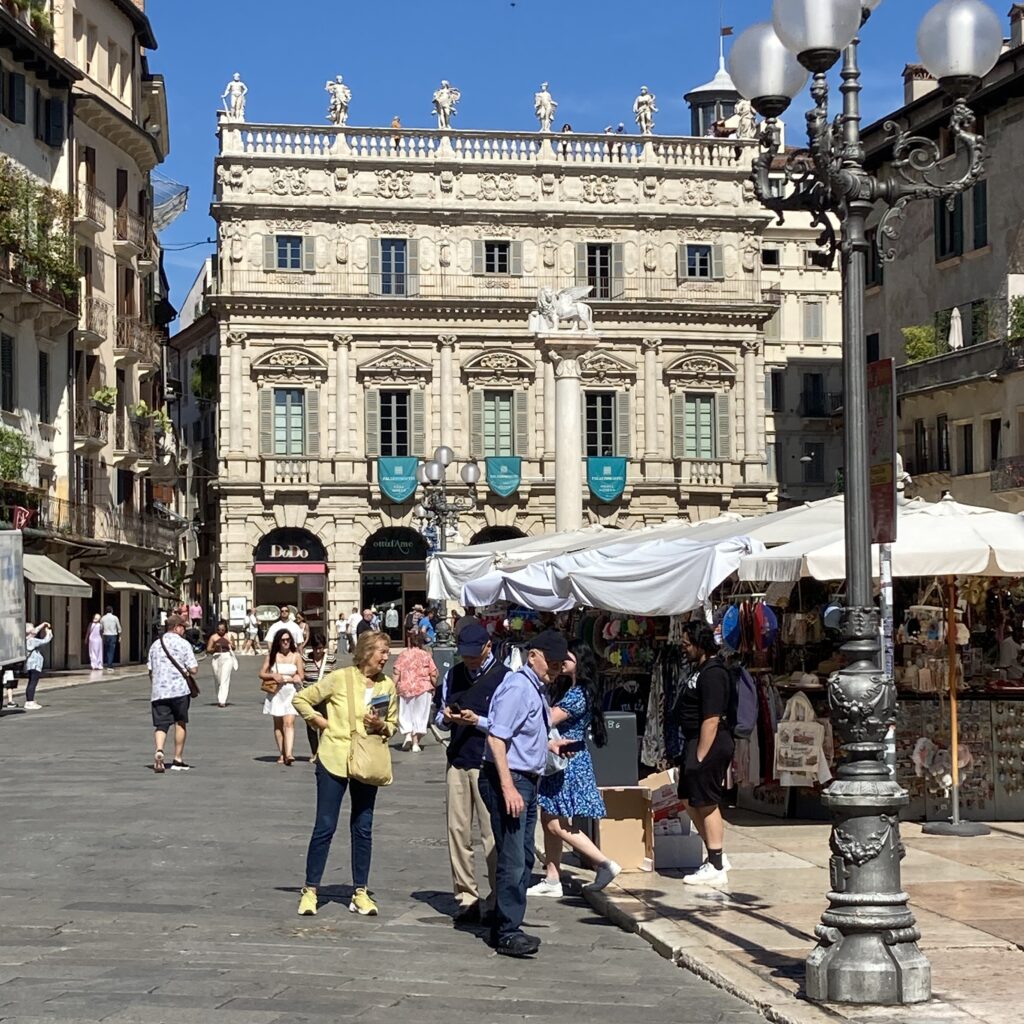
Standing before this painting today, in the galleries of Palazzo Maffei, one senses its enduring emotional relevance. The panel invites slow engagement: the kind of thoughtful looking that reveals how faith, artistry, and daily life intertwined in 15th-century Verona. For contemporary audiences, students, teachers, museum visitors, the work reminds us that Renaissance art is not only monumental frescoes and grand narratives. It is also quiet objects made for personal reflection, created with care for the human heart as much as for the eye. Antonio Badile’s Madonna and Child is one such jewel: a modest masterpiece that transforms tenderness into timeless devotion.
For a Student Worksheet on Antonio Badile, Madonna and Child, please.. Click HERE!
Bibliography: from the Palazzo Maffei https://palazzomaffeiverona.com/en/collection/the-collection-carlon-palazzo-maffei-verona/?utm_source=chatgpt.com