https://commons.wikimedia.org/wiki/File:Meister_des_Evangeliars_von_Rossano_002.jpg

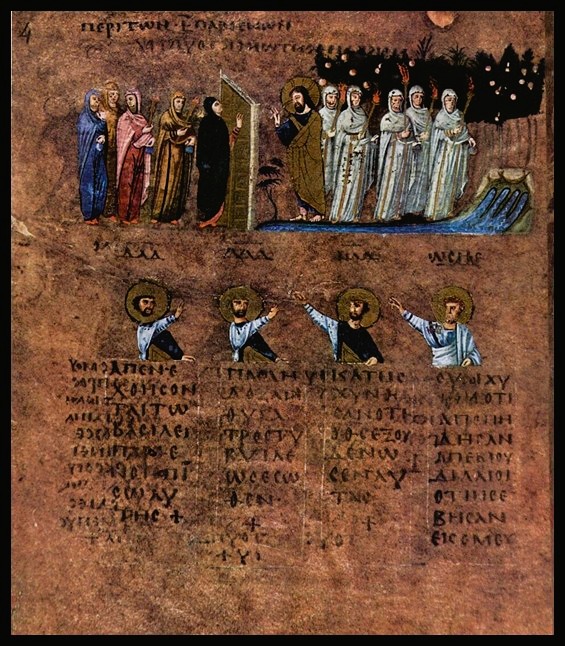
Few works of early Christian art capture the interplay of narrative, symbolism, and material splendor as vividly as the sixth-century Codex Purpureus Rossanensis, known as the Rossano Gospels. Its purple-dyed parchment, inscribed in silver and gold, sets the stage for a series of luminous miniatures, among which the depiction of the Parable of the Ten Virgins stands out. The miniature demonstrates a sophisticated use of spatial composition, color, and gesture to convey the contrast between the wise and foolish virgins, transforming a biblical parable into a visually compelling meditation on vigilance and readiness. Waiting with Lamps Aflame reflects this synthesis of artistry and theology, offering viewers both aesthetic and spiritual insight as they contemplate Easter 2026.
A Royal Gospel in Purple and Gold
Created in the 6th century, probably in the eastern Mediterranean world, the Codex Purpureus Rossanensis is one of the oldest surviving illuminated manuscripts of the New Testament. Its pages are dyed a deep imperial purple, a colour reserved in antiquity for royalty, and its sacred text is written in silver and gold ink. Containing the Gospels of Matthew and Mark, the manuscript is both a theological treasure and a masterpiece of early Christian art. Today it is preserved in the Cathedral Museum of Rossano in southern Italy and is recognized by UNESCO as part of the Memory of the World Register. Yet beyond its historical prestige, the codex speaks in images that remain spiritually urgent.
The Parable of Watchfulness
The Parable of the Ten Virgins tells of ten young women waiting for the arrival of the bridegroom. Five are wise, bringing extra oil for their lamps. Five are ‘foolish’, unprepared for delay. When the bridegroom finally arrives at midnight, only the prepared enter the wedding feast. The door is shut. The parable concludes with a solemn warning: “Watch therefore, for you know neither the day nor the hour.” In the liturgical tradition of Holy Week, especially in the Orthodox services of Holy Tuesday, this parable is read as a call to spiritual vigilance. Christ is the Bridegroom. Humanity waits. The question is not whether He will come, but whether we will be ready.
https://grace.allpurposeguru.com/2024/03/the-parable-of-the-wise-and-foolish-virgins-a-warning/
Light and Division in the Rossano Miniature
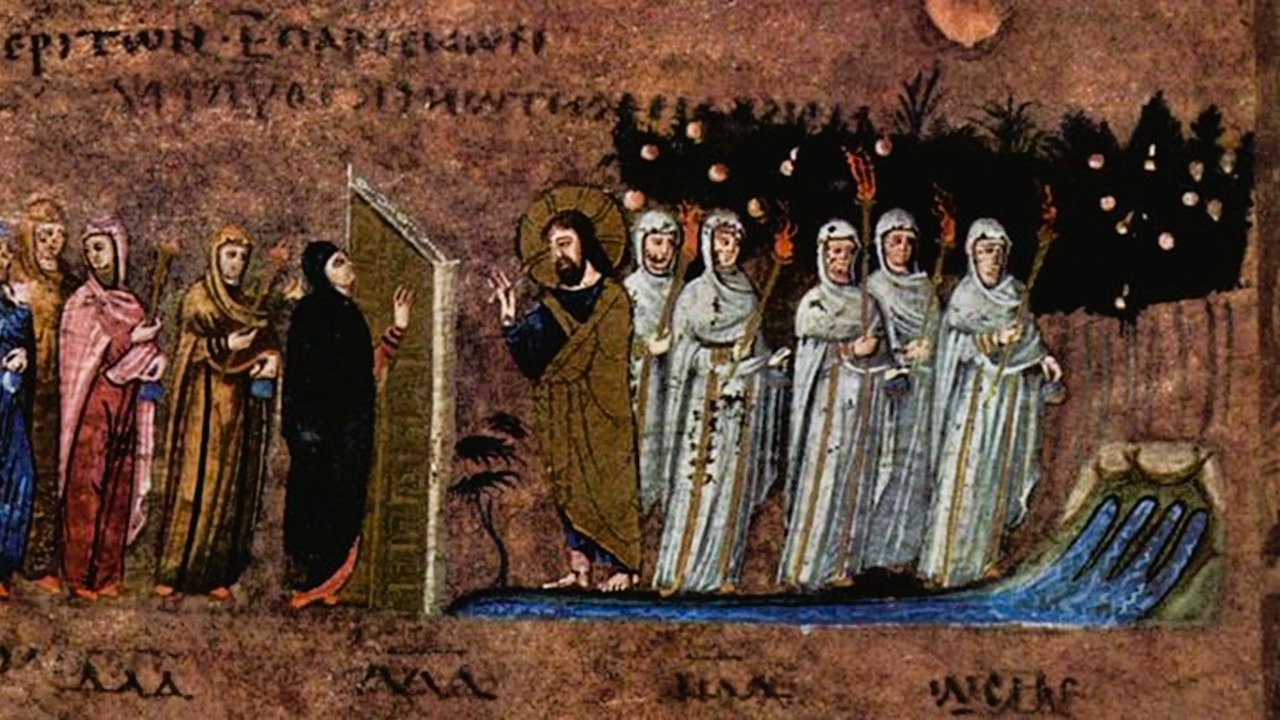
In the Rossano Gospels, this parable unfolds across a richly coloured miniature structured around a central architectural door. On one side stand the five unprudent ladies. Their garments are vibrant, yet their lamps are dark. Their gestures suggest movement and urgency, but they approach a closed door, too late. The absence of flame is striking: the torches they carry are extinguished, visually reinforcing their lack of preparation. On the other side stand the five wise ladies. Clad in luminous white, they hold torches crowned with flame. Their posture is composed, serene. Light radiates from their lamps, visually echoing Christ’s own identity as the Light of the World. The door near them is not a barrier but a threshold. The artist uses contrast, dark and light, colour and white, stillness and anxiety, not simply to illustrate the Gospel story, but to interpret it. The painting becomes theology in colour.
An Image for Our Own Vigil
What makes the Rossano Gospels so powerful is that they do not merely preserve Scripture, they invite contemplation. The purple pages, once associated with imperial authority, now proclaim a different kingship: that of the risen Christ. The silver and gold letters shimmer like reflected candlelight, drawing the reader into sacred time.
In this Easter season, the miniature of the Ten Virgins offers more than historical beauty. It offers a spiritual mirror. To live as a Christian is to live in hopeful expectation, not anxious waiting, but watchful trust. The oil in the lamp becomes a symbol of prayer, mercy, faithfulness, love, all that sustains the flame.
As we celebrate the Resurrection in 2026, we might pause before this sixth-century image and ask ourselves: Are we merely standing at the door, or are we ready to enter the feast?
For a PowerPoint Presentation of the Codex Purpureus Rossanensis, please… check HERE!
Sources
Archdiocese of Rossano–Cariati, Codex Purpureus Rossanensis, available at: https://www.artesacrarossano.it/eng/details_works.php?IDo=36
Google Arts & Culture, Admire the Rossano Gospels’ Miniatures of the New Testament, available at: https://artsandculture.google.com/story/admire-the-rossano-gospels%E2%80%99-miniatures-of-the-new-testament-unesco-memory-of-the-world/9wXBYc45V5WHdA?hl=en