Andrea della Robbia’s tender Portrait of a Child

Andrea Della Robbia, 1435-1525
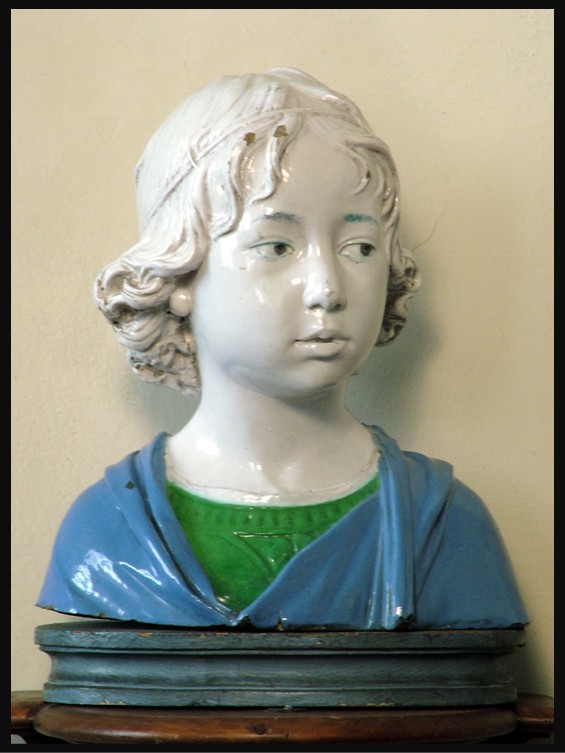
Portrait of a Child, ca 1475 – ca 1480, Glazed Terracotta, Height: 34 cm, National Museum of Bargello, Florence, Italy – Photo Credit: Amalia Spiliakou, April 2025

To mark UN World Children’s Day on November 20, a celebration of children’s rights and their place at the heart of our shared humanity, it feels fitting to turn our attention to Andrea della Robbia’s tender Portrait of a Child, housed in Florence’s Bargello Museum. Crafted in the late 15th century, this glazed terracotta bust captures the purity and quiet dignity of childhood with remarkable grace. Della Robbia’s mastery of the terracotta invetriata technique lends the work its luminous surface and soft, lifelike expression, qualities that make the child’s gentle gaze as moving today as it was five centuries ago. This piece serves as both an artistic treasure and a timeless reminder of innocence, compassion, and the enduring importance of nurturing the young. https://www.un.org/en/observances/world-childrens-day

Andrea della Robbia (1435–1525) was a prominent Florentine sculptor and a key figure in the celebrated Della Robbia family workshop, renowned for its innovative glazed terracotta sculptures. The nephew of Luca della Robbia, who first perfected the family’s distinctive enamel technique, Andrea inherited both the workshop and his uncle’s passion for combining sculpture with color. Working in Renaissance Florence during a period of extraordinary artistic flourishing, he produced devotional works, portraits, and architectural reliefs that blended religious feeling with human warmth. His works adorned churches, hospitals, and cloisters throughout Tuscany, where his serene Madonnas and angelic figures became beloved symbols of faith and tenderness.

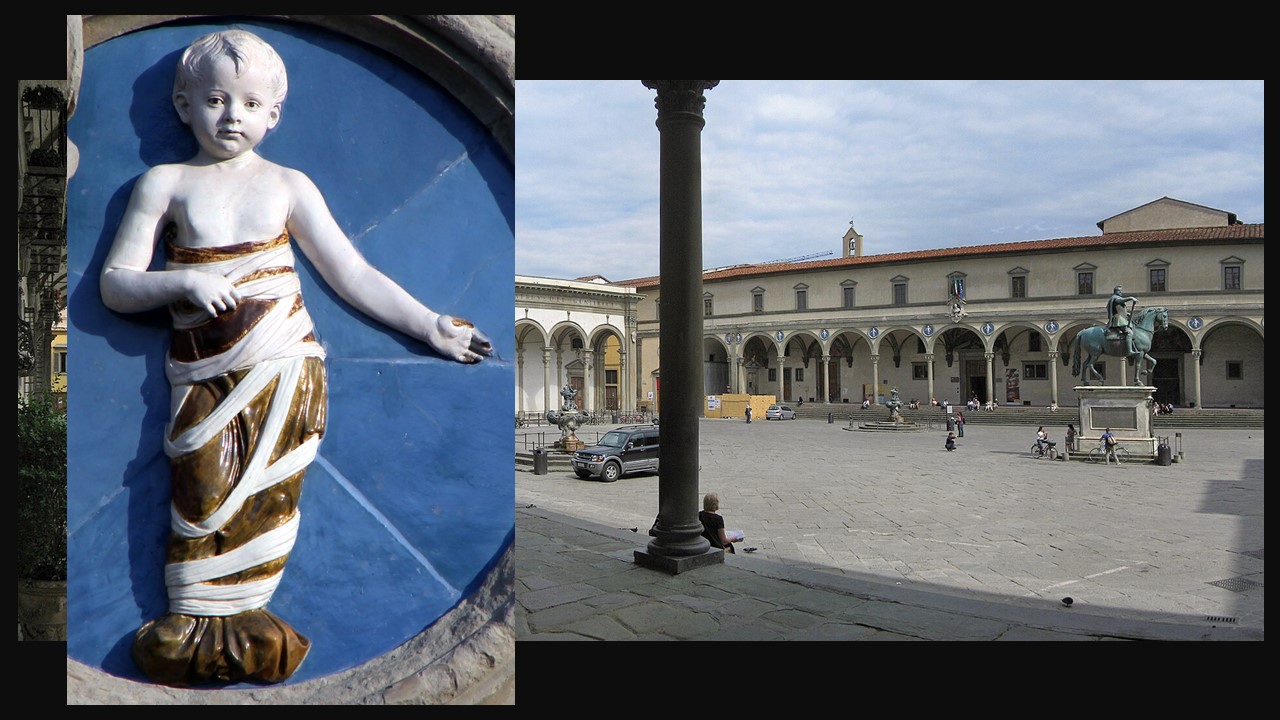
Andrea della Robbia’s artistic legacy lies in his refinement of the terracotta invetriata technique, a process that coated clay sculptures with brightly colored, tin-based glazes to achieve both durability and visual brilliance. This innovation, first pioneered by his uncle Luca, was transformed under Andrea’s hand into a sophisticated artistic language that united practicality, beauty, and devotion. His mastery of color and form allowed him to create works that combined the sculptural depth of relief with the vibrancy of painting, resulting in pieces that glowed with a sense of divine light. The luminous surfaces of his sculptures not only protected them from weathering but also made them accessible to a broader audience, adorning churches, hospitals, and civic spaces across Tuscany. Beyond technical achievement, Andrea infused his figures with spiritual purity and emotional tenderness, particularly visible in his serene Madonnas and the famous swaddled infants of the Ospedale degli Innocenti. Through his craftsmanship and sensitivity, he elevated glazed terracotta into one of the Renaissance’s most distinctive and enduring expressions of faith, compassion, and artistic innovation.
Designed by Filippo Brunelleschi, 1377-1446
Spedale degli Innocenti, Construction: 1417-1436 – Inauguration: 1445, Piazza della Santissima Annunziata, Florence, Italy https://it.wikipedia.org/wiki/Spedale_degli_Innocenti
Andrea della Robbia, 1435-1525
Infant in Swaddling Clothes, 1487, Glazed Terracotta, Diameter about 100 cm, Ospedale degli Innocenti, Piazza della Santissima Annunziata, Florence, Italy https://smarthistory.org/andrea-della-robbia-bambini-ospedale-degli-innocenti/

Andrea della Robbia’s Head of a Boy, housed in the Bargello Museum in Florence, is a finely modeled glazed terracotta bust that captures the quiet grace and innocence of childhood. The sculpture portrays a young boy with softly curling hair, serene features, and a gentle, introspective expression. His head is slightly turned, lending the figure a sense of naturalism and presence, while the delicate modeling of the lips and eyes reflects Andrea’s remarkable sensitivity to human emotion. The figure’s clothing, rendered in vivid blue and green glazes, contrasts beautifully with the pure white of the face, emphasizing both the luminosity and purity that the invetriata technique made possible. This harmony of color and form, combined with the lifelike modeling, embodies the Renaissance ideal of blending spiritual serenity with human warmth. The piece radiates quiet dignity and emotional restraint, standing as a testament to Andrea della Robbia’s gift for transforming humble terracotta into art of transcendent beauty.

For a PowerPoint Presentation of Andrea della Robbia’s oeuvre, please… Check HERE!

For more information on Andrea della Robbia’s contribution to the Florentine Ospedale degli Innocenti, please visit the Teacher Curator’s Blog Post… https://www.teachercurator.com/art/spedale-degli-innocenti-in-florence/

Bibliography: https://catalogo.beniculturali.it/detail/HistoricOrArtisticProperty/0900383750 and https://wahooart.com/en/artists/andrea-della-robbia-en/ and chrome-extension://efaidnbmnnnibpcajpcglclefindmkaj/https://www.nga.gov/sites/default/files/2025-06/exhibition-della-robbia.pdf
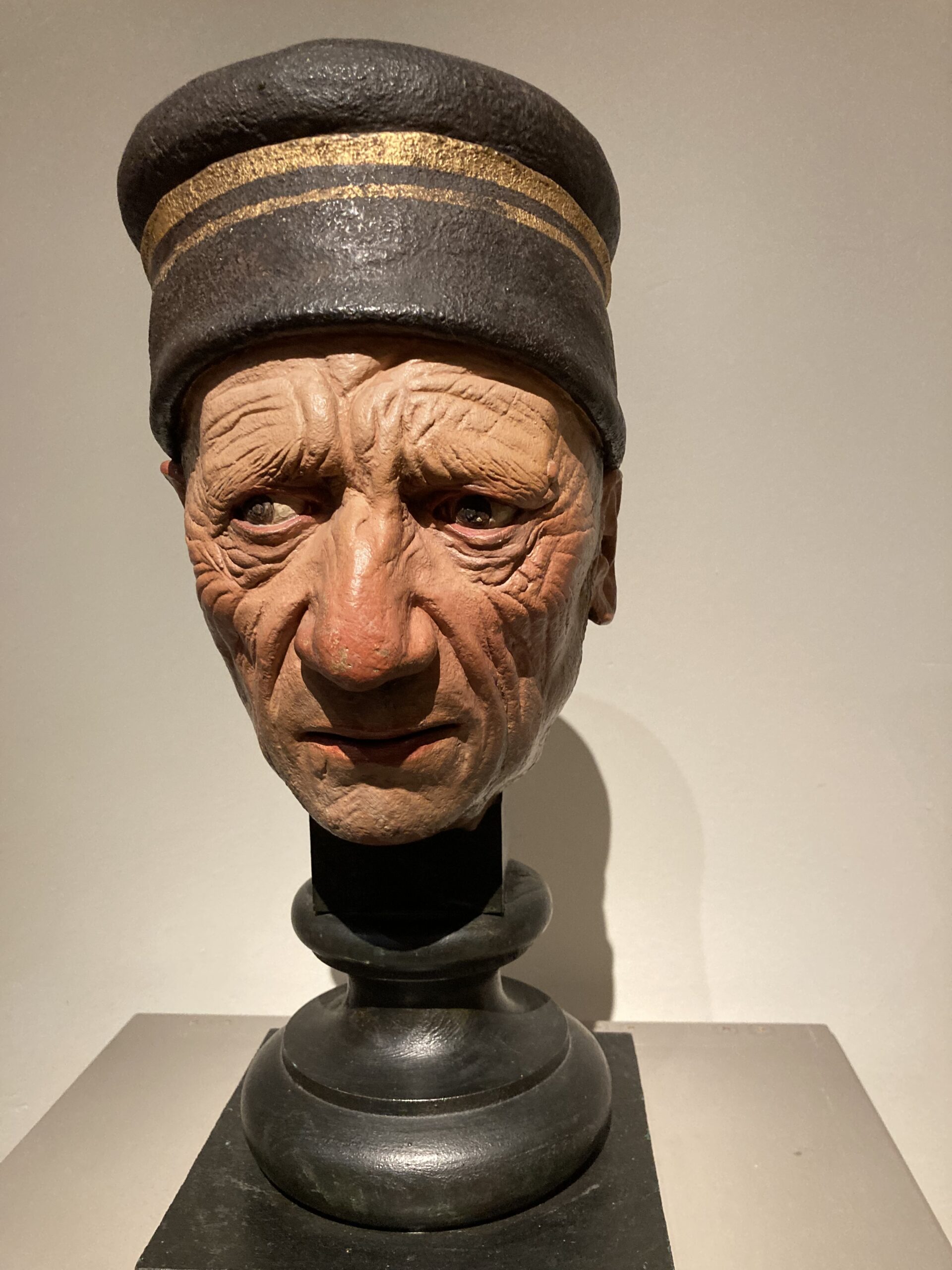
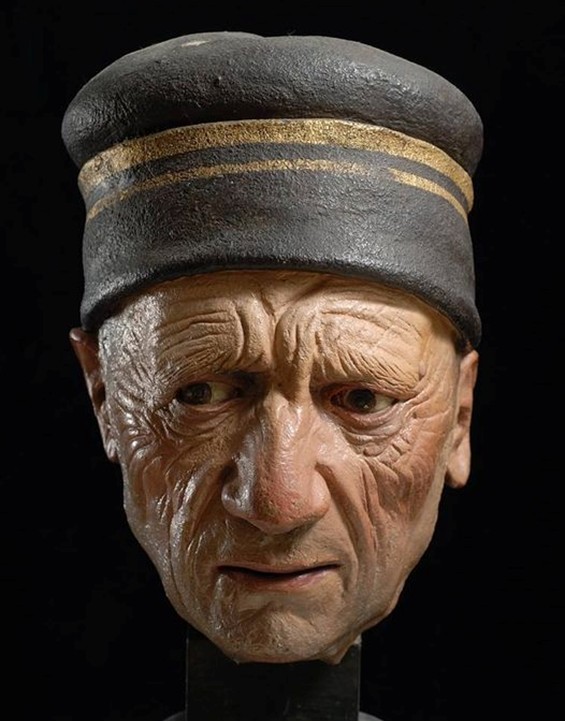
Guido Mazzoni’s Portrait of an Old Man

Guido Mazzoni, c. 1445-1518
Head of a Man, 1480s, Polychrome Terracotta, Height: 26 cm, Galleria Estense, Modena, Italy – Photo Credit: Amalia Spiliakou, April 2025

Among the many treasures of Renaissance Modena, Guido Mazzoni’s Portrait of an Old Man stands out as a striking testament to the artist’s gift for capturing human presence in all its fragile dignity. Unlike the idealised faces often associated with the period, this work confronts the viewer with unmistakable signs of age, including wrinkles, sagging skin, and weary eyes, rendered with sculptural intensity. It is a portrait that resists flattery, instead offering an unvarnished meditation on mortality and memory, reminding us that true artistry lies not only in beauty but in truth.

Guido Mazzoni (c. 1445–1518), also known as Il Modanino, was an Italian sculptor celebrated for his extraordinary terracotta figures that combined lifelike detail with deep emotional resonance. Born in Modena, he trained in the local artistic traditions before developing a distinctive style that blended Renaissance naturalism with theatrical intensity. His talent for capturing individuality and human vulnerability is especially evident in his devotional groups, such as the famous Lamentation over the Dead Christ in Modena, where each figure is imbued with unique gestures and striking realism.

Mazzoni’s reputation spread beyond his native city, earning him commissions in Ferrara, Naples, and even at the French court of Charles VIII, where he created funerary monuments that secured his international acclaim. Though he worked in an era dominated by marble and bronze, his masterful use of painted terracotta gave his sculptures an immediacy and humanity that resonated deeply with contemporary audiences. Today, he is remembered as a pioneer of Renaissance naturalism, a sculptor who elevated humble clay into a medium of profound psychological and spiritual depth.

Mazzoni’s terracotta portraits hold a special place within Renaissance art, bridging devotional practice and the emerging culture of individual likeness. Unlike the idealised forms of classical revival, his works present faces lined with age, grief, or quiet dignity, revealing a concern for truthful representation rarely achieved in sculpture of the time. These portraits not only embodied the Renaissance fascination with humanism and personal identity but also offered a powerful medium for viewers to confront mortality and faith in profoundly tangible form. Through his clay figures, Mazzoni expanded the role of portraiture from commemoration to intimate encounter, leaving behind works that still speak with raw immediacy across centuries.

Guido Mazzoni, c. 1445-1518
Head of a Man, 1480s, Polychrome Terracotta, Height: 26 cm, Galleria Estense, Modena, Italy https://www.facebook.com/groups/203138520642/posts/10168057091855643/

Mazzoni’s Portrait of an Old Man, formally titled Head of a Man, is a strikingly naturalistic polychrome terracotta bust dating to the 1480s and currently housed in Modena’s Galleria Estense. What appears today as a standalone head was likely cut from a larger Passion-group sculpture, either a Lamentation or adoration scene, functioning perhaps as the representation of a donor within a devotional tableau. The life-sized head, richly painted and finely modelled, reveals Mazzoni’s remarkable ability to render individual features, the drooping jawline, deeply incised wrinkles, stippled beard, and even the weathered texture of aged skin, in a way that seems to echo the direct observation, almost like a moulded life cast sculpted into clay. The sitter’s berettone (a type of upper-class hat) further hints at his social status, lending an air of quiet dignity rather than theatrical grandeur.

What makes this terracotta portrait especially compelling is its unvarnished realism. Mazzoni does not smooth away the signs of ageing; instead, he embraces them, allowing each line, sagging plane, and subtle blemish to coexist with a steady, penetrating gaze, a gaze that forges an intimate, psychologically charged connection with the viewer. Smarthistory underscores how the painted surface, though now restored, would have once enhanced the illusion of living flesh, infusing the clay with lifelike presence and emotional resonance. In the Renaissance context, such individuality marked a departure from idealised portrayals. It connected deeply with humanist ideals: the acknowledgement of personal identity, wisdom that comes with age, and the blending of spiritual humility with worldly reality. As part of a devotional ensemble, this head may have invited viewers to see the donor, and by extension themselves, as active participants in spiritual reflection and empathy, all rendered in a medium both accessible and profoundly expressive.

For a PowerPoint Presentation of Guido Mazzoni’s oeuvre, please… Check HERE!

Bibliography: https://smarthistory.org/guido-mazzoni-head-of-a-man/ and https://www.artsupp.com/en/artists/guido-mazzoni/testa-di-vecchio and https://gallerie-estensi.beniculturali.it/blog/longform/guardare-all-anima-delle-opere/

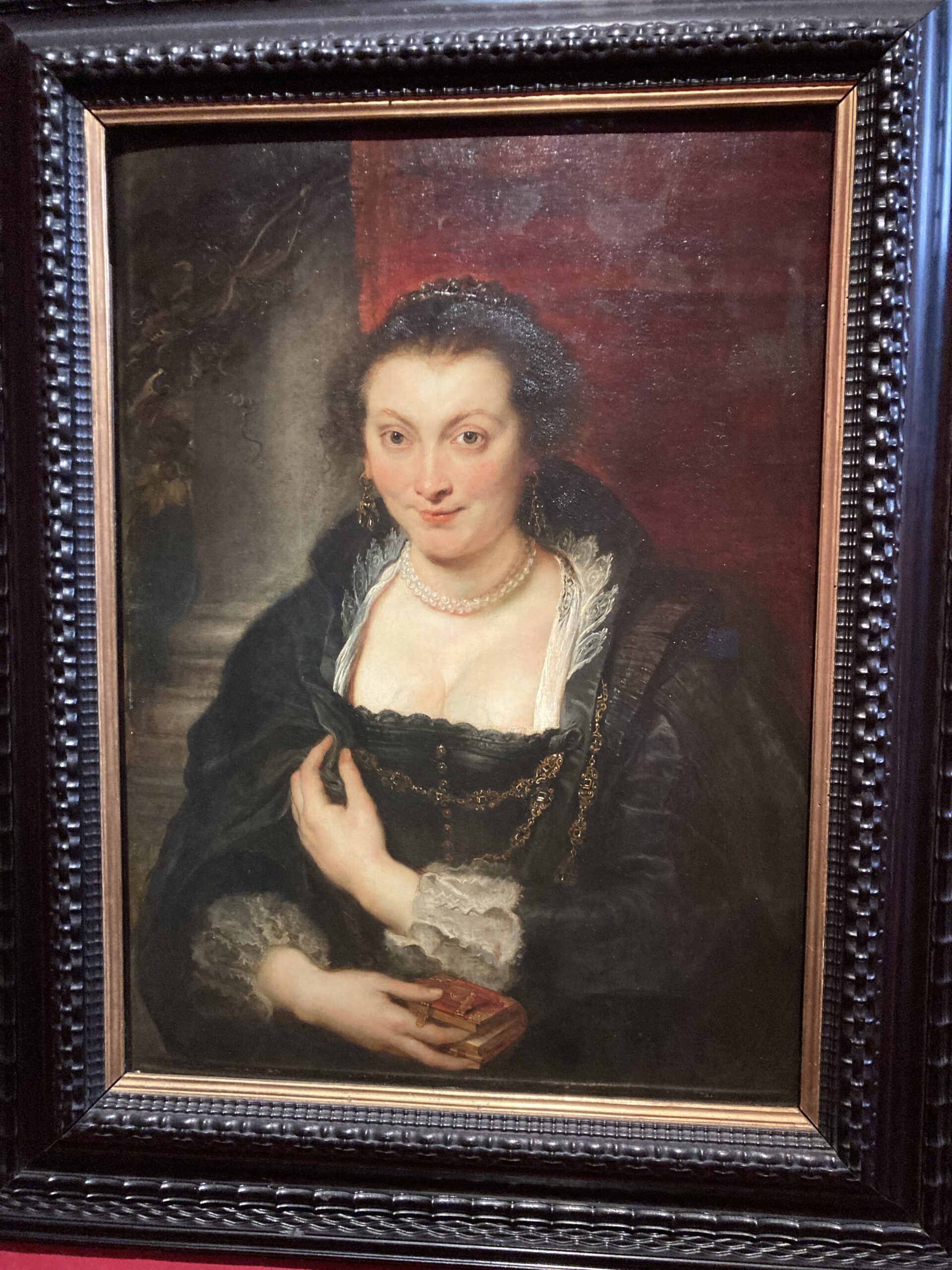
Isabella Brant

Pieter Paul Rubens, 1577- 1640   
Portrait of Isabella Brant, 1626, Oil on canvas, 86×62 cm, Uffizi Gallery, Florence, Italy
Photo Credit: Amalia Spiliakou, April 2025

Isabella Brant (1591–1626) was the first wife of the celebrated Flemish painter Peter Paul Rubens and a woman of notable grace and social standing in early 17th-century Antwerp. Born into a prominent family, she was the daughter of Jan Brant, a respected city official and scholar, which placed her at the heart of Antwerp’s intellectual and cultural life. Isabella married Rubens in 1609, a union that combined affection with advantageous connections, strengthening the artist’s ties to influential circles in the city. Known for her charm, wit, and refinement, Isabella was admired not only as a devoted wife and mother—she and Rubens had three children together—but also as a figure who embodied the elegance and sophistication of her time. Her life, though tragically brief, left a lasting impression on those around her and continues to be remembered as an integral part of Rubens’ story.

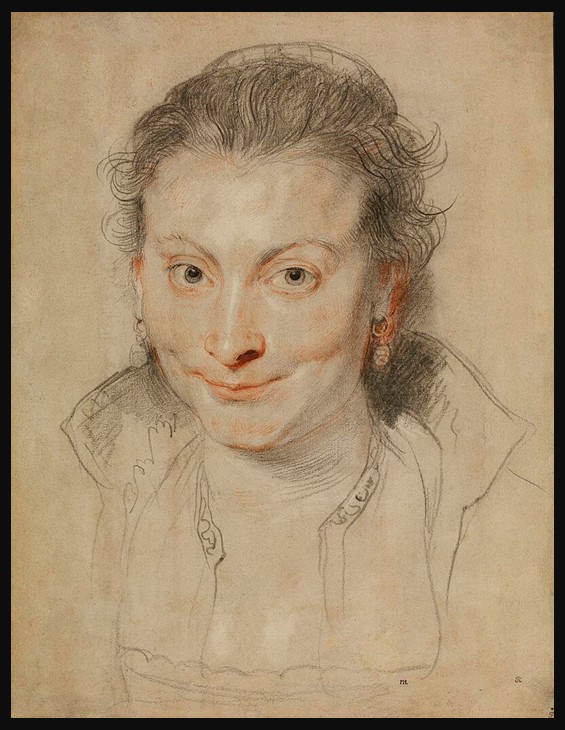
The artist painted his first wife, Isabella Brant, numerous times, leaving behind a vivid record of her presence in his life. One of their earliest joint portrayals is the famous Honeysuckle Bower (1609), a double portrait celebrating their marriage with symbolic gestures of love and harmony. Beyond this, Rubens created several individual portraits of Isabella, including the elegant Portrait of Isabella Brant now in the Uffizi Gallery, painted around 1620, where her calm dignity and refined beauty are captured with remarkable sensitivity. Her likeness also appears in drawings and informal sketches, suggesting she was both a willing sitter and a constant source of inspiration. Even after her untimely death in 1626, Rubens continued to evoke her image in allegorical works, blending memory with artistry. Taken together, these portraits reveal not only Isabella’s grace but also the depth of affection and admiration with which Rubens regarded her, preserving her legacy through his masterful brush.

Pieter Paul Rubens, 1577- 1640   
Portrait of Isabella Brant, c.1621-1622, Black and red chalk, with some brown wash, heightened with white, on light grey-brown paper, 381×294 millimeters, British Museum, London, UK
https://www.britishmuseum.org/collection/object/P_1893-0731-21

Rubens’s Portrait of Isabella Brant in Galleria degli Uffizi, in Florence, Italy, shows the artist’s first wife at half-length, turned slightly left against a neutral setting punctuated by a stone column and a sweep of reddish drapery. She wears a sumptuous dark gown with jewels and chains, her alert gaze and faint smile animating the likeness. Painted circa 1625–26 in oil on panel (about 86 × 62 cm), the work likely entered Medici collections as a gift sent in 1705 by the Elector of Düsseldorf to Ferdinando de’ Medici and has been recorded in the Uffizi since the 18th century.

Aesthetically, the painting distills Baroque ideals into an intimate format… supple, luminous flesh set against a subdued ground, softly modelled forms created by confident, fluid brushwork, and a poised interplay of light and shadow that gives Isabella psychological presence as well as social stature. Rather than theatrical gesture, Rubens opts for restrained dignity, rich fabrics, tactile surfaces, and a living, breathing immediacy, embodying the Baroque’s preference for sensuous color, dynamism of paint, and persuasive naturalism in the service of status, piety, and affection.

Peter Paul Rubens (1577–1640) stands as one of the greatest masters of the Baroque, celebrated not only for his monumental altarpieces and mythological scenes but also for the intimacy and vitality of his portraits. In his likenesses, Rubens combined acute psychological insight with a painterly richness that gave his sitters both dignity and immediacy. His portraits of Isabella Brant exemplify this mastery: the fluidity of his brushwork, the luminosity of skin tones, and the nuanced handling of fabric and jewelry all serve to elevate the sitter while preserving her individuality. Rubens’s genius lay in his ability to balance grandeur with naturalism, portraying figures of status with humanity and warmth. Through such works, he transformed portraiture into a vibrant art form that communicated not only outward likeness but also inner character, securing his reputation as one of the most accomplished portraitists of his time.

For a PowerPoint Presentation of Rubens and Isabella Brant, please… Check HERE!

Bibliography: https://catalogo.beniculturali.it/detail/HistoricOrArtisticProperty/0900129546?utm_source=chatgpt.com and https://www.artchive.com/artwork/portrait-of-isabella-brant-peter-paul-rubens-c-1625-26/ and https://www.virtualuffizi.com/peter-paul-rubens.html

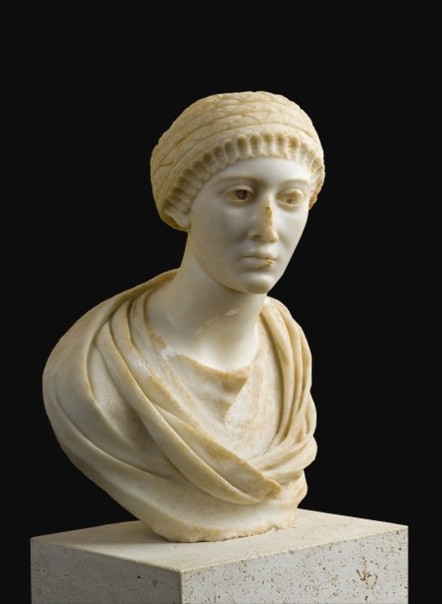
Bust of a Lady

Bust of a Lady, circa 410 AD, from an Asia Minor workshop, possibly in
Aphrodisias, circa 410, white Phrygian (Dokimion) Marble, Height: 56 cm, Archaeological Museum of Chania, Greece

In the Archaeological Museum of Chania on the island of Crete, the Bust of a Lady offers a rare window into the shifting artistic and cultural values of the Late Roman and Early Christian period through the medium of female portraiture. During this era, women’s portraits began to diverge from classical Roman realism and overt displays of status, embracing a more stylized, introspective aesthetic aligned with emerging Christian ideals. Features such as large, contemplative eyes and serene expressions came to symbolize inner virtue and spiritual depth. While hairstyles and clothing still hinted at social rank, they also reflected increasing modesty, mirroring broader societal transformations.

This particular bust depicts a woman of aristocratic beauty in the prime of her life, aged approximately 25 to 30. She is shown frontally, with her neck gently turned to the right, lending the portrait a poised and lifelike presence. Her oval face is framed by a tall forehead, almond-shaped eyes once inlaid with rose-colored glass, small full lips, and a strong chin—features that convey both grace and inner fortitude. A decorative band of twenty-two stylized curls runs across her forehead and temples, while four braids crown her head, testifying to her refined appearance.

She is draped in a heavy himation falling in deep, classical folds over a lighter chiton, a detail that evokes the sculptural traditions of earlier periods and enhances the portrait’s intellectual elegance. Although her left shoulder is only partially modeled, the form suggests the bust was designed for a niche setting, likely within a private villa, where such an omission would remain unseen. The combination of fine craftsmanship, classical references, and material opulence speaks to both her high status and the enduring artistry of late Roman Crete.

Although initially dated between the 2nd and 4th centuries, recent scholarship proposes a more precise date in the early 5th century, during the reign of Theodosios II (c. 410 AD). This dating is based on strong stylistic parallels with imperial portraits of Valentinian II and Theodosios II, and the bust is thought to have originated in an Asia Minor workshop, likely Aphrodisias. If correct, this attribution provides rare evidence of continued cultural and artistic exchange between Crete and Constantinople following the catastrophic earthquake of 365 AD.

This striking portrait, crafted from fine-grained marble was unearthed in 1982 in Nea Chora, a neighborhood of modern Chania that once formed the western sector of ancient Kydonia. Found in unstratified fill, it lacks a secure archaeological context. Nonetheless, the area was continuously inhabited from the Roman to early Byzantine periods, and the sculpture’s discovery in a historically wealthy district known for luxurious homes supports the notion that it belonged to an elite and culturally vibrant community.

While Crete is most famously celebrated for its Bronze Age Minoan civilization, the island also enjoyed a remarkable cultural resurgence under Roman rule, a period that produced refined works of art like the Bust of a Lady in the Archaeological Museum of Chania. In a region often viewed through the lens of its ancient past, the portrait from Kydonia invites us to appreciate the island’s lesser-known legacy: a vibrant late antique society that continued to engage with the broader currents of imperial art, identity, and belief.

For a Student Activity inspired by the Bust of a Lady in the Archaeological Museum of Chania, please… Check HERE!

Bibliography: Heaven & Earth, Edited by Anastasia Drandaki, Demetra Papanikola-Bakirtzi, Anastasia Tourta, Exhibition Catalogue, Athens 2013 https://www.academia.edu/3655015/Heaven_and_Earth_Art_of_Byzantium_from_Greek_Collections_edited_by_Anastasia_Drandaki_Demetra_Papanikola_Bakirtzi_and_Anastasia_Tourta_Exh_cat_Athens_2013_238_9_275 Pages: 56-57 and https://amch.gr/collection/eikonistiki-protomi-astis-l-3176/

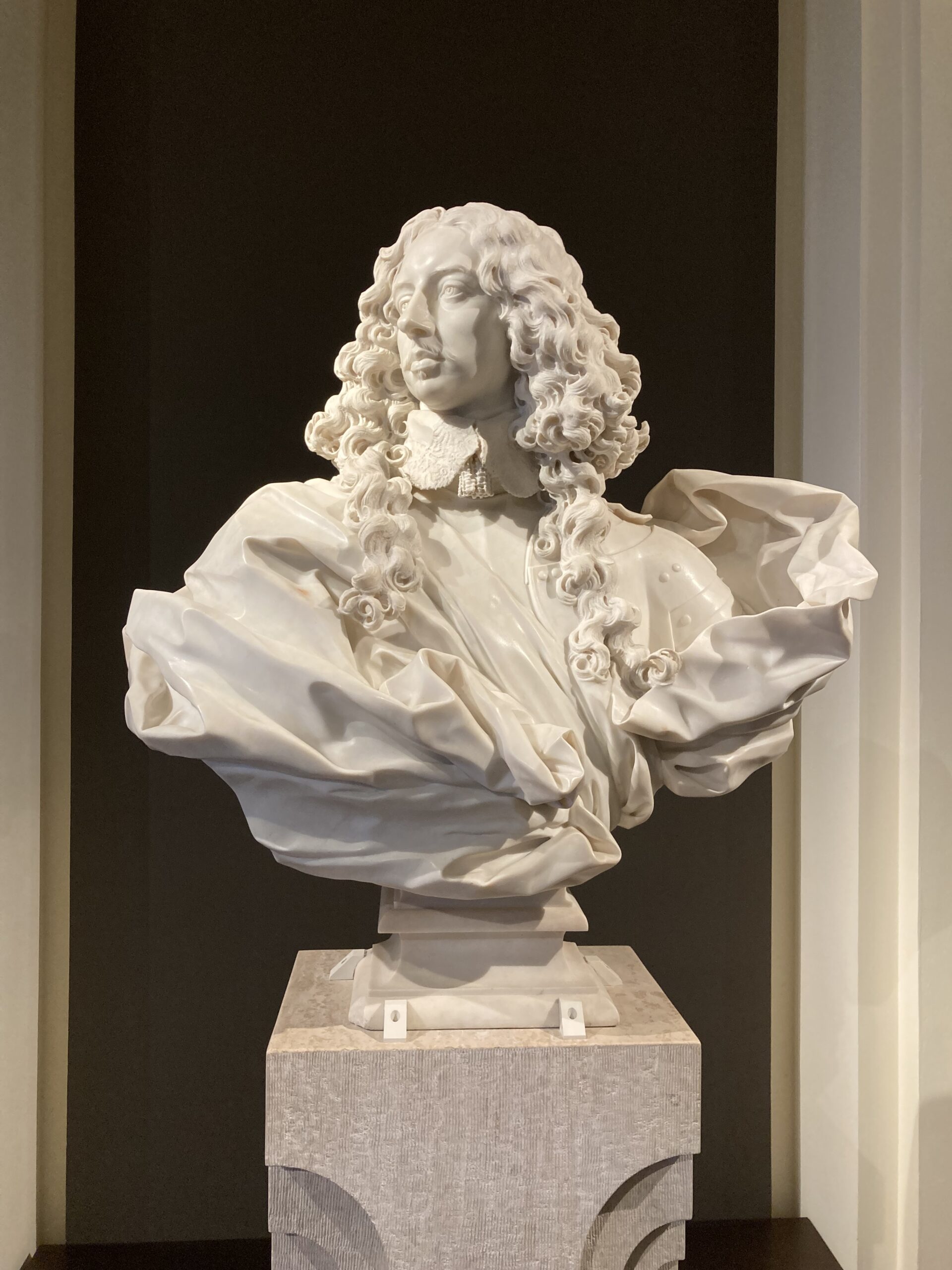
Gian Lorenzo Bernini’s bust of Duke Francesco I d’Este

Gian Lorenzo Bernini, 1598-1680
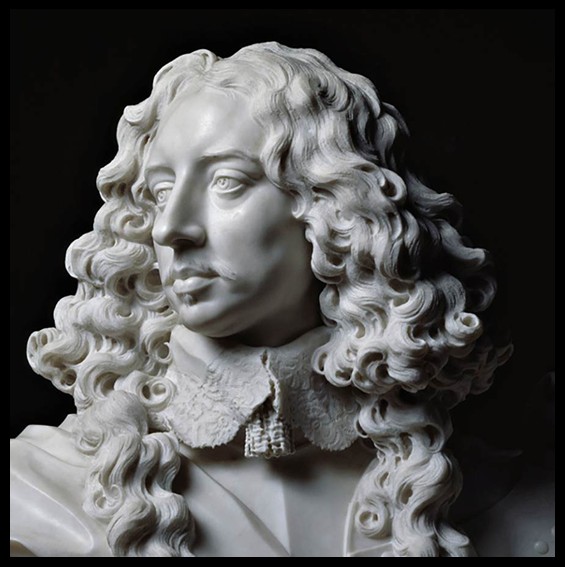
Bust of Francesco I d’Este, 1650–1652, Marble, 98 x 106 x 50 cm, Galleria Estense, Modena, Italy – Photo Credit: Amalia Spiliakou April 2025

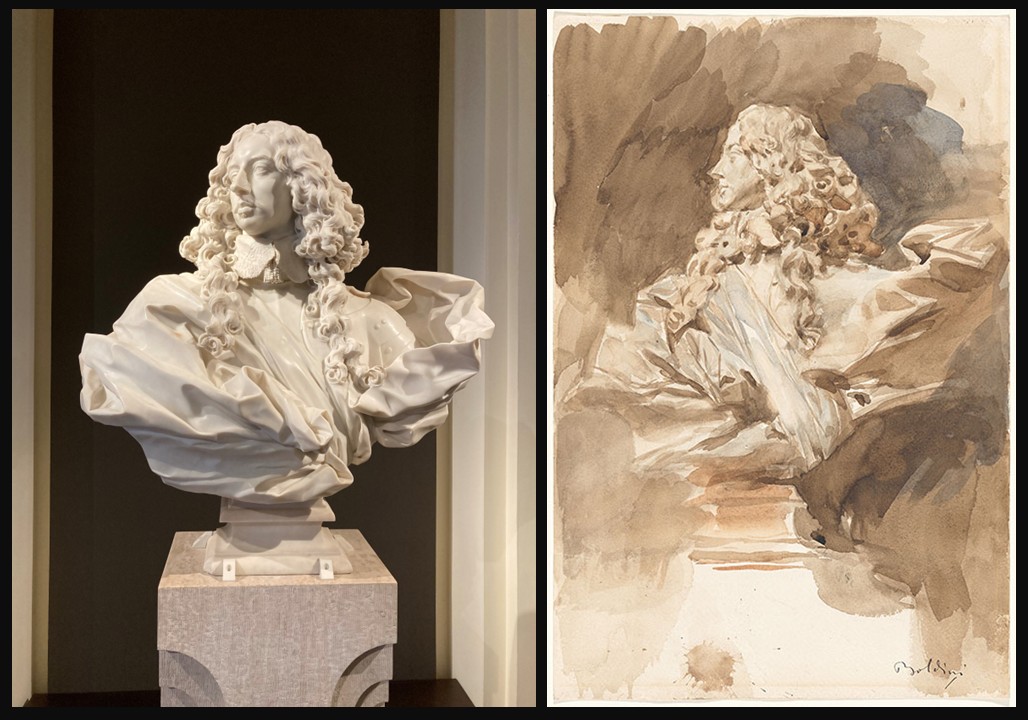
Upon entering the Galleria Estense in Modena, visitors are greeted by a masterpiece of Baroque sculpture that sets an immediate tone of grandeur and theatricality, Gian Lorenzo Bernini’s bust of Duke Francesco I d’Este. Commissioned in the 1650s, this dazzling marble portrait is more than a likeness; it is a triumph of artistic bravura that captures the duke in a moment of almost divine command, his chest proudly thrust forward, his locks swirling with motion, and his gaze lofty and enigmatic. Bernini’s extraordinary ability to fuse idealization with vitality makes the bust an unforgettable encounter at the heart of the gallery’s collection. Decades later and miles away, the bust’s spirit found a new interpretation through the brush of Giovanni Boldini. His painting Bust of Francesco I d’Este after Gian Lorenzo Bernini, now in the National Gallery of Art in Washington, D.C., revives the sculpture’s theatrical essence in painterly form—transforming cool marble into a vibrant, expressive study of light and form. Boldini, known for his flair and fluid technique, pays homage not only to Bernini’s virtuosity but also to the enduring legacy of Baroque splendor.

​In August 1650, Duke Francesco I d’Este of Modena commissioned Gian Lorenzo Bernini to sculpt his portrait in marble. Initially, Bernini was reluctant to undertake the project without meeting the Duke in person, considering it an “almost impossible” task. However, with the persistent intercession of Cardinal Rinaldo d’Este, the Duke’s brother, Bernini agreed, provided he received multiple portraits of the Duke and precise measurements of his height and shoulder width. Consequently, two profile portraits by Justus Sustermans were sent to Rome, while a frontal portrait by Jean Boulanger did not arrive in time. Bernini began sculpting in August 1651 and completed the bust by September. The sculpture arrived in Modena in November, and upon unveiling, the Duke was so impressed that he paid Bernini 3,000 scudi—the same amount Pope Innocent X had paid for the Fountain of the Four Rivers in Rome. This generous payment not only reflected the Duke’s satisfaction but also underscored his ambition to elevate the cultural stature of the Este court through patronage of renowned artists.

Gian Lorenzo Bernini, 1598-1680
Bust of Francesco I d’Este, 1650–1652, Marble, 98 x 106 x 50 cm, Galleria Estense, Modena, Italy https://ducatoestense.com/en/beni-storici-artistici/bust-of-duke-francesco-i-deste/

Bernini’s bust portrait of Francesco I d’Este stands as a quintessential example of Baroque art, embodying the movement’s defining traits of dynamism, theatricality, and grandeur. Far from being a static likeness, the sculpture radiates energy and authority: the Duke’s chest swells with pride, his elaborate curls cascade in dramatic motion, and his expression conveys both noble detachment and inner vitality. Bernini masterfully transforms marble into a living presence, infusing the work with psychological depth and an almost divine aura. This portrait doesn’t merely represent Francesco—it exalts him, turning the Duke into a timeless symbol of princely power and ambition. In doing so, Bernini demonstrates how sculpture in the Baroque era was not just about capturing appearances, but about commanding emotion and crafting an idealized image of rulership through the language of art.

Gian Lorenzo Bernini, 1598-1680
Bust of Francesco I d’Este, 1650–1652, Marble, 98 x 106 x 50 cm, Galleria Estense, Modena, Italy – Photo Credit: Amalia Spiliakou April 2025
Giovanni Boldini, 1842-1931
Bust of Francesco I d’Este after Gian Lorenzo Bernini, c. 1890/1900, brown and blue washes on ivory wove paper, 45.5 x 30.4 cm, National Gallery of Art, Washington DC, USA https://www.nga.gov/press/acquisitions/2022/boldini.html

In the late 19th century, Giovanni Boldini, celebrated for his dynamic and elegant portraits, created a wash drawing titled Bust of Francesco I d’Este, inspired by Gian Lorenzo Bernini’s renowned marble sculpture. Executed around 1890–1900, during Boldini’s flourishing career in Paris, the drawing captures the essence of Bernini’s Baroque masterpiece through expressive brown and blue washes on ivory wove paper. Boldini’s rendition emphasizes the dramatic curls and vigorous movement of the original bust, portraying the head in full profile while simplifying certain elements, such as omitting the lace collar and armor. This approach highlights Boldini’s theatrical style and his ability to convey vitality and motion, aligning with the gestural tendencies of contemporaries like John Singer Sargent. The drawing not only pays homage to Bernini’s work but also reflects Boldini’s exploration of abstract form, bridging 19th-century impressionism and the gestural styles that would influence 20th-century modernism. Acquired by the National Gallery of Art in 2021, this piece enriches the museum’s collection, illustrating the enduring impact of Baroque artistry on later generations

For art lovers, the Galleria Estense in Modena offers more than a collection, it offers a journey into the heart of artistic brilliance, where Bernini’s bust of Francesco I d’Este greets visitors with imperial flair and sculptural poetry. Its enduring legacy, later reimagined through the fluid hand of Giovanni Boldini, reminds us that true masterpieces do not merely survive the passage of time—they continue to speak, to inspire, and to live on in new and unexpected forms.

For a Student Activity on Gian Lorenzo Bernini’s Bust of Francesco I d’Este, and Giovanni Boldini painting of Francesco’s Bust, please… Check HERE!

Bibliography: https://ducatoestense.com/en/beni-storici-artistici/bust-of-duke-francesco-i-deste/ and https://www.nga.gov/press/acquisitions/2022/boldini.html