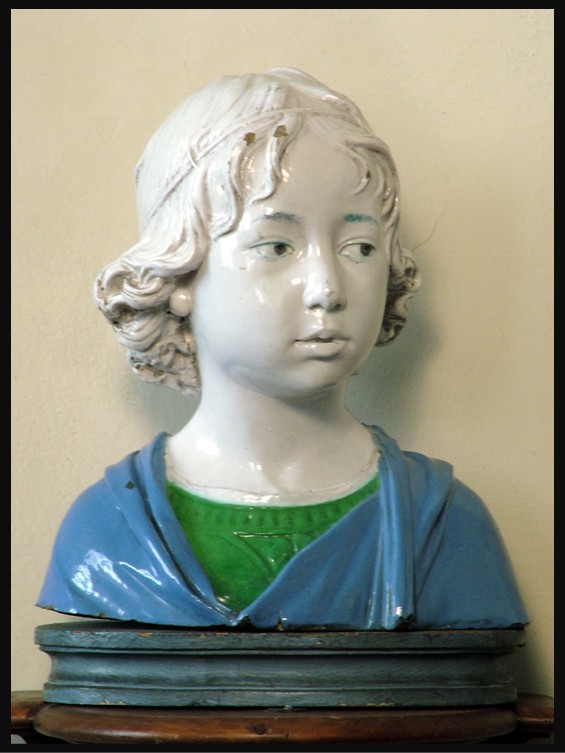
Andrea della Robbia’s tender Portrait of a Child

Andrea Della Robbia, 1435-1525
Portrait of a Child, ca 1475 – ca 1480, Glazed Terracotta, Height: 34 cm, National Museum of Bargello, Florence, Italy – Photo Credit: Amalia Spiliakou, April 2025

To mark UN World Children’s Day on November 20, a celebration of children’s rights and their place at the heart of our shared humanity, it feels fitting to turn our attention to Andrea della Robbia’s tender Portrait of a Child, housed in Florence’s Bargello Museum. Crafted in the late 15th century, this glazed terracotta bust captures the purity and quiet dignity of childhood with remarkable grace. Della Robbia’s mastery of the terracotta invetriata technique lends the work its luminous surface and soft, lifelike expression, qualities that make the child’s gentle gaze as moving today as it was five centuries ago. This piece serves as both an artistic treasure and a timeless reminder of innocence, compassion, and the enduring importance of nurturing the young. https://www.un.org/en/observances/world-childrens-day

Andrea della Robbia (1435–1525) was a prominent Florentine sculptor and a key figure in the celebrated Della Robbia family workshop, renowned for its innovative glazed terracotta sculptures. The nephew of Luca della Robbia, who first perfected the family’s distinctive enamel technique, Andrea inherited both the workshop and his uncle’s passion for combining sculpture with color. Working in Renaissance Florence during a period of extraordinary artistic flourishing, he produced devotional works, portraits, and architectural reliefs that blended religious feeling with human warmth. His works adorned churches, hospitals, and cloisters throughout Tuscany, where his serene Madonnas and angelic figures became beloved symbols of faith and tenderness.

Andrea della Robbia’s artistic legacy lies in his refinement of the terracotta invetriata technique, a process that coated clay sculptures with brightly colored, tin-based glazes to achieve both durability and visual brilliance. This innovation, first pioneered by his uncle Luca, was transformed under Andrea’s hand into a sophisticated artistic language that united practicality, beauty, and devotion. His mastery of color and form allowed him to create works that combined the sculptural depth of relief with the vibrancy of painting, resulting in pieces that glowed with a sense of divine light. The luminous surfaces of his sculptures not only protected them from weathering but also made them accessible to a broader audience, adorning churches, hospitals, and civic spaces across Tuscany. Beyond technical achievement, Andrea infused his figures with spiritual purity and emotional tenderness, particularly visible in his serene Madonnas and the famous swaddled infants of the Ospedale degli Innocenti. Through his craftsmanship and sensitivity, he elevated glazed terracotta into one of the Renaissance’s most distinctive and enduring expressions of faith, compassion, and artistic innovation.
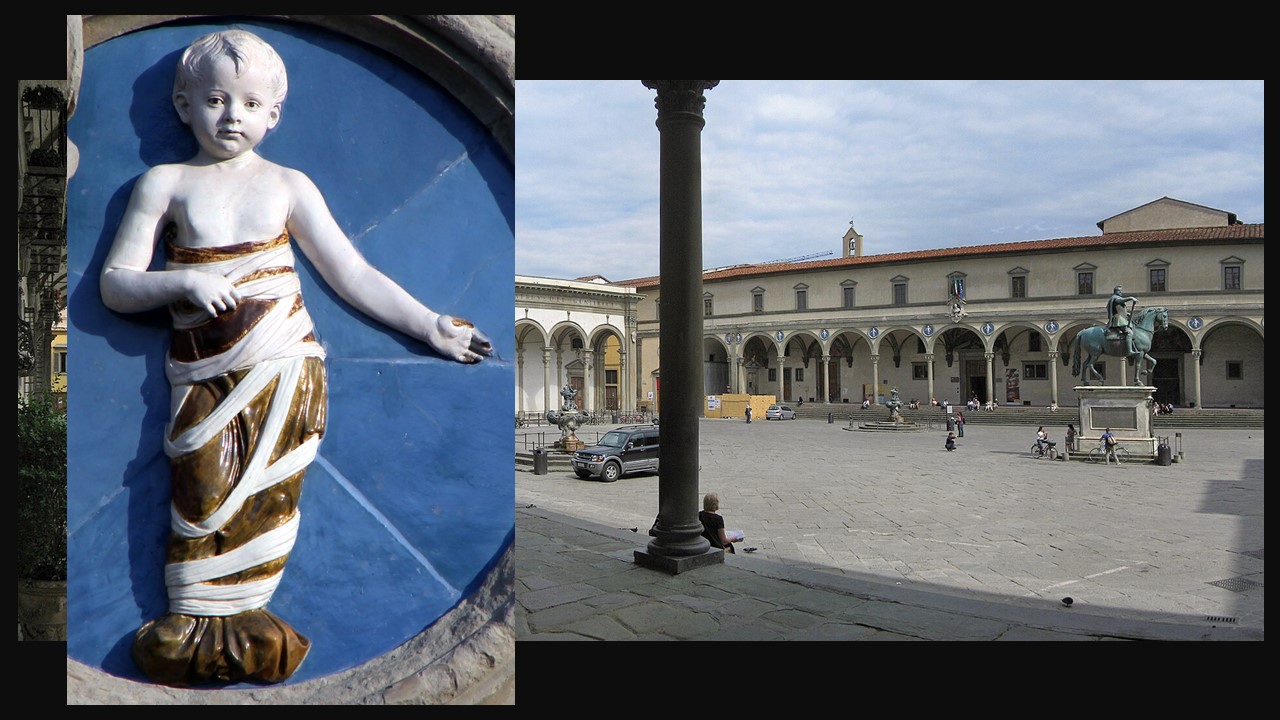
Designed by Filippo Brunelleschi, 1377-1446
Spedale degli Innocenti, Construction: 1417-1436 – Inauguration: 1445, Piazza della Santissima Annunziata, Florence, Italy https://it.wikipedia.org/wiki/Spedale_degli_Innocenti
Andrea della Robbia, 1435-1525
Infant in Swaddling Clothes, 1487, Glazed Terracotta, Diameter about 100 cm, Ospedale degli Innocenti, Piazza della Santissima Annunziata, Florence, Italy https://smarthistory.org/andrea-della-robbia-bambini-ospedale-degli-innocenti/

Andrea della Robbia’s Head of a Boy, housed in the Bargello Museum in Florence, is a finely modeled glazed terracotta bust that captures the quiet grace and innocence of childhood. The sculpture portrays a young boy with softly curling hair, serene features, and a gentle, introspective expression. His head is slightly turned, lending the figure a sense of naturalism and presence, while the delicate modeling of the lips and eyes reflects Andrea’s remarkable sensitivity to human emotion. The figure’s clothing, rendered in vivid blue and green glazes, contrasts beautifully with the pure white of the face, emphasizing both the luminosity and purity that the invetriata technique made possible. This harmony of color and form, combined with the lifelike modeling, embodies the Renaissance ideal of blending spiritual serenity with human warmth. The piece radiates quiet dignity and emotional restraint, standing as a testament to Andrea della Robbia’s gift for transforming humble terracotta into art of transcendent beauty.

For a PowerPoint Presentation of Andrea della Robbia’s oeuvre, please… Check HERE!

For more information on Andrea della Robbia’s contribution to the Florentine Ospedale degli Innocenti, please visit the Teacher Curator’s Blog Post… https://www.teachercurator.com/art/spedale-degli-innocenti-in-florence/

Bibliography: https://catalogo.beniculturali.it/detail/HistoricOrArtisticProperty/0900383750 and https://wahooart.com/en/artists/andrea-della-robbia-en/ and chrome-extension://efaidnbmnnnibpcajpcglclefindmkaj/https://www.nga.gov/sites/default/files/2025-06/exhibition-della-robbia.pdf
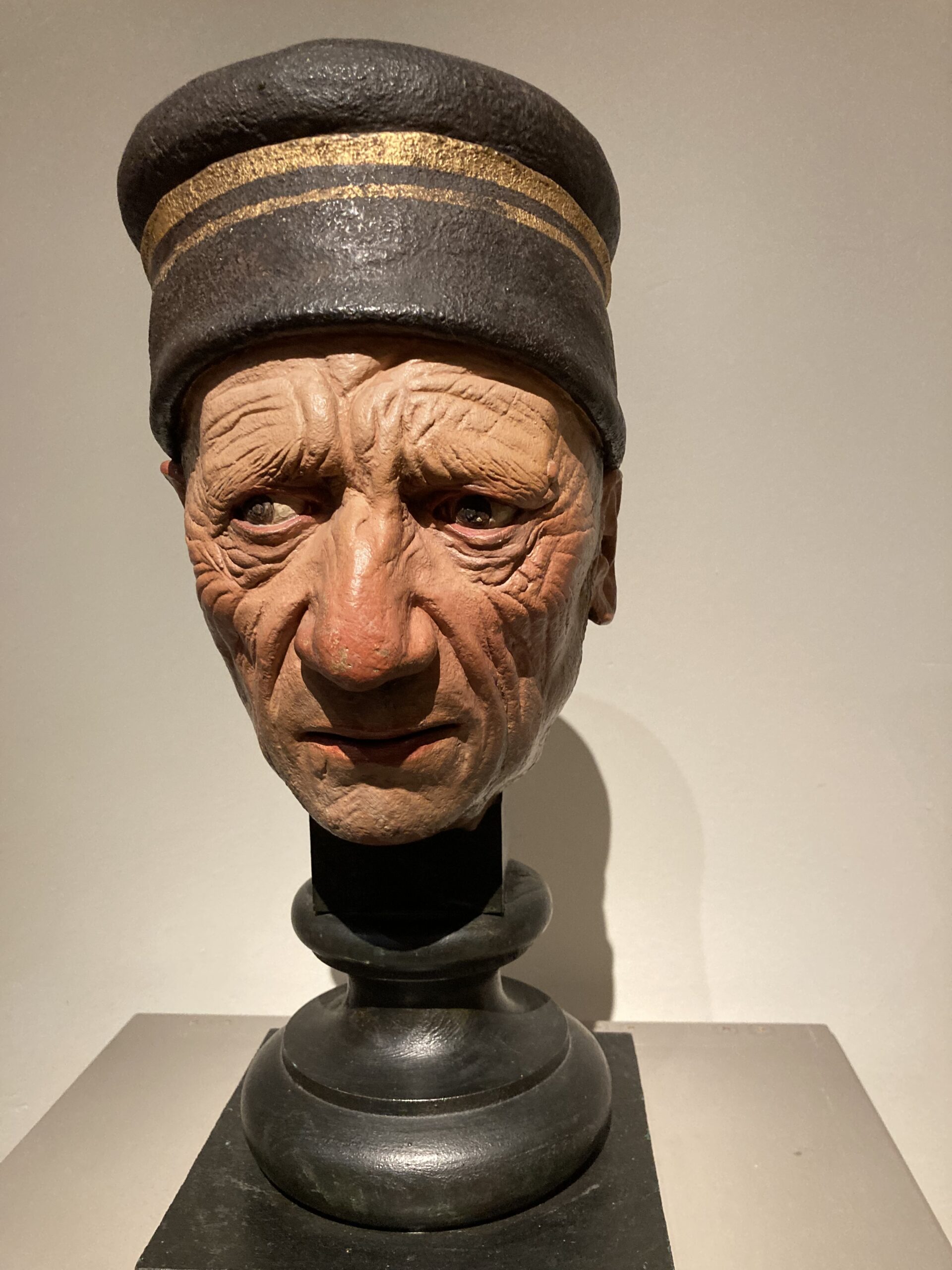
Guido Mazzoni’s Portrait of an Old Man

Guido Mazzoni, c. 1445-1518
Head of a Man, 1480s, Polychrome Terracotta, Height: 26 cm, Galleria Estense, Modena, Italy – Photo Credit: Amalia Spiliakou, April 2025

Among the many treasures of Renaissance Modena, Guido Mazzoni’s Portrait of an Old Man stands out as a striking testament to the artist’s gift for capturing human presence in all its fragile dignity. Unlike the idealised faces often associated with the period, this work confronts the viewer with unmistakable signs of age, including wrinkles, sagging skin, and weary eyes, rendered with sculptural intensity. It is a portrait that resists flattery, instead offering an unvarnished meditation on mortality and memory, reminding us that true artistry lies not only in beauty but in truth.

Guido Mazzoni (c. 1445–1518), also known as Il Modanino, was an Italian sculptor celebrated for his extraordinary terracotta figures that combined lifelike detail with deep emotional resonance. Born in Modena, he trained in the local artistic traditions before developing a distinctive style that blended Renaissance naturalism with theatrical intensity. His talent for capturing individuality and human vulnerability is especially evident in his devotional groups, such as the famous Lamentation over the Dead Christ in Modena, where each figure is imbued with unique gestures and striking realism.

Mazzoni’s reputation spread beyond his native city, earning him commissions in Ferrara, Naples, and even at the French court of Charles VIII, where he created funerary monuments that secured his international acclaim. Though he worked in an era dominated by marble and bronze, his masterful use of painted terracotta gave his sculptures an immediacy and humanity that resonated deeply with contemporary audiences. Today, he is remembered as a pioneer of Renaissance naturalism, a sculptor who elevated humble clay into a medium of profound psychological and spiritual depth.

Mazzoni’s terracotta portraits hold a special place within Renaissance art, bridging devotional practice and the emerging culture of individual likeness. Unlike the idealised forms of classical revival, his works present faces lined with age, grief, or quiet dignity, revealing a concern for truthful representation rarely achieved in sculpture of the time. These portraits not only embodied the Renaissance fascination with humanism and personal identity but also offered a powerful medium for viewers to confront mortality and faith in profoundly tangible form. Through his clay figures, Mazzoni expanded the role of portraiture from commemoration to intimate encounter, leaving behind works that still speak with raw immediacy across centuries.

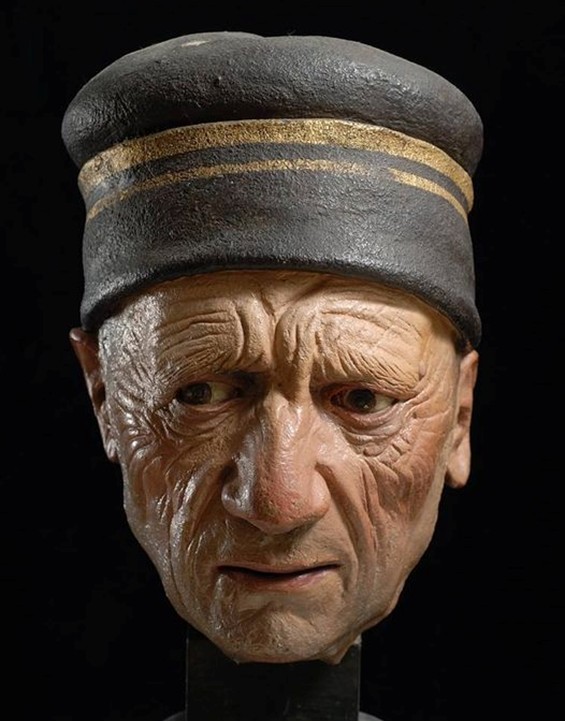
Guido Mazzoni, c. 1445-1518
Head of a Man, 1480s, Polychrome Terracotta, Height: 26 cm, Galleria Estense, Modena, Italy https://www.facebook.com/groups/203138520642/posts/10168057091855643/

Mazzoni’s Portrait of an Old Man, formally titled Head of a Man, is a strikingly naturalistic polychrome terracotta bust dating to the 1480s and currently housed in Modena’s Galleria Estense. What appears today as a standalone head was likely cut from a larger Passion-group sculpture, either a Lamentation or adoration scene, functioning perhaps as the representation of a donor within a devotional tableau. The life-sized head, richly painted and finely modelled, reveals Mazzoni’s remarkable ability to render individual features, the drooping jawline, deeply incised wrinkles, stippled beard, and even the weathered texture of aged skin, in a way that seems to echo the direct observation, almost like a moulded life cast sculpted into clay. The sitter’s berettone (a type of upper-class hat) further hints at his social status, lending an air of quiet dignity rather than theatrical grandeur.

What makes this terracotta portrait especially compelling is its unvarnished realism. Mazzoni does not smooth away the signs of ageing; instead, he embraces them, allowing each line, sagging plane, and subtle blemish to coexist with a steady, penetrating gaze, a gaze that forges an intimate, psychologically charged connection with the viewer. Smarthistory underscores how the painted surface, though now restored, would have once enhanced the illusion of living flesh, infusing the clay with lifelike presence and emotional resonance. In the Renaissance context, such individuality marked a departure from idealised portrayals. It connected deeply with humanist ideals: the acknowledgement of personal identity, wisdom that comes with age, and the blending of spiritual humility with worldly reality. As part of a devotional ensemble, this head may have invited viewers to see the donor, and by extension themselves, as active participants in spiritual reflection and empathy, all rendered in a medium both accessible and profoundly expressive.

For a PowerPoint Presentation of Guido Mazzoni’s oeuvre, please… Check HERE!

Bibliography: https://smarthistory.org/guido-mazzoni-head-of-a-man/ and https://www.artsupp.com/en/artists/guido-mazzoni/testa-di-vecchio and https://gallerie-estensi.beniculturali.it/blog/longform/guardare-all-anima-delle-opere/

The Spinario

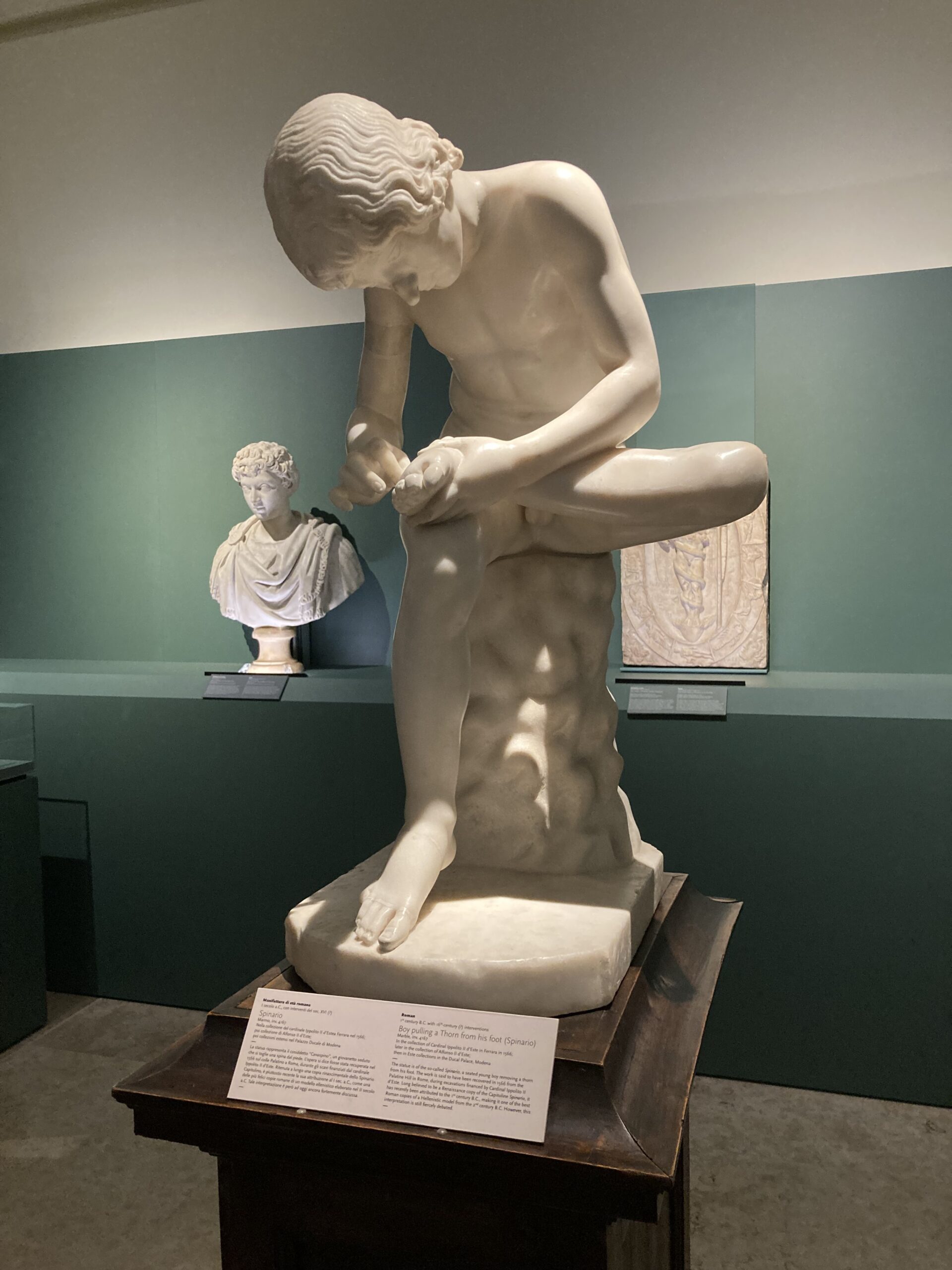
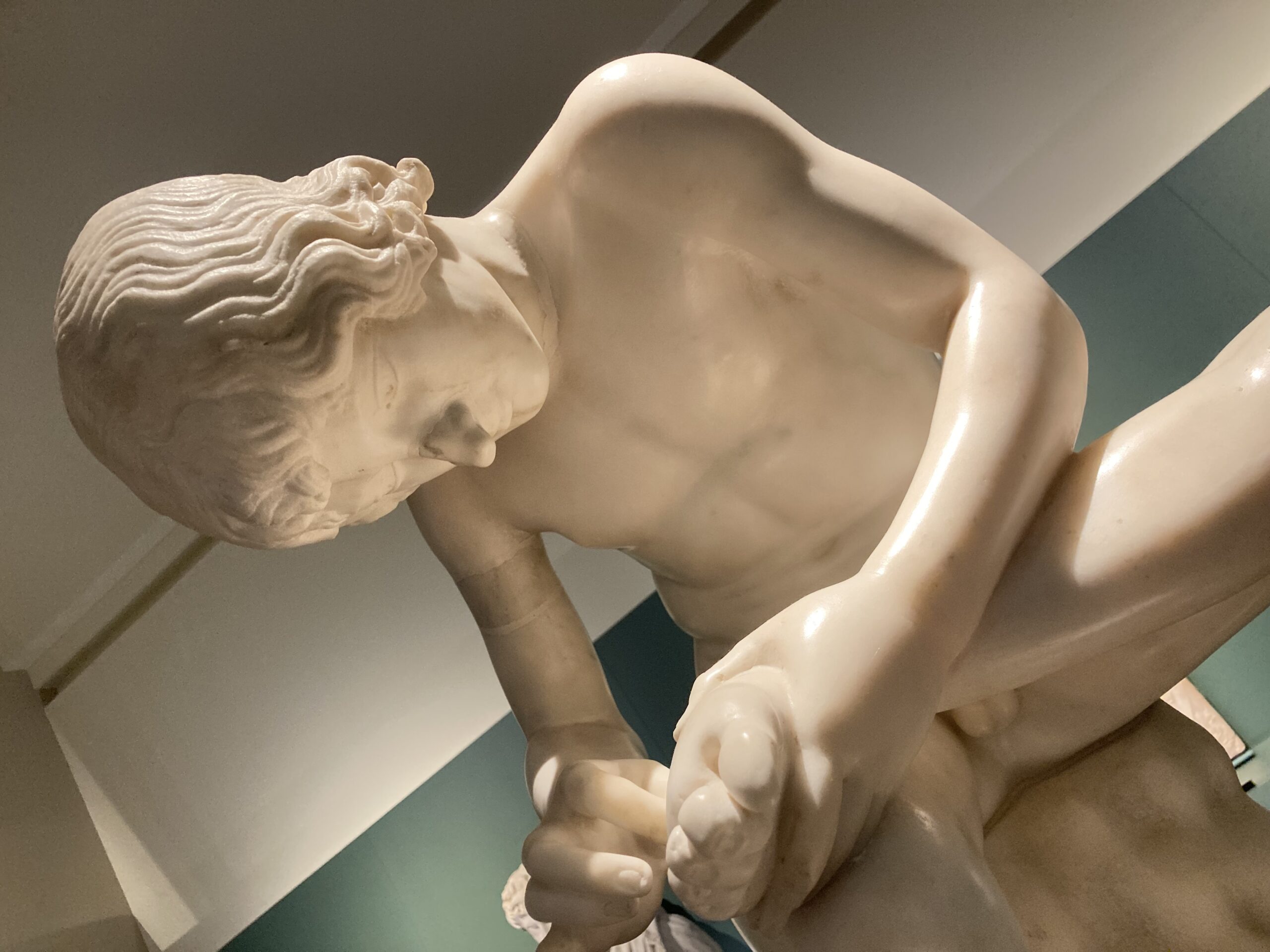
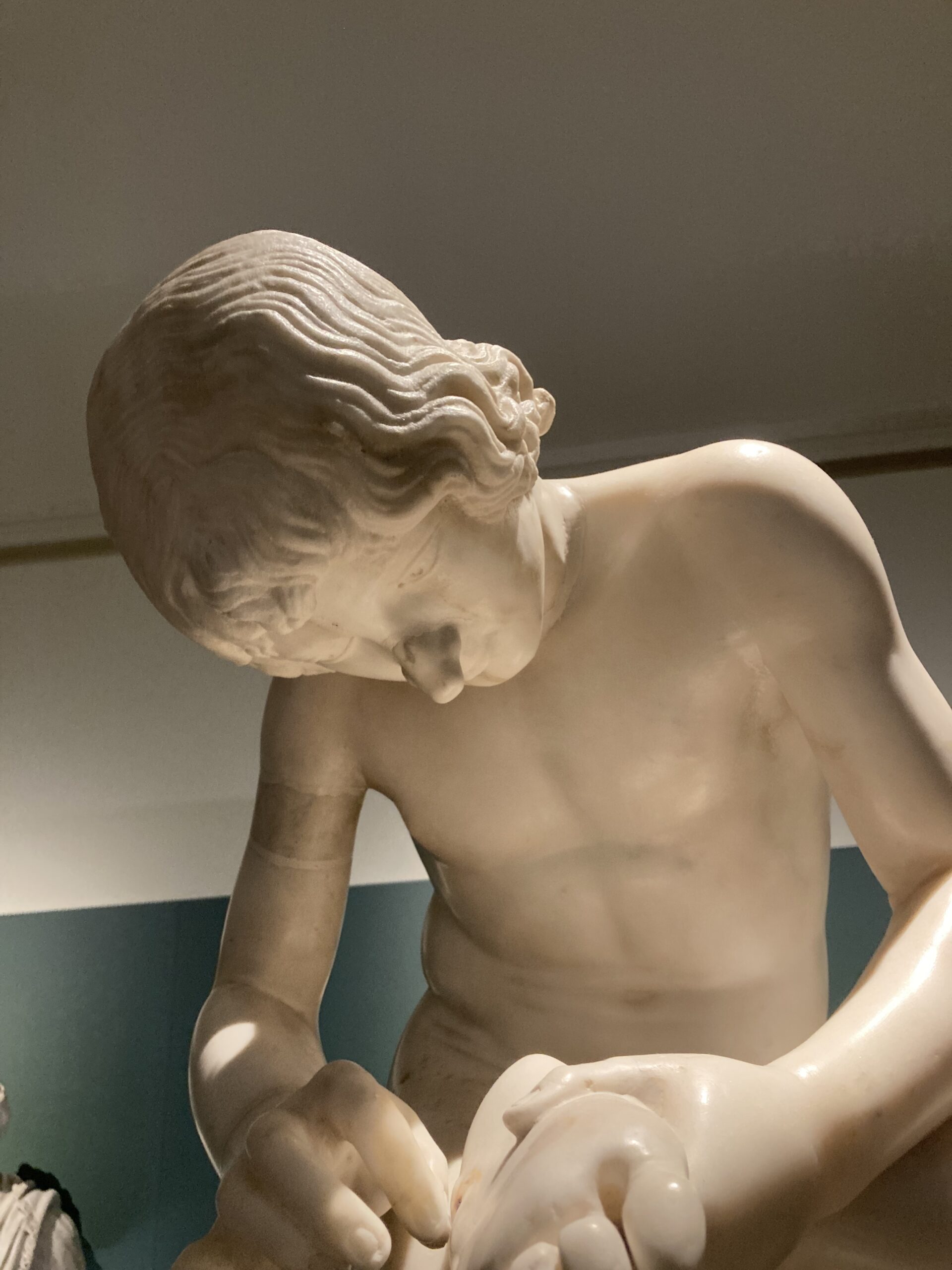
Spinario Estense, Roman Republican Art (attributed), 509 BC 509 BC / 27 BC, Marble, Height: 92 cm, Galleria Estense, Modena, Italy Photo Credit: Amalia Spiliakou, April 1, 2025

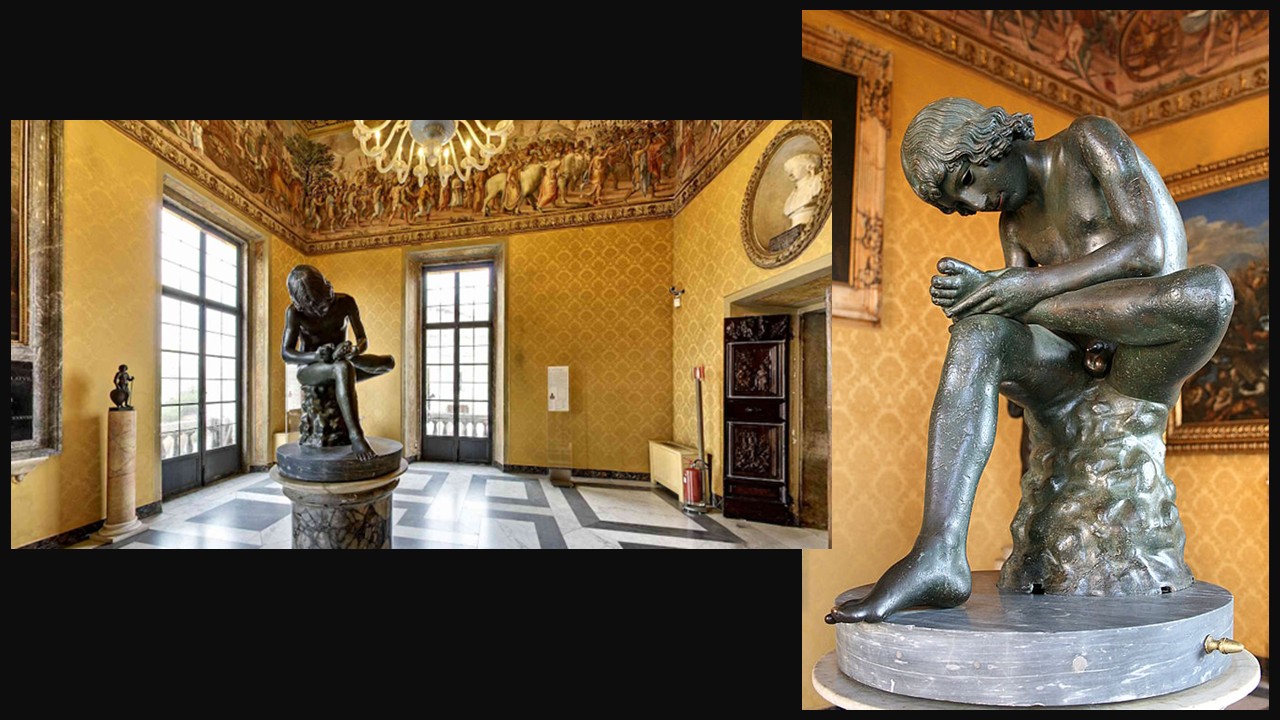
The Spinario, also known as Boy with Thorn, is a celebrated bronze statue that likely dates to the Hellenistic period (323–31 BC), though the most famous version is a Roman copy from the 1st century BC. The original Greek artist remains unknown, but the sculpture exemplifies the Hellenistic interest in naturalism and the depiction of everyday, intimate moments. It shows a young boy seated, intently pulling a thorn from his foot—a simple yet evocative scene that contrasts with the heroic or divine themes common in earlier classical art. The statue gained fame during the Renaissance, admired for its realistic portrayal of youth and emotion, and was among the first ancient sculptures to be displayed publicly in Rome, influencing artists for centuries.

Spinario, 1st century BC, Bronze, Height: 73 cm, Museii Capitolini, Rome, Italy
https://www.museicapitolini.org/en/opera/spinario

Its presence in Rome during the Renaissance elevated the Spinario to iconic status, as artists and scholars alike celebrated it as a paragon of classical antiquity, drawn to its technical mastery and expressive naturalism. Its prominent display made it a touchstone for artists seeking to reconnect with the aesthetics and values of antiquity. Housed in the Palazzo dei Conservatori on the Capitoline Hill, it was admired not just for its aesthetic beauty but also for its embodiment of classical ideals, such as contemplation and youthful grace. Renaissance humanists and artists saw the Spinario as a direct link to the artistic genius of antiquity, inspiring works that emphasized anatomical accuracy, emotional depth, and classical themes. Its presence helped revive a deep respect for Greco-Roman art and shaped the artistic ambitions of the period.

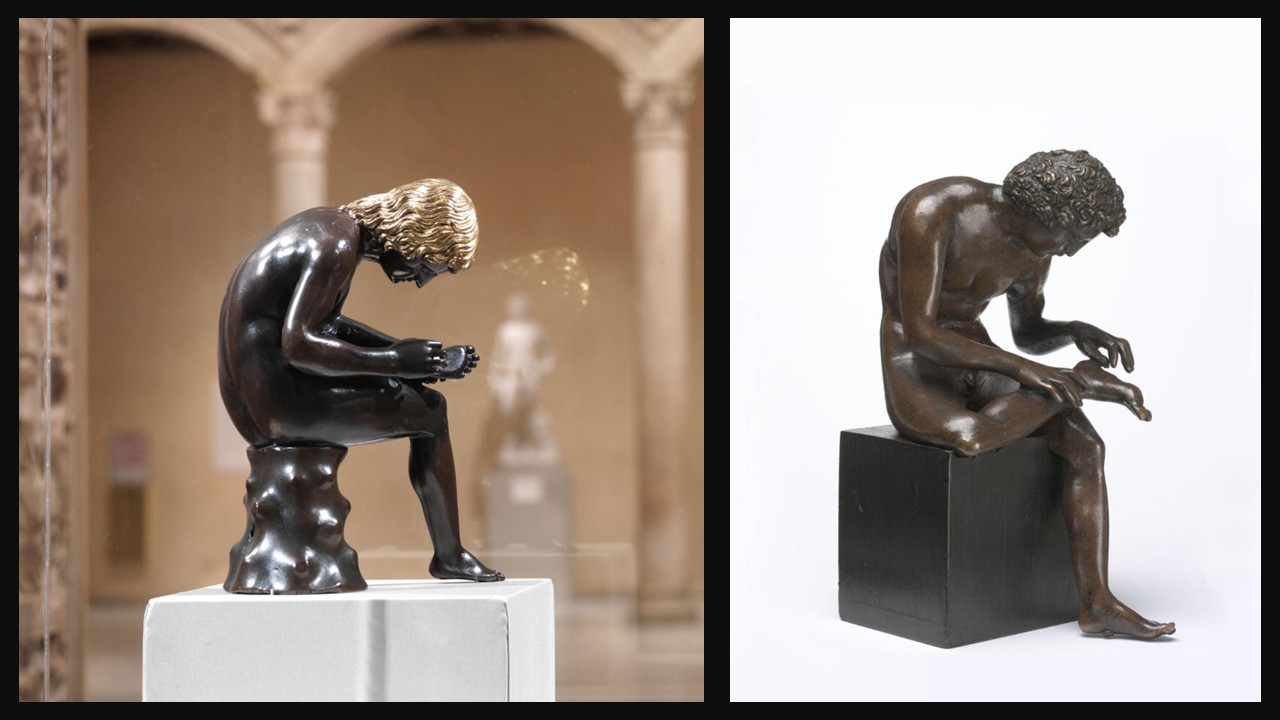
Severo Da Ravenna (workshop of),
The Spinario, 1510-1530, Bronze, Height: 18.8 cm, V&A Museum, London, UK https://collections.vam.ac.uk/item/O158405/the-spinario-statuette-severo-da-ravenna/
Antico (Pier Jacopo Alari Bonacolsi), ca. 1460–1528
Spinario, modeled ca. 1496, cast ca. 1501, Bronze, Height:19.7 cm, the MET, NY, USA https://www.metmuseum.org/perspectives/spinario-facing-pain

During the Renaissance, the Spinario captivated artists who sought to emulate classical antiquity’s grace and realism. Notably, it was copied by artists such as Severo da Ravenna and Jacopo Buonaccolsi (also known as “L’Antico”), both of whom created bronze replicas in the early 16th century. These Renaissance versions were often smaller in scale and displayed the same refined attention to anatomical detail and natural posture. Some of these copies were commissioned by powerful patrons and collectors across Europe, eager to possess echoes of classical antiquity. Today, examples of these Renaissance copies can be found in major collections such as the Louvre Museum in Paris, the Victoria and Albert Museum in London, and the Kunsthistorisches Museum in Vienna, reflecting the enduring influence of the Spinario on European art and collecting traditions.

Spinario Estense, Roman Republican Art (attributed), 509 BC 509 BC / 27 BC, Marble, Height: 92 cm, Galleria Estense, Modena, Italy Photo Credit: Amalia Spiliakou, April 1, 2025

The Spinario Estense, now housed in the Galleria Estense in Modena, is a sculpture that reflects deep admiration for classical antiquity. Its form is based on the celebrated ancient statue of a boy removing a thorn from his foot, which was once located in the Lateran area of Rome before being transferred to the Capitoline Hill in 1471 by Pope Sixtus IV. The Modena version was restored between 1598 and 1599 by the sculptor Francesco Casella, as noted in a letter to Giovan Battista Laderchi, secretary to Duke Cesare d’Este. It arrived in Modena between 1629 and 1630, becoming part of the Este collection, where it remains a key example of how Renaissance patrons sought to preserve and celebrate the artistic legacy of antiquity.

The statue in Modena is now widely regarded as an eclectic work that blends stylistic elements from different periods of antiquity. Scholars believe it was originally conceived in the Hellenistic period, with a naturalistic body inspired by Greek prototypes, while the head reflects the more rigid, idealized forms of the earlier Severe Style. This fusion suggests the statue, in its present form, was produced in the 1st century BC, during the proto-Augustan age. Recent interpretations propose that rather than representing a generic shepherd boy, the figure may embody a more significant character tied to Rome’s foundational mythology. In the cultural and political climate of the Augustan period, the shepherd par excellence of Greek origin was Ascanio, also known as Iulo—the mythological son of Aeneas and legendary ancestor of the gens Iulia—lending the statue a symbolic dimension connected to Roman identity and imperial lineage.

Spinario Estense, Roman Republican Art (attributed), 509 BC 509 BC / 27 BC, Marble, Height: 92 cm, Galleria Estense, Modena, Italy Photo Credit: Amalia Spiliakou, April 1, 2025

Seeing the Spinario Estense in person on April 1st, 2026, was a striking and memorable experience. Standing before it in the Galleria Estense, I was captivated by the quiet intensity of the boy’s gesture, so focused, so human. Knowing its long journey through time, from Hellenistic inspiration to Roman reinterpretation and Renaissance reverence, added a powerful sense of continuity to the moment. What struck me most was how this single figure holds within its layers of history, mythology, and artistic devotion. It reminded me that classical art isn’t just something we study, it’s something we feel, and seeing the Spinario in Modena made that connection deeply personal.

For a Sudent Activity, titled If the Spinario Could Speak…, please… Check HERE!

Bibliography: https://catalogo.beniculturali.it/detail/HistoricOrArtisticProperty/0800675924

Giambologna’s Mercury

Giambologna, 1529-1608
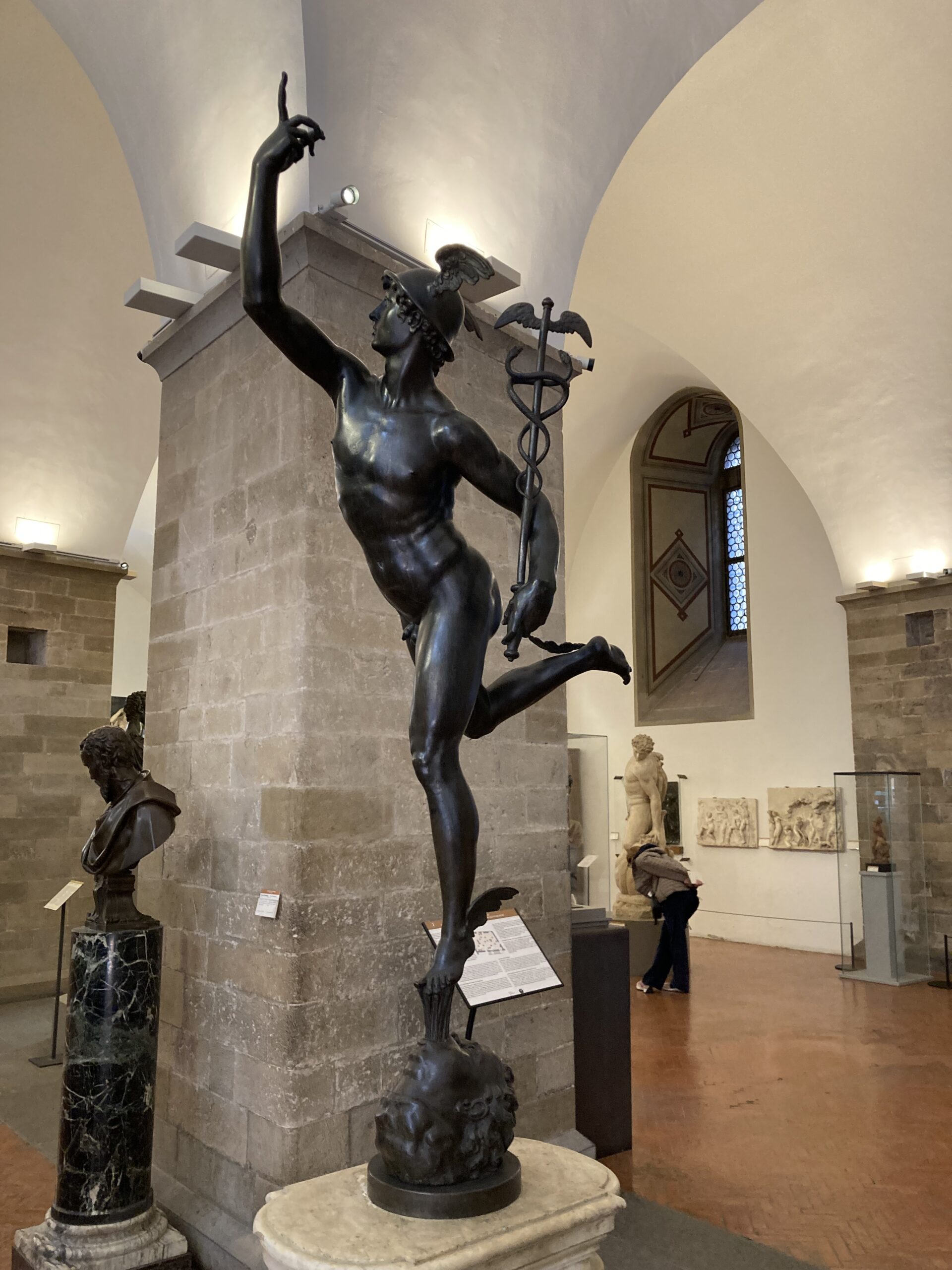
Mercury, 1564-65, Bronze, Height: 1.87 m, National Museum of Bargello, Florence, Italy – Photo Credit: Amalia Spiliakou, April 2025

High in the dome of Heaven, behold the bright Caduceus-Bearer soared on balanced wings… With these words from Metamorphoses, Ovid captures the essence of Mercury—the swift-footed messenger of the gods, gliding effortlessly between the realms of men and Olympus. Few sculptures have embodied this celestial lightness more vividly than Giambologna’s Mercury, housed in Florence’s Bargello Museum. A masterpiece of Mannerist sculpture, this bronze figure defies gravity, poised mid-flight with one foot balanced on a puff of air, as if the god himself has just touched down—or is about to vanish upward. Both a technical marvel and a poetic tribute to divine motion, Giambologna’s Mercury invites us to consider how myth and material can together create the illusion of weightless divinity. https://www.perseus.tufts.edu/hopper/text?doc=Perseus%3Atext%3A1999.02.0028%3Abook%3D2%3Acard%3D708 Ovid’s Book II, lines 708-832

Giambologna, born Jean Boulogne in 1529 in Douai, Flanders (now northern France), was one of the most celebrated sculptors of the late Renaissance. Trained in the Flemish tradition, he moved to Italy in his twenties, where the grandeur of classical antiquity and the influence of Michelangelo deeply shaped his artistic vision. After a period of study in Rome, he settled in Florence and entered the service of the powerful Medici family, becoming their official sculptor. Giambologna spent most of his career in Florence, where he produced a prolific body of work for public spaces, churches, and the Medici court. His art, which bridged the High Renaissance and early Baroque, earned him fame across Europe, and his reputation led to commissions from prominent patrons beyond Italy, including the kings of France and Spain.

Giambologna’s sculptures are renowned for their dynamic movement, elegant elongation, and mastery of anatomy, often conveying a sense of fluid motion frozen in bronze or marble. He favored spiraling compositions and complex, multi-viewpoint figures—hallmarks of the Mannerist style that pushed beyond the balanced harmony of the High Renaissance. Works like The Rape of the Sabine Women and Mercury exemplify his ability to animate mythological subjects with theatricality and grace. Mercury, in particular, showcases his signature elegance: the god is captured in a moment of upward flight, supported by a breath of wind and pointing heavenward with refined poise. Giambologna’s attention to surface detail, psychological expression, and compositional ingenuity placed him among the most innovative sculptors of his time and helped define the artistic identity of late 16th-century Florence.

Giambologna, 1529-1608
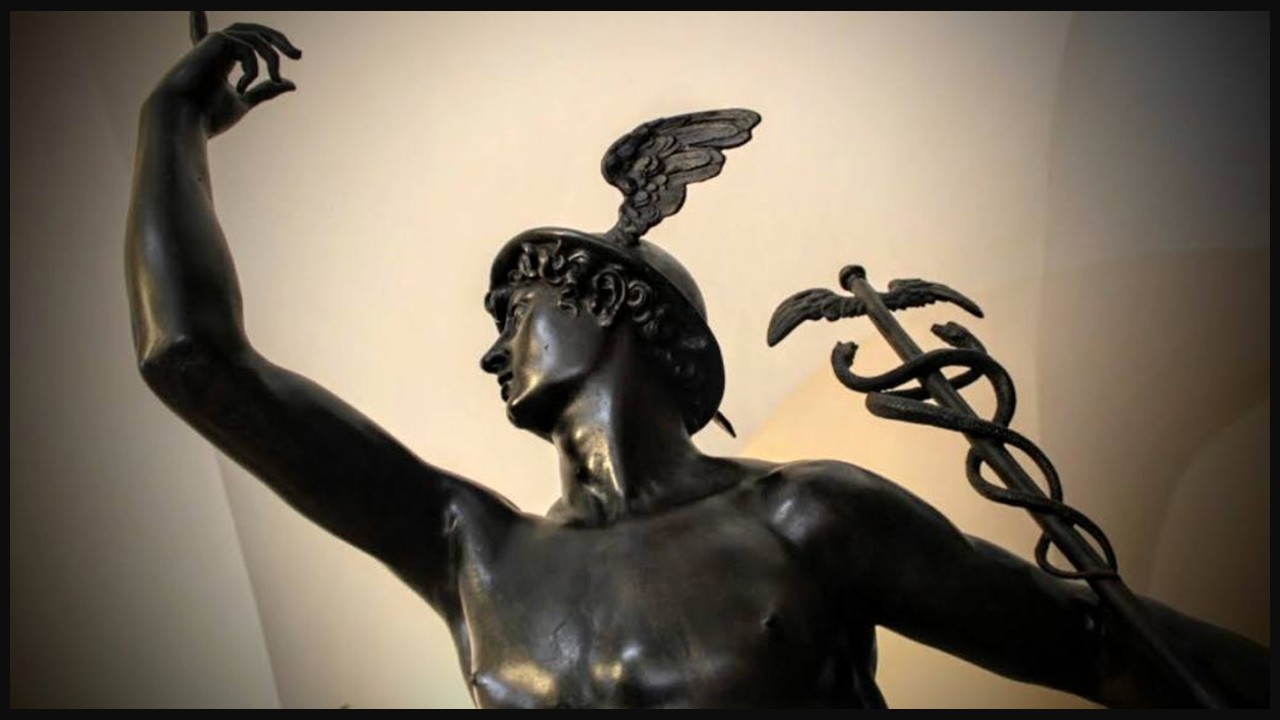
Mercury (detail), 1564-65, Bronze, Height: 1.87 m, National Museum of Bargello, Florence, Italy https://michelangelobuonarrotietornato.com/2023/07/17/la-scultura-del-giorno-il-mercurio-volante-del-giambologna/

About a month ago, I found myself standing in one of Florence’s most quietly astonishing museums—the Bargello—and there, in a sunlit corner of its vaulted Renaissance halls, I met Mercury. Not the planet or the element, but Giambologna’s bronze god in flight. He’s impossibly light, captured in the instant of takeoff, one toe barely touching a breath of wind. His arm stretches skyward, guiding your eyes along the elegant arc of his body, as if he might vanish through the ceiling at any moment. With his winged sandals and caduceus in hand, he’s unmistakably the divine messenger—but in this version, he’s also youth, grace, and motion incarnate.

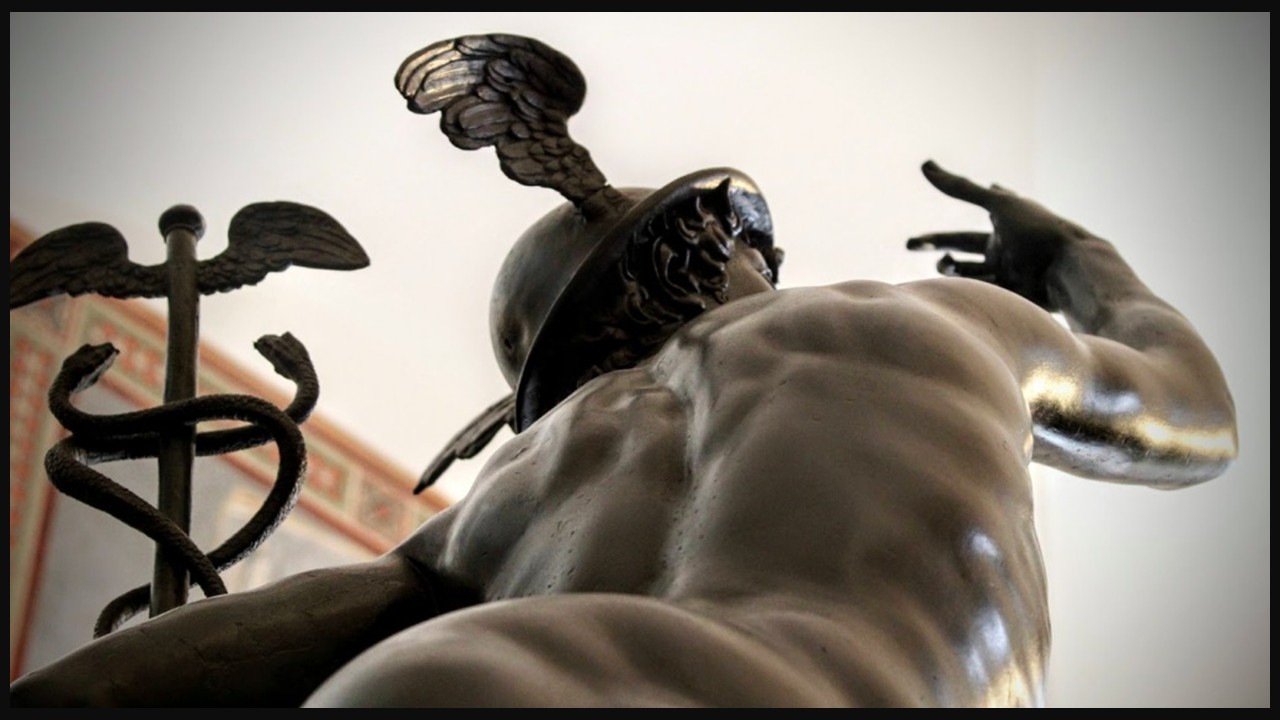
What struck me most wasn’t just the technical feat—though balancing a tall bronze figure on a single outstretched toe is no small thing—it was the way the statue invites you to move. Walk around him and the pose unfolds like choreography: the twist of his torso, the reach of his arm, the lift in his stride. Giambologna, a master of Mannerist sculpture, was clearly less interested in stillness than in storytelling. Here, Mercury isn’t simply frozen in time; he’s becoming. There’s a rhythm to his limbs, a musicality even in the tension of his muscles. You don’t just look at this sculpture—you orbit it.

Giambologna, 1529-1608
Mercury (detail), 1564-65, Bronze, Height: 1.87 m, National Museum of Bargello, Florence, Italy https://michelangelobuonarrotietornato.com/2023/07/17/la-scultura-del-giorno-il-mercurio-volante-del-giambologna/

Like so much in Florence, this statue comes with a backstory as rich as the bronze it’s cast in. Vasari, ever the gossipy biographer of Renaissance artists, tells us that Giambologna originally made a version of Mercury as a gift for Emperor Maximilian II. The emperor, a Medici ally through marriage, fancied himself a kind of modern Mercury—nimble, clever, divinely connected—so Cosimo I had no trouble choosing a fitting diplomatic token. The version at the Bargello may not be that statue; scholars have debated whether it’s an earlier, imperfect casting or a later variant, possibly made around 1580. Records show it turning up in Rome that same year, decorating the gardens of a Medici villa. Somehow, over the centuries, it made its way back to Florence—where I, and countless others, have been lucky enough to encounter it in mid-flight.

In a city overflowing with artistic treasures, it’s easy to feel overwhelmed—but my visit to the Bargello will always stand out, thanks to Mercury. There was something unforgettable about encountering a figure so full of motion and lightness in such a quiet, grounded space. Giambologna’s Mercury doesn’t just capture a mythological god; it captures the wonder of seeing art defy gravity, time, and expectation. Long after leaving the museum’s cool stone halls, it was Mercury who lingered in my thoughts—mid-air, timeless, and still soaring.

For a PowerPoint Presentation of Giambologna’s oeuvre, inspired by Giambologna’s Mercury, please… Check HERE!

Bibliography: https://catalogo.beniculturali.it/CulturalInstituteOrSite/fd60027675ee78994f1fa2f8e4c16f45

A former Teacher Curator BLOG POST on Giambologna is titled The Colosso del’Appenino by Giambologna. It can be reached… https://www.teachercurator.com/art/the-colosso-delappennino-by-giambologna/