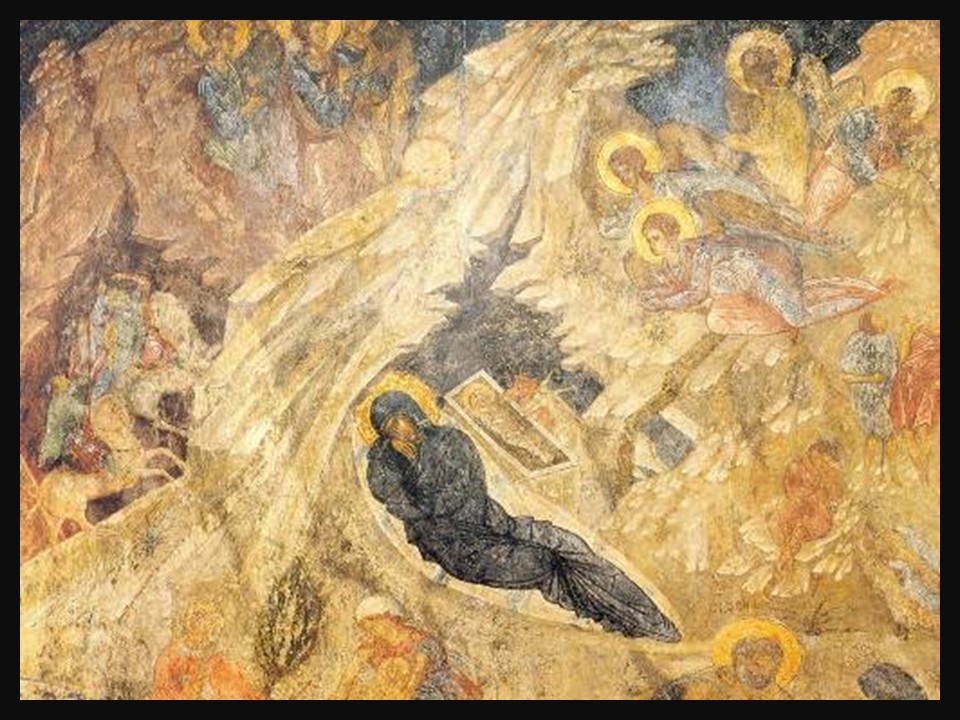
Byzantine fresco of the Nativity in the Perivleptos Monastery Katholikon at Mystra, showing the Virgin Mary reclining and the infant Jesus in a cave-like setting, surrounded by haloed figures and a rocky landscape rendered in rich, earth-toned pigments typical of 14th-century Orthodox iconography.

The Nativity Fresco of Peribleptos Monastery in Mystra

Byzantine fresco of the Nativity in the Perivleptos Monastery Katholikon at Mystra, showing the Virgin Mary reclining and the infant Jesus in a cave-like setting, surrounded by haloed figures and a rocky landscape rendered in rich, earth-toned pigments typical of 14th-century Orthodox iconography.
Nativity Scene, Peribleptos Monastery, circa 1348/80, Mystras, Greece
https://eclass.uoa.gr/modules/document/file.php/ARCH396/Didaktiko%20yliko/PanKal997.htm

The Nativity Fresco of Peribleptos Monastery in Mystras captures the spiritual heart of the season through the radiant artistry of Byzantine devotion. High on the slopes of Mistra, within the Monastery of Perivleptos, the Nativity scene painted across its frescoed walls unfolds as a vivid testament to Byzantine spirituality and artistic mastery. Created in the 14th century, this depiction of Christ’s birth captures both the human tenderness and divine mystery central to Orthodox faith. Beneath the soft light filtering through the dome windows, figures of Mary, Joseph, angels, and shepherds converge around the newborn Christ, embodying a theology of incarnation rendered through luminous color and sacred geometry. As we celebrate Christmas Day 2025, this fresco invites reflection on how art can transform stone and pigment into a living proclamation of hope and transcendence.

Mystras and the Late Byzantine World

Mystras, located near ancient Sparta in the Peloponnese, was one of the most significant centers of the late Byzantine Empire, flourishing between the 13th and 15th centuries. Established by the Franks in 1249 and later reclaimed by the Byzantines, it became the capital of the Despotate of the Morea, a major political, intellectual, and artistic hub during Byzantium’s final centuries. The city’s fortified acropolis, palaces, monasteries, and churches, including the Peribleptos, Pantanassa, and Hodegetria to mention just three, reveal a remarkable synthesis of political power and cultural refinement. Mystras nurtured a vibrant artistic school known for its refined frescoes and architecture, which combined classical Byzantine traditions with new stylistic developments that prefigured aspects of the Renaissance. Today, Mystras stands as a UNESCO World Heritage Site, representing the last brilliant flowering of Byzantine art and spirituality before the empire’s fall.
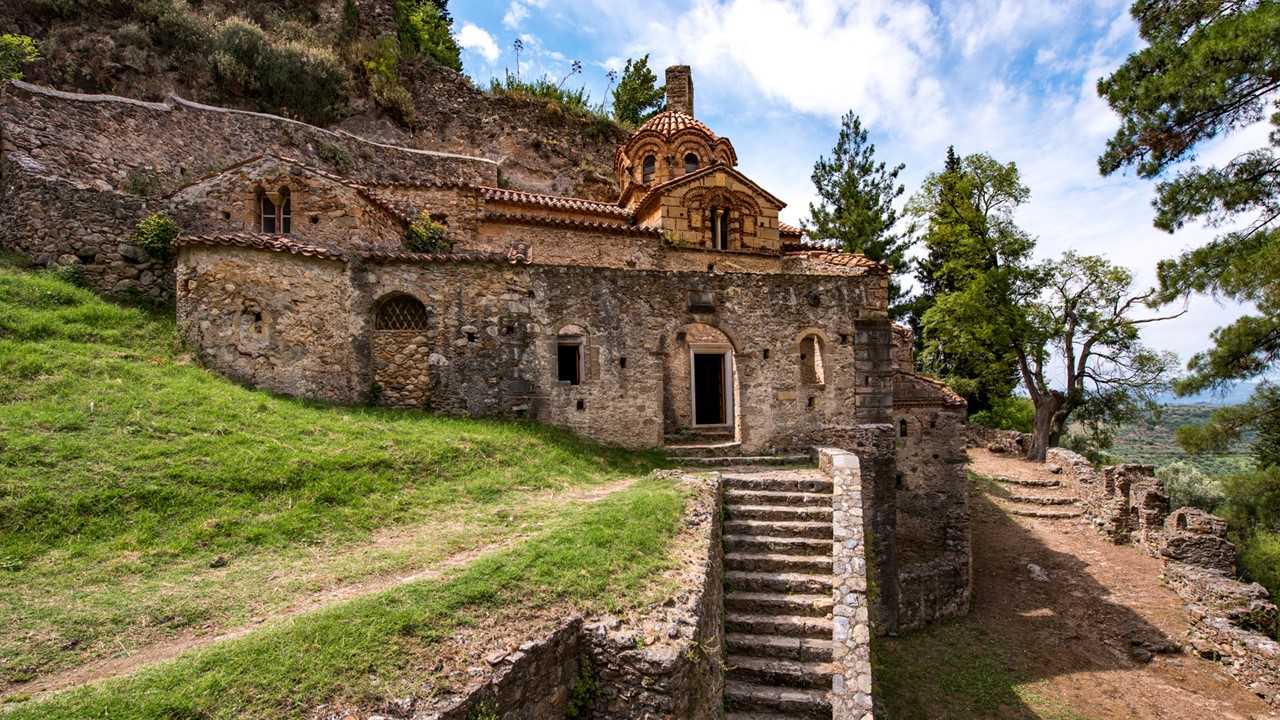
Exterior view of the Perivleptos Monastery Katholikon in Mystras, showing the late Byzantine stone and brick church built into the side of a cliff with its rugged masonry walls, traditional pitched roof, and adjacent tower and monastic buildings under a clear sky, reflecting its 14th-century Mystras architectural style and historic setting on the hillside.
Peribleptos Monastery, circa 1348/80, Mystras, Greece
https://www.religiousgreece.gr/en/attractions/monastery-perivleptos

Late Byzantine Frescoes of Peribleptos

Among its most notable monuments, the Katholikon (main church) of the Peribleptos (Perivleptos) Monastery was founded in the mid-14th century, most scholars attribute its patronage to the first Despot of the Morea, Manuel Kantakouzenos, and his wife Isabella (Isabelle) de Lusignan. Built into the southeast slope of the town and partly supported by a cave, the church is a two-column cross-in-square plan that exemplifies the local “Mystras style,” with squared stone and inlaid tilework that give the exterior a fortress-like appearance. Its dating is commonly placed around the 1350s–1370s, when Mystras was a lively cultural and political center of the late Byzantine Peloponnese.

The interior is celebrated for an extensive and unusually well-preserved cycle of late Byzantine frescoes (mid-14th century) that focus especially on the life of the Virgin and key Gospel scenes, paintings that art historians link stylistically to Cretan and Macedonian workshops and that show Palaeologan-era innovations in space and movement. Because these frescoes survive largely in situ, the Peribleptos Katholikon is considered crucial for understanding late Byzantine painting and the artistic renaissance in the Morea; the whole site of Mystras is protected for its outstanding medieval ensembles.
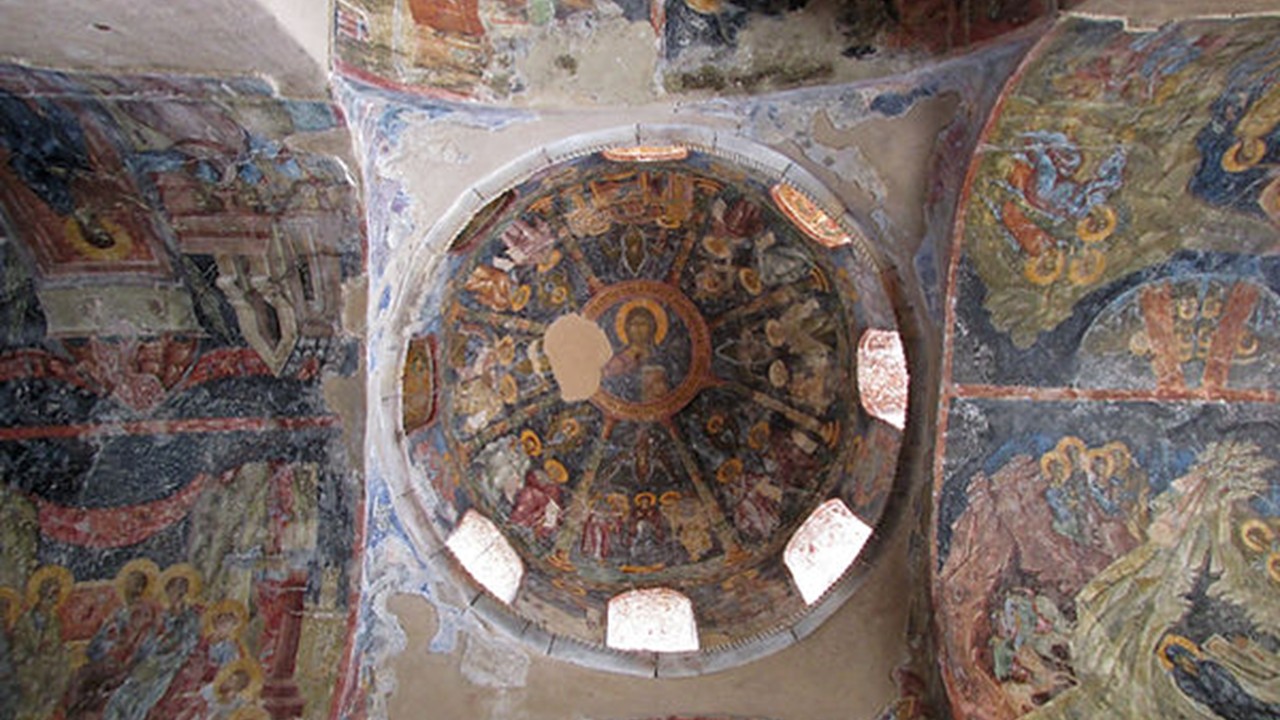
Interior view of the frescoed roof (dome) of the Katholikon at Perivléptos Monastery, showing the large central image of Christ Pantokrator (Christ as ruler of all) within the dome, painted in vivid colors on the curved vaults of this 14th-century church interior.
Peribleptos Monastery frescoes, circa 1348/80, Mystras, Greece
https://www.thebyzantinelegacy.com/peribleptos-mystras

The Nativity Fresco at Peribleptos

The Nativity scene in the Peribleptos Monastery at Mystra stands as one of the most evocative frescoes of the late Byzantine period, part of the church’s rich Christological cycle. Depicted with serene grace and otherworldly poise, the Virgin reclines beside the Christ Child in a rocky grotto, encircled by Joseph, the Magi, shepherds, and angels—each slender figure animated by elegant gestures and expressive faces. The artist achieves a vivid harmony of color and form, combining traditional Byzantine iconography with a confident, freer sense of spatial rhythm. The layered landscape, luminous tones, and effortless authority of each depiction reveal the maturity of the Mystras school, whose refinement would profoundly influence the later Cretan School of icon painters.

Aesthetically, the Nativity fresco exemplifies the serene elegance and emotional subtlety of late Byzantine art at its height. The soft modulation of color—from deep blues and warm ochres to pale rose and gold—infuses the composition with both tenderness and transcendence. Figures are modeled with a supple handling of light and shadow that departs from earlier rigidity, achieving a lyrical balance between solemnity and grace. This confident, almost Renaissance sensibility anticipates the stylistic currents that would flow from Mystras to Crete and, ultimately, to Venice. Through this luminous synthesis of theology and beauty, the Peribleptos Nativity becomes not merely a devotional image but a harbinger of artistic renewal across the Mediterranean world.

As we celebrate Christmas Day 2025, the Nativity fresco at Peribleptos reminds us that the story of Christ’s birth continues to inspire wonder, devotion, and artistic creation across the centuries. Just as the figures in the fresco gather around the newborn Savior, we too are invited to pause, reflect, and share in the warmth, hope, and light that this holy day brings. In the quiet glow of candlelight or the brilliance of a winter sunrise, the spirit of Mystra endures, connecting past and present in a timeless celebration of faith and beauty.

Explore further: Download our PowerPoint Presentation on the Byzantine Monuments of Mystras for educators, students, and art lovers… HERE!

Bibliography: analysed in detail by The Byzantine Legacy: https://churchesingreece.blogspot.com/2014/07/mystras-peribleptos.html and in Greek https://www.ime.gr/choros/mystras/gr/E/14E/14E12.html
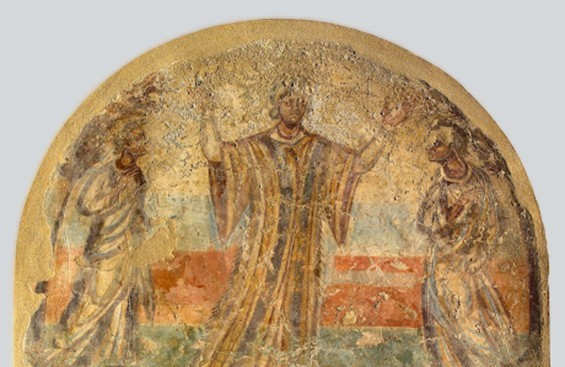
Sosannah

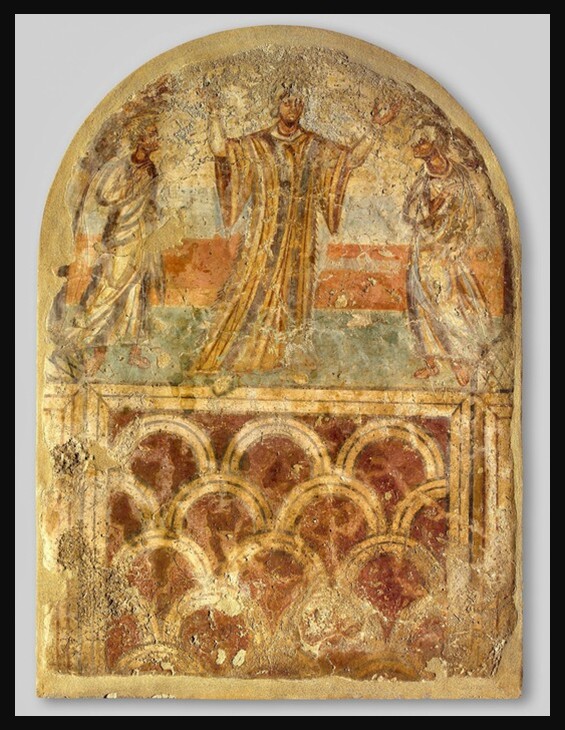
Funerary Wall Painting with Sosannah and the Elders, early 5th century, Fresco, 170 x 127 cm, Museum of Byzantine Culture, Thessaloniki, Greece https://www.lifo.gr/culture/arxaiologia/oi-toihografies-sta-tafika-mnimeia-sto-moyseio-byzantinoy-politismoy-tis

In the quiet hush of a walled garden, Sosannah, a woman of rare beauty and deeper virtue, sought solitude beneath the sun. But hidden behind aged branches and envy-clouded eyes, two elders — judges of the people — watched with corrupted hearts. When the moment came and she was alone, they emerged, casting off the mask of piety to reveal their lust. They cornered her with a cruel choice: submit to their desire or face a false accusation that would cost her life. But Sosannah, steadfast and unshaken, chose honor over life, her silence a cry to the heavens. Dragged before the assembly and condemned by perjury, her fate seemed sealed — until Daniel, youthful and divinely stirred, rose with clarity and courage. Separating the liars, he unraveled their tale with the sharp blade of truth, exposing their deceit. Justice turned its gaze, and the elders, once revered, fell by the very law they had twisted. And Sosannah, radiant in her innocence, stood free — a testament to the power of virtue and the triumph of truth… https://bible.usccb.org/bible/daniel/13

The story of Sosannah stands as a powerful symbol for the Christian Church — a portrait of moral courage, spiritual integrity, and trust in divine justice. She embodies the faithful soul, or even the Church itself, called to remain pure amid a world of temptation, false judgment, and the abuse of authority. Her unwavering stance reflects the Church’s vocation: to uphold truth and righteousness, even when isolated or under threat. In a culture that often rewards compromise, Sosannah’s quiet strength challenges believers to hold fast to virtue, trusting in God’s unseen hand.

The figures surrounding her — the corrupt elders and the righteous Daniel — deepen the symbolism. They represent, respectively, the danger of distorted power within religious institutions and the hope of divine intervention through the voice of the just. For the Church today, Sosannah’s story is less about the drama of her trial and more about the enduring truth it reveals: that God sees the heart, hears the cry of the innocent, and will ultimately vindicate the faithful. In this, Sosannah becomes not just a heroine of the past, but a guide for the present — a reminder that holiness is resilient, and truth, though buried for a time, will rise.

The Biblical story has inspired countless artists across centuries, drawn to its rich emotional tension and symbolic depth. In Renaissance and Baroque art especially, painters such as Rembrandt, Artemisia Gentileschi, and Tintoretto depicted the moment of confrontation in Sosannah’s garden — a scene ripe with psychological complexity. While some early depictions emphasized her beauty and vulnerability, later interpretations, particularly by women artists like Gentileschi, focused on Sosannah’s distress, resistance, and the moral corruption of the elders. These artworks often served as visual meditations on virtue under siege, the misuse of authority, and the strength of conscience. Through gestures, gazes, and the contrast of light and shadow, artists explored not only a biblical narrative but a timeless human drama — inviting viewers to contemplate justice, dignity, and divine vindication.

Funerary Wall Painting with Sosannah and the Elders, early 5th century, Fresco, 170 x 127 cm, Museum of Byzantine Culture, Thessaloniki, Greece https://www.lifo.gr/culture/arxaiologia/oi-toihografies-sta-tafika-mnimeia-sto-moyseio-byzantinoy-politismoy-tis

My favourite rendition of Sosannah’s story lies within the Museum of Byzantine Culture in Thessaloniki. It is a remarkable early Christian fresco on the west wall of a barrel-vaulted grave, presenting the biblical story of Sosannah and the Elders with both symbolic power and refined artistry. There’s something deeply moving about how this familiar biblical story comes to life through the quiet beauty of early Christian art. The composition is split into two parts: the lower register features a delicate thorakion slab with small pillars topped by pinecones — a soft, almost architectural whisper — while the upper zone bursts with meaning. There stands Sosannah, praying with solemn grace, flanked by two men whose agitation betrays their guilt. She’s framed by tall cypress trees that bend inward, as if the natural world itself leans in to witness this moment of trial and courage. Her footsteps slightly beyond the slab, reaching toward the viewer, as if inviting us to stand with her.

This fresco, dating to the fifth century, is not only a masterful example of early Christian funerary art but also a theological statement. The theme of Sosannah’s unjust accusation and divine vindication was especially resonant during a time when the Christian Church was defining its identity against the backdrop of intense doctrinal disputes and heresies. In this context, Sosannah becomes an allegory for the Church itself—pure, persecuted, and ultimately defended by divine truth. The expressive detail, naturalistic rendering of garments and foliage, and vibrant use of colour distinguish this fresco as one of the finest examples of its kind, blending artistic grace with profound spiritual symbolism.

For a PowerPoint Presentation, titled Sosannah in Painting, please… Check HERE!

Bibliography: Heaven & Earth. Art of Byzantium from Greek Collections, Exhibition catalogue, A. Drandaki, D. Papanikola-Bakirtzi, A.Tourta (eds), Page 71 https://www.academia.edu/43062741/_Heaven_and_Earth_Art_of_Byzantium_from_Greek_Collections_Exhibition_catalogue_A_Drandaki_D_Papanikola_Bakirtzi_A_Tourta_eds_National_Gallery_of_Art_Washington_October_3_2013_March_2_2014_and_J_Paul_Getty_Museum_Los_Angeles_April_9_August_25_2014_Athens_2013_64_123_no_10_43