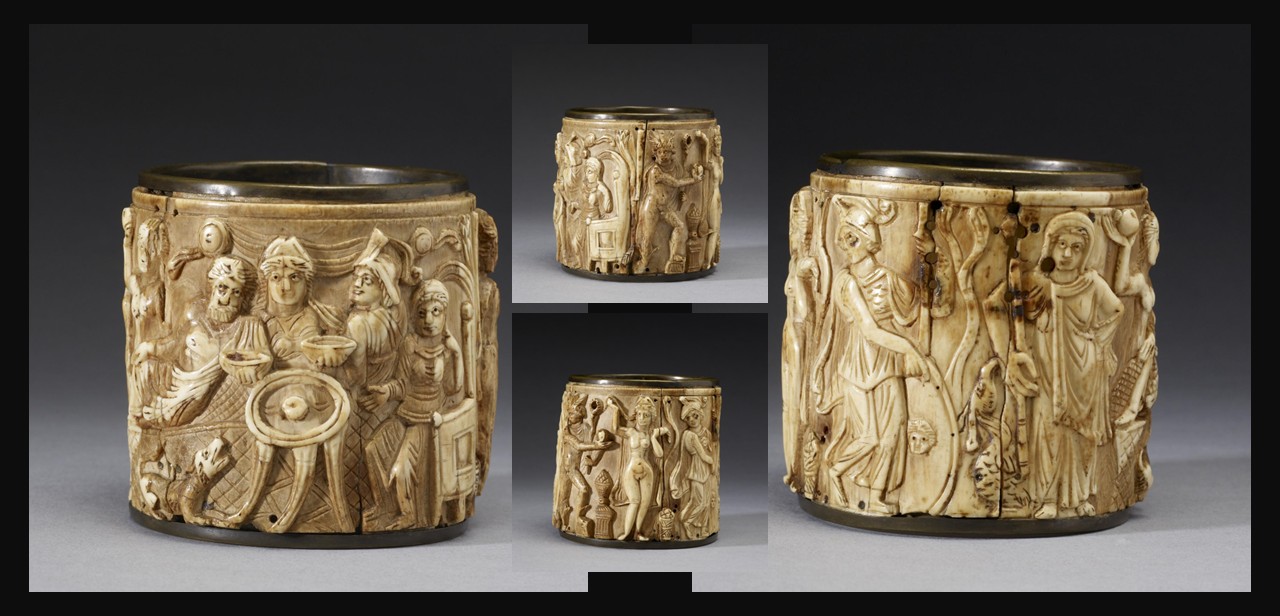
Circular Pyxis with Mythological scenes, 5th-6th century, from Egypt, Ivory, 8.5 x 9.1 cm, The Walters Art Gallery, Baltimore, USA https://art.thewalters.org/object/71.64/
Nestled in the collection of The Walters Art Museum in Baltimore is a remarkable Ivory Vessel known as the Circular Pyxis, carved in Egypt during the 5th or the 6th century AD. This delicately worked object may be small in size, but it opens a rich window into the artistic and cultural world of Late Antiquity, a period of transition, imagination, and blending traditions. This exquisite Late Antique Ivory Pyxis not only captivates with its carved mythological scenes but also carries a rich history of ownership that reflects the changing tides of art collecting over the centuries. Originally circulating in European collections in the 19th century, the pyxis was first recorded in the possession of Count Girolamo Possenti of Fabriano before being sold in Florence in 1880 and again in Cologne in 1886. It entered the collection of American collector Henry Walters in 1926, and upon his bequest in 1931 became part of the permanent holdings of The Walters Art Museum in Baltimore, where it continues to be studied and admired today.
What Is a Pyxis? Meaning, Function, and Materials: The term pyxis derives from the Greek word for “box” and in antiquity referred to a small, lidded container used to store personal items such as jewelry, cosmetics, or incense. Characterized by its simple form, a body with a fitted lid, the pyxis offered artists a compact surface for both functional design and decorative refinement. Although the type is most familiar from Classical and later Greek pottery, archaeological evidence indicates that luxury containers, including examples carved from ivory, were already produced in the Aegean during the Minoan and Mycenaean periods. By the Roman and Late Antique eras, the pyxis had become firmly established as a prestigious object, increasingly fashioned from precious materials such as ivory, metal, and stone. Ivory in particular, valued across the Mediterranean for its rarity and suitability for fine carving, endowed these objects with an elegance that signaled both elite status and a long tradition of personal adornment.
Mythological Imagery on the Circular Pyxis: What makes the Baltimore pyxis truly exceptional is its carved decoration. Around its circumference, the artist has rendered two mythological episodes from Greek lore in fine relief. One scene depicts the Olympian gods feasting, gathered around a tripod and holding the famed golden Apple of the Hesperides. In the next, Hermes presents this golden fruit to Aphrodite, chosen over Hera and Athena as the most beautiful goddess, a story connected to the Judgment of Paris.
Late Antique Context: Pagan Myth in a Christian Age: This pyxis was carved in Late Antique/Early Christian period, a time when classical Greek mythological themes were still popular even as the Roman Empire embraced Christianity. Many luxury ivories from the 4th through 7th centuries blend pagan and Christian imagery or appear in elite contexts where older stories of pagan mythology remained aesthetically or intellectually significant. The survival of this mythological subject matter on an object likely owned by a sophisticated patron suggests that ancient narratives continued to resonate even amid changing beliefs.
Why the Late Antique Ivory Pyxis Still Matters Today: Today, the Circular Pyxis invites us not only to admire the technical skill of its anonymous craftsman but also to reflect on the layered cultural world it came from. Its intricate carvings make it both a work of art and a storytelling medium, bridging classical mythology with Late Antique tastes. Objects like this remind us that art can transcend time, connecting the ancient past to modern viewers in unexpected ways.
For a related PowerPoint presentation on Ivory Pyxides from the Greco-Roman world, please, Check… HERE!
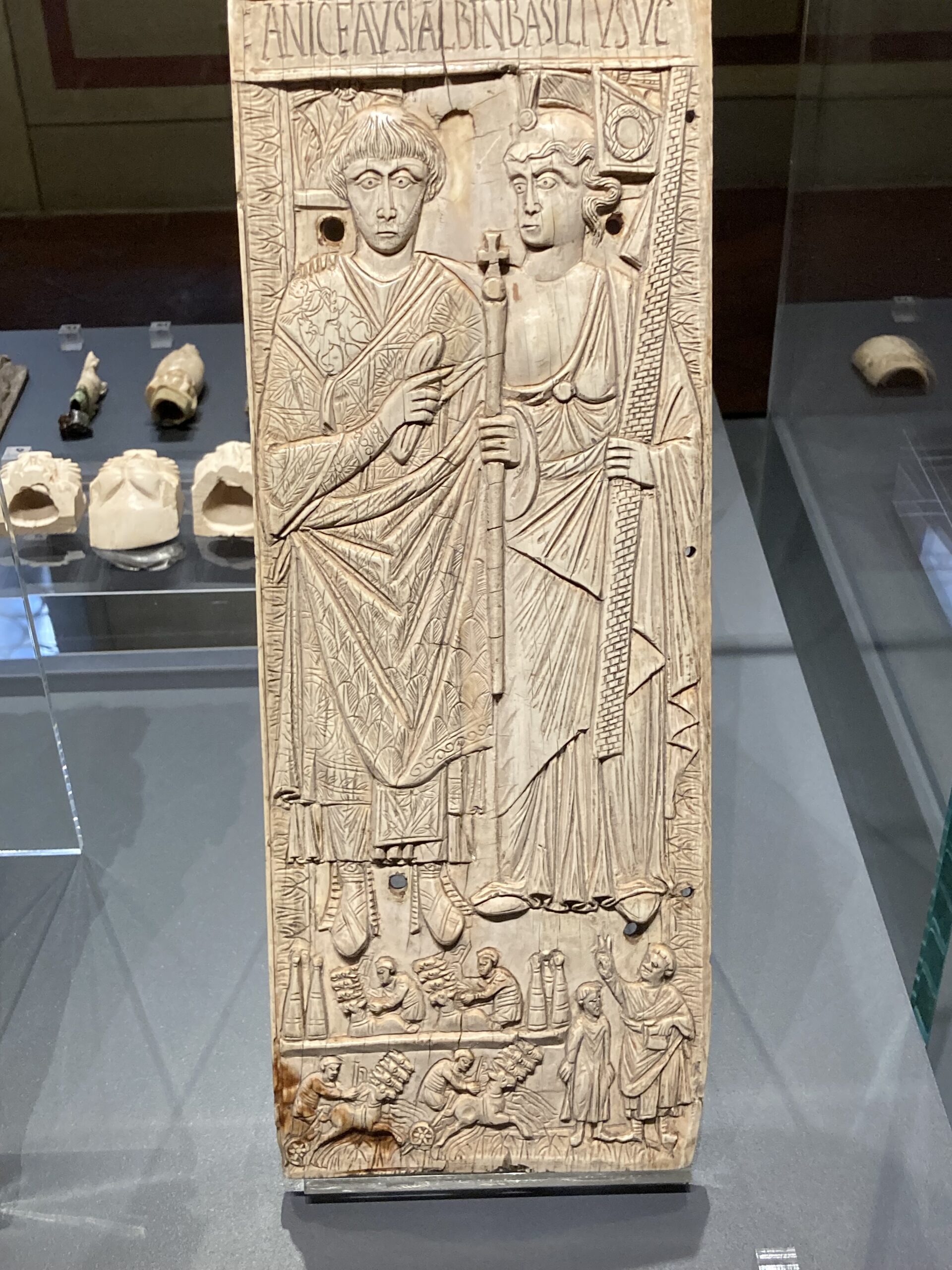
The Bargello panel of The Consular Diptych ofAnicius Faustus Albinus Basilius (consul in 541 AD) offers a vivid glimpse into the ceremonial splendor and political symbolism of late antiquity. Carved in fine ivory, the plaque depicts the Consul Basilio standing frontally beside the personification of Rome, who crowns him with a laurel wreath, a timeless emblem of civic and military virtue. Below unfolds a chariot race, a rare and dynamic motif symbolizing the public games that marked the consul’s inauguration. The consul holds both the scipio topped with a cross and the mappa circensis, the cloth used to signal the start of the races, fusing Christian and traditional Roman imagery in a moment of political theater.
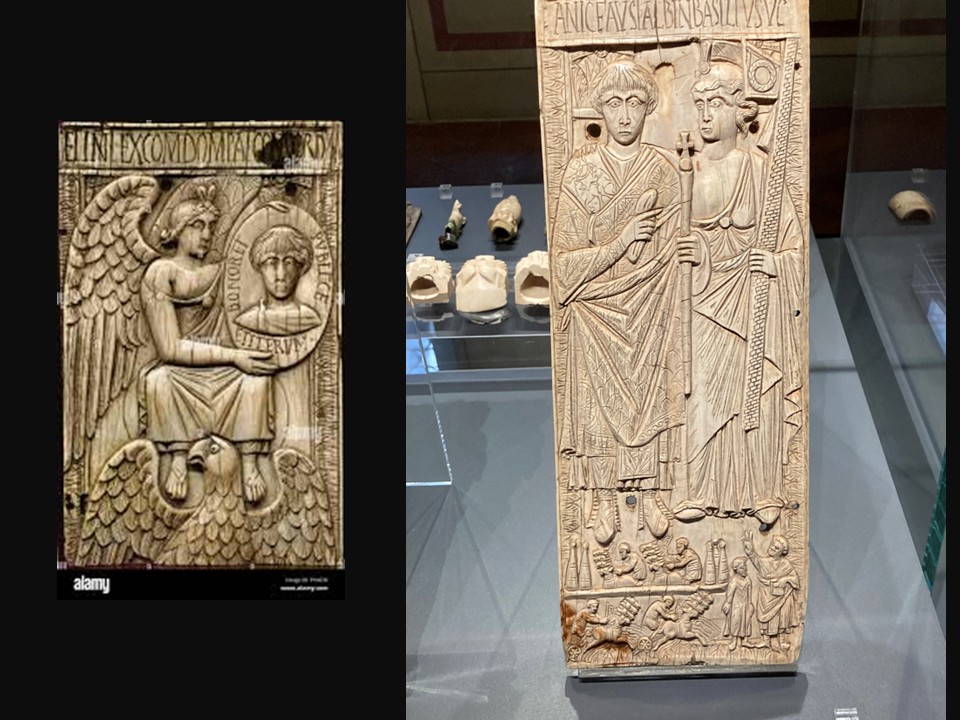
Once hinged to a now-separated companion leaf, the Milan panel (Avori 10, Castello Sforzesco), the Bargello relief would have formed one side of a luxurious diptych presented to commemorate Basilius’s consulship. The Milan fragment, showing Victory presenting the consul’s portrait within a clipeus, completes the scene’s message of divine favor and public virtue. Together, these ivories capture the final flowering of the consular tradition, bridging Roman civic ideals and Byzantine court aesthetics, and reflecting a world where art served both as devotion and as declaration of power.
Consular diptychs were luxurious paired ivory panels created in the late Roman and early Byzantine periods to commemorate the inauguration of a consul, one of the highest offices in the empire. Traditionally carved on the inside to hold wax for writing, these diptychs evolved by the 4th and 5th centuries into richly decorated ceremonial gifts rather than practical objects. Newly appointed consuls commissioned them to celebrate their accession and distributed them to friends, allies, and dignitaries as tokens of prestige and gratitude. The front surfaces were elaborately carved with scenes of the consul’s investiture, imperial imagery, or allegorical figures such as Victory or Rome, while inscriptions proclaimed the consul’s name and titles. Their iconography—often showing the consul presiding over games, dispensing largesse, or associated with divine favor—served to reaffirm the continuity of Roman civic traditions even as imperial power shifted eastward to Constantinople.
Anicius Faustus Albinus Basilius, consul in 541 CE, was a distinguished member of the ancient and influential Anicii family, one of the last great senatorial lineages of Rome. His career unfolded during a turbulent period in the Gothic War and the final years of the Western Roman aristocracy. Before attaining the consulship, Basilius held prominent administrative posts, including comes domesticorum (commander of the imperial household guard) and patricius, titles that reflected both his rank and his proximity to the imperial court. Appointed consul by Emperor Justinian I, he was the last man to hold the title in the Western tradition. After his term, the consulship ceased to exist as an independent civic office and became an imperial prerogative. His consular games, commemorated by the magnificent ivory diptych now divided between Florence and Milan, symbolized both the enduring prestige of Rome’s senatorial elite and the transformation of Roman political culture under Byzantine rule. Basilius’s life thus marks a poignant historical threshold: he stood at the end of Rome’s ancient civic offices and the dawn of a new, imperial order dominated by Constantinople.
The Consular Diptych of Anicius Faustus Albinus Basilius, divided today between the Bargello Museum in Florence and the Museo delle Arti Decorative in Milan, stands as one of the most compelling survivals of sixth-century ivory art. Created in 541 CE to commemorate Basilius’s consulship—the last in the Western Roman tradition—the two panels once formed a hinged pair, uniting political ceremony, imperial iconography, and refined craftsmanship. The Bargello panel represents the consul’s public and civic identity, while the Milan plaque embodies the divine and honorific aspects of his role, creating a complete visual narrative of authority and virtue.
Consul Basilio with personification of Rome and chariot race, 541 – 541, Plaque of an Ivory Consular Diptych, 34.5×12.9 cm, National Museum of Bargello, Florence, Italy – Photo Credit: Amalia Spiliakou, April 2025
The Bargello panel presents Basilius standing frontally in full consular regalia beside the personification of Rome, who crowns him with a laurel wreath, a symbol of victory and civic honor. In his hands, the consul holds the scipio topped with a cross and the mappa circensis, signaling the opening of the chariot races carved below in vivid relief, where teams of four-horse chariots turn around the spina of the circus. This combination of Christian and traditional Roman imagery reflects the fusion of old civic ritual with new imperial faith. The Milan plaque, by contrast, depicts a winged Victory seated on a globe, her feet resting on an eagle’s outstretched wings as she presents a clipeus containing Basilius’s portrait. Around it runs the inscription BONO REI PVBLICAE ET ITERVM (For the good of the Republic, and again), proclaiming the consul’s service to the state. Together, these compositions balance earthly power and celestial sanction, merging public ceremony with divine endorsement.
Aesthetically, the two panels reveal both unity and distinction. The Bargello panel is dense and narrative, crowded with human figures and architectural motifs that emphasize movement and civic spectacle. The Milan panel, in contrast, is more restrained and idealized, its composition centered, symmetrical, and imbued with spiritual calm. The Milanese Victory, delicately modeled and classically poised, recalls earlier Roman traditions of divine personification, while the Bargello figures are more rigid, their proportions elongated, their gestures formalized in the emerging Byzantine style. The difference in tone, public versus celestial, active versus contemplative, suggests that the two leaves were designed as complementary expressions of the same ideology: the earthly authority of the consul validated by divine and imperial favor.
Viewed together, the two ivories encapsulate the final synthesis of Roman civic art and Byzantine symbolism. They celebrate the consulship not merely as an office but as a sacred performance of continuity between past and present, Rome and Constantinople, man and empire. Their divided survival, one in Florence, one in Milan, mirrors the historical fragmentation of the world that produced them, yet their shared message endures: that power, piety, and artistic excellence could still converge in the twilight of antiquity. As such, the diptych of Basilius stands not only as a testament to individual glory but as a poignant farewell to the visual language of Roman public life.
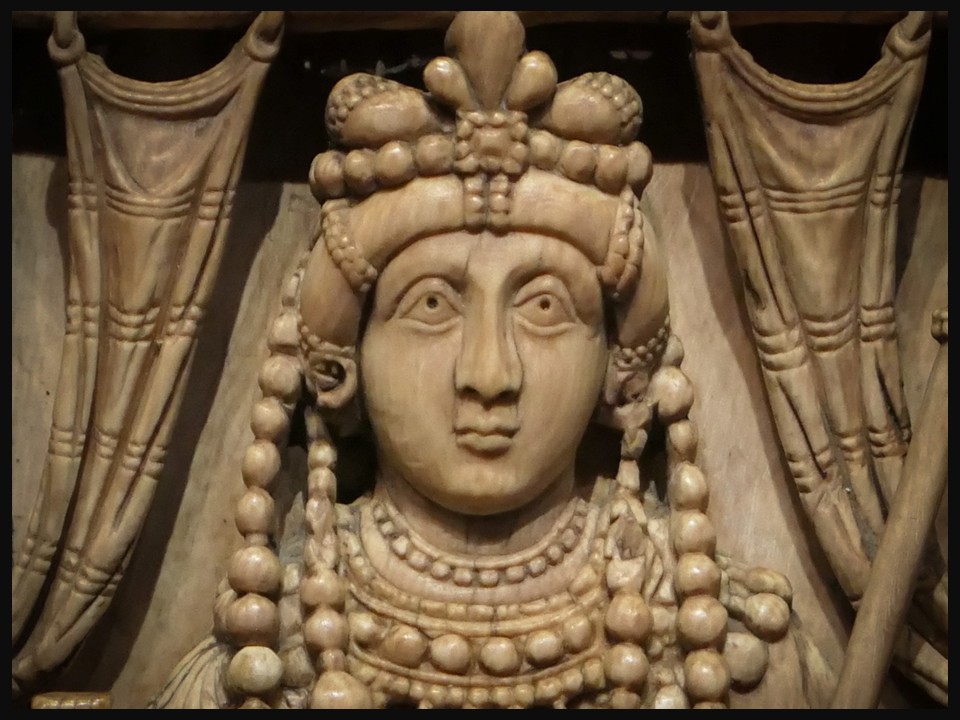
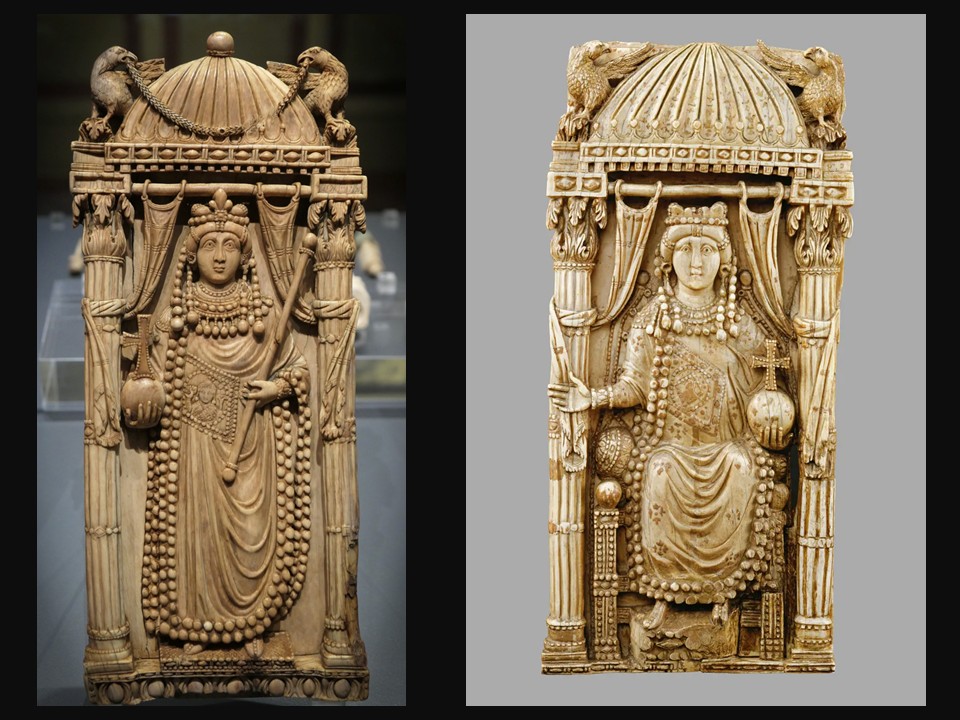
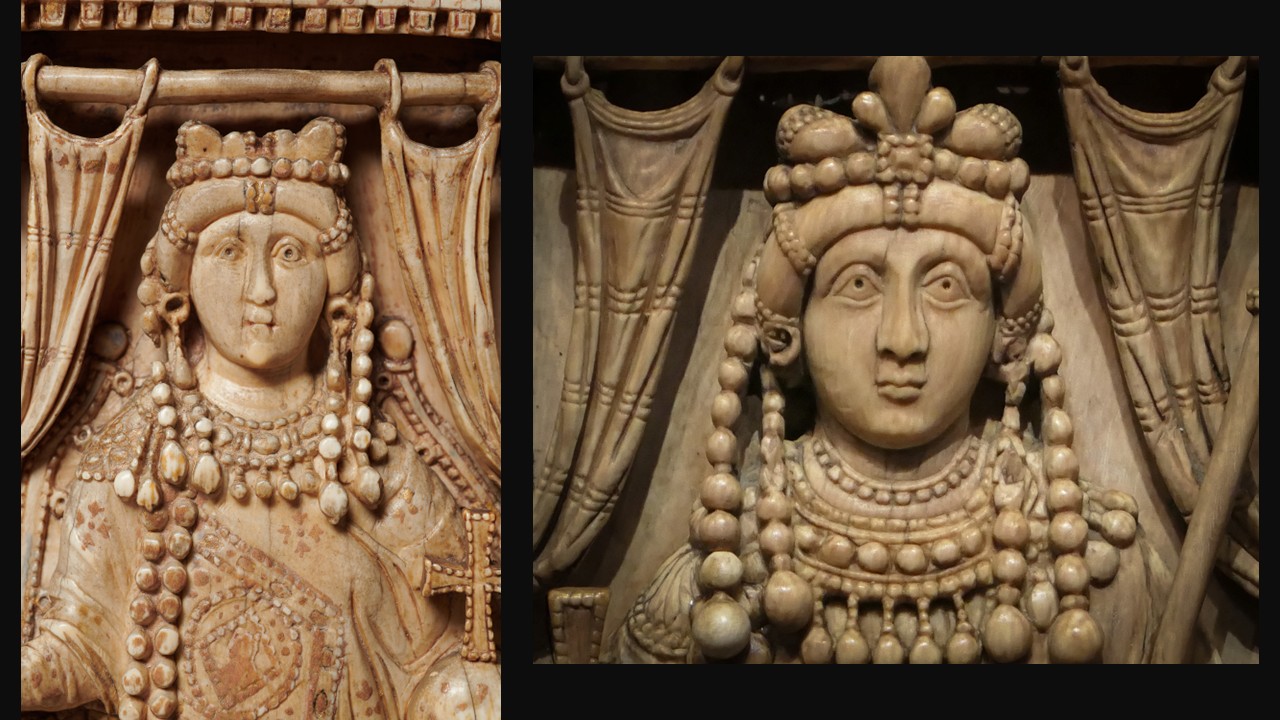
In the heart of Late Antique Constantinople, luxury art served not only as decoration but as a statement of power and identity. Among these treasures are two exquisite ivory plaques, generally attributed to portray Empress Ariadne (r. 474–515), now housed in the Bargello Museum in Florence and the Kunsthistorisches Museum in Vienna. While scholars debate their exact identification, these delicate carvings offer a rare glimpse into the artistry and political symbolism of the early Christian Byzantine court.
Empress Ariadne, around 500 AD, Ivory, Height: 36,5 cm,The Bargello Museum, Florence, Italy – Photo Credit: Marya Stamatiadi April 2025 Empress Ariadne, around 500 AD, Ivory, Height: 26,5 cm,Kunsthistorisches Museum, Vienna, Austria https://www.khm.at/en/artworks/kaiserin-ariadne-71782-1
The late 5th and early 6th centuries were a period of significant political and religious transformation. Ariadne, the daughter of Emperor Leo I and Empress Verina, became central to dynastic succession at a time when no male heir was available. Married first to Emperor Zeno, she played a mediating role during his often turbulent reign. After his death, Ariadne married Anastasios, a palace official (silentiarius) whom she helped elevate to the throne, securing imperial stability. If the ivory plaques do depict her, they present not only an image of an empress consort but also of a figure who embodied dynastic continuity and wielded real political influence in Constantinople.
The Bargello plaque, cataloged as part of a larger pentittico (five-panel composition), presents a standing female figure dressed in imperial robes and facing frontally. Executed in carved and incised ivory with traces of paint, it has been compared to major works such as the Barberini Ivory, and scholars have proposed that it may once have formed part of the same ensemble as the Vienna plaque. Stylistic affinities with consular diptychs, such as those of Aerobindus and Anastasius, suggest a date around 500 AD. While rival identifications have been proposed, the attribution to Ariadne remains the most recurrent. The ivory entered the Bargello in the 19th century through an exchange, further adding to its layered history as both a Byzantine and a modern collectible.
Empress Ariadne, around 500 AD, Ivory, Height: 36,5 cm,The Bargello Museum, Florence, Italy – Photo Credit: Marya Stamatiadi April 2025 Empress Ariadne, around 500 AD, Ivory, Height: 26,5 cm,Kunsthistorisches Museum, Vienna, Austria https://www.khm.at/en/artworks/kaiserin-ariadne-71782-1
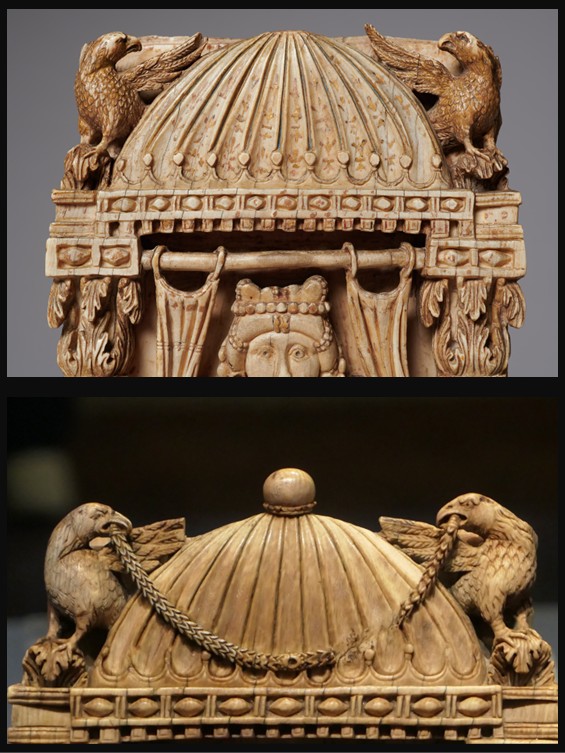
By contrast, the Vienna plaque shows the empress enthroned beneath a shell-shaped baldachin, flanked by eagles, symbols of imperial authority. Dated to around 500 AD, the ivory portrays the ruler richly adorned, holding a sphaira topped with a cross in her left hand while raising her right in a gesture of blessing. The throne, the globe and cross, and the orant-like pose emphasize divine sanction and ceremonial majesty over individual portraiture. Classified as Early Byzantine, the plaque passed from the Riccardi collection in Florence into the Kunsthistorisches Museum, where it remains a centerpiece of the Antikensammlung.
Empress Ariadne, around 500 AD, Ivory, Height: 36,5 cm,The Bargello Museum, Florence, Italy – Photo Credit: Marya Stamatiadi April 2025 Empress Ariadne, around 500 AD, Ivory, Height: 26,5 cm,Kunsthistorisches Museum, Vienna, Austria https://www.khm.at/en/artworks/kaiserin-ariadne-71782-1
Taken together, the two plaques, one depicting the empress standing in ceremonial presence, the other enthroned in majesty, illustrate complementary aspects of imperial power. They exemplify the Constantinopolitan fusion of classical forms with emerging Christian symbolism, and, if indeed they represent Ariadne, they also illuminate the ways in which an empress could embody both dynastic continuity and divine legitimacy during a pivotal moment in Byzantine history.
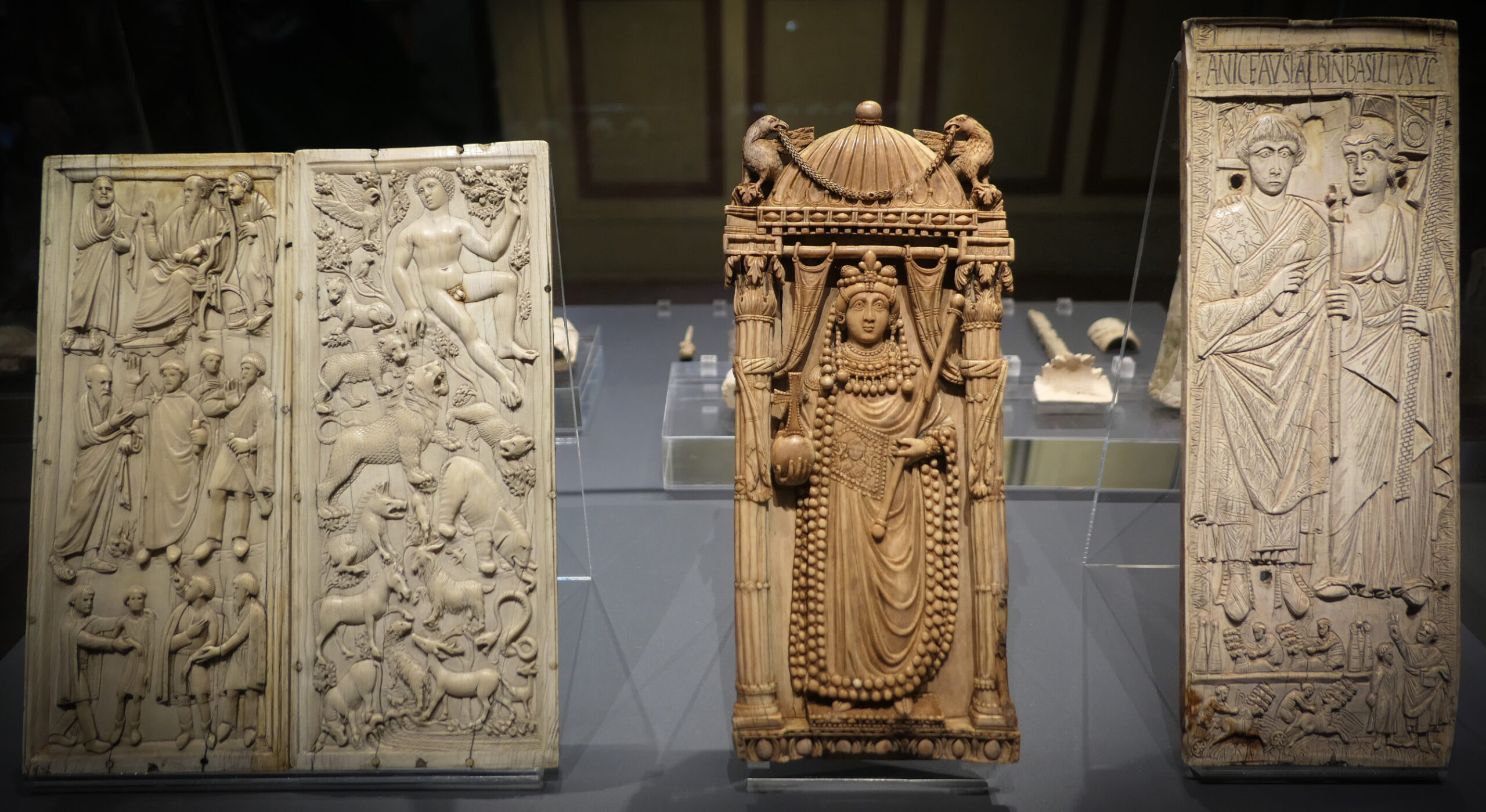
Early Christian Ivory Treasures in The Bargello Museum, Florence, Italy – Photo Credit: Marya Stamatiadi April 2025
Today, the Bargello and Vienna ivory plaques continue to captivate scholars and visitors alike, not only for their exquisite craftsmanship but also for the historical questions they raise. Whether or not they truly portray Ariadne, they stand as rare survivals of Constantinopolitan ivory carving, embodying the fusion of imperial image-making and Christian symbolism. Through them, we glimpse both the artistry of a vibrant court and the enduring allure of an empress whose legacy shaped the transition of power at a crucial moment in Byzantine history.