Mary Stevenson Cassatt’s 1884 double portrait of Alexander J. Cassatt and his son captures an intimate father-son bond, reflecting American artistic success within Paris’s vibrant cultural world.

Donatello’s Pazzi Madonna
Donatello’s Pazzi Madonna (c.1420) reveals tender intimacy between mother and child, exemplifying his innovative, humanized style and groundbreaking role in shaping Renaissance sculpture.
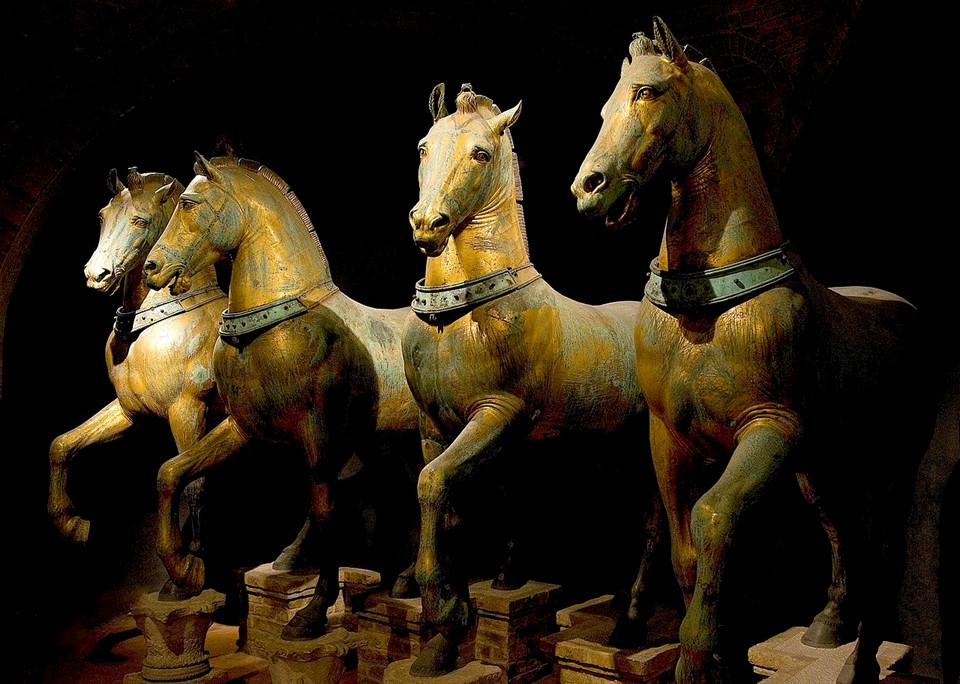
The magnificent Bronze Quadriga in San Marco
Inspired by Brenda Riley-Seymore’s poem, the Horses of Saint Mark evoke timeless beauty—symbols of power, history, and imagination, echoing like celestial horses across art, memory, and myth.
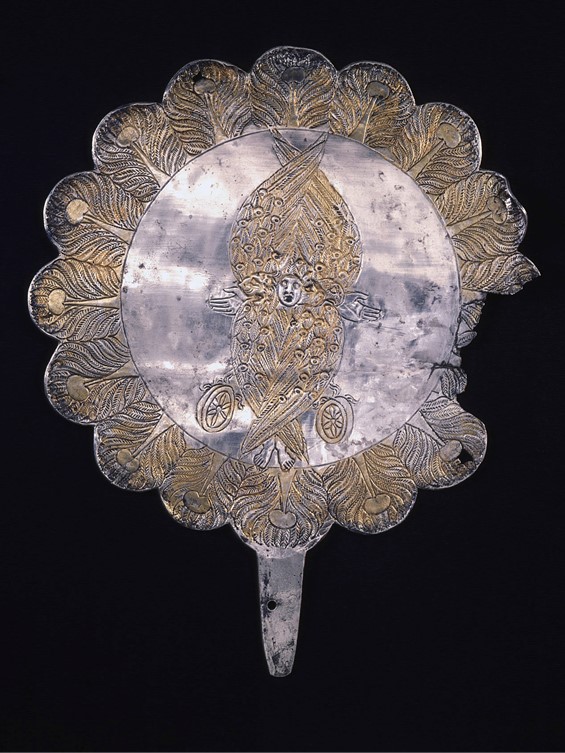
Silver Flabellum in the Collection of the Dumbarton Oaks
A 6th-century silver flabellum (rhipidion), now at Dumbarton Oaks, exemplifies both liturgical function and artistic refinement, once used to honor the Eucharist and protect sacred elements.
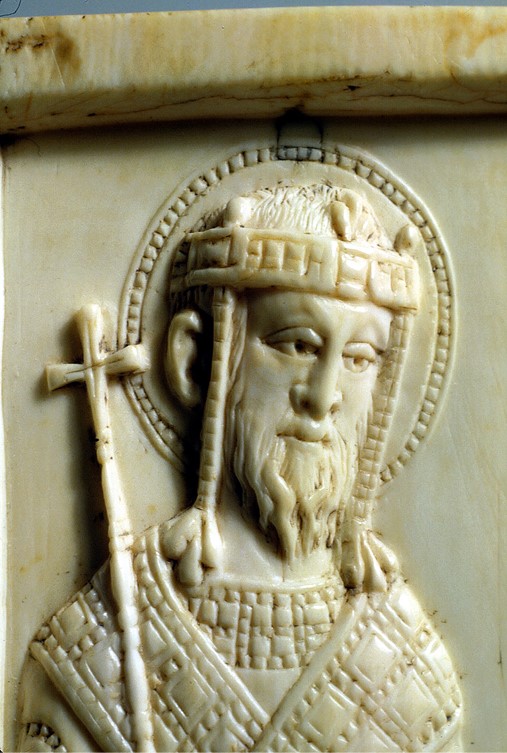
Triptych Leaf with St. Constantine
Constantine the Great is honored through a 10th-century ivory triptych leaf from Dumbarton Oaks, portraying him as both imperial ruler and Christian saint, embodying enduring authority and faith.
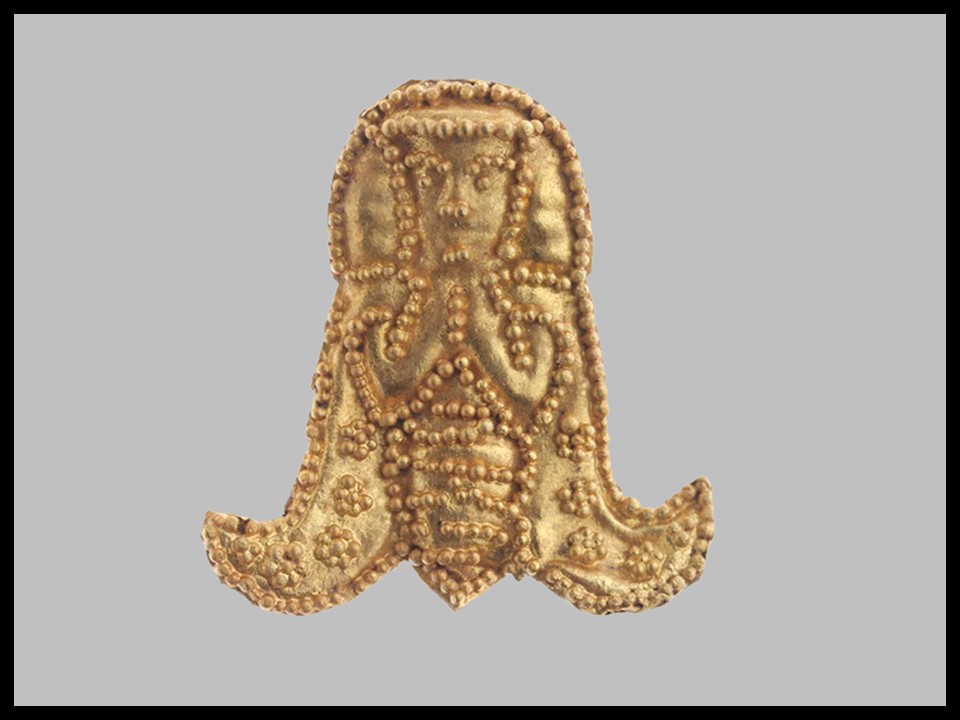
The Bee Goddess of Eleutherna
Celebrating World Bee Day, the ancient Bee Goddess Pendant of Eleutherna reflects early Greek reverence for bees as vital pollinators and powerful symbols of life, nature, and divine femininity.
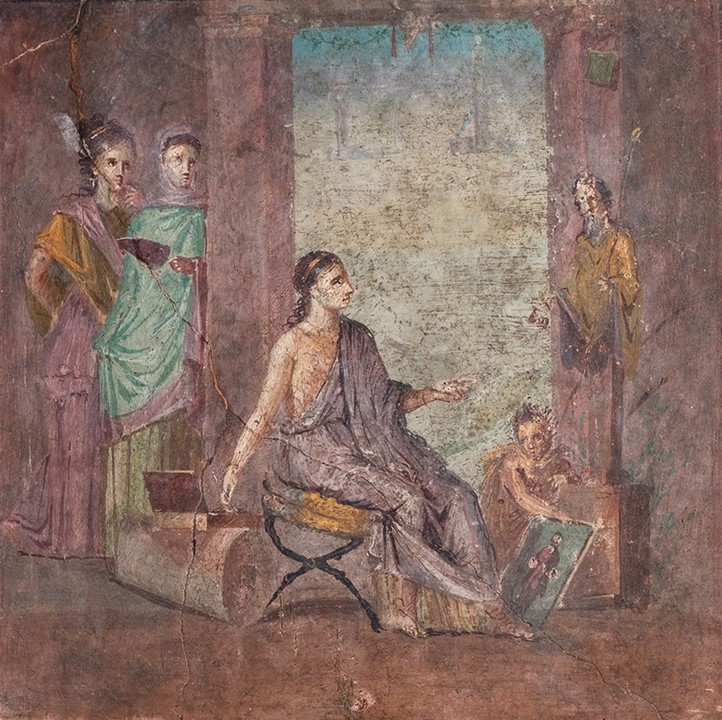
Painter at Work!
From the Pompeii in Color: The Life of Roman Painting, the fresco Painter at Work from the House of the Surgeon captures a rare, intimate Roman scene of a female artist absorbed in painting within a richly framed interior space.
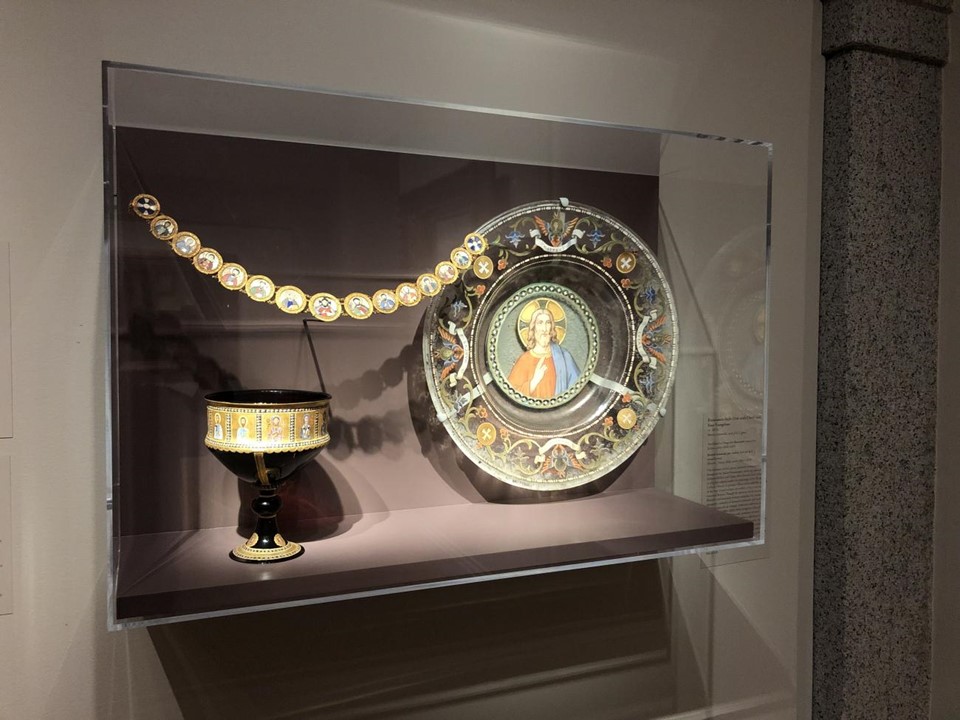
Byzantine-Style Mosaic Necklace with Christ and Twelve Apostles
The Sargent, Whistler, and Venetian Glass: American Artists and the Magic of Murano highlights a Byzantine-style mosaic necklace whose debated origins—ancient or 19th-century revival—reflect Venice’s enduring fascination with Byzantine artistry and Murano craftsmanship.
Simon Bening’s April
Simon Bening’s April miniature from the Golf Book depicts an elegant Renaissance courtship in a lush garden, where richly dressed lovers, lively figures, and refined details celebrate spring, love, and aristocratic life.
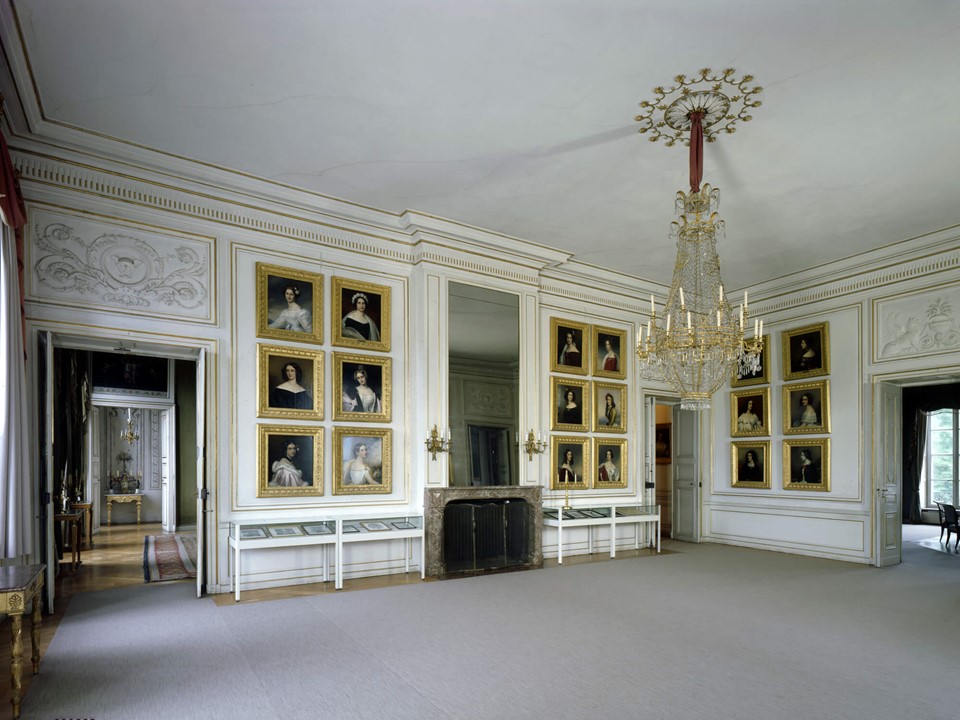
Joseph Karl Stieler’s Portrait of Katerina “Rosa” Botsaris
Katerina “Rosa” Botsaris, famed for her beauty and noble heritage, became Queen Amalia’s lady-in-waiting and was immortalized by Joseph Karl Stieler in Bavaria’s Gallery of Beauties.