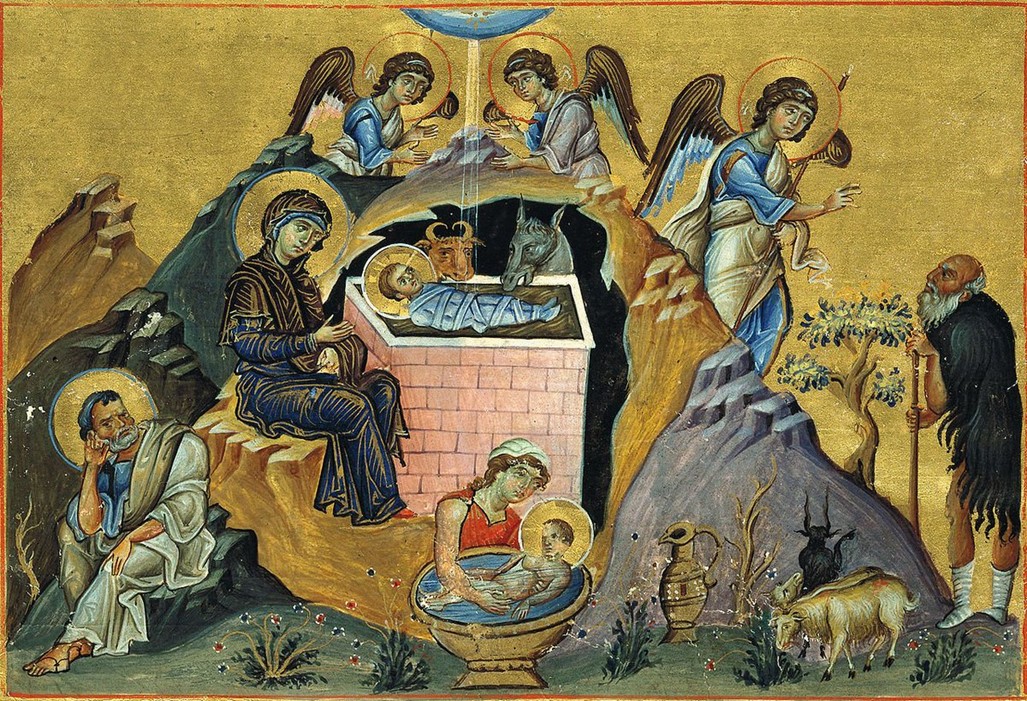
The Nativity in the Menologion of Basil II presents Christ’s birth not as a simple narrative scene but as a visual theology of light and revelation. In Byzantine thought, the birth of Christ is understood as the “light of knowledge” entering the world, replacing the guidance of the stars with a higher form of divine illumination.
Hartwell Memorial Window by Tiffany
Agnes Northrop, leader of Tiffany’s female designers, “the Tiffany Girls,” crafted the luminous 1917 Hartwell Memorial Window — a masterpiece of light, color, and glass-painted landscapes.
The Art of the Old Kingdom Period
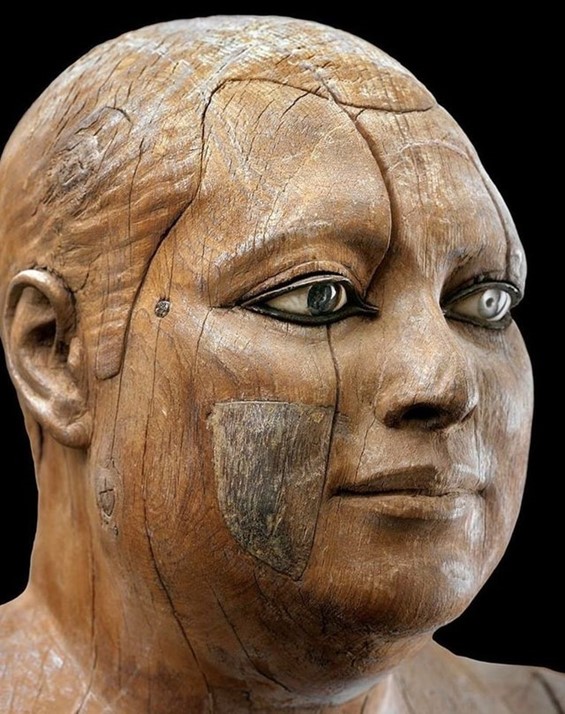
Egypt’s Old Kingdom stuns with serene, powerful statues and masterful relief carvings — formal, idealized, yet deeply human — reflecting a civilization obsessed with eternity.
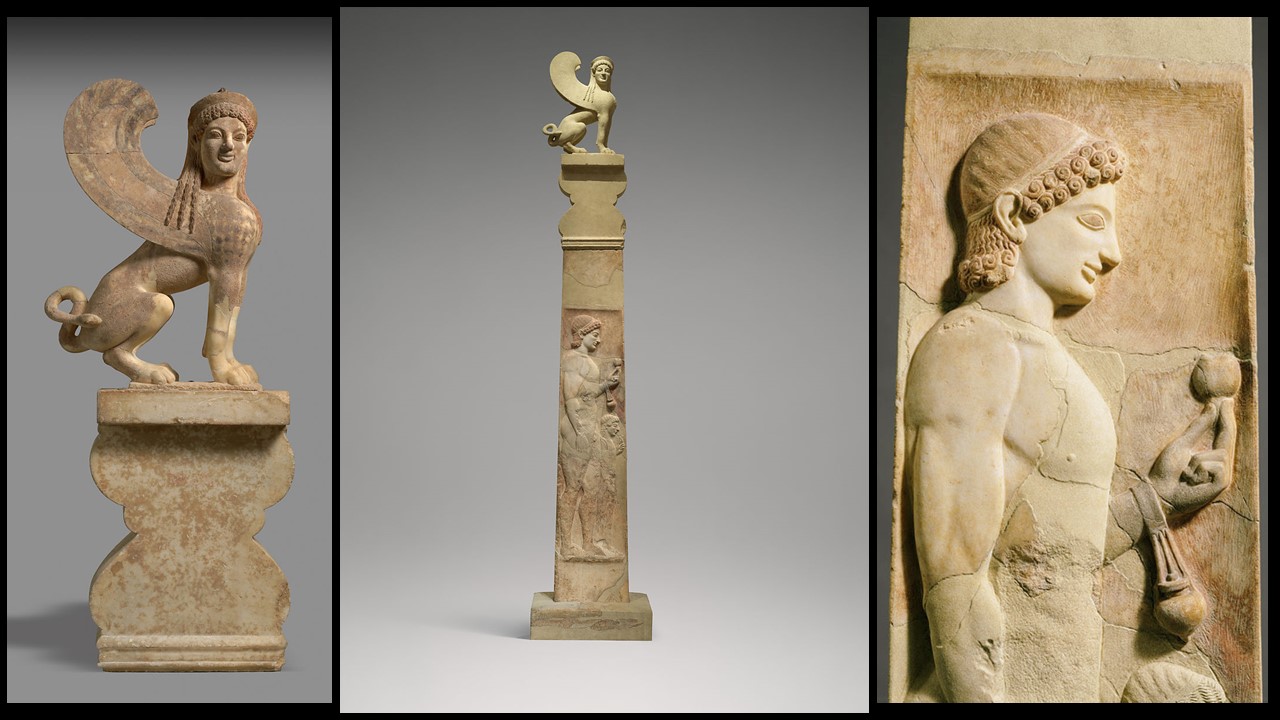
Grave Stele of a Youth and a little Girl
Standing 4.23 meters tall, brilliantly painted, the MET’s Archaic grave stele of Megakles — crowned by a sphinx — remains antiquity’s most complete surviving monument of its kind.
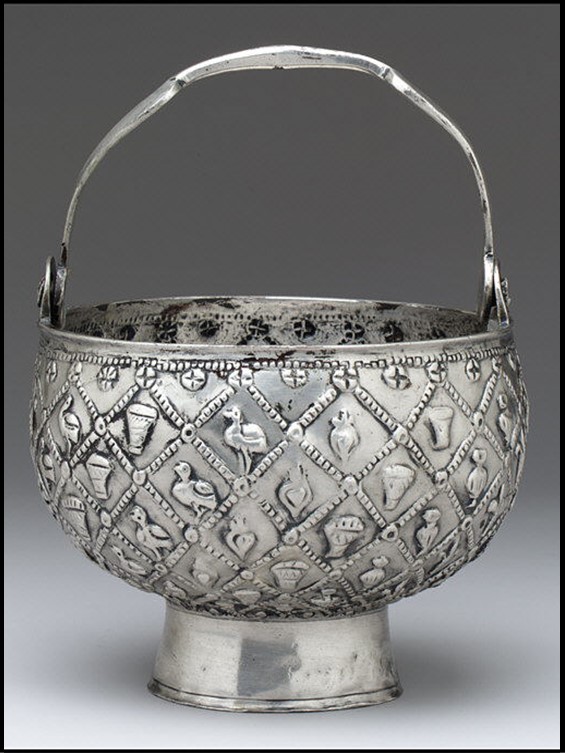
Byzantine Silver Bucket
Unearthed in 1901 near Albania’s Via Egnatia, the Vrap Treasure’s exquisite Byzantine Silver Bucket — repoussé birds, flowers, and mysteries intact — captivates still from the MET.
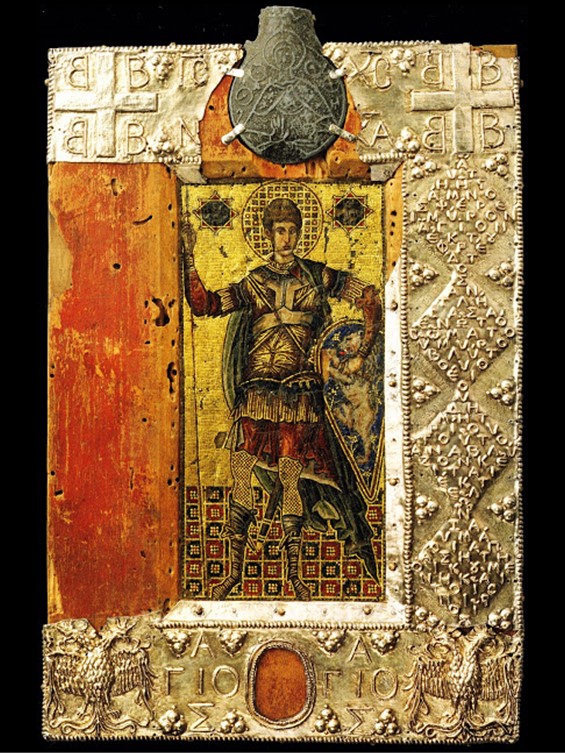
Miniature Mosaic Icon of Saint Demetrios in Sassoferrato
Sassoferrato’s breathtaking micromosaic Saint Demetrios — soldier, miracle-worker, holy oil and all — distills Byzantium’s final glorious artistic flowering into one extraordinary 24cm treasure.
The Red School House by Winslow Homer
Homer’s luminous Red School House — a young teacher, mountain light, children learning — captured post-Civil War America’s tender optimism for simpler times and brighter futures.
Portrait of Giovanni Arnolfini and his Wife
Van Eyck’s Arnolfini Portrait captivates with luminous detail, symbolic richness, and his bold “I was here” signature—blending technical mastery and mystery into a timeless scene of wealth, presence, and interpretation.
The Enthroned Christ and Emperor Leo VI the Wise
The Hagia Sophia narthex mosaic of Christ and Emperor Leo VI endures as both art and message—an image of imperial humility and divine authority, crafted to speak across centuries.
Babylonian Panel with a Striding Lion
The Ishtar Gate and Processional Way of Babylon, commissioned by Nebuchadnezzar II, formed a monumental, vividly glazed ceremonial route decorated with lions, dragons, and bulls—an architectural spectacle designed to embody divine power and imperial grandeur.