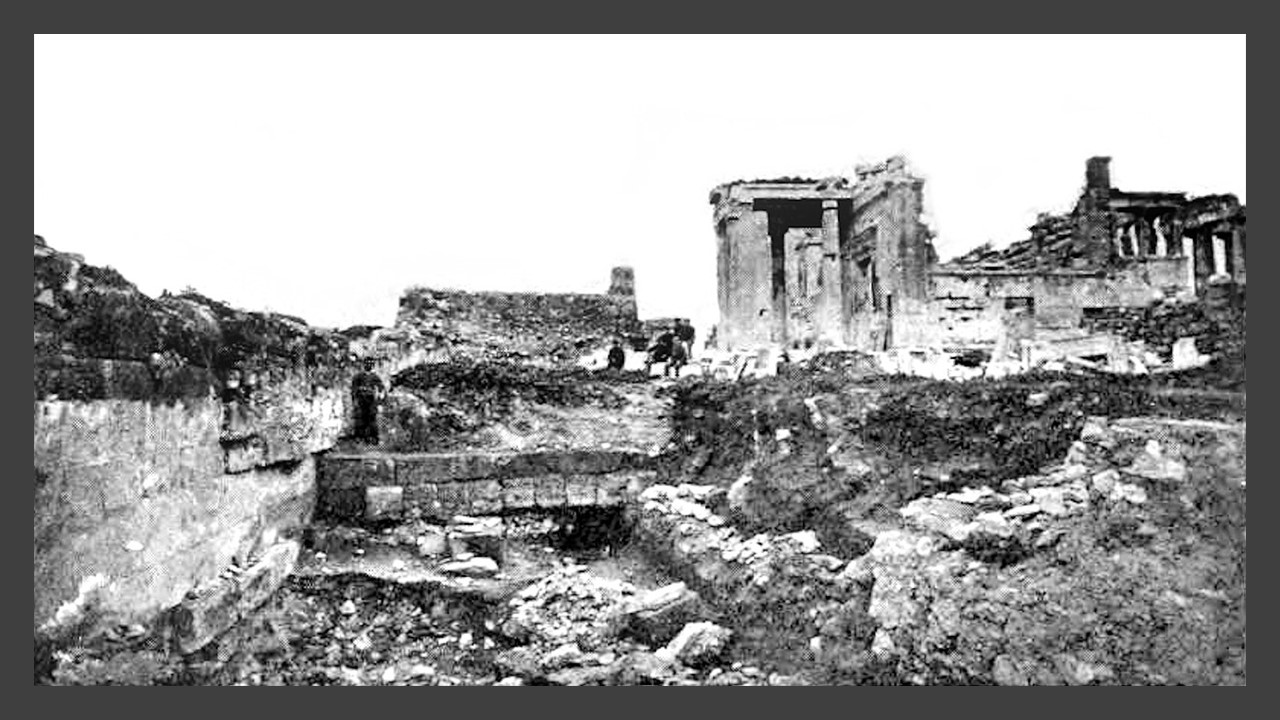
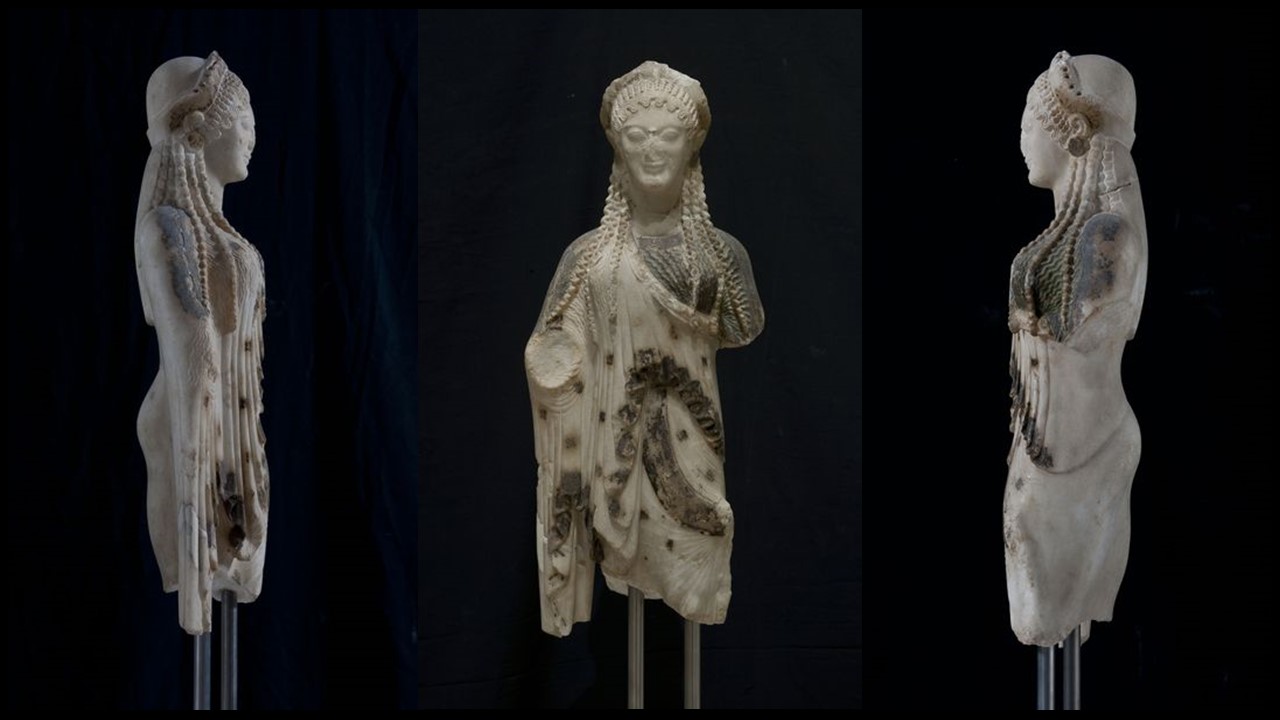
The Peplos Kore, discovered in the Acropolis “Perserschutt,” is a richly painted Archaic Greek statue of a young woman whose formal pose, elaborate drapery, and uncertain identity—possibly a votive figure or goddess like Artemis—reflect early experimentation with representation, colour, and sacred imagery in Greek sculpture.
Degas’ Little Dancer Aged Fourteen combines wax, fabric, and real hair over a complex armature, creating a strikingly lifelike sculpture that blurred the boundaries between art, realism, and theatrical illusion.
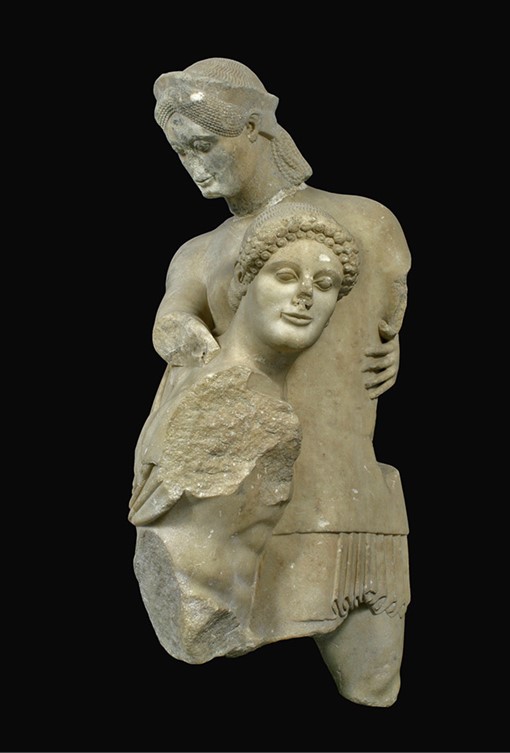
The Theseus and Antiope pediment sculpture from Eretria (late 6th century BC) captures a pivotal Archaic moment of abduction, blending emerging naturalism with restrained emotional tension in early Greek monumental sculpture.
The “Kore from Chios,” displayed in the Kallos exhibition at the Museum of Cycladic Art, embodies Archaic Greek ideals of beauty (kallos) as a unity of physical elegance, refined drapery, and inner virtue.
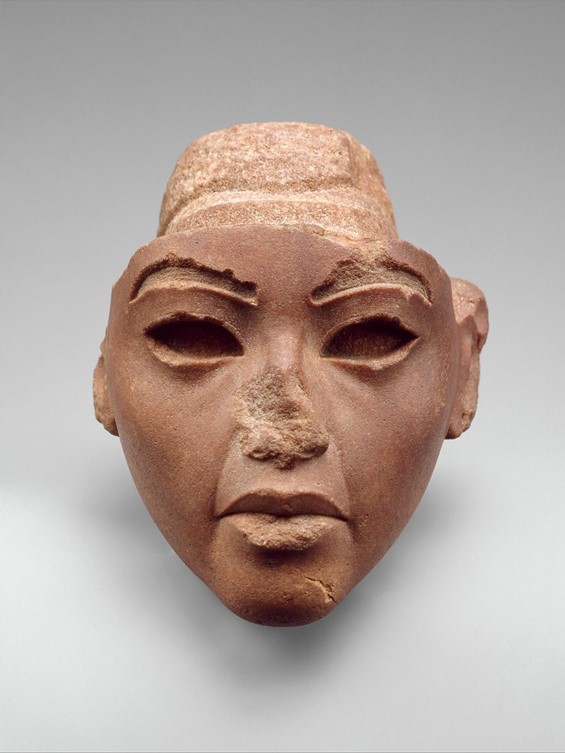
Queen Tiye — formidable wife of Amenhotep III and grandmother of Tutankhamun — was dramatically identified through hair analysis, matching her mummy to a lock buried in Tutankhamun’s tomb since 1922.
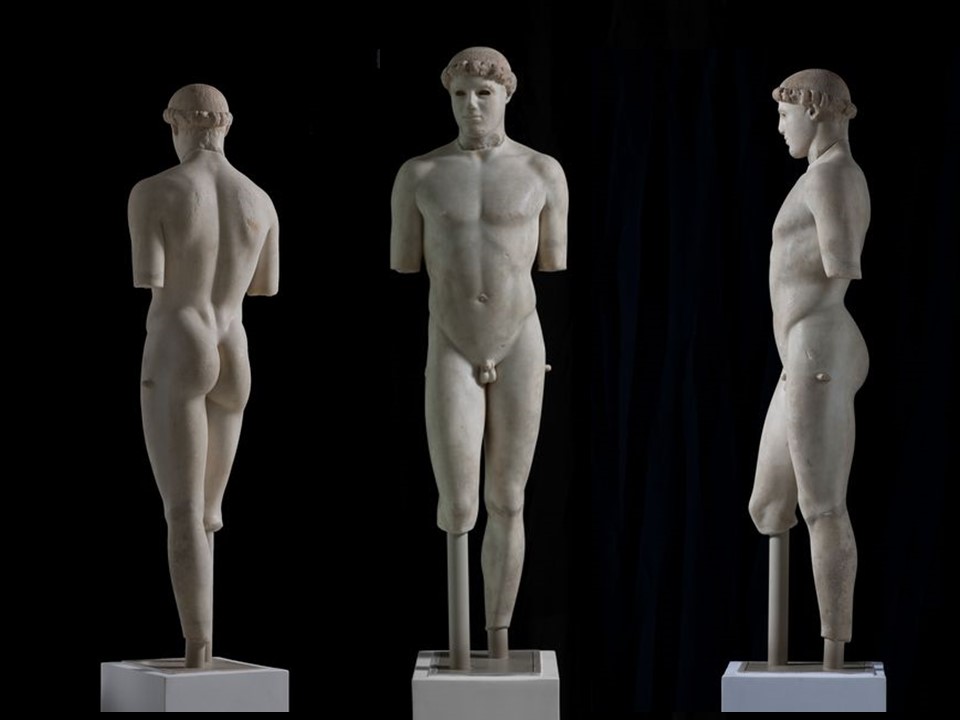
The Kritios Boy — a masterpiece of the Severe Style — revolutionized Greek sculpture with its subtle weight shift and solemn naturalism, possibly portraying a Panathenaic athlete or the hero Theseus himself.
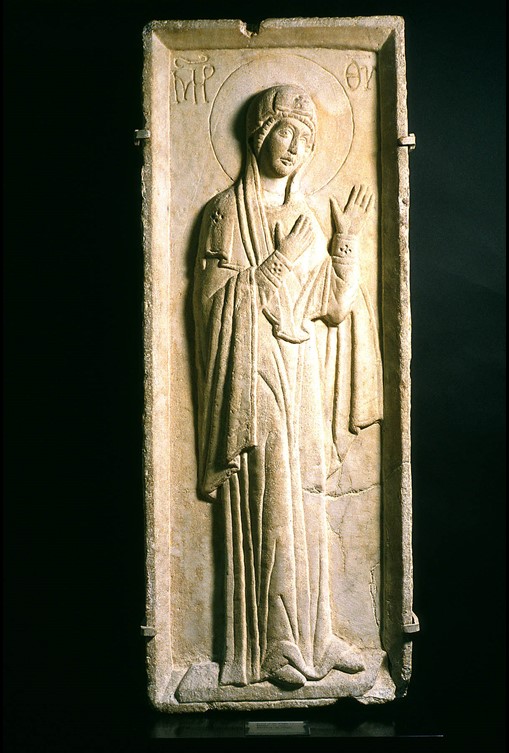
“…denuded of all help, and deprived of human alliance, we were spiritually led on by holding fast to our hopes in the Mother of the Word, our God, urging her to implore her Son, invoking her for the expiation of our sins, her intercession of our salvation, her protection as an impregnable wall for us, begging her to break the boldness of the barbarians, her to crush their insolence, her to defend the despairing people and fight for her own flock…” writes Patriarch Photius in the second of his two homilies on the siege of Constantinople by the Rus’ and Sirarpie der Nersessian, in his 1960 Dumbarton Oaks Papers article titled Two Images of the Virgin, quotes him. I couldn’t find better introductory remarks for a BLOG POST on the marble Icon of The Interceding Theotokos at Dumbarton Oaks. https://www.jstor.org/stable/1291145?seq=15#metadata_info_tab_contentspage 72 and https://www.doaks.org/resources/bliss-tyler-correspondence/art/bz/BZ.1938.62.jpg/view
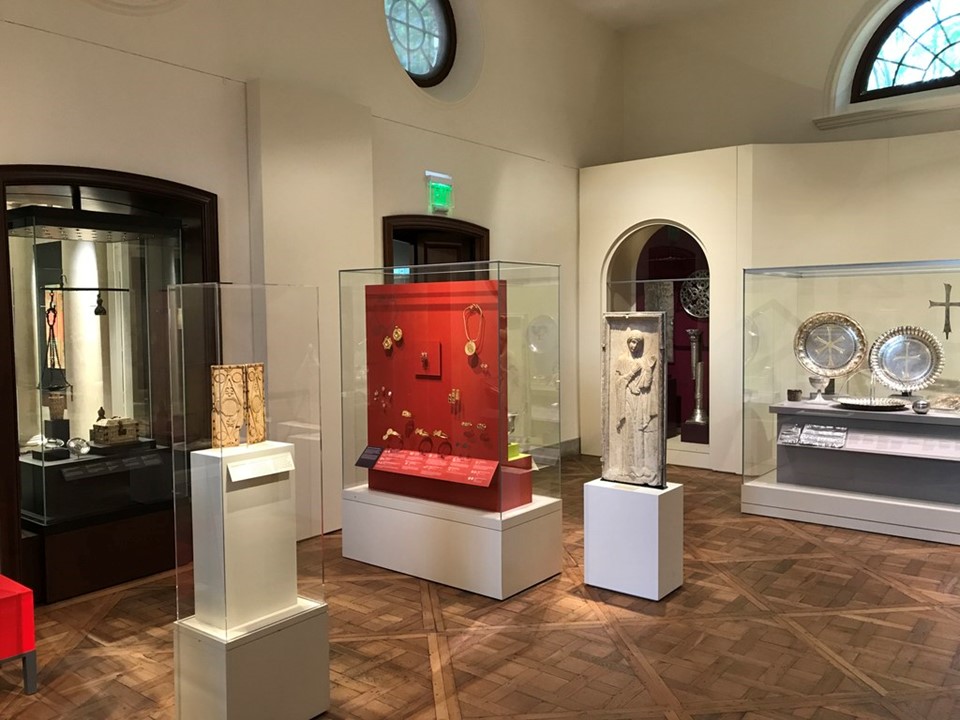
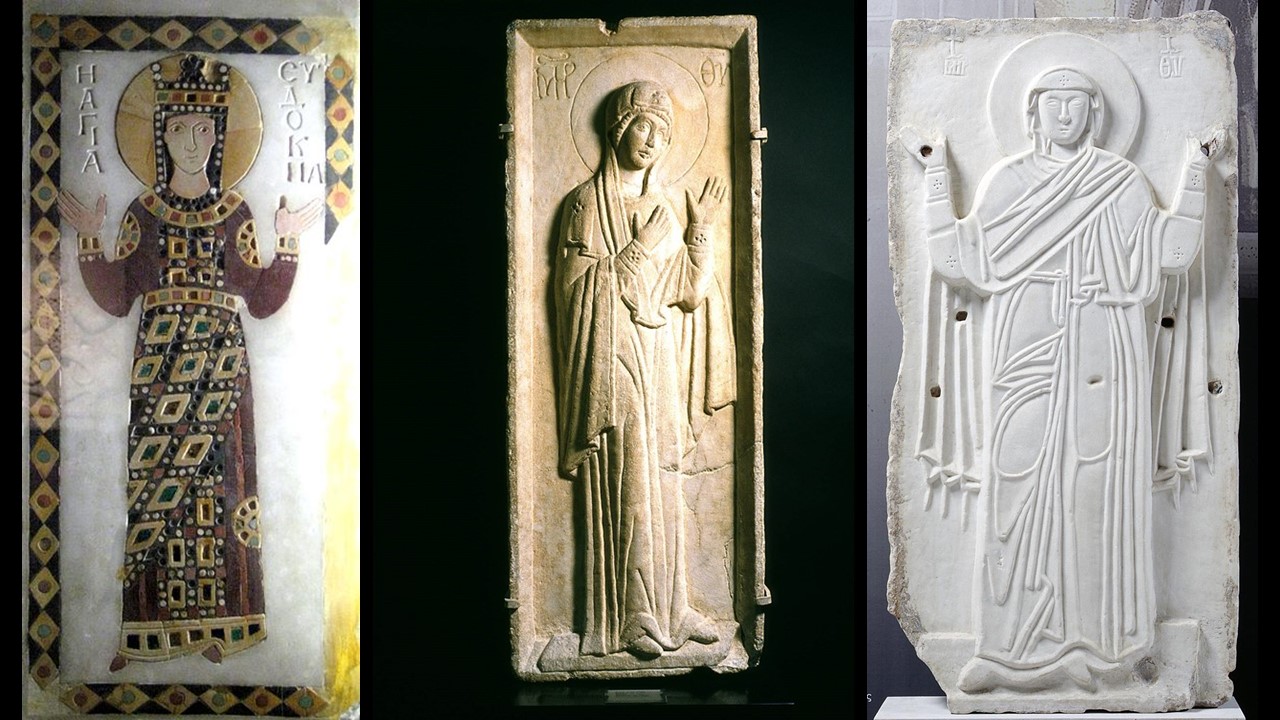
I confess, I first noticed The Marble Interceding Theotokos in the collection of Dumbarton Oaks when I visited the grand Metropolitan Museum Exhibition The Glory of Byzantium back in 1997. Exhibited then, along with the Lips Monastery Icon of Saint Eudokia from the Archaeological Museum of Istanbul, the two marble Icons “opened my eyes” in the genre of Sculpted Marble Icons from the Byzantine era. Ever since I seek them out, and when I visit the Museum of Byzantine Culture in my hometown Thessaloniki, I always pay my respects to the marble ΜΗ(ΤΗ)Ρ Θ(ΕΟ)Υ(=Mother of God) Icon in Room 4, where artefacts of the Macedonian and Komnenian dynasties are presented. https://www.metmuseum.org/art/metpublications/The_Glory_of_Byzantium_Art_and_Culture_of_the_Middle_Byzantine_Era_AD_843_1261 and https://www.mbp.gr/en/object/marble-icon-praying-virgin
One more confession… the title of this BLOG POST was a decision that troubled me. At Dumbarton Oaks Museum the marble Icon of the Theotokos is presented as Virgin Hagiosoritissa Relief. The Glory of Byzantium Exhibition Catalogue uses a similar name Icon of the Virgin Hagiosoritissa. I thought, this is it…until I started reading Sirarpie der Nersessian article Two Images of the Virgin in the Dumbarton Oaks Collection, and I changed my mind! The author presents in detail the different styles, whereabouts and use of Interceding Theotokos Icons in every medium! Bottom line… I was not convinced the Marble Icon of the Theotokos is of the Hagiosoritissa type… and the title changed to The Interceding Theotokos at Dumbarton Oaks.
For a Student Activity on The Interceding Theotokos at Dumbarton Oaks, please… check HERE!
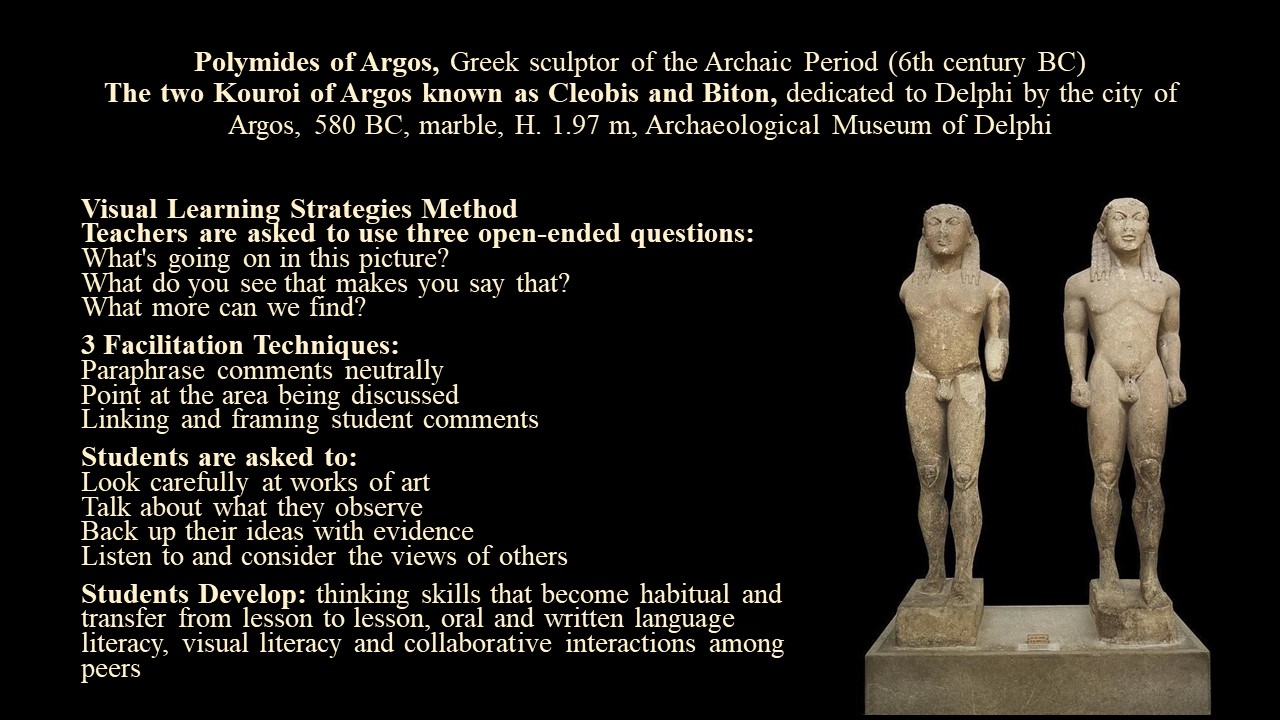
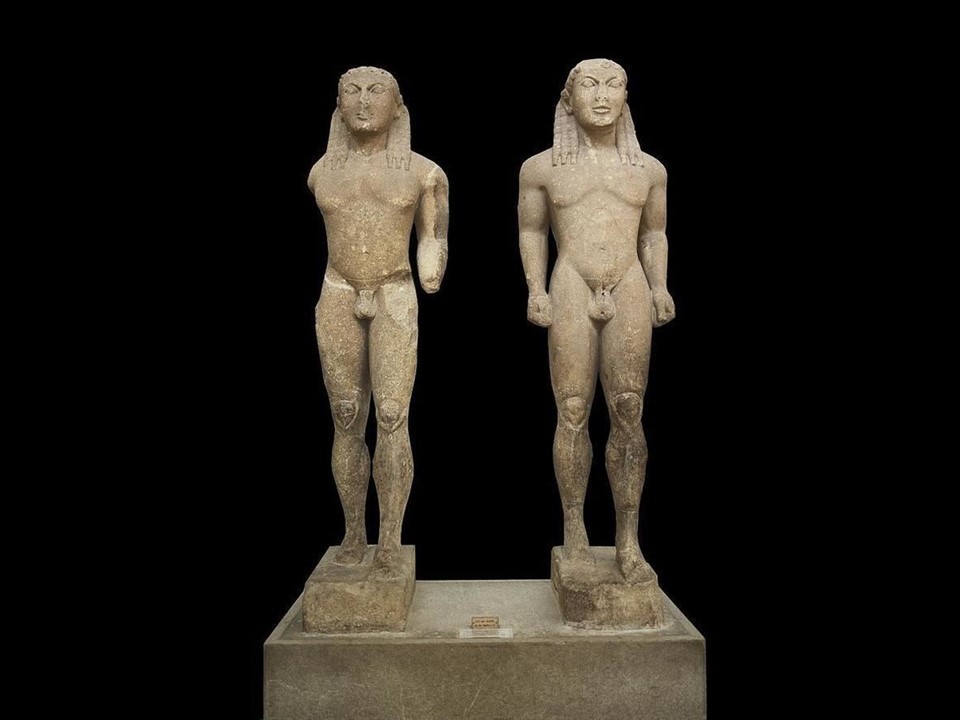
Polymides of Argos, a Greek sculptor of the Archaic Period (6th century BC) The two Kouroi of Argos, known as Cleobis and Biton, dedicated to Delphi by the city of Argos, 580 BC, marble, H. 1.97 m, Archaeological Museum of Delphi https://alchetron.com/Kleobis-and-Biton
“Cleobis and Biton,” according to Herodotus “were of Argive stock, had enough to live on, and on top of this had great bodily strength. Both had won prizes in the athletic contests, and this story is told about them: there was a festival of Hera in Argos, and their mother absolutely had to be conveyed to the temple by a team of oxen. But their oxen had not come back from the fields in time, so the youths took the yoke upon their own shoulders under constraint of time. They drew the wagon, with their mother riding atop it, traveling five miles until they arrived at the temple. When they had done this and had been seen by the entire gathering, their lives came to an excellent end, and in their case the god made clear that for human beings it is a better thing to die than to live. The Argive men stood around the youths and congratulated them on their strength; the Argive women congratulated their mother for having borne such children. She was overjoyed at the feat and at the praise, so she stood before the image and prayed that the goddess might grant the best thing for man to her children Cleobis and Biton, who had given great honor to the goddess. After this prayer they sacrificed and feasted. The youths then lay down in the temple and went to sleep and never rose again; death held them there. The Argives made and dedicated at Delphi statues of them as being the best of men.” What a story… http://www.perseus.tufts.edu/hopper/text?doc=Perseus%3Atext%3A1999.01.0126%3Abook%3D1%3Achapter%3D31 and https://www.jstor.org/stable/4476541?read-now=1&refreqid=excelsior%3A696d910b4f58214d895c34828b1f43ce&seq=3#page_scan_tab_contents
The two statues affectionately called The Twins of Argos hold me in fascination! They were sent to Delphi by the Argives back in the early 6th century BC… the first monumental commemorative monument to grace Apollo’s sanctuary. Many, resplended monuments followed… but the Kouroi of Cleobis and Biton forever bedazzle us with their monumentality and grace.
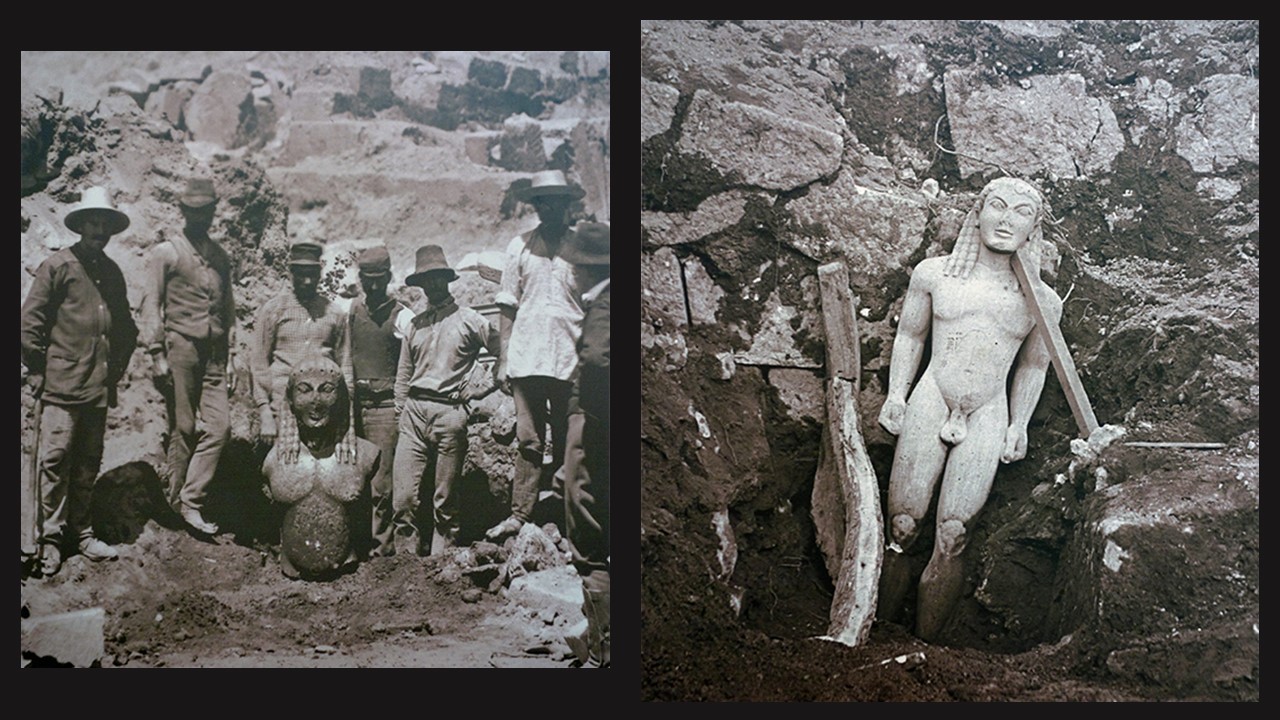
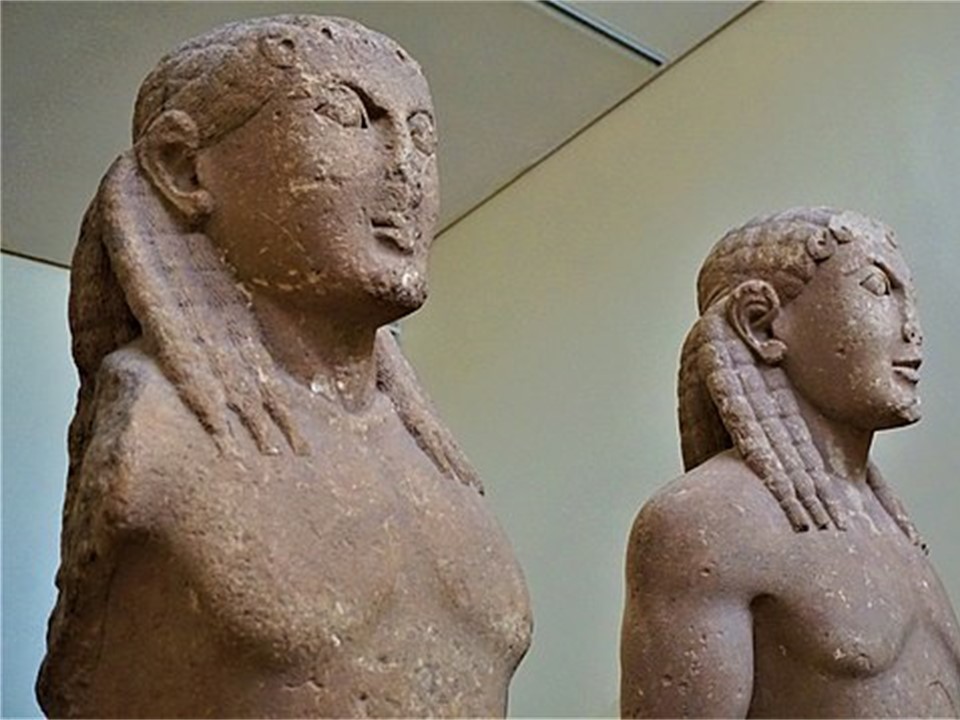
The Twins of Argos were excavated in Delphi by French archaeologists in 1893 and 1894. The discovery of two extremely similar statues of idealized nude male youths is a rare find of the kouros type. Like other kouroi, they are “naked except for boots, which distinguish them from images of Apollo and may mark them as travellers. They are stockily built, short though over-life-size, with broad shoulders and broad faces… The round eyes are set within curving upper and lower lids, the entire eye unit cut deeply into the head beneath heavy brows. The mouth is full. The large ears are set far back at the side of the head; the lobe is a flat disk. The transition between the front and sides of the head is very abrupt. A single row of large disk-like curls line the forehead. The rest of the hair, emphasizing the flat top of the head, is combed and then subdivided into large bead-like elements. In back the hair springs out from beneath the double cord which holds it in place, at the top of the ears and, again, at the base of the neck. Each of the tendrils, front and back, is neatly finished with a tie… The abdomen is defined linearly… The round knees are set off by incision as well as by modeling. The arms are held close to the body, the clenched hands securely attached to the thighs, the thumbs facing outward…” http://www.perseus.tufts.edu/hopper/artifact?name=Delphi%2C+Kleobis+and+Biton&object=Sculpture
To introduce my students to ancient Greek Archaic Art and the Kouros Brothers from Argos, Cleobis and Biton, I use the Inquiry-based teaching method known as Visual Thinking Strategy introduced by Abigail Housen and Philip Yenawine which “uses art to teach visual literacy, thinking, and communication skills—listening and expressing oneself. Growth is stimulated by looking at artworks of increasing complexity, answering developmentally based questions, and participating in peer-group discussions carefully facilitated by teachers.” Philip Yenawine, Visual Thinking Strategies: Using Art to Deepen Learning Across School Disciplines, 2013 https://www.amazon.com/Visual-Thinking-Strategies-Learning-Disciplines-ebook/dp/B00XO20380
For a student “RWAP”, (RWAP stands for Research – Writing – Art – Project), please… CheckHERE!
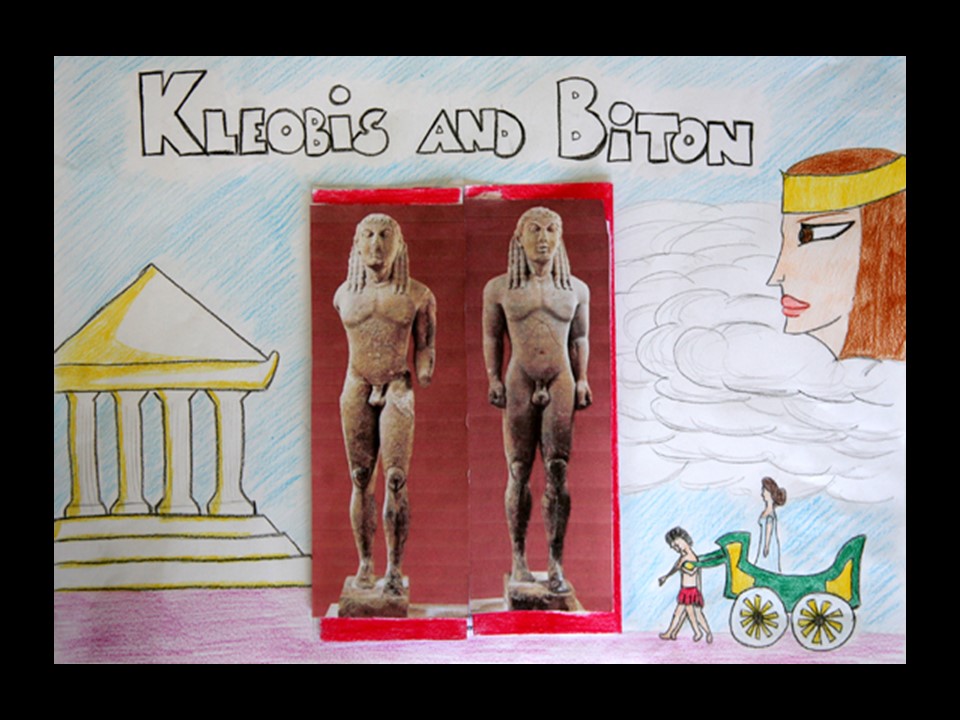
In 2016, after visiting the Archaeological Museum of Delphi… one of my Grade 7 students, inspired by Cleobis and Biton, presented me with the above poster!
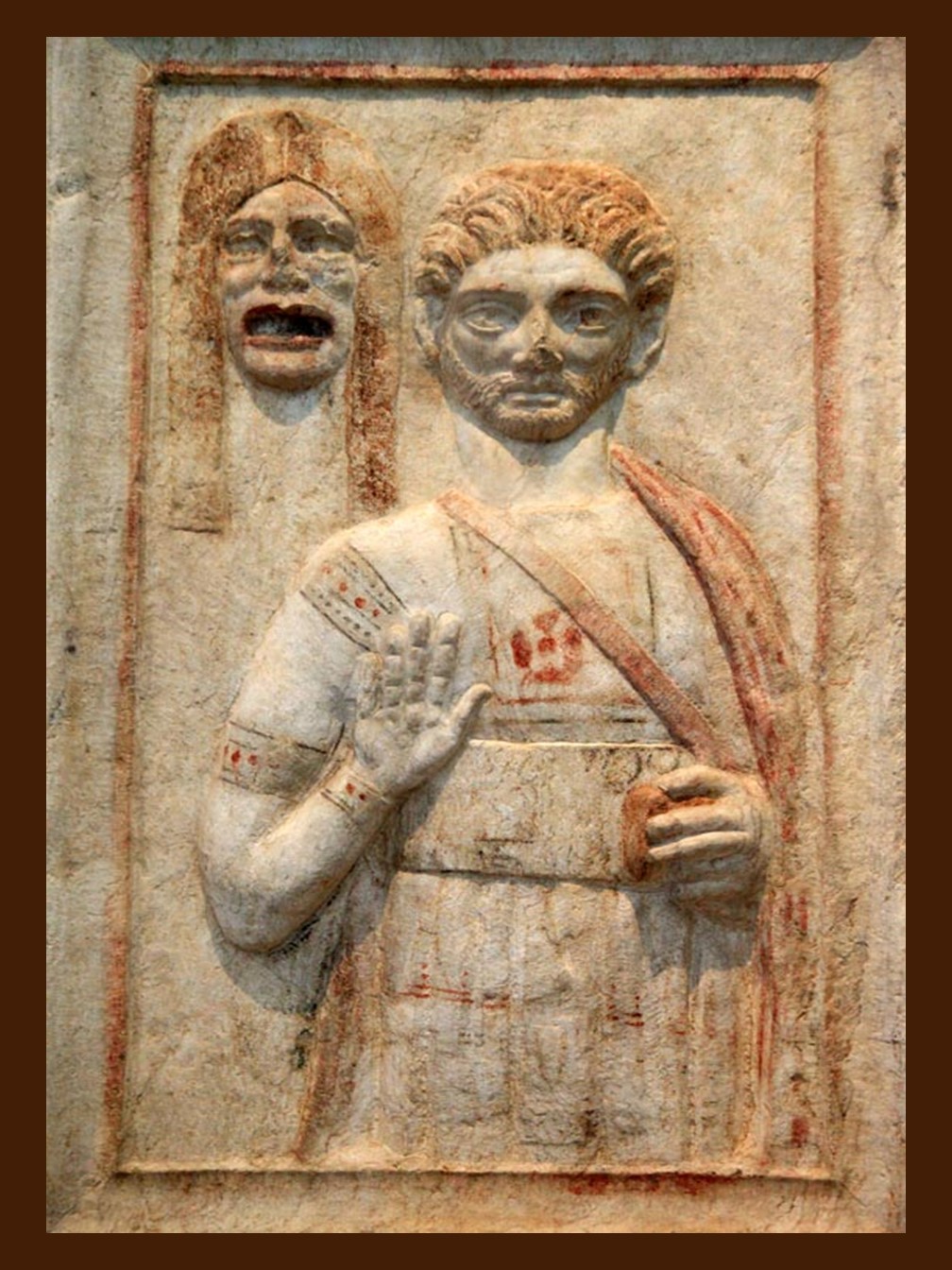
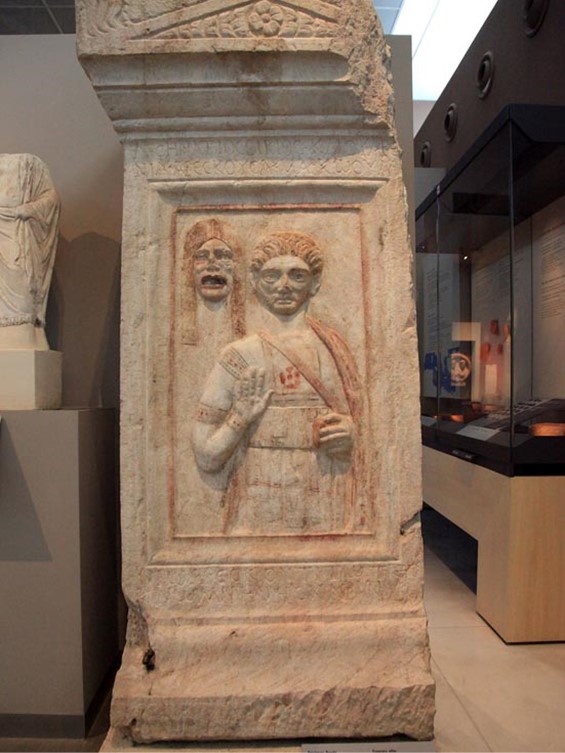
Funerary Altar-Shaped Stele of Actor Marcus Varinius Areskon, 170-200 AD, Marble with traces of the original paint, 1670×70-72×52-66 cm, Archaeological Museum of Thessaloniki Photo Credit: Kostas Papantoniou https://www.amth.gr/en/exhibitions/highlights
O man, with your wonderful dower, / O woman, with genius and grace, / You can teach the whole world with your power, / If you are but worthy the place. / The stage is a force and a factor / In moulding the thought of the day, / If only the heart of the actor / Is high as the theme of the play. … No matter what role you are giving, / No matter what skill you betray, / The everyday life you are living, / Is certain to colour the play./ The thoughts we call secret and hidden / Are creatures of malice, in fact;/ They steal forth unseen and unbidden, / And permeate motive and act. Ella Wheeler Wilcox (1850-1919) was an American author and poet who wrote THE ACTOR…an appropriate, in my humble opinion, introduction to our new POST… Areskon is my Name and I am an Actor. http://www.ellawheelerwilcox.org/poems/pactor.htmhttps://en.wikipedia.org/wiki/Ella_Wheeler_Wilcox
Funerary Altar-Shaped Stele of Actor Marcus Varinius Areskon, 170-200 AD, Marble with traces of the original paint, 1670×70-72×52-66 cm, Archaeological Museum of Thessaloniki Photo Credit: Kostas Papantoniou https://www.amth.gr/en/exhibitions/highlights
Marcus Varinius Areskon… I seek him out every time I visit the Archaeological Museum of Thessaloniki. I introduce him to my students every time I guide them around this wonderful “shrine” of the Muses… and yet I know so little about him. An inscription introduces himself. Carved above his portrait and under it, the epitaph inscription reads… Λ(ούκιος) Σηνάτιος Οἴκιος καὶ Οὐαρε | νία Ἀρέσκουσα Μάρκῳ Οὐαρ[ε] | νίῳ Ἀρέσκοντι τῷ τέ | κνῳ μνήμης χάριν Lucius Senatius (probably an unknown member of the family) and Var(e)inia Areskousa to her son Marcus Var(e)inius Areskon in memory… I am intrigued… can the portrait of a young man and an inscription help us unravel the knot? https://www.amth.gr/en/exhibitions/highlights
Areskon was the son of Var(e)inia Areskousa, he was related? to Lucius Senatius, he was Roman, he lived in Thessaloniki, and he died painfully young. This beautiful funerary memorial, in marble and vividly painted, the colours remain remarkably well-preserved, testifying to the economic ability of the family to honour their young demised member with a worthy memorial. https://m.flickr.com/photos/69716881@N02/50914350016/in/faves-36551225@N05/
Areskousa and Areskon, mother and son, members of a popular family of actors, were probably entertainment “stars” of the time. This is what their names connotate (Areskon/Areskousa= one who pleases, who is popular). The mother was probably an actress of the popular mime theatre, while the son managed to elevate himself and become a young, versatile tragic actor of fame and fortune. His funerary monument is a proper testament to his popularity and wealth.
The portrait on his rectangular funerary altar shows him en face, upright, attired in military gear. His right hand is raised in salutation, the left seems to hold a sword? In the upper left corner of the composition, still beautifully coloured, a mask, worn by male actors for a female theatrical role, identifies the male portrait as an actor of versatile abilities.
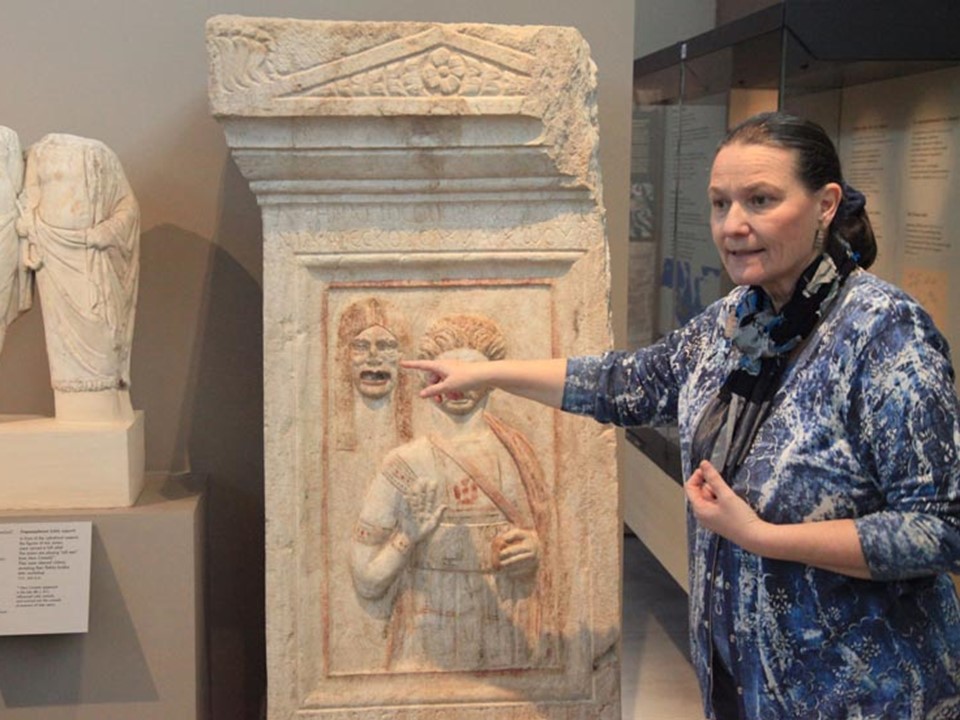
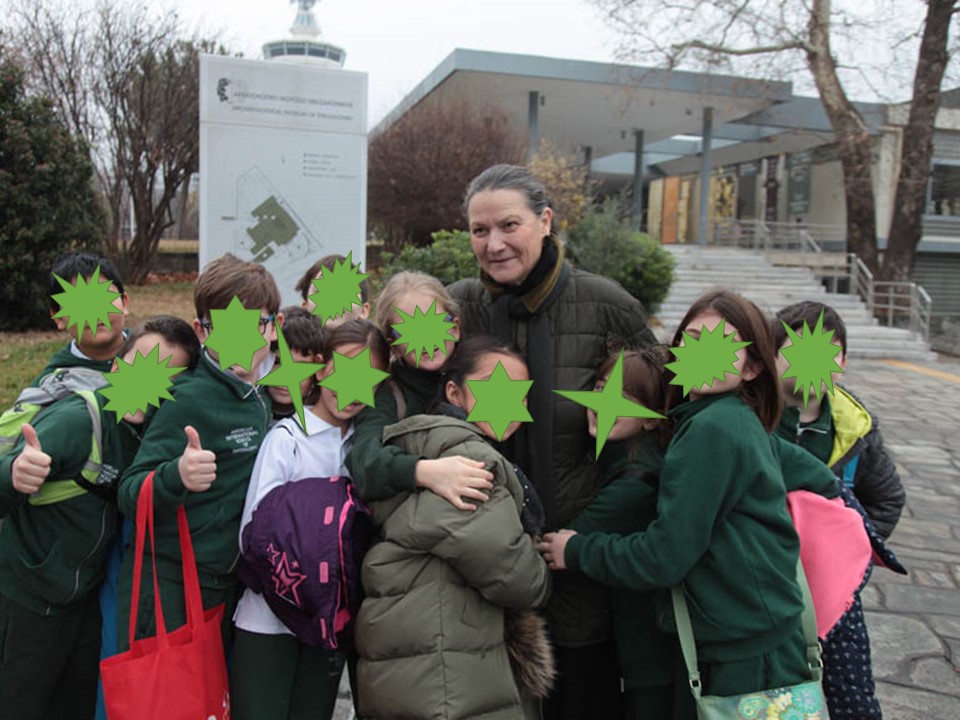
1917, Trip to the Archaeological Museum of Thessaloniki… my respects to Areskon… Photo Credit: Kostas Papantoniou
The Portrait of Areskon is shown in the middle of a simple yet elegantly proportioned structure described by the Museum archaeologists as a funerary altar. It is simply framed, sits on a pedestal and is crowned by an inscribed pediment with a central rosette, leaves and stylized acroteria. It was discovered near the eastern fortification walls of Thessaloniki, almost embedded in an apartment building of modern times. Today, exhibited in the Archaeological Museum of Thessaloniki, it is considered one of the Museum’s highlights!
For a PowerPoint presenting a School Trip to the Archaeological Museum of Thessaloniki and the Funerary Altar of Areskon, please… Check HERE!
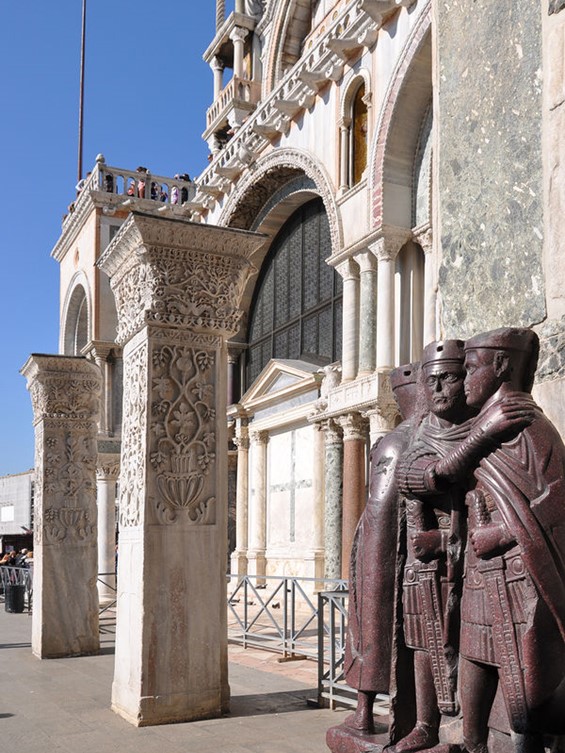
Two ancient pillars looted from Constantinople in 1204, long misidentified as war trophies, inspired Turner and other 19th-century masters — Venice’s silent Byzantine witnesses hiding in plain sight.