Pietro Lorenzetti's painting of the Crucifixion in the Lower Church, San Francesco, Assisi, Italy

Good Friday – ΜεγάληΠαρασκευή

Pietro Lorenzetti's painting of the Crucifixion in the Lower Church, San Francesco, Assisi, Italy
Pietro Lornzetti, ca. 1280-1348
Panoramic view of the frescoes,
1320-40, Fresco, Lower Church, San Francesco, Assisi, Italy – Photo Credit: Amalia Spiliakou, April 2025

Σήμερον κρεμᾶται ἐπὶ ξύλου ὁ ἐν ὕδασι τὴν γῆν κρεμάσας. Στέφανον ἐξ ἀκανθῶν περιτίθεται ὁ τῶν Ἀγγέλων Βασιλεύς. Ψευδῆ πορφύραν περιβάλλεται ὁ περιβάλλων τὸν οὐρανὸν ἐν νεφέλαις. Ῥάπισμα κατεδέξατο ὁ ἐν Ἰορδάνῃ ἐλευθερώσας τὸν Ἀδάμ. Ἥλοις προσηλώθη ὁ Νυμφίος τῆς Ἐκκλησίας. Λόγχῃ ἐκεντήθη ὁ Υἱὸς τῆς Παρθένου. Προσκυνοῦμέν σου τὰ Πάθη, Χριστέ. Δεῖξον ἡμῖν καὶ τὴν ἔνδοξόν σου Ἀνάστασιν/ (Good Friday – Μεγάλη Παρασκευή) Ἀντίφωνον ΙΒ΄ – ἦχος πλ. δ΄) http://www.hchc.edu/assets/files/CD/All_Creation_Trembled_ebook.pdf

Today he who hung the earth upon the waters is hung upon a Tree. He who is King of the Angels is arrayed in a crown of thorns. He who wraps the heaven in clouds is wrapped in mocking purple. He who freed Adam in the Jordan receives a blow on the face. The Bridegroom of the Church is transfixed with nails. The Son of the Virgin is pierced by a lance. We worship your Sufferings, O Christ. Show us also your glorious Resurrection. (Good Friday – Μεγάλη Παρασκευή Twelfth Antiphon – plagal fourth mode) http://www.hchc.edu/assets/files/CD/All_Creation_Trembled_ebook.pdf

Nestled within the hallowed walls of the Lower Church of San Francesco in Assisi, Pietro Lorenzetti’s Crucifixion fresco stands as a haunting yet masterful portrayal of sorrow, sacrifice, and divine transcendence. Painted in the early 14th century, this monumental work is a cornerstone of Lorenzetti’s artistic legacy, embodying the emotional intensity and narrative depth that defined Sienese painting. As part of the broader cycle of frescoes adorning the basilica, the Crucifixion transforms the left transept into a space of profound contemplation, where art and faith converge in striking realism and dramatic composition. In this post, we will explore the fresco’s artistic significance, its place within the basilica’s iconographic program, and the deeply human expressions that set Lorenzetti’s vision apart from his contemporaries.
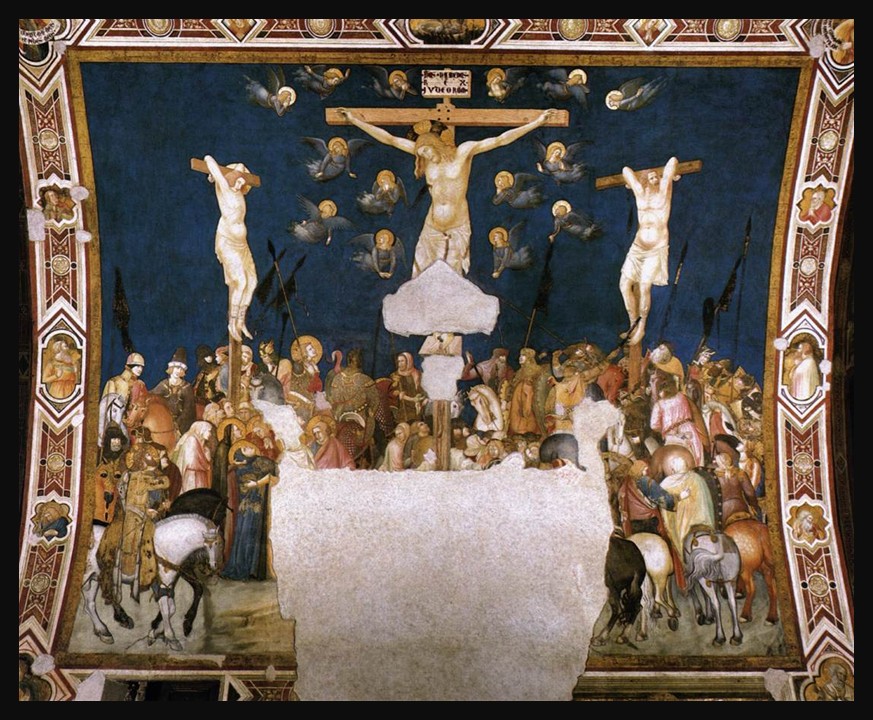
Pietro Lorenzetti's painting of the Crucifixion in the Lower Church, San Francesco, Assisi, Italy
Pietro Lornzetti, ca. 1280-1348
Panoramic view of the frescoes,
1320-40, Fresco, Lower Church, San Francesco, Assisi, Italy https://www.wga.hu/frames-e.html?/html/l/lorenzet/pietro/index.html

The Basilica of San Francesco in Assisi is one of the most revered pilgrimage sites in Italy, built to honor Saint Francis of Assisi, the founder of the Franciscan Order. Constructed shortly after his canonization in 1228, the basilica is a masterpiece of medieval architecture, blending Romanesque solidity with the soaring elegance of early Gothic design. It consists of two distinct churches, the Upper Church, with its luminous frescoes by Giotto and Cimabue, and the Lower Church, a more intimate, shadowed space adorned with the works of Pietro Lorenzetti and Simone Martini. Beneath these sacred walls lies the Crypt of Saint Francis, drawing countless visitors who seek spiritual reflection and artistic inspiration. Beyond its role as a religious site, the basilica is a testament to the power of art in shaping faith, as its fresco cycles revolutionized narrative painting in the 13th and 14th centuries, setting a precedent for Renaissance masters to come.

Stepping into the Lower Church of San Francesco is like entering a sanctuary of shadow and splendor, where the interplay of dim light and rich color creates an atmosphere of deep reverence. In contrast to the soaring luminosity of the Upper Church, the Lower Church is a more intimate and solemn space, its vaulted ceilings and walls covered in some of the most exquisite fresco cycles of the 13th and 14th centuries. The Sienese masters Pietro Lorenzetti and Simone Martini, along with other painters, adorned the chapels and transepts with emotionally charged narratives from the life of Christ and the Virgin Mary, employing striking realism, dramatic gestures, and a masterful use of color. Lorenzetti’s Crucifixion and Deposition stand out for their raw human expression, while Martini’s elegant, courtly style infuses his frescoes with a lyrical grace. Gold accents, deep blues, and rich ochres further heighten the mystical aura, turning the church into a profound visual meditation on faith, sacrifice, and redemption.
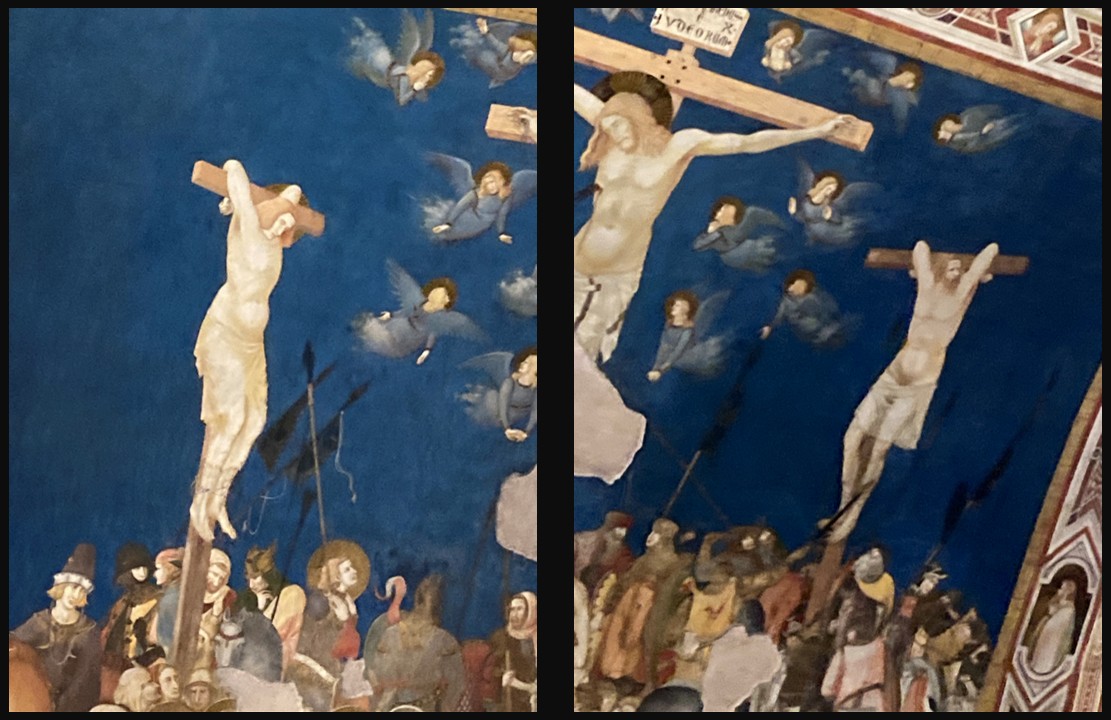
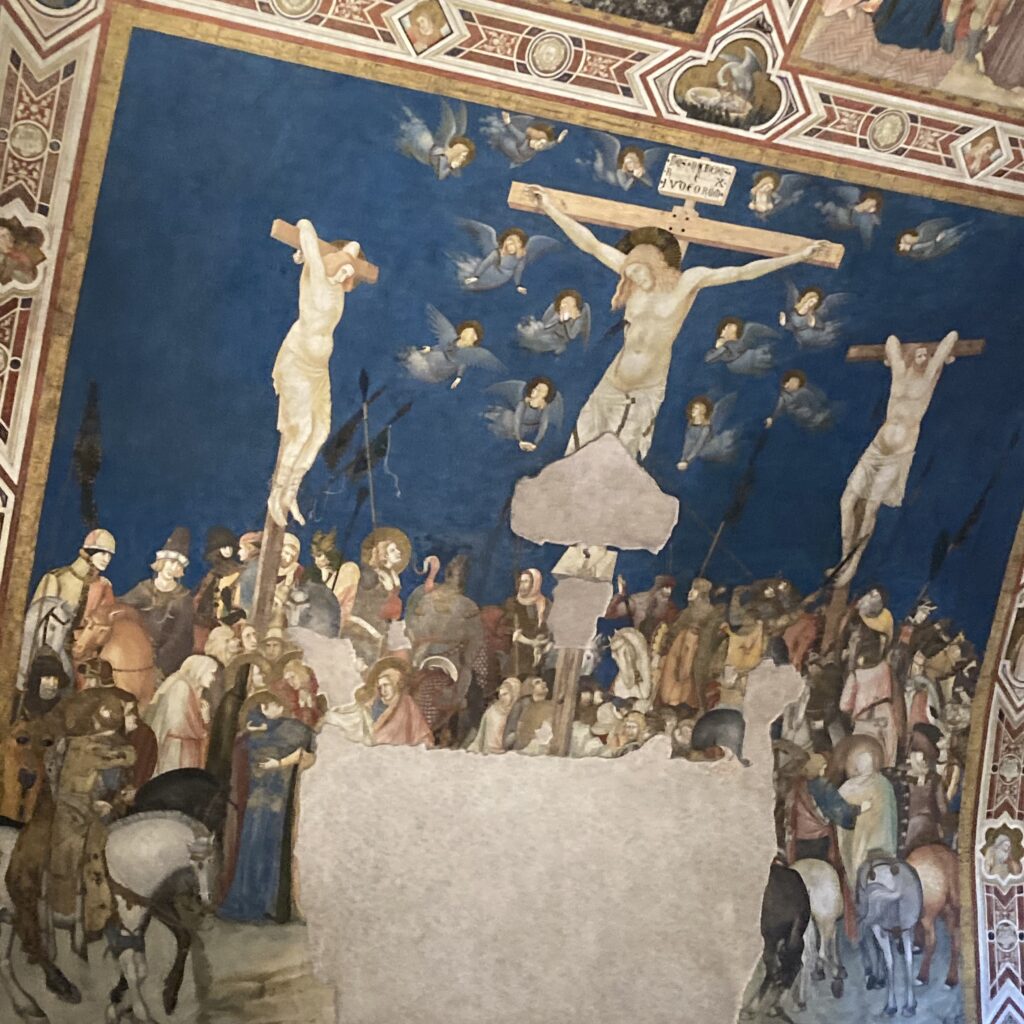
Details of Pietro Lorenzetti's painting of the Crucifixion in the Lower Church, San Francesco, Assisi, Italy
Pietro Lornzetti, ca. 1280-1348
Panoramic view of the frescoes,
1320-40, Fresco, Lower Church, San Francesco, Assisi, Italy – Photo Credit: Amalia Spiliakou, April 2025

Pietro Lorenzetti’s Crucifixion in the Left Transept of the Lower Church of San Francesco is a profoundly dramatic and emotionally charged depiction of Christ’s suffering. Painted in the early 14th century, the fresco exemplifies Lorenzetti’s mastery of naturalism, spatial depth, and psychological intensity, setting it apart from the more hieratic Byzantine traditions. The composition is filled with raw human emotion. The anguished expressions of the gathered crowd, including Roman soldiers and sorrowful onlookers, heighten the sense of immediacy and realism. Lorenzetti employs bold foreshortening, dynamic gestures, and chiaroscuro effects to create depth and a sense of movement, drawing the viewer into the heart of the scene. The somber colour palette, dominated by earthy reds, deep blues, and stark contrasts, reinforces the tragic weight of the moment. As part of the broader fresco cycle in the transept, this Crucifixion not only serves as a meditation on Christ’s sacrifice but also marks a pivotal moment in the evolution of Sienese painting, bridging the gap between Gothic spirituality and the emerging naturalism that would shape the Renaissance.

For a PowerPoint Presentation of Pietro Lorenzetti’s oeuvre, please… Check HERE!

Bibliography: https://www.keytoumbria.com/Assisi/S_Francesco_LC_Transepts.html and https://www.visit-assisi.it/en/monuments/religious-buildings/papal-basilica-of-saint-francis-and-the-sacred-convent/
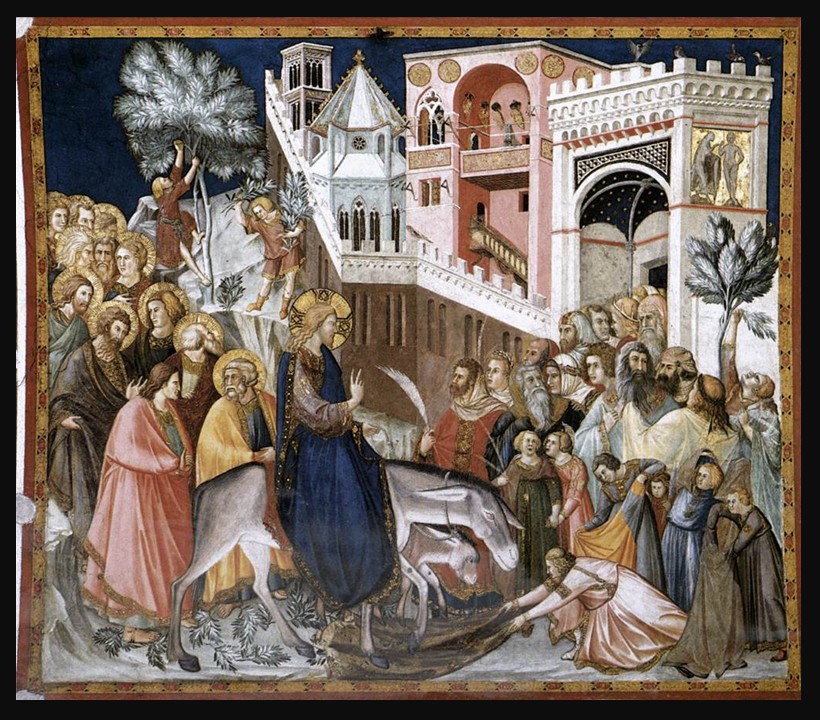
Pietro Lornzetti's fresco of .Entry of Christ into Jerusalem.

Palm Sunday fresco scene in Assisi

Pietro Lornzetti's fresco of .Entry of Christ into Jerusalem.
Pietro Lornzetti, ca. 1280-1348
Entry of Christ into Jerusalem, c. 1320, Fresco, Lower Church, View of the south arm of the western transept, San Francesco, Assisi, Italy https://www.wga.hu/html_m/l/lorenzet/pietro/1/1vault/1entry.html

Pietro Laurati (commonly known as Pietro Lorenzetti), an excellent painter of Siena, proved in his life how great is the contentment of the truly able, who feel that their works are prized both at home and abroad, and who see themselves sought after by all men, for the reason that in the course of his life he was sent for and held dear throughout all Tuscany… and Umbria, if I may add, as his Palm Sunday fresco scene in Assisi is truly magnificent! https://www.gutenberg.org/files/25326/25326-h/25326-h.htm

Pietro Lorenzetti was a renowned Sienese painter of the Early Renaissance, known for his expressive and naturalistic approach to religious art. Alongside his younger brother, Ambrogio Lorenzetti, he played a crucial role in advancing Sienese painting by incorporating elements of spatial depth and emotional realism, bridging the gap between Byzantine traditions and the emerging Renaissance style. His most celebrated works include the frescoes in the Lower Basilica of San Francesco in Assisi, notably the Palm Sunday scene and the Crucifixion of Christ, which showcase his mastery of dramatic composition and human expression. His contributions, along with those of Duccio and Simone Martini, helped define the distinctive elegance and narrative richness of Sienese art. Like many artists of his time, it is believed that Pietro fell victim to the Black Death around 1348, marking the end of an influential career that significantly shaped early Italian painting.

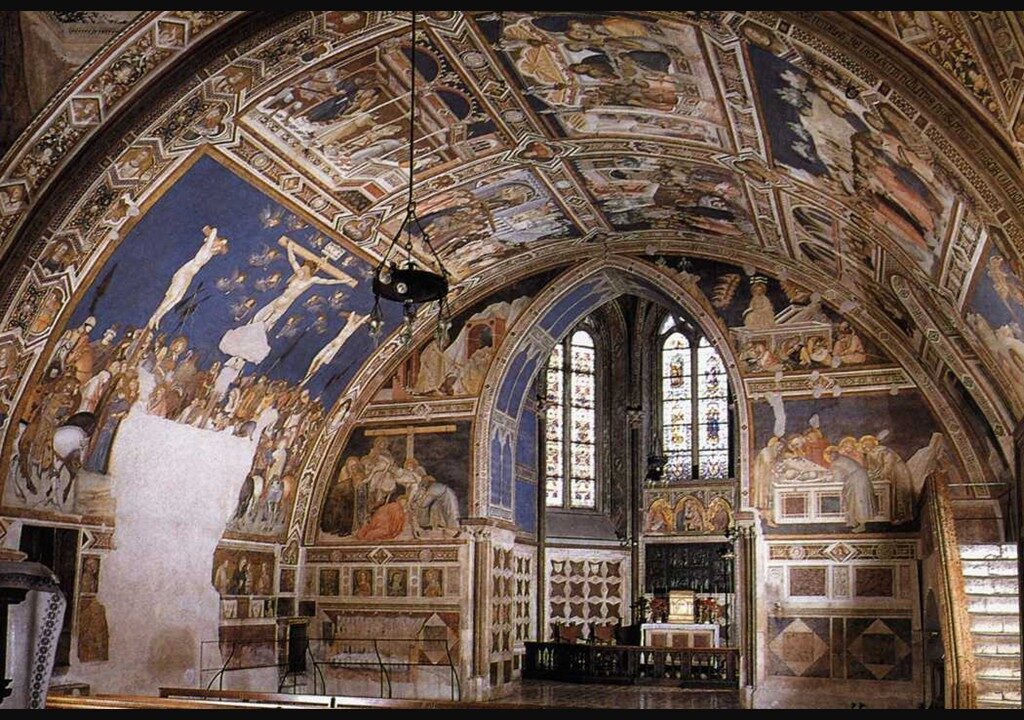
Pietro Lornzetti's view of the south arm of the western transept in the Lower Church of San Francesco, Assisi
Pietro Lornzetti, ca. 1280-1348
View of the south arm of the western transept, c. 1320, Fresco, Lower Church, View of the south arm of the western transept, San Francesco, Assisi https://arsartisticadventureofmankind.wordpress.com/tag/basilica-of-saint-francis-of-assisi/

The artist’s frescoes in the Lower Basilica of San Francesco in Assisi are among the most significant works of early 14th-century Italian painting. Commissioned as part of the extensive decorative program honoring St. Francis of Assisi, these frescoes depict various scenes from the Passion of Christ. Created between 1320 and 1340, they showcase Lorenzetti’s innovative approach to storytelling, blending the spiritual intensity of Gothic tradition with a heightened sense of realism. His compositions introduce a more profound emotional depth and spatial complexity compared to earlier Sienese paintings. Unfortunately, time and environmental factors have caused some deterioration, but the surviving sections still provide a remarkable glimpse into Lorenzetti’s mastery of fresco technique and his contribution to the evolution of Italian art.

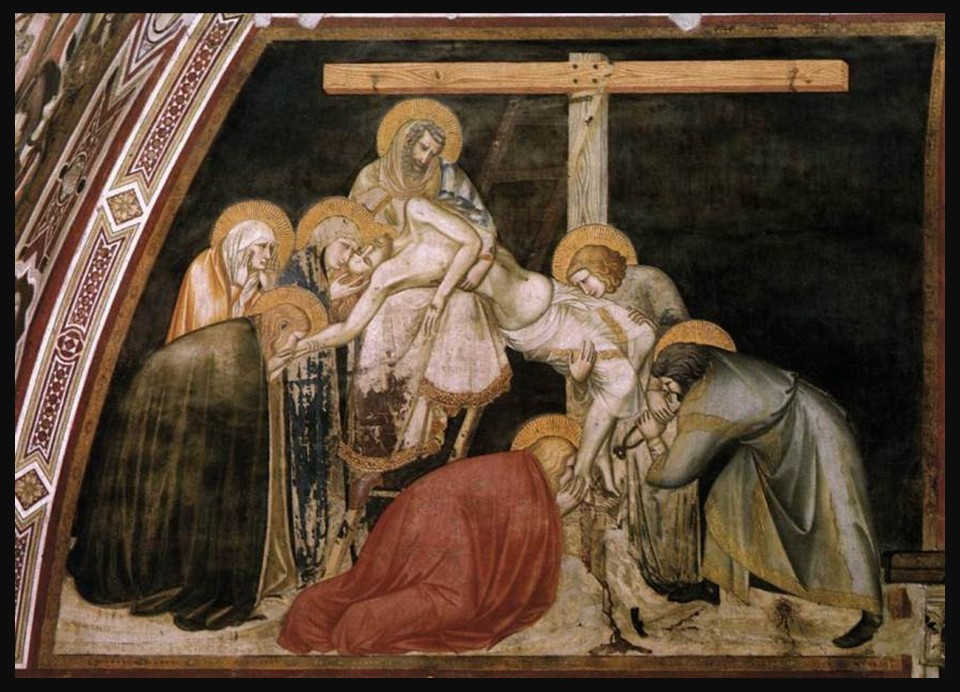
Pietro Lornzetti fresco of the Deposition in the Lower Church, San Francesco, Assisi
Pietro Lornzetti, ca. 1280-1348
The Deposition, c. 1320, Fresco, Lower Church, San Francesco, Assisi, Italy https://arsartisticadventureofmankind.wordpress.com/tag/basilica-of-saint-francis-of-assisi/

Aesthetically, Lorenzetti’s frescoes in Assisi are striking for their dramatic use of chiaroscuro, spatial illusionism, and expressive human figures. Unlike the rigid and hieratic figures of earlier Byzantine-style painting, his characters convey deep emotion and dynamic movement, making the biblical narratives more immediate and relatable. The Deposition of Christ, for example, is renowned for its intense sorrow, as mourners delicately cradle Christ’s lifeless body in a composition that feels both weighty and fluid. His use of architectural elements to frame and organize space enhances the sense of depth, allowing figures to appear more grounded and three-dimensional. The naturalistic drapery, individualized facial expressions, and carefully observed gestures reveal a sophisticated understanding of human emotion and physicality, marking a significant step toward the artistic advancements of the Renaissance.

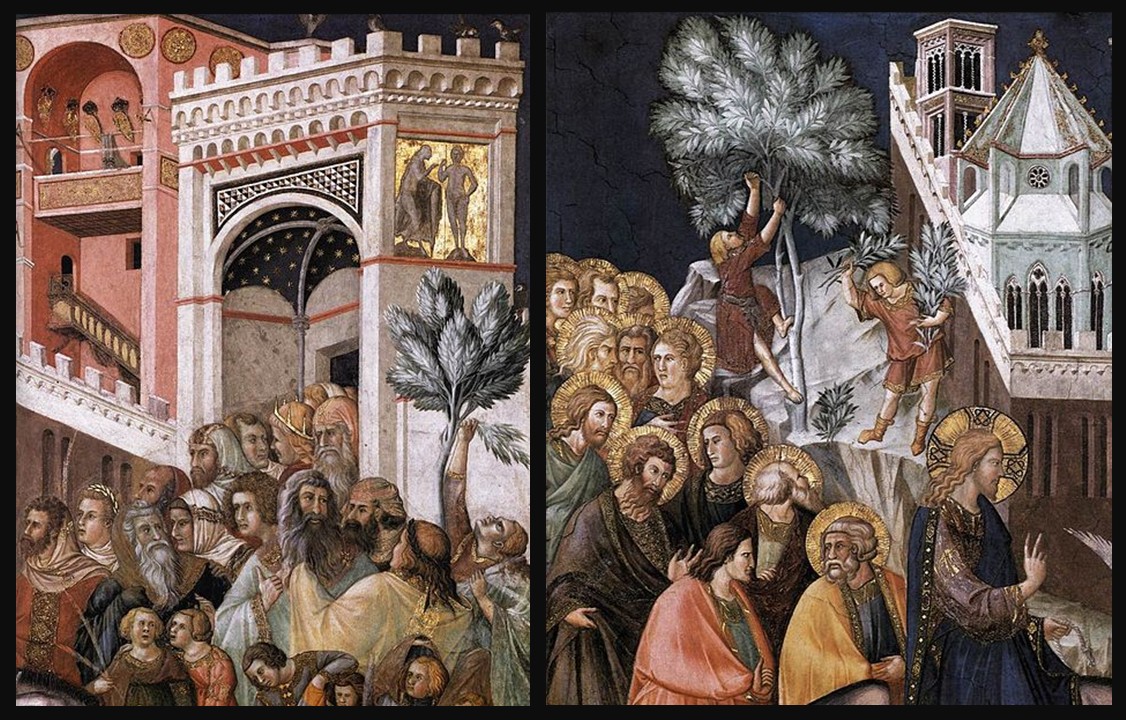
The Entry to Jerusalem fresco, part of Pietro’s cycle depicting the Passion of Christ in the Lower Basilica of San Francesco in Assisi, is a favourite example of his oeuvre, as it masterfully captures the dramatic moment when Christ enters Jerusalem, greeted by a crowd laying down garments and palm branches in reverence. The composition is notable for its structured yet dynamic arrangement, with Christ positioned centrally, riding a donkey, surrounded by his disciples and the expectant citizens of Jerusalem. Lorenzetti’s ability to create narrative clarity while maintaining a rich visual complexity is evident in the fresco’s layered depth and the variety of gestures that convey both reverence and excitement. The scene is framed by an architectural backdrop, suggesting an awareness of spatial organization, a characteristic that distinguishes Lorenzetti from earlier, more rigidly structured Byzantine-influenced compositions.

Pietro Lornzetti's fresco of the Entry of Christ into Jerusalem (details) in the Lower Church, San Francesco, Assisi
Pietro Lornzetti, ca. 1280-1348
Entry of Christ into Jerusalem (details), c. 1320, Fresco, Lower Church, San Francesco, Assisi, Italy https://commons.wikimedia.org/wiki/File:Pietro_Lorenzetti_-_Entry_of_Christ_into_Jerusalem_%28detail%29_-_WGA13504.jpg

Aesthetically, Lorenzetti’s Entry to Jerusalem is remarkable for its expressive realism, and innovative spatial depth. The figures, though arranged in a relatively shallow space, are rendered with a keen sense of individualization, each face reflecting distinct emotions ranging from joy to solemn contemplation. His use of chiaroscuro adds volume and weight to the figures, making them appear more three-dimensional, a technique that anticipates the later advancements of the Renaissance. The drapery of the garments flows naturally, and the figures interact convincingly within the setting, creating a sense of immediacy and liveliness. Additionally, Lorenzetti’s handling of colour and light enhances the emotional intensity of the scene—earthy tones provide warmth and depth, while brighter highlights emphasize key focal points, such as Christ and the welcoming crowd. This fresco not only reflects Lorenzetti’s technical mastery but also underscores his role in pushing Sienese painting beyond decorative elegance into a more humanized and spatially aware visual language.

For a PowerPoint Presentation of Pietro Lorenzetti’s oeuvre, please… Check HERE!