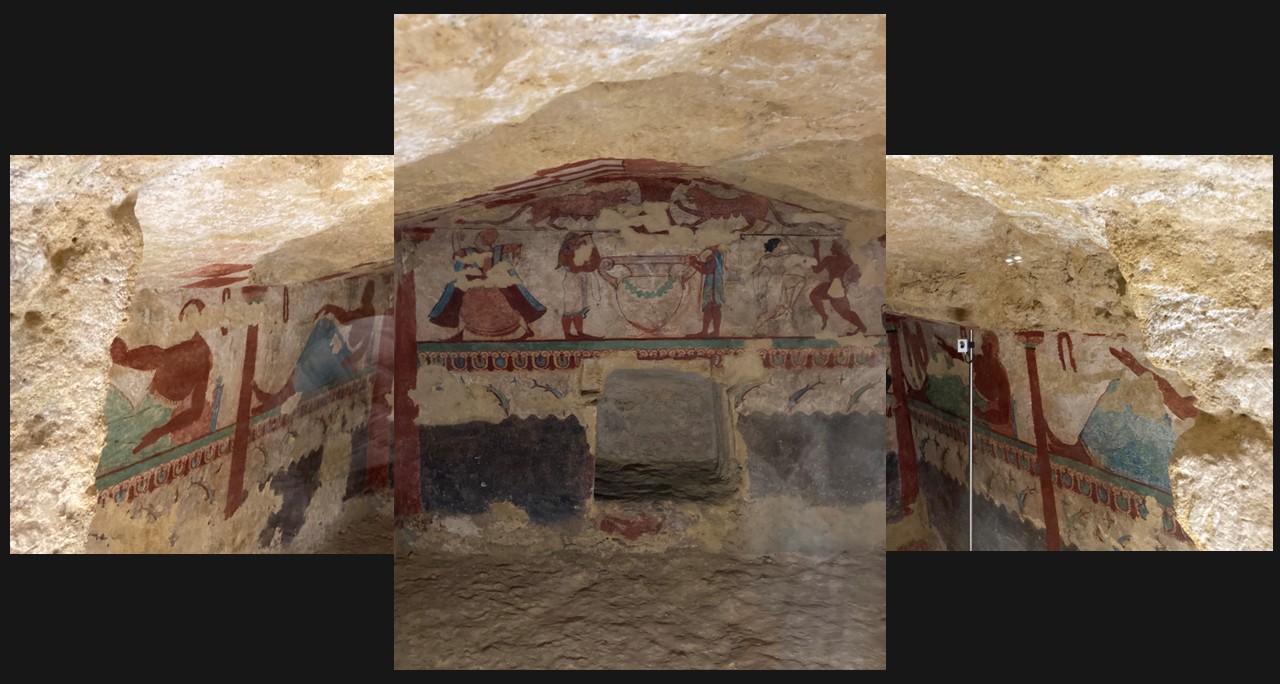
There are few places where the ancient world feels as vivid and immediate as in the painted tombs of the Etruscans. Among them, the Etruscan Tomb of the Lionesses stands out for its energy, colour, and celebration of life. Located within the vast burial grounds of the Necropolis of Monterozzi, this tomb invites us to look beyond death and into a culture that embraced vitality, music, and communal experience. Let’s explore the where, when, how, and what of this remarkable monument through a series of guiding questions.
Where is the Tomb of the Lionesses located? The tomb lies in Tarquinia, one of the most important cities of ancient Etruria, about 90 kilometres north of Rome. The Necropolis of Monterozzi contains hundreds of chamber tombs carved into the rock, many of them decorated with frescoes. Today, it is recognized as a UNESCO World Heritage Site, offering invaluable insight into Etruscan life and beliefs.
When was the tomb created, and what does its time period reveal about Etruscan culture? The Tomb of the Lionesses dates to around 520 BCE, during the Archaic period. This was a time when Etruscan society was flourishing, enriched by trade and cultural exchange, particularly with the Greek world. The art of the tomb reflects this interaction: while certain stylistic elements recall Greek vase painting, the subject
matter remains distinctly Etruscan, emphasizing social gatherings, performance, and lived experience.
How was it discovered? Like many of the tombs in Tarquinia, the Tomb of the Lionesses was uncovered in the 19th century, during systematic archaeological explorations. These discoveries transformed modern understanding of the Etruscans, revealing a culture far more expressive and life-affirming than previously imagined.
What are the architectural features of the Tomb of the Lionesses, and how do they reflect Etruscan funerary practices? The tomb is a rock-cut chamber with a simple yet meaningful design. Its interior is shaped to resemble a domestic space, reinforcing the Etruscan idea that the tomb served as a “home” for the deceased. This concept suggests continuity rather than finality, death was not an end, but a transition to another mode of existence.
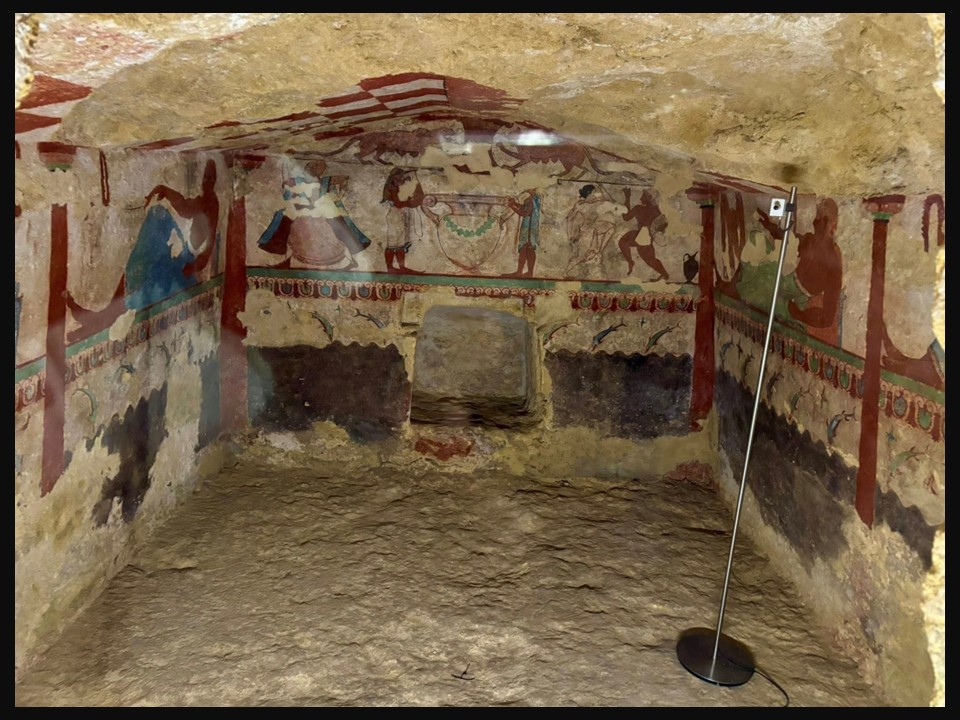
What is the interior decoration of the Tomb of the Lionesses? The walls of the tomb are animated with frescoes that depict a lively banquet scene. Figures recline, musicians play instruments, and dancers move rhythmically across the space. On the pediment wall, two lionesses, powerful, symmetrical, and alert, frame the central scene, giving the tomb its modern name. Their presence may carry protective or symbolic meaning, watching over the festivities below.
How do the frescoes represent Etruscan beliefs about the afterlife and social customs? Unlike the more somber funerary imagery found in other ancient cultures, the scenes here are filled with joy and movement. The banquet, accompanied by music and dance, suggests that the afterlife was imagined as a continuation of earthly pleasures. These images also reflect the importance of social identity and communal experience in Etruscan life, where feasting and performance played central roles.
What role do performance and movement play in the imagery? Movement is one of the defining features of the tomb’s decoration. The dancers are shown in dynamic poses, their gestures expressive and rhythmic. Musicians accompany them, creating a sense of sound and atmosphere that extends beyond the visual. This emphasis on performance may point to ritual practices, where music and dance were integral to both celebration and commemoration.
What aesthetic values can be observed, and what do they reveal about Etruscan attitudes toward life and death? The frescoes are characterized by bold colours, clear outlines, and stylized forms. There is a strong sense of pattern and symmetry, balanced by the liveliness of the figures. Rather than focusing on grief or loss, the imagery celebrates vitality, connection, and continuity. In this way, the Tomb of the Lionesses reflects an outlook on death that is not defined by fear, but by the enduring presence of life’s pleasures.
The Etruscan Tomb of the Lionesses offers a powerful reminder that ancient perspectives on death were not always solemn or introspective. Instead, this tomb presents a world of music, movement, and shared experience, a vision of the afterlife rooted in the richness of living. For modern viewers, it challenges assumptions and opens a window into a culture that chose to commemorate the dead not with silence, but with celebration.
Continue Exploring Etruscan Tombs: If you enjoyed the Tomb of the Lionesses, you might also like: Etruscan Tomb of Hunting and Fishing – An unprecedented imagery of fishermen, hunters, and divers that expanded the known repertoire of Etruscan funerary art / Etruscan Tomb of the Jugglers – Frescoes of dancers, musicians, and jugglers transform this ancient resting place into a living stage of movement, music, and joy
For a PowerPoint Presentation of the Tomb of the Lionesses in Tarquinia, please… Check HERE!
Sources and further Reading: Art in Tuscany – Tarquinia and the Etruscan Necropolises: http://www.travelingintuscany.com/art/art/tarquiniatombaleonesse.htm and The Tomba delle Leonesse and the Tomba dei Giocolieri at Tarquinia by Sonia Amaral Rohter: https://archaeology.brown.edu/native-publications/tomba-delle-leonesse-and-tomba-dei-giocolieri-tarquinia
Visiting the Tomb of the Lionesses: The tomb is open to visitors as part of the Monterozzi Necropolis site near Tarquinia. Note that specific tombs rotate in and out of access to aid preservation, so it is worth checking current opening information before you visit. Pair your trip with the Tarquinia National Museum (Palazzo Vitelleschi), which houses artefacts excavated from the necropolis, including pottery, jewellery, and the famous Winged Horses terracotta.