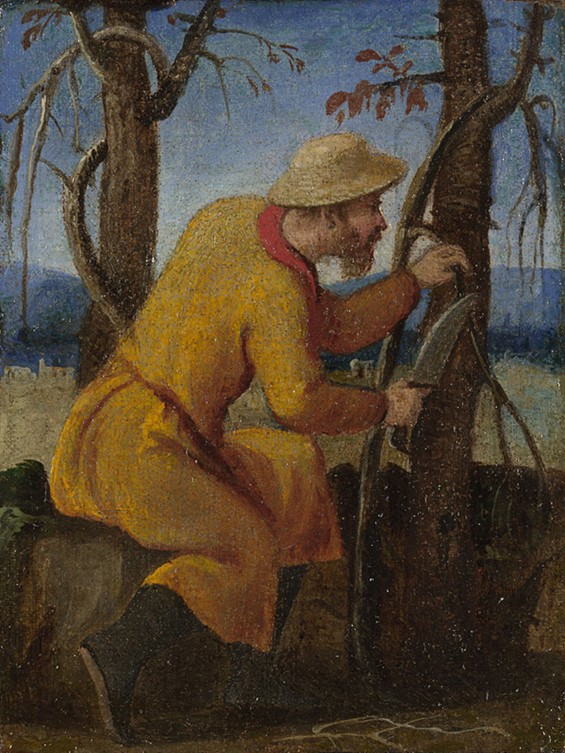
The Labours of the Months: March, about 1580, oil on canvas, 13.6 x 10.6 cm, National Gallery, London
https://www.nationalgallery.org.uk/paintings/italian-venetian-the-labours-of-the-months-march
Dear March – Come in – / How glad I am – / I hoped for you before – / Put down your Hat – / You must have walked – / How out of Breath you are – / Dear March, how are you, and the Rest – / Did you leave Nature well – /Oh March, Come right upstairs with me –/I have so much to tell – / I got your Letter, and the Birds – / The Maples never knew that you were coming – / I declare – how Red their Faces grew – / But March, forgive me – / And all those Hills you left for me to Hue – / There was no Purple suitable – / You took it all with you – / Who knocks? That April – / Lock the Door – / I will not be pursued – / He stayed away a Year to call / When I am occupied – / But trifles look so trivial / As soon as you have come / That blame is just as dear as Praise / And Praise as mere as Blame – Dear March, Come in!, a poem by Emily Dickinson, is about the love and joy it brought to her… She personifies March as if he were a friend… and I find it a fitting introduction to the new POST The Labours of the Months: March! https://poets.org/poem/dear-march-come-1320 and https://www.poetryfoundation.org/poets/emily-dickinson
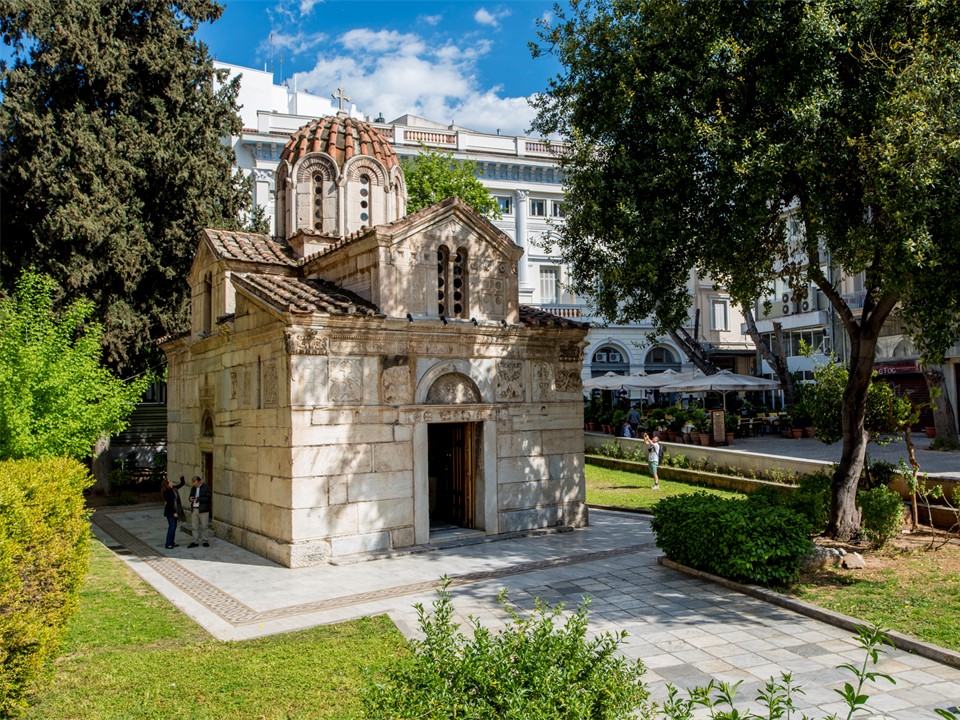
http://www.religiousgreece.gr/athens-attica/-/asset_publisher/lpcrESlL5iOO/content/panagia-gorgoepekoos
Depicting The Labours of the Months in works of art is a tradition that goes back to ancient Greek times. The charming Church of Hagios Eleutherios in Athens, also known as the Panagia Gorgoepikoos or the Mikri (Small) Metropolis, made up entirely of spolia of both ancient and Christian monuments, is a good example to start with. Above the main entrance to the Church and under the roof cornice, the builders of this extraordinary church placed “a frieze of Pentelic marble, which shows the months of the Attic Calendar, some festivals, and the complete circle of the Zodiac.” This ancient frieze “attempts to put together and coordinate the lunar calendar (Attic months and festivals) and the solar calendar (the signs of the Zodiac).” Amazing… https://hellenismo.wordpress.com/2012/12/01/the-frieze-of-the-attic-calendar/
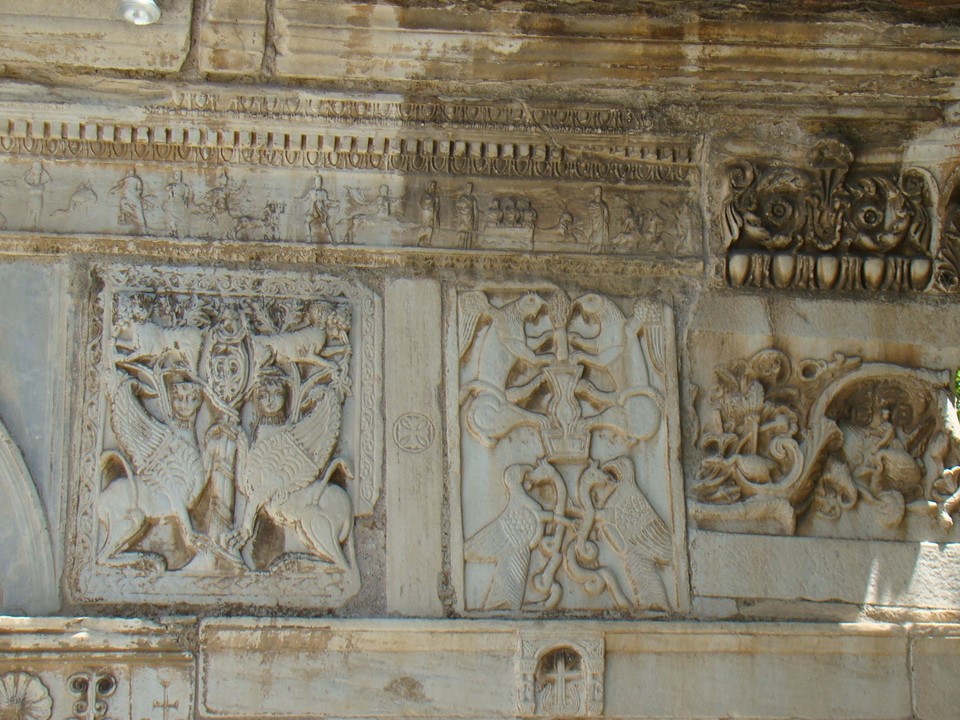
Photo credit: http://surprisedbytime.blogspot.com/2011/10/cyriaco-and-little-metropolis.html
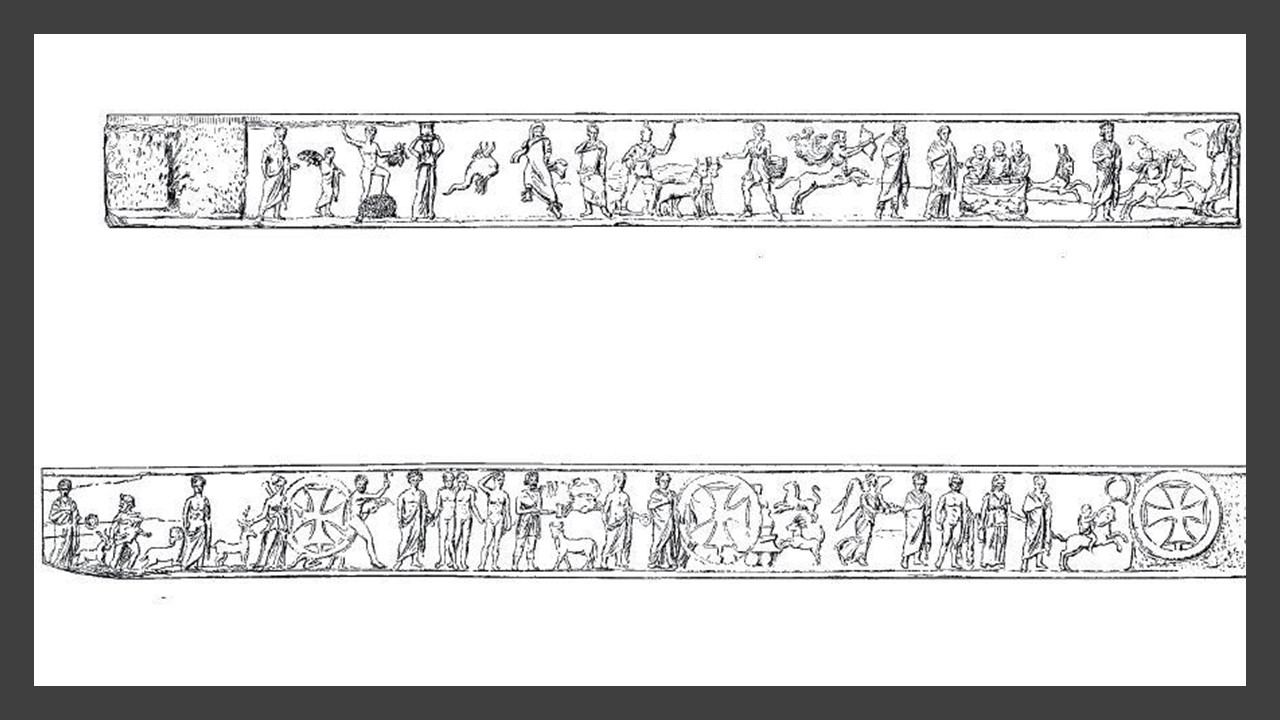
Drawings of the Calendar Frieze in the Church of Panagia Gorgoepikoos or Hagios Eleftherios or Mikri Mitropoli (Date of the Calendar Frieze: 2nd or 15th century BC- Date of the Church: 12th century) Athens
https://hellenismo.wordpress.com/2012/12/01/the-frieze-of-the-attic-calendar/
Olga Palagia, Professor of Classical Archeology at the National and Kapodistrian University of Athens, argues that the Calendar Frieze, in most probability, was created in Athens for the Great Panathenaic festivities of the year 142/3. If this small Attic Calendar Frieze, Palagia still argues, is tied to Herodes Atticus, who presented Athens with a number of public buildings…if this Calendar Frieze was part of the grand Athenian marble Panathenaic Stadium complex, built entirely at the expense of Herodes Atticus for the Great Panathenaia that fell in 142/3… well, makes it most interesting evidence of public Calendar representation… but in the realm of pure speculation! The date and iconography of the calendar frieze on the little metropolis, Athens, JdI 123, 2008, by Olga Palagia, https://www.academia.edu/843544/The_date_and_iconography_of_the_calendar_frieze_on_the_little_metropolis_Athens_JdI_123_2008
SO… The Calendar of the Months during Antiquity and the Labours of the Months later in history attracts our attention in Calendar works of Art adorning public buildings, Churches and Cathedrals of the time, striking Vitreaux Windows, amazingly colourful manuscripts, and paintings, monumental, like the eleven surviving panels in Torre Aquila I presented in 2020 (check: https://www.teachercurator.com/?s=torre%20aquila&cat=plus-5-results), or small, like the paintings in the National Gallery, in London, we will explore in 2021… month by month… https://archive.org/details/labormonth00webs/page/n9/mode/2up Webster, James Carson – 1905-1989, The labors of the months in antique and mediaeval art to the end of the twelfth century, 1938, Evanston, Ill., Northwestern University, and https://www.nationalgallery.org.uk/paintings/italian-venetian-the-labours-of-the-months-march
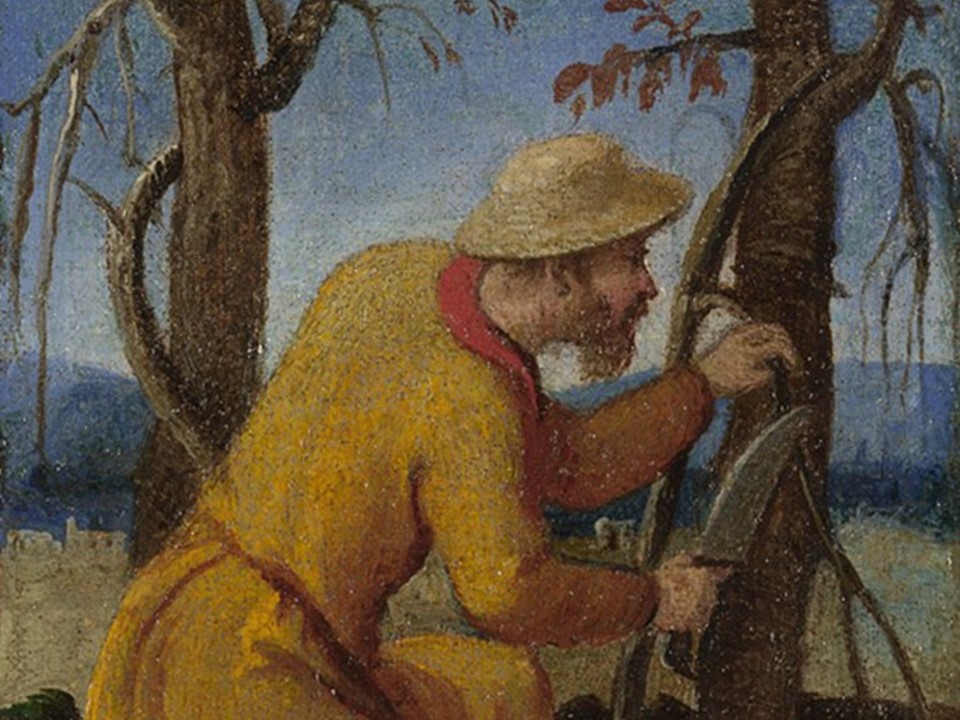
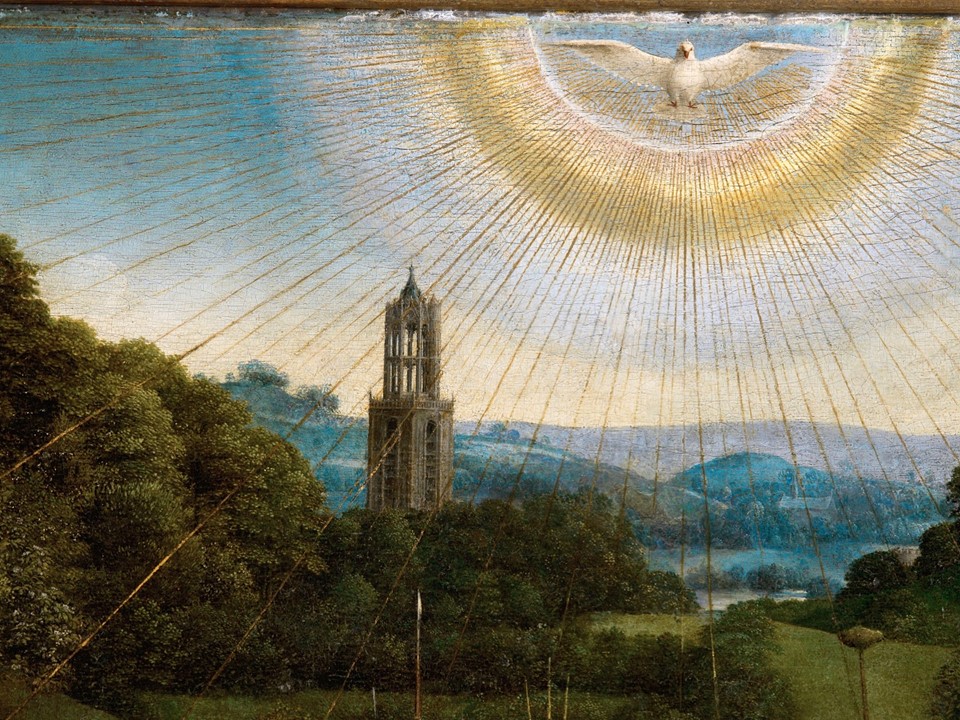
The Labours of the Months: March (detail) , about 1580, oil on canvas, 13.6 x 10.6 cm, National Gallery, London
https://www.nationalgallery.org.uk/paintings/italian-venetian-the-labours-of-the-months-march
For the Venetian Month of March at the National Gallery, we have yet another outdoor scene. “A bearded man wearing a yellow tunic trims vines that have been trained to grow up two trees. The branches of the vine are bare, while the trees have a few brownish leaves. Pruning vines is an activity carried out in Italy in winter, when the plant is dormant, and in spring when the new leaves have started to grow.” Once more, young farmers need to bundle up and take care of the daily chores… https://www.nationalgallery.org.uk/paintings/italian-venetian-the-labours-of-the-months-march
For a PowerPoint on The Labours of the Months at the National Gallery in London, please… Check HERE!
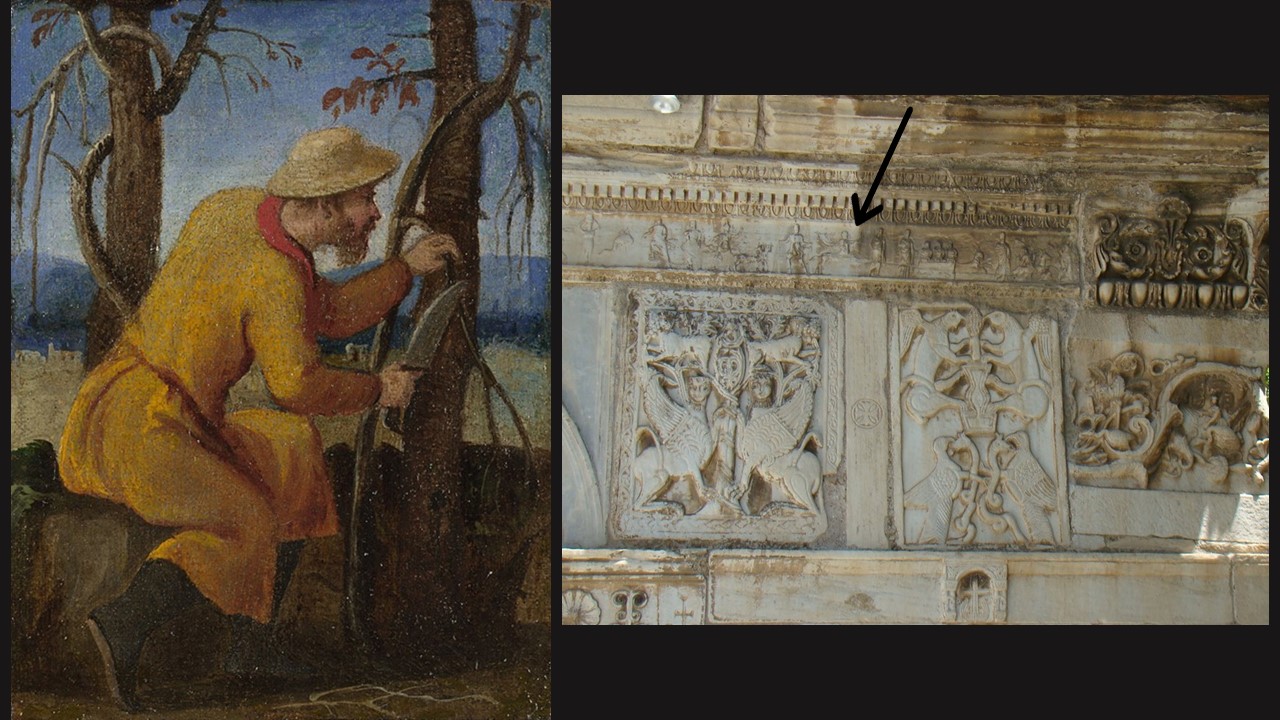
The Labours of the Months: March, about 1580, oil on canvas, 13.6 x 10.6 cm, National Gallery, London https://www.nationalgallery.org.uk/paintings/italian-venetian-the-labours-of-the-months-march
Calendar Frieze at the Church of Panagia Gorgoepikoos, Hagios Eleftherios or Mikri Mitropoli (Date of the Calendar Frieze: 2nd century BC- Date of the Church: 12th or 15th century) Athens http://surprisedbytime.blogspot.com/2011/10/cyriaco-and-little-metropolis.html