A Grade 6 Student Activity exploring the myth of Ariadne, where students research five artworks and creatively present her journey through love, betrayal, and myth across painting and sculpture.
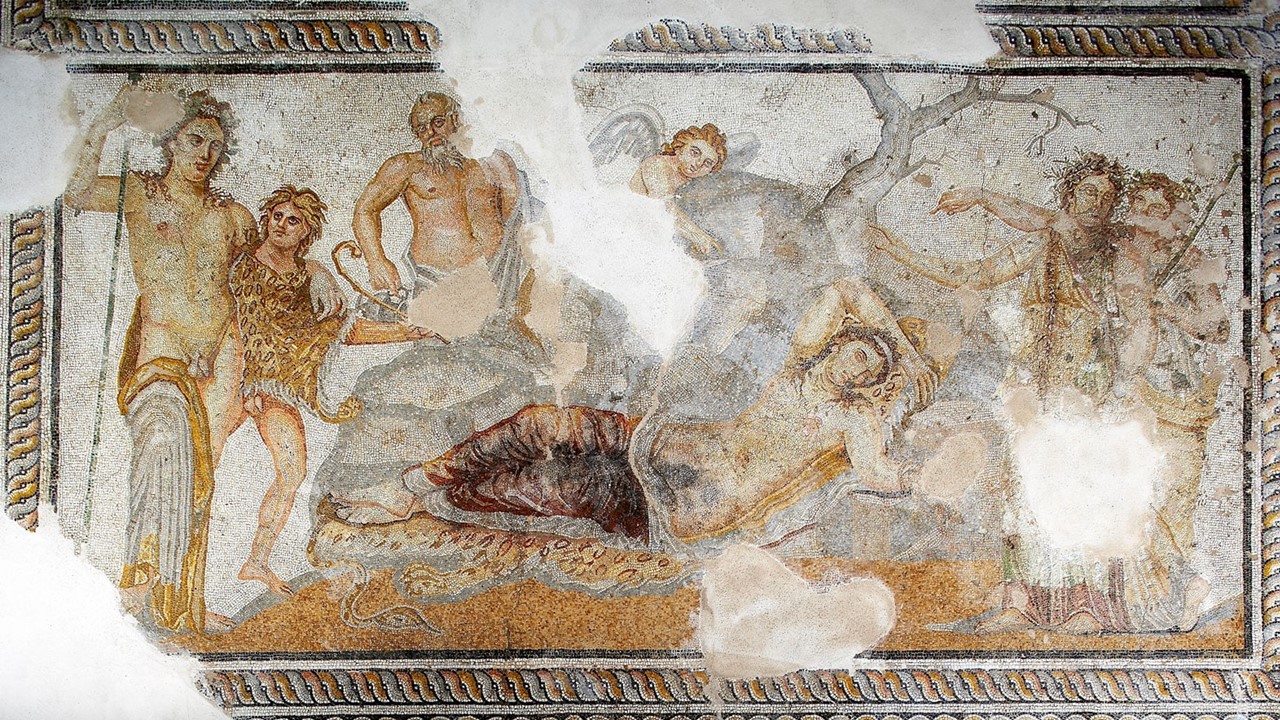
A Grade 6 Student Activity exploring the myth of Ariadne, where students research five artworks and creatively present her journey through love, betrayal, and myth across painting and sculpture.
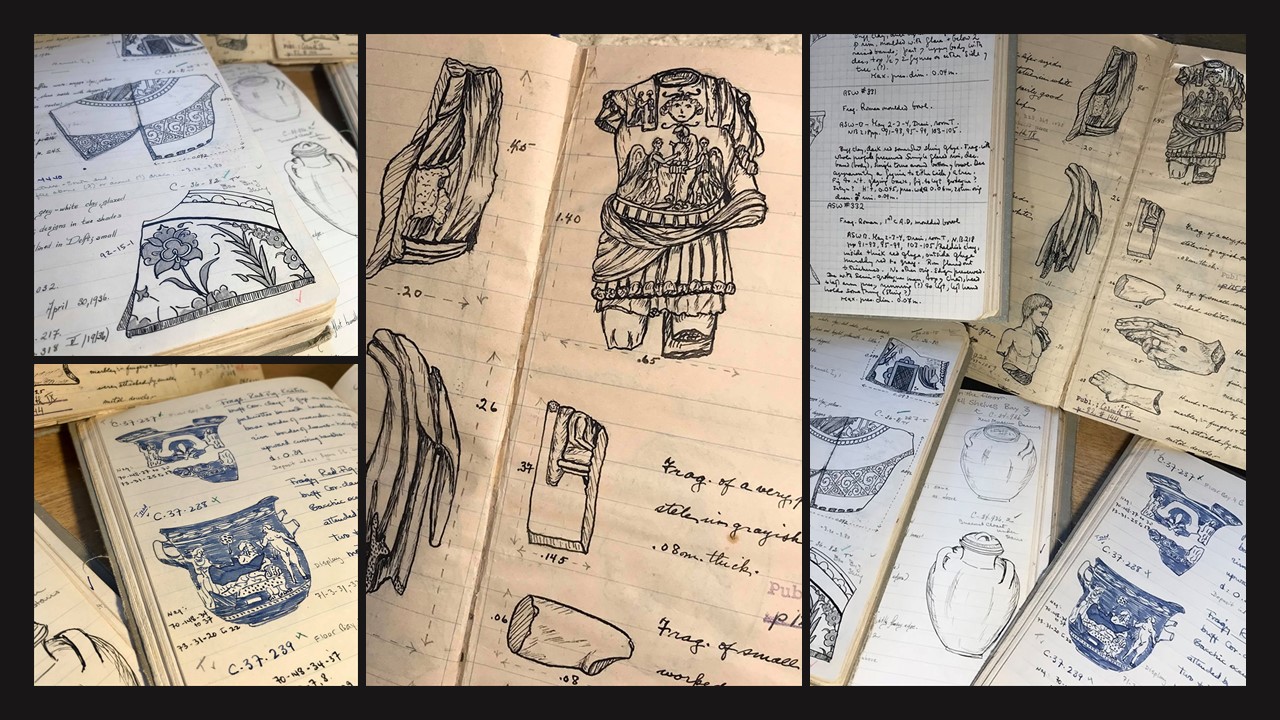
The carefully handwritten excavation records from the American School of Classical Studies at Athens, especially those from Corinth, preserve archaeology as both scholarship and quiet artistry—precise, tactile, and deeply human documentation of discovery.
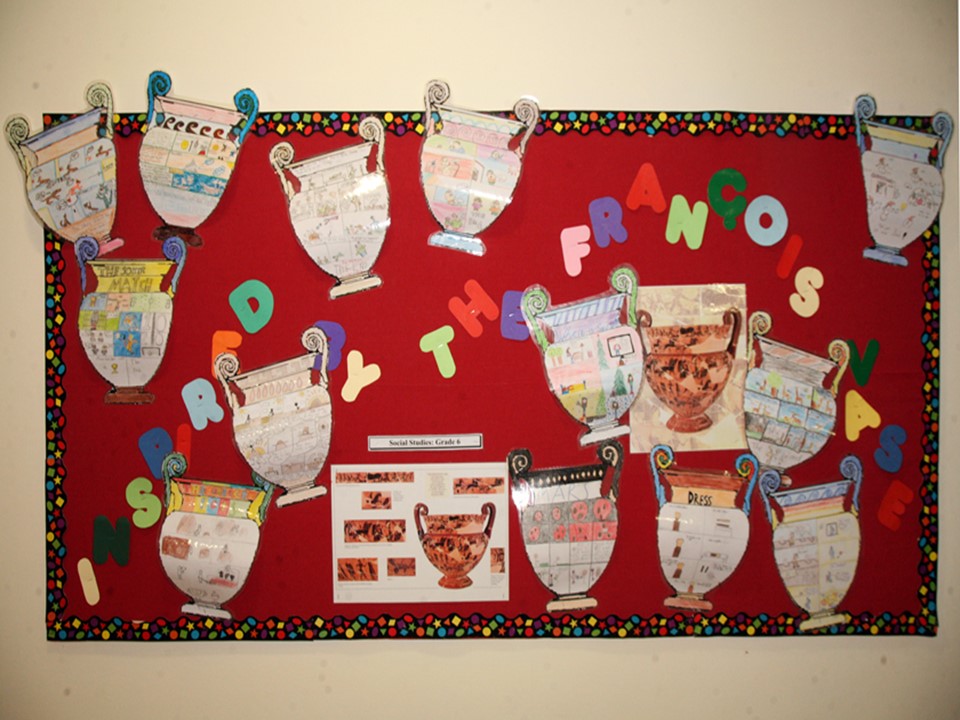
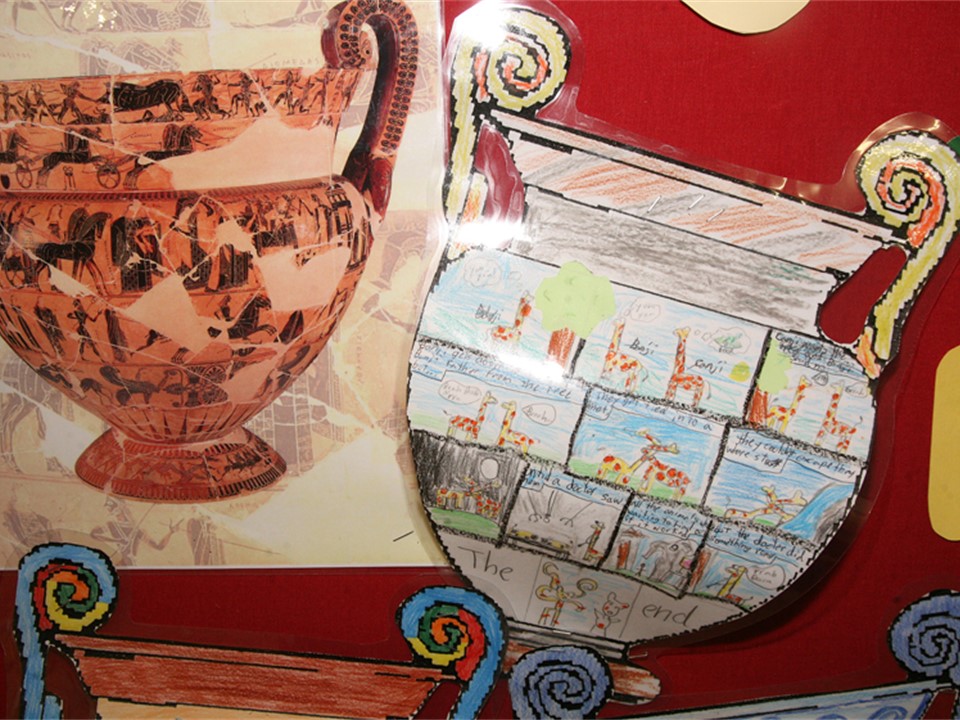
Inspired by the François Vase is a Grade 7 Activity my students enjoy doing!
François Vase is exhibited at the National Museum of Archaeology in Florence. It is “a large black-figure krater, a large vase in Ancient Greece believed to be used for watering down wine, from c. 570 BC. The design is fascinating and, if one looks carefully, you will find both the signature of the potter, Ergotimos and the painter, Kleitias. This krater is named the “François Vase” after the archaeologist who found it in 1844. ” https://www.visitflorence.com/florence-museums/maf-archeological-museum.html
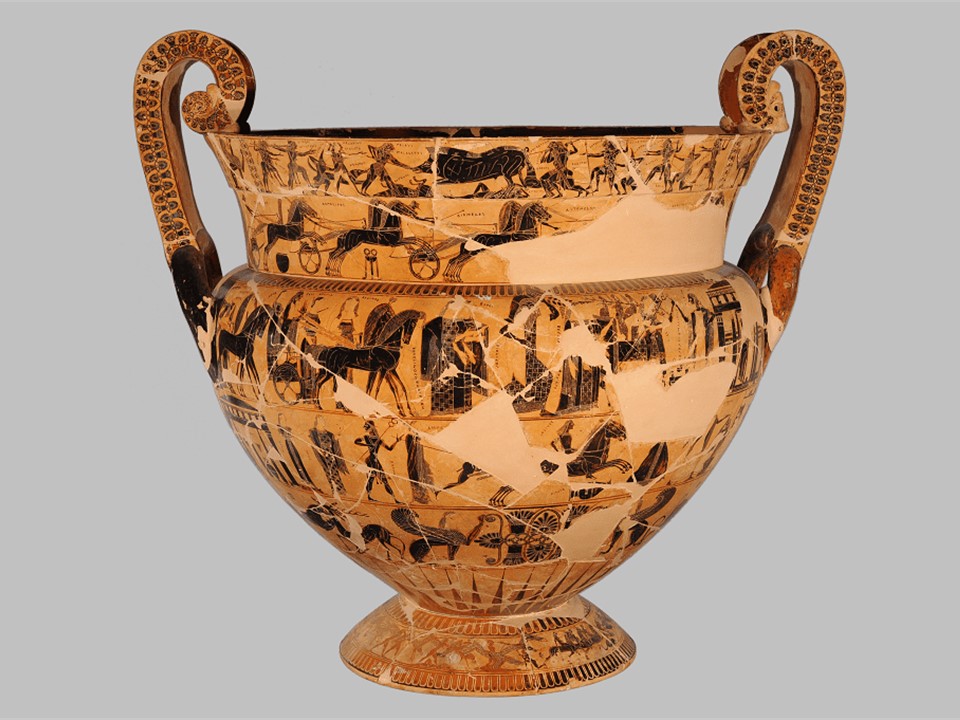
Instructions on what to do: During class, students are introduced to ancient Greek pottery, and more specifically the importance and characteristics of the François Vase. This Activity is based on the classroom lectures, student research on the subject, and ultimately student creativity and imagination. So, ……
The PowerPoint, teachercurator has prepared, can be seen if you… Click HERE!
For more examples of student work… Click HERE!
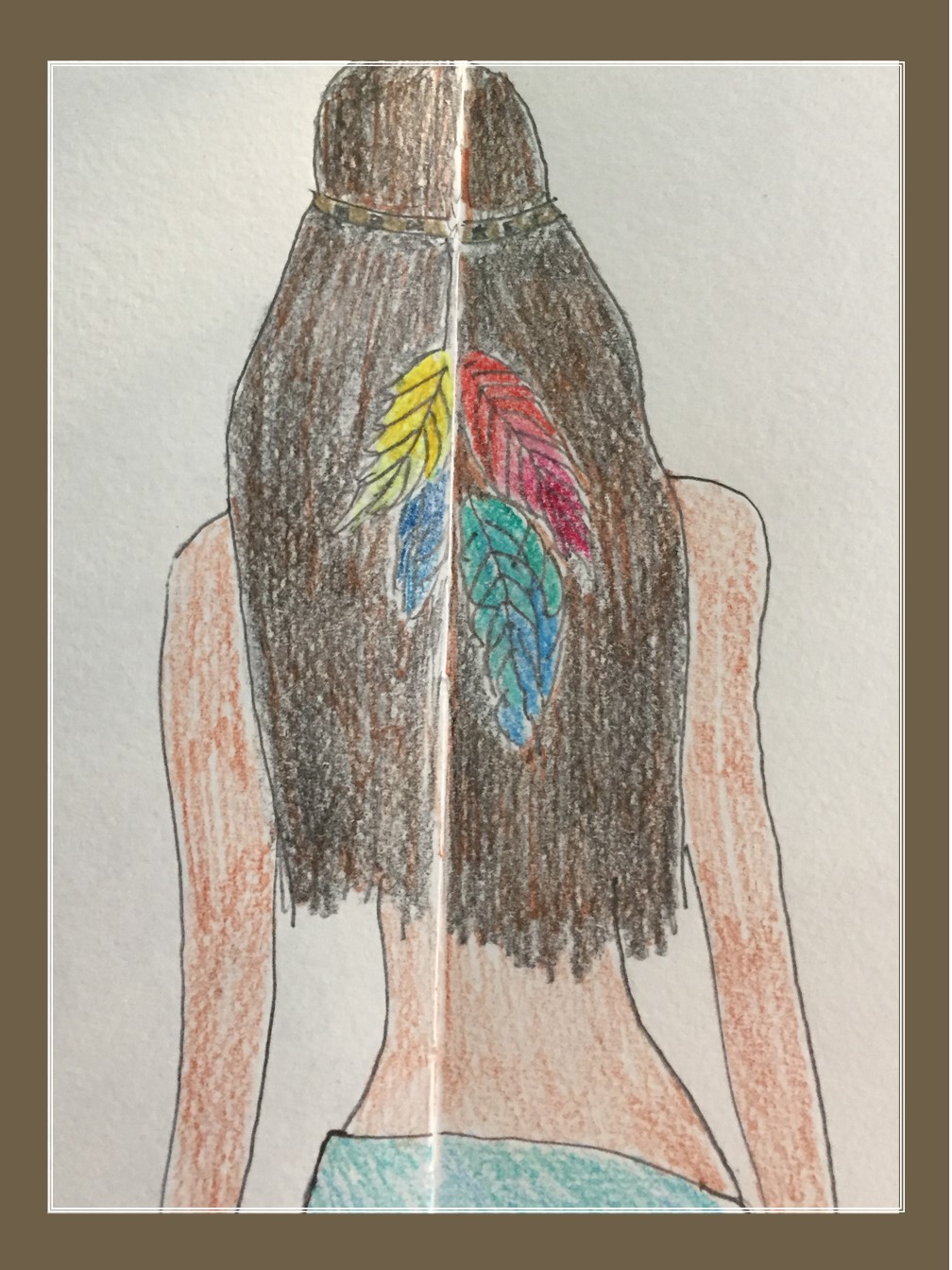
The New World is an interesting Movie to start our American Art Journey in an entertaining, yet educational, way! “This cinematic masterpiece illustrates the adventures of explorer John Smith as he establishes the Jamestown Settlement in 1607. Smith and Native American princess Pocahontas discover their worlds are different yet their hearts beat the same for each other, while English settlers and Native Americans come to blows.” https://www.owlteacher.com/teach-with-movies-page-6.html
We followed 3 steps for this Project: 1. We first saw the movie, The New World, https://en.wikipedia.org/wiki/The_New_World_(2005_film). 2. Then, students were asked to do some research, find and write down 10 Facts of Jamestown Settlement. 3. Finally, RWAP time! (RWAP stands for Research-Writing-Art-Project)
This Project covers at least 2 pages of the student RWAP Sketchbook or an A3 size Poster.
RWAP Instructions: A. Research – Coloured or B/W Photocopies of Artworks related to or inspired by Jamestown Settlement. Go to Google – Jamestown Colony – Pictures. Do not forget that correct identification for each picture is needed. B. Research – Writing – 6 Facts about Jamestown Settlement. Students already have 10 Facts from Step 2 of the Project. Review Facts, choose 6 of them, the BEST! and use them in their RWAP Sketchbook. Students are asked to not COPY/PASTE!!! and to write down BIBLIOGRAPHY! C. Art Activity and Project Title – There is so much on the Internet to get students inspired!!! BE CREATIVE! Do not forget a nice, artistic TITLE for the Project!!!
For examples of student RWAP… Click HERE!
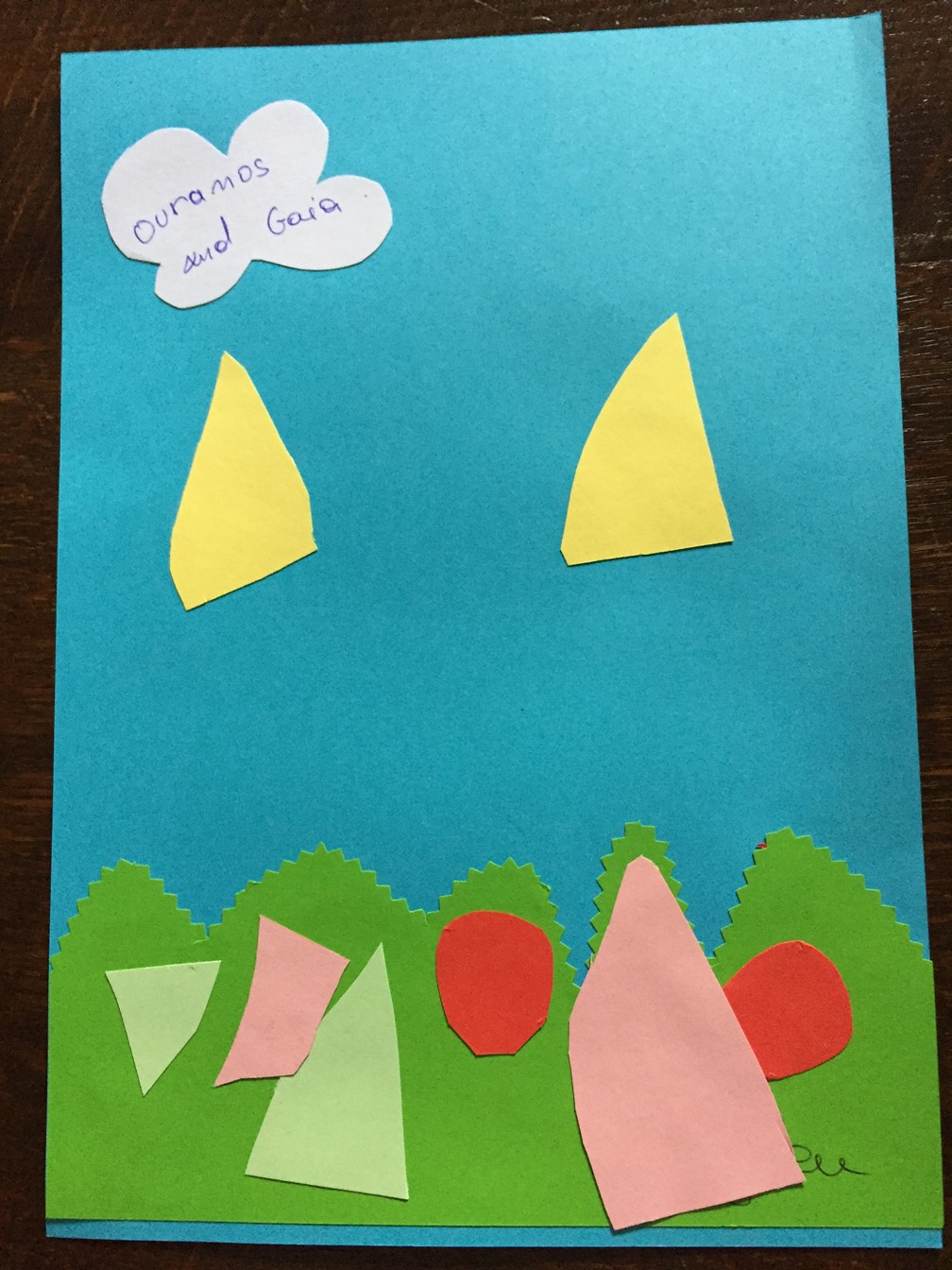
My Kindergarten Mythology Class started with the Myth of Ouranos and Gaia.
Created thousands of years ago, Greek Myths tell us epic stories, adventures of demigods, heroes, and monsters, tales of love, loyalty, betrayal, friendship, bravery… Greek Myths show that the gods, very much like ordinary humans, men and women alike, can be right or wrong, fail or succeed, love or be jealous. Greek Myths and the extraordinary deeds of their protagonists are to be found on everything, from ancient Greek pottery to temple decoration to stone statues, paintings, music, and poetry! Greek Myths offer my Kindergarten students a glimpse into the lives of the Ancient Greek people, their culture and art.
My Classroom Lesson always starts with a warm welcome, a short sentence on what the Lesson will be about… “Imagine two powerful gods, one was Gaia/Earth, our planet, the other was Ouranos, the Sky above us… “and continues with the Myth.
Here are some interesting sites on Ouranos and Gaia: https://www.theoi.com/Protogenos/Ouranos.html and https://www.theoi.com/Protogenos/Gaia.html
My students love our next Activity… We go to the schoolyard, we lie down and “feel the earth”. Then we “look up and try to reach the sky”.
Finally, back in class, students are asked to do an Art Activity with different colored papers. Blue represents the sky, green the earth, yellow the sun and the stars, pink, red and lighter green, the plants and the flowers.
For student Artwork, please… Click HERE!
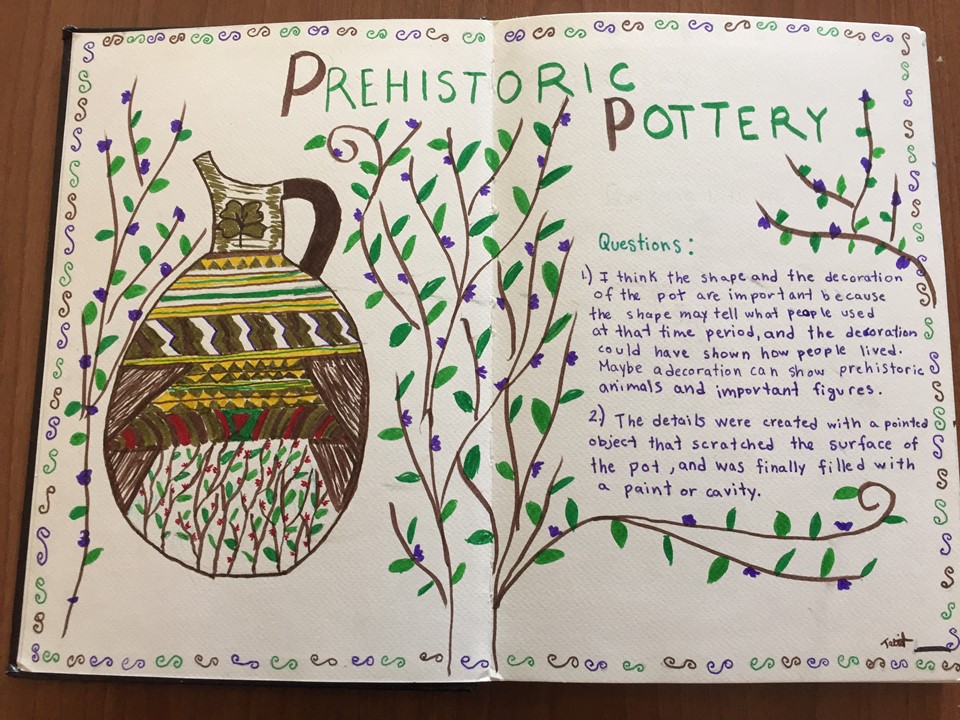
My Grade 6 Host Country Studies Class is on the History, Art and Culture of the city we live in, Thessaloniki, and our first RWAP (Research-Writing-Art-Project) is on the Prehistoric Pottery of Thessaloniki.
Archaeologists and Art Historians love Pottery! Even the smallest broken pieces, or sherds as they are called, indestructible as they have been for thousands of years, carry valuable information. They tell us how people lived, cooked, or stored their food, they show us ways of decoration and artistic expression. Pottery helps specialists date a site or relate an archaeological site to specific communities and groups of people. In other words, Pottery, humble as it might be, is of great value!
For information on the Stone Age and Greece in particular, go to http://www.thehistoryofancientgreece.com/2016/04/003-stone-age-greece.html
Prehistoric Pottery of Thessaloniki is a Topic and a Project that can be adapted for any Pottery period you explore in your class!
The Project should cover at least 2 pages in the student RWAP Sketchbook. RWAP stands for RESEARCH-WRITING-ART-PROJECT. I usually ask my students to buy an A4 Sketchbook and all RWAP Projects are done there. An alternative option is to use an A3 sized poster paper.
Each RWAP should include 4 parts: a. Title, b. Coloured or B/W copies of at least 2 artworks related to the topic of the Project, correctly identified, c. Writing, d. Art
For the Prehistoric Pottery of Thessaloniki Project, students are asked to:
a. Title: Think and then apply a representative Title for their Project
b. Research: Find photos of at least 2 Greek Prehistoric Potteries, photocopy them, and use them in their RWAP Sketchbook, correctly identified.
c. Writing: Answer the following questions: 1. Which is more important, the shape of the vase or the decoration? Why do you think so? 2. How were the details of the vases created: with paint or by some other means? Look closely and try to identify patterns in the decoration.
d. Art: Become a prehistoric pottery maker! There is so much to get you inspired!!! BE CREATIVE!
The Archaeological Museum of Thessaloniki site is quite informative https://www.amth.gr/en/exhibitions/permanent-exhibitions/prehistoric-macedonia
For student RWAP Sketchbooks… Click HERE!
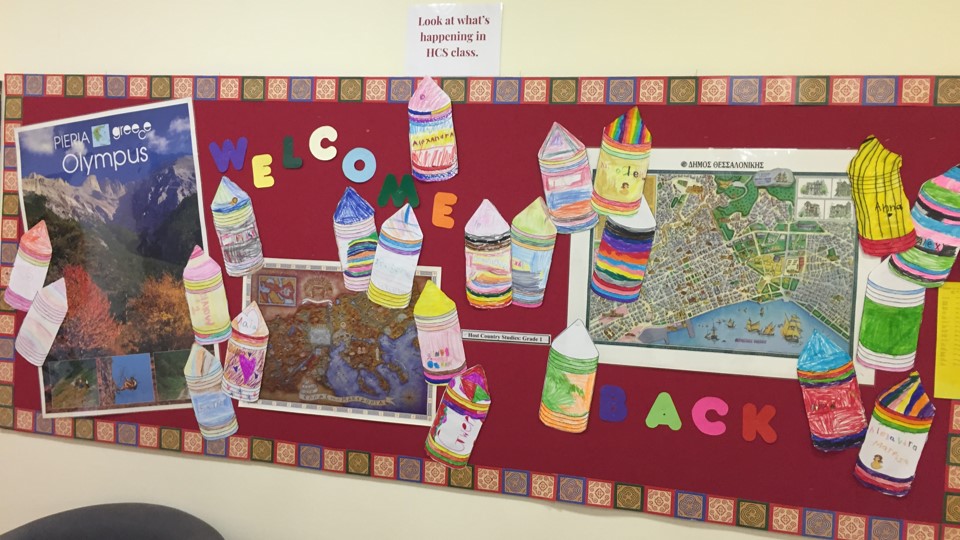
A joyful first day sets the tone—through creative activities, collaboration, and shared expectations, young students turn introductions into meaningful connections, building a vibrant classroom community from the very start.
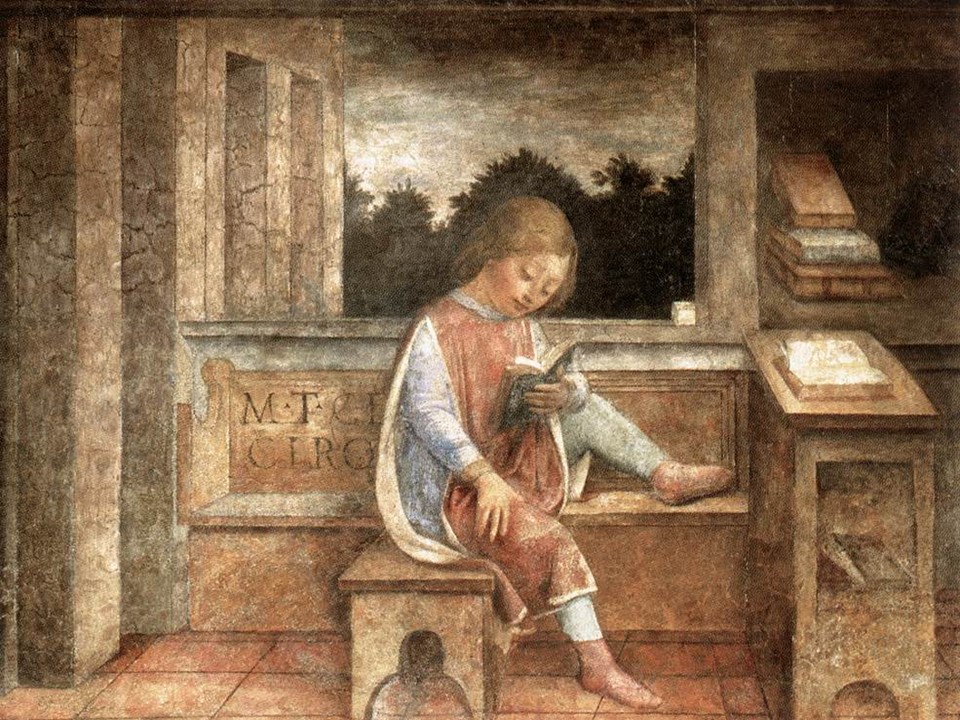
Inspired by Renaissance depictions of Cicero, this activity invites students to explore reading, creativity, and self-expression through writing, posing, and art-based learning.
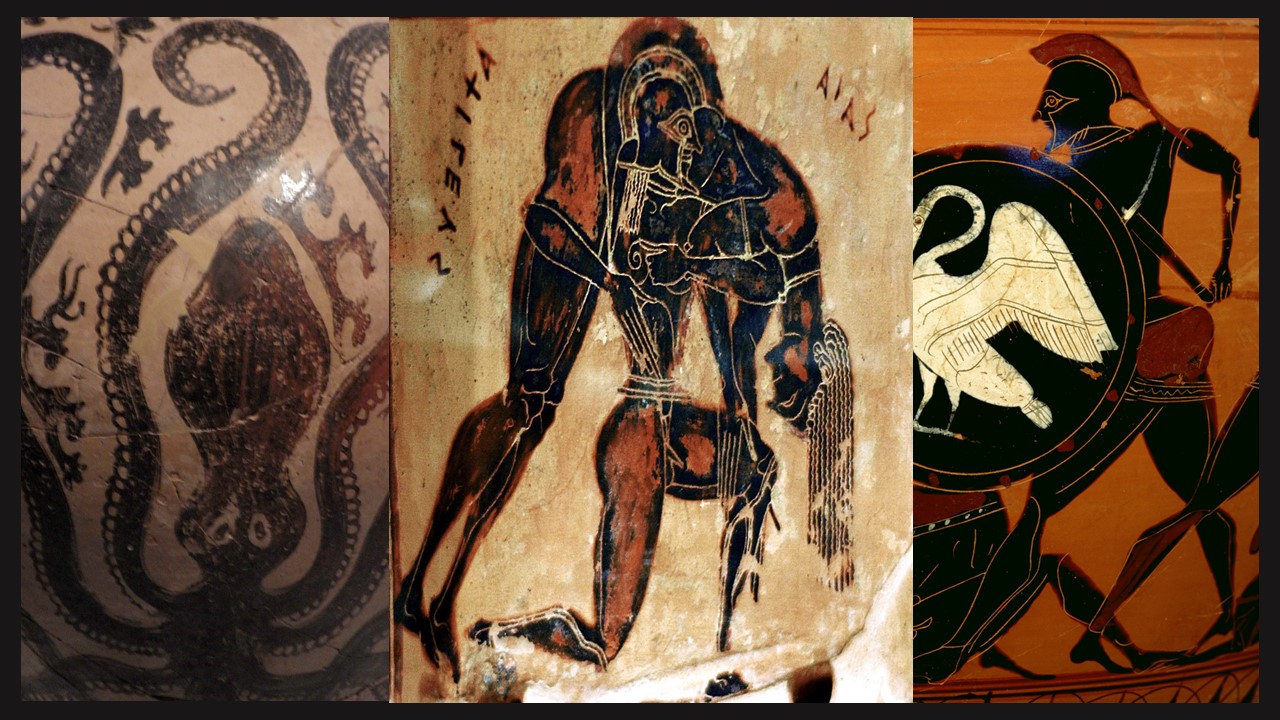
Inspired by the Hood Museum of Art Educational Program, this activity guides students through observing, analyzing, researching, interpreting, and evaluating Ancient Greek pottery—building critical thinking through art.
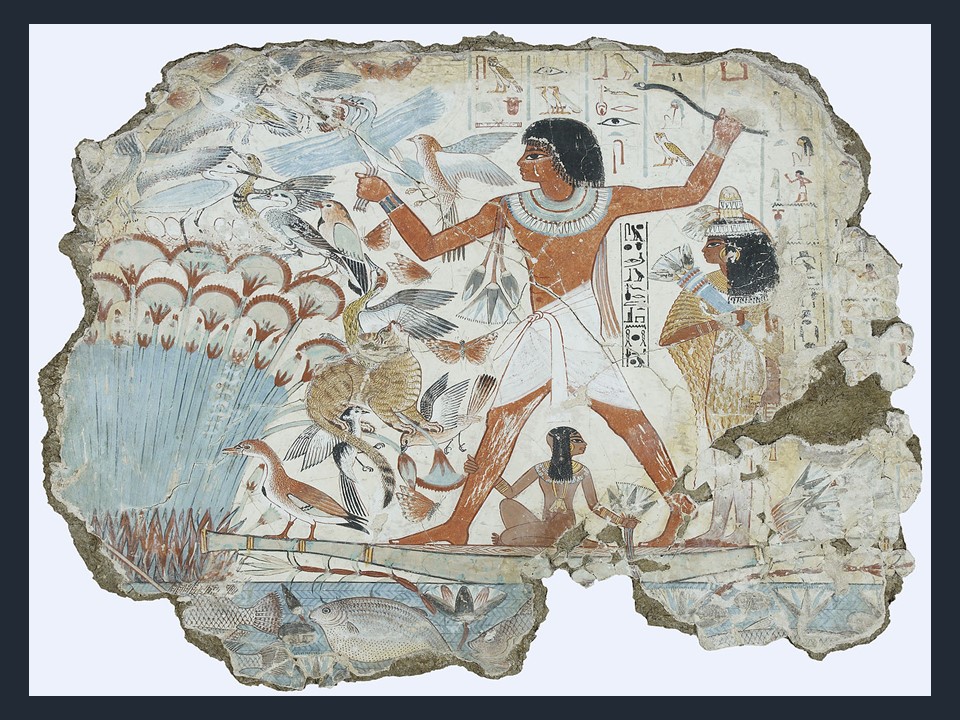
The British Museum’s frescoes from Nebamun’s tomb reveal vibrant scenes of life and status in ancient Thebes—masterpieces shaped by both artistry and complex histories of discovery.