Rogier van der Weyden’s Saint George and the Dragon combines chivalric drama, delicate detail, and luminous realism, transforming a legendary battle into an intimate vision of faith, courage, and triumph.
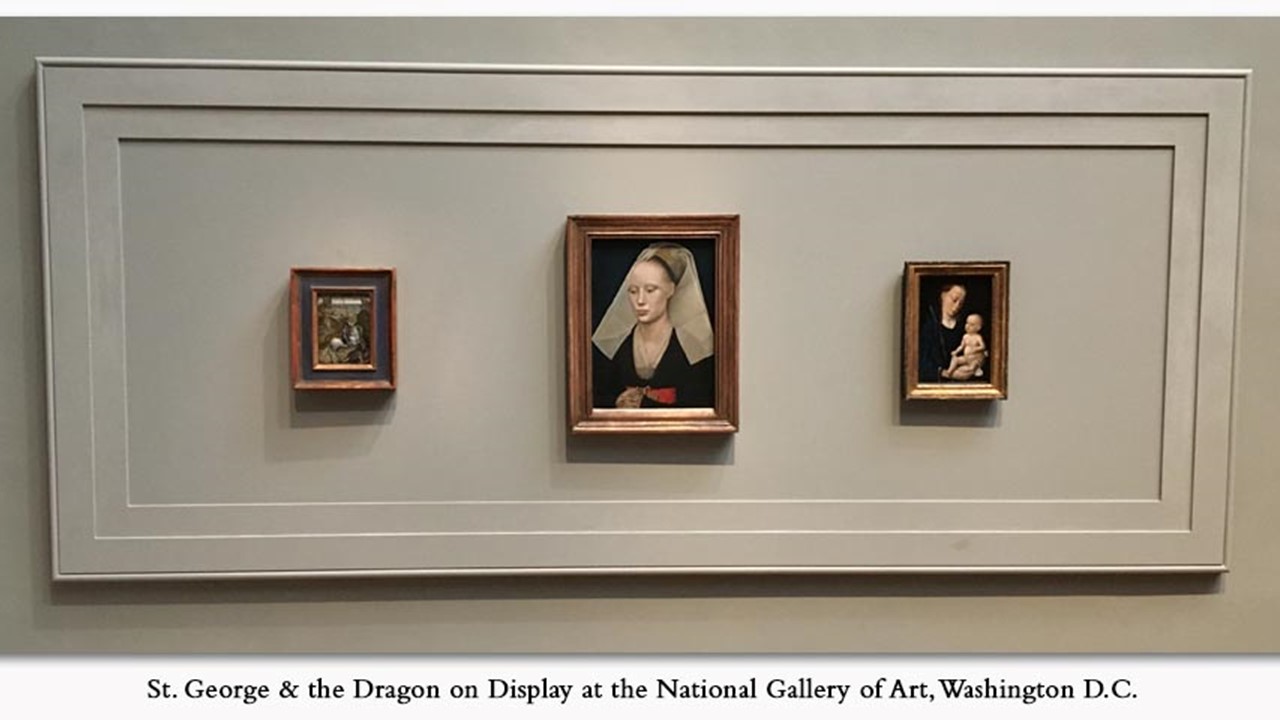
Rogier van der Weyden’s Saint George and the Dragon combines chivalric drama, delicate detail, and luminous realism, transforming a legendary battle into an intimate vision of faith, courage, and triumph.
Simon Bening’s February miniature depicts a lavish manor feast, where aristocrats, musicians, and servants gather around firelight and rich furnishings, revealing the social ritual, luxury, and domestic life of late medieval nobility.
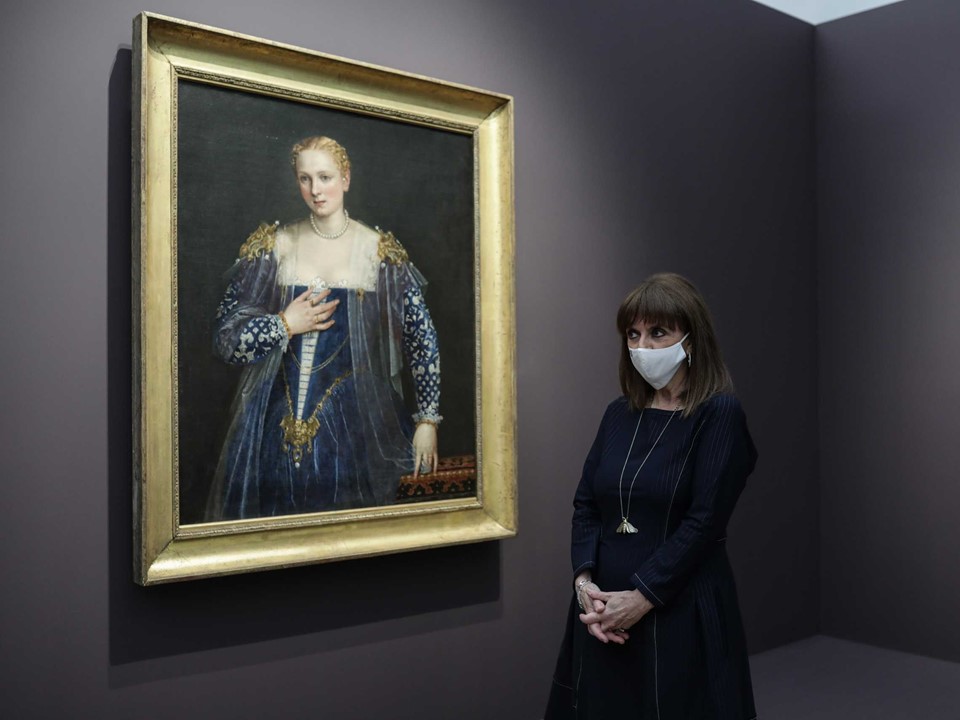
Paolo Veronese’s La Belle Nani presents an elegant Venetian woman whose identity remains uncertain, embodying Renaissance ideals of beauty, virtue, fashion, and aristocratic status in a richly symbolic portrait.
Books of Hours were popular medieval prayer books designed for lay devotion, structured around daily prayers and richly illustrated calendars marking saints’ days, “red letter days,” and feast days in gold and red for spiritual reflection and timekeeping.
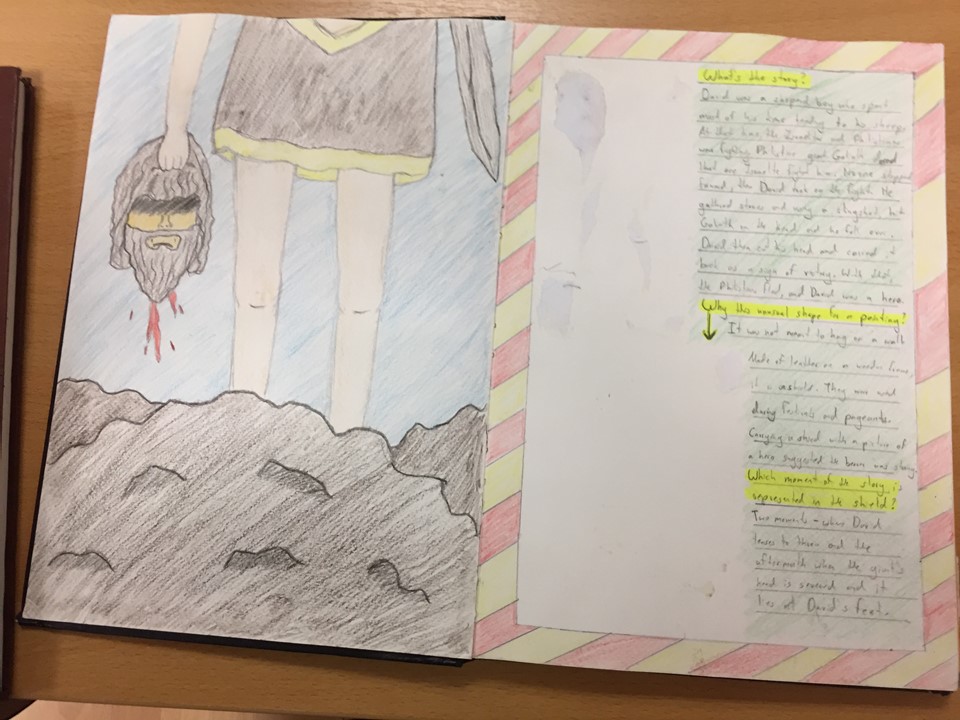
Andrea del Castagno’s David with the Head of Goliath (c. 1450–55) presents a Florentine civic hero triumphing over evil, symbolizing republican strength, determination, and Renaissance ideals of virtù.
Folgore da San Gimignano’s December sonnet, translated by Rossetti, introduces the “Labours of the Months” theme, linking medieval rural work, seasonal cycles, and moral reflection through vivid poetic imagery.
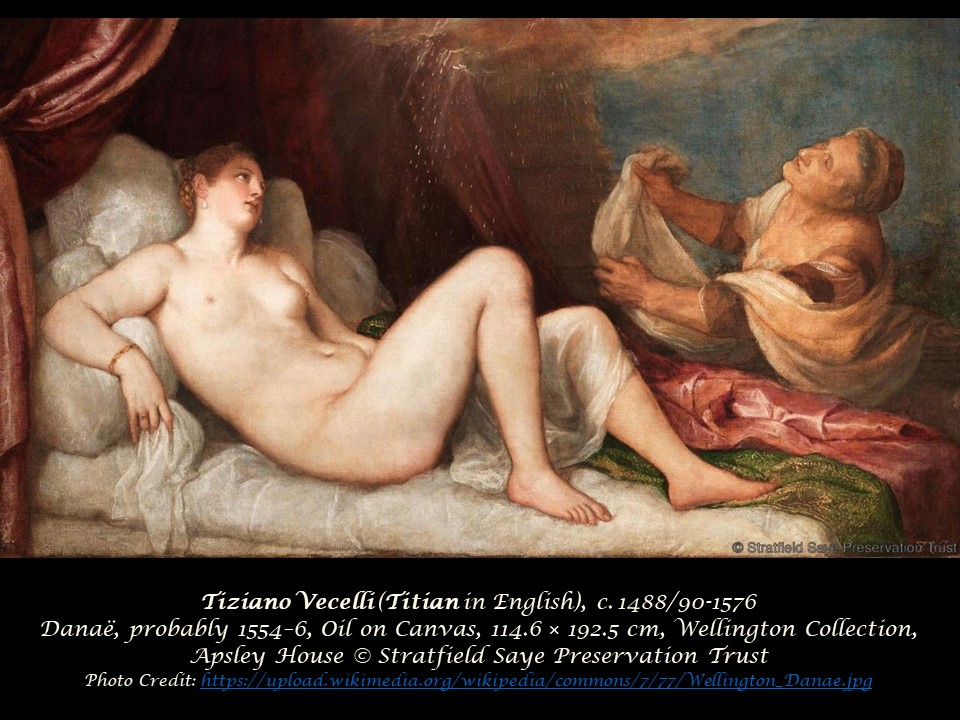
Titian’s poesie for Philip II reimagined Ovidian myths as sensuous, emotionally charged paintings of gods and mortals, exploring love, desire, violence, and fate through innovative, poetic Renaissance compositions.
The Venetian November panel from the National Gallery’s “Labours of the Months” cycle replaces agrarian toil with a courtly hunt, depicting a young huntsman with hounds and falcon in a vividly colored, aristocratic landscape.
A Renaissance marvel, Giambologna’s Colosso del’Appennino is a 10-meter mountain giant statue, once animated with water and hidden chambers, symbolizing Medici power and artistic ingenuity.
Part of a Venetian ‘Labours of the Months’ series, this small painting depicts seasonal rural life with vivid colours, linking peasant work, nature’s cycles, and social order in a decorative, symbolic composition.