Giovanni Bellini’s The Philips Madonna reflects the delicate transition from Byzantine inheritance to Renaissance naturalism, where luminous colour, sculptural tenderness, and classical echoes shape an intimate vision of divine motherhood.
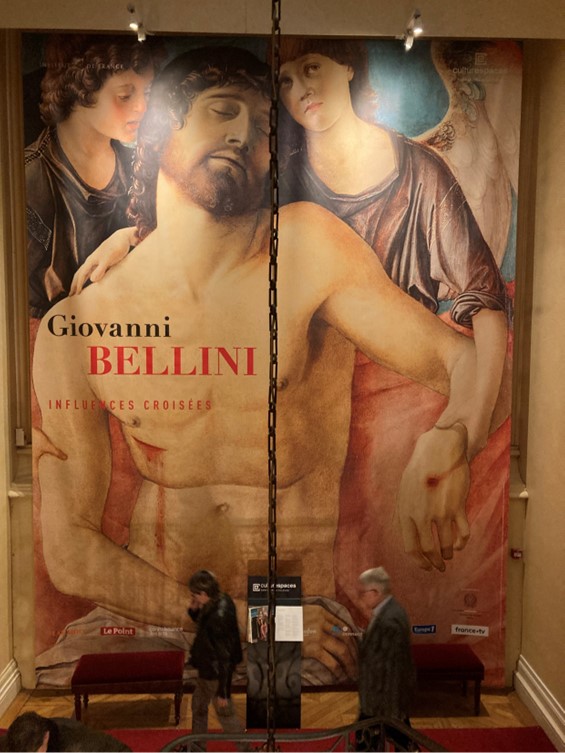
Giovanni Bellini’s The Philips Madonna reflects the delicate transition from Byzantine inheritance to Renaissance naturalism, where luminous colour, sculptural tenderness, and classical echoes shape an intimate vision of divine motherhood.
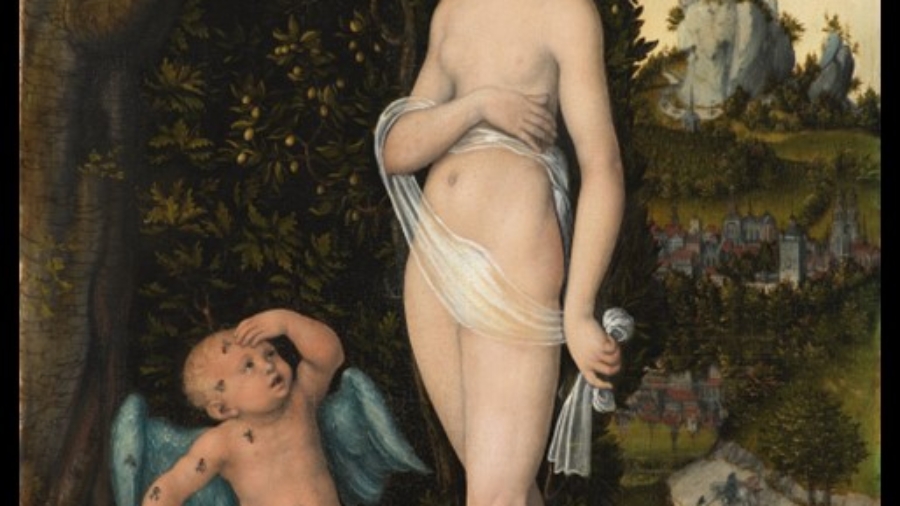
Theocritus’ playful tale of Eros stealing honey—only to be stung—becomes, in Cranach’s paintings, a moral allegory on desire, pleasure, and the painful consequences hidden within sweetness and beauty.
Leonardo’s Saint John the Baptist extends his late exploration of chiaroscuro and ambiguous gesture, using sculptural lighting and a raised, enigmatic finger to fuse biblical symbolism with painterly experiment, suggesting a continuity from earlier lost works described by Vasari toward an increasingly spiritual abstraction.
While in Vienna, to celebrate the reign of Emperor Maximilian II, Arcimboldo created his “ signature Portraits of the 4 Seasons,” composed of imaginatively arranging elements of nature like plants, flowers, fruits, and vegetables.
Simon Bening’s luminous December miniature captures festive anticipation — bread baking, animals slaughtered, hunters departing — a Flemish world poised breathlessly before Christmas celebration begins.
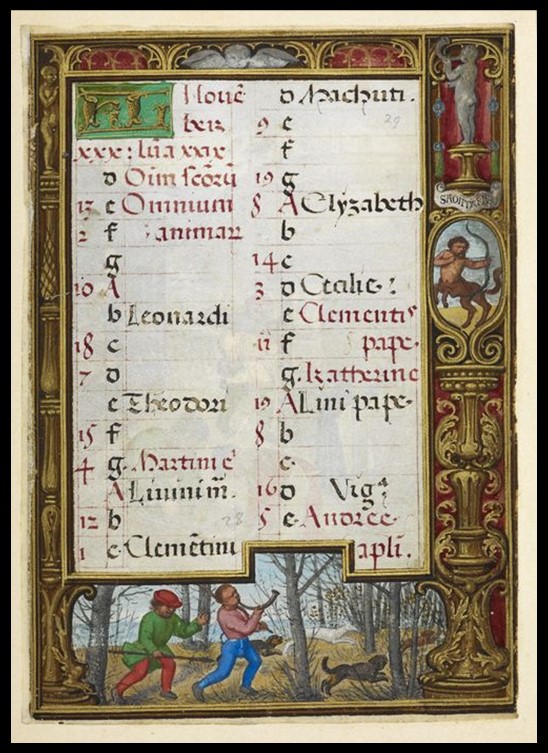
Bening’s luminous November miniature captures aristocratic splendor — a nobleman triumphantly returning, antlered stag in tow, hounds straining — hunting elevated to magnificent courtly theater.
Arcimboldo’s gloriously quizzical Autumn — berry-eyed, grape-crowned, emerging from a wine barrel — transforms harvest abundance into portraiture so inventive it astonishes five centuries later.
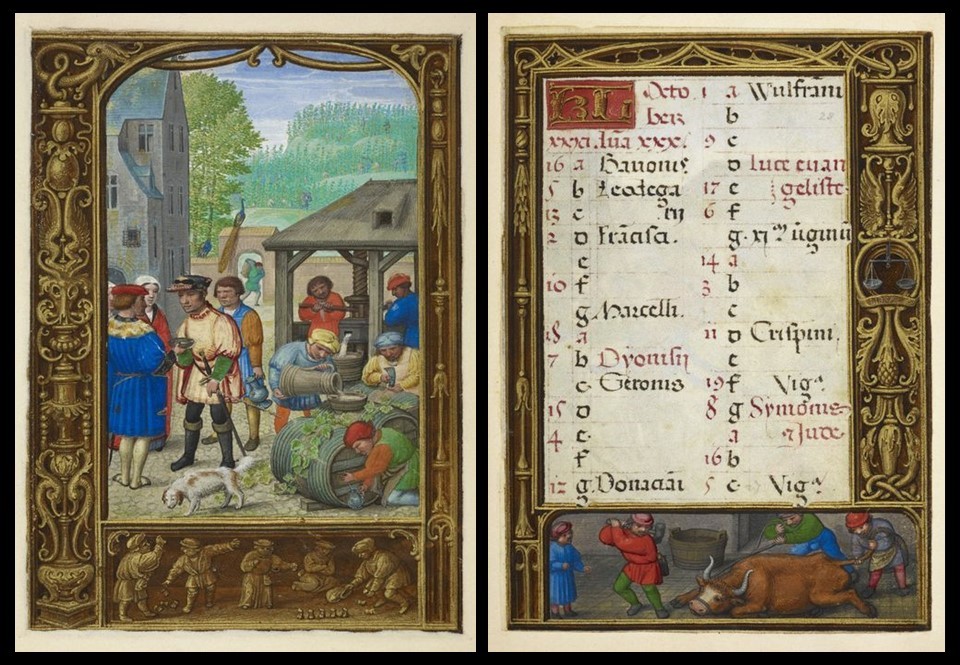
Bening’s intoxicating October miniature — nobles tasting, peasants pressing, barrels groaning — distills Renaissance Flemish winemaking into one luminous, grape-soaked masterpiece of observation.
Van Eyck’s Arnolfini Portrait captivates with luminous detail, symbolic richness, and his bold “I was here” signature—blending technical mastery and mystery into a timeless scene of wealth, presence, and interpretation.
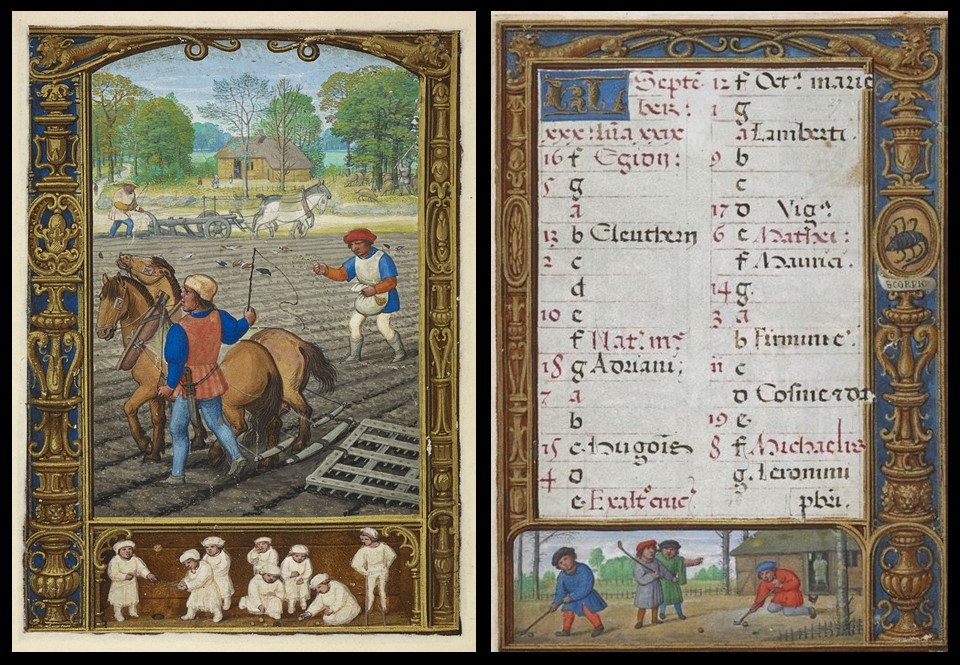
Simon Bening’s Golf Book depicts a lively September scene of a medieval stick-and-ball game resembling golf, blending courtly leisure, rural setting, and early sport imagery within a richly illuminated calendar page from 16th-century Bruges.