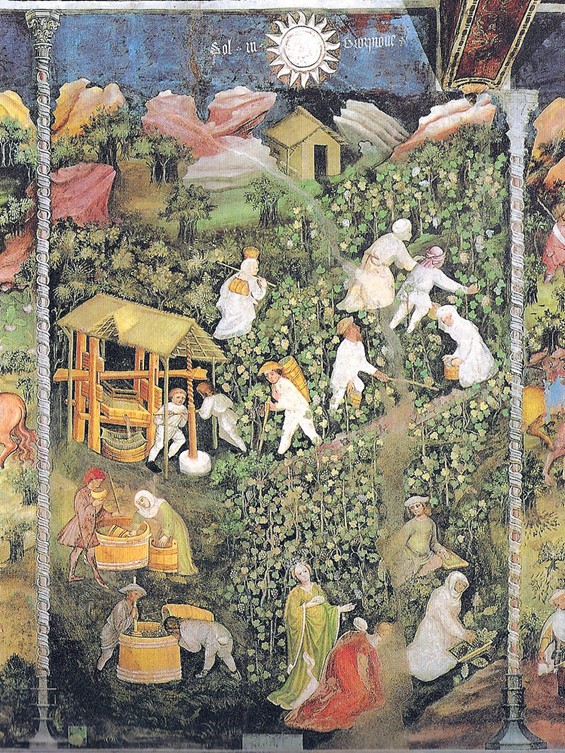
Jean Toomer’s Harvest Song resonates with the Torre Aquila, where Master Venceslao depicts August’s labor and leisure, binding human toil to a timeless seasonal rhythm.
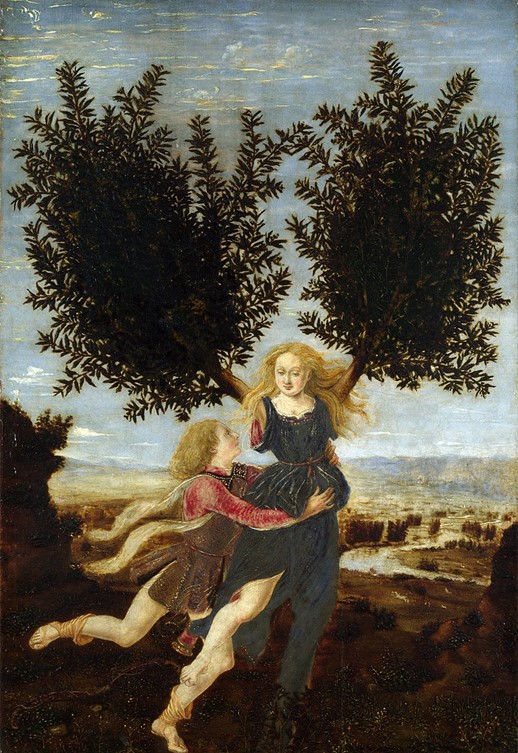
Pollaiuolo’s Apollo and Daphne
Ovid’s Metamorphoses provides the poetic source for Apollo and Daphne, where desire and escape culminate in transformation, as Renaissance Florence reinterprets myth into an idealised vision of unattainable love and beauty.
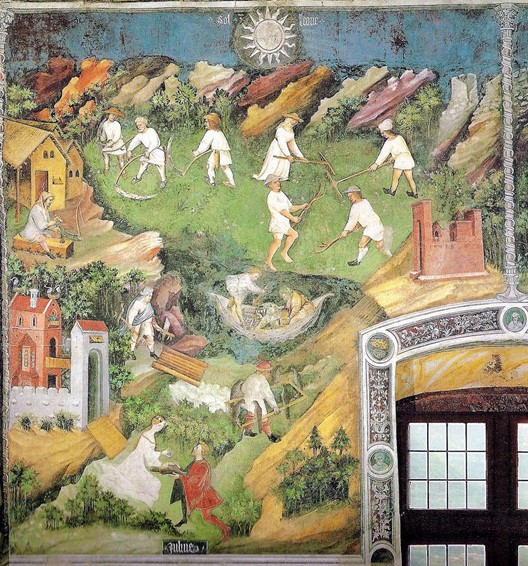
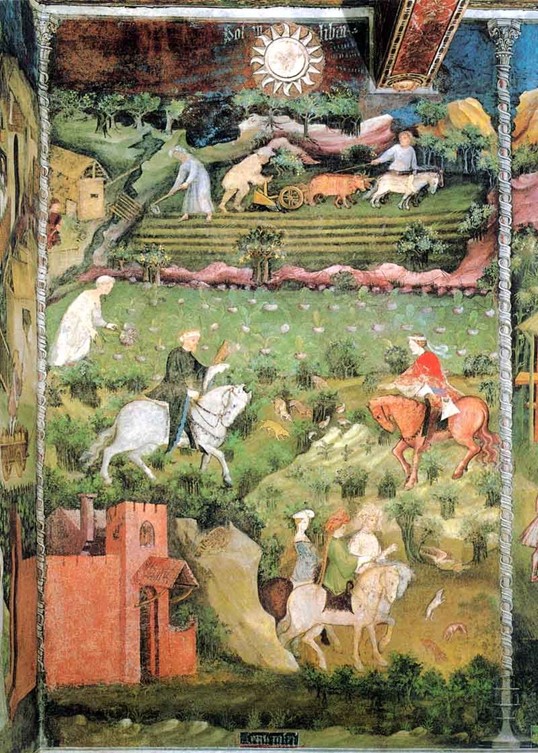
The Month of July
July at Torre Aquila celebrates idealized summer: nobles enjoy falconry while farmers labor in lush Trentino fields, a vivid, harmonious vision of prosperity crafted to glorify princely rule and order.
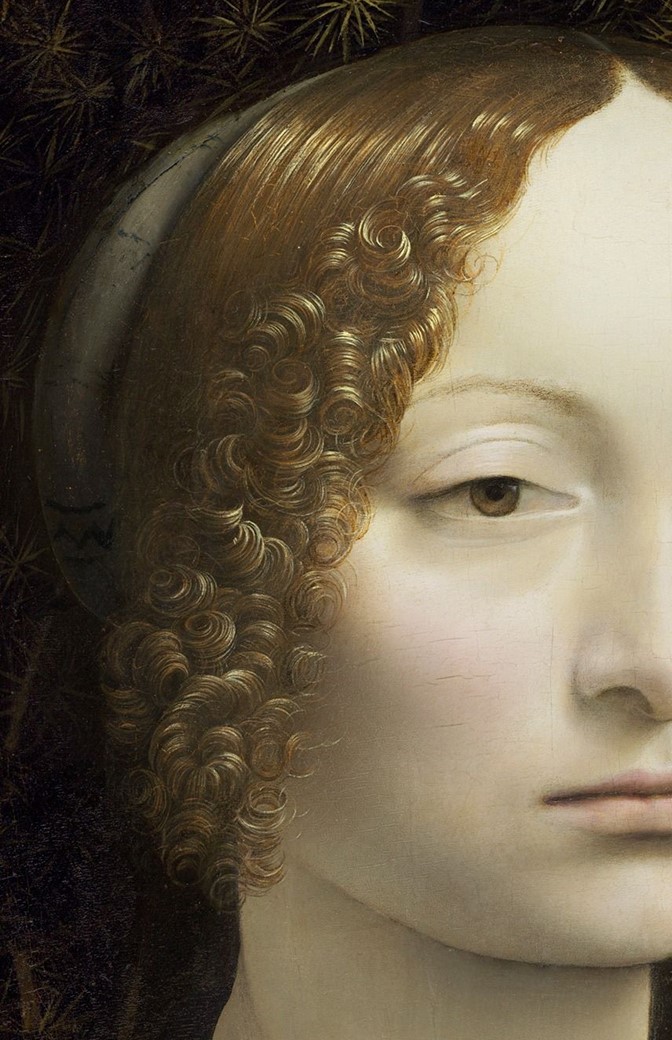
Bernardo Bembo and La Bencina
Renaissance Florence’s courtly love shines in Bembo and Ginevra de’ Benci: poetry and portraiture entwine, where ideal beauty, chastity, and longing inspire verses—and Leonardo’s enigmatic, psychological masterpiece.
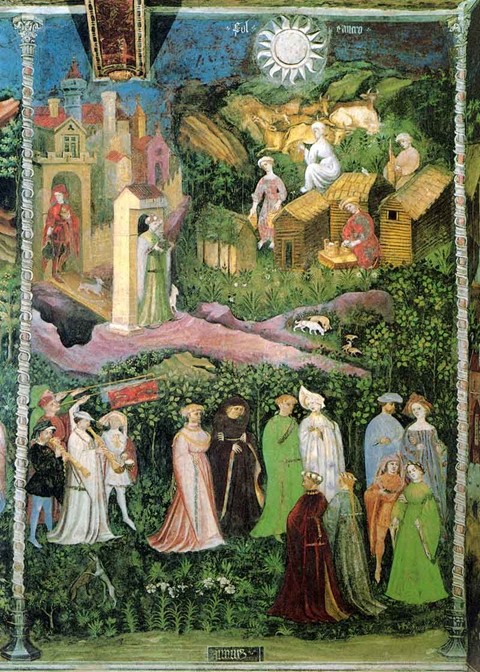
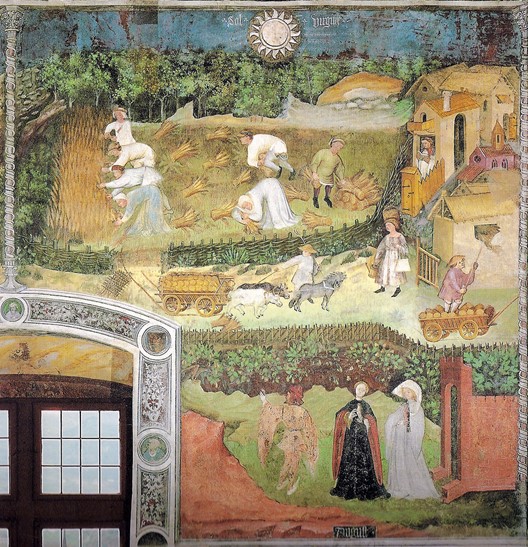
The Month of June
June at Torre Aquila celebrates the arrival of summer: nobles dance and stroll through lush landscapes while peasants labour in mountain pastures, uniting courtly leisure and rural life in vivid harmony.
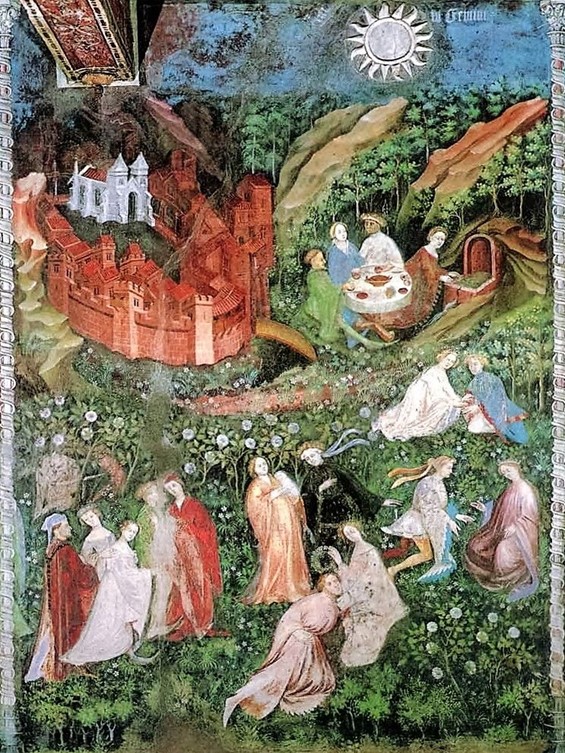
The Month of May
Master Wenceslas’s May fresco at Torre Aquila celebrates spring as aristocratic delight and rural renewal, where blossoming nature, courtly love, and Alpine prosperity merge into a radiant vision of medieval life.
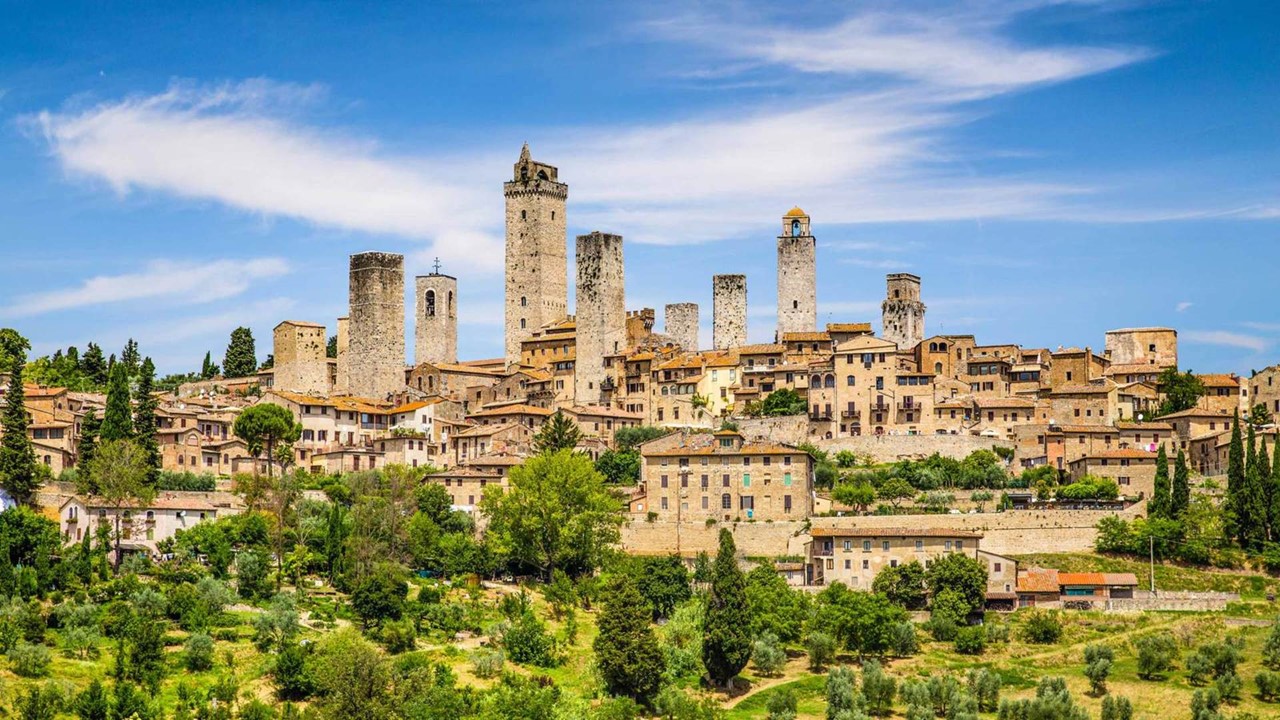
Virtual Italian Weekend
During COVID-19, let Art wash away life’s dust — join us for a virtual Italian weekend in San Gimignano, the magnificent towering hill town, from the comfort of your home.
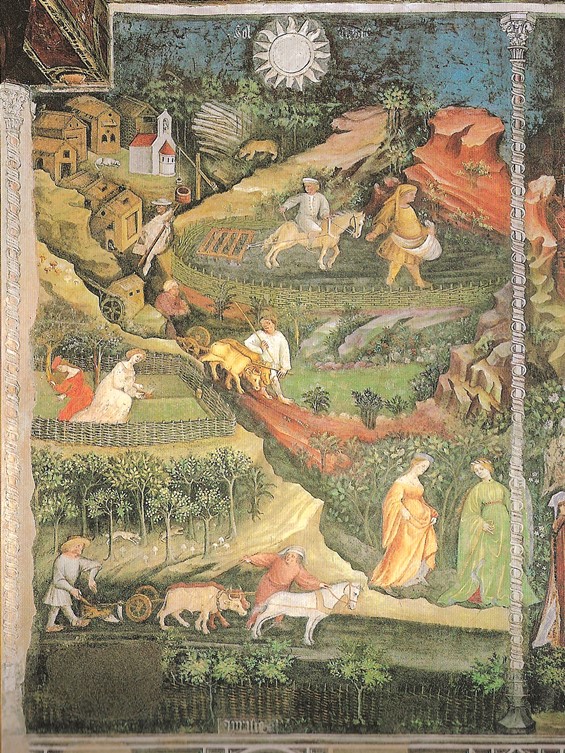
The Month of April
Master Wenceslas’s vibrant April fresco at Trento’s Torre Aquila captures a flourishing 15th-century spring — farmers, elegant ladies and fertile landscapes celebrating nature’s awakening under wise governance.
Correggio’s Jupiter and Io
Correggio’s Jupiter and Io masterfully twists Renaissance harmony into Mannerist excitement — Io’s sensuous, entwining body against Zeus’s dark cloud creating an unforgettable contrast of texture, colour and desire.
The Forty Martyrs of Sebaste

https://history2701.fandom.com/wiki/The_Forty_Martyrs_of_Sebaste
The Forty Martyrs of Sebaste Ivory Icon at the BODE Museum in Berlin is a favorite of mine for making me think, reflect and compare.
First of all, I like the story of these 40 tough Roman soldiers, devoted to their faith, suffering… in the city of Sevaste, in Armenia, during the reign of Emperor Licinius, and under the presidency of Agricolaus, in the year 320 AD. Their story is beautifully told by MATHEW in http://dignareme.blogspot.com/2017/03/the-40-martyrs-of-sebaste.html

Then, I like Byzantine Ivory Carving! What a magnificent medium in… small-scale. Byzantine Art is not only about monumental, awe-inspiring mosaics and frescoes. The aficionados of Byzantium find equal pleasure even more! in artifacts of smaller scale, like luxurious ivories, silverware, glassware, and jewelry, even humble pottery and woodwork.
I am fascinated by Ivory itself. One only has to imagine the caravans or the galleys bringing to Constantinople African elephant tasks, the anticipation of the artisans ready to put their expertise into practice, and the eagerness of the buyers as they consider one more coveted possession. During the 10th and the 11th centuries, Byzantine Ivories were popular among the City’s aristocrats and highly prized as Imperial gifts to foreign dignitaries.
Meticulously carved, ivory icons, consular diptychs, or pyxides, enchant us today with their beauty. “The allure of this substance is easily understood: its smooth, tactile quality and creamy color made it ideal for the creation of” amazing works of art, just like the Icon of the Forty Martyrs of Sevaste in the BODE Museum.

The Forty Martyrs of Sebaste, 10th century AD, ivory relief panel from Constantinople, Museum für Byzantinische Kunst, BODE Museum, Berlin
Is this amazing carving a case of Byzantine Renascence? The depiction of forty agonizing bodies, winding and twisting, reminds me of Signorelli’s fantasia of Paradise and Hell in Orvioto’s Cathedral, in the Capella of San Brizio. Are there missing links connecting these two masterpieces I don’t know about? Whatever the answer is, the BODE Ivory Icon is a strategic player in the equation. https://www.metmuseum.org/toah/hd/ivor/hd_ivor.htm and http://www.travelingintuscany.com/art/lucasignorelli/sanbriziochapel.htm
For a “Similarities and Differences” Student Activity, please… check HERE!