Kokoschka’s monumental Prometheus Triptych — myth, apocalypse, and regeneration blazing across three panels — confronts postwar humanity’s arrogance and existential crisis with extraordinary Expressionist urgency.
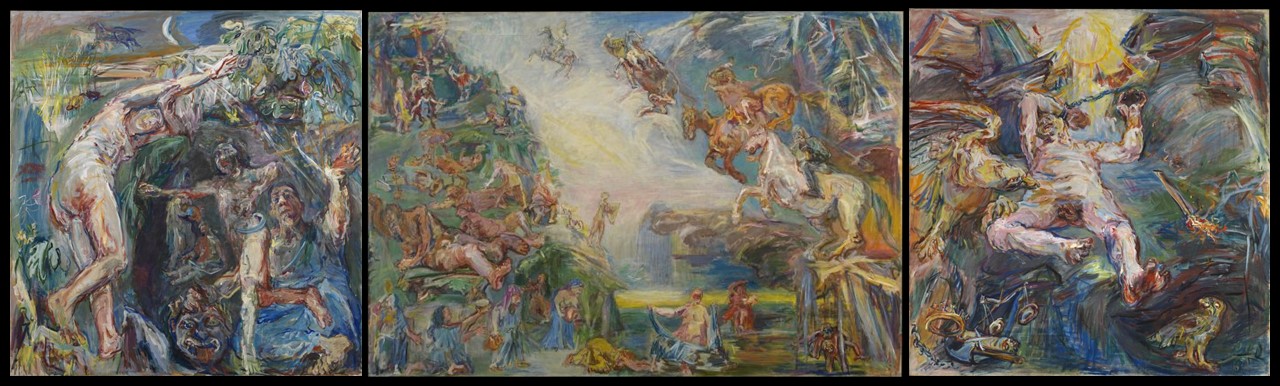
Kokoschka’s monumental Prometheus Triptych — myth, apocalypse, and regeneration blazing across three panels — confronts postwar humanity’s arrogance and existential crisis with extraordinary Expressionist urgency.
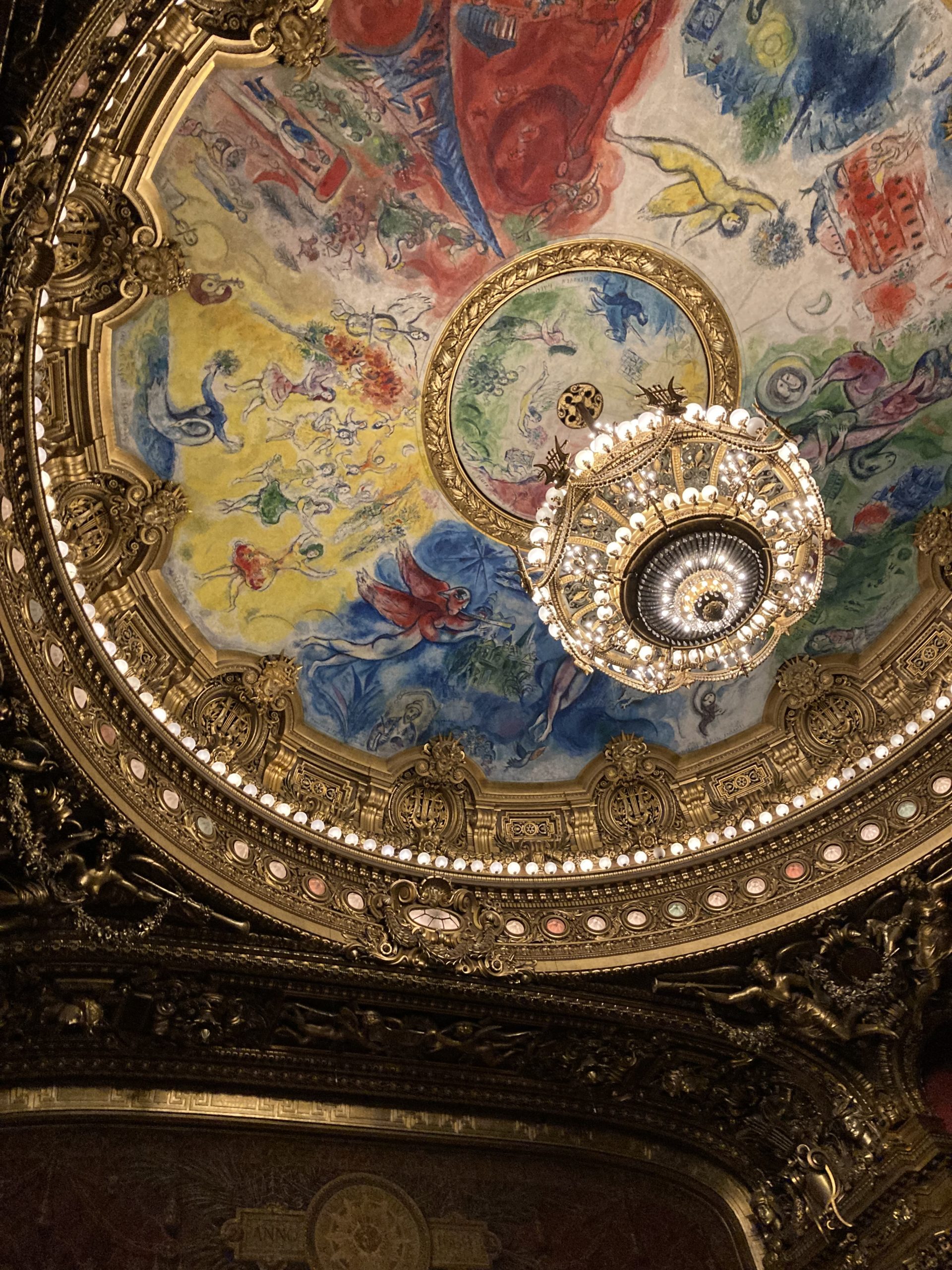
Chagall’s dreamlike 560-square-metre dome at the Opéra Garnier — dancers, musicians, and opera scenes swirling in luminous colour — unites modern wonder with Belle Époque grandeur magnificently.
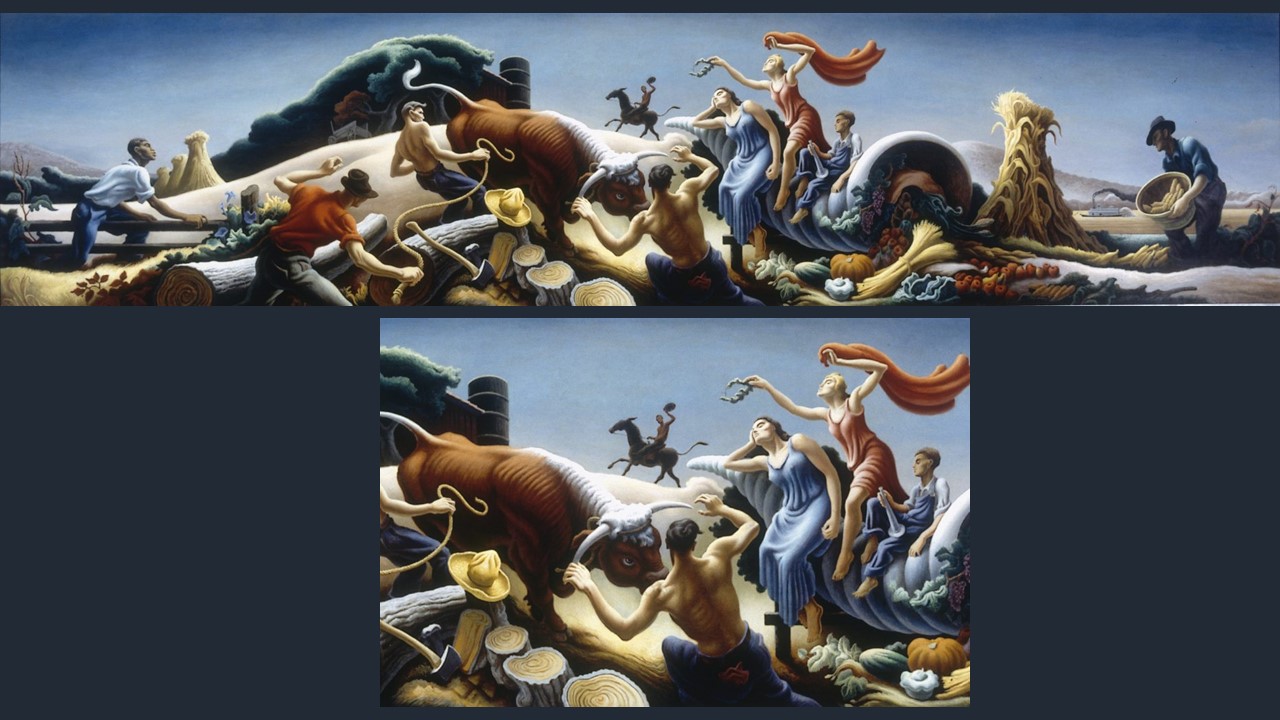
Explore Thomas Hart Benton’s masterful 1947 mural reimagining the Greek myth of Achelous and Hercules — a powerful fusion of classical mythology and the American Midwest’s spirit of strength and abundance.
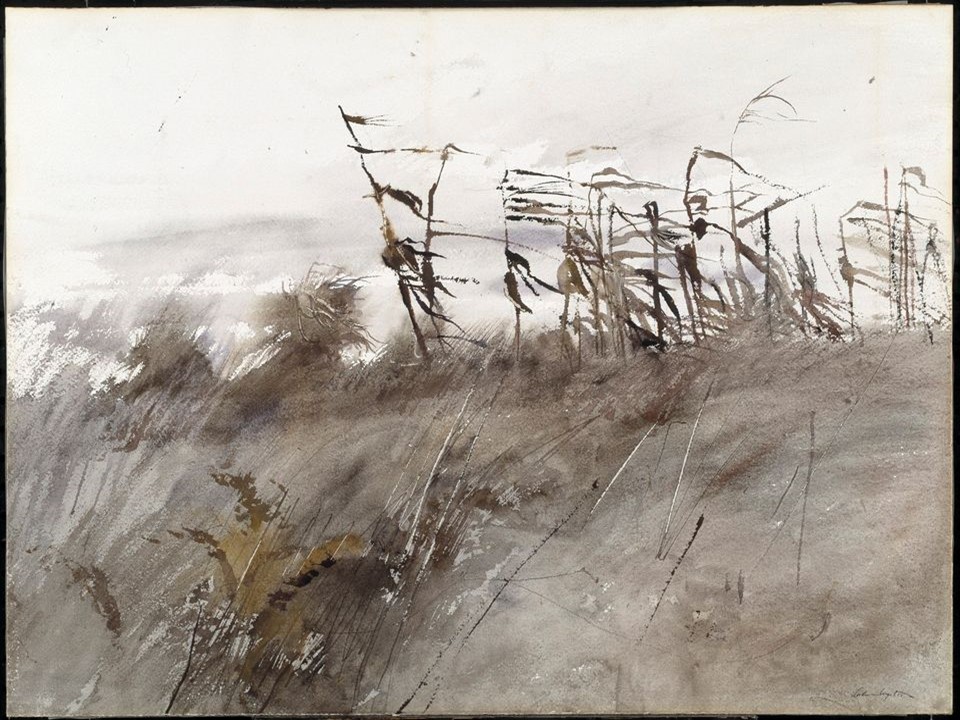
Through muted ochres and November greys, Andrew Wyeth’s watercolour November First tenderly captures the quiet beauty of decay and renewal — a meditation on solitude, nature’s cycles, and passing time.
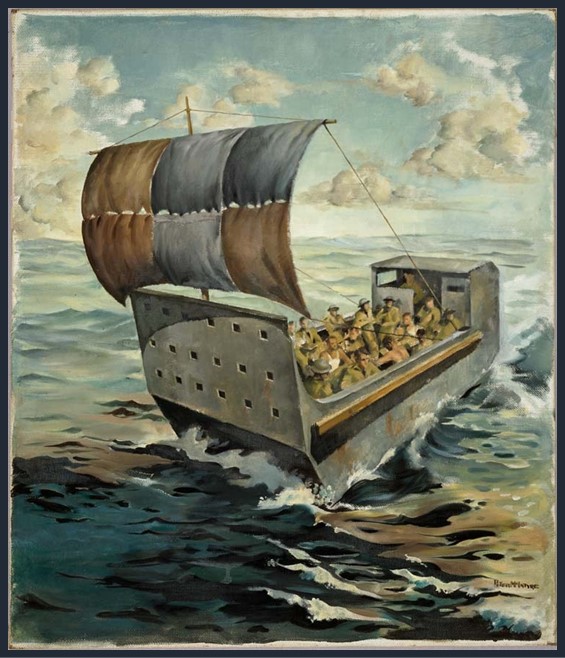
Discover Peter McIntyre’s powerful paintings of the 1941 Battle of Crete — a New Zealand war artist’s firsthand visual record of courage, sacrifice, and the unforgettable human cost of war.
Explore Matisse’s monumental The Dance at the Barnes Foundation — a triumphant return to modernist boldness, where sweeping figures across pink and blue fields reignited a great master’s creative genius.

At a 1982 meeting arranged by Bruno Bischofberger, Warhol photographed Basquiat, who soon returned a still-wet double portrait, sparking a prolific collaboration explored in the Basquiat × Warhol exhibition.
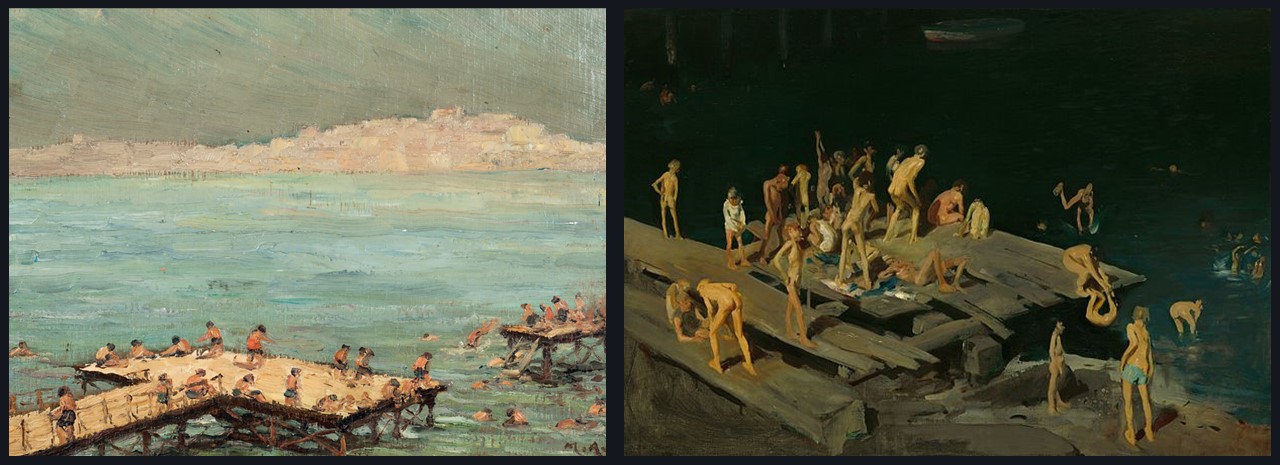
Michael Axelos’s Swimmers at Palaio Faliro (1935) captures a sunlit, carefree Greek seaside, inviting comparison with Bellows’ Forty-Two Kids, where urban energy and raw vitality define a contrasting vision of youth.
Childe Hassam’s The Fourth of July 1916 transforms Fifth Avenue into a vibrant sea of American flags, using Impressionist brushwork and patriotic color to celebrate national identity during the First World War era.
Louis Comfort Tiffany’s Fish and Waves lamp reflects his fascination with water, Eastern aesthetics, and luminous design, transforming glass and bronze into a flowing aquatic vision of color, movement, and light.