Colegiata de San Isidoro, León, Spain

Royal Pantheon of San Isidoro

Royal Pantheon of San Isidoro de León, Romanesque Fresco Paintings
July, Calendar of San Isidoro de León
Royal Pantheon of San Isidoro de León, Romanesque Fresco Paintings
July, Calendar of San Isidoro de León, between 1160 and 1170, fresco painting, Colegiata de San Isidoro, León, Spain https://conocerelmundo.blog/2021/04/25/san-isidoro-de-leon/ and https://viajarconelarte.blogspot.com/2015/06/el-panteon-real-los-claustros-y-el.html

On the 12th of May 2024, I was in León, Spain, and the Royal Pantheon of San Isidoro was the first cultural monument I visited. Nestled within the Royal Collegiate of San Isidoro, this remarkable Pantheon is often referred to as the “Sistine Chapel of Romanesque Art” due to its stunningly preserved frescoes that date back to the 12th century. As I stepped inside, I was immediately captivated by the vibrant murals that depict biblical scenes and medieval life, their rich colours, and intricate details astonishingly intact after centuries. The Pantheon serves as the final resting place for many of León’s kings and queens, adding a profound historical significance to its artistic splendour. The serene ambience, coupled with the sense of walking through a living piece of history, made my visit an unforgettable introduction to the cultural and historical treasures of León.
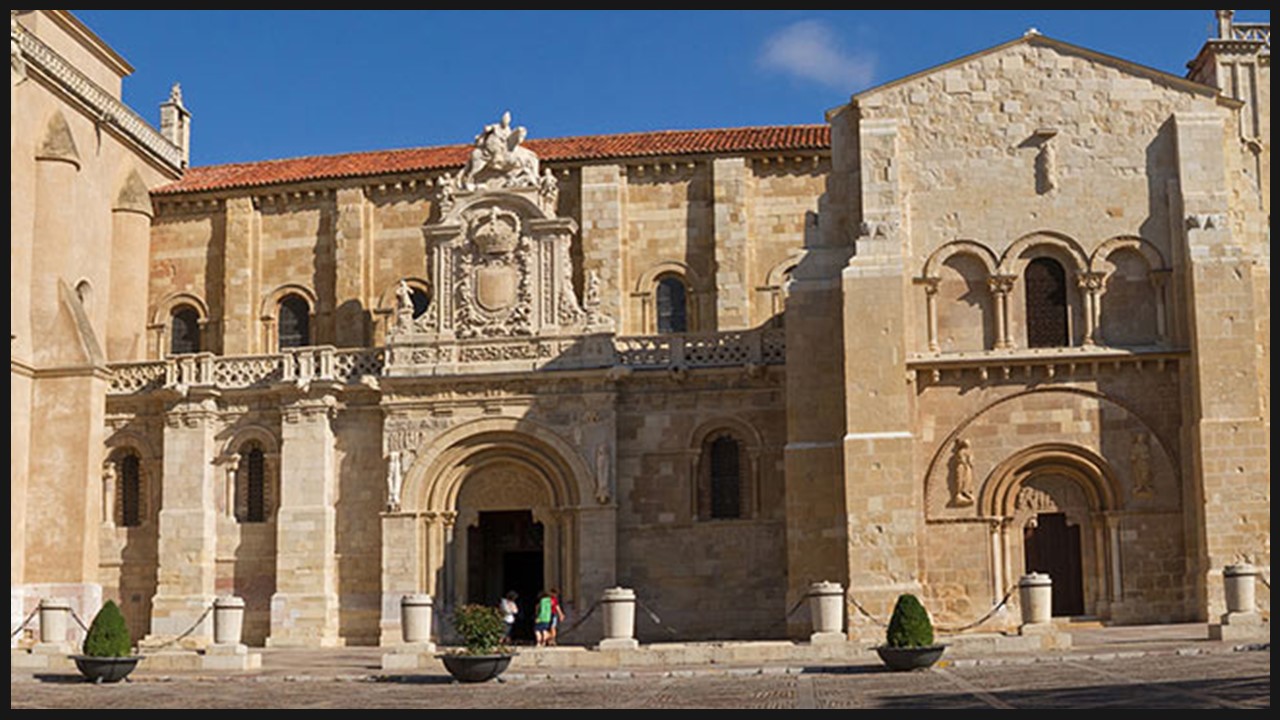
Colegiata de San Isidoro, León, Spain
https://basilicasanisidoro.com/

The Royal Collegiate of San Isidore in León holds a pivotal place in Spanish history and culture, renowned for its religious, architectural, and historical significance. Established in the 10th century and later dedicated to Saint Isidore of Seville, this monastery has long been a center of spiritual and intellectual life. Architecturally, it is a stunning example of Romanesque design, featuring intricate carvings, soaring arches, and the remarkable Royal Pantheon with its breathtaking frescoes. Historically, it served as a royal collegiate church and a burial site for Leonese monarchs, symbolizing the political and religious power of the Kingdom of León. The monastery also played a crucial role in the cultural revival of the medieval period, housing a vast scriptorium where scholars produced and preserved numerous manuscripts, thus contributing significantly to the preservation and dissemination of knowledge throughout Europe.

The architecture of the Royal Pantheon in San Isidoro in León is a quintessential example of the Romanesque style, characterized by its solid and austere construction, yet adorned with remarkable artistic details. The structure features robust stone walls and semi-circular arches that exude a sense of permanence and strength. Inside, the Pantheon is renowned for its barrel-vaulted ceilings, which are covered with some of the most exquisite and well-preserved frescoes from the 12th century. These vibrant murals, which depict biblical scenes and daily life, are framed by intricately carved capitals atop sturdy columns, adding to the grandeur of the space. The use of natural light, filtering through small, strategically placed windows, enhances the ethereal quality of the interior, creating a sacred atmosphere that complements its function as the resting place for León’s royalty. This harmonious blend of architectural solidity and artistic finesse makes the Royal Pantheon a masterpiece of medieval art and architecture.
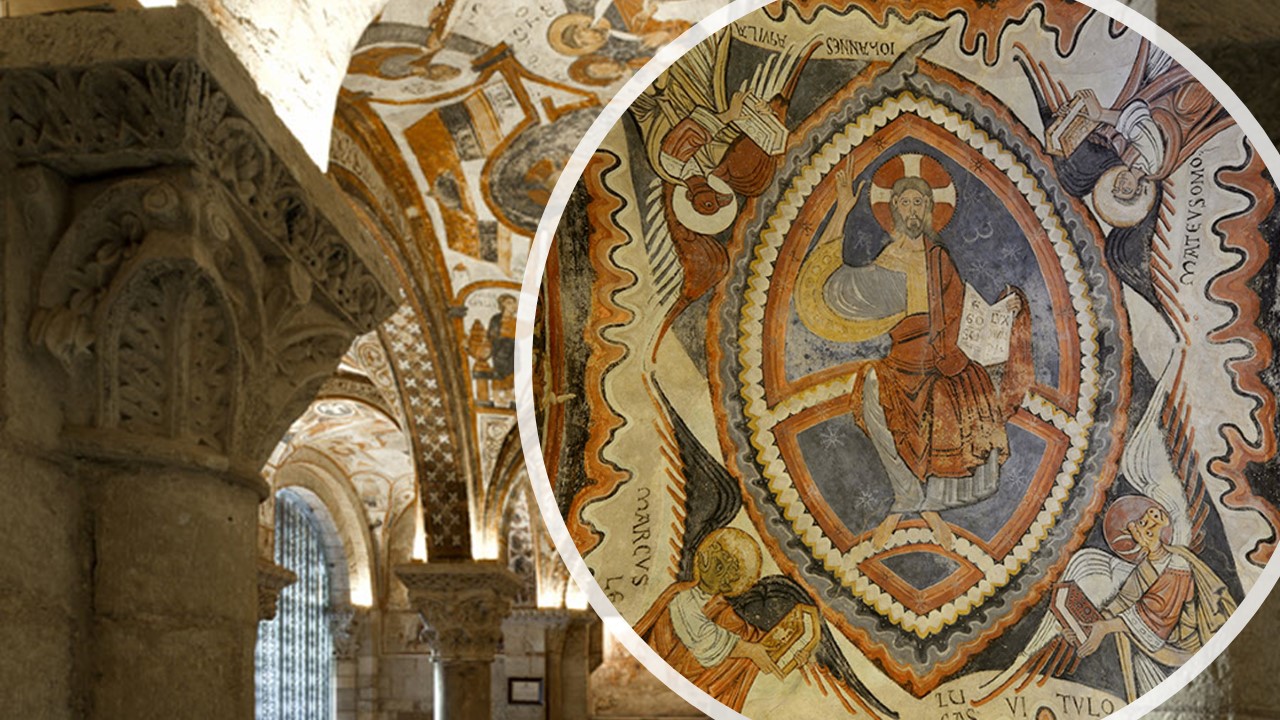
Royal Pantheon of San Isidoro de León, Romanesque Fresco Paintings
Royal Pantheon of San Isidoro de León, Romanesque Fresco Paintings, between 1160 and 1170, fresco painting, Colegiata de San Isidoro, León, Spain
https://www.museosanisidorodeleon.com/en/the-royal-panteon/ and https://www.wga.hu/html_m/zgothic/mural/12c2/05catala.html

The fresco decoration of the Royal Pantheon is an equally stunning example of Romanesque art, revered for its vibrant colours and intricate detail. These 12th-century murals cover the ceilings and upper walls, vividly depicting an array of biblical scenes, including the Annunciation to the Shepherds, Christ in Majesty, and various saints and angels. The frescoes are notable for their expressive figures and dynamic compositions, capturing the spiritual and cultural essence of the medieval period. Rich hues of reds, blues, and ochres dominate the palette, creating a visually striking contrast against the stone architecture. These frescoes not only serve as a religious and educational tool, illustrating key narratives of Christian doctrine but also stand as a testament to the artistic skill and devotional intensity of the period. Their exceptional preservation allows visitors to experience the same awe and reverence as medieval worshippers, making the Royal Pantheon a remarkable fusion of art, faith, and history.
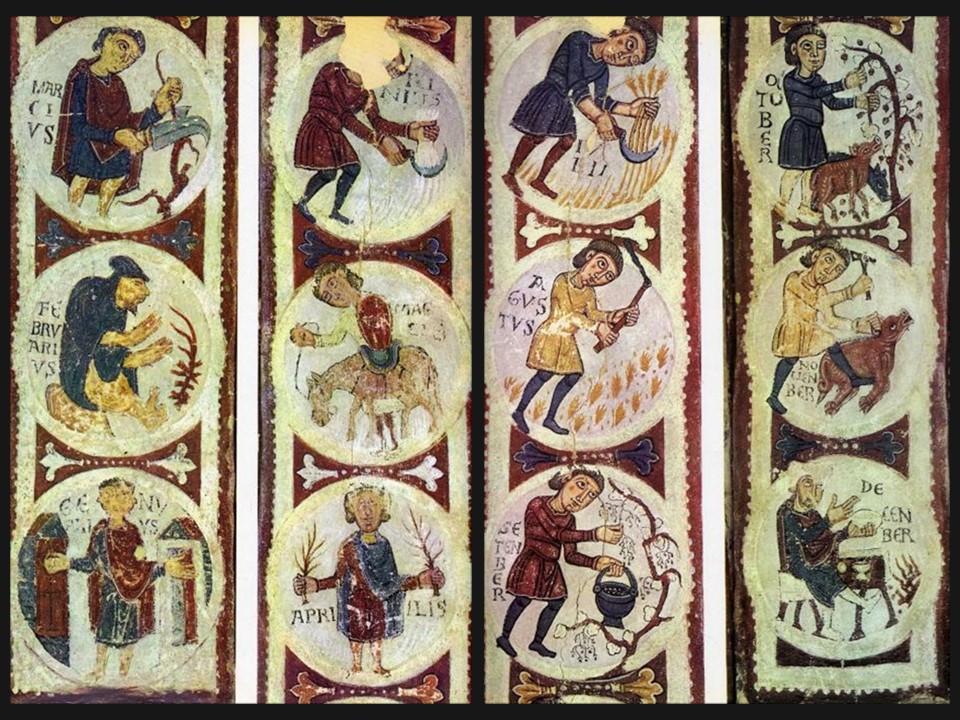
Royal Pantheon of San Isidoro de León, Romanesque Fresco Paintings
July, Calendar of San Isidoro de León
Royal Pantheon of San Isidoro de León, Romanesque Fresco Paintings
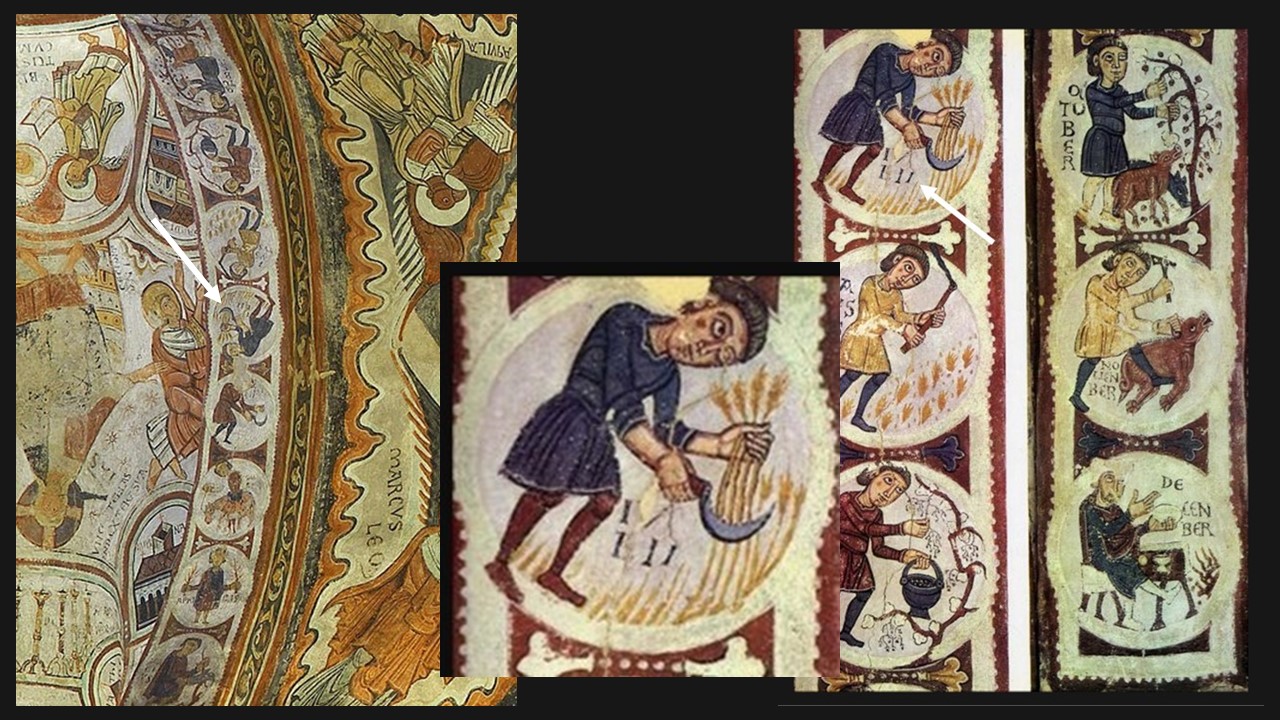
Calendar of San Isidoro de León, between 1160 and 1170, fresco painting, Colegiata de San Isidoro, León, Spain https://viajarconelarte.blogspot.com/2015/06/el-panteon-real-los-claustros-y-el.html

I was pleasantly surprised by the twelve roundels presenting the agricultural calendar, developed in the intrados (the inner curve of an arch or vault) of an arch, where the daily and real life of the people of León in the 12th century are portrayed. These frescoes depicting the 12 months are a fascinating blend of Roman tradition and medieval life. Each month is personified with a vivid scene that captures the essence of seasonal activities and agricultural cycles. January, (Genuarius), echoes the ancient Roman deity Janus, with a double-faced figure symbolizing the transition between the old and new year. February, (Februarius), shows a man warming himself by the fire, indicating the harshness of winter and the retreat from outdoor labour. March, (Marcius), portrays a man pruning vines, a task essential for the forthcoming growth. April, (Aprilis), celebrates the onset of planting with a figure holding tender sprouts, ready for sowing. May, (Magius), diverges from agricultural labour, depicting a knight with a shield, representing the pursuits of hunting and warfare. June, (Iunius), and July, (Iulii), are illustrated with scenes of harvesting, emphasizing the peak of agricultural activity. August, (Agustus), focuses on the separation of grain from chaff, a crucial step in the agricultural process. September, (September), captures the grape harvest, a vital part of the winemaking tradition. October, (October), shows a man shaking acorns from a tree to feed pigs, linking to the preparation for winter. November, (November), is marked by the depiction of pig slaughter, a significant event for food preservation. Finally, December, (December), closes the cycle with a man resting by the fire, reflecting on the year’s labours, and enjoying the respite of winter. These frescoes not only highlight the agricultural calendar but also offer a glimpse into the daily lives and seasonal rhythms of medieval society.

Best Wishes for a Healthy and Happy Month of July

For Student Activities, please…Check HERE!
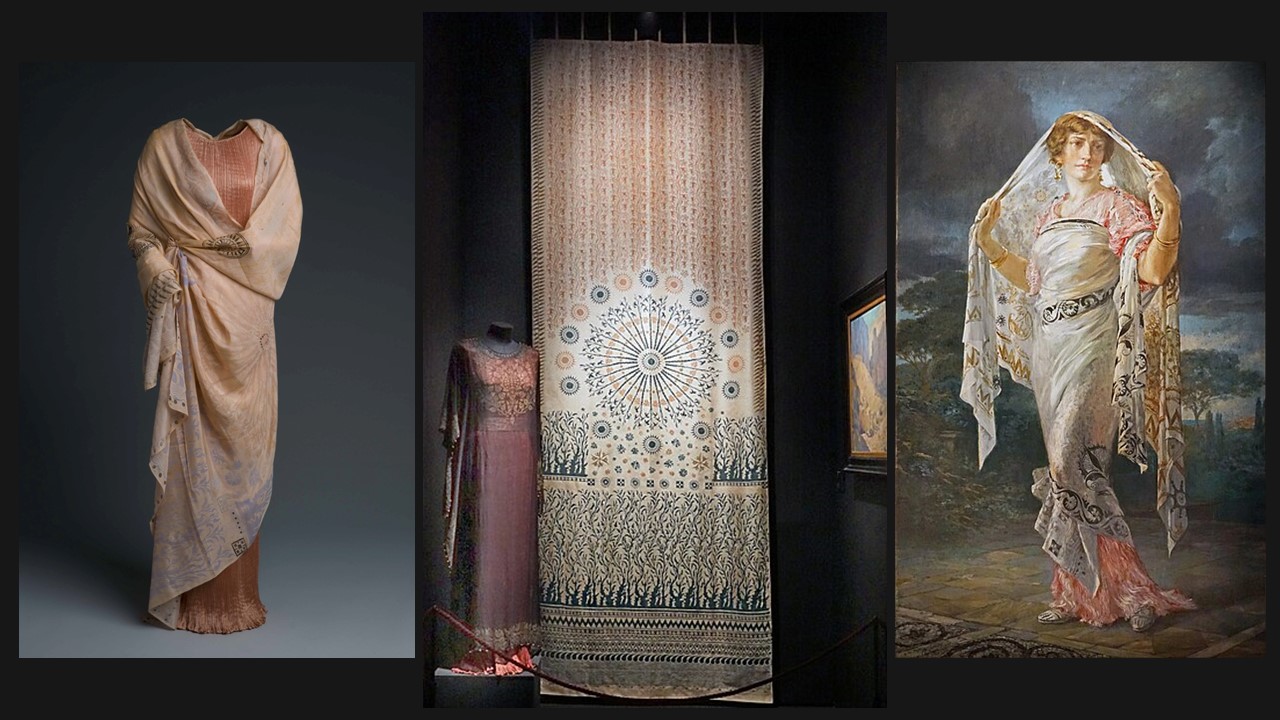
Mariano Fortuny y Madrazo, Knossos Veil

The Knossos Veil

Mariano Fortuny y Madrazo, Knossos Veil
Mariano Fortuny y Madrazo, Spanish Artist, 1871-1949
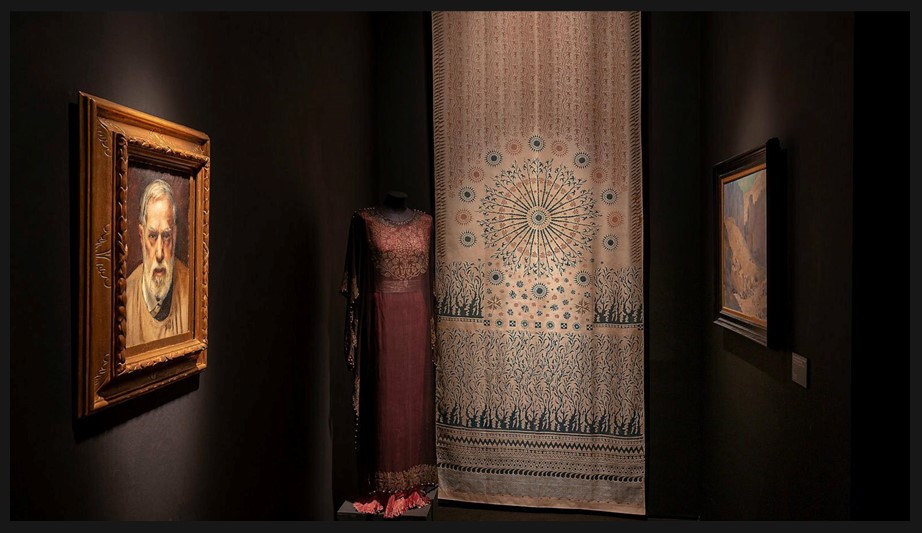
Knossos Veil, ca. 1906 – ca. 1930, Silk and Metal, 110 x 144 cm, Museo del Traje CIPE, Madrid, Spain https://twitter.com/MuseodelTraje/status/1528695788771201024/photo/1
Knossos Veil, ca. 1906 – ca. 1930, Silk and Metal, 110 x 144 cm, Museo Fortuny, Venice, Italy https://fortuny.visitmuve.it/it/il-museo/sede/la-sede-e-la-storia/
https://commons.wikimedia.org/wiki/File:Tenture_et_robe_de_Mariano_Fortuny_(Mus%C3%A9e_Fortuny,_Venise).jpg
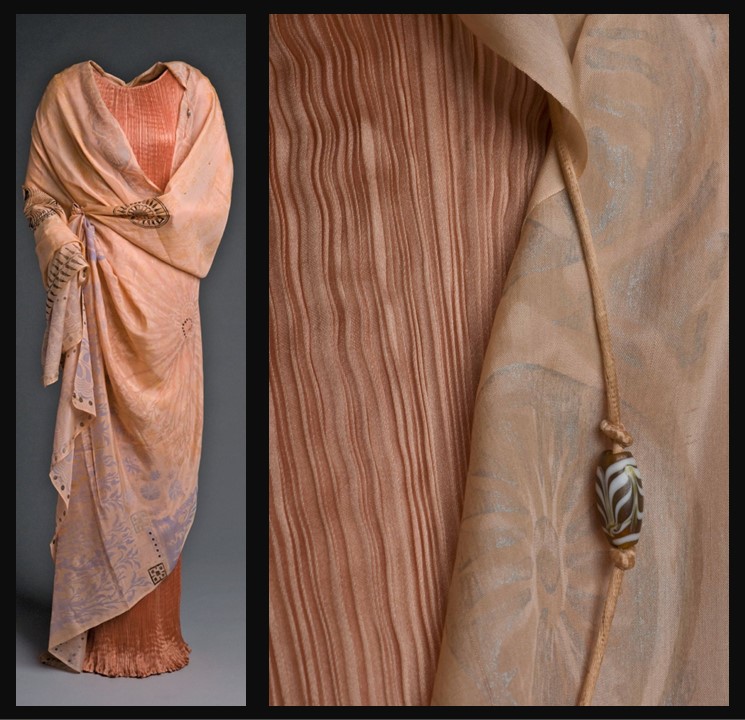
Portrait of Henriette Nigrin wearing a Delphos gown and a Knossos Veil, 1935, Tempera on Wood, Palazzo Pesaro degli Orfei, Fortuny Museum, Venice, Italy
https://en.m.wikipedia.org/wiki/File:Henriette_Fortuny_par_Mariano_Fortuny_%28mus%C3%A9e_Fortuny,_Venise%29.jpg

Mariano Fortuny y Madrazo’s influence on fashion, reflected in his innovative approach to textile design and garment creation during the late 19th and early 20th centuries, lies in his belief that art should be personally meaningful… I do not want to waste my time, he used to say, with art that has no need of me… Renowned for his luxurious fabrics and intricate patterns, Fortuny revolutionized the fashion world with his signature pleating technique, which allowed the fabric to drape elegantly and maintain its shape without the need for heavy understructures. His iconic Delphos Gown along with The Knossos Veil, both inspired by ancient Greek attire, became symbols of haute couture, coveted by aristocrats and artists alike for their timeless beauty and unparalleled craftsmanship.

Mariano Fortuny y Madrazo, Knossos Veil
A portrait of the legendary couturier as exhibited alongside his work (Credit: Archivio Fotografico Fondazione Musei Civici di Venezia/ Marcello Venturini) https://www.arabalears.cat/misc/colleccio-fortuny-venecia_1_3247710.html

Fortuny, as he is popularly known, was a Spanish painter, set designer, photographer, inventor, and technology aficionado. He was born in Granada, Spain, into an artistic and intellectual family, on May 11, 1871. His father, Mariano Fortuny y Marsal, was a successful genre painter and an avid collector of antiquities and artefacts. His mother, Cecilia de Madrazo y Garreta, was a noted collector of textiles. Fortuny was only three years old when his father died and his mother decided to move to Paris so that her family would be close to her relative Federico ‘Cocò’ de Madrazo, an artist in the circle of Serge Diaghilev’s Ballets Russes.

Growing up in a very artistic and theatrical environment, Fortuny early developed one of his two passions, that of how to apply the latest lighting technology to establishments of the performing arts and galleries of art. Amidst an era dominated by gas illumination, his keen interest in electricity and its applications, particularly within the realm of stage design, led him to develop a revolutionary indirect lighting system known as the “Fortuny Dome,” which he patented in 1901. His innovation of an indirect electric lighting system, capable of emulating the nuances of natural daylight, reshaped the theatrical experience for audiences. This system became widely used in theatrical productions and is still appreciated for its ability to create atmospheric lighting effects.

Mariano Fortuny y Madrazo, Knossos Veil
Mariano Fortuny y Madrazo, Spanish Artist, 1871-1949
Knossos Veil, ca. 1906 – ca. 1930, Silk and Metal, 110 x 144 cm, Museo del Traje CIPE, Madrid, Spain https://twitter.com/MuseodelTraje/status/1528695788771201024/photo/1

In 1888 Mariano Fortuny moved to Venice, where the family interest in antique textiles reignited. His wife Henriette Nigrin, a young woman who he had met in Paris, and who shared his aesthetics, and the family collection of ancient textiles inspired him to explore his second passion, the world of fashion. In 1906 he opened his textile/fashion workshop at the Palacio Pesaro degli Orfei creating original fabrics and costumes using modern techniques, with his own patents, and secrets, impossible to solve even today.

His wife, Henriette Negrin, was a talented and influential figure in her own right. Born in Paris to a family of Sephardic Jewish descent, she married Fortuny in 1902, becoming his lifelong partner and collaborator. Henriette was renowned for her skills in textile design and fashion, contributing significantly to the success of Fortuny’s textile workshop in Venice, Italy. Together, they perfected the intricate techniques behind the iconic Fortuny fabrics, known for their rich colours, luxurious textures, and timeless elegance. Henriette’s creative vision and business acumen played a pivotal role in expanding the reach of Fortuny’s designs, garnering acclaim from royalty, celebrities, and discerning patrons worldwide. Her enduring partnership with Mariano Fortuny y Madrazo underscored their shared commitment to artistic excellence and innovation in the realms of fashion and design.

Mariano Fortuny y Madrazo, Knossos Veil
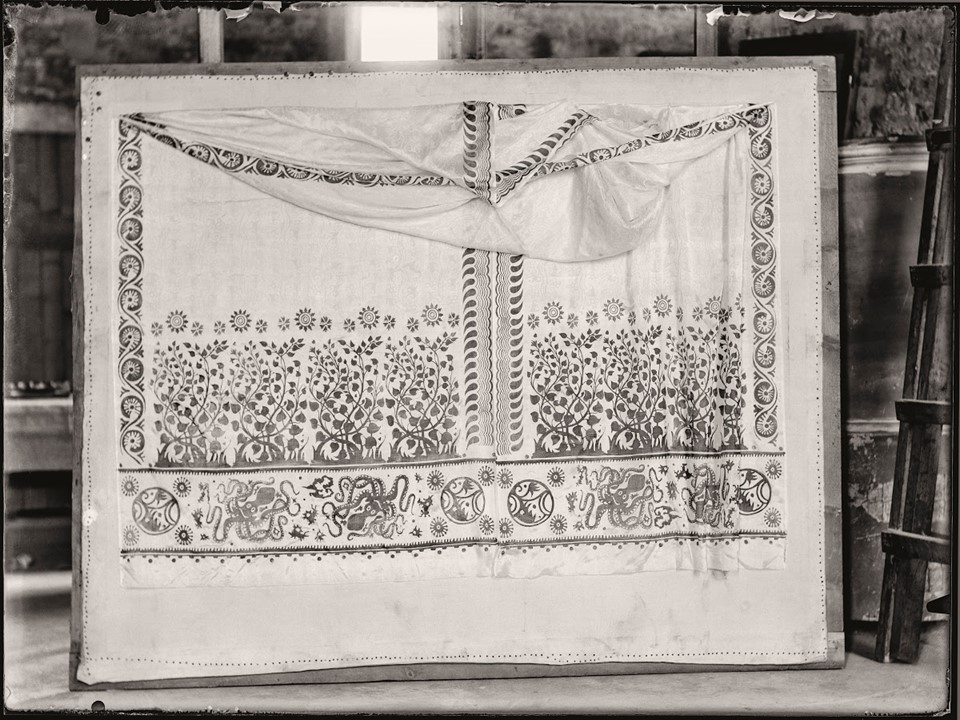
Model for the Knossos Veil, 1910, Photo by Mariano Fortuny y Madrazo,Archivio Museo Fortuny, Venice, Italy
https://artsandculture.google.com/asset/model-for-the-knossos-scarf-mariano-fortuny/_AFs03WjdU506A

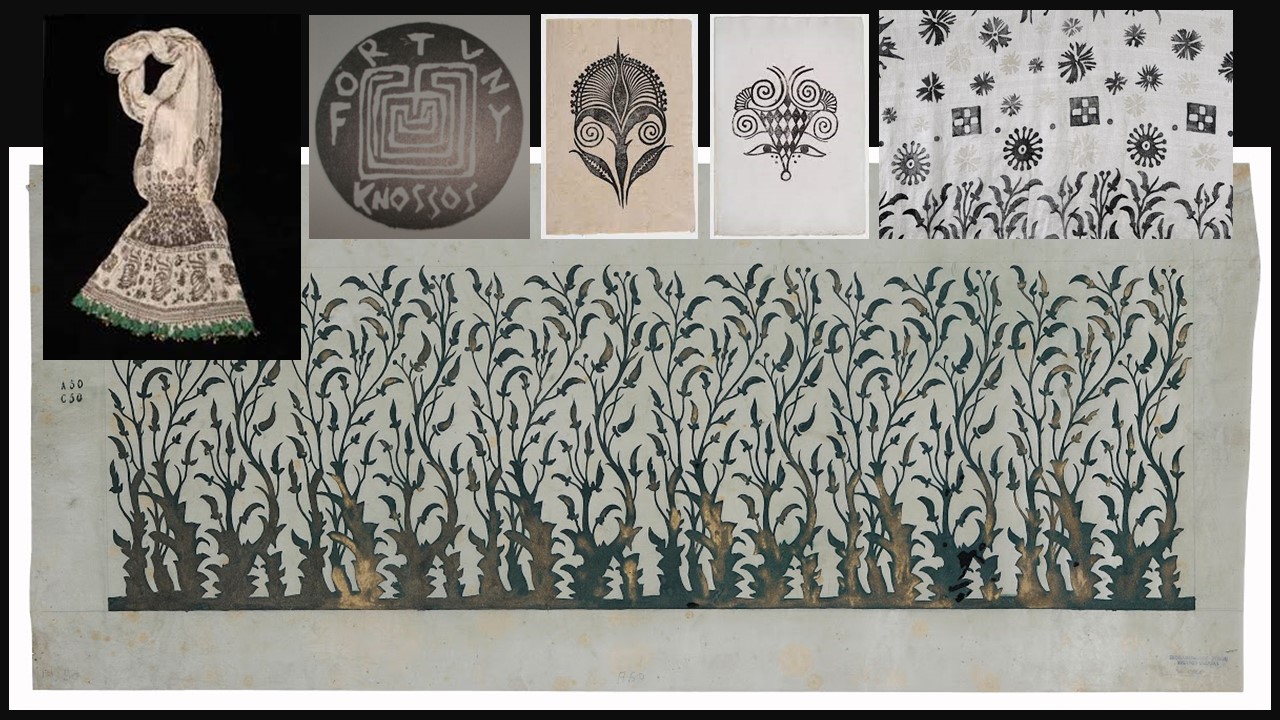
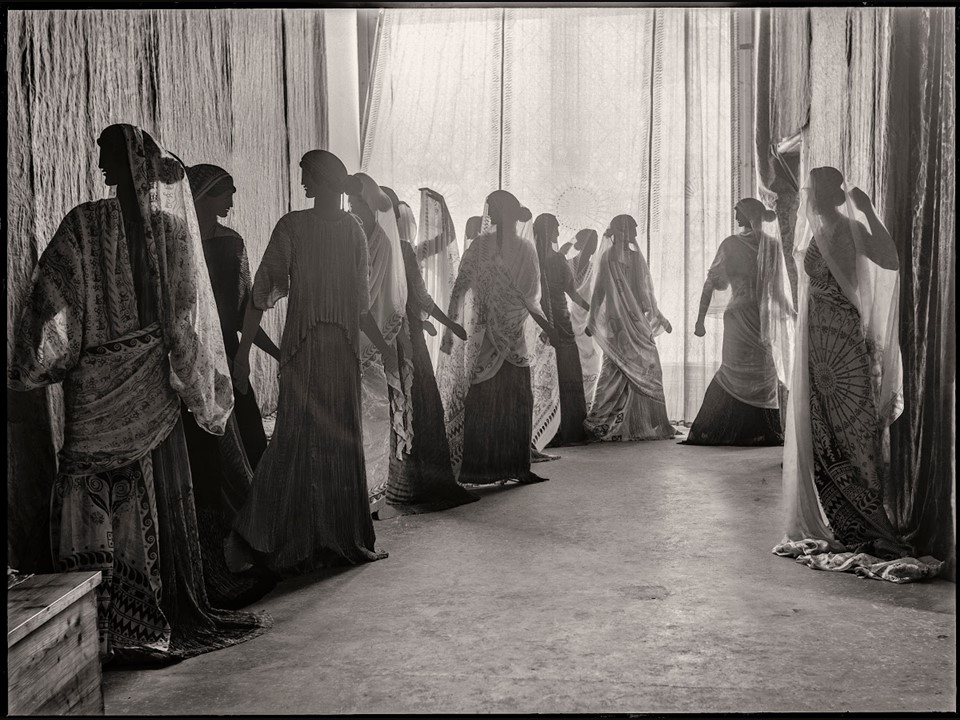
The Knossos Veil emerged as Mariano and Henriette Fortuny’s inaugural foray into the world of textile and clothing design, marking a pivotal moment in their career, and establishing their reputation as masters of their craft. This creation, inspired by the ancient Greek himation, was a substantial piece of printed silk taffeta, measuring an impressive 450 cm in length and 110 cm in width. Its design showcased an extraordinary commitment to craftsmanship, experimentation, and innovation, featuring motifs that spanned early-Corinthian, Minoan, and Archaic Greek influences, including papyrus flowers, heart-shaped palms, stylized flora, octapus and argonaut designs. These patterns, indicative of Fortuny’s fascination with ancient civilizations, were meticulously derived from Minoan fresco and vase painting, encapsulating a blend of historical reverence and artistic ingenuity.

The unveiling of the first prototypes of the Knossos Veil during the ballet for the opening of the Countess of Béarn’s private theater in Paris on March 29, 1906, marked the beginning of its storied history. However, it was the presentation in Berlin on November 24, 1907, that truly showcased the scarf’s allure and versatility, with the legendary American dancer Ruth St. Denis demonstrating the myriad ways it could be adorned, from headdresses to gowns, epitomizing the scarf’s fluid beauty and elegance. The Knossos models were whimsically named… “Alblan,” “Aldou,” “Algan,” “Alro,” “Gandou,” and “Tilleul”… each evoking an air of mystique and otherworldliness, as if conjured from a spellbook.

Mariano Fortuny y Madrazo, Knossos Veil
Display of Knossos Veils, 1910 Photograph, Archivio Museo Fortuny, Venice, Italy https://artsandculture.google.com/asset/display-of-knossos-scarves-mariano-fortuny/cgFuZN5ijI5FBQ

Henriette Negrin, Fortuny’s wife and muse played a critical role in the scarf’s development and was famously immortalized wearing it in a large painting by Fortuny, titled Portrait in Pompeian Costume. This collaboration between Mariano and Henriette not only underscored the depth of their partnership but also highlighted the Knossos Veil’s significance as a versatile and innovative piece that bridged the gap between historical inspiration and contemporary fashion.

The Knossos Veil remains a symbol of Fortuny’s legacy in the fusion of art, history, and fashion, a testament to his and Henriette’s extraordinary vision and creativity.

For a Student Activity, inspired by Fortuny’s Knossos Veil, please… Check HERE!

For a former, July 17, 2020, Teacher Curator Presentation on Fortuny’s Delphos Dress, titled When Fashion becomes Art, please Check… https://www.teachercurator.com/20th-century-art/when-fashion-becomes-art/?fbclid=IwAR338hgUJsJtyH8g3Jz3FY94sxVQFrYhG6S-NQhaW2rKFhwbqNQG9wdRA8w_aem_AZylhUe8XI9z7o2vFhteSLotU8lONi8gw48QfZxF2KaChzmSgMuEUCRast8kH0_zgk4UDd-TkYSDjA_CD2A3SyA2

Bibliography: https://www.palaisgalliera.paris.fr/sites/galliera/files/cp_dp_visuels/dossiers_de_presse/dp_fortuny_eng_bdef.pdf and https://artsandculture.google.com/story/JgWBsAjx7KyuJg?hl=en and https://www.fortuny.shop/blog/mariano-fortuny/the-fortuny-dome-a-revolution-in-the-theatre/ and https://artsandculture.google.com/story/ZQVxXe7qWmpwKg?hl=en and https://www.academia.edu/5421220/%CE%9C%CE%B9%CE%BD%CF%89%CE%B9%CE%BA%CF%8C%CF%82_%CE%BD%CE%B5%CF%89%CF%84%CE%B5%CF%81%CE%B9%CF%83%CE%BC%CF%8C%CF%82_%CE%97_%CE%B1%CE%B9%CE%B3%CE%B1%CE%B9%CE%B1%CE%BA%CE%AE_%CF%84%CE%AD%CF%87%CE%BD%CE%B7_%CE%BA%CE%B1%CE%B9_%CE%B7_art_nouveau_%CE%B7_%CF%80%CE%B5%CF%81%CE%AF%CF%80%CF%84%CF%89%CF%83%CE%B7_%CF%84%CE%BF%CF%85_Mariano_Fortuny_y_Madrazo (in Greek)

Francisco de Goya y Lucientes, An Avenue in Andalusia or The Maja and the Cloaked Men Tapestry (detail)

The Cathedral of Santiago de Compostela and the Goya Tapestries

Francisco de Goya y Lucientes, An Avenue in Andalusia or The Maja and the Cloaked Men Tapestry (detail)
Francisco de Goya y Lucientes, 1746-1828
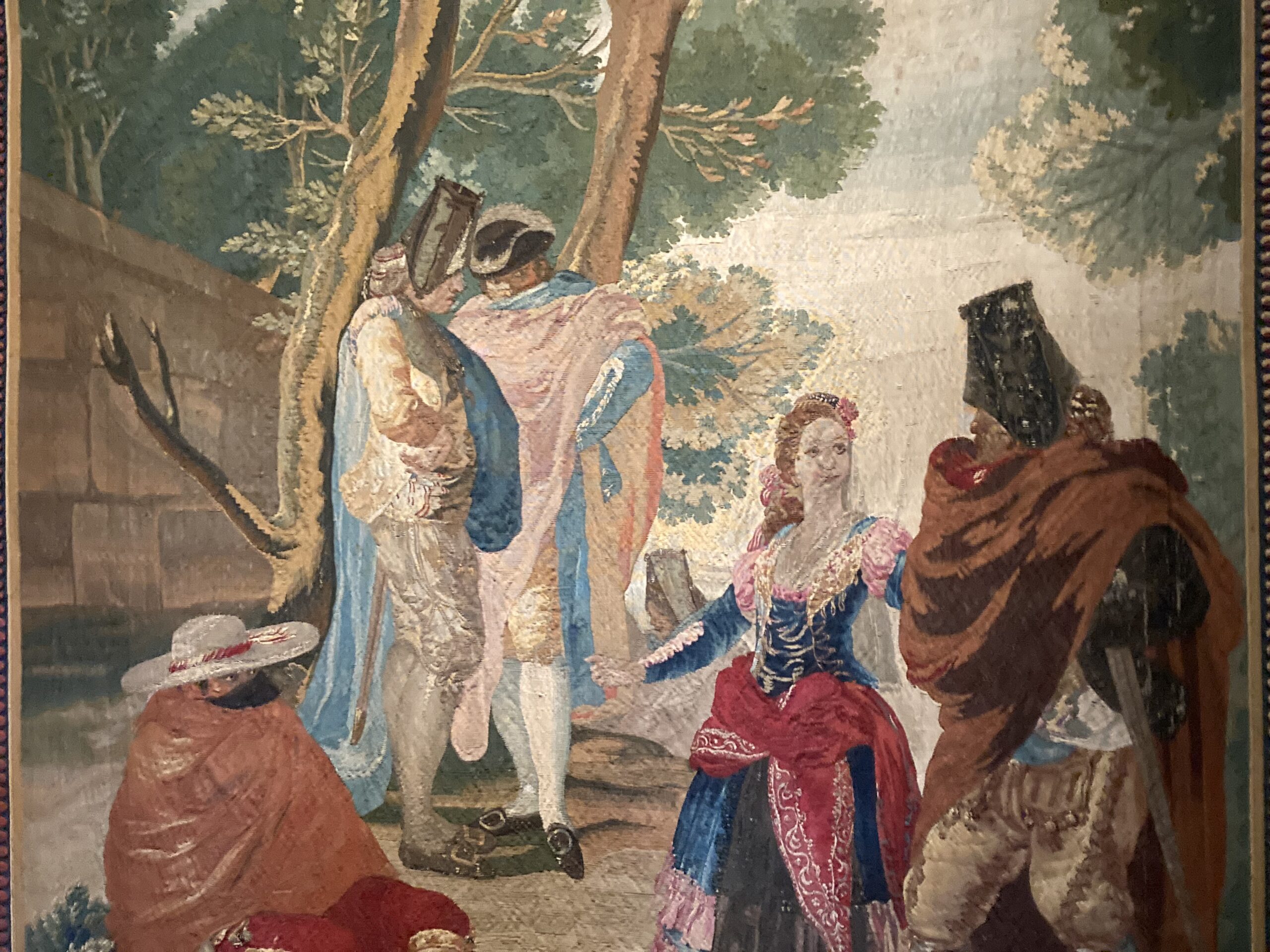
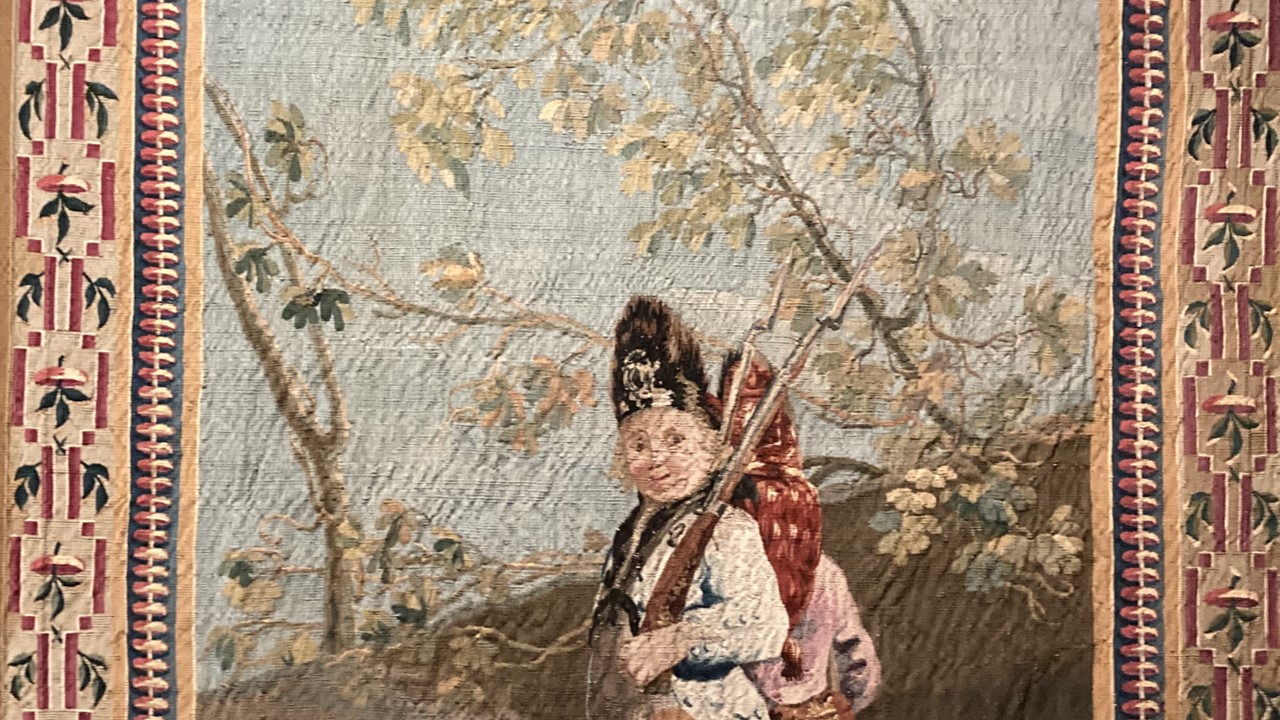
An Avenue in Andalusia or The Maja and the Cloaked Men (detail), 1777, Royal Tapestry Factory, from a Goya Cartoon, Tapestry – Wool and silk, 337×217 cm, Santiago de Compostela Cathedral Collection, Spain https://artsandculture.google.com/asset/an-avenue-in-andalusia-or-the-maja-and-the-cloaked-men-royal-tapestry-factory-from-a-goya-cartoon/mAFzZaxpTqLttA

On the 10th of May, I visited The Cathedral of Santiago de Compostela and the Goya Tapestries, among the masterpieces I was anxious to see intrigued by their unbelievable charm and allure …

Francisco Goya, renowned for his masterful paintings and prints, also delved into the realm of tapestry cartoons, creating a series of remarkable works that showcased his artistic versatility. Commissioned by the Spanish royal family, Goya produced a collection of tapestry cartoons between 1775 and 1792, intended to be transformed into large-scale tapestries to adorn the royal residences. These cartoons, characterized by their intricate detail, dynamic compositions, and vibrant storytelling, demonstrated Goya’s adeptness in translating his painterly vision into the medium of woven textiles. The tapestries created from his designs adorned the grand interiors of palaces, reflecting the royal court’s opulence and Goya’s unique ability to capture the essence of human experience through his art.

Francisco de Goya y Lucientes, An Avenue in Andalusia or The Maja and the Cloaked Men Tapestry
Francisco de Goya y Lucientes, 1746-1828
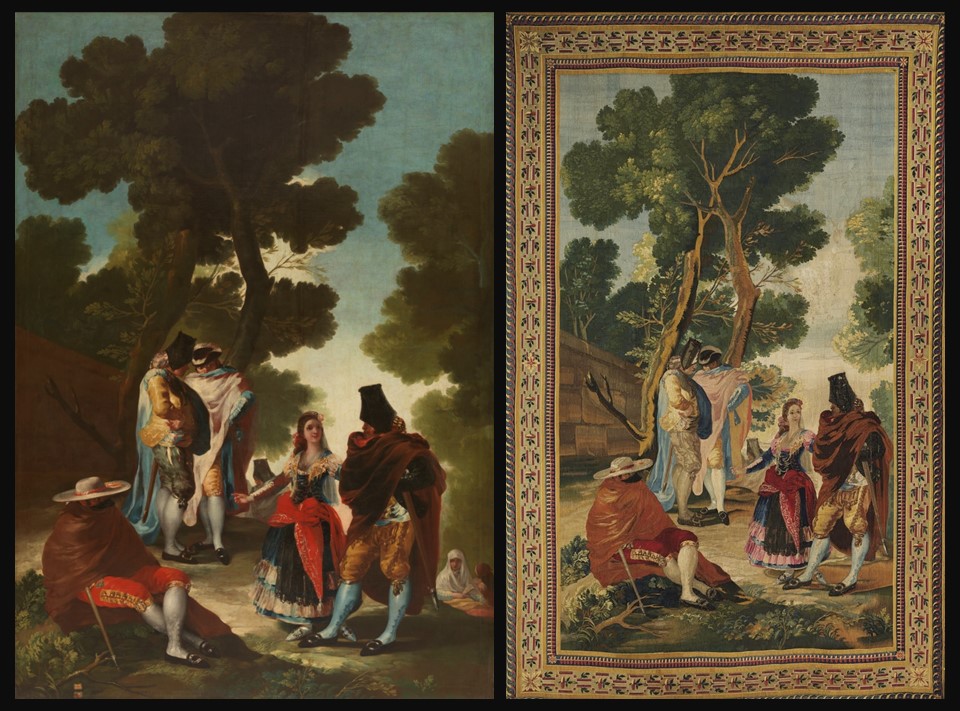
An Avenue in Andalusia, or The Maja and the Cloaked Men, 1777, Oil on Canvas, 275×190 cm, Prado Museum, Madrid, Spain https://www.museodelprado.es/en/the-collection/art-work/an-avenue-in-andalusia-or-the-maja-and-the/a4af7051-a0c2-4a63-8aef-5fa080890873
An Avenue in Andalusia or The Maja and the Cloaked Men, 1777, Royal Tapestry Factory, from a Goya Cartoon, Tapestry – Wool and silk, 337×217 cm, Santiago de Compostela Cathedral Collection, Spain https://artsandculture.google.com/asset/an-avenue-in-andalusia-or-the-maja-and-the-cloaked-men-royal-tapestry-factory-from-a-goya-cartoon/mAFzZaxpTqLttA

The Cathedral Museum of Santiago de Compostela houses an exceptional collection of tapestries, originally woven at the Royal Tapestry Factory of Santa Bárbara from designs by the celebrated Francisco Goya. These tapestries, based on cartoons mostly preserved at the Prado Museum, were part of a commission by King Charles III between 1777 and 1780 intended to adorn the Royal Palace of El Pardo. The illustrious Pedro Acuña y Malvar, a canon who served as Secretary of State for Justice under King Charles IV, bequeathed these artworks to the museum upon his death in 1814. Acuña, noted for his significant art collection in Madrid, thus ensured that the Cathedral Museum became the custodian of these invaluable cultural treasures, enriching its offerings and preserving a vital piece of Spain’s artistic heritage within the sacred walls of Santiago Cathedral.

Francisco de Goya y Lucientes Tapestries
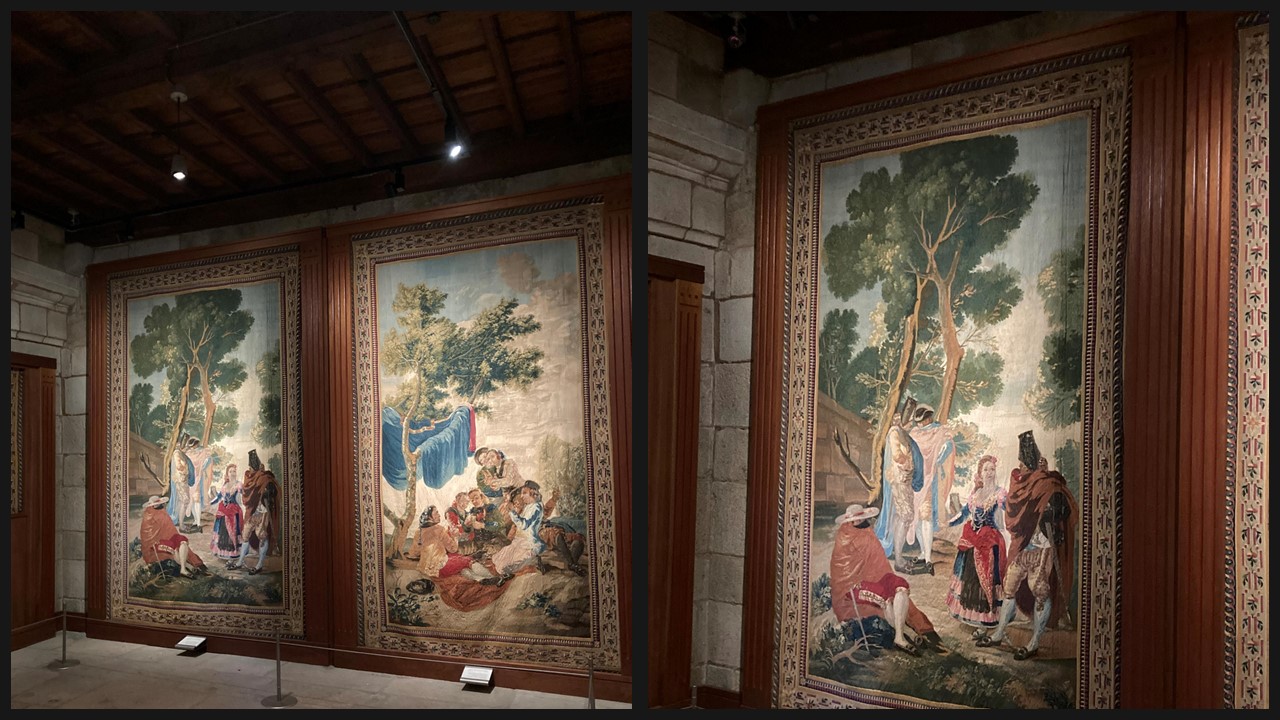
Francisco de Goya y Lucientes (1746-1828)Tapestries including An Avenue in Andalusia or The Maja and the Cloaked Men, Wool and silk, 337×217 cm, Santiago de Compostela Cathedral Collection, Spain – Photo Credit: Amalia Spiliakou, May 10, 2024

Francisco Goya’s artistic legacy is marked by his masterful exploration of costumbrista themes and his adept use of colour and light. His tapestries, such as The Maja and the Cloaked Men, eschew religious motifs in favour of depicting local customs and traditions. Through these works, Goya invites viewers into the vibrant world of 18th-century Andalusia, capturing the essence of everyday life with keen observation and wit. His cartoons, serving as blueprints for the tapestries, reveal his meticulous attention to detail and his ability to convey emotion through the interplay of light and shadow. Goya’s use of wool for darker hues and fine silk burlap for lighter tones further accentuates the richness of his palette, showcasing his unparalleled skill as both a painter and a storyteller.

Francisco de Goya y Lucientes, Boys Playing Soldiers Tapestry (detail)
Boys Playing Soldiers, 1777, Royal Tapestry Factory, from a Francisco de Goya y Lucientes (1746-1828) Cartoon, Tapestry – Wool and silk, 337×217 cm, Santiago de Compostela Cathedral Collection, Spain – Photo Credit: Amalia Spiliakou, May 10, 2024

The exhibition of Goya’s tapestries at the Cathedral Museum provides a captivating glimpse into the artist’s oeuvre and the cultural milieu of his time. Originally housed in the cathedral’s tailor’s workshop, these remarkable works were later unveiled to the public during the Corpus Christi festivities. Now, as part of the museum’s permanent collection, these tapestries are prominently displayed in dedicated rooms, offering visitors a comprehensive overview of Goya’s contributions to the art of tapestry-making. The legacy of Pedro Acuña y Malvar, who bequeathed these treasures to the cathedral, ensures that Goya’s legacy survives, providing a testament to the enduring significance of his work in shaping the artistic landscape of Spain.

For a Student Activity, please… Check HERE!

For a PowerPoint of Goya’s Tapestries in the Museum of the Cathedral de Santiago de Compostela, please… Check HERE!

Bibliography: https://www.museodelprado.es/en/the-collection/artist/goya-y-lucientes-francisco-de/39568a17-81b5-4d6f-84fa-12db60780812 and https://artsandculture.google.com/story/BQXxc6wiofP4Lw

Attributed to El Greco - Domenikos Theotokopoulos, Pandora and Epimetheus statues

Pandora and Epimetheus

Attributed to El Greco - Domenikos Theotokopoulos, Pandora and Epimetheus statues
Attributed to El Greco – Domenikos Theotokopoulos
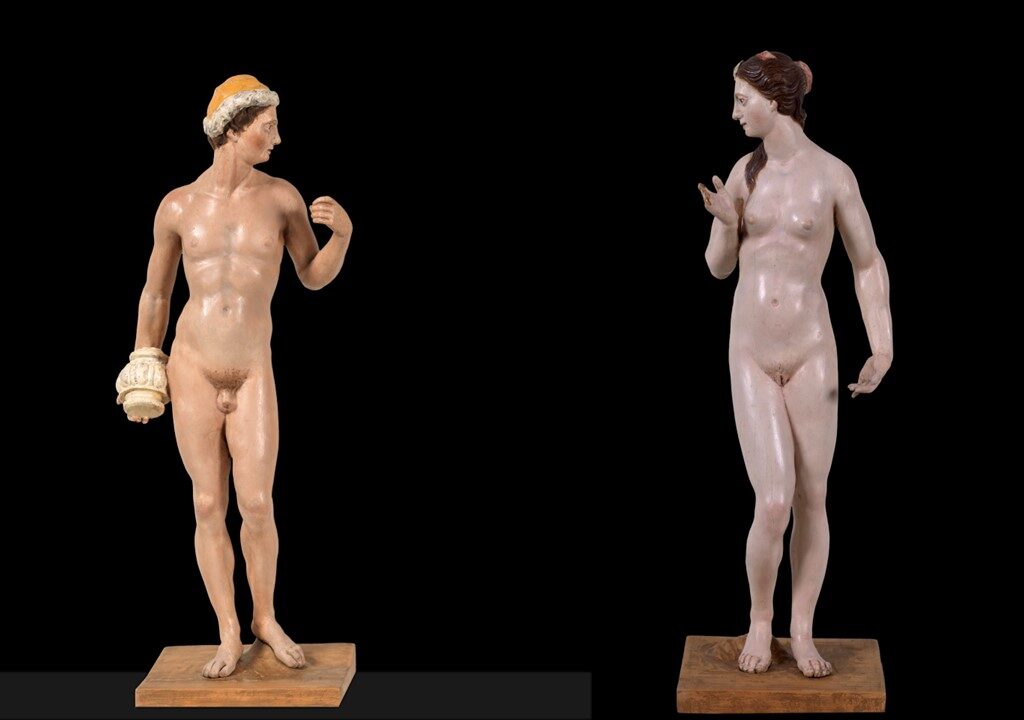
Pandora and Epimetheus, 1600 – 1610, Polychromed, Carved Wood, Height: 43 cm, Prado Museum, Madrid, Spain
https://www.museodelprado.es/en/the-collection/art-work/pandora/86a6b73f-8ef3-4132-aa68-4648a27a4b6a

In Greek mythology, Pandora was the first woman on Earth. Created by the god Hephaestus at the request of Zeus, her creation was part of a divine punishment for humanity. This punishment was in retaliation for Prometheus, a Titan, who defied the gods by stealing fire and giving it to mankind. Endowed with gifts from each god and made irresistibly alluring to humans, Pandora was given in marriage to Epimetheus, the brother of Prometheus. Despite warnings from Prometheus not to accept any gifts from Zeus, Epimetheus accepted her. Pandora and Epimetheus thus became the first human couple. However, disaster loomed nearby. Driven by curiosity, Pandora opened a box she was forbidden to touch and released into the world all sorrows and death-bringers. Only Hope remained, trapped under the box’s lid, narrowly missing escape when Pandora hastily closed the lid. This calamity unfolded exactly as Zeus, the cloud-gatherer, had planned. Do Pandora’s actions illustrate the profound and often unintended consequences of human curiosity and disobedience?

Domenicos Theotokopoulos, known as El Greco, was born in 1541 in Crete, which was then part of the Republic of Venice. Initially trained in the Byzantine tradition of icon painting, he moved to Venice around 1567, where he adopted elements of the Venetian Renaissance style under the influence of painters like Titian and Tintoretto. Seeking greater opportunities, El Greco relocated to Rome in 1570 and later moved to Toledo, Spain, in 1577, where he spent the remainder of his life. In Toledo, El Greco developed a distinctive style characterized by elongated figures and vibrant, expressive use of colour and light, often infused with dramatic spirituality. Despite his critical reception being mixed during his lifetime, El Greco is now celebrated as a precursor to both the Expressionist and Cubist movements, profoundly influencing the evolution of Western art. He died in 1614 in Toledo.

El Greco’s art is distinguished by its unique blend of Byzantine and Western painting traditions, resulting in a highly personal and spiritual style that pushed the boundaries of the Mannerist period. His figures are elongated and anatomically exaggerated, often imbued with a sense of spiritual intensity and inner turmoil that seems to stretch towards the divine. He used unconventional, vivid colour palettes and bold, almost expressionistic brush strokes that imbued his compositions with a dramatic, almost otherworldly quality. His treatment of light is particularly notable. It often seems to emanate from within the figures themselves, highlighting their ethereal and transcendent nature. This handling of form, colour, and light not only enhances the emotional depth and mystical atmosphere of his paintings but also foreshadows the emotional expressiveness of the Expressionist movement and the structural experimentation of Cubism, making El Greco a pivotal figure in the transition from the Renaissance ideals of harmony and proportion to the more subjective and distorted approaches of modern art.

The unique statues of Pandora and Epimetheus housed in the Prado Museum hold significant artistic and stylistic importance as they represent a rare excursion into sculpture by an artist renowned primarily for his paintings. These works are critical for understanding El Greco’s artistic language in a three-dimensional form, showcasing his ability to translate the intense emotionality and spiritual expressiveness characteristic of his paintings into sculpture. Stylistically, these statues exemplify his signature approach of elongation and dramatic posturing, traits that underscore his departure from conventional Renaissance forms and anticipate the emotional intensity of the Baroque period. The representation of such complex mythological figures in sculpture by El Greco adds a profound layer to the interpretation of his artistic legacy, demonstrating his innovative approach to volume, movement, and the human form, which challenged and expanded the aesthetic boundaries of his time.

Considering El Greco’s unique interpretive style and his known penchant for blending the spiritual with the human form, in what ways might his statues of a nude man and a nude woman be seen as symbolic representations of Pandora and Epimetheus? How do these sculptures reflect the themes of innocence, curiosity, and the inevitable consequences of human actions as depicted in the myth? …The woman removed the heavy lid of the jar with her own hands, and / driven by her own thoughts, unleashed sorrows for men, death-bringers. / Hope alone remained in its unbreakable home, / caught underneath the lip of the jar. Its escape / was only a short flight away, but, just in time, she slammed the lid down. / All according to the plan of aegis-bearing, cloud-gathering Zeus… https://pressbooks.library.torontomu.ca/myths/chapter/lesson-5-primary-readings-prometheus-and-pandora/

For a PowerPoint Presentation titled, Domenikos Theotokopoulos, 10 Masterpieces, please… Check HERE!

Bibliography: https://www.museodelprado.es/en/the-collection/art-work/pandora/86a6b73f-8ef3-4132-aa68-4648a27a4b6a and https://www.museodelprado.es/en/the-collection/art-work/epimetheus/8abbfd9f-27f9-44b6-bbc6-e19854e7a69c

Francisco de Zurbarán's painting of Agnus Dei

Agnus Dei by Francisco de Zurbarán

Francisco de Zurbarán's painting of Agnus Dei
Francisco de Zurbarán, Spanish Artist,1598 – 1664
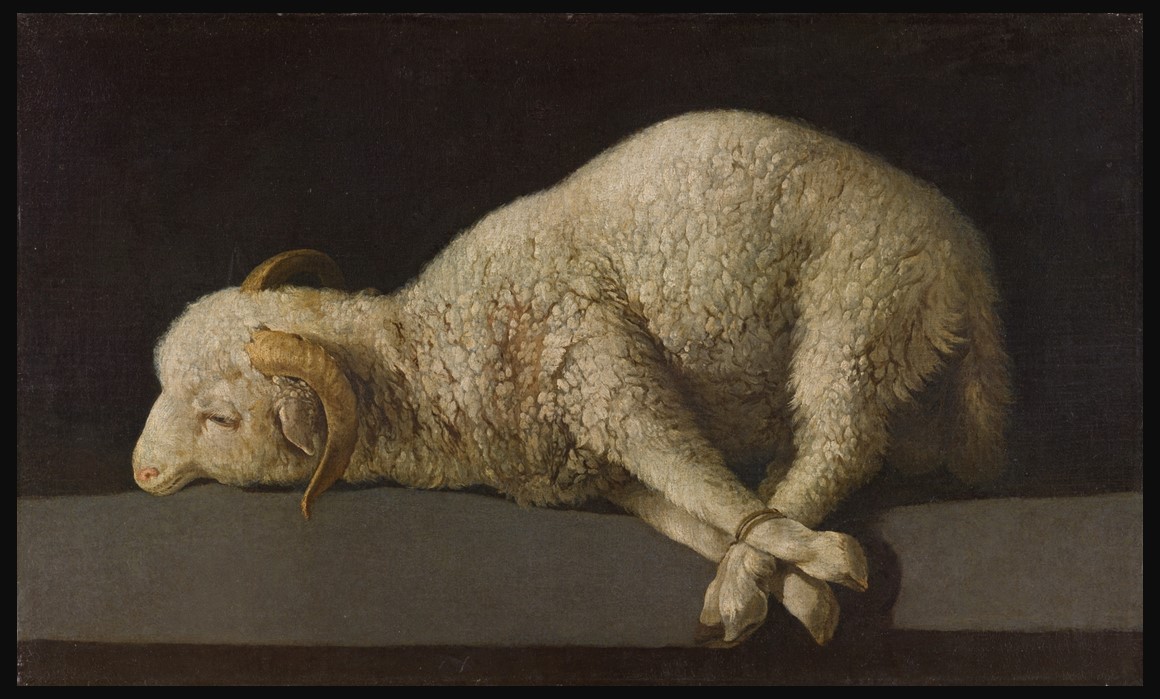
Agnus Dei, 1635 – 1640, Oil on Canvas, 37.3×62 cm, Prado Museum, Spain https://www.museodelprado.es/en/the-collection/art-work/agnus-dei/795b841a-ec81-4d10-bd8b-0c7a870e327b

The term Agnus Dei carries significance in both Christian liturgy and art, emanating from Latin to mean Lamb of God. Its usage and implications span religious, cultural, and historical contexts. The connection between Agnus Dei and Easter is central to Christian symbolism and deeply interwoven with the themes of sacrifice, redemption, and renewal inherent in the Easter celebration. The painting of Agnus Dei by Francisco de Zurbarán, is I believe one of the finest examples.

In Christian art, the Agnus Dei symbolizes Jesus’ sacrificial death and resurrection. This symbol is often depicted as a lamb carrying a cross or with a halo around its head, sometimes holding a flag, representing victory over death. This imagery has been a significant motif in Christian iconography since the early centuries of Christianity, appearing in mosaics, sculptures, paintings, and liturgical objects.

Francisco de Zurbarán, a Spanish painter of the Baroque period, is renowned for his deeply religious works that often depict monastic life, still lifes, and themes of Christian mysticism with a dramatic interplay of light and shadow. Zurbarán’s painting titled Agnus Dei, dating from around 1635-1640 is a fine example of his style. In this work, the artist presents a bound merino lamb between eight and twelve months old, lying on its side positioned against a dark, undefined background on top of a grey table. The lamb is presented with a remarkable degree of realism, from the texture of its wool to the serene expression on its face, despite the foreboding sense of its imminent sacrifice. This powerful image serves as a direct visual representation of the Lamb of God as referenced in Christian theology, symbolizing Jesus Christ’s sacrifice for the sins of humanity.

The elements of Zurbarán’s painting, the bound state of the lamb, and the overall somber tone evoke the Passion of Christ. The lamb, an innocent creature, becomes a poignant symbol of Christ’s submission to the crucifixion and his role as the sacrificial lamb who takes away the sins of the world. The use of chiaroscuro, or the contrast between light and dark, highlights the purity and innocence of the lamb, making it stand out against the dark background, which adds to the painting’s emotional depth and spiritual solemnity.

Zurbarán’s focus on this theme aligns with the Counter-Reformation period’s emphasis on religious renewal and the visual expression of Catholic doctrine. His works are celebrated for their ability to convey profound religious concepts with intense emotional weight and a deep sense of piety. Through his depiction of the Agnus Dei, Zurbarán invites contemplation on themes of innocence, sacrifice, and redemption, providing a visual meditation on the Christian faith and the mystery of Christ’s sacrificial love.

Francisco de Zurbarán’s engagement with the Agnus Dei theme extended beyond a singular masterpiece, manifesting in no fewer than six paintings, each with its iconographic nuances, highly sought after, presumably by private patrons. The allure of these pieces was such that in 1724, Antonio Palomino, both painter and writer, recounted the pride of an art aficionado in Seville who treasured a Zurbarán lamb, “painted from life,” more than a hundred actual sheep. The presented Museo del Prado example stands out as the epitome of Zurbarán’s artistry, marrying unparalleled technical skill, vivid descriptiveness, and poignant expressiveness with a layer of emotional depth considered unmatched by its counterparts. Art historians concur that this version emerged in the finest moment of Zurbarán’s creative period, specifically pinpointed to between 1635 and 1640, showcasing the artist at the pinnacle of his powers.

Francisco de Zurbarán (1598–1664), hailed from Fuente de Cantos, Extremadura, is an important figure of the Spanish Baroque period. As a painter, Zurbaráns is known for his profound religiosity, meticulous attention to detail, and masterful use of chiaroscuro. His artistic journey blossomed in Seville, where he established his workshop and became a pivotal figure in the city’s vibrant art scene, often being referred to as the ‘Spanish Caravaggio’ due to his dramatic interplay of light and shadow. His oeuvre predominantly explores themes of Christian mysticism and monastic life, with works that depict saints, martyrs, and biblical narratives imbued with a stark realism and emotional depth. Among his most celebrated works are the series for the Monastery of Guadalupe, the altarpieces for the San Pablo El Real, and his poignant renditions of the Agnus Dei. Zurbarán’s ability to blend spiritual intensity with lifelike representation won him the admiration of his contemporaries and a significant commission from King Philip IV. Despite facing financial difficulties in his later years, Zurbarán’s legacy endured, influencing not only the trajectory of Spanish art but also leaving a lasting impact on the broader tapestry of Baroque painting.

For a PowerPoint Presentation of 10 Masterpieces by Francisco de Zurbarán, please… Check HERE!