https://collections.vam.ac.uk/item/O458070/inr%C5%8D-unknown/
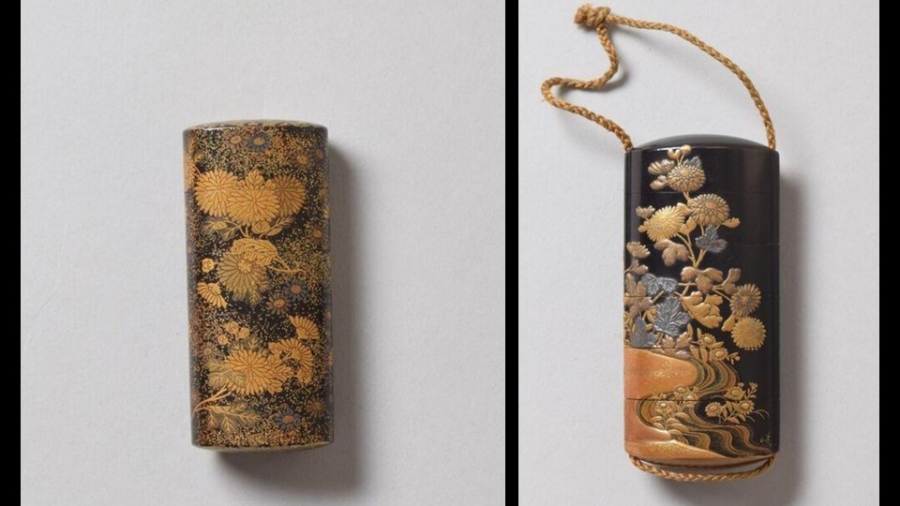
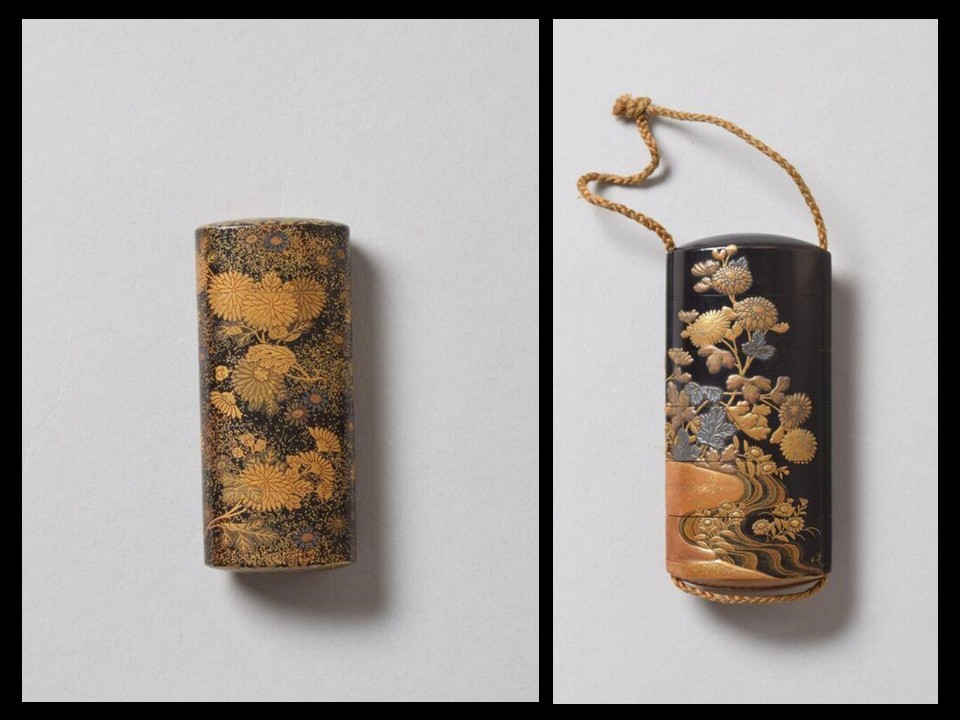
Inrō with flowering chrysanthemums and asters, 18th century – 19th century, Lacquer, Height: 9.2cm, Victoria and Albert Museum, London, UK
https://collections.vam.ac.uk/item/O458198/inr%C5%8D-unknown/inr%C5%8D-unknown/
September arrives quietly. As the days grow a little shorter and the light softens, gardens begin their gentle transition into autumn. It is a fitting moment to explore Asters, Chrysanthemums and Two Japanese Inrōs, where the season’s flowers meet the refined artistry of Japanese lacquer. September is also the month of the Aster, a flower admired for its delicate, star-shaped blooms and long association with elegance, wisdom, and the changing seasons.
Japanese Inrō: Small Objects with a Practical Purpose
At first glance, an inrō may look like a small decorative box. In fact, it was an ingenious accessory worn by Japanese men during the Edo period (1603–1868). Because traditional kimono had no pockets, small personal belongings, such as medicines, seals, or valuable keepsakes, were carried in these elegant tiered cases, suspended from the sash by a silk cord and secured with a carved netsuke.
By the eighteenth century, Japanese inrō had evolved far beyond their practical purpose. Wealthy merchants and samurai commissioned master lacquer artists to create miniature masterpieces using techniques that required remarkable patience and precision. Layer upon layer of lacquer was carefully polished before artists applied shimmering gold powders in the technique known as maki-e, creating surfaces that still glow more than two hundred years later.
Flowers That Welcome Autumn
What makes these particular Japanese inrō especially fitting for September is their choice of flowers. The Aster has long been admired in Japan as one of the graceful flowers of early autumn. Its delicate petals and star-like form bring a sense of quiet beauty rather than dramatic display.
Beside the Asters bloom Chrysanthemums, perhaps Japan’s most celebrated flower. A symbol of longevity, happiness, and renewal, the Chrysanthemum is also closely associated with the Imperial Household and remains an enduring emblem of Japanese culture. Together, Asters and Chrysanthemums do more than decorate the lacquer surfaces. They announce the arrival of autumn itself.
Beauty in a Fleeting Season
One of the enduring qualities of Japanese art is its deep appreciation of the seasons. Flowers are rarely chosen simply because they are beautiful. Instead, they become visual reminders of time passing, of nature’s rhythms, and of the importance of noticing each fleeting moment. This sensitivity to seasonal change is reflected in the Japanese aesthetic known as mono no aware, the quiet awareness that beauty is often most moving because it is temporary.
That philosophy feels surprisingly familiar every September. Summer slowly gives way to cooler mornings, leaves begin to change, and gardens offer one last burst of colour before autumn settles in. Like the flowers on these tiny inrōs, these moments invite us to pause and appreciate a season that never lasts quite long enough.
Perhaps that is why these small objects continue to captivate museum visitors today.
Although measuring only a few centimetres in height, they carry not only exceptional craftsmanship but also an entire season in miniature. Their makers understood that beauty did not depend on size. A masterpiece could fit comfortably in the palm of a hand.
As we welcome September and celebrate the Aster, the Victoria and Albert Museum’s exquisite Japanese inrōs remind us that art preserves more than remarkable craftsmanship. It also preserves memories, traditions, and the timeless pleasure of watching one season gently become the next. Sometimes, the smallest works of art tell the biggest stories.
Classroom Activities: Bring Japanese history of Inros to life in your classroom with four hands-on student activities inspired by two examples at the Victoria and Albert Museum in London. Explore the Student Activity →
Continue Exploring on Teacher Curator: Expand your understanding of Flowers in Art with related articles: Irises by Vincent van Gogh and The Twelve Months of Flowers by Pieter Casteels III
Sources and further Reading: To dive deeper into the world of Japanese Inros, visit the V&A Museum site: https://collections.vam.ac.uk/item/O458070/inr%C5%8D-unknown/ and https://collections.vam.ac.uk/item/O458198/inr%C5%8D-unknown/inr%C5%8D-unknown/. Learn more about the history, craftsmanship, and legacy of Japanese Inros from the Encyclopedia Britanica: https://www.britannica.com/topic/inro