Created for Queen Jeanne d’Evreux, this tiny 14th-century Book of Hours dazzles with refined grisaille miniatures, lively marginal scenes, and intimate devotional imagery, reflecting the elegance and culture of medieval Paris.
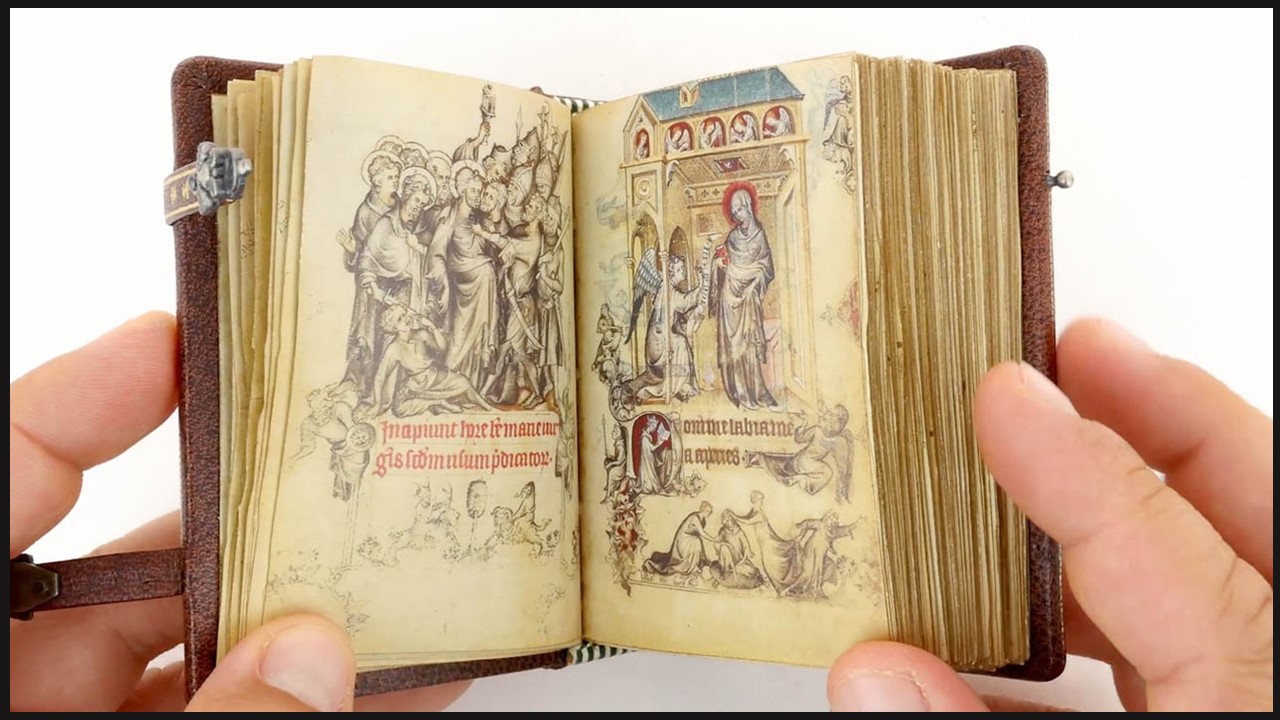
Created for Queen Jeanne d’Evreux, this tiny 14th-century Book of Hours dazzles with refined grisaille miniatures, lively marginal scenes, and intimate devotional imagery, reflecting the elegance and culture of medieval Paris.
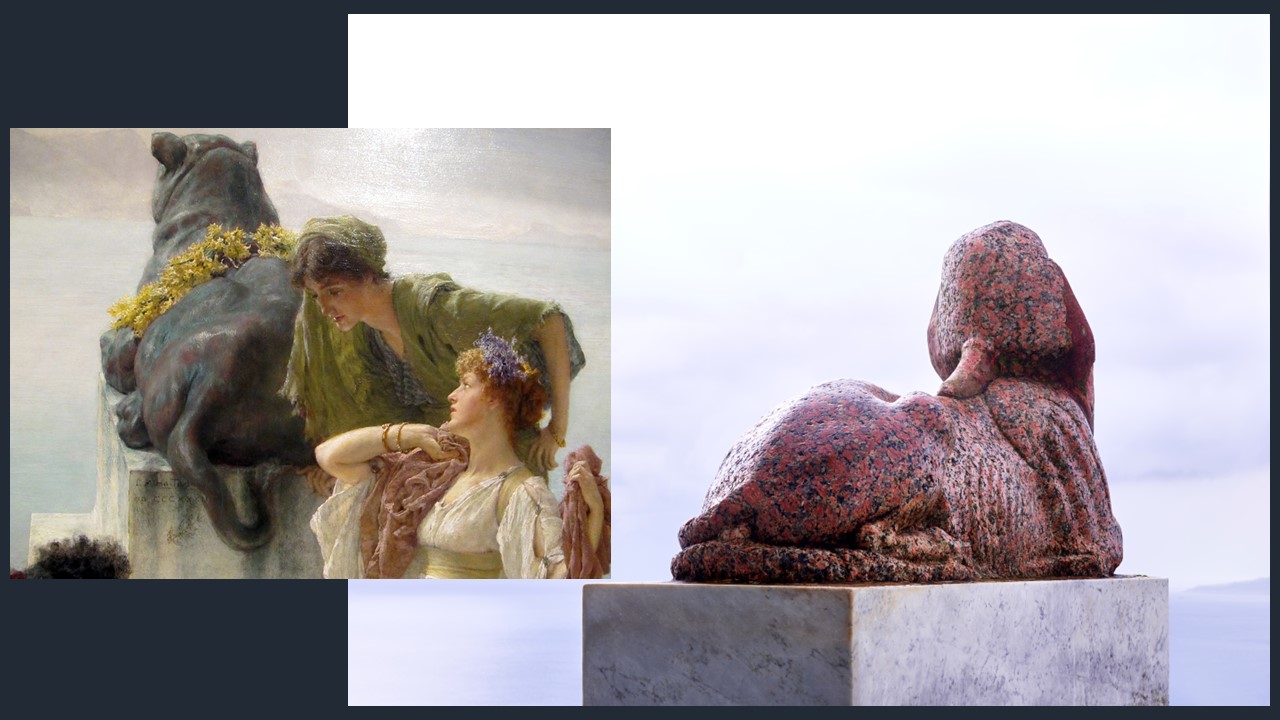
A Coign of Vantage (1895) by Alma-Tadema captures elegant women on a marble terrace overlooking the sea, blending classical luxury, historical precision, and atmospheric Mediterranean light into a refined escapist vision.
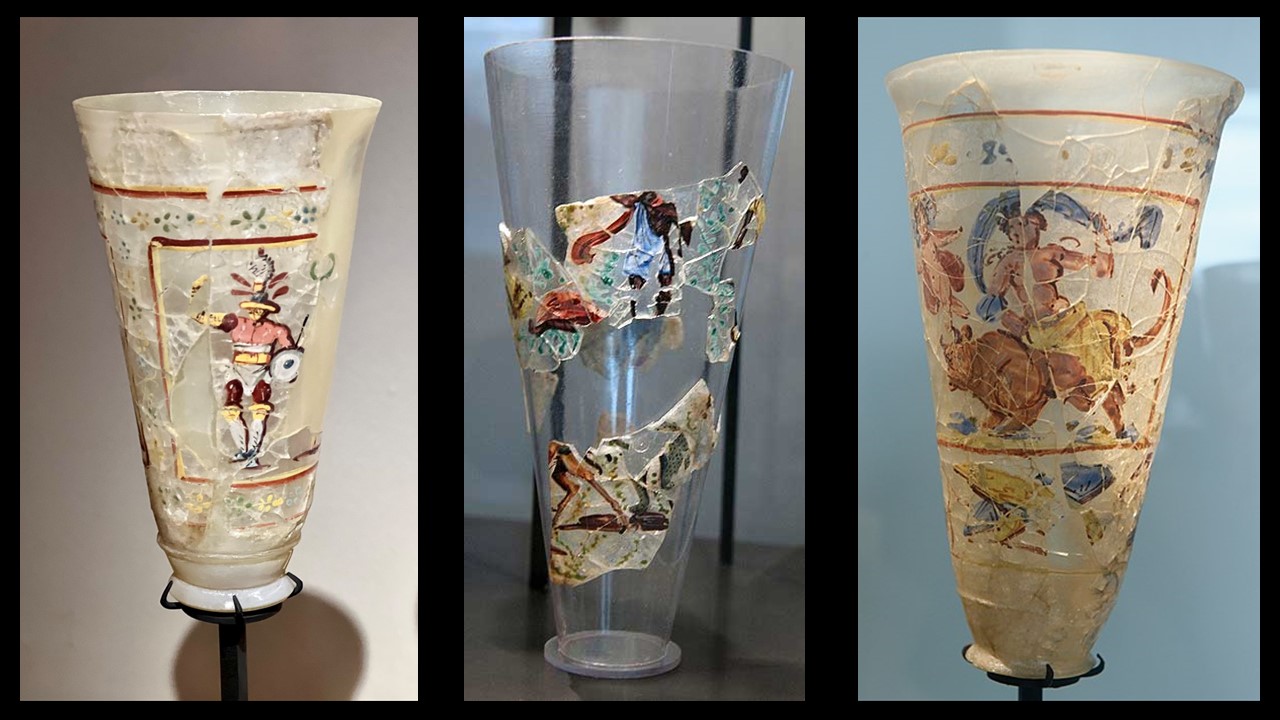
Roman enameled glass, as discussed by Corning Museum of Glass, reveals a rare fusion of ancient glassmaking and vivid painted enamel, producing luxurious vessels where colour, light, and craftsmanship define Roman artistic refinement.

At a 1982 meeting arranged by Bruno Bischofberger, Warhol photographed Basquiat, who soon returned a still-wet double portrait, sparking a prolific collaboration explored in the Basquiat × Warhol exhibition.
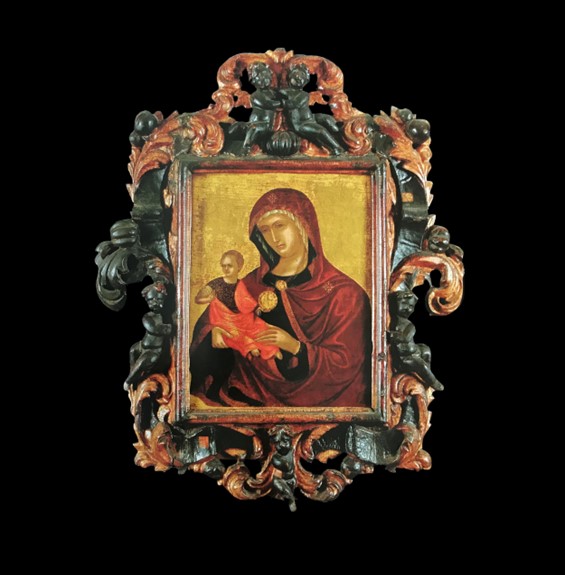
Inspired by the decree of the Second Council of Nicaea, this refined 15th-century Madre della Consolazione icon blends Byzantine tradition with Italo-Cretan influences, expressing tenderness, devotion, and artistic elegance.
Inspired by Vittoria Colonna’s poetic devotion, this intimate Virgin and Child—attributed to Simon Bening—blends Flemish symbolism and tender realism, presenting Mary as a nurturing, humble source of spiritual and physical solace.
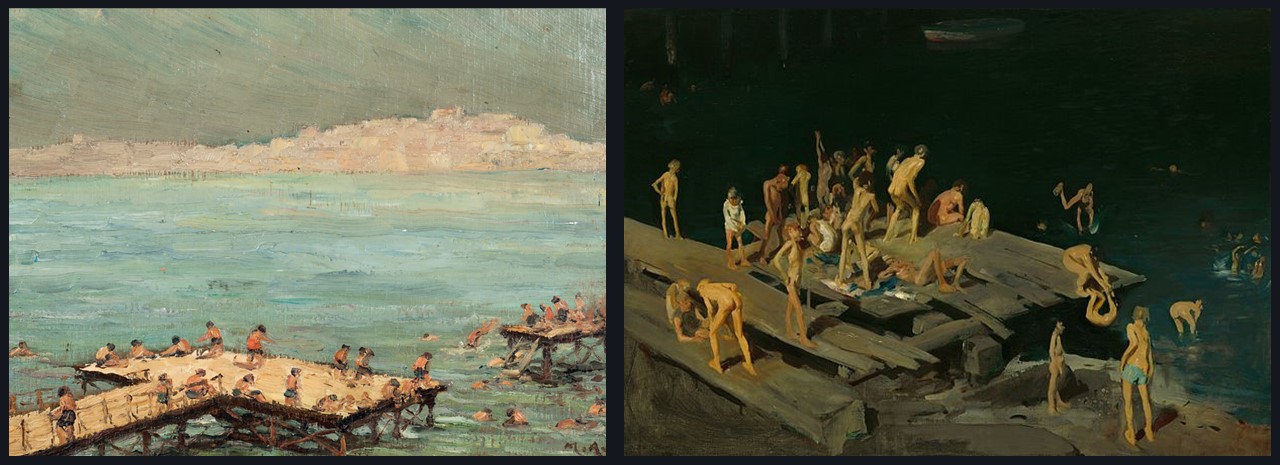
Michael Axelos’s Swimmers at Palaio Faliro (1935) captures a sunlit, carefree Greek seaside, inviting comparison with Bellows’ Forty-Two Kids, where urban energy and raw vitality define a contrasting vision of youth.
Claude Monet’s Les Meules à Giverny (1890–91) captures fleeting light and atmosphere through geometric compositions of haystacks, transforming a simple rural motif into a poetic meditation on time, color, and perception.
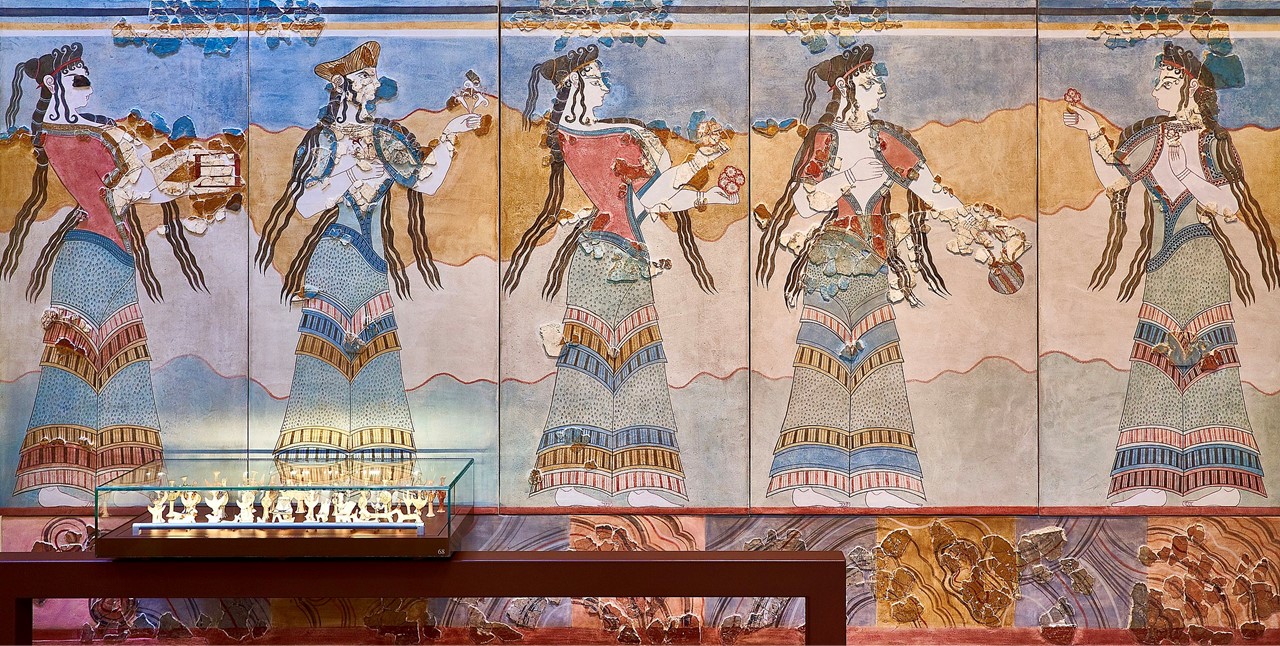
The Mycenaean Procession fresco from Thebes (c. 1400 BC) depicts life-size female worshippers in Minoan dress, revealing artistic innovation, ritual devotion, and the emergence of a Boeotian painting tradition.
Giovanni Bellini’s Portrait of a Young Man à l’Antique (c. 1475–80) reflects Renaissance classicism and Mantegna’s influence, its enigmatic sitter—possibly Mantegna—adding intrigue to this refined and lifelike work.