https://art.thewalters.org/object/71.64/
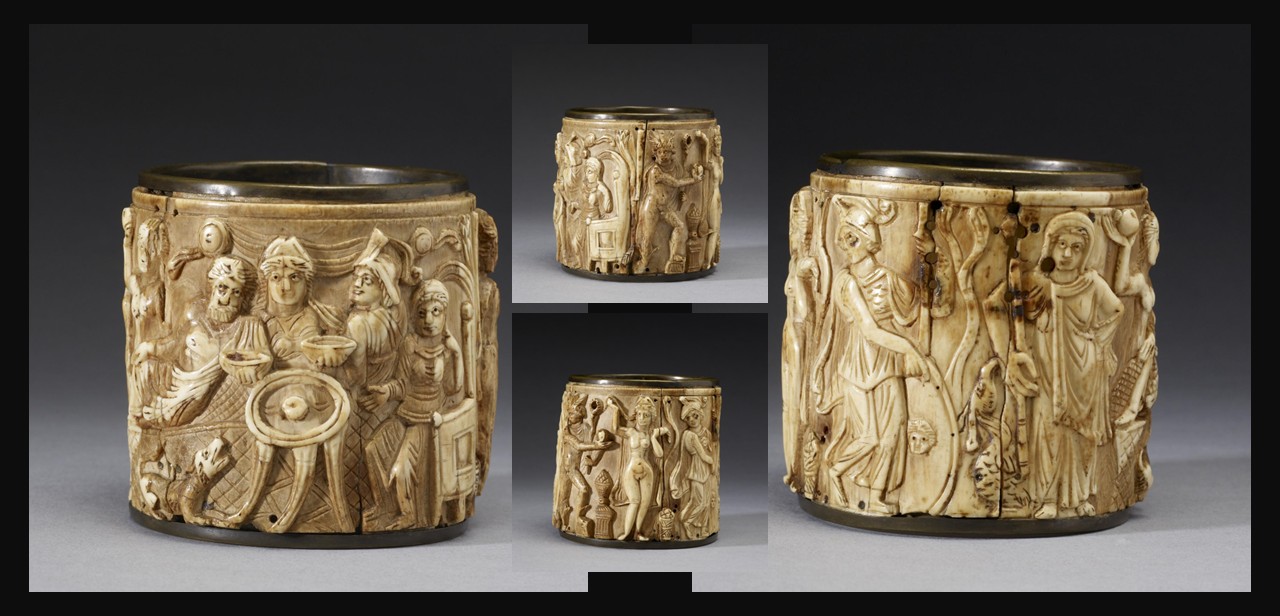
Nestled in the collection of The Walters Art Museum in Baltimore is a remarkable Ivory Vessel known as the Circular Pyxis, carved in Egypt during the 5th or the 6th century AD. This delicately worked object may be small in size, but it opens a rich window into the artistic and cultural world of Late Antiquity, a period of transition, imagination, and blending traditions. This exquisite Late Antique Ivory Pyxis not only captivates with its carved mythological scenes but also carries a rich history of ownership that reflects the changing tides of art collecting over the centuries. Originally circulating in European collections in the 19th century, the pyxis was first recorded in the possession of Count Girolamo Possenti of Fabriano before being sold in Florence in 1880 and again in Cologne in 1886. It entered the collection of American collector Henry Walters in 1926, and upon his bequest in 1931 became part of the permanent holdings of The Walters Art Museum in Baltimore, where it continues to be studied and admired today.
What Is a Pyxis? Meaning, Function, and Materials: The term pyxis derives from the Greek word for “box” and in antiquity referred to a small, lidded container used to store personal items such as jewelry, cosmetics, or incense. Characterized by its simple form, a body with a fitted lid, the pyxis offered artists a compact surface for both functional design and decorative refinement. Although the type is most familiar from Classical and later Greek pottery, archaeological evidence indicates that luxury containers, including examples carved from ivory, were already produced in the Aegean during the Minoan and Mycenaean periods. By the Roman and Late Antique eras, the pyxis had become firmly established as a prestigious object, increasingly fashioned from precious materials such as ivory, metal, and stone. Ivory in particular, valued across the Mediterranean for its rarity and suitability for fine carving, endowed these objects with an elegance that signaled both elite status and a long tradition of personal adornment.
Mythological Imagery on the Circular Pyxis: What makes the Baltimore pyxis truly exceptional is its carved decoration. Around its circumference, the artist has rendered two mythological episodes from Greek lore in fine relief. One scene depicts the Olympian gods feasting, gathered around a tripod and holding the famed golden Apple of the Hesperides. In the next, Hermes presents this golden fruit to Aphrodite, chosen over Hera and Athena as the most beautiful goddess, a story connected to the Judgment of Paris.
Late Antique Context: Pagan Myth in a Christian Age: This pyxis was carved in Late Antique/Early Christian period, a time when classical Greek mythological themes were still popular even as the Roman Empire embraced Christianity. Many luxury ivories from the 4th through 7th centuries blend pagan and Christian imagery or appear in elite contexts where older stories of pagan mythology remained aesthetically or intellectually significant. The survival of this mythological subject matter on an object likely owned by a sophisticated patron suggests that ancient narratives continued to resonate even amid changing beliefs.
Why the Late Antique Ivory Pyxis Still Matters Today: Today, the Circular Pyxis invites us not only to admire the technical skill of its anonymous craftsman but also to reflect on the layered cultural world it came from. Its intricate carvings make it both a work of art and a storytelling medium, bridging classical mythology with Late Antique tastes. Objects like this remind us that art can transcend time, connecting the ancient past to modern viewers in unexpected ways.
For a related PowerPoint presentation on Ivory Pyxides from the Greco-Roman world, please, Check… HERE!
Bibliography: From the Walters Art Galleryhttps://art.thewalters.org/object/71.64/