Hopper’s raw 1918 propaganda poster Smash the Hun — dismissed by its creator as “pretty awful” — unexpectedly launched his career, winning $300 and captivating thousands of Broadway passersby.
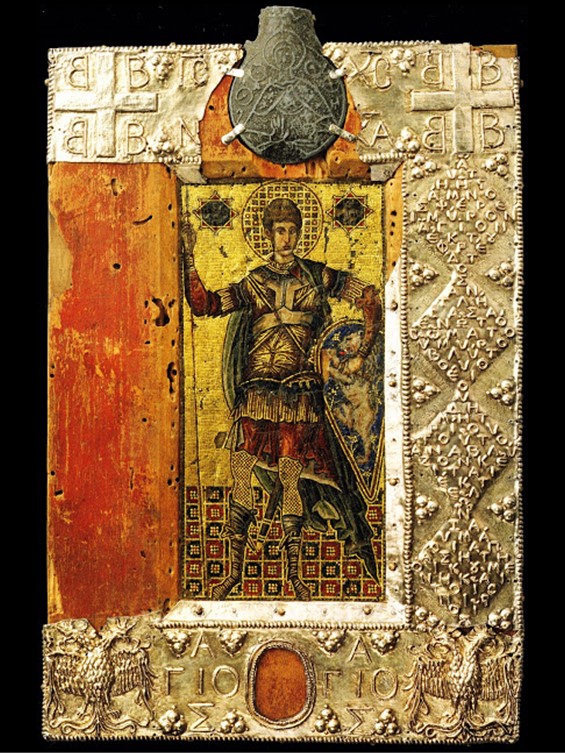
Miniature Mosaic Icon of Saint Demetrios in Sassoferrato
Sassoferrato’s breathtaking micromosaic Saint Demetrios — soldier, miracle-worker, holy oil and all — distills Byzantium’s final glorious artistic flowering into one extraordinary 24cm treasure.
Autumn by Giuseppe Arcimboldo
Arcimboldo’s gloriously quizzical Autumn — berry-eyed, grape-crowned, emerging from a wine barrel — transforms harvest abundance into portraiture so inventive it astonishes five centuries later.
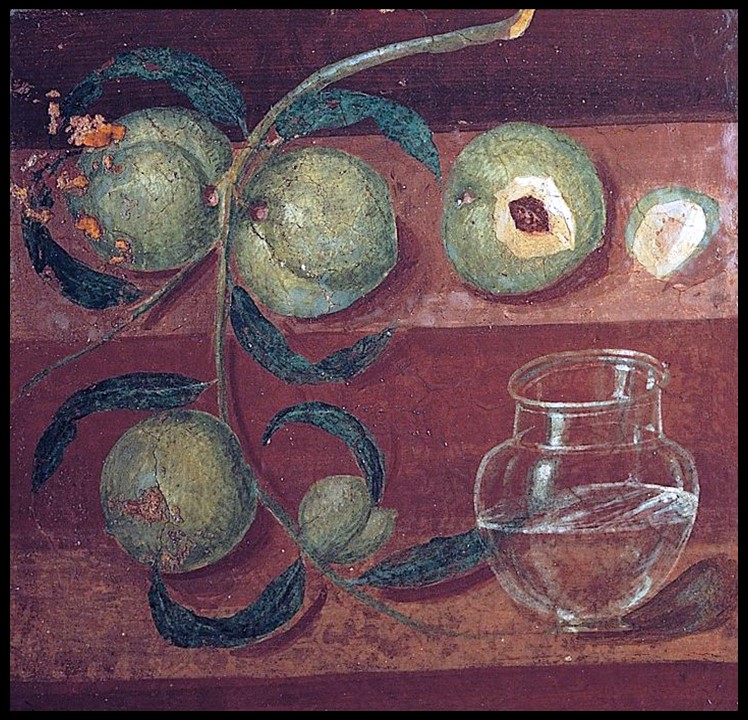
House of the Deer in Herculaneum
Herculaneum’s luminous Still Life with Peaches and Water Jar — frozen since 79 CE — reminds us on World Food Day that sharing food with others is humanity’s most ancient, generous impulse.
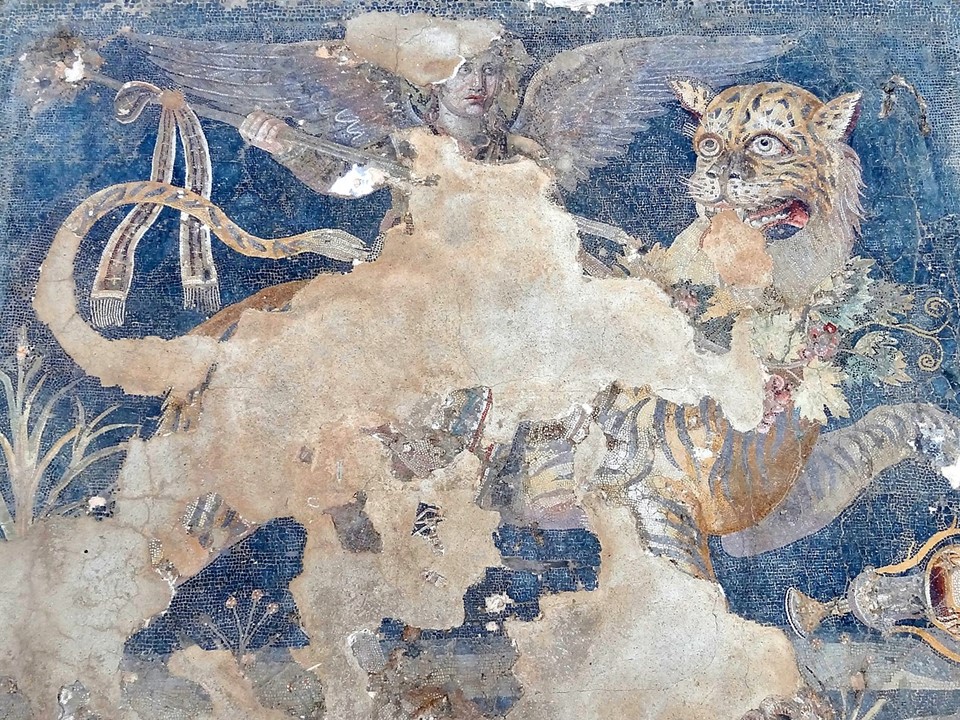
The Epiphany of Dionysus Mosaic in Delos
Delos’s breathtaking Epiphany of Dionysus — ivy-crowned, winged, tiger-mounted — captures antiquity’s most electrifying god in one million tiny tesserae of pure Hellenistic genius.
The Red School House by Winslow Homer
Homer’s luminous Red School House — a young teacher, mountain light, children learning — captured post-Civil War America’s tender optimism for simpler times and brighter futures.
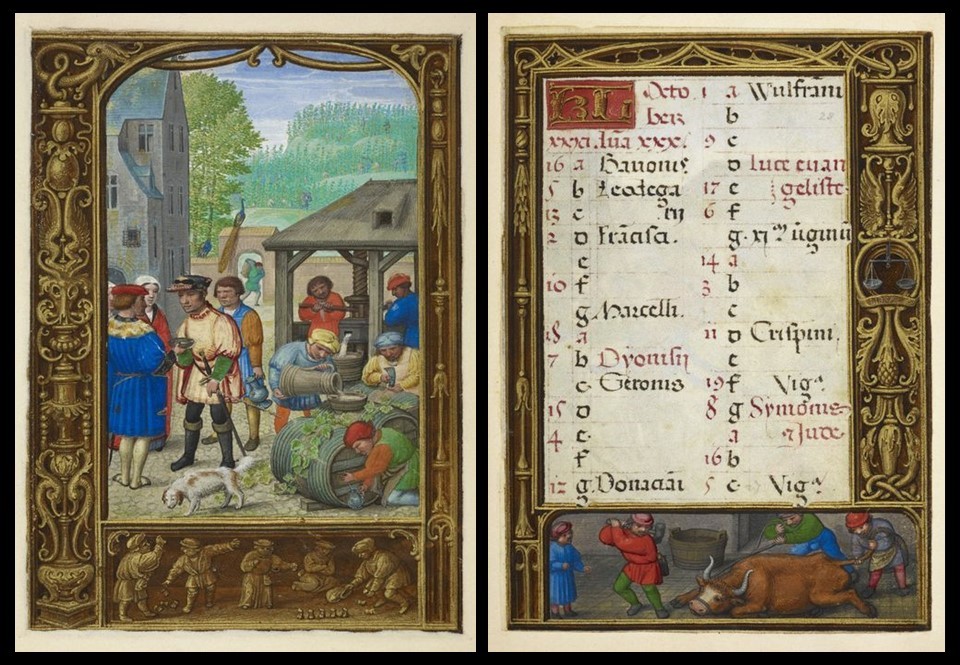
Simon Bening’s October
Bening’s intoxicating October miniature — nobles tasting, peasants pressing, barrels groaning — distills Renaissance Flemish winemaking into one luminous, grape-soaked masterpiece of observation.
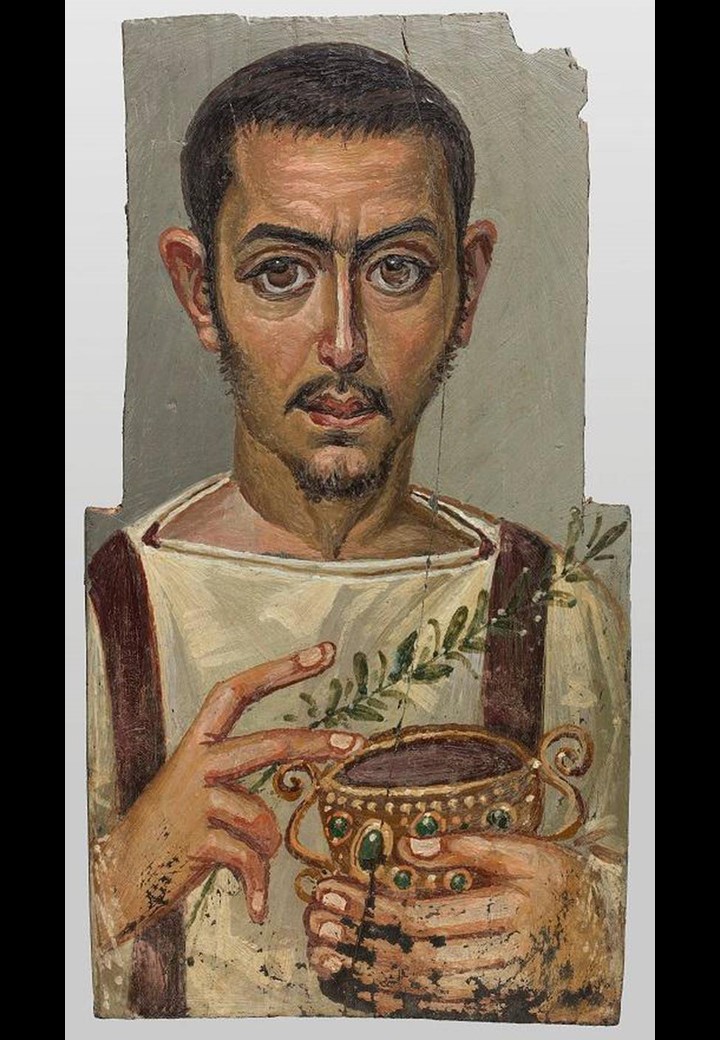
Fayum Portrait of a Man with a Cup
The Louvre Abu Dhabi’s Man with a Cup — hollow-cheeked, large-eyed, hauntingly alive — bridges Egyptian, Greek, and Roman worlds, offering two millennia later an unforgettable human gaze.
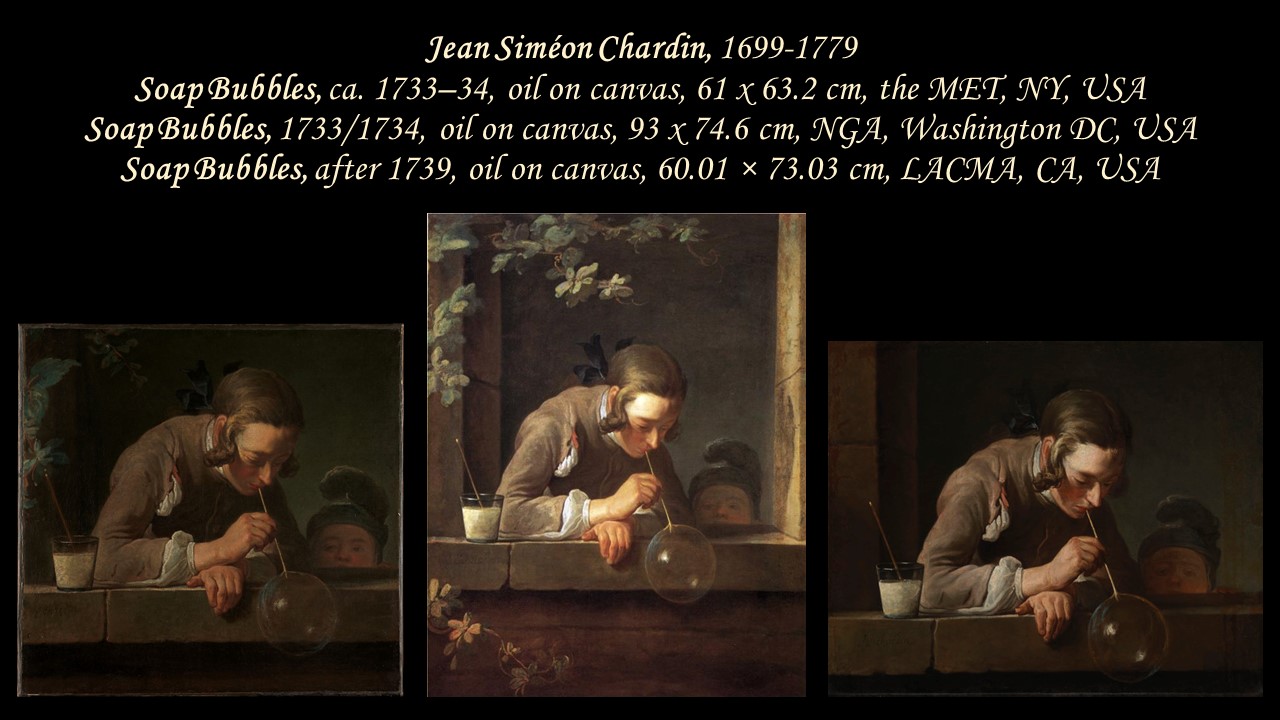
Trilogy of Soap Bubbles
Chardin’s Soap Bubbles trilogy captures playful boys and shimmering bubbles, blending Dutch-inspired naturalism with poetic ambiguity—an image of fleeting innocence and life’s transience, rendered with quiet dignity and emotional depth.
Portrait of Giovanni Arnolfini and his Wife
Van Eyck’s Arnolfini Portrait captivates with luminous detail, symbolic richness, and his bold “I was here” signature—blending technical mastery and mystery into a timeless scene of wealth, presence, and interpretation.