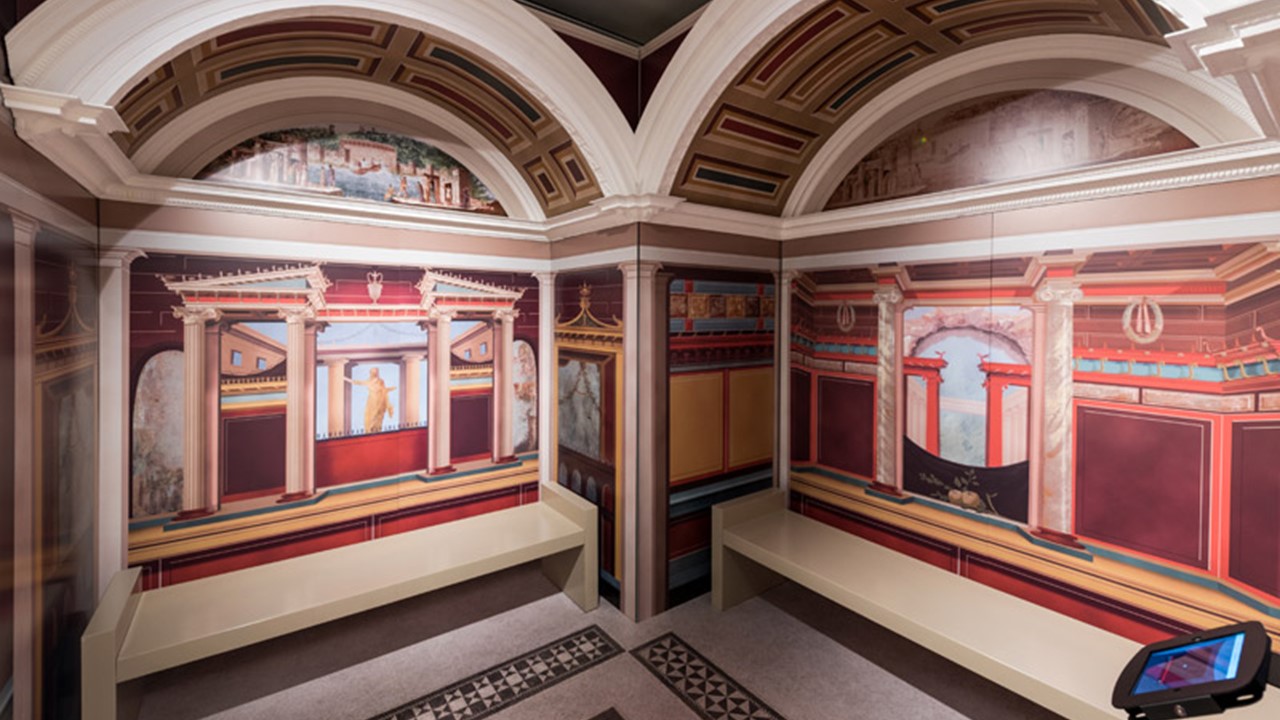
Herculaneum’s luminous Still Life with Peaches and Water Jar — frozen since 79 CE — reminds us on World Food Day that sharing food with others is humanity’s most ancient, generous impulse.
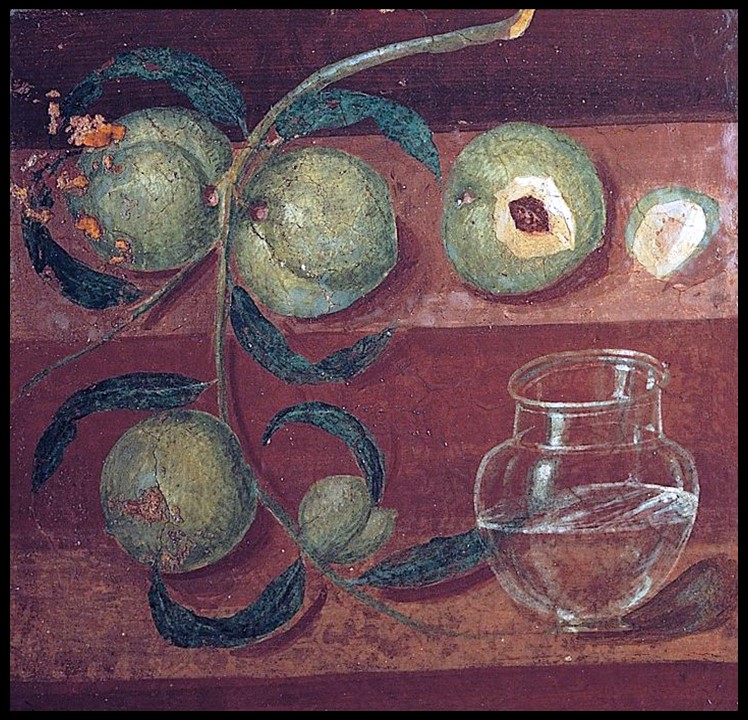
Herculaneum’s luminous Still Life with Peaches and Water Jar — frozen since 79 CE — reminds us on World Food Day that sharing food with others is humanity’s most ancient, generous impulse.
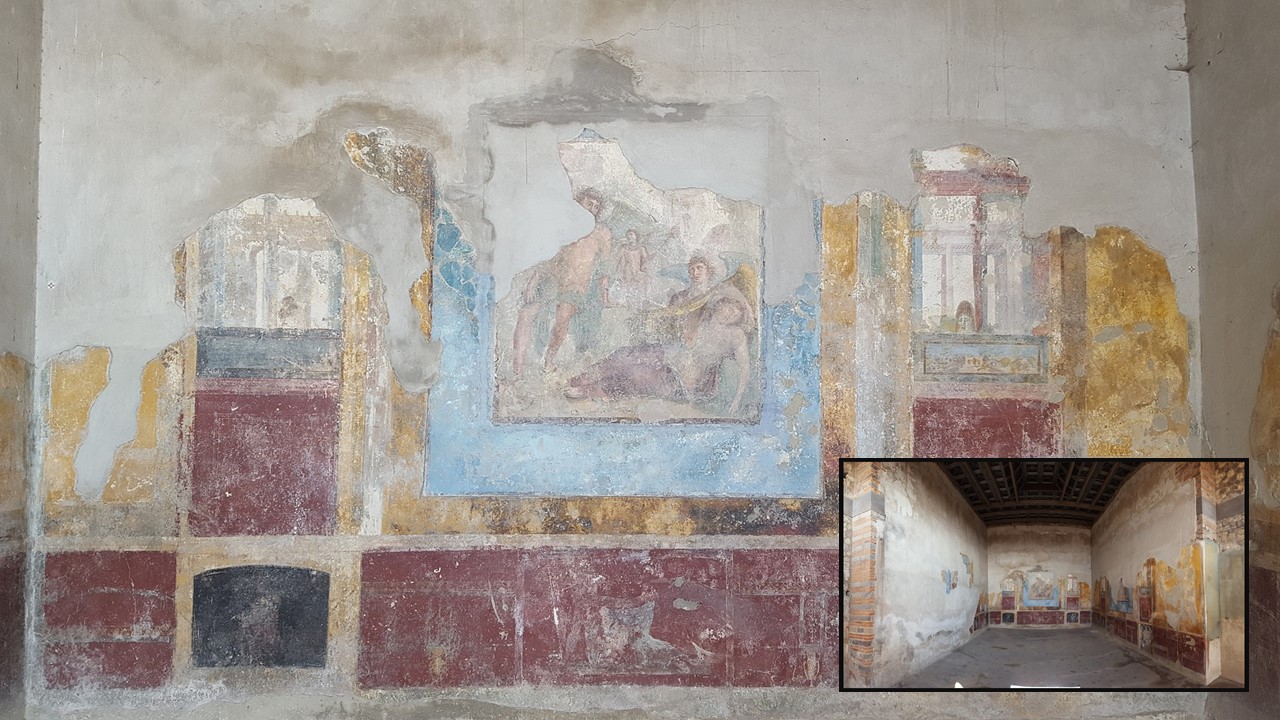
Villa Arianna at Stabiae preserves lavish 1st-century frescoes, including a vivid Dionysus and Ariadne scene in a grand triclinium, reflecting elite Roman myth, luxury, and imaginative Fourth Style wall decoration.
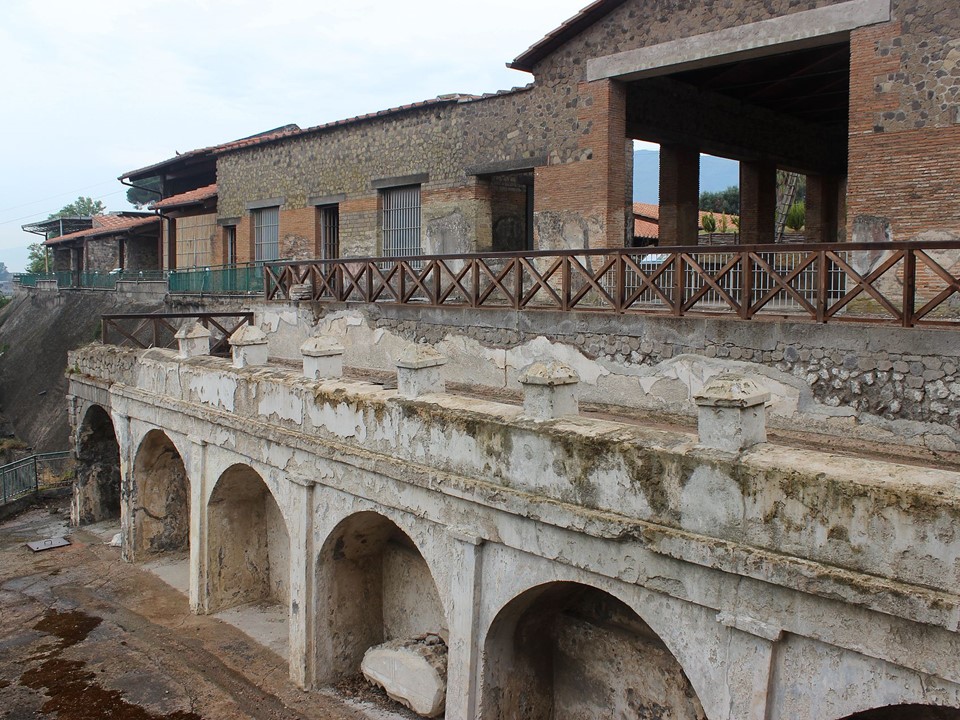
Villa Arianna at Stabiae, a luxurious Roman seaside residence, featured panoramic views, elaborate frescoes, and baths; early excavations damaged it, but modern archaeology continues to reveal its scale and significance.
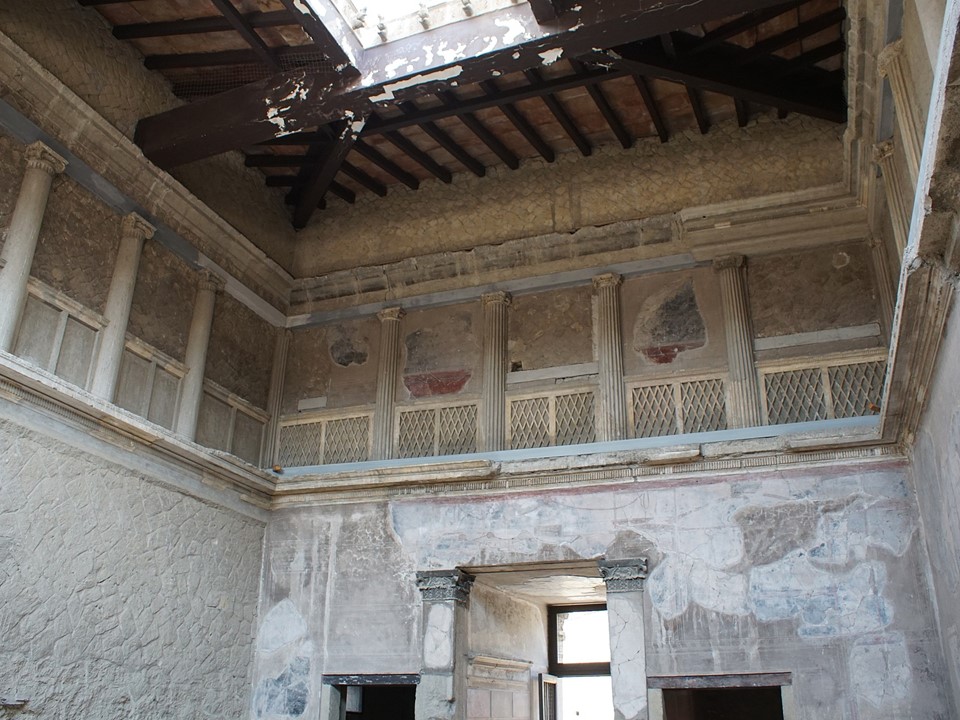
Herculaneum’s Samnite House, dating to the 2nd century BC, is a remarkable survivor — its frescoed fauces, Corinthian columns, and ornate atrium offering an intimate glimpse into ancient Roman domestic life.
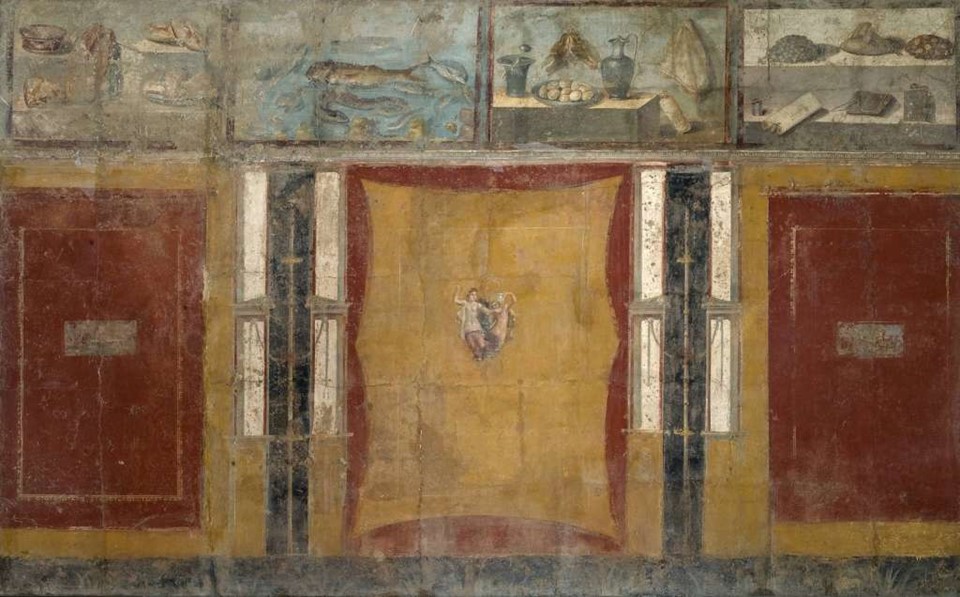
House of Julia Felix reveals a savvy Roman entrepreneur who transformed her property into baths, shops, and rentals, while its refined frescoes capture everyday luxury and commerce.
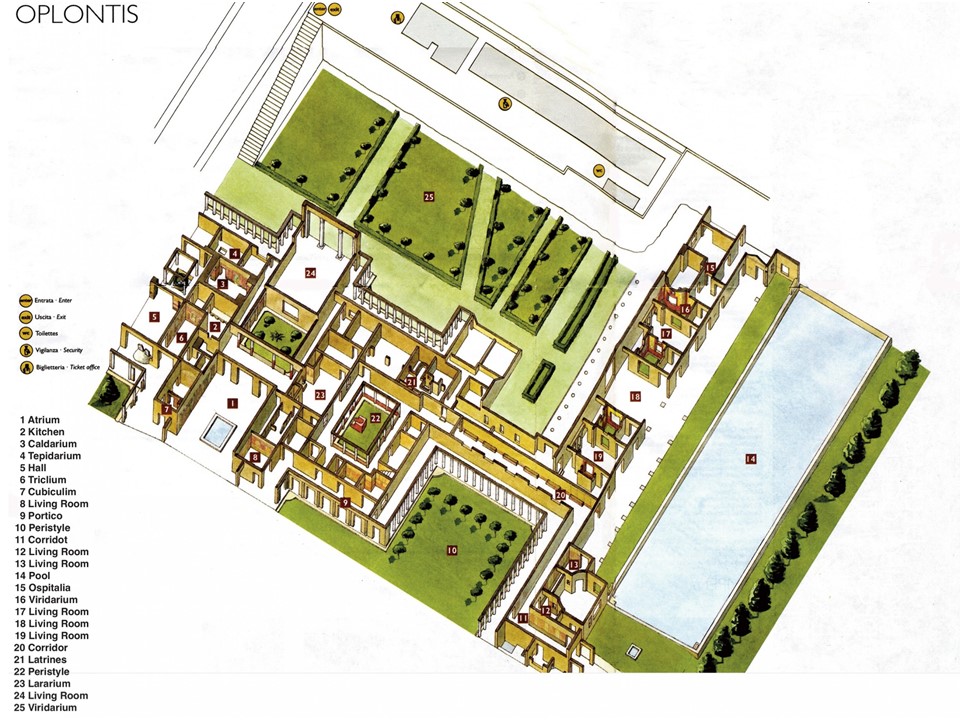
I wish I were standing in the middle of Villa Poppaea’s central sitting room (Room 18 on the plan), gazing at “the portico in front of the swimming pool and its surrounding garden… the large window (behind me, that opens) onto the principal garden of the villa… (more) windows, (on my sides) opening into rooms richly-painted with garden scenes, and (further beyond those) into tiny ‘garden’ courtyards, again decorated with garden frescos. Trees, greenery, flowers, birds and water (are) visible in every direction, both painted and real, with nature being brought into the interiors. …It’s hard not to imagine the building filled with …peace, …accompanied by the twittering of birds and the wind in the grass and leaves.” Villa Poppaea Viridarium Frescoes have a strange effect on me! https://www.italyheaven.co.uk/campania/villa-oplontis.html
Villa Poppaea, built on a plateau fourteen meters above sea level, took advantage of all the scenic pleasures of the Bay of Naples, the latest trends in architecture and the art of fresco painting. Rooms, one hundred of them, were in such a way organized so that its residents and their guests would be able to enjoy the open air and the dramatic view of the sea in an environment of the utmost luxury. Walls decorated with sumptuous frescos further enhanced the effect this Villa probably had on its residents and visitors. Please allow me to explain why exploring the fresco decoration in just one Room in Villa Poppaea, makes your trip to Oplontis, worth your time…
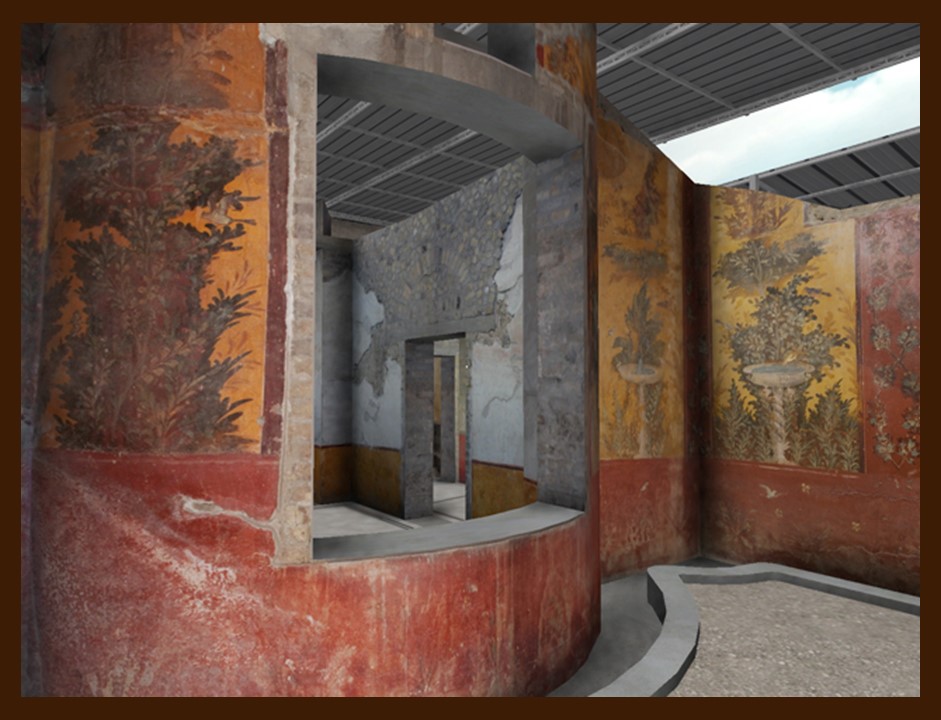
Back in the late 19th century, the German archaeologist August Mau (1840–1909), delineated and described a system of dividing Pompeian Frescoes into four distinct Styles. It is amazing how in Villa Poppaea visitors can see fine examples of the latter three of these four Fresco Styles by just walking from room to room. The amazing frescoes in the small Viridarium area (Room 16 in our Villa Plan) of Villa Poppaea are incredible!
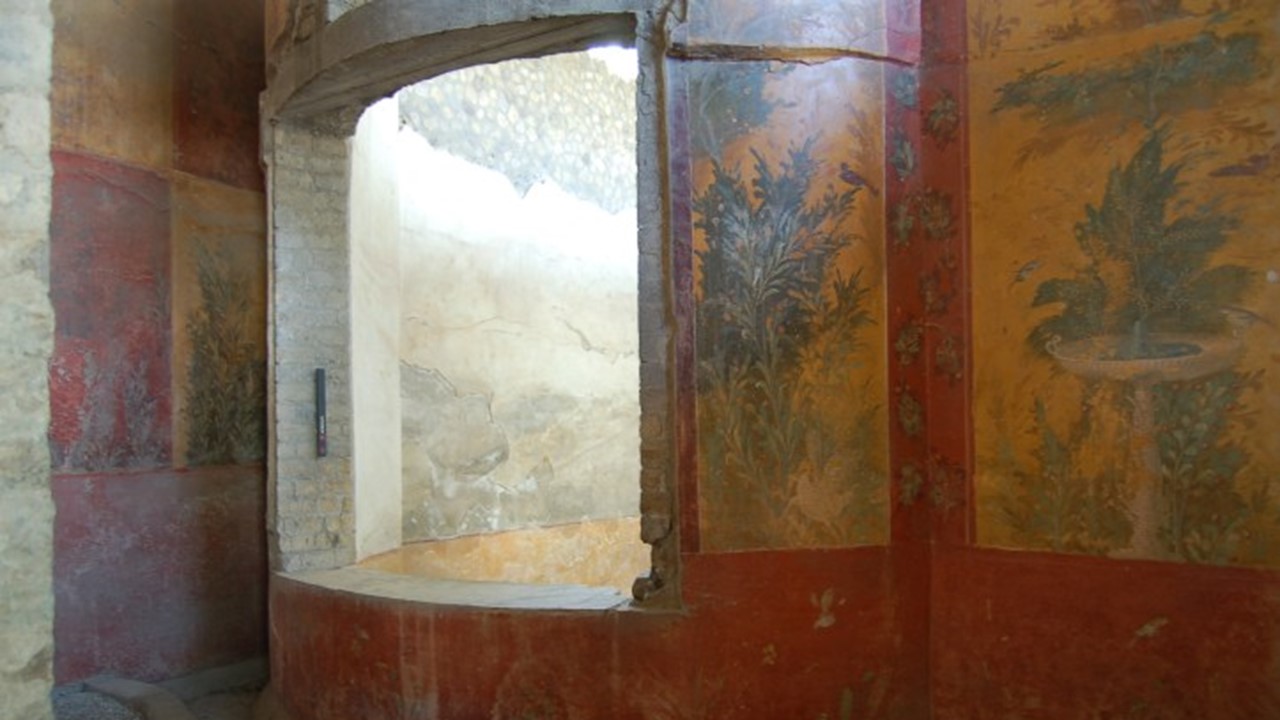
The Viridarium is described as an indoor garden sitting room, decorated with frescoes depicting plants and birds. Room 16 in our Villa Plan is one such Viridarium beautifully embellished with what scholars describe as “Garden Painting,” a very precise genre that is distinct from landscape painting. Garden Paintings give viewers an interesting glimpse of the relationship that existed between architecture and landscape in the ancient world. Exploring the frescoes of Villa Poppaea I read OPLONTIS: VILLA A (“OF POPPAEA”) AT TORRE ANNUNZIATA, ITALY by John R. Clarke and Nayla K. Muntasser, and particularly Chapter 6: Wilhelmina Jashemski and Garden Archaeology at Oplontis, by Kathryn Gleason. The information provided in this presentation is the result of an enjoyable weekend of seeking more and more data… https://quod.lib.umich.edu/cgi/t/text/text-idx?cc=acls;c=acls;idno=heb90048.0001.001;node=heb90048.0001.001:21.7.2;rgn=div1;view=text
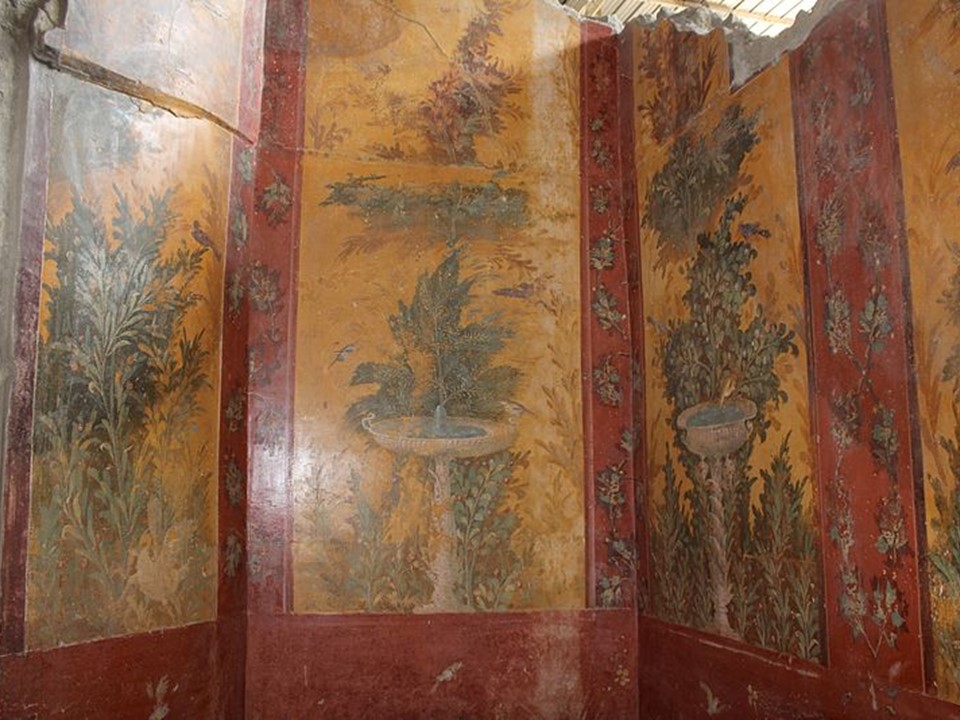
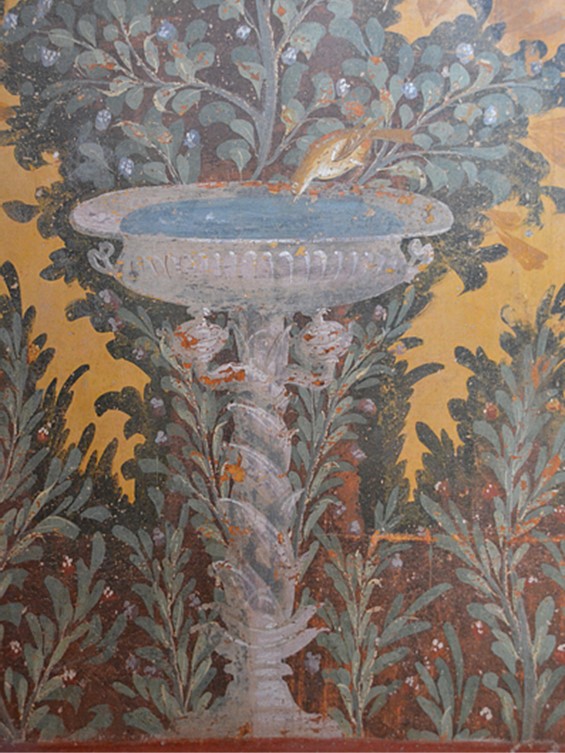
The delightful frescoes in Room 16, the Villa’s Viridarium, display arrangements of evergreen foliage of arbutus, laurels and branches of roses, artfully shaped alone or around a decorative fountain. Hues of red and yellow, powerful primary colours, serve as a striking background. Birds twittering and drinking water from the fountains give an extra sense of joyful life. Kathryn Gleason describes them as Topiarii and continues presenting Ars Topiaria, as the art of creating displays of foliage and shrubs by clipping plants, the pruning and dwarfing of large trees… to the training of ivy into ornate patterns in small peristyle gardens. https://quod.lib.umich.edu/cgi/t/text/text-idx?cc=acls;c=acls;idno=heb90048.0001.001;node=heb90048.0001.001:21.7.2;rgn=div1;view=text
I found of particular interest the site of The Oplontis Project, a collaboration of John R. Clarke and Michael L. Thomas of the University of Texas at Austin and the Soprintendenza Speciale per i Beni Archeologici di Napoli e Pompe, along with the Visual Restorations of King’s Visualisation Lab, in the Department of Digital Humanities at King’s College London, by Martin Blazeby. http://www.oplontisproject.org/ and http://www.oplontisproject.org/index.php/visualization/
For a PowerPoint on Villa Poppaea Viridarium Frescoes, please… Click HERE!
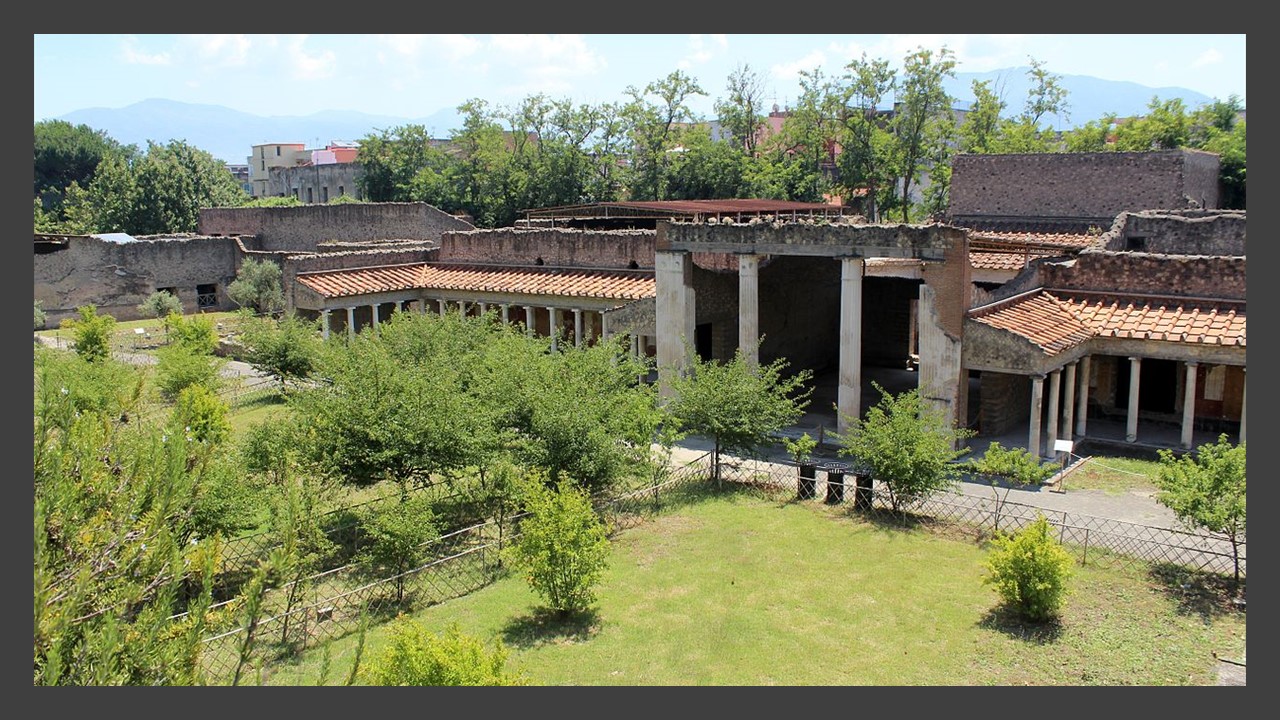
A traveller cruising by boat in the Bay of Naples during the 1st century AD would have marvelled at the continuous chain of private villas lining the coast. Although evidence of these villas survives to the present day, our knowledge is mostly fragmentary due to the fact that many are buried beneath Vesuvius’s ashes, modern estates or have been swallowed by the sea. Travellers would have been amazed by the opulence of the architectural features exhibited in these structures: porticoes, panoramic exedras, artificial or natural grottos, galleries, nymphaea, and piscinae. Travellers would have been equally amazed by the diverse interior designs and luxurious materials used by the artists. Villa Poppaea, in the ancient Roman town of Oplontis (Torre Annunziata between Naples and Sorrento, in Southern Italy) was one such extraordinary Villa…
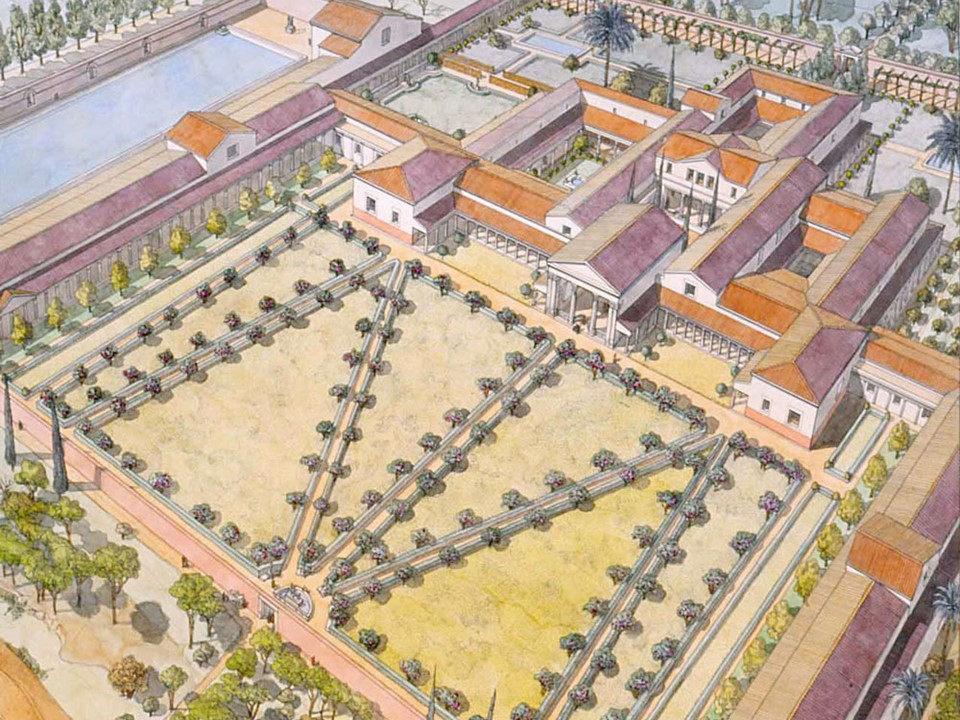
“Villa A of Oplontis, attributed by some to Poppaea the second wife of emperor Nero, was, strictly speaking, a maritime villa. It commanded a panoramic view from the top of a sheer cliff more than 14 m high that overlooked the ancient shoreline. To the south the view ranged from the limestone cliffs of the faraglioni (tall formations that resemble lighthouses) of Rovigliano, the islet near the port of Pompeii at the mouth of the Sarno River, to the length of the coast of the Sirens as far as Capri. To the west the superimposition of various layers of lava that created the Capo Oncino promontory during the Middle Ages had not completely concealed the Neapolitan and Phlegraean coast.” https://quod.lib.umich.edu/cgi/t/text/text-idx?c=acls;idno=heb90048.0001.001;rgn=div1;view=text;cc=acls;node=heb90048.0001.001:18
Villa Poppaea, built on a plateau, fourteen meters above sea level, took advantage of all the scenic pleasures of the Bay of Naples. Rooms were in such a way organized so that its residents and their guests would be able to enjoy the open air and the dramatic view of the sea in an environment of the utmost luxury. Please allow me to explain why Villa Poppaea was, for me, worth exploring…
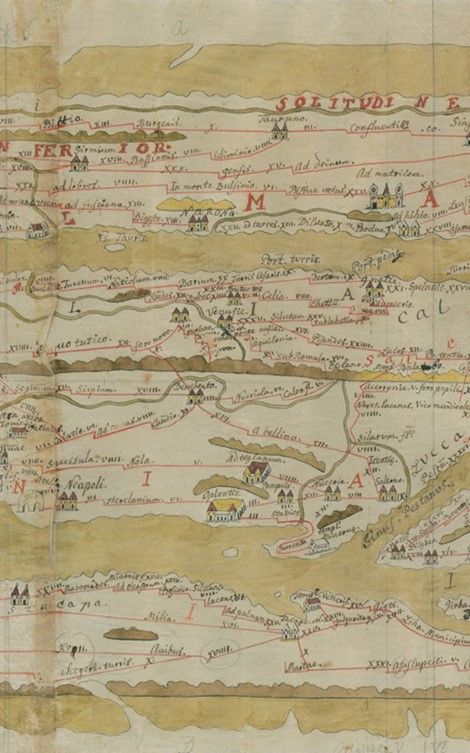
Tabula Peutingeriana, a unique twelfth-century copy of a fourth-century Roman map, marks Oplontis, the area where Villa Poppaea was discovered, as a large square building fronting the sea with twin, gabled, entrances. Interestingly, this is the only Roman reference to a site named Oplontis available to scholars. The name Oplontis is an intriguing mystery! https://quod.lib.umich.edu/cgi/t/text/text-idx?c=acls;idno=heb90048.0001.001;rgn=div1;view=text;cc=acls;node=heb90048.0001.001:20
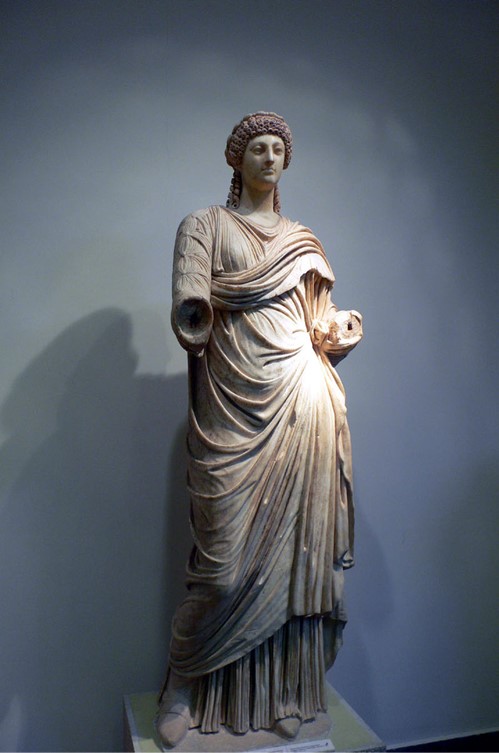
The luxurious Villa Maritime in Oplontis is believed to have been one of the residences of Poppaea Sabina, the second wife of Emperor Nero. Poppaea Sabina, born in nearby Pompeii, was the grand-daughter of Gaius Poppaeus Sabinus, Imperial Proconsul of Greece and the daughter of Poppaea Sabina the Elder, a celebrated Roman matron praised by Tacitus for her wealth and loveliness.
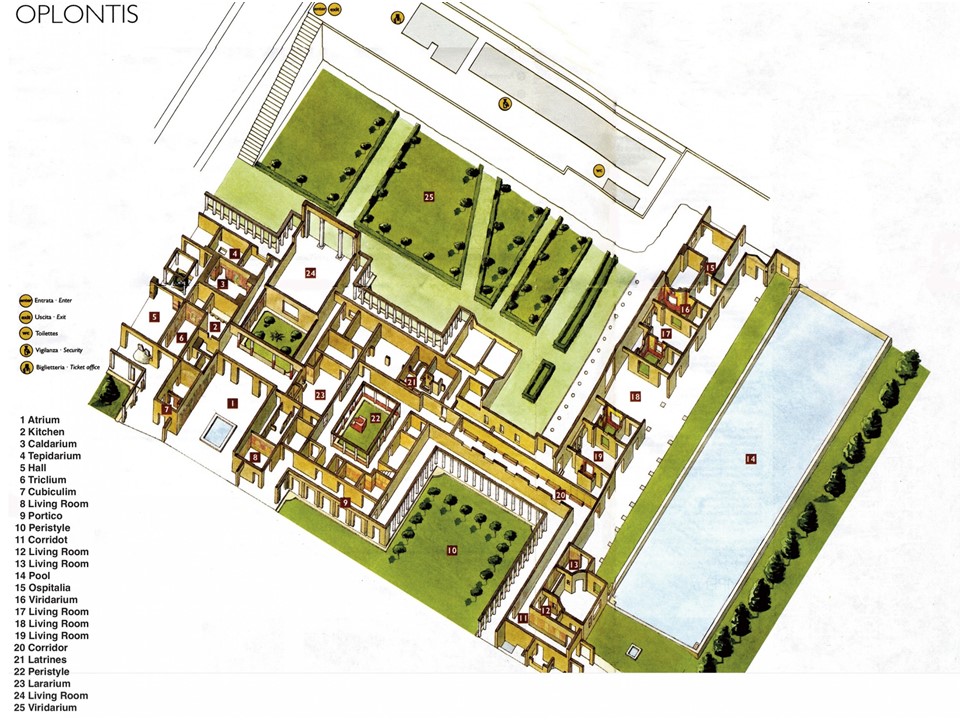
Villa Poppaea, uninhabited and under reconstruction at the time of Vesuvius’s eruption, was a massive residence of more than one hundred rooms and thirteen gardens. Construction started in the 50s BC, while renovations and extensions occurred regularly until the 79 AD volcanic eruption. This sumptuous villa was probably the model house for many of the smaller and less opulent houses built in the area at the same time. The oldest part of the house developed around the atrium, with a number of private or public rooms to serve its purpose for leisure and formalities. By 54 AD, the house extended to the east, with the addition of peristyles with collonaded porticoes extending out from the building’s core, an immense swimming pool and formal gardens. http://pompeiisites.org/en/oplontis-en-2/villa-poppaea/
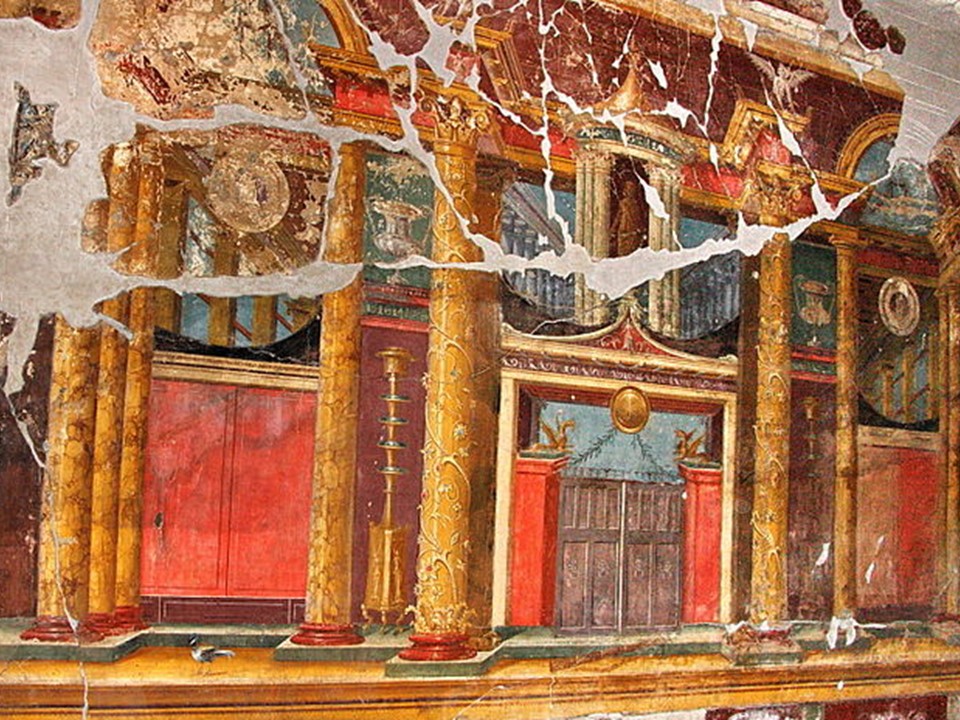
The 4th reason why Villa Poppaea was, for me, worth exploring, is its interior decoration… please bear with me as I will discuss the Villa’s frescoes in Villa Poppaea, Part II.
For a PowerPoint on Villa Poppaea, please… Check HERE!