Andrea della Robbia’s glazed terracotta Portrait of a Child embodies Renaissance ideals of innocence and care, using luminous color and tender naturalism to celebrate childhood and reflect enduring values of compassion and human dignity.
Guido Mazzoni’s Portrait of an Old Man
Guido Mazzoni’s terracotta portrait of an elderly man confronts viewers with unidealised age and psychological realism, transforming clay into a profound Renaissance meditation on human dignity, mortality, and individual identity.
Michelangelo’s Bacchus with Satyr
Michelangelo’s Bacchus transforms Horatian visions of Dionysian ecstasy into marble, depicting the god’s intoxicating instability, sensuality, and mythic ambiguity through a dynamic fusion of classical form and emotional excess.
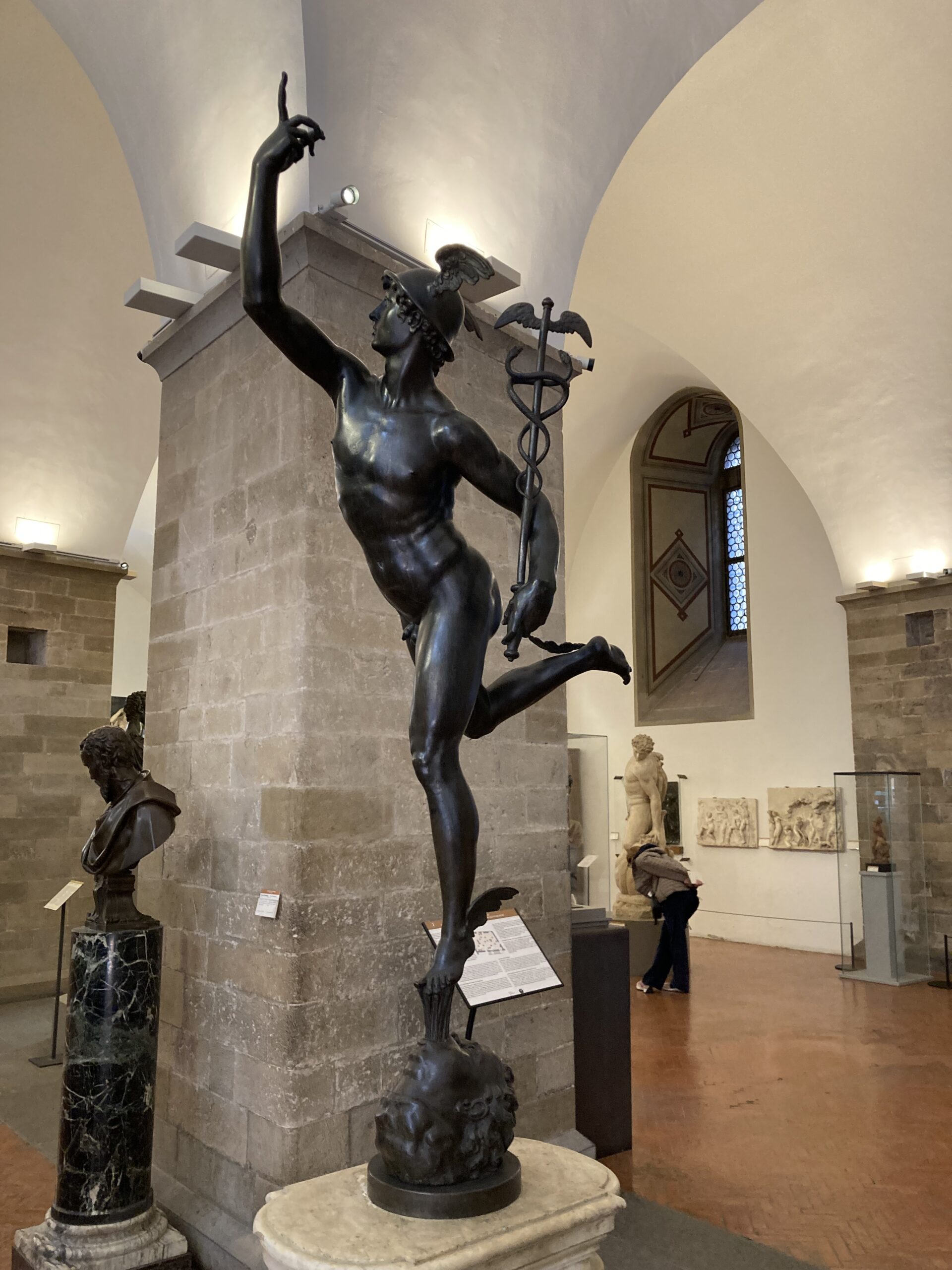
Giambologna’s Mercury
Poised mid-flight on a breath of wind, Giambologna’s bronze Mercury at Florence’s Bargello Museum defies gravity — a Mannerist masterpiece where myth, motion, and divine elegance are frozen in bronze.
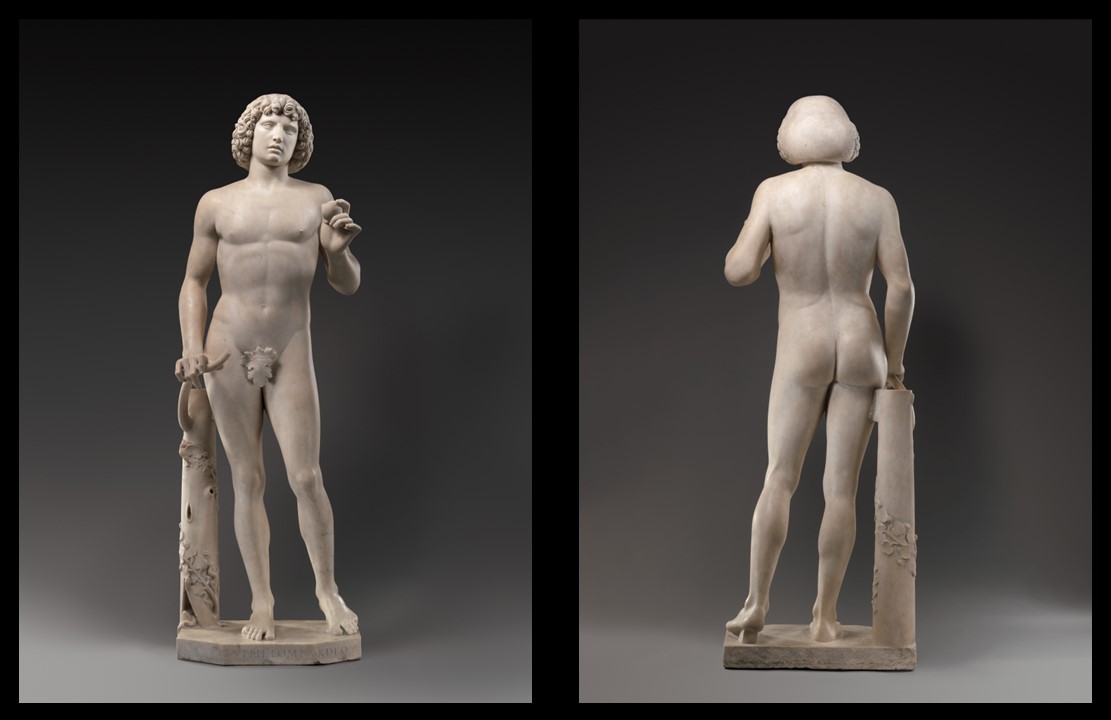
Adam’s Statue by Tullio Lombardo
Tullio Lombardo’s marble Adam — Renaissance humanism at its most sublime — embodies Milton’s timeless lament: divine beauty forever shadowed by the weight of human frailty.
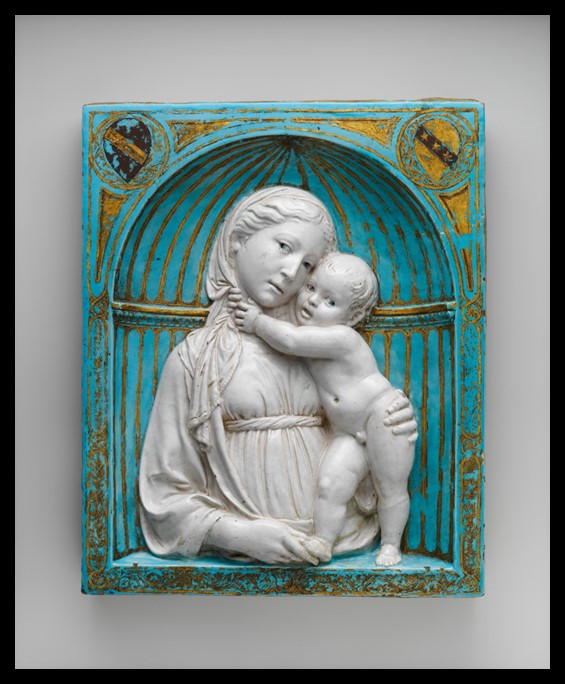
Bliss Madonna by Luca della Robbia
Virgin and Child in a Niche (Bliss Madonna) exemplifies Renaissance innovation, where glazed terracotta becomes luminous, timeless devotion—merging spiritual intimacy, classical harmony, and technical mastery in a serene image of sacred tenderness.
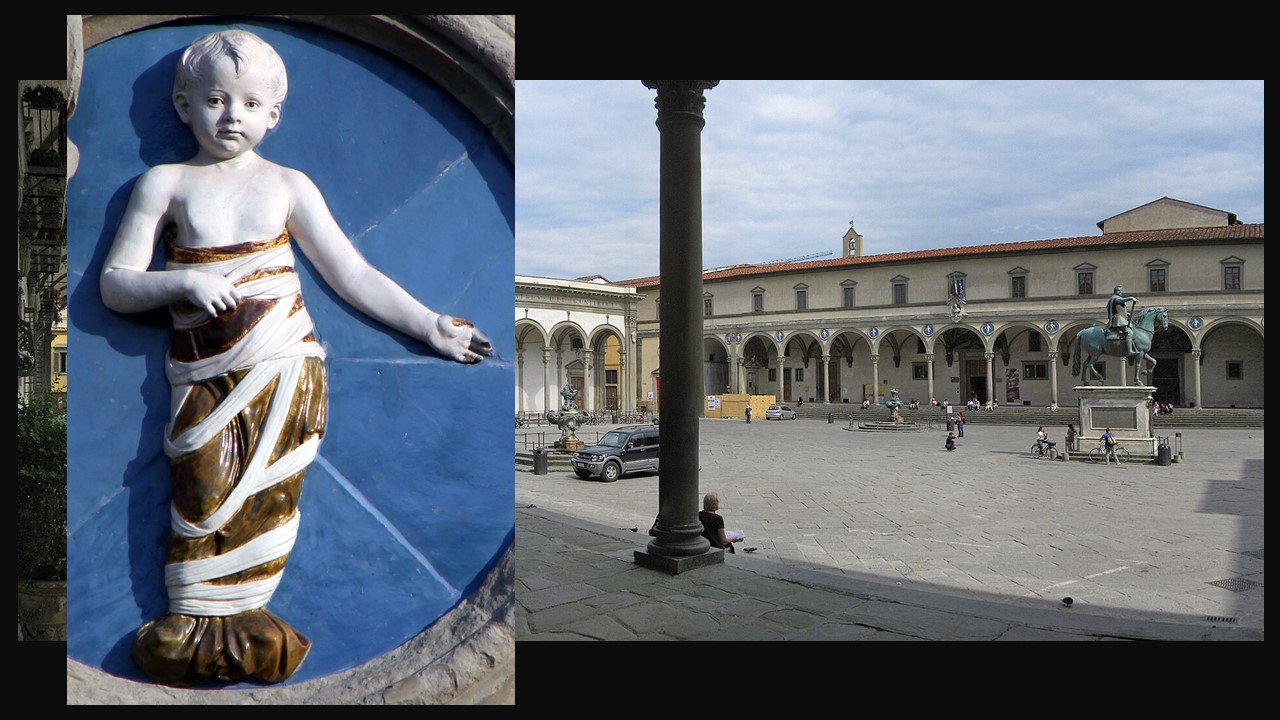
Spedale degli Innocenti in Florence
Explore Florence’s Ospedale degli Innocenti — Brunelleschi’s Renaissance masterpiece built for orphaned children, adorned with Andrea della Robbia’s tender glazed terracotta roundels, celebrating innocence, compassion, and timeless artistic beauty.
Brunelleschi vs. Ghiberti
Relive the legendary 1401 Florence Baptistery competition — where Ghiberti’s gilded genius triumphed over Brunelleschi’s brilliance, launching one of the Renaissance’s most captivating artistic rivalries, as told by Vasari himself.
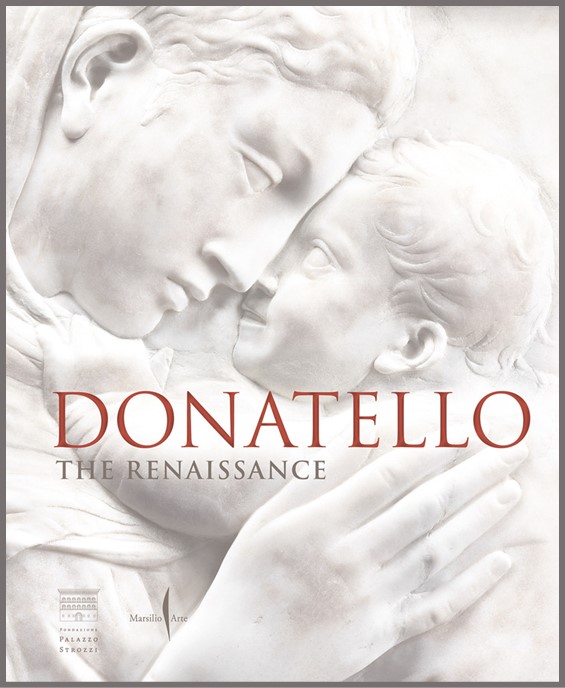
Donatello’s Pazzi Madonna
Donatello’s Pazzi Madonna (c.1420) reveals tender intimacy between mother and child, exemplifying his innovative, humanized style and groundbreaking role in shaping Renaissance sculpture.
The Colosso del’Appennino by Giambologna
A Renaissance marvel, Giambologna’s Colosso del’Appennino is a 10-meter mountain giant statue, once animated with water and hidden chambers, symbolizing Medici power and artistic ingenuity.