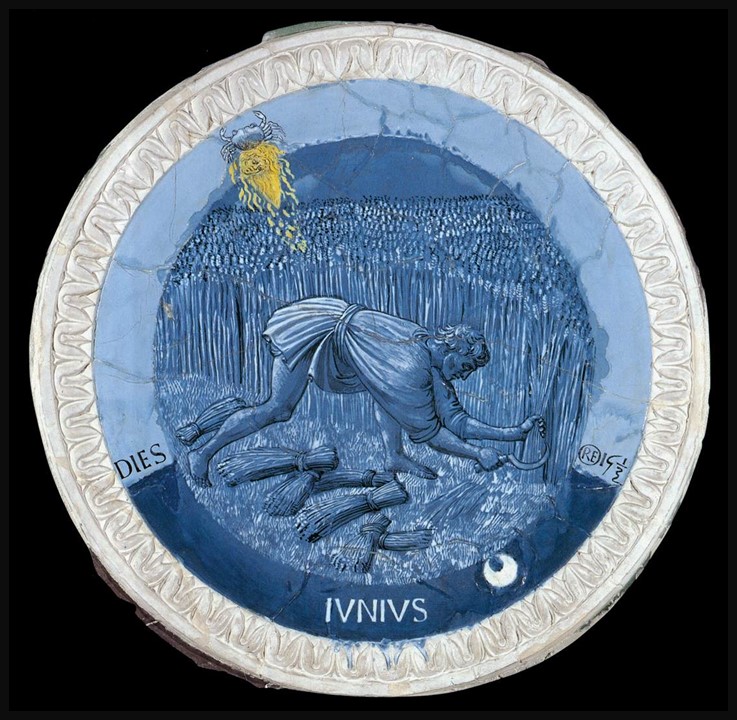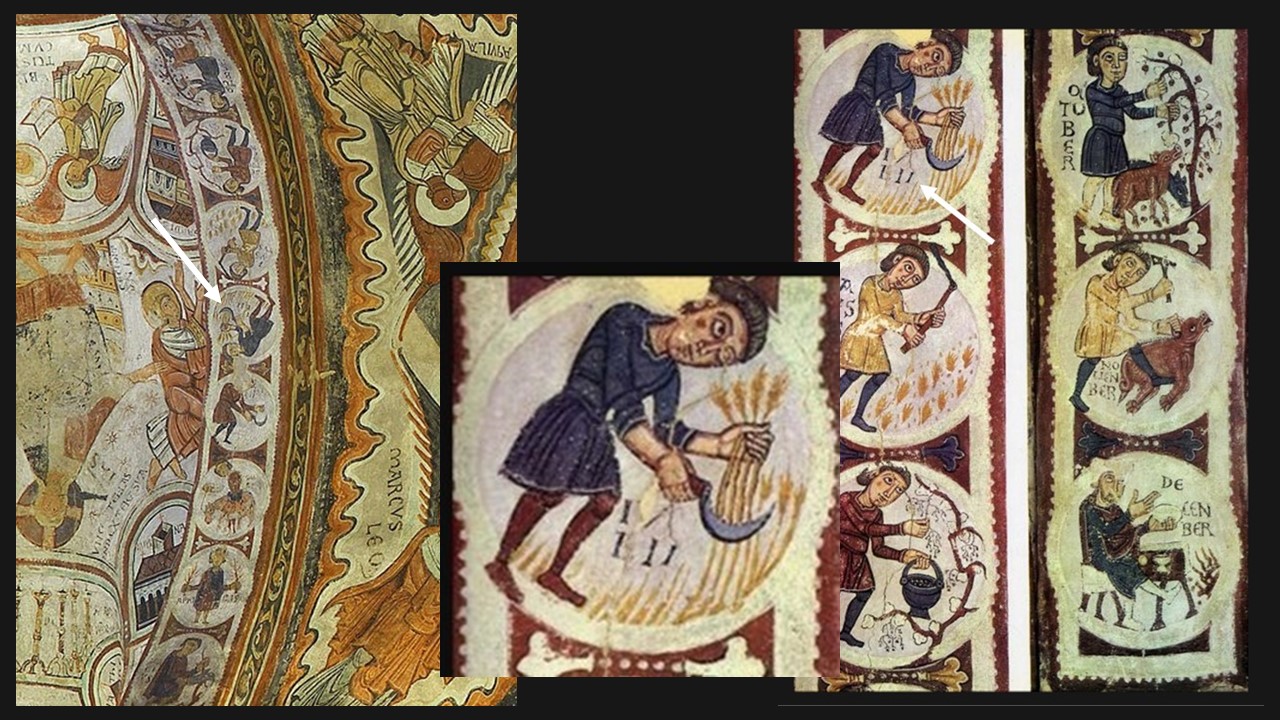
July, Calendar of San Isidoro de León, between 1160 and 1170, fresco painting, Colegiata de San Isidoro, León, Spain https://conocerelmundo.blog/2021/04/25/san-isidoro-de-leon/ and https://viajarconelarte.blogspot.com/2015/06/el-panteon-real-los-claustros-y-el.html
On the 12th of May 2024, I was in León, Spain, and the Royal Pantheon of San Isidoro was the first cultural monument I visited. Nestled within the Royal Collegiate of San Isidoro, this remarkable Pantheon is often referred to as the “Sistine Chapel of Romanesque Art” due to its stunningly preserved frescoes that date back to the 12th century. As I stepped inside, I was immediately captivated by the vibrant murals that depict biblical scenes and medieval life, their rich colours, and intricate details astonishingly intact after centuries. The Pantheon serves as the final resting place for many of León’s kings and queens, adding a profound historical significance to its artistic splendour. The serene ambience, coupled with the sense of walking through a living piece of history, made my visit an unforgettable introduction to the cultural and historical treasures of León.
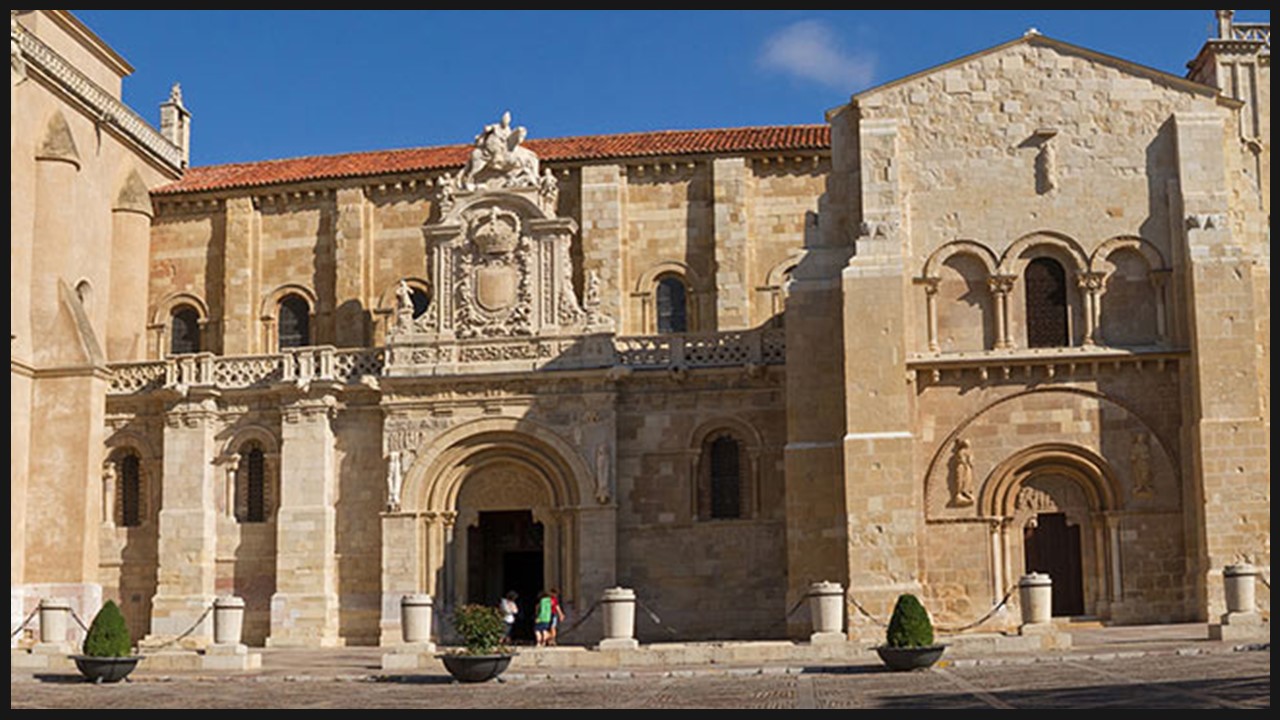
https://basilicasanisidoro.com/
The Royal Collegiate of San Isidore in León holds a pivotal place in Spanish history and culture, renowned for its religious, architectural, and historical significance. Established in the 10th century and later dedicated to Saint Isidore of Seville, this monastery has long been a center of spiritual and intellectual life. Architecturally, it is a stunning example of Romanesque design, featuring intricate carvings, soaring arches, and the remarkable Royal Pantheon with its breathtaking frescoes. Historically, it served as a royal collegiate church and a burial site for Leonese monarchs, symbolizing the political and religious power of the Kingdom of León. The monastery also played a crucial role in the cultural revival of the medieval period, housing a vast scriptorium where scholars produced and preserved numerous manuscripts, thus contributing significantly to the preservation and dissemination of knowledge throughout Europe.
The architecture of the Royal Pantheon in San Isidoro in León is a quintessential example of the Romanesque style, characterized by its solid and austere construction, yet adorned with remarkable artistic details. The structure features robust stone walls and semi-circular arches that exude a sense of permanence and strength. Inside, the Pantheon is renowned for its barrel-vaulted ceilings, which are covered with some of the most exquisite and well-preserved frescoes from the 12th century. These vibrant murals, which depict biblical scenes and daily life, are framed by intricately carved capitals atop sturdy columns, adding to the grandeur of the space. The use of natural light, filtering through small, strategically placed windows, enhances the ethereal quality of the interior, creating a sacred atmosphere that complements its function as the resting place for León’s royalty. This harmonious blend of architectural solidity and artistic finesse makes the Royal Pantheon a masterpiece of medieval art and architecture.
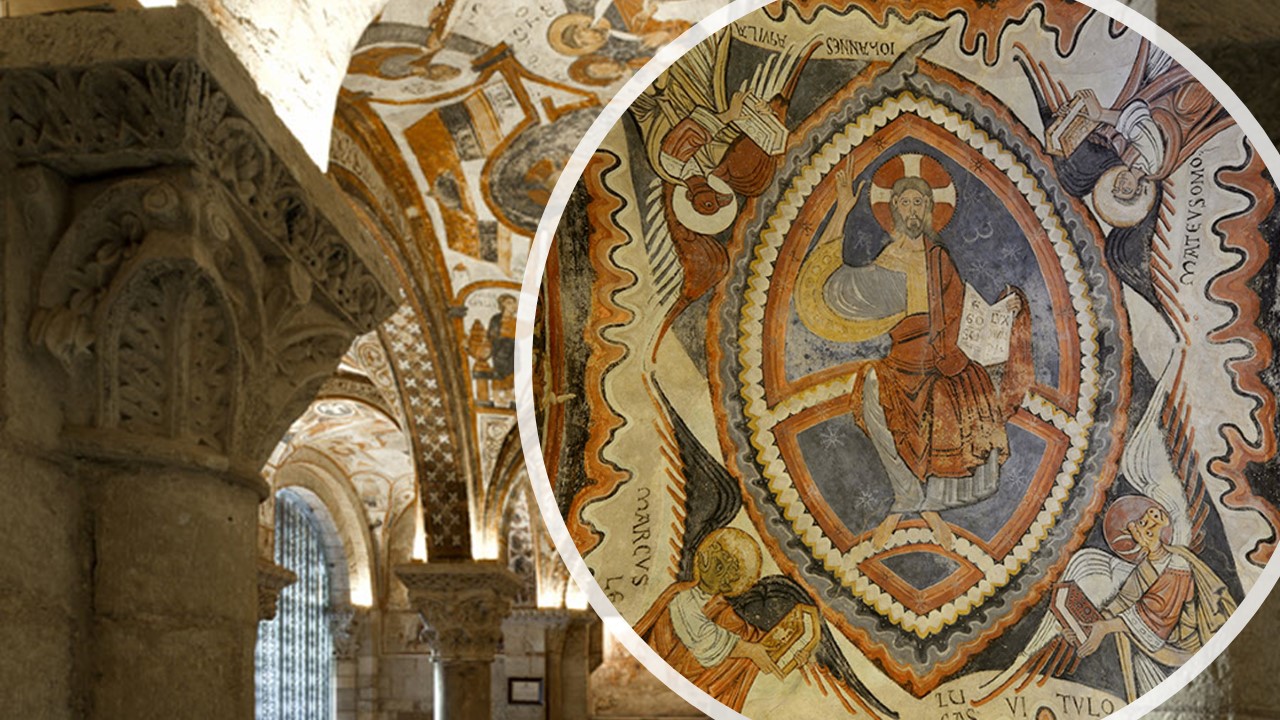
https://www.museosanisidorodeleon.com/en/the-royal-panteon/ and https://www.wga.hu/html_m/zgothic/mural/12c2/05catala.html
The fresco decoration of the Royal Pantheon is an equally stunning example of Romanesque art, revered for its vibrant colours and intricate detail. These 12th-century murals cover the ceilings and upper walls, vividly depicting an array of biblical scenes, including the Annunciation to the Shepherds, Christ in Majesty, and various saints and angels. The frescoes are notable for their expressive figures and dynamic compositions, capturing the spiritual and cultural essence of the medieval period. Rich hues of reds, blues, and ochres dominate the palette, creating a visually striking contrast against the stone architecture. These frescoes not only serve as a religious and educational tool, illustrating key narratives of Christian doctrine but also stand as a testament to the artistic skill and devotional intensity of the period. Their exceptional preservation allows visitors to experience the same awe and reverence as medieval worshippers, making the Royal Pantheon a remarkable fusion of art, faith, and history.
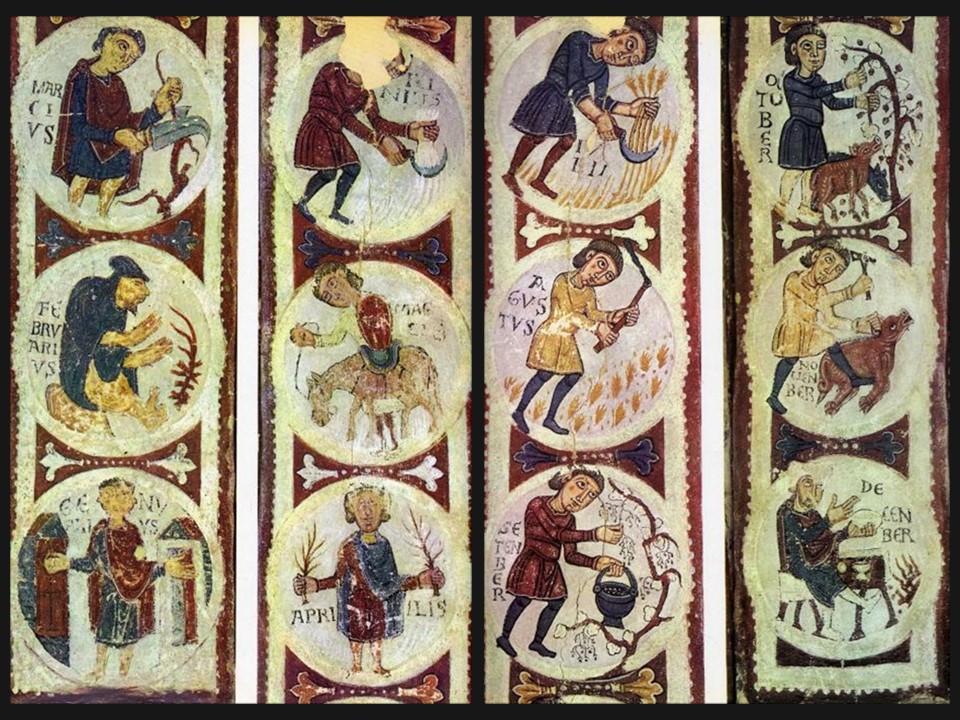
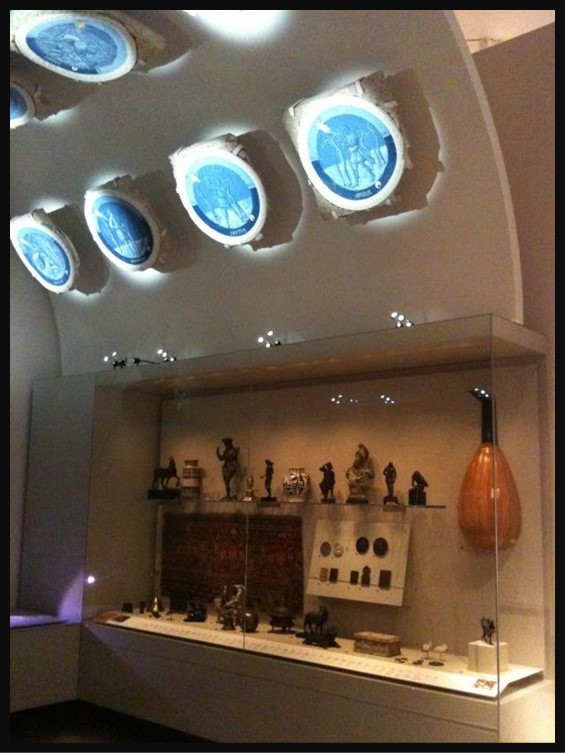
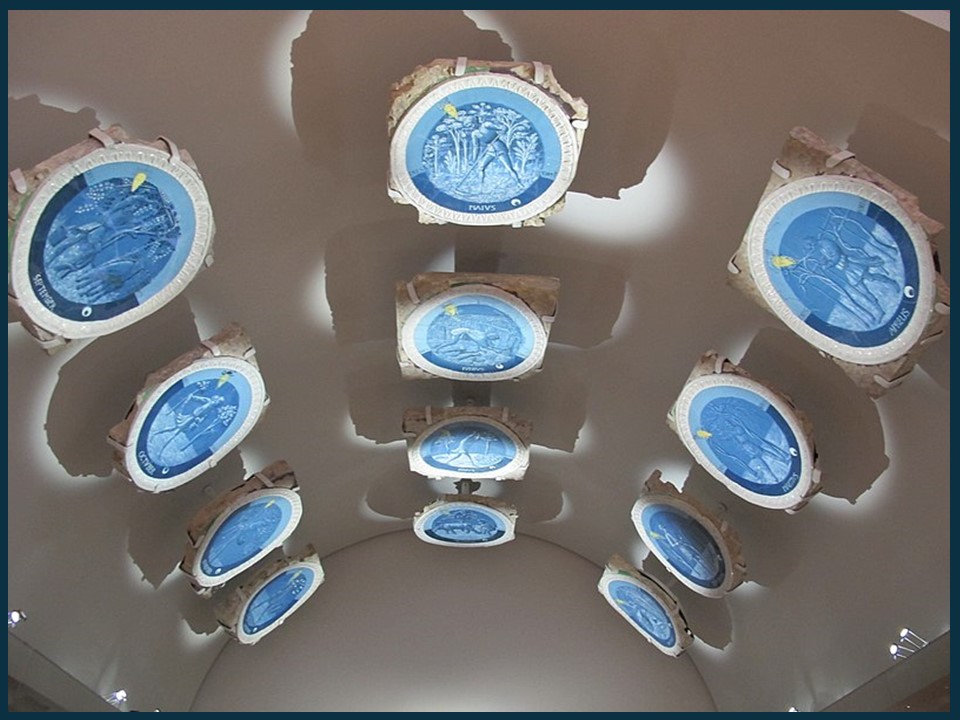
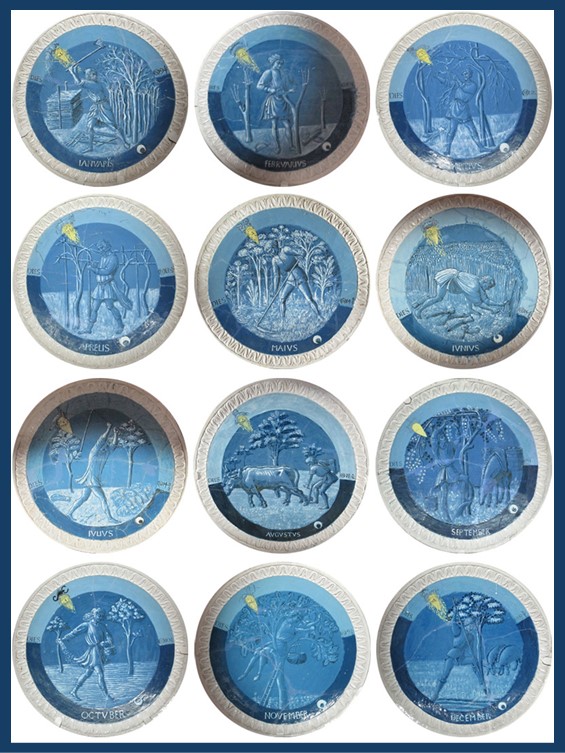
Calendar of San Isidoro de León, between 1160 and 1170, fresco painting, Colegiata de San Isidoro, León, Spain https://viajarconelarte.blogspot.com/2015/06/el-panteon-real-los-claustros-y-el.html
I was pleasantly surprised by the twelve roundels presenting the agricultural calendar, developed in the intrados (the inner curve of an arch or vault) of an arch, where the daily and real life of the people of León in the 12th century are portrayed. These frescoes depicting the 12 months are a fascinating blend of Roman tradition and medieval life. Each month is personified with a vivid scene that captures the essence of seasonal activities and agricultural cycles. January, (Genuarius), echoes the ancient Roman deity Janus, with a double-faced figure symbolizing the transition between the old and new year. February, (Februarius), shows a man warming himself by the fire, indicating the harshness of winter and the retreat from outdoor labour. March, (Marcius), portrays a man pruning vines, a task essential for the forthcoming growth. April, (Aprilis), celebrates the onset of planting with a figure holding tender sprouts, ready for sowing. May, (Magius), diverges from agricultural labour, depicting a knight with a shield, representing the pursuits of hunting and warfare. June, (Iunius), and July, (Iulii), are illustrated with scenes of harvesting, emphasizing the peak of agricultural activity. August, (Agustus), focuses on the separation of grain from chaff, a crucial step in the agricultural process. September, (September), captures the grape harvest, a vital part of the winemaking tradition. October, (October), shows a man shaking acorns from a tree to feed pigs, linking to the preparation for winter. November, (November), is marked by the depiction of pig slaughter, a significant event for food preservation. Finally, December, (December), closes the cycle with a man resting by the fire, reflecting on the year’s labours, and enjoying the respite of winter. These frescoes not only highlight the agricultural calendar but also offer a glimpse into the daily lives and seasonal rhythms of medieval society.
Best Wishes for a Healthy and Happy Month of July
For Student Activities, please…Check HERE!