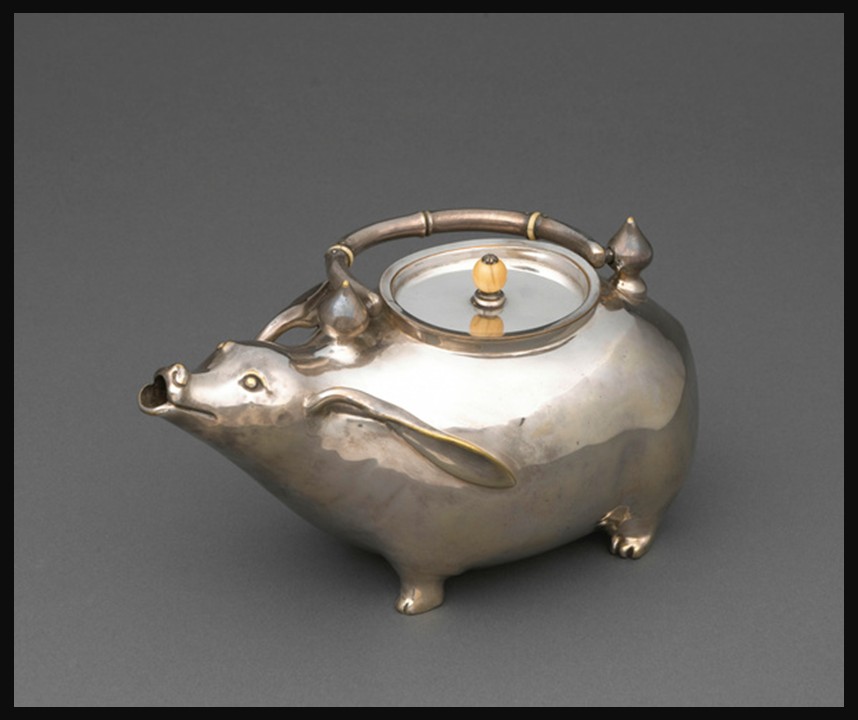
The Musée d’Orsay’s hare-shaped teapot by Émile Reiber transforms function into sculpture, reflecting Japonism’s playful naturalism and cross-cultural exchange that reshaped European decorative arts in the late nineteenth century vividly.
Byzantine Engagement Ring in the Stathatos Collection
Love, faith, and dynasty — a Byzantine engagement ring from the Stathatos Collection reveals the extraordinary world of a prominent family whose story ends at the fall of Constantinople.
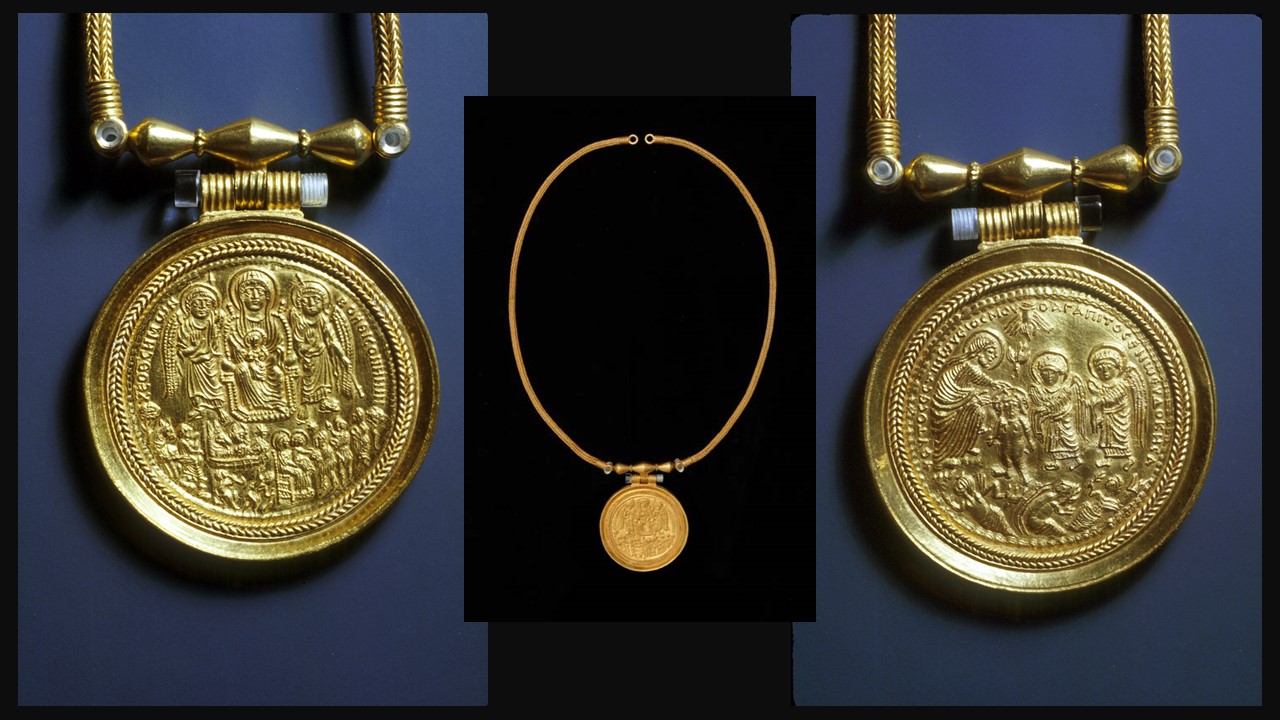
Enkolpion with Nativity
In the realm of Byzantine devotion, Enkolpia (plural of enkolpion) were cherished devotional objects, worn around the neck by early Christian believers. These items often depict religious icons, acting as both a personal expression of faith and a protective amulet. An enkolpion with the Enthroned Virginwould emphasize the veneration of Mary, the Nativity, Adoration, and Baptism scenes would highlight central narratives of the Christian story, underscoring the divinity of Christ from birth to baptism. The Dumbarton Oaks Enkolpion with Nativity, the Enthroned Virgin, Adoration and Baptism is more than an object, it’s a narrative of divine love and protection. This piece captures the Byzantine reverence for Mary and Christ’s life events, merging intricate craftsmanship with theological depth—a fascinating window into Byzantine religious artistry and belief.
The Enkolpion in the Dumbarton Oaks was once part of the collection of Josef Strzygowski, a prominent Austrian art historian known for his studies on Byzantine and Islamic art. Strzygowski’s collection included rare and unique devotional pieces, with the enkolpion being notable for its intricate scenes. The enkolpion changed hands in October 1955 when Walter Strzygowski sold it to Dumbarton Oaks Research Library and Collection in Washington, DC, where it now stands as a key artifact reflecting Byzantine religious art and devotion.
Tracing its provenance, we go back to June 22, 1906, at Graz, in Austria, where a Cypriot Greek sold it to the Austrian scholar. According to Marvin C. Ross (Art historian, curator and member of WWII Monuments Men), the same Cypriot states in a letter that ‘his treasure’ had been found in Cyprus (the small town of Karavas, near Lambousa), along with other Byzantine jewelry which was sold to the elder J. Pierpont Morgan, and which was later given, by his son, to the Metropolitan Museum of Art in New York.’ It is believed that the Dumbarton Oaks enkolpio was part of a much larger find, which has come to be called the Lambousa treasure. Today, in the Cyprus Museum in Nicosia, there is a gold hinge that perfectly fits the two rings at the top of the frame on the Strzygowski/Dambarton Oaks medallion, providing valuable evidence on the artwork’s provenance. https://www.jstor.org/stable/1291110?read-now=1&seq=1
The Byzantine Enkolpion, a type of devotional object worn around the neck, served as both a spiritual safeguard and a personal emblem of faith. These small, portable items, often featuring crosses, medallions, or reliquaries, were deeply intertwined with the daily lives and social practices of their owners, extending beyond mere religious devotion to function as symbols of protection, connection, and exchange. The Strzygowski/Dambarton Oaks Emkolpion consists of a Medallion, cast, not struck, 6.5 cm in diameter, and 109 grs of gold in weight, adorned with a braidlike inner border, and a broad, flat frame.
The Enkolpion of the Enthroned Mary at Dumbarton Oaks features intricate religious imagery that underscores its devotional purpose. On one side, the Virgin Mary is depicted seated on a throne, holding the Christ Child, flanked by two angels. Below this central scene are smaller panels illustrating key moments from Christ’s early life: the Nativity, with the Christ Child in a manger surrounded by the ox, the ass, and a contemplative Joseph; two shepherds pointing toward a guiding star; and the Visit of the Magi, who approach the Virgin and Child while a star shines above them. An inscription along the edge reads, “Christ, our God, help us.”
The reverse side of the Byzantine Enkolpion of the Enthroned Mary at Dumbarton Oaks depicts the Baptism of Christ, a scene rich with symbolic elements. On the left, St. John baptizes a nude Christ in the waters of the Jordan, while the Hand of God and the Dove of the Holy Spirit appear from above, signifying divine approval. To the right, two angels stand with their hands respectfully covered, witnessing the sacred event. Below, the river Jordan is personified, and two river nymphs swim, adding a sense of movement to the scene. Encircling the medallion is an inscription quoting Matthew 3:17: “This is my beloved Son, in whom I am well pleased.”
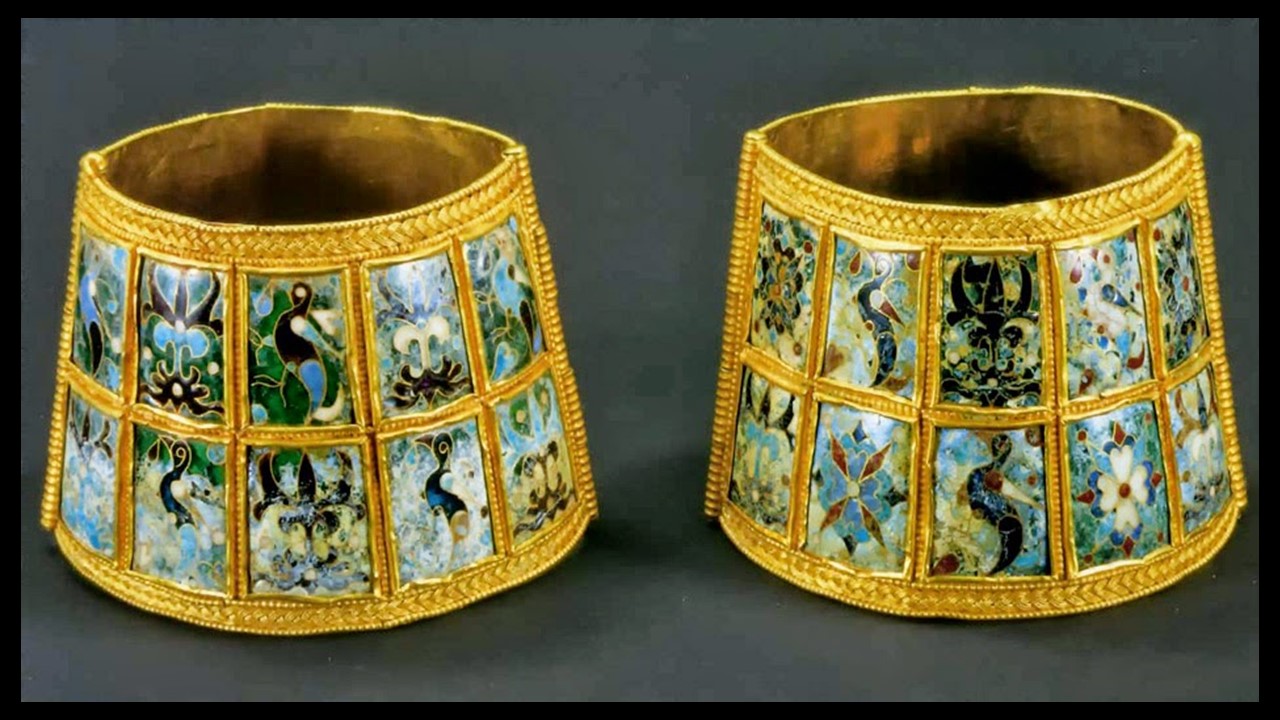
Pair of Byzantine Gold Perikarpia from Thessaloniki
In Byzantine culture, bejewelled perikarpia served as symbols of status and protection — these extraordinary wristbands from Thessaloniki reveal a city’s turbulent history, buried twice to survive centuries of conflict.
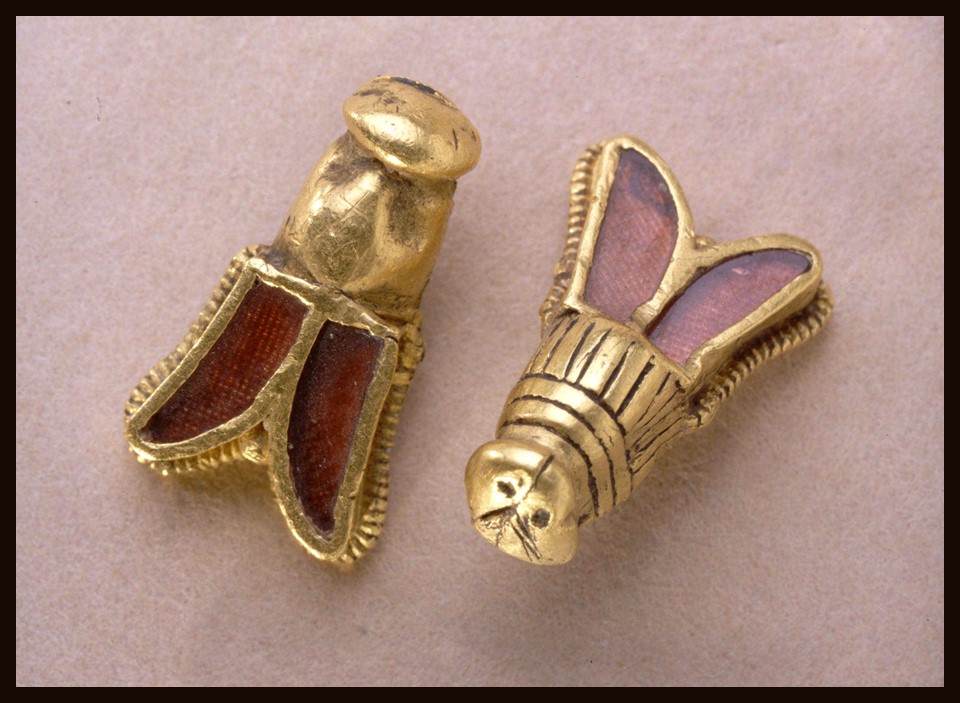
The Treasure of Childeric I
Childeric I’s golden bees — stolen, partially lost, yet immortalized on Napoleon’s coronation robe — connect a 5th-century Frankish king to France’s grandest imperial ambitions and enduring national identity.
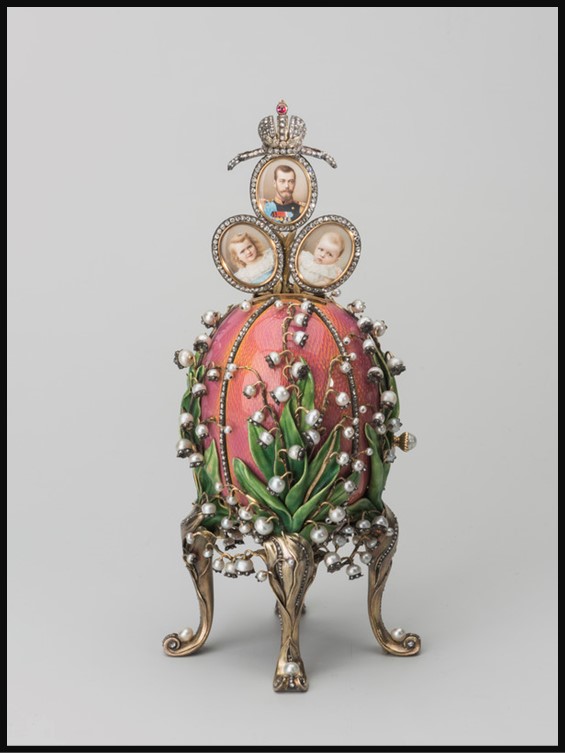
The Lilies of the Valley Fabergé Egg
Fabergé’s Lilies of the Valley Egg — pink enamel, pearl blossoms, hidden Romanov portraits — captures Imperial Russia’s breathtaking opulence and tender family devotion in one exquisite Art Nouveau masterpiece.
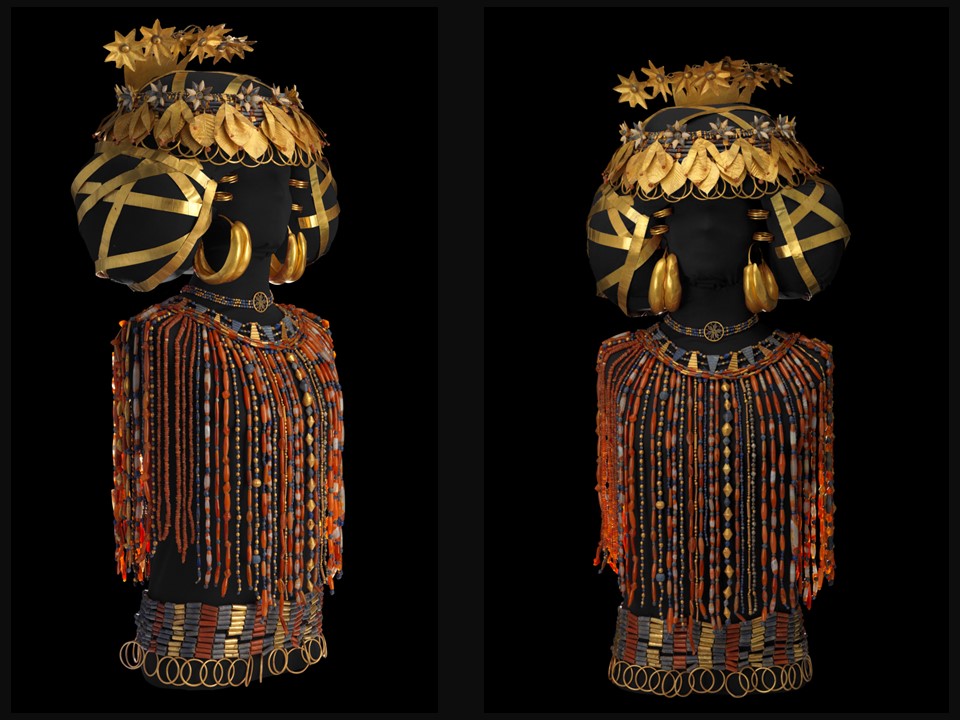
Puabi’s Tomb and Magnificent Jewels
At Royal Cemetery of Ur, Puabi emerges as a figure of power and splendor, her golden regalia and lapis-lazuli adornments reflecting elite status, ritual authority, and the enduring legacy of early Mesopotamian civilization.
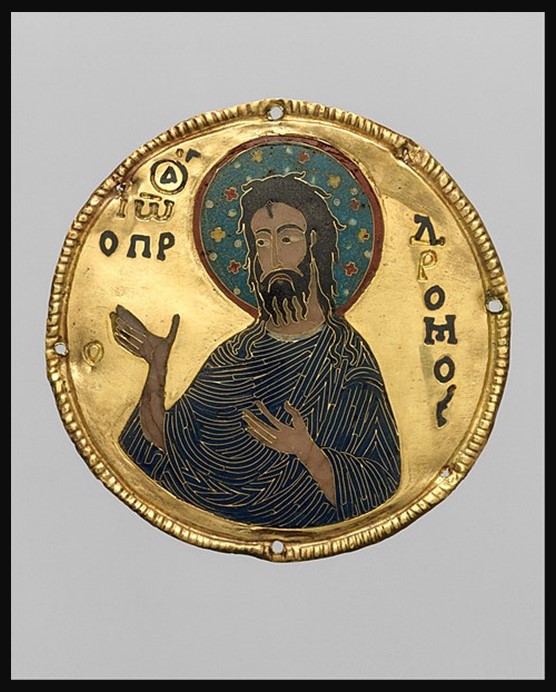
Gold Medallion of Saint John the Forerunner
Medallion of Saint John the Forerunner reflects Byzantine devotional artistry, where gold, enamel, and sacred portraiture converge to express intercession, spiritual hierarchy, and the solemn beauty of divine mediation.
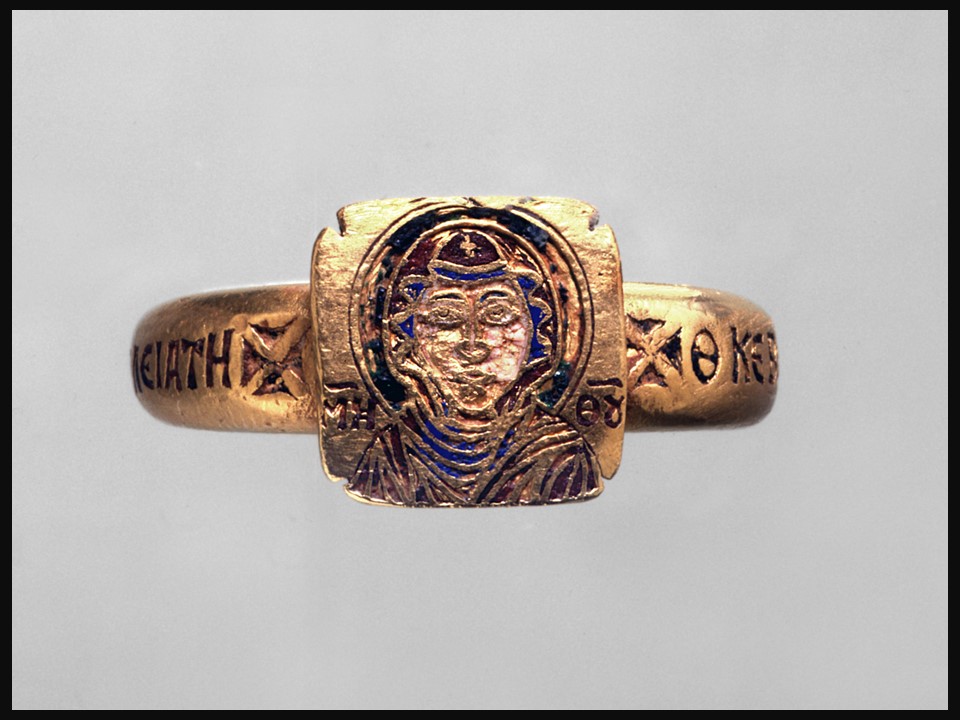
Michael Attaleiates’s Ring at Dumbarton Oaks
Ring of Michael Attaleiates, now at Dumbarton Oaks, unites inscription, portraiture, and devotion, revealing Byzantine identity through a rare personal object of prayer, status, and artistic refinement.
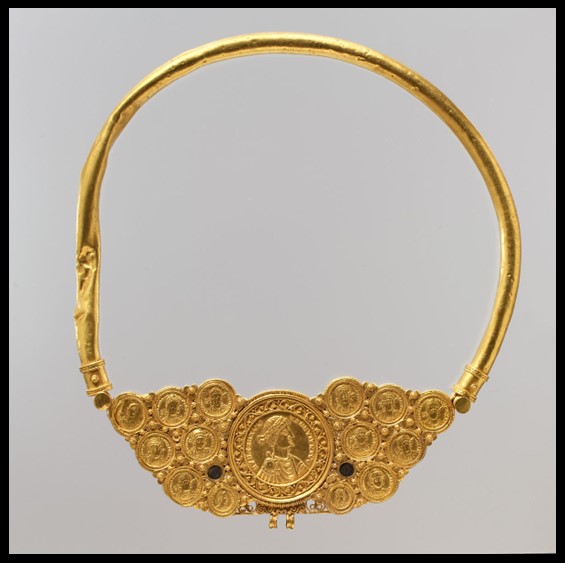
Pectoral with Coins and Pseudo-Medallion
Explore the opulent Byzantine Imperial Neck Ring at the Met — a breathtaking gold pectoral adorned with coins and medallions, symbolising power, faith, and the grandeur of Byzantine imperial authority.