The snowdrop, Galanthus nivalis, heralds January with quiet resilience, symbolizing hope and renewal, while the Old Judge cards transform this delicate bloom into art, blending nature, culture, and everyday life.
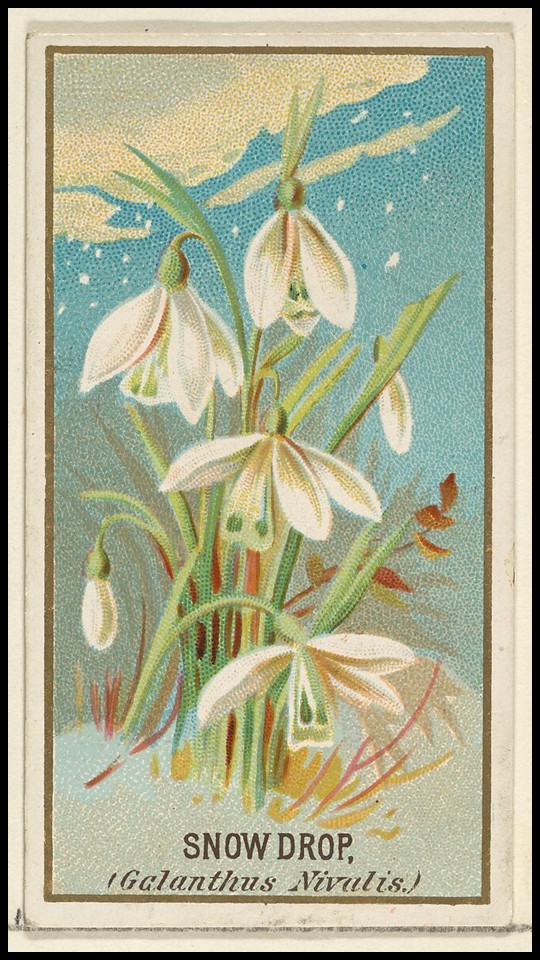
The snowdrop, Galanthus nivalis, heralds January with quiet resilience, symbolizing hope and renewal, while the Old Judge cards transform this delicate bloom into art, blending nature, culture, and everyday life.
Chrysanthemums, the flower of November, bridge Matsuo Bashō’s haiku meditation on autumnal impermanence with Andy Warhol’s Kiku prints, where repetition and color transform a traditional Japanese symbol into a modern reflection on beauty, memory, and cultural continuity.
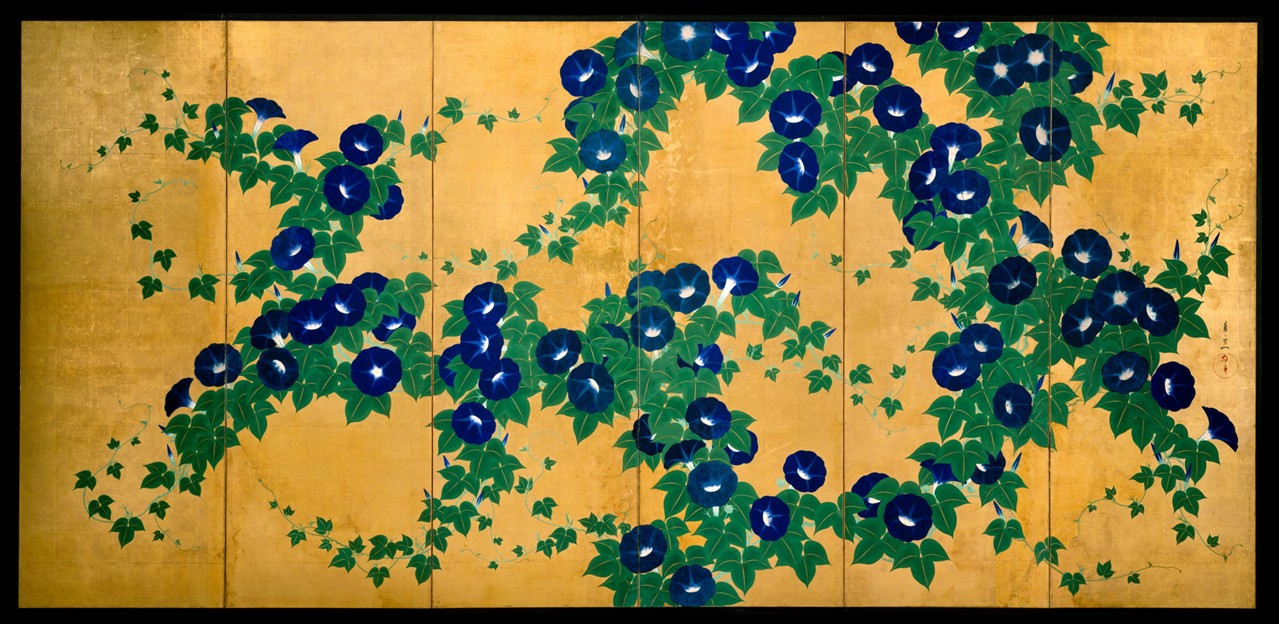
Suzuki Kiitsu’s Morning Glories screens embody Rinpa elegance, transforming seasonal blooms into rhythmic cascades of color and gold that blur nature and design into a timeless meditation on fleeting beauty.
Dante Gabriel Rossetti’s Marigolds transforms a quiet domestic moment into a symbolic meditation on renewal, where simple floral arrangement becomes an intimate expression of resilience, beauty, and nature’s persistent return.
A luminous field of crimson poppies, a drowsy summer sky, and the quiet magic of nature — John Ottis Adams’s In Poppyland is landscape painting at its most poetic.
Gifted to Empress Alexandra Feodorovna in 1896, Fabergé’s Imperial Basket with Lilies of the Valley transforms gold, pearls, and diamonds into a breathtaking tribute to nature, loyalty, and imperial grace.
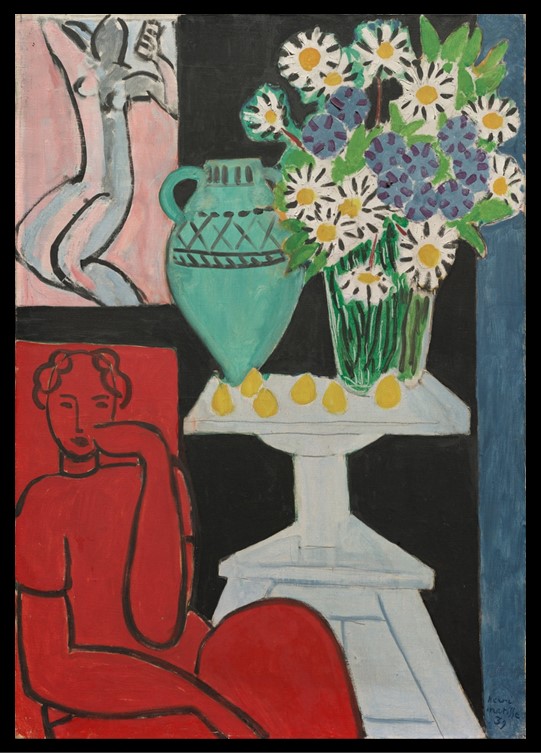
Painted in 1939 on the eve of World War II, Matisse’s Daisies at the Art Institute of Chicago transforms a simple bouquet into a radiant celebration of colour, light, and resilience.
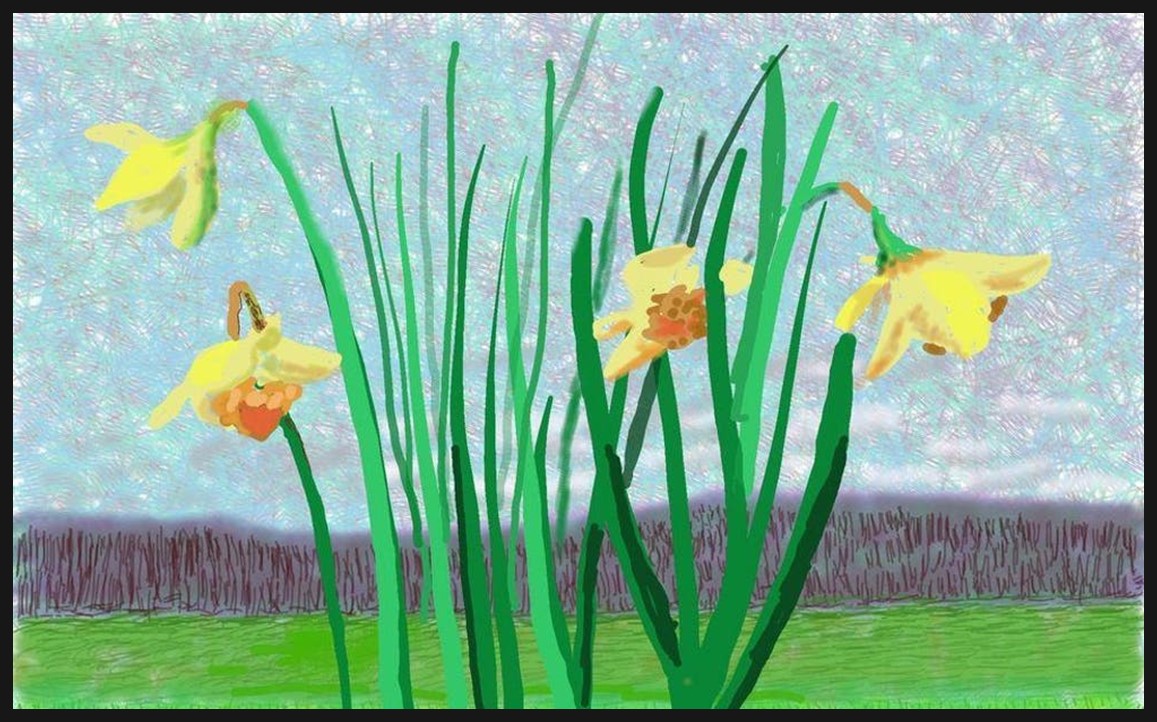
Created during pandemic lockdown, David Hockney’s vibrant iPad painting Daffodils captures spring’s triumphant arrival in Normandy — a luminous, hopeful celebration of nature’s resilience embodied in his memorable phrase, ‘They can’t cancel the Spring.’
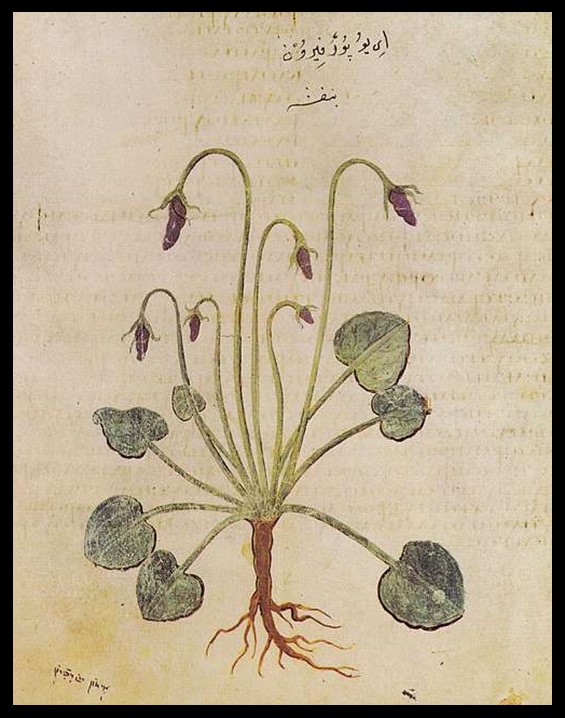
Explore the Vienna Dioscurides, a 6th-century fusion of art and science, preserving De Materia Medica through exquisite botanical illustrations and imperial patronage.
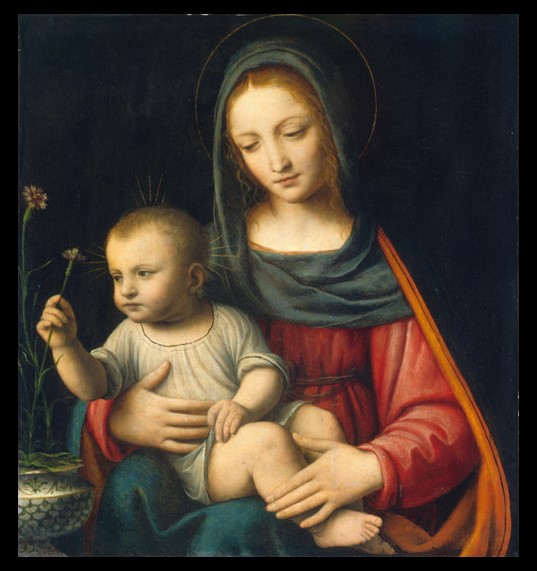
In Madonna of the Carnation, Bernardino Luini transforms the carnation into a quiet symbol of divine love, purity, and foreshadowed sacrifice within an intimate mother-and-child scene.