Paul Cézanne’s Les Baigneurs lithograph dissolves figure and landscape into a unified geometry of form and color, where bodies and nature interlock in a structured yet ambiguous space that anticipates modernist abstraction.
Gabriel Argy- Rousseau’s Poissons Dans Les Vagues
Gabriel Argy-Rousseau’s Poissons Dans Les Vagues transforms pâte de verre into a luminous aquatic vision, where stylised fish and flowing waves merge into a suspended meditation on motion, fragility, and the poetic stillness of the sea.
Rhyl Sands
David Cox’s Rhyl Sands captures the fleeting rhythms of seaside life on the North Wales coast — a master of light, weather, and quiet, unhurried atmosphere.
Lorenzo di Credi
Lorenzo di Credi’s Venus at the Uffizi challenges every Renaissance ideal of feminine grace — monumental, grounded, and quietly radical for its time.
In Poppyland
A luminous field of crimson poppies, a drowsy summer sky, and the quiet magic of nature — John Ottis Adams’s In Poppyland is landscape painting at its most poetic.
Grand Canal Venice
homas Moran wandered Venice’s streets in speechless wonder — and transformed that awe into Grand Canal, Venice, a luminous painting where light, water, and memory converge.
Bastille Day
Alfred-Philippe Roll’s Bastille Day captures a jubilant Paris in 1880 — crowds, tricolore flags, and Marianne rising above it all, a vivid visual anthem of French republican ideals.
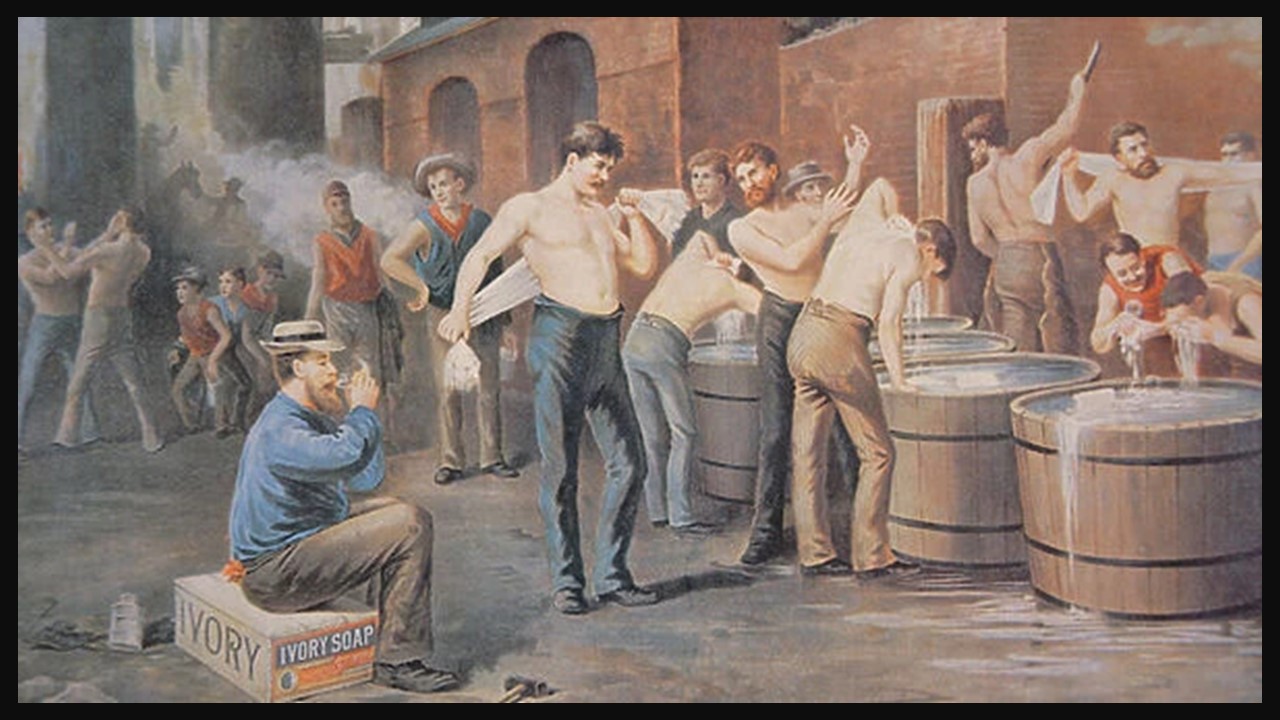
The Ironworkers’ Noontime
Thomas Pollock Anshutz painted ironworkers at rest with raw, unsentimental realism — then Ivory Soap turned his canvas into an advertisement. A fascinating collision of art and commerce.
The Roses of Heliogabalus by Sir Lawrence Alma-Tadema
A Roman emperor releases a cascade of rose petals to smother his banquet guests — Alma-Tadema transforms this tale of imperial cruelty into a breathtaking vision of beauty and horror.
The enduring legacy of ancient civilizations
Hubert Robert never painted one place — he painted time itself. The Ruins of Nîmes, Orange and Saint-Rémy blends real Roman monuments into a dreamlike meditation on decay and grandeur.”