Tomb of Philosophers Fresco Paintings, Pella, Greece

Tomb of the Philosophers

Tomb of Philosophers Fresco Paintings, Pella, Greece
Tomb of Philosophers, c. 300 BC, Fresco Paintings, Pella, Greece
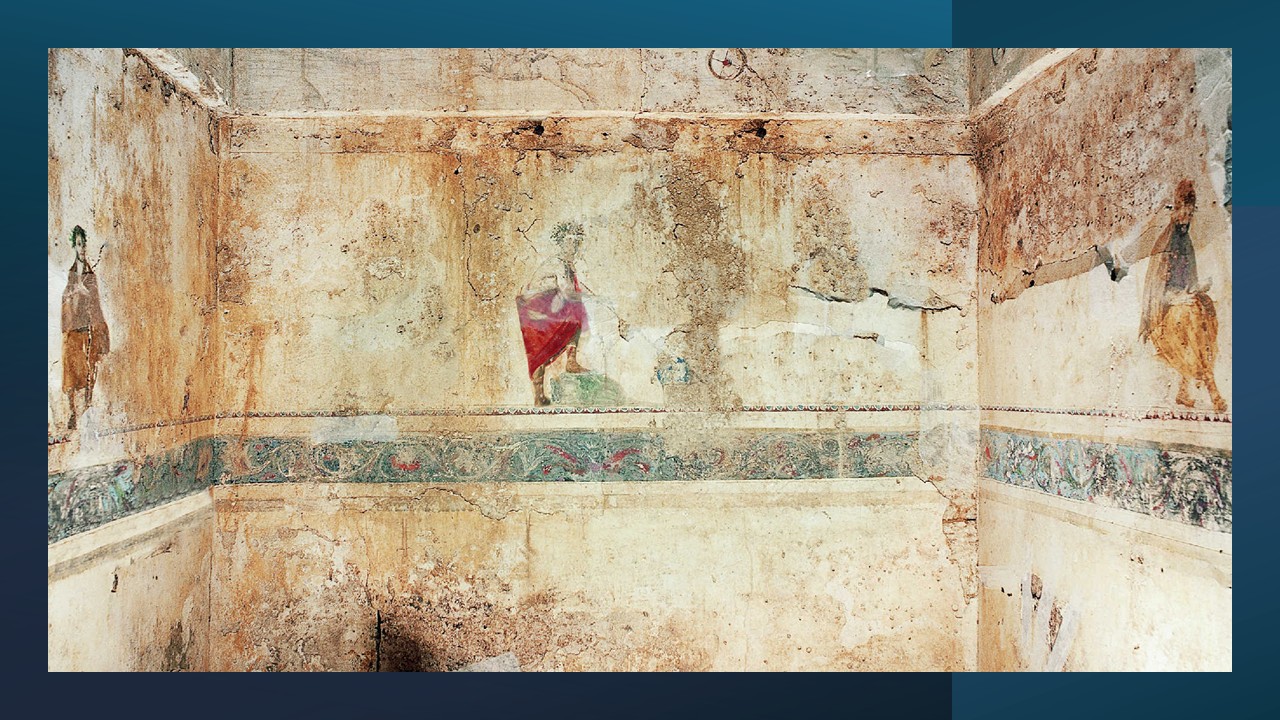
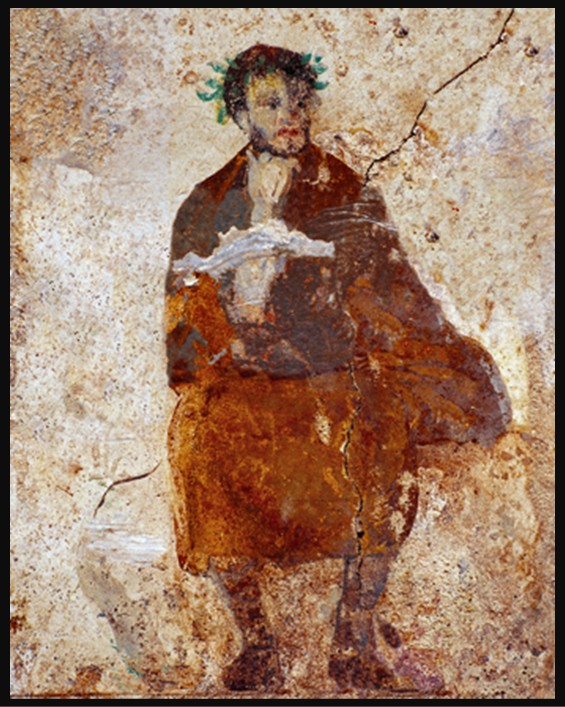
West Wall: Main figural frieze showing a man in a red himation with a wooden rod, pointing at a blue globe. North Wall: On the right side of the photo, a bearded man is depicted, absorbed in reading a papyrus roll. South Wall: On the left side of the photo, another wreathed, bearded ‘philosopher’ is vividly presented.
https://www.palaceofpella.gr/ancient-pella-the-areas-and-the-monuments/?lang=en

Nestled in the heart of ancient Pella, the Tomb of Philosophers stands as one of the most remarkable and enigmatic funerary monuments in Greece, dating back to circa 300 BC. As one of the largest cist-graves ever discovered, its unique decoration sets it apart from any other known ancient tomb. The six figures depicted on its walls, reminiscent of later Roman gatherings of philosophers, provide the earliest known portrayal of an intellectual tradition that links Pella’s vibrant cultural life to the Late Classical period. Among these depictions, a celestial globe suggests the deceased may have been a philosopher with an interest in astronomy or a patron of intellectual pursuits. Above them, scenes of horsemen and grave steles evoke Homeric funeral games, connecting the tomb to the epic, heroic past. The tomb’s intricate design and profound symbolism reflect the high level of cultural and intellectual development that defined ancient Pella, where philosophy and the sciences were integral to a humanist education.

Let’s explore the ‘who’, ‘where”, ‘when’ and ‘what’ of this amazing Hellenistic tomb by posing some questions!

Where is the Tomb of Philosophers located in ancient Pella? The Tomb of Philosophers is located in the ancient city of Pella, which was once the capital of the Macedonian Kingdom in northern Greece. Pella is situated in the region of Central Macedonia, approximately 40 kilometers west of modern-day Thessaloniki. Located in the region of the so-called Eastern Cemetery of Pella, the Tomb is situated just outside the city’s eastern walls. This area, used for burials from the mid-4th century BC until the early 1st century BC, became a principal necropolis following Pella’s major expansion in the late 4th century BC. The Eastern Cemetery is notable for its diverse funerary architecture, with cist graves being a predominant feature. These graves, often arranged in clusters and surrounded by enclosures with sculpted monuments, reflect the wealth and social complexity of the era. The Tomb of Philosophers (the burial chamber is 4.40 m long, 1.95 m wide and 3.00 m high) stands out among these for its exceptional decoration and significance, providing insight into the intellectual and cultural achievements of ancient Pella during its peak.

What is a Cist Tomb? A Cist Tomb is a type of ancient burial structure characterized by its box-like design, typically made of large stone slabs forming the walls, floor, and roof, or sometimes constructed with wood. These tombs were often hewn directly into rock or built within shallow pits and were commonly used for single or multiple burials. Frequently found in ancient cemeteries, cist tombs often contained grave goods such as pottery, jewelry, or personal items meant to accompany the deceased into the afterlife. In Pella’s Eastern Cemetery, Cist Tombs were a prominent feature, reflecting the wealth, social status, and cultural sophistication of the individuals buried within them.

Who was the owner of the Tomb of Philosophers located in ancient Pella? The owner of the Tomb of Philosophers in ancient Pella remains unknown, but the burial context offers intriguing insights. The tomb contained the remains of three individuals: a man in his forties, a woman in her thirties, and an infant. These findings suggest it was a family grave, likely serving as a resting place for multiple generations. The assumption that the family members died at different times aligns with the practice of reusing cist tombs over years, a common custom in ancient burial traditions. The artistic and intellectual significance of the tomb, combined with the presence of elaborate frescoes and symbolic elements such as a celestial globe, suggests the family belonged to the intellectual or social elite of Pella. The man, given the philosophical themes of the tomb, may have been a scholar, astronomer, or patron of knowledge, while the woman and infant reflect the familial connections integral to the tomb’s purpose.

What is depicted in the frescoes decorating the Tomb of Philosophers? The frescoes decorating the Tomb of Philosophers in ancient Pella are a testament to the intellectual and artistic sophistication of Macedonian society during the late Classical and early Hellenistic periods. The walls of the tomb feature a combination of architectural elements, ornamental motifs, and elaborate figurative compositions. These decorations reflect the philosophical and cosmological interests of the time, with the main iconographic theme centered around figures of literati or philosophers. The most striking element is a deep blue sphere depicted on the west wall, symbolizing celestial and cosmological themes, likely influenced by Aristotelian teachings and works like Aratus’s Phaenomena, written in Macedonia during the poet’s time at the court of Antigonus II Gonatas.
Detail from the Tomb of Philosophers Fresco Paintings, Pella, Greece
Tomb of Philosophers, South Wall, c. 300 BC, Fresco Paintings, Pella, Greece
https://x.com/ancientorigins/status/1585557691497418753

It is interesting to note that the Tomb frescoes illustrate the blending of symbolic and decorative elements to convey both personal identity and cultural values. The use of deep blue tones, floral patterns, and heroic imagery like galloping horsemen suggests a connection to both intellectual and heroic ideals. These visual elements not only commemorate the deceased but also serve as a testament to the vibrant intellectual and artistic achievements of ancient Pella, offering valuable insights into the social, philosophical, and aesthetic priorities of the Macedonian kingdom.

When was the Tomb of Philosophers discovered? The Tomb was unearthed in 2001 by the 17th Ephorate of Prehistoric and Classical Antiquities of Greece, under the leadership of its then-Director, Maria Lilimpaki-Akamati, alongside her team of collaborators.

For a PowerPoint of frescoes preserved in the Tomb of Philosophers in ancient Pella, please… Check HERE!

Bibliography: https://www.palaceofpella.gr/ancient-pella-the-areas-and-the-monuments/?lang=en and https://ejournals.epublishing.ekt.gr/index.php/tekmiria/article/view/36631/27647 and https://www.latsis-foundation.org/content/elib/book_18/pella_gr.pdf pp 185-186
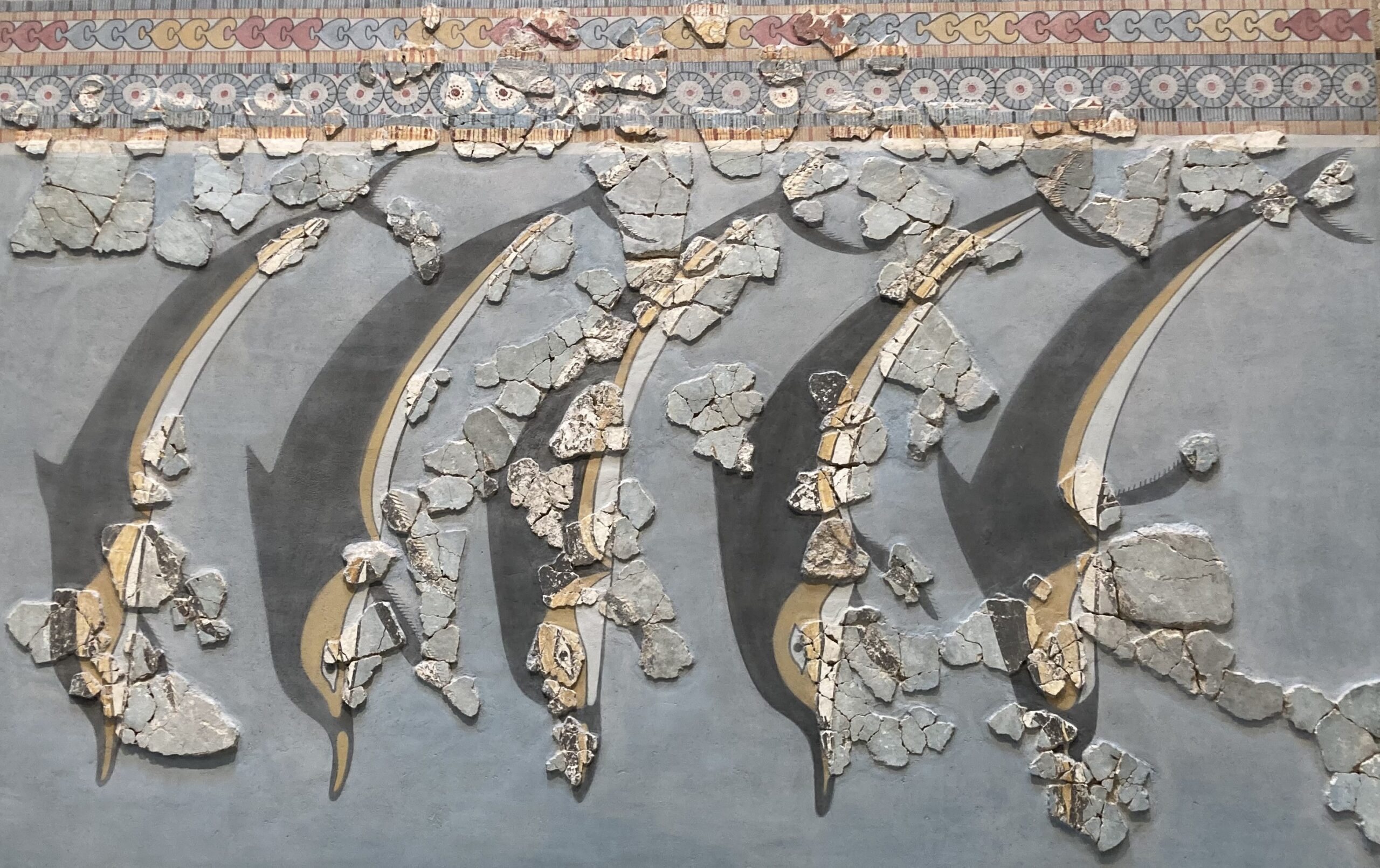
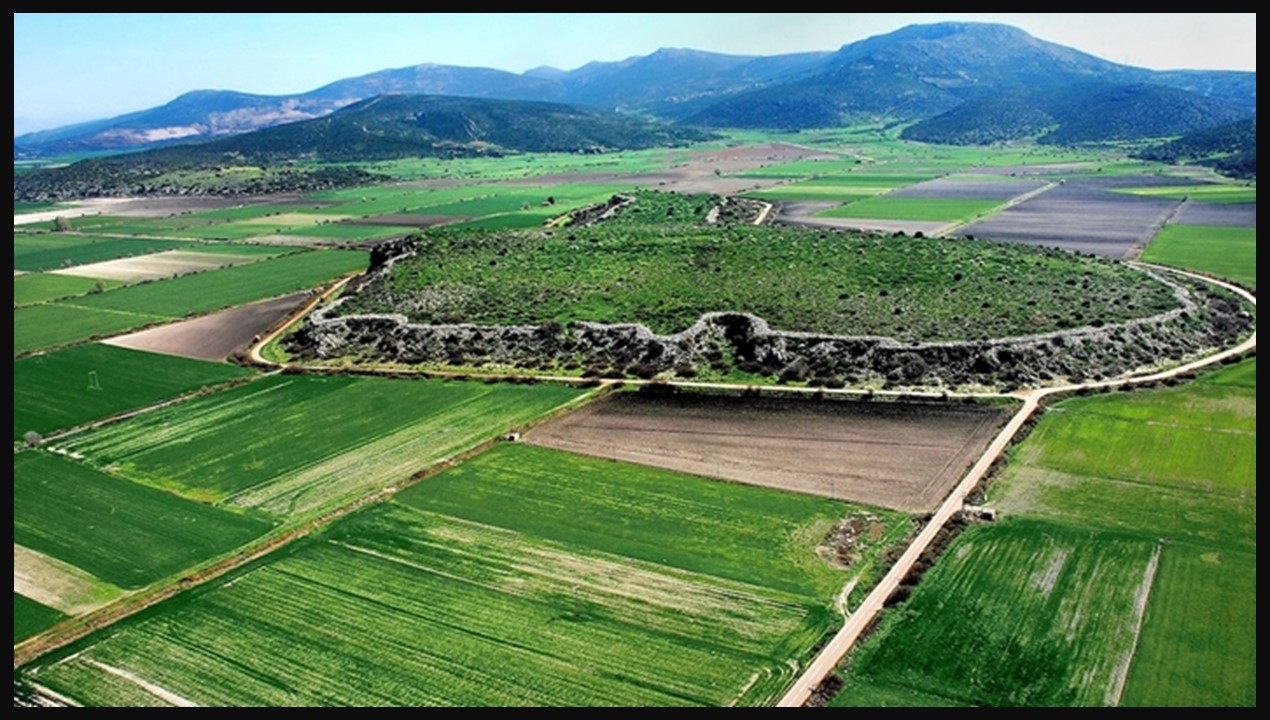
The Dolphin Frieze fresco from the Mycenaean Acropolis of Gla

The Dolphin Frieze from the Mycenaean Acropolis of Gla

The Dolphin Frieze fresco from the Mycenaean Acropolis of Gla
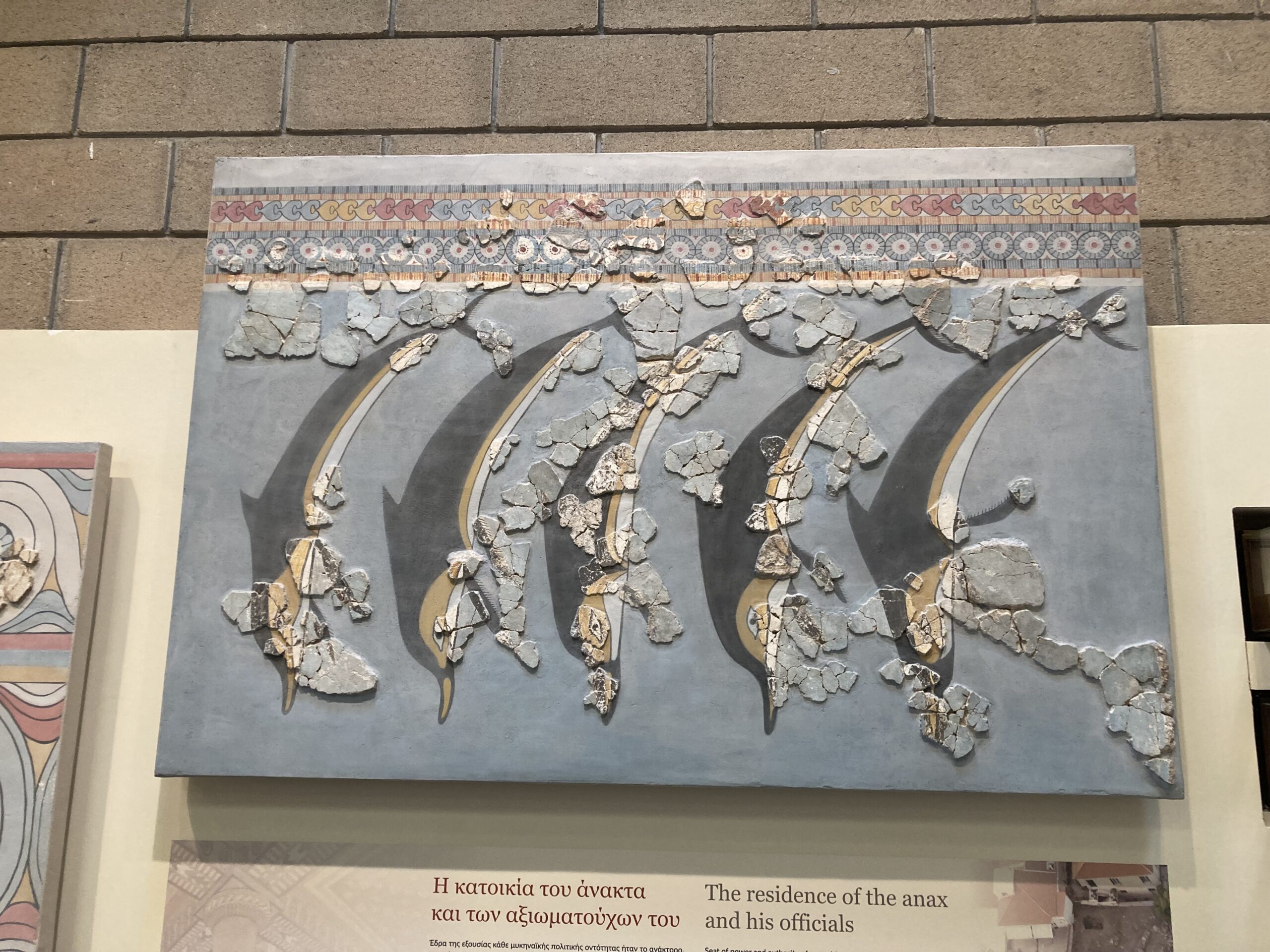
Dolphin Frieze, Second half of the 13th century BC, Fresco, from the Mycenaean Acropolis of Gla in Boeotia, Archaeological Museum of Thebes, Greece – Photo Credit: Amalia Spiliakou, February 19, 2024

On February 19, 2024, I fulfilled a long-awaited wish by visiting the Archaeological Museum of Thebes, one of Greece’s most significant archaeological museums. The collections, some of which are rare or unique, have been on my bucket list for quite some time. These artefacts, originating from excavations across Boeotia, span from the Paleolithic era to post-Byzantine times, providing a comprehensive view of the region’s cultural history. The Dolphin Frieze from the Mycenaean Acropolis of Gla was at the top of my list; seeing it in person was a moment of sheer delight and fulfilment.

The Mycenaean period is of profound significance in both art and history, acting as a vital cultural link between the Bronze Age civilizations of the Aegean and the classical world of ancient Greece. Artefacts from this era, ranging from architecture to fresco painting and pottery, illuminate the emergence of distinct artistic styles and techniques that greatly influenced classical Greek artistry. Mycenaean builders demonstrated their prowess through the construction of grand palaces, robust fortifications, and imposing tombs, showcasing advanced architectural and engineering capabilities. Their vibrant fresco paintings, characterized by bold depictions of figures, animals, and geometric patterns, stand as a testament to their artistic abilities. Moreover, the Mycenaean civilization played a pivotal role in shaping the socio-political landscape of ancient Greece, laying the groundwork for the development of Greek culture and identity.

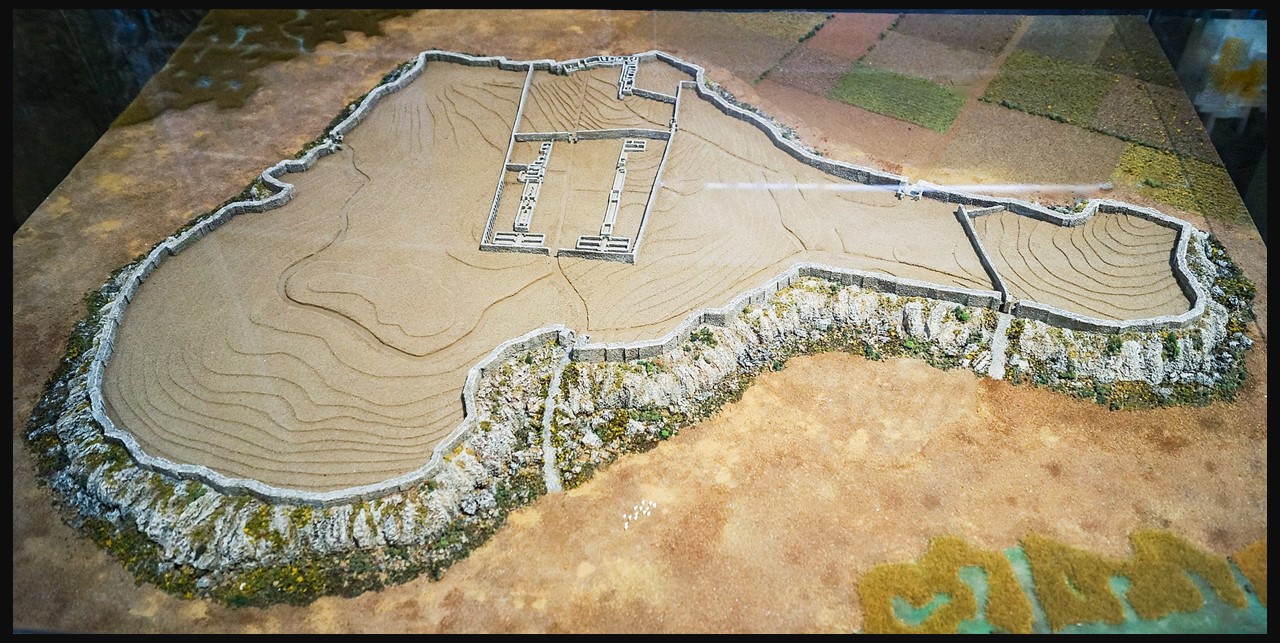
Model of the Archaeological site of Gla, Archaeological Museum of Thebes, Greece
https://commons.wikimedia.org/wiki/File:Gla_-_Modell_of_archaeological_site.JPG

The least known of all Mycenaean Palaces is probably that of Gla in Central Greece. Perched atop a rugged hill, the Mycenaean Acropolis of Gla is a site of historical and archaeological significance dating back to the Late Bronze Age. This fortified settlement, strategically positioned on the Boeotian plain jutted into Lake Kopais (now drained) or formed an island within it. It served as a vital center of the Mycenaean civilization, showcasing the architectural prowess and strategic foresight of its ancient inhabitants. With its imposing Cyclopean Walls, about 3 m thick, and 2.8 km long, enclosing about 235,000 square meters of land, and commanding views, the Acropolis of Gla stands as a testament to the military and cultural achievements of the Mycenaeans, offering invaluable insights into their society, economy, and interactions within the broader Aegean world.

The Acropolis of Gla is famously associated with the ambitious endeavour to drain Lake Kopais, a feat considered unparalleled in Bronze Age antiquity, highlighting the advanced technical knowledge possessed by Mycenaean engineers. It is also known for its sheer magnitude and complexity. Encircled by robust Cyclopean Walls featuring four gates constructed from imposing stone blocks, Gla reigns as the largest fortified Mycenaean Acropolis within Greek territory. Less known, but equally important is the site’s residential area, a sprawling L-shaped edifice, often hailed as a ‘Palace’, and situated in the site’s northern expanse. Built atop an engineered plateau, this ‘Palace’ or, Melathron’, unfolds into three distinct sections, featuring a layout reminiscent of the renowned Megaron structures found in ancient centers like Tiryns, Mycenae, and Pylos. However, the absence of hallmark Mycenaean Palace elements, specifically a “throne room”, a circular hearth, and a “bathroom”, raises questions about its classification as a fully-fledged Mycenaean Megaron.

Among the buildings’ debris, archaeologists discovered as early as 1893, evidence of a wastewater system, unique clay roof tiles suggesting pitched roofs, and evidence of decorative wall frescoes, damaged and fragmentary, but extremely precious. Today, these fragments, discovered in the elongated East Wing of the South Enclosure, during excavations conducted by S. Iakovidis, in the early 1980s and 1990s are exhibited in the Archaeological Museum of Thebes. The most remarkable of these fragments show diving Dolphins and parts of other maritime scenes, including large Argonauts. These fresco fragments were expertly reconstructed by Christos Boulotis. (See Bibliography)

The Dolphin Frieze fresco from the Mycenaean Acropolis of Gla
Dolphin Frieze, Second half of the 13th century BC, Fresco, from the Mycenaean Acropolis of Gla in Boeotia, Archaeological Museum of Thebes, Greece – Photo Credit: Amalia Spiliakou, February 19, 2024

The Dolphin Fresco from the Mycenaean Acropolis of Gla is a remarkable artefact that showcases an unusual naturalism and a sophisticated understanding of marine life, captured through the depiction of Dolphins with an astonishing level of detail and realism. These elegant creatures, spanning 75 to 80 cm in height, are painted against a vivid blue background, highlighting their dynamic forms and graceful postures. The Dolphins, numbering between six and seven, are depicted in a uniform size and posture, their bodies elegantly curved into open arches or crescents, embodying the fluidity and grace of living dolphins. Their upper bodies are painted black, featuring a triangular dorsal fin, while their bellies are a contrasting white, delineated from the black with yellow stripes. Their eyes are almond-shaped, set against a yellow background, adding a striking detail to their overall appearance.

The use of colours in the Gla Dolphins fresco draws closer to the real hues of these marine creatures, with the black, white, and yellow providing a stark contrast to the deep blue sea they inhabit. This colour choice not only enhances the naturalism of the scene but also demonstrates the Mycenaeans’ advanced skills in pigment selection and application. Indeed, recent analyses have revealed the use of rare, imported lapis lazuli mixed with hematite and possibly an organic colour derived from murex, underscoring the significant effort and resources devoted to achieving the fresco’s vibrant colours.

This fresco, along with other Dolphin Paintings of the Aegean Bronze Age period demonstrates a persistence of themes drawn from nature within Mycenaean art, suggesting a deep-rooted appreciation for the natural world. The Gla Dolphins, with their lifelike appearance and intricate detailing, stand as a testament to the Mycenaean civilization’s artistic prowess and their enduring fascination with the sea and its inhabitants.

For a Student Activity, inspired by the Dolphin Freeze, please… Check HERE!

Bibliography: Christos Boulotis, Reconstructing a Dolphin Frieze and Argonauts from the Mycenaean Citadel of Gla, ΜΕΛΕΤΗΜΑΤΑ 72, Mycenaean Wall Painting in Context, National Hellenic Research Foundation, Athens, 2015, pp. 371… https://www.academia.edu/39148590/RECONSTRUCTING_A_DOLPHIN_FRIEZE_AND_ARGONAUTS_FROM_THE_MYCENAEAN_CITADEL_OF_GLA_In_MYCENAEAN_WALL_PAINTING_IN_CONTEXT_ATHENS_2015_371_403