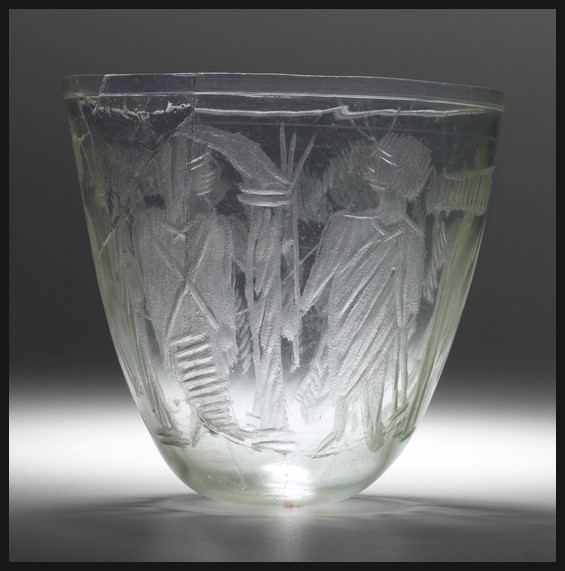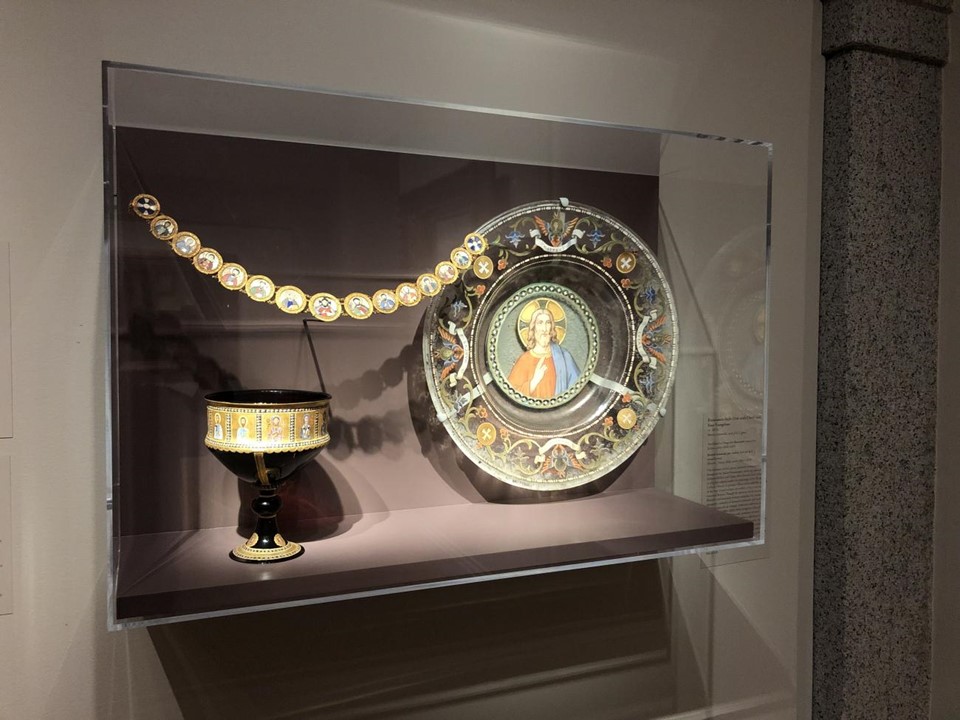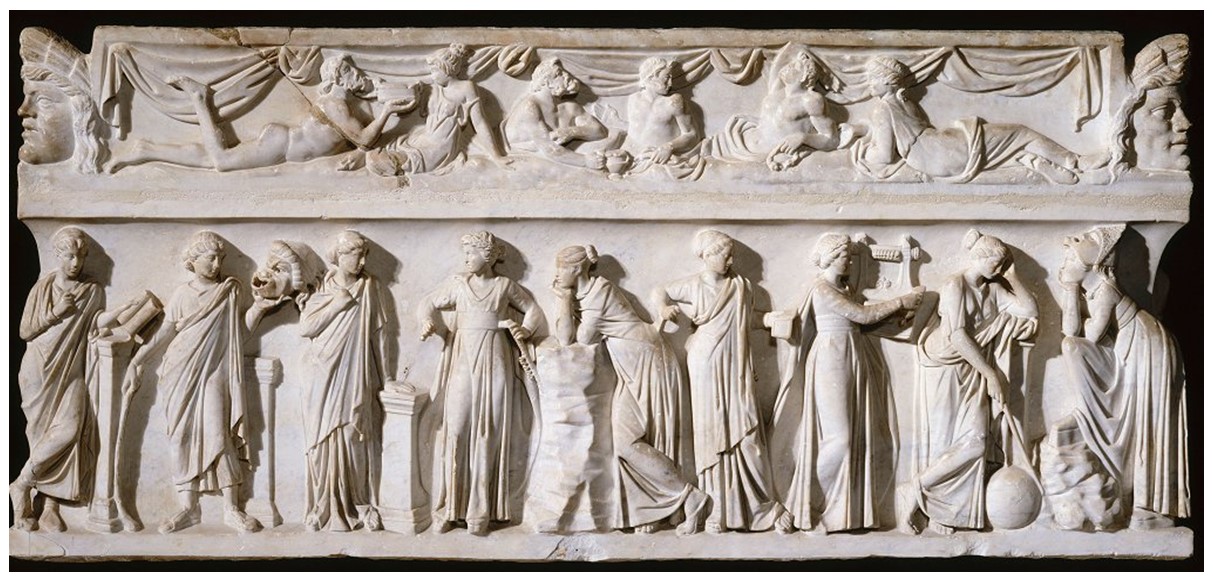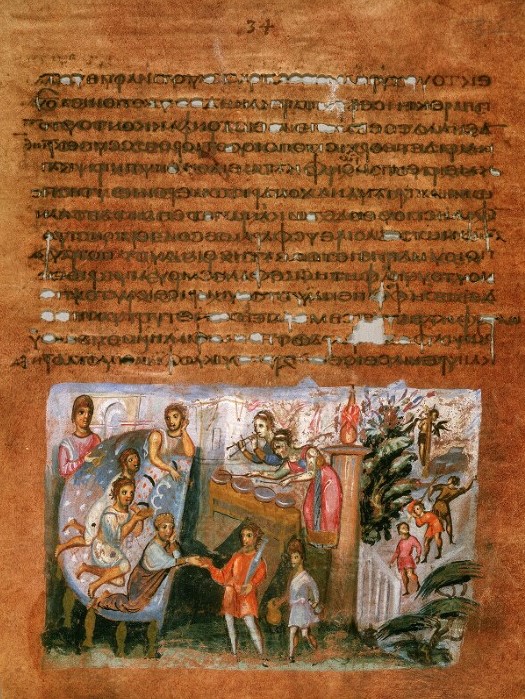
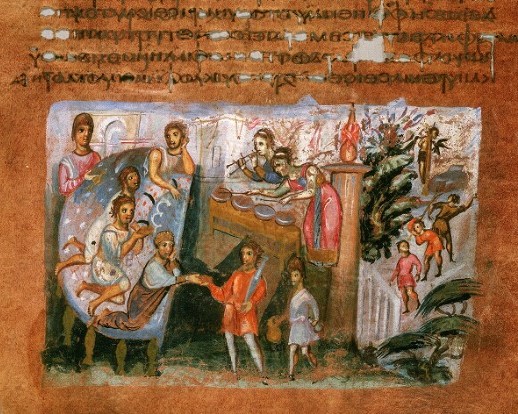
On the third day, which was Pharaoh’s birthday, he held a feast for all his officials, and in their presence, he lifted up the heads of the chief cupbearer and the chief baker. Pharaoh restored the chief cupbearer to his position, so that he once again placed the cup in Pharaoh’s hand.… (Book of Genesis, The story of Joseph, 40:20-22 – Holy Monday – Μεγάλη Δευτέρα) https://www.biblegateway.com/passage/?search=Genesis+40&version=NIV
Την τρίτη ημέρα λοιπόν, ο Φαραώ είχε τα γενέθλιά του και έκανε συμπόσιο για όλους τους υπηρέτες του και έφερε μπροστά τους τόσο τον αρχιοινοχόο όσο και τον αρχιαρτοποιό. Και επανέφερε τον αρχιοινοχόο στη θέση που είχε ως οινοχόος, και εκείνος συνέχισε να δίνει το ποτήρι στον Φαραώ. Τον αρχιαρτοποιό όμως τον κρέμασε, ακριβώς όπως τους είχε δώσει την ερμηνεία ο Ιωσήφ. (Γένεση, Η Ιστορία του Ιωσήφ, 40:20-22- Holy Monday – Μεγάλη Δευτέρα) https://www.jw.org/el/%CE%B2%CE%B9%CE%B2%CE%BB%CE%B9%CE%BF%CE%B8%CE%AE%CE%BA%CE%B7/%CE%B1%CE%B3%CE%AF%CE%B1-%CE%B3%CF%81%CE%B1%CF%86%CE%AE-online/nwt/%CE%B2%CE%B9%CE%B2%CE%BB%CE%AF%CE%B1/%CE%93%CE%AD%CE%BD%CE%B5%CF%83%CE%B7/40/
Andreas Fingernagel, Director of the Department of Manuscripts and Rare Books
at the Austrian National Library, considers the Late Antique Codex theologicus graecus 31, the Vienna Genesis as of outstanding importance, an illuminated manuscript regarded and admired as a rare testimony of Late Antique art history. The manuscript, dated to the first half of the 6th century, consists of 48 preserved pages, written in Maiuscula Biblica in silver ink on purple parchment. It is illustrated with 48 miniatures produced in a city scriptorium of culture and sophistication like Antioch or Constantinople. It is one of the earliest known cycles of book miniatures from the Old Testament, a rare witness of Late Antique book culture. Since 1664, this magnificent codex has been preserved at the Imperial Court Library, today, the Austrian National Library in Vienna. https://library.oapen.org/handle/20.500.12657/41206
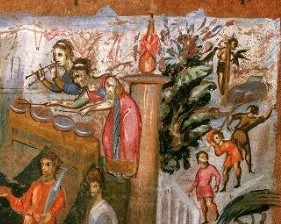
According to research done in the early 2020s, the Vienna Genesis is the incredible work of 7 different artists. Scholars came to this conclusion, by looking into each artist’s style, iconography, colour palette, pigments, and dyes. All artists involved in the illumination of the Vienna Genesis were trained in creating rich, and lively paintings in an authentic Late Antique style, suited for the sophisticated liking of an imperial patron. Painter E (folios 17–18, pages 33–36) has been identified as the artist who created the amazing miniature (folio 17, page 34) depicting The Pharaoh’s Birthday Banquet. This is a scene in the story of Joseph, son of Jacob and Rachel, celebrated during Holy Monday. https://library.oapen.org/handle/20.500.12657/41206 pp. 232-235 and Age of Spirituality: Late Antique and Early Christian Art, Third to Seventh Century https://www.metmuseum.org/art/metpublications/Age_of_Spirituality_Late_Antique_and_Early_Christian_Art_Third_to_Seventh_Century pp. 458-459
The Österreichische Nationalbibliothek of Vienna Digital Copy of the Vienna Genesis… Check https://onb.digital/search/324304
A PowerPoint of all artworks presented for the Holy Week in the Greek Orthodox Church, 2022… is HERE!