Donatello commanded his sculptures to speak — and they did. From Florence’s peasant Christ to Padua’s magnificent Gattamelata, his genius reshaped Renaissance sculpture for centuries to come.
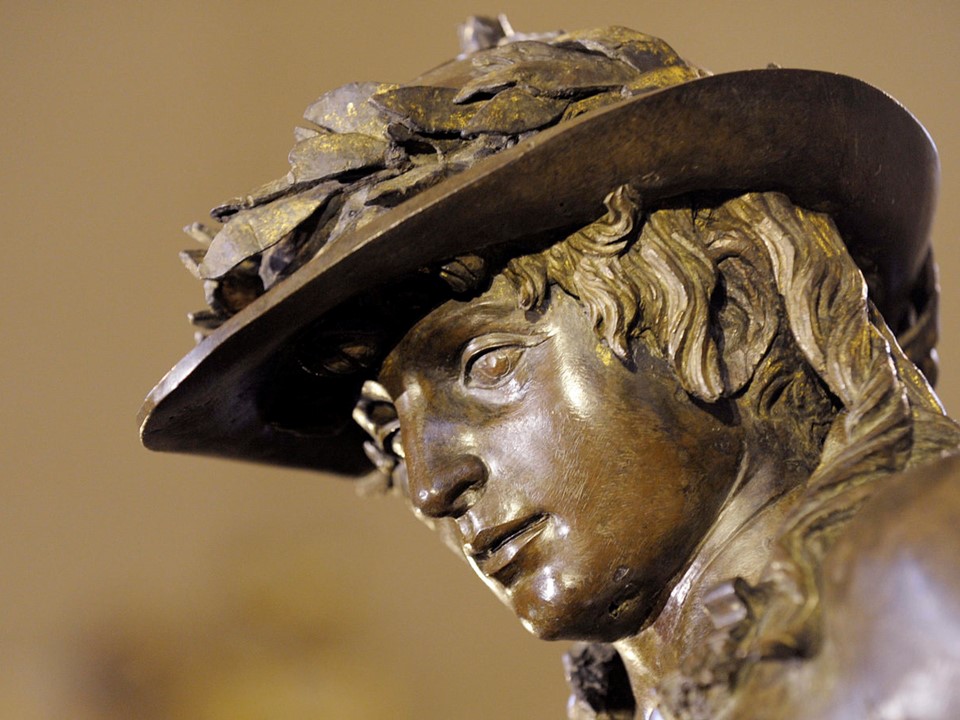
Donatello commanded his sculptures to speak — and they did. From Florence’s peasant Christ to Padua’s magnificent Gattamelata, his genius reshaped Renaissance sculpture for centuries to come.
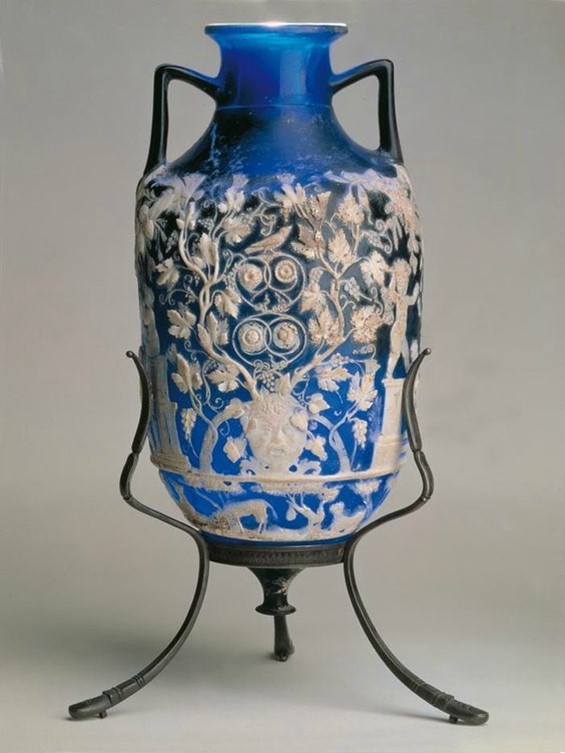
The Pompeian Blue Glass Amphoriskos showcases extraordinary Roman luxury, with Dionysiac relief scenes carved in layered glass, blending technical mastery and exuberant decoration in one of antiquity’s rarest surviving treasures.
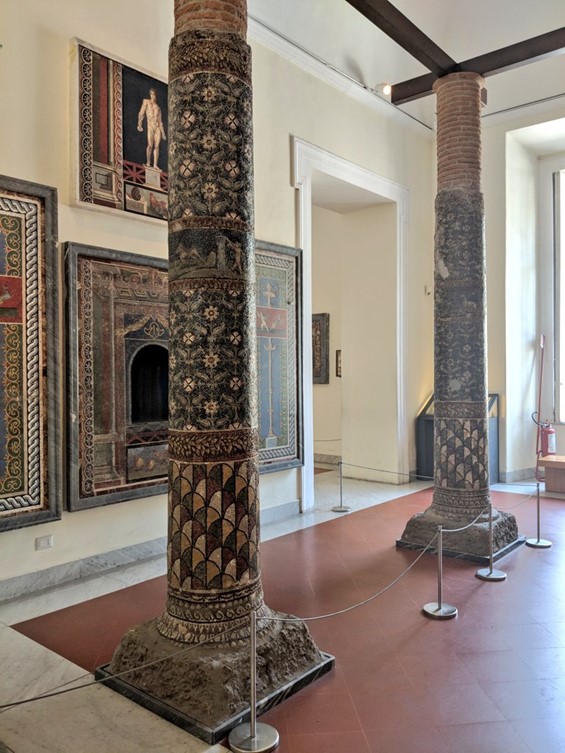
The Villa of the Mosaic Columns reveals the richness of Roman horti culture, where gardens, mosaics, and architecture merge into a luxurious expression of status, leisure, and everyday life in ancient Pompeii.
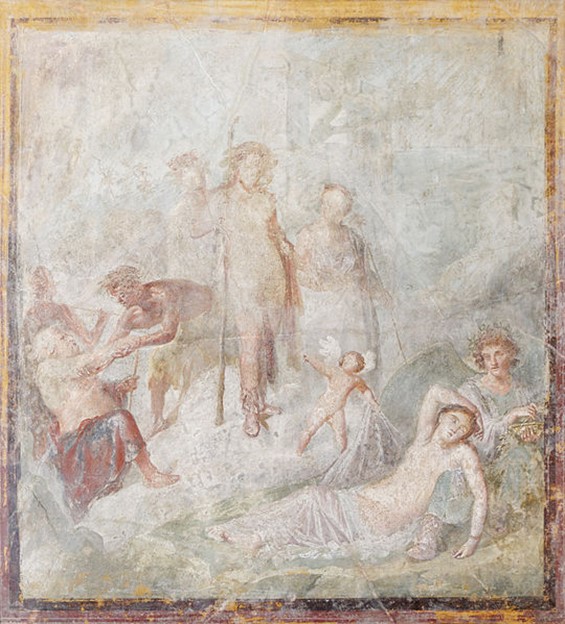
Naxos blends myth and history: where Dionysus finds Ariadne on Palatia, inspiring timeless art—from the Portara to Pompeii frescoes—capturing love, divine intrigue, and enduring beauty.
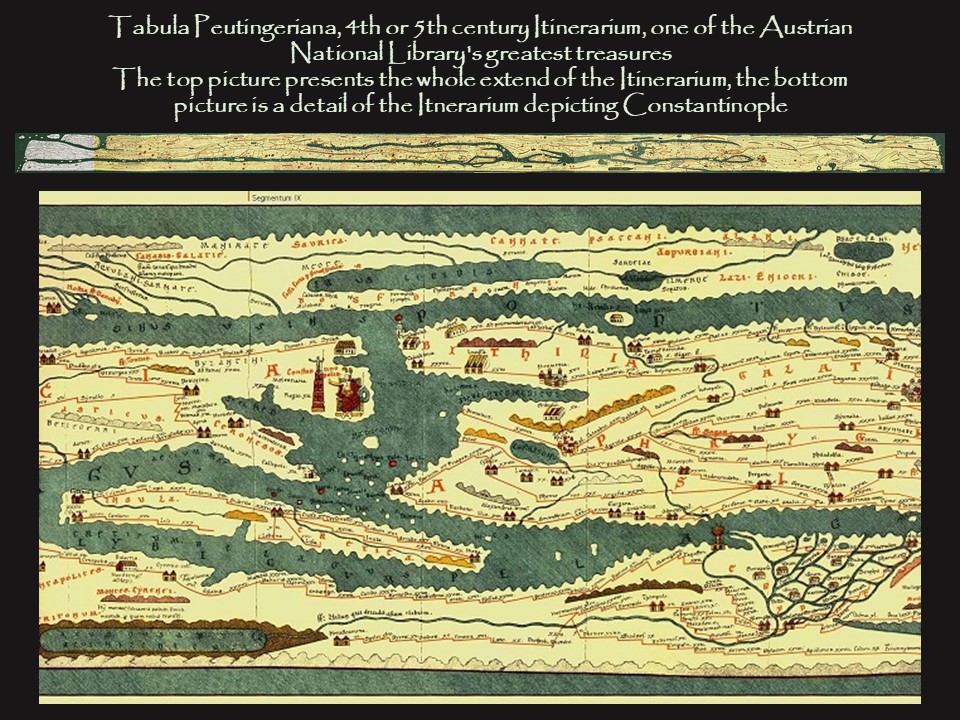
The Tabula Peutingeriana presents the Roman world as a continuous road network rather than a geographic map, where stretched landscapes, red routes, and symbolic markers guide travellers through cities, inns, and distances.
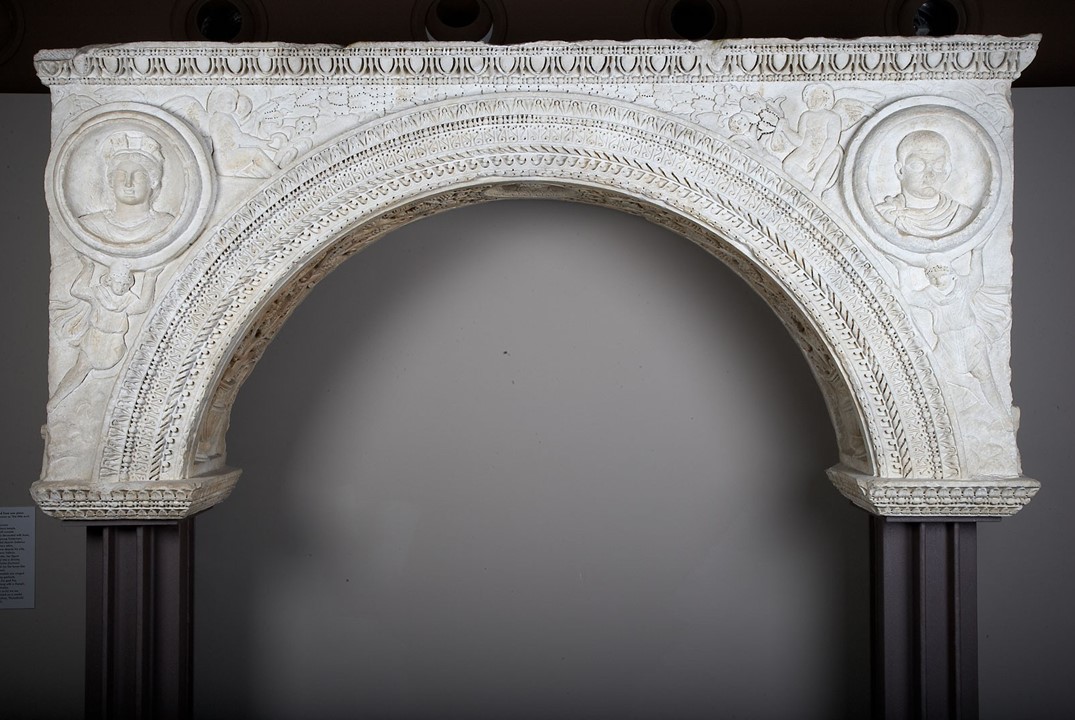
The Pre-Raphaelites reimagined art through intense realism, nature, and emotion—Rossetti and his circle reshaping Victorian creativity into a vivid world of beauty, symbolism, and imaginative “conception.”
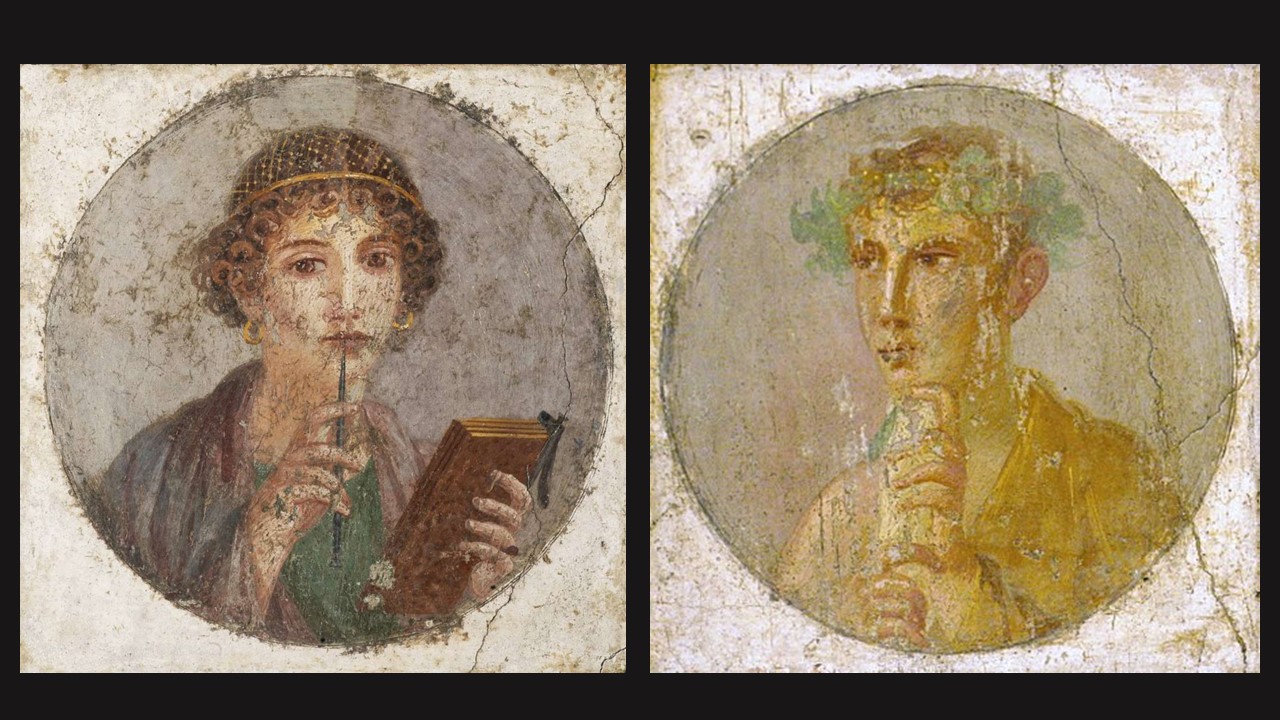
A striking Pompeian portrait captures a refined young couple—stylus and papyrus in hand—poised in quiet thought, embodying elegance, intellect, and the timeless allure of Roman artistic sophistication.
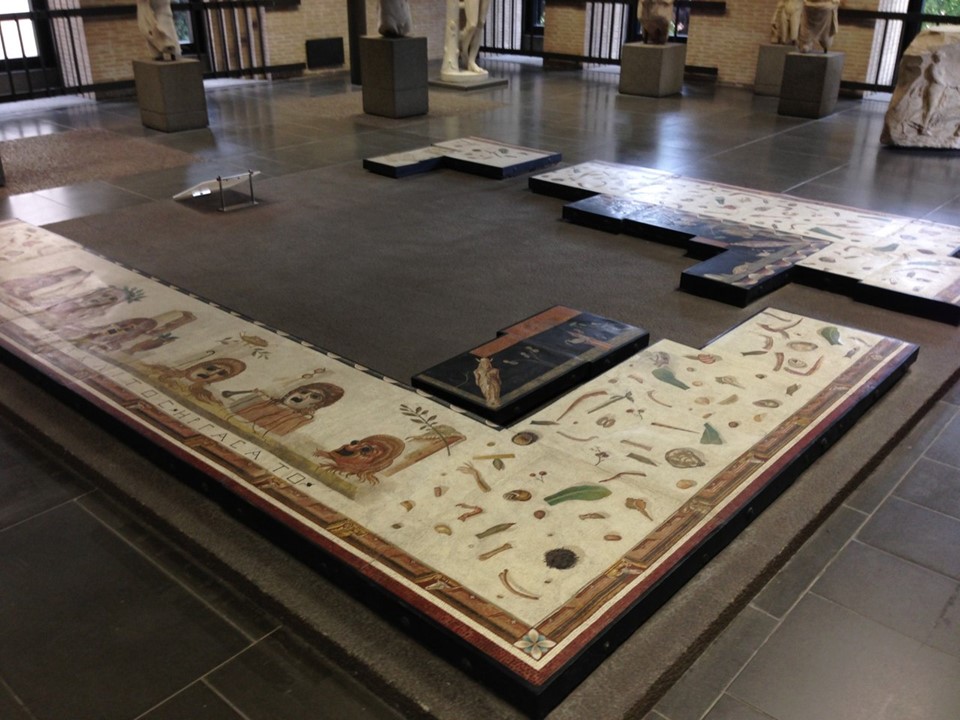
Heraklitos’ Asarotos Oikos mosaic delights with its illusionistic “unswept floor,” blending humor, virtuosity, and elite sophistication—transforming everyday banquet remnants into a dazzling display of artistic mastery and status.
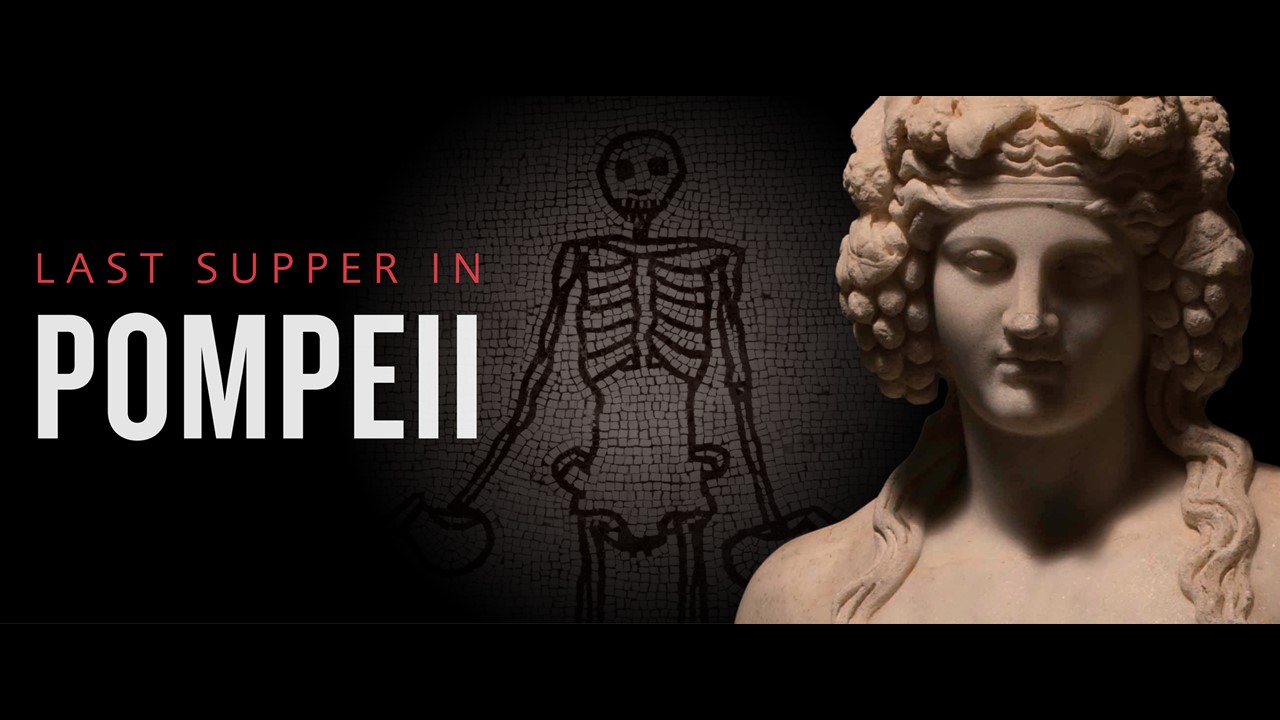
The Last Supper in Pompeii exhibition explores Roman food culture through vivid frescoes, mosaics, and artefacts, revealing everyday banquets and civic generosity in the richly preserved world of ancient Pompeii.
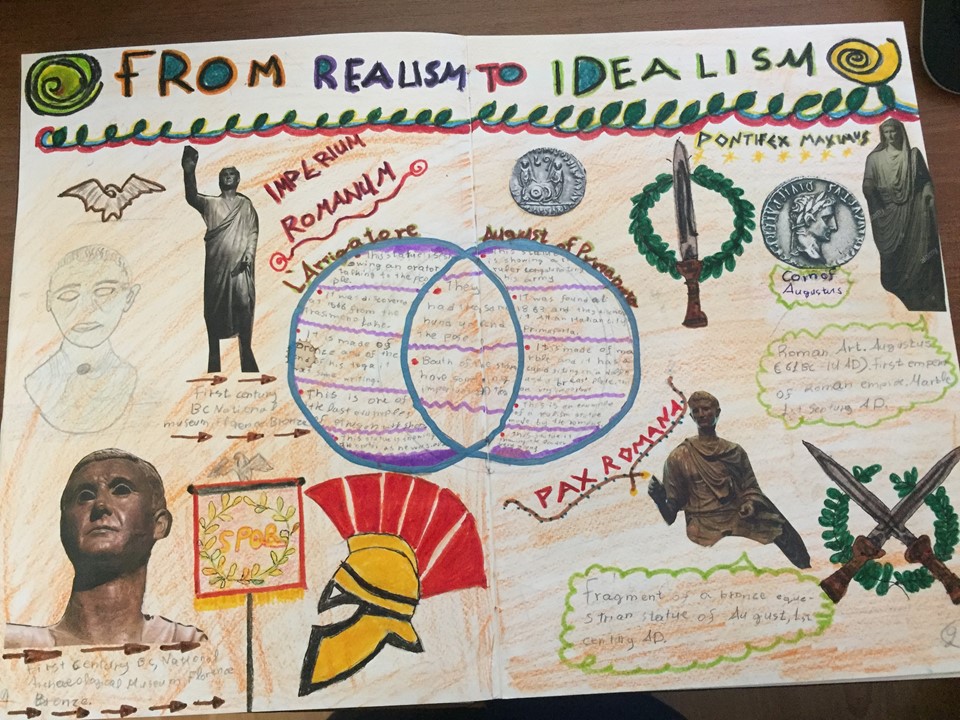
This Student Activity compares Augustus of Primaporta and Aulus Metellus, helping students explore Roman government through art—contrasting imperial power with republican ideals via analysis, writing, and creative response.