Bening’s intoxicating October miniature — nobles tasting, peasants pressing, barrels groaning — distills Renaissance Flemish winemaking into one luminous, grape-soaked masterpiece of observation.
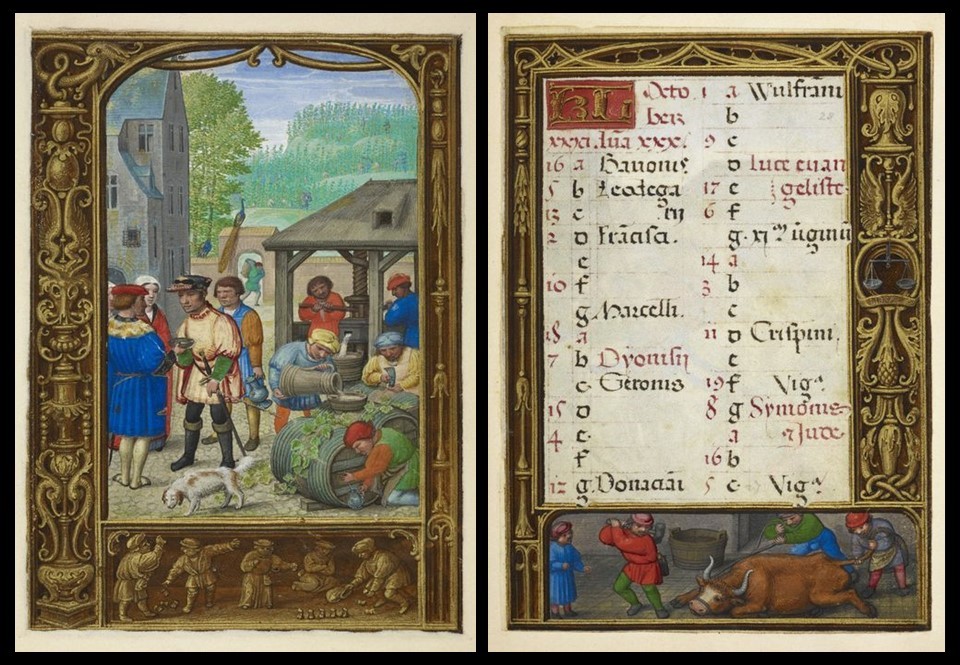
Bening’s intoxicating October miniature — nobles tasting, peasants pressing, barrels groaning — distills Renaissance Flemish winemaking into one luminous, grape-soaked masterpiece of observation.
Van Eyck’s Arnolfini Portrait captivates with luminous detail, symbolic richness, and his bold “I was here” signature—blending technical mastery and mystery into a timeless scene of wealth, presence, and interpretation.
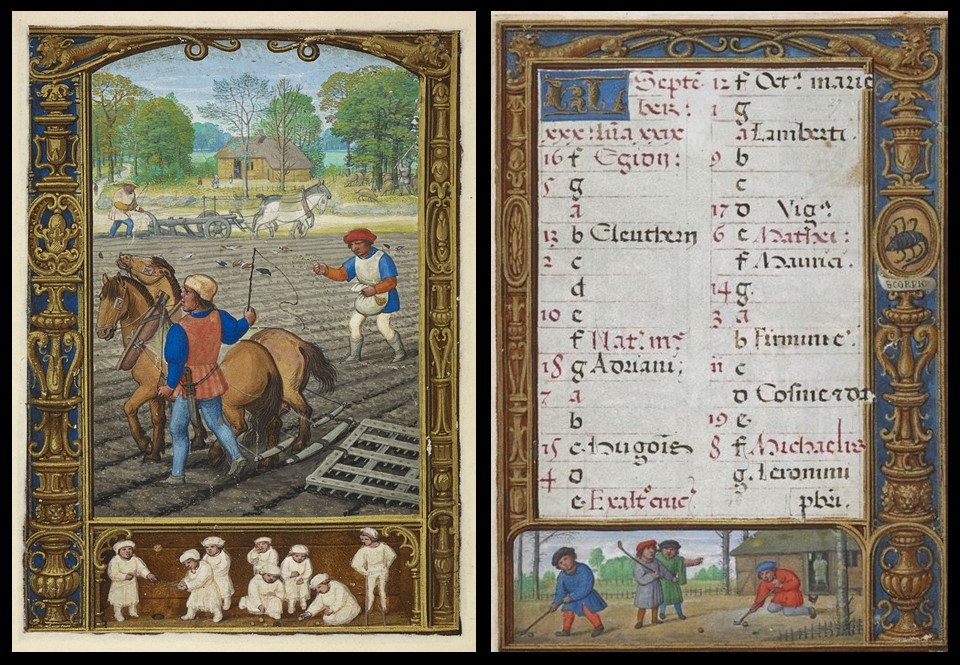
Simon Bening’s Golf Book depicts a lively September scene of a medieval stick-and-ball game resembling golf, blending courtly leisure, rural setting, and early sport imagery within a richly illuminated calendar page from 16th-century Bruges.
Bruegel’s Landscape with the Fall of Icarus, read alongside Ovid and Williams, transforms myth into quiet tragedy, where Icarus’s drowning is almost unnoticed amid a vast, indifferent world of labour, nature, and everyday human activity.
Bening’s Golf Book August scene evokes a poetic harvest landscape of golden wheat, labour, and rest, where Flemish peasants inhabit a richly detailed world of seasonal abundance, luminous colour, and harmonious rural rhythm.
Simon Bening’s July miniature elevates falconry into an emblem of aristocratic refinement and control over nature, while Rilke’s poem reimagines the same practice as a profound, almost spiritual bond between human and bird, united in movement, training, and freedom.
Simon Bening’s June page from the Golf Book vividly depicts a chivalric tournament, where armored knights joust for honor, love, and glory amid a lively Flemish city backdrop.
Simon Bening’s Golf Book (May, fol. 22v) presents a vibrant Renaissance May Day scene, blending aristocratic leisure on the river with richly detailed Flemish city and countryside landscapes.
Simon Bening’s April miniature from the Golf Book depicts an elegant Renaissance courtship in a lush garden, where richly dressed lovers, lively figures, and refined details celebrate spring, love, and aristocratic life.
Simon Bening’s Golf Book (March, f.20v) presents a refined medieval garden scene where aristocratic authority, labour, and daily life intersect, offering insight into monastic horticulture and medicinal plant traditions.