The Parthenon by Frederic Edwin Church
Church’s Parthenon study captures Athenian light in radiant, shifting color, transforming Pentelic marble into a living presence—an intimate, luminous prelude to his grand vision of classical grandeur.
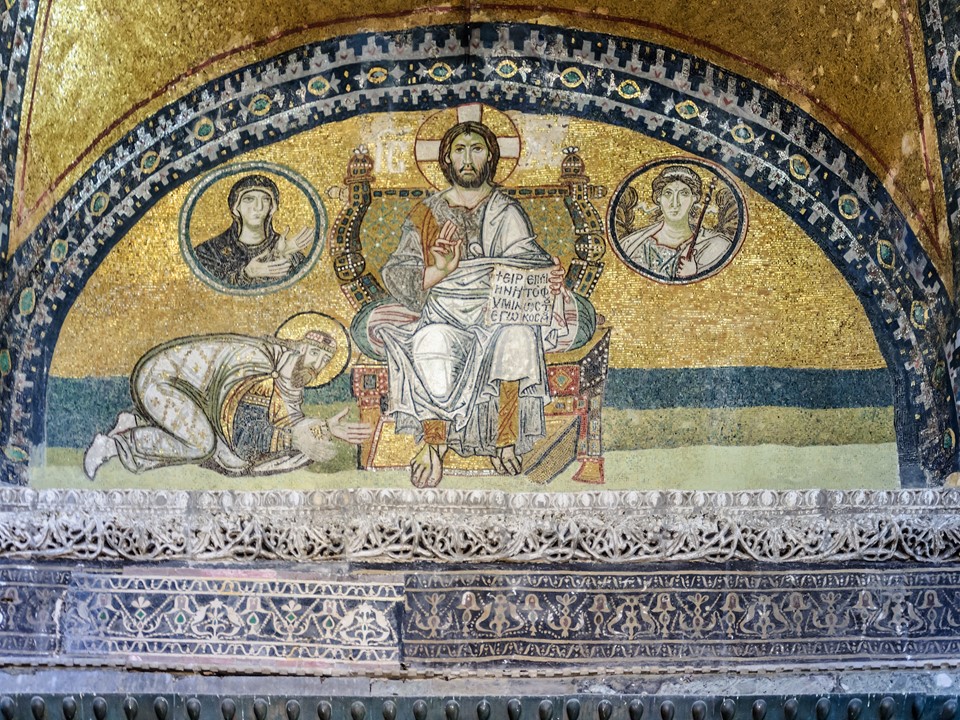
The Enthroned Christ and Emperor Leo VI the Wise
The Hagia Sophia narthex mosaic of Christ and Emperor Leo VI endures as both art and message—an image of imperial humility and divine authority, crafted to speak across centuries.
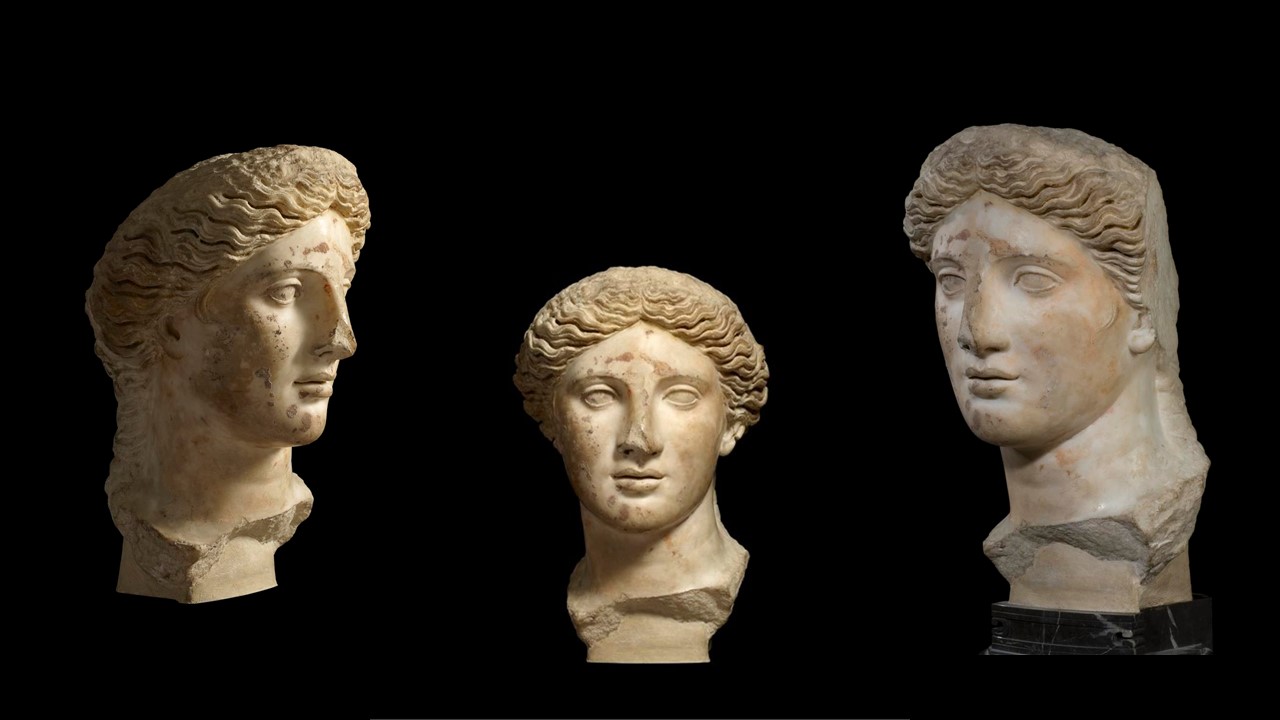
Treu Head
The Treu Head, discovered on the Esquiline Hill in Rome and now in the British Museum, is a striking example of Roman sculptural polychromy. Traces of red, black, and yellow paint reveal a once vividly colored image, reshaping our understanding of ancient sculpture.
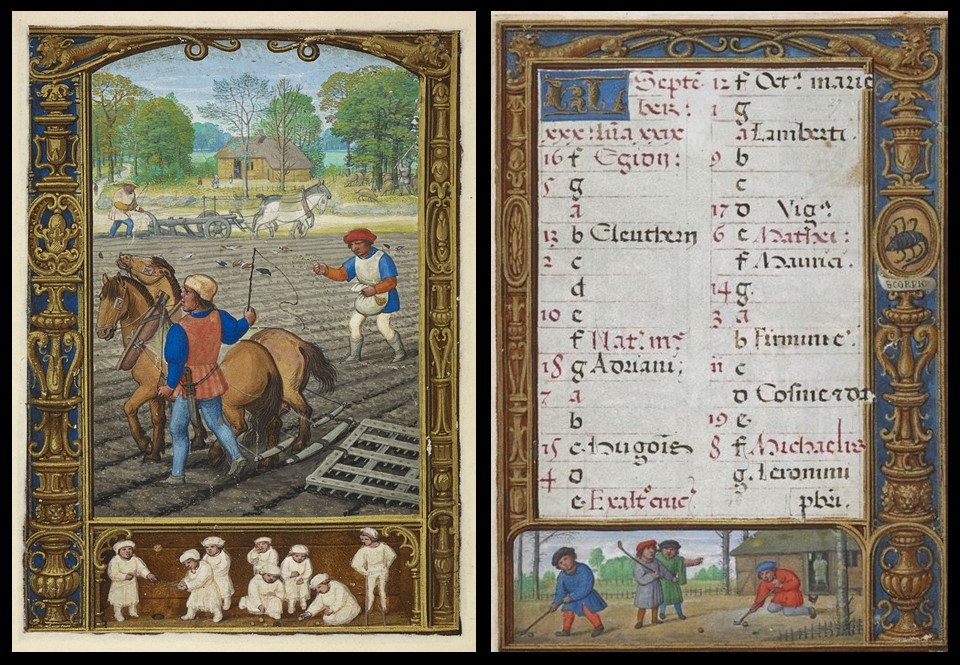
Simon Bening’s September
Simon Bening’s Golf Book depicts a lively September scene of a medieval stick-and-ball game resembling golf, blending courtly leisure, rural setting, and early sport imagery within a richly illuminated calendar page from 16th-century Bruges.
Rooms by the Sea
Hopper’s Rooms by the Sea transforms Cape Cod light into an image of solitude, where an interior opens abruptly to the vast, silent sea—echoing Romantic ideas of isolation, contemplation, and the presence of nature beyond human enclosure.
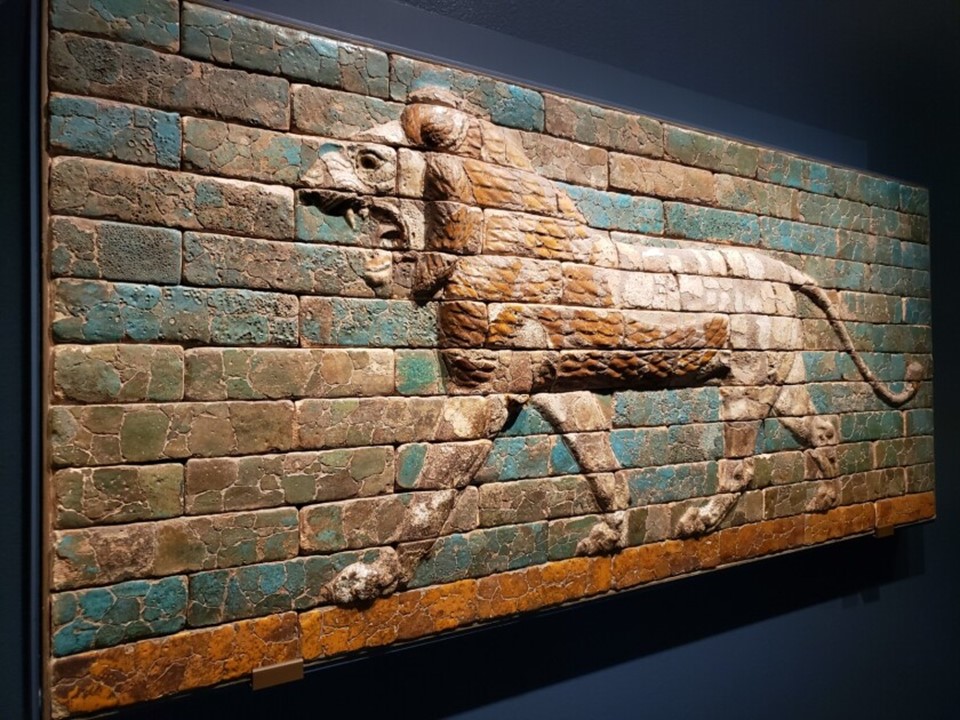
Babylonian Panel with a Striding Lion
The Ishtar Gate and Processional Way of Babylon, commissioned by Nebuchadnezzar II, formed a monumental, vividly glazed ceremonial route decorated with lions, dragons, and bulls—an architectural spectacle designed to embody divine power and imperial grandeur.
Hand With Seaweed and Shells by Émile Gallé
Gallé’s Hand With Seaweed and Shells echoes Baudelaire’s vision of the sea as a mirror of the human soul, transforming glass into a poetic symbol of fluid identity, where nature, life, and mortality merge in ambiguous, oceanic reflection.
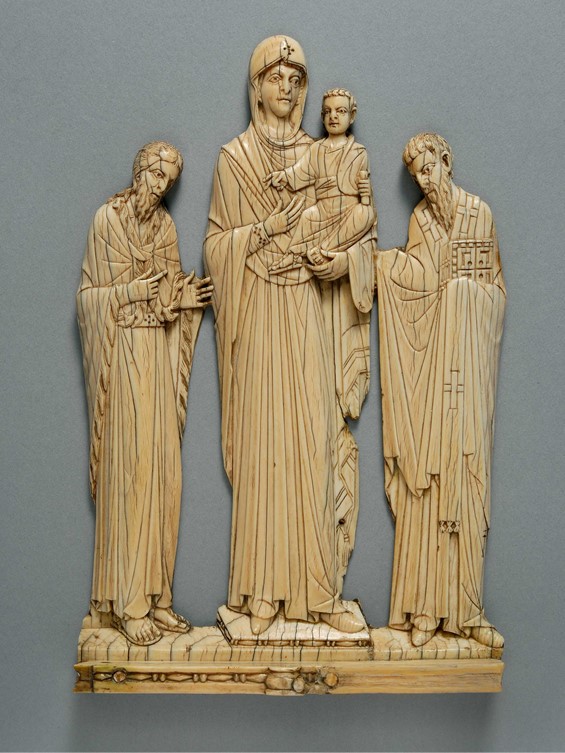
The Hodegetria Plaque
The Hodegetria ivory and its related Louvre panel reveal the refined elegance of 10th-century Byzantine carving, where sacred figures, delicate drapery, and restrained composition embody aristocratic devotion and the serene spiritual authority of the Deësis tradition.
The Fall of Icarus
Bruegel’s Landscape with the Fall of Icarus, read alongside Ovid and Williams, transforms myth into quiet tragedy, where Icarus’s drowning is almost unnoticed amid a vast, indifferent world of labour, nature, and everyday human activity.
Boating by Édouard Manet
Manet’s Boating, admired by Huysmans, captures modern leisure on the Seine with bold clarity and Japanese-inspired cropping, presenting a fleeting, sunlit moment of Parisian life where color, composition, and immediacy replace academic convention.